Integrated AI Driven Data Solutions for Utility OT Control Architecture
By Saul Melara, Director of Global Sector Architecture, Oracle Utilities
By Saul Melara, Director of Global Sector Architecture, Oracle Utilities
Request for Quotation Service
Buyers Submit Free RFQs to top suppliers, no obligation.
Suppliers Browse real project RFQs directly from buyers.
Trust Electricity Forum 40 years connection buyers and suppliers.
Integrated AI Driven Data Solutions unify AMI, ADMS, SCADA, and billing data into governed cloud and edge pipelines that preserve OT boundaries, enable real time forecasting, DER detection, and anomaly billing control, and reduce model drift that can destabilize feeder operations.
Integrated AI Driven Data Solutions are not about analytics capability. They determine whether artificial intelligence can influence feeder control, billing integrity, and DER coordination without degrading operational confidence. Once model outputs enter switching logic or load forecasting, probabilistic inference becomes part of the live grid authority.
Utilities operate within layered data domains that were never designed for unified inference. AMI interval data, SCADA telemetry, DER profiles, weather inputs, and customer billing records differ in their latency tolerance, retention policies, and cybersecurity classifications. When these domains are fused without structured governance, correlations can appear mathematically valid while remaining operationally unsafe.
The engineering decision is therefore precise: how to deploy AI across grid and customer systems without exporting sensitive operational data, and without allowing model latency or drift to erode control room determinism. Registry approval lag, delayed feature drift detection, or weak confidence score gating can allow an outdated model to influence switching plans long after its assumptions have shifted. At that point, governance failure becomes operational exposure.
Failure does not produce a reporting discrepancy. It produces feeder misalignment, protection miscoordination, and preventable outage escalation.
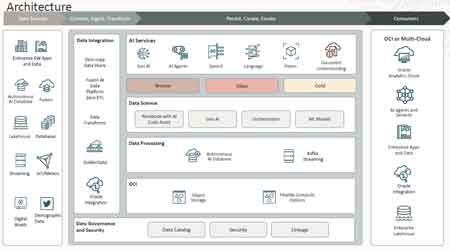
A secure architecture enforces separation between raw operational data and model orchestration layers. Sensitive OT and customer records remain within local retention zones, while metadata, engineered features, and model artifacts traverse cloud infrastructure for lifecycle management and training.

This separation creates a structural tradeoff. Centralized cloud computing provides scalable GPU capacity for forecasting and classification models, yet OT systems require zero data movement for protected fields. Integrated AI Driven Data Solutions, therefore, rely on feature engineering at the edge, controlled model registries, and governed promotion of artifacts into production scoring environments.
Deployment must align with existing cybersecurity frameworks such as Cybersecurity for Utilities and SCADA Cybersecurity. Without alignment, AI pipelines become an unmonitored ingress path into control systems.
Integrated AI-Driven Data Solutions extend beyond batch analytics. A governed lifecycle trains models on engineered features, registers them centrally, and deploys them for edge scoring across CCS, IoT streams, MDM, and ADMS platforms. This lifecycle introduces a threshold discipline issue.
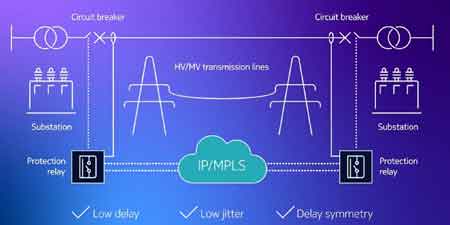
Edge inference must tolerate degraded communications and partial network segmentation. If WAN latency spikes during storm conditions, local scoring engines must continue operating against synchronized feature sets. This places architectural pressure on Utility WAN Architecture and requires deterministic failover logic.
Consider a cascading operational consequence. An EV detection model drifts seasonally and misclassifies plateau loads during a heat wave. Localized load forecasts inflate. ADMS optimization reallocates switching plans in response to exaggerated demand, thereby increasing conductor loading on adjacent feeders. Protection margins narrow. A transient fault now cascades into a multi feeder outage rather than a contained event.
The source of uncertainty is not limited to algorithm accuracy. It includes seasonal feature drift, evolving DER penetration, and weather volatility. EV and AC detection models depend on duration thresholds, flatness constraints, baseline windows, and uplift calculations. When those assumptions shift, inference confidence degrades.
The operational scale is substantial. Monthly interval ingestion can exceed one billion records across hundreds of thousands of meters. At that volume, a one percent misclassification rate affects thousands of endpoints and distorts aggregated feeder forecasts.
Integrated AI-driven data solutions, therefore, rely on disciplined data engineering stages: ingestion, cleansing, baseline computation, uplift detection, clustering, supervised classification, and ensemble fine-tuning. EV detection pipelines often use 2- to 8-hour plateau windows, along with season-specific load thresholds and variability caps, to reduce false positives.
An operational edge case arises when AC and EV demand are concurrent on peak summer evenings. If the uplift logic fails to disaggregate overlapping load signatures, demand response programs target the wrong customer segments. The result is misaligned load shifting, degraded program credibility, and insufficient peak reduction.
Architectures that aspire to Autonomous Utility Networks must confront this problem of segmentation precision. Autonomy without high confidence consumption classification amplifies control volatility rather than reducing it.
Integrated AI-driven data solutions deliver value only when embedded across enterprise systems, including ADMS, DERMS, CRM, and customer engagement platforms. Integration, however, multiplies the blast radius if governance fails.
For DER-heavy feeders, AI-driven disaggregation and weather-adjusted forecasts feed directly into distributed resource coordination logic. Any misalignment between distribution topology models and AI forecasts distorts real-time optimization decisions. This creates friction with DER Cybersecurity, where bidirectional energy flows complicate trust boundaries.
The deployment tradeoff becomes explicit. Expanding model influence into switching authority increases operational efficiency but raises systemic risk if inference confidence drops below tolerance. Restricting models to advisory roles preserves stability but limits measurable ROI.
Stay informed with our FREE Grid Data Foundations & AI Infrastructure Newsletter — get the latest news, breakthrough technologies, and expert insights, delivered straight to your inbox.
The engineering gravity is this: deploying Integrated AI-Driven Data Solutions is not a software enhancement. It redefines how operational truth is computed. Once probabilistic inference influences feeder switching, anomaly-billing flags, DER curtailment signals, or call-center segmentation, accountability shifts from static rules to model governance.
Utilities must decide where model confidence is sufficient to influence live control and where it remains advisory only. That boundary determines whether AI strengthens grid reliability or introduces silent instability.
Explore 50+ live, expert-led electrical training courses –