AMI Communications and Network Resiliency
By Jim Ketchledge, PMP, CEO, Nexcergy
By Jim Ketchledge, PMP, CEO, Nexcergy
AMI Communications determines whether advanced metering infrastructure can support LTE-M, private LTE, licensed-spectrum reliability, and scalable bandwidth for DER integration, real-time telemetry, and resilient distribution control under grid-stress conditions.
AMI Communications determines whether a metering system functions as a billing network or as a grid operations backbone. As utilities replace aging AMI 1.0 deployments, the communications decision becomes structural. The network selected today defines telemetry limits, DER visibility, and restoration performance for decades.
Early AMI programs relied heavily on proprietary RF mesh systems. These networks were optimized for low-bandwidth meter reads and predictable interval data. They were not designed for high-frequency waveform capture, edge analytics, or continuous grid telemetry.
Replacement cycles now coincide with increasing DER penetration, electric vehicle load growth, and pressure to manage voltage. Communications architecture is no longer a background procurement decision. It is a control layer decision.
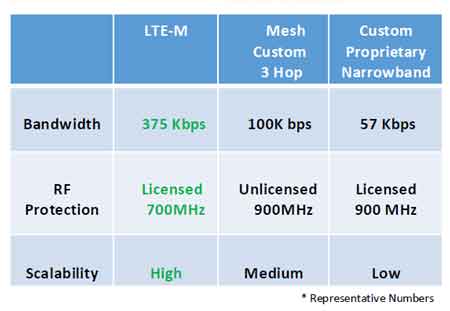
Proprietary RF mesh networks operate in unlicensed spectrum and rely on meter-to-meter relays. For routine interval reads, performance is generally stable. Under heavy traffic, limitations begin to show.
When a disturbance triggers a surge of messages, latency increases. During storm restoration, retries multiply, and routing paths shift unpredictably. If one relay fails, downstream meters may lose their path to the head end.
In early AMI Metering deployments, that constraint was manageable because the data was not time sensitive. Today’s systems depend on voltage awareness that approaches real time. That margin is much tighter.
LTE M throughput exceeds traditional RF mesh capacity by several orders of magnitude, allowing thousands of endpoints to transmit high-frequency data simultaneously without congestion. That difference becomes apparent when thousands of endpoints report events simultaneously. A communications network serving 500,000 endpoints cannot tolerate congestion during a feeder disturbance without losing operational visibility.
Download our FREE Electrical Training Catalog and explore a full range of expert-led electrical training courses.

The consequence is straightforward. If the network cannot quickly move disturbance data, operators lose visibility when they need it most. If congestion delays telemetry during a fault, operators may see incomplete voltage data, isolate a broader section of the feeder than required, and increase customer minutes of interruption.
Cellular AMI Communications uses licensed spectrum and established carrier networks. LTE M and private LTE provide consistent latency and higher data capacity than most mesh systems.
Licensed spectrum avoids the interference that can occur in crowded unlicensed bands. In urban areas or high risk regions, that stability becomes noticeable during major events.
The model outlined in Intelligent Connectivity reflects this shift. Instead of relying on meter-to-meter routing, utilities use infrastructure that already carries critical communications traffic.
There are tradeoffs. Public cellular service depends on carrier agreements and shared infrastructure. Remote coverage can be inconsistent. Private LTE requires capital investment and spectrum planning. Hybrid designs are often necessary.
The real question is operational. Can the AMI communications network sustain a surge of telemetry during a feeder event without losing visibility? If it cannot, the control room operates with partial information.
Private LTE deployments give utilities greater operational sovereignty. Spectrum licensing and infrastructure ownership allow control over quality of service and security segmentation.
As described in the broader Advanced Metering Infrastructure modernization effort, AMI communications architecture must integrate with head end systems, outage management, and DER coordination platforms.
Private LTE can prioritize critical telemetry traffic during switching operations. In contrast, shared mesh networks may experience unpredictable routing congestion during widespread outages.
An operational edge case illustrates the difference. During a feeder backfeed event caused by DER misconfiguration, rapid reverse power detection must reach control systems without delay. If AMI communications latency exceeds protection coordination timing, switching decisions may rely on incomplete data.
This increases decision gravity. Communications failure is not an inconvenience. It is a risk multiplier.
Next Generation AMI assumes rising telemetry density. Waveform capture, voltage sampling, and distributed analytics expand bandwidth requirements beyond traditional interval reads.
Cellular roadmaps provide migration paths toward 5G and future standards. Mesh architectures lack comparable upgrade flexibility without wholesale hardware replacement.
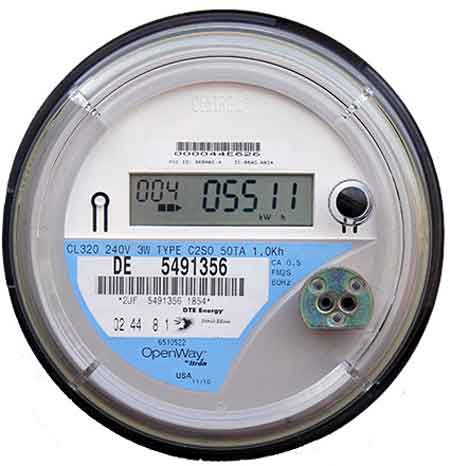
The modern AMI Smart Meter increasingly performs localized processing and event classification. AMI communications architecture must support firmware updates, application downloads, and event streaming at scale.
If network capacity ceilings are reached, utilities face a threshold discipline issue. Do they limit sampling frequency to preserve bandwidth, or do they upgrade the network? The wrong initial architecture forces an earlier compromise than expected.
AMI communications architecture directly affects head end design. Cellular networks simplify topology by reducing multi-hop routing complexity. This supports cleaner integration with cloud head end systems and enterprise analytics.
The data movement described in AMI Data becomes more dynamic when high-frequency telemetry is introduced. Bandwidth scalability determines whether analytics remain selective or become comprehensive.
Even the physical AMI Meter becomes dependent on network capacity when firmware updates, security patches, and distributed applications must be deployed reliably across hundreds of thousands of endpoints.
AMI Communications are therefore not an accessory to metering. They define the operational ceiling of the entire platform. If the communications layer fails under stress, distributed intelligence at the meter cannot compensate for lost visibility.
Stay informed with our FREE Metering, AMI & Edge Intelligence Newsletter — get the latest news, breakthrough technologies, and expert insights, delivered straight to your inbox.
Utilities that treat AMI communications as a legacy design extension will constrain future DER integration and voltage control strategies. Architecture choices made during AMI replacement will either constrain or expand distribution control capability for the next decade.
Explore 50+ live, expert-led electrical training courses –