Why Building Automation Failures Usually Begin at Commissioning
By Howard WIlliams, Associate Editor
By Howard WIlliams, Associate Editor
Request for Quotation Service
Buyers Submit Free RFQs to top suppliers, no obligation.
Suppliers Browse real project RFQs directly from buyers.
Trust Electricity Forum 40 years connection buyers and suppliers.
Most building automation failures begin at commissioning, where incomplete system understanding, poor coordination between disciplines, and undocumented assumptions embed performance limitations before the system operates under real conditions.
Commissioning is the transition point where design intent meets operational reality. It is also where building automation systems are most vulnerable to long-term failure. Decisions made during commissioning often determine how the system behaves for years, yet this phase is frequently treated as a procedural checklist rather than a system-level validation process.
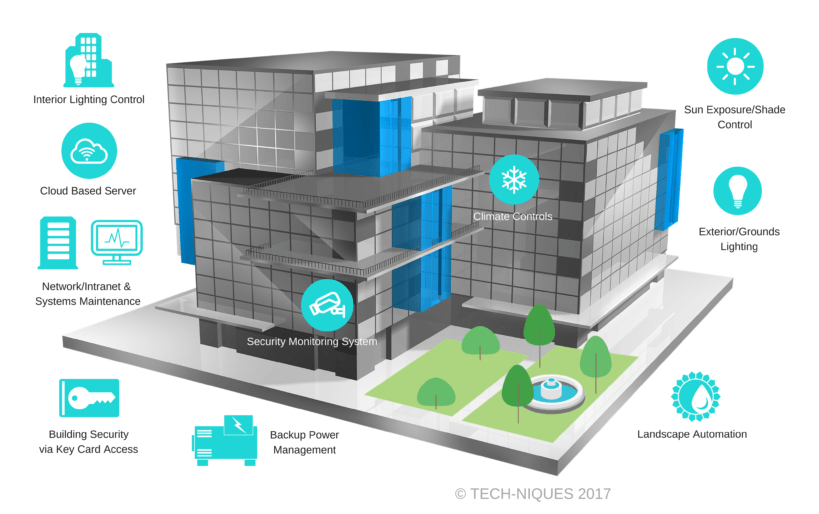
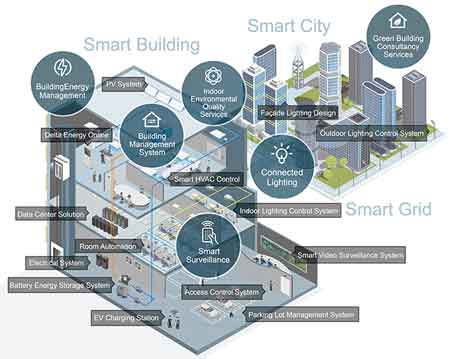
Commissioning failures often occur because the full building automation system is never validated as an integrated whole, rather than as individual subsystems, reflecting a misunderstanding of how a Building Automation System is structured.
A common failure pattern begins with isolated functional testing. Individual components such as air handlers, VAV boxes, lighting controls, or metering devices appear to function correctly when tested independently. However, system-level interactions are never fully validated. Control loops compete, schedules overlap, alarms are suppressed, and energy optimization strategies are disabled to stabilize operations. These are not tuning problems. They are structural commissioning failures.
Another frequent issue is poor alignment between building electrical systems and automation logic. Automation depends on accurate power distribution, correct sensor referencing, reliable grounding, and predictable electrical behavior. When commissioning teams lack a working understanding of how electrical system design affects automation inputs and control responses, faults are often misdiagnosed as software issues rather than electrical or architectural ones.
Professionals responsible for avoiding these commissioning failures often require a deeper, system-level understanding of BAS architecture, protocols, and lifecycle behavior, which is addressed through structured Building Automation Training.
Download our FREE Electrical Training Catalog and explore a full range of expert-led electrical training courses.

Communication protocols introduce additional risk during commissioning. BAS networks using BACnet, Modbus, or mixed-protocol gateways may function at a basic level while still introducing latency, data loss, or naming inconsistencies that undermine analytics and fault detection. Without protocol-level validation during commissioning, data appears available but cannot be trusted for control, diagnostics, or optimization.
Over time, commissioning shortcuts solidify into operational habits. Operators inherit systems they do not fully understand and respond with overrides, workarounds, and conservative settings. Energy performance degrades, data credibility erodes, and automation shifts from proactive system control to reactive problem management.
Professionals who understand how building automation systems behave during commissioning are far better equipped to prevent failures that would otherwise persist throughout the system lifecycle. Decisions made at commissioning continue to shape performance, reliability, and energy outcomes long after installation is complete.
Automation performance at commissioning is often constrained by upstream electrical design decisions, which is why professionals responsible for integrated system outcomes benefit from a solid grounding in Building Electrical Systems Training.
Advantages To Instructor-Led Training – Instructor-Led Course, Customized Training, Multiple Locations, Economical, CEU Credits, Course Discounts.
Request For QuotationWhether you would prefer Live Online or In-Person instruction, our electrical training courses can be tailored to meet your company's specific requirements and delivered to your employees in one location or at various locations.