CSA Z462 Arc Flash Training – Electrical Safety Compliance Course
Our customized live online or in‑person group training can be delivered to your staff at your location.

- Live Online
- 6 hours Instructor-led
- Group Training Available
Regular Price:
$249
Coupon Price:
$199
President Bush suffered the first major environmental policy setback of his second term recently when his "Clear Skies" initiative relaxing federal air pollution control restrictions on power plants was defeated in the Senate Environment Committee.
The proposal was a top White House priority, but its failure to include carbon dioxide emissions - which many scientists consider a major cause of global warming - among pollution control targets was a big factor in its defeat.
Committee Chairman James Inhofe, R-Okla., a Bush stalwart and a strong proponent of the measure, declared the bill "killed" when a key Republican defection by Sen. Lincoln Chafee of Rhode Island left him without the votes to break a 9-9 committee tie, largely along party lines, and move the legislation to the Senate floor. Inhofe blamed the impasse on "environmental extremists."
Environmentalists hailed the committee action as a blow against what they charged was corporate undermining of federal anti- pollution rules.
"Today senators on both sides of the aisle stood up for the American people against a corporate scheme to weaken federal law and delay the day we all can enjoy breathing clean air," said John Walke, director of the Natural Resources Defense Council's clean air project.
League of Conservation Voters Vice President Betsy Loyless agreed.
"Today, the Bush administration and its corporate allies were handed a defeat while the health of our families and children came out on top," she said.
The measure would have scrapped provisions of the 1970 Clean Air Act that have applied strict, specific pollution control limits to coal-fired power plants and other industrial sources of nitrous oxide, sulfur dioxide and mercury emissions.
Under "Clear Skies," individual facilities instead would have been able to trade pollution rights among themselves under a nationwide cap applied to all such plant emissions.
Though the administration claimed this would eventually lead to an overall 70 percent reduction of these airborne toxins, environmental groups argued the plan was full of loopholes, difficult to enforce and would take too long to implement.
And Chafee objected to its failure to deal with carbon dioxide emissions. "It is a shame that the U.S. Congress is the last bastion of denial on climate change," Chafee said.
Chafee's opposition, plus that of former Republican-turned- Independent James Jeffords of Vermont, led to the 9-9 tie in the GOP- controlled committee.
Administration attempts to push the plan through during Bush's first term also failed, but Republicans had hoped their significant Senate gains in the last election would enhance its chances.
The electrical power industry - which had argued "Clear Skies" would improve air quality, help keep jobs, hold energy prices down and make use of America's abundant supplies of coal - expressed disappointment in the outcome.
"'Clear Skies' would accomplish all of this," said Paul Oakley, executive director of the Coalition for Affordable and Reliable Energy. "It is disappointing that we could not achieve sufficient support."
"The Electric Reliability Coordinating Council is clearly disappointed that the deadlock over the bill could not be broken today," said Scott Segal, director of that organization. "But we hope that continued work may yet yield legislative success."
Related News

The Need for Electricity During the COVID-19 Pandemic
US utilities COVID-19 resilience shows electric utilities maintaining demand stability, reaffirming earnings guidance, and accessing…
View more

Some old dams are being given a new power: generating clean electricity
Hydroelectric retrofits for unpowered dams leverage turbines to add renewable capacity, bolster grid reliability, and…
View more

New clean energy investment in developing nations slipped sharply last year: report
Developing Countries Clean Energy investment fell as renewable energy financing slowed in China; solar and…
View more

GM president: Electric cars won't go mainstream until we fix these problems
Electric Vehicle Adoption Barriers include range anxiety, charging infrastructure, and cost parity; consumer demand, tax…
View more
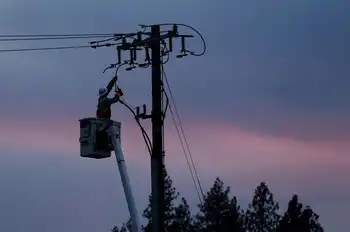
PG&E restoring power after intentional shut-offs affect 20,500 customers
PG&E power restoration continues across Butte and Yuba counties after PSPS shut-offs from high winds…
View more

A new material made from carbon nanotubes can generate electricity by scavenging energy from its environment
Carbon Nanotube Solvent Electricity enables wire-free electrochemistry as organic solvents like acetonitrile pull electrons, powering…
View more
Sign Up for Electricity Forum’s Newsletter
Stay informed with our FREE Newsletter — get the latest news, breakthrough technologies, and expert insights, delivered straight to your inbox.
Electricity Today T&D Magazine Subscribe for FREE

Stay informed with the latest T&D policies and technologies.
- Timely insights from industry experts
- Practical solutions T&D engineers
- Free access to every issue

