With coal production, cleaner skies could mean more landfills

By Charleston Daily Mail


CSA Z462 Arc Flash Training - Electrical Safety Essentials

Our customized live online or in‑person group training can be delivered to your staff at your location.

  • Live Online
  • 6 hours Instructor-led
  • Group Training Available
Regular Price:
$249
Coupon Price:
$199
Reserve Your Seat Today
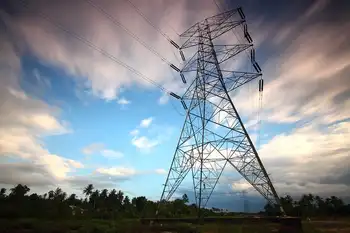
As the nation's coal-fired power plants work to create cleaner skies, they'll likely fill up landfills with millions more tons of potentially harmful ash.

More than one-third of the ash generated at the country's hundreds of coal-fired plants is now recycled - mixed with cement to build highways or used to stabilize embankments, among other things.

But in a process being used increasingly across the nation, chemicals are injected into plants' emissions to capture airborne pollutants.

That, in turn, changes the composition of the ash and cuts its usefulness. It can't be used in cement, for example, because the interaction of the chemicals may keep the concrete from hardening.

That ash has to go somewhere - so it usually ends up in landfills, along with the rest of the unusable waste.

"You're replacing an air problem with a land problem - a disposal problem,'' said Bruce Dockter, a research engineer with the Energy and Environmental Research Center at the University of North Dakota.

Coal ash naturally contains arsenic and mercury, and if the elements leach into groundwater they can contaminate drinking supplies. The EPA says ash disposed of in landfills could pose significant risks when mismanaged, and there are gaps in state regulation.

And the chemicals added to clean up emissions - such as ammonia, lime and calcium hydroxide - make the ash worse, environmental groups say, because they take toxins such as mercury out of the air but leave higher levels of it in the ash.

The U.S. Environmental Protection Agency doesn't classify coal ash - with or without the added chemicals - as a hazardous waste, although many environmental groups say it should.

"As a general rule, anything you do to make the air emissions cleaner makes the ash more toxic,'' said Lisa Evans, an attorney with Earthjustice, a nonprofit environmental law firm.

More than 120 million tons of ash and other leftovers come from coal combustion each year in the United States, and more than 46 million tons are reused, according to the American Coal Ash Association.

Environmental groups encourage reuse of the ash because it keeps most of the waste out of landfills. And substituting ash for cement means less mining for the materials typically used to make cement - consequently causing a drop in the amount of carbon dioxide that would be emitted by mining machinery.

But the EPA is pushing power companies to cut emissions of the sulfur dioxide and nitrogen oxides, which add to smog and acid rain and contribute to thousands of premature deaths, asthma and other respiratory ailments. A large portion of those emissions come from coal plants, the EPA says.

"If you live near a power plant, you want the cleanest air possible,'' said Dave Goss, executive director of the American Coal Ash Association. "If in exchange for clean air they have to dispose of material - that's the challenge. The only option may be putting it in a landfill.''

It's not clear how many plants already using or will use the new technology or how much ash may be affected, but the technique is becoming widespread as companies work to comply with federal guidelines, Goss said.

The issue was raised as the EPA developed air emissions rules, but the power sector has found ways to minimize the impact, said EPA spokesman John Millett, who said the agency doesn't believe the increased injection of the chemicals into ash will cause a significant drop-off in ash recycling.

But the effects are evident in Nebraska, for example, where the Omaha Public Power District sells about 135,000 tons of ash from its current plant near Nebraska City every year. Ash from a new plant being built nearby will be injected with chemicals to clean emissions, and it will be dumped in a 16-acre landfill to be built onsite at a cost of $2.7 million, said Mike Jones, a spokesman for the utility.

"You've got to do something with it,'' Jones said. "This was the best option.''

The landfill will fill up in about five years and likely have to be expanded.

Xcel Energy Inc. will use the injection equipment on a new plant near Pueblo, Colo., and also will install the equipment on two existing units there. The ash will be dumped in a 250-acre onsite landfill.

But even if there is a drop in recycling, the trade-off might be worth it.

"The benefits of the additional (emission) reductions from these controls is immense,'' Millett said.

In Nebraska, the dump sites are closely regulated, said Bill Gidley, a section supervisor with the state's Department of Environmental Quality. Landfills must have liners to collect seepage, and they are inspected every year.

This month, the Maryland Department of the Environment ordered the operator of an 80-acre Anne Arundel County coal ash dump to clean contaminated water detected near the site. Cancer-causing metals were discovered last fall in almost two dozen wells in the area. BBSS Inc. also was fined an undisclosed amount.

Related News
Flowing with current, Frisco, Colorado wants 100% clean electricity

Frisco 100% Renewable Electricity Goal outlines decarbonization via Xcel Energy, wind, solar, and battery storage, enabling beneficial electrification and a smarter grid for 100% municipal power by 2025 and community-wide clean electricity by 2035.


Key Points

Frisco targets 100% renewable electricity: municipal by 2025, community by 2035, via Xcel decarbonization.

✅ Municipal operations to reach 100% renewable electricity by 2025

✅ Community-wide electricity to be 100% carbon-free by 2035

✅ Partnerships: Xcel Energy, wind, solar, storage, grid markets


Frisco has now set a goal of 100-per-cent renewable energy, joining communities on the road to 100% renewables across the country. But unlike some other resolutions adopted in the last decade, this one isn't purely aspirational. It's swimming with a strong current.

With the resolution adopted last week by the town council, Frisco joins 10 other Colorado towns and cities, plus Pueblo and Summit counties, a trend reflected in tracking progress on clean energy targets reports nationwide, in adopting 100-per-cent goals.

The goal is to get the municipality's electricity to 100-per-cent by 2025 and the community altogether by 2035, a timeline aligned with scenarios showing zero-emissions electricity by 2035 is possible in North America.

Decarbonizing electricity will be far easier than transportation, and transportation far easier than buildings. Many see carbon-free electricity as being crucial to both, a concept called "beneficial electrification," and point to ways to meet decarbonization goals that leverage electrified end uses.

Electricity for Frisco comes from Xcel Energy, an investor-owned utility that is making giant steps toward decarbonizing its power supply.

Xcel first announced plans to close its work-horse power plants early to take advantage of now-cheap wind and solar resources plus what will be the largest battery storage project east of the Rocky Mountains. All this will be accomplished by 2026 and will put Xcel at 55 per cent renewable generation in Colorado.

In December, a week after Frisco launched the process that produced the resolution, Xcel announced further steps, an 80 percent reduction in carbon dioxide emissions by 2030 as compared to 2050 levels. By 2050, the company vows to be 100 per cent "carbon-free" energy by 2050.

Frisco's non-binding goals were triggered by Fran Long, who is retired and living in Frisco. For eight years, though, he worked for Xcel in helping shape its response to the declining prices of renewables. In his retirement, he has also helped put together the aspirational goal adopted by Breckenridge for 100-per-cent renewables.

A task force that Long led identified a three-pronged approach. First, the city government must lead by example. The resolution calls for the town to spend $25,000 to $50,000 annually during the next several years to improve energy efficiency in its municipal facilities. Then, through an Xcel program called Renewable Connect, it can pay an added cost to allow it to say it uses 100-per-cent electricity from renewable sources.

Beyond that, Frisco wants to work with high-end businesses to encourage buying output from solar gardens or other devices that will allow them to proclaim 100-per-cent renewable energy. The task force also recommends a marketing program directed to homes and smaller businesses.

Goals of 100-per-cent renewable electricity are problematic, given why the grid isn't 100% renewable today for technical and economic reasons. Aspen Electric, which provides electricity for about two-thirds of the town, by 2015 had secured enough wind and hydro, mostly from distant locations, to allow it to proclaim 100 per cent renewables.

In fact, some of those electrons in Aspen almost certainly originate in coal or gas plants. That doesn't make Aspen's claim wrong. But the fact remains that nobody has figured out how, at least at affordable cost, to deliver 100-per-cent clean energy on a broad basis.

Xcel Energy, which supplies more than 60 per cent of electricity in Colorado, one of six states in which it operates, has a taller challenge. But it is a very different utility than it was in 2004, when it spent heavily in advertising to oppose a mandate that it would have to achieve 10 per cent of its electricity from renewable sources by 2020.

Once it lost the election, though, Xcel set out to comply. Integrating renewables proved far more easily than was feared. It has more than doubled the original mandate for 2020. Wind delivers 82 per cent of that generation, with another 18 per cent coming from community, rooftop, and utility-scale solar.

The company has become steadily more proficient at juggling different intermittent power supplies while ensuring lights and computers remain on. This is partly the result of practice but also of relatively minor technological wrinkles, such as improved weather forecasting, according to an Energy News Network story published in March.

For example, a Boulder company, Global Weather corporation, projects wind—and hence electrical production—from turbines for 10 days ahead. It updates its forecasts every 15 minutes.

Forecasts have become so good, said John T. Welch, director of power operations for Xcel in Colorado, that the utility uses 95 per cent to 98 per cent of the electricity generated by turbines. This has allowed the company to use its coal and natural gas plants less.M

Moreover, prices of wind and then solar declined slowly at first and then dramatically.

Xcel is now comfortable that existing technology will allow it to push from 55 per cent renewables in 2026 to an 80 per cent carbon reduction goal by 2030.

But when announcing their goal of emissions-free energy by mid-century in December, the company's Minneapolis-based chief executive, Ben Fowke, and Alice Jackson, the chief executive of the company's Colorado subsidiary, freely admitted they had no idea how they will achieve it. "I have a lot of confidence they will be developed," Fowke said of new technologies.

Everything is on the table, they said, including nuclear. But also including fossil fuels, if the carbon dioxide can be sequestered. So far, such technology has proven prohibitively expensive despite billions of dollars in federal support for research and deployment. They suggested it might involve new technology.

Xcel's Welch told Energy News Network that he believes solar must play a larger role, and he believes solar forecasting must improve.

Storage technology must also improve as batteries are transforming solar economics across markets. Batteries, such as produced by Tesla at its Gigafactory near Reno, can store electricity for hours, maybe even a few days. But batteries that can store large amounts of electricity for months will be needed in Colorado. Wind is plentiful in spring but not so much in summer, when air conditioners crank up.

Increased sharing of cheap renewable generation among utilities will also allow deeper penetration of carbon-free energy, a dynamic consistent with studies finding wind and solar could meet 80% of demand with improved transmission. Western US states and Canadian provinces are all on one grid, but the different parts are Balkanized. In other words, California is largely its own energy balancing authority, ensuring electricity supplies match electricity demands. Ditto for Colorado. The Pacific Northwest has its own balancing authority.

If they were all orchestrated as one in an expanded energy market across the West, however, electricity supplies and demands could more easily be matched. California's surplus of solar on summer afternoons, for example, might be moved to Colorado.

Colorado legislators in early May adopted a bill that requires the state's Public Utilities Commission to begin study by late this year of an energy imbalance market or regional transmission organization.


Related News

View more

The UK’s energy plan is all very well but it ignores the forecast rise in global sea-levels

UK Marine Energy and Climate Resilience can counter sea level rise and storm surge with tidal power, subsea turbines, heat pumps, and flood barriers, delivering renewable electricity, stability, and coastal protection for the United Kingdom.


Key Points

Integrated use of tidal power, barriers, and heat pumps to curb sea level rise, manage storms, and green the UK grid.

✅ Tidal bridges and subsea turbines enhance baseload renewables

✅ Integrated barriers cut storm surge and river flood risk

✅ Heat pumps and marine heat networks decarbonize coastal cities


IN concentrating on electrically driven cars, the UK’s new ten-point energy plans, and recent UK net zero policies, ignores the elephant in the room.

It fails to address the forecast six-metre sea level rise from global warming rapidly melting the Greenland ice sheet.

Rising sea levels and storm surge, combined with increasingly heavy rainfall swelling our rivers, threaten not only hundreds of coastal communities but also much unprotected strategic infrastructure, including electricity systems that need greater resilience.

New nuclear power stations proposed in this United Kingdom plan would produce radioactive waste requiring thousands of years to safely decay.

This is hardly the solution for the Green Energy future, or the broader global energy transition, that our overlooked marine energy resource could provide.

Sea defences and barrier design, built and integrated with subsea turbines and heat pumps, can deliver marine-driven heat and power to offset the costs, not only of new Thames Barriers, but also future Severn, Forth and other barrages, while reducing reliance on high-GWP gases such as SF6 in switchgear across the grid.

At the Pentland Firth, existing marine turbine power could be enhanced by turbines deployed from new tidal bridges to provide much of UK’s electricity needs, as nations chart an electricity future that replaces fossil fuels, from its estimated 60 gigawatt capability.

Energy from Bluemull Sound could likewise be harvested and exported or used to enhance development around UK’s new space station at Unst.

The 2021 Climate Change Summit gives Glasgow the platform to secure Scotland’s place in a true green, marine energy future and help build an electric planet for the long term.

We must not waste this opportunity.

THERE is no vaccine for climate change.

It is, of course, wonderful news that such progress is being made in the development of Covid-19 vaccines but there is a risk that, no matter how serious the Covid crisis is, it is distracting attention, political will and resources from the climate crisis, a much longer term and more devastating catastrophe.

They are intertwined. As climate and ecological systems change, vectors and pathogens migrate and disease spreads.

What lessons can be learned from one to apply to the other?

Prevention is better than cure. We need to urgently address the climate crisis, charting a path to net zero electricity by the middle of the century, to help prevent future pandemics.

We are only as safe as the most vulnerable. Covid immunisation will protect the most vulnerable; to protect against the effects of climate change we need to look far more deeply. Global challenges require systemic change.

Neither Covid or climate change respect national borders and, for both, we need to value and trust science and the scientific experts and separate them from political posturing.


Related News

View more

Japanese utilities buy into vast offshore wind farm in UK

Japan Offshore Wind Investment signals Japanese utilities entering UK offshore wind, as J-Power and Kansai Electric buy into Innogy's Triton Knoll, leveraging North Sea expertise, 9.5MW turbines, and 15-year fixed-rate contracts.


Key Points

Japanese utilities buying UK offshore wind stakes to import expertise, as J-Power and Kansai join Innogy's Triton Knoll.

✅ $900M deal: J-Power 25%, Kansai Electric ~16% in Innogy unit

✅ Triton Knoll: 860MW, up to 90 9.5MW turbines, 15-year fixed PPA

✅ Goal: Transfer North Sea expertise to develop Japan offshore wind


Two of Japan's biggest power companies will buy around 40% of a German-owned developer of offshore wind farms in the U.K., seeking to learn from Britain's lead in this sector, as highlighted by a UK offshore wind milestone this week, and bring the know-how back home.

Tokyo-based Electric Power Development, better known as J-Power, will join Osaka regional utility Kansai Electric Power in investing in a unit of Germany's Innogy.

The deal, estimated to be worth around $900 million, will give J-Power a 25% stake and Kansai Electric a roughly 16% share. It will mark the first investment in an offshore wind project by Japanese power companies, as other markets shift strategies, with Poland backing wind over nuclear signaling broader momentum.

Innogy plans to start up the 860-megawatt Triton Knoll offshore wind project -- one of the biggest of its kind in the world -- in the North Sea in 2021. The vast installation will have up to 90 9.5MW turbines and sell its output to local utilities under a 15-year fixed-rate contract.

J-Power, which supplies mainly fossil-fuel-based electricity to Japanese regional utilities, will set up a subsidiary backed by the government-run Development Bank of Japan to participate in the Innogy project. Engineers will study firsthand construction and maintenance methods.

While land-based wind turbines are proliferating worldwide, offshore wind farms have progressed mainly in Europe, though U.S. offshore wind competitiveness is improving in key markets. Installed capacity totaled more than 18,000MW at the end of 2017, which at maximum capacity can produce as much power as 18 nuclear reactors.

Japan has hardly any offshore wind farms in commercial operation, and has little in the way of engineering know-how in this field or infrastructure for linking such installations to the land power grid, with a recent Japan grid blackout analysis underscoring these challenges. But there are plans for a total of 4,000MW of offshore wind power capacity, including projects under feasibility studies.

J-Power set up a renewable energy division in June to look for opportunities to expand into wind and geothermal energy in Japan, and efforts like a Japan hydrogen energy system are emerging to support decarbonization. Kansai Electric also seeks know-how for increasing its reliance on renewable energy, even as it hurries to restart idled nuclear reactors.

They are not the only Japanese investors is in this field. In Asia, trading house Marubeni will invest in a Taiwanese venture with plans for a 600MW offshore wind farm.


Related News

View more

Feds "changing goalposts" with 2035 net-zero electricity grid target: Sask. premier

Canada Clean Electricity Regulations outline a 2035 net-zero grid target, driving decarbonization via wind, solar, hydro, SMRs, carbon capture, and efficiency, balancing reliability, affordability, and federal-provincial collaboration while phasing out coal and limiting fossil-fuel generation.


Key Points

Federal rules to cap CO2 from power plants and deliver a reliable, affordable net-zero grid by 2035.

✅ Applies to fossil-fired units; standards effective by Jan 1, 2035.

✅ Promotes wind, solar, hydro, SMRs, carbon capture, and efficiency.

✅ Balances reliability, affordability, and emissions cuts; ongoing consultation.


Saskatchewan’s premier said the federal government is “changing goalposts” with its proposed target for a net-zero electricity grid.

“We were looking at a net-zero plan in Saskatchewan and across Canada by the year 2050. That’s now been bumped to 2035. Well there are provinces that quite frankly aren’t going to achieve those types of targets by 2035,” Premier Scott Moe said Wednesday.

Ottawa proposed the Clean Electricity Regulations – formerly the Clean Electricity Standard – as part of its target for Canada to transition to net-zero emissions by 2050.

The regulations would help the country progress towards an updated proposed goal of a net-zero electricity grid by 2035.

“They’re un-consulted, notional targets that are put forward by the federal government without working with industries, provinces or anyone that’s generating electricity,” Moe said.

The Government of Canada was seeking feedback from stakeholders on the plan’s regulatory framework document earlier this year, up until August 2022.

“The clean electricity standard is something that’s still being consulted on and we certainly heard the views of Saskatchewan – not just Saskatchewan, many other provinces – and I think that’s something that’s being reflected on,” Jonathan Wilkinson, Canada’s minister of natural resources, said during an event near Regina Wednesday.

“We also recognize that the federal government has a role to play in helping provinces to make the kinds of changes that would need to be made in order to actually achieve a clean grid,” Wilkinson added.

The information received during the consultation will help inform the development of the proposed regulations, which are expected to be released before the end of the year, according to the federal government.


NET-ZERO ELECTRICITY GRID
The federal government said its Clean Electricity Regulations (CER) is part of a suite of measures, as the country moves towards a broad “decarbonization” of the economy, with Alberta's clean electricity path illustrating provincial approaches as well.

Net-zero emissions would mean Canada’s economy would either emit no greenhouse gas emissions or offset its emissions.

The plan encourages energy efficiency, abatement and non-emitting generation technologies such as carbon capture and storage and electricity generation options such as solar, wind, geothermal, small modular nuclear reactors (SMRs) and hydro, among others.

The government suggests consumer costs could be lowered by using some of these energy efficiency techniques, alongside demand management and a shift to lower-cost wind and solar power, echoing initiatives like the SaskPower 10% rebate aimed at affordability.

The CER focuses on three principles, each tied to affordability debates like the SaskPower rate hike in Saskatchewan:

 Maximize greenhouse gas reductions to achieve the 2035 target
 Ensure a reliable electrical grid to support Canadians and the economy
 Maintain electrical affordability

“Achieving a net-zero electricity supply is key to reaching Canada’s climate targets in two ways,” the government said in its proposed regulations.

“First, it will reduce [greenhouse gas] emissions from the production of electricity. Second, using clean electricity instead of fossil fuels in vehicles, heating and industry will reduce emissions from those sectors too.

The regulations would regulate carbon dioxide emissions from electricity generating units that combust any amount of fossil fuel, have a capacity above a small megawatt threshold and sell electricity onto a regulated electricity system.

New rules would also be implemented for the development of new electricity generation units firing fossil fuels in or after 2025 and existing units. All units would be subject to emission standards by Jan. 1, 2035, at the latest.

The federal government launched consultations on the proposed regulations in March 2022.

Canada also has a 2030 emissions reduction plan that works towards meeting its Paris Agreement target to reduce emissions by 40-45 per cent from 2005 levels by 2030. This plan includes regulations to phase out coal-fired electricity by 2030.


COLLABORATION
The province recently introduced the Saskatchewan First Act, in an attempt to confirm its own jurisdiction and sovereignty when it comes to natural resources.

The act would amend Saskatchewan’s constitution to exert exclusive legislative jurisdiction under the Constitution of Canada.

The province is seeking jurisdiction over the exploration of non-renewable resources, the development, conservation and management of non-renewable natural and forestry resources, and the operation of sites and facilities for the generation and production of electrical energy.

While the federal government and Saskatchewan have come head-to-head publicly over several policy concerns in the past year, both sides remain open to collaborating on issues surrounding natural resources.

“We do have provincial jurisdiction in the development of these natural resources. We’d like to work collaboratively with the federal government on developing some of the most sustainable potash, uranium, agri-food products in the world,” Moe said.

Minister Wilkinson noted that while both the federal and provincial governments aim to respect each other’s jurisdiction, there is often some overlap, particularly in the case of environmental and economic policies, with Alberta's electricity sector changes underscoring those tensions as well.

“My view is we should endeavour to try to figure out ways that we can work together, and to ensure that we’re actually making progress for Saskatchewanians and for Canadians,” Wilkinson said.

“I think that Canadians expect us to try to figure out ways to work together, and where there are some disputes that can’t get resolved, ultimately the Supreme Court will decide on the issue of jurisdiction as they did in the case on the price on pollution.”

Moe said Saskatchewan is always open to working with the federal government, but not at the expense of its “provincial, constitutional autonomy.”


Related News

View more

Chinese govt rejects the allegations against CPEC Power Producers

CPEC Power Producers drive China-Pakistan energy cooperation under the Belt and Road Initiative, delivering clean, reliable electricity, investment transparency, and grid stability while countering allegations, cutting circular debt, and easing load-shedding nationwide.


Key Points

CPEC Power Producers are BRI-backed energy projects supplying clean, reliable power and stabilizing Pakistan's grid.

✅ Supply one-third of load during COVID-19 peak, ensuring reliability

✅ Reduce circular debt and mitigate nationwide load-shedding

✅ Operate under BRI with transparent, long-term investment


Chinese government has rejected the allegations against the CPEC Power Producers (CPPs) amid broader coal reduction goals in the power sector.

Chinese government has made it clear that a mammoth cooperation with Pakistan in the energy sector is continuing, aligned with its broader electricity outlook through 2060 and beyond.

A letter written by Chinese ambassador to minister of Energy Omar Ayub Khan has said that major headway has been seen in recent days in the perspective of CPEC projects, alongside China's nuclear energy development at home. But he wants to invite the attention of government of Pakistan to the recent allegations leveled against the CPEC Power Producers (CPPs).

The Chinese ambassador further said Energy is a major area of cooperation under the CPEC and the CPPs have provided large amount of clean, reliable and affordable electricity to the Pakistani consumers and have guaranteed one-third of the power load during the COVID-19 pandemic, even as China grappled with periodic power cuts domestically. However many misinformed analysis and media distortion about the CPPs have been made public to create confusion about the CPEC, amid global solar sector uncertainty influencing narratives. Therefore, the Port Qasim Electric Power Company, Huaneng Shandong Ruyi Energy Limited and the China Power Hub Generation Company Limited as leading CPPs have drafted their own reports in this regard to present the real facts about the investors and operators. The conclusion is the CPPs have contributed to overcoming of loadshedding and the reduction of the power circular debt.

Reports of the two companies have also been attached with the letter wherein it has been laid out that CPEC as a pilot project under the Belt and Road Initiative, which also includes regional nuclear energy cooperation efforts, is an important platform for China and Pakistan to build a stronger economic and development partnership.

Chinese companies have expressed strong reservations over report of different committees besides voicing protest over it. They have made it clear they are ready to present the real situation before the competent authorities and committee, and in parallel with electricity infrastructure initiatives abroad, because all the work is being carried out by Chinese companies in power sector in fair and transparent manner.


Related News

View more

TTC Bans Lithium-Ion-Powered E-Bikes and Scooters During Winter Months for Safety

TTC Winter E-Bike and E-Scooter Ban addresses lithium-ion battery safety, mitigating fire risk on Toronto public transit during cold weather across buses, subways, and streetcars, while balancing micro-mobility access, infrastructure gaps, and evolving regulations.


Key Points

A seasonal TTC policy limiting lithium-ion e-bikes and scooters on transit in winter to cut battery fire risk.

✅ Targets lithium-ion fire hazards in confined transit spaces

✅ Applies Nov-Mar across buses, subways, and streetcars

✅ Sparks debate on equity, accessibility, and policy alternatives


The Toronto Transit Commission (TTC) Board recently voted to implement a ban on lithium-ion-powered electric bikes (e-bikes) and electric scooters during the winter months, a decision that reflects growing safety concerns. This new policy has generated significant debate within the city, particularly regarding the role of these transportation modes in the lives of Torontonians, and the potential risks posed by the technology during cold weather.

A Growing Safety Concern

The move to ban lithium-ion-powered e-bikes and scooters from TTC services during the winter months stems from increasing safety concerns related to battery fires. Lithium-ion batteries, commonly used in e-bikes and scooters, are known to pose a fire risk, especially in colder temperatures, and as systems like Metro Vancouver's battery-electric buses expand, robust safety practices are paramount. In recent years, Toronto has experienced several high-profile incidents involving fires caused by these batteries. In some cases, these fires have occurred on TTC property, including on buses and subway cars, raising alarm among transit officials.

The TTC Board's decision was largely driven by the fear that the cold temperatures during winter months could make lithium-ion batteries more prone to malfunction, leading to potential fires. These batteries are particularly vulnerable to damage when exposed to low temperatures, which can cause them to overheat or fail during charging or use. Since public transit systems are densely populated and rely on close quarters, the risk of a battery fire in a confined space such as a bus or subway is considered too high.

The New Ban

The new rule, which is expected to take effect in the coming months, will prohibit e-bikes and scooters powered by lithium-ion batteries from being brought onto TTC vehicles, including buses, streetcars, and subway trains, even as the agency rolls out battery electric buses across its fleet, during the winter months. While the TTC had previously allowed passengers to bring these devices on board, it had issued warnings regarding their safety. The policy change reflects a more cautious approach to mitigating risk in light of growing concerns.

The winter months, typically from November to March, are when these batteries are at their most vulnerable. In addition to environmental factors, the challenges posed by winter weather—such as snow, ice, and the damp conditions—can exacerbate the potential for damage to these devices. The TTC Board hopes the new ban will prevent further incidents and keep transit riders safe.

Pushback and Debate

Not everyone agrees with the TTC Board's decision. Some residents and advocacy groups have expressed concern that this ban unfairly targets individuals who rely on e-bikes and scooters as an affordable and sustainable mode of transportation, while international examples like Paris's e-scooter vote illustrate how contentious rental devices can be elsewhere, adding fuel to the debate. E-bikes, in particular, have become a popular choice among commuters who want an eco-friendly alternative to driving, especially in a city like Toronto, where traffic congestion can be severe.

Advocates argue that instead of an outright ban, the TTC should invest in safer infrastructure, such as designated storage areas for e-bikes and scooters, or offer guidelines on how to safely store and transport these devices during winter, and, in assessing climate impacts, consider Canada's electricity mix alongside local safety measures. They also point out that other forms of electric transportation, such as electric wheelchairs and mobility scooters, are not subject to the same restrictions, raising questions about the fairness of the new policy.

In response to these concerns, the TTC has assured the public that it remains committed to finding alternative solutions that balance safety with accessibility. Transit officials have stated that they will continue to monitor the situation and consider adjustments to the policy if necessary.

Broader Implications for Transportation in Toronto

The TTC’s decision to ban lithium-ion-powered e-bikes and scooters is part of a broader conversation about the future of transportation in urban centers like Toronto. The rise of electric micro-mobility devices has been seen as a step toward reducing carbon emissions and addressing the city’s growing congestion issues, aligning with Canada's EV goals that push for widespread adoption. However, as more people turn to e-bikes and scooters for daily commuting, concerns about safety and infrastructure have become more pronounced.

The city of Toronto has yet to roll out comprehensive regulations for electric scooters and bikes, and this issue is further complicated by the ongoing push for sustainable urban mobility and pilots like driverless electric shuttles that test new models. While transit authorities grapple with safety risks, the public is increasingly looking for ways to integrate these devices into a broader, more holistic transportation system that prioritizes both convenience and safety.

The TTC’s decision to ban lithium-ion-powered e-bikes and scooters during the winter months is a necessary step to address growing safety concerns in Toronto's public transit system. Although the decision has been met with some resistance, it highlights the ongoing challenges in managing the growing use of electric transportation in urban environments, where initiatives like TTC's electric bus fleet offer lessons on scaling safely. With winter weather exacerbating the risks associated with lithium-ion batteries, the policy seeks to reduce the chances of fires and ensure the safety of all transit users. As the city moves forward, it will need to find ways to balance innovation with public safety to create a more sustainable and safe urban transportation network.


Related News

View more

Sign Up for Electricity Forum’s Newsletter

Stay informed with our FREE Newsletter — get the latest news, breakthrough technologies, and expert insights, delivered straight to your inbox.

Electricity Today T&D Magazine Subscribe for FREE

Stay informed with the latest T&D policies and technologies.
  • Timely insights from industry experts
  • Practical solutions T&D engineers
  • Free access to every issue

Live Online & In-person Group Training

Advantages To Instructor-Led Training – Instructor-Led Course, Customized Training, Multiple Locations, Economical, CEU Credits, Course Discounts.

Request For Quotation

Whether you would prefer Live Online or In-Person instruction, our electrical training courses can be tailored to meet your company's specific requirements and delivered to your employees in one location or at various locations.