CSA Z462 Arc Flash Training – Electrical Safety Compliance Course
Our customized live online or in‑person group training can be delivered to your staff at your location.

- Live Online
- 6 hours Instructor-led
- Group Training Available
Regular Price:
$249
Coupon Price:
$199
Ford is supplying experimental plug-in Escape hybrid SUVs, for a study of user behaviour, battery technology and grid infrastructure over the next three years in the United States and Canada in a partnership with Hydro-Quebec and the Electric Power Research Institute.
The prototype uses a plug-in lithium-ion battery, unlike the nickel-metal hydride battery in the current Escape hybrid, but doesn't provide completely gas-free motoring, even after being fully charged.
A full charge will take the vehicle up to 48 km before the gas motor kicks in, for a fuel economy rating of about two litres/100 km, Ford says. At current rates, this puts the cost of fuelling the Escape plug-in for 18,000 kilometres in a year is $244 in electricity, versus $1,383 for a regular Escape, Ford estimates.
Hydro-Quebec is the only Canadian company taking part in the three-year research and demonstration program; it's one of the cleanest utilities in North America, generating 98 per cent of its electricity from renewable hydroelectric power. Canadian utilities are generally less dependent on coal than U.S. utilities, and more dependent on nuclear or hydroelectric sources, blunting some criticism of electric cars as simply moving vehicle emissions from tailpipes to utility smoke stacks.
But another long-term test of plug-in aftermarket systems by the U.S. government suggests that current lithium-ion plug-in technology may not provide the 100-plus mpg utopia that even well-informed folks like U.S. President Barack Obama are touting on popular mediums such as The Tonight Show. After a year or longer of testing two fleets of Toyota Prius models modified with lithium-ion batteries and plug-in capability kits provided by conversion firm Hymotion, the Idaho National Laboratory found that the first fleet averaged an overall 46 miles per U.S. gallon (5.1 L/100 km), while the second fleet of modified Priuses averaged 49 mpg (4.8 L/100 km) – compared to the stock Prius hybrid's official government mileage figure of 46 mpg.
The test, done for the U.S. Department of Energy, was not small in scale either: the fleets consisted of 40 and 75 modified Priuses altogether, collectively covering 484,682 miles (780,020 km). And remember, the U.S. government's official fuel economy figures have been revamped to be closer to real-world use, such as testing with the use of A/C and at real highway speeds, unlike the Canadian government's outdated but car company-friendly figures.
Granted, Hymotion never said the vehicles would average 100 mpg (2.35 L/100 km) in overall driving, but they did claim that the cars “can achieve up to 100 mpg for 30-40 miles” after a full charge, with the usual disclaimers that actual mileage depends on driving style, route, climate conditions, etc. But the Idaho researchers found that although the cars would occasionally touch figures above 100 mpg, even the around-town, fully charged figure was closer to half that, going higher or lower by about 15 mpg in concert with the aggressiveness of the driver's right foot.
Related News

Fire in manhole leaves thousands of Hydro-Québec customers without power
Montreal Power Outage linked to Hydro-Que9bec infrastructure after an underground explosion and manhole fire in…
View more
Texas produces and consumes the most electricity in the US
Texas ERCOT Power Grid leads U.S. wind generation yet faces isolated interconnection, FERC exemption, and…
View more

LOC Renewables Delivers First MWS Services To China's Offshore Wind Market
Pinghai Bay Offshore Wind Farm MWS advances marine warranty survey best practices, risk management, and…
View more
Quebec Hit by Widespread Power Outages Following Severe Windstorm
Quebec Windstorm 2025 disrupted Montreal and surrounding regions, triggering power outages, Hydro-Québec repairs, fallen trees,…
View more
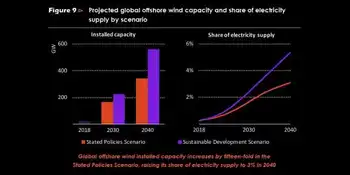
Offshore wind is set to become a $1 trillion business
Offshore wind power accelerates low-carbon electrification, leveraging floating turbines, high capacity factors, HVDC transmission, and…
View more

How the 787 uses electricity to maximise efficiency
Boeing 787 More-Electric Architecture replaces pneumatics with bleedless pressurization, VFSG starter-generators, electric brakes, and heated…
View more
Sign Up for Electricity Forum’s Newsletter
Stay informed with our FREE Newsletter — get the latest news, breakthrough technologies, and expert insights, delivered straight to your inbox.
Electricity Today T&D Magazine Subscribe for FREE

Stay informed with the latest T&D policies and technologies.
- Timely insights from industry experts
- Practical solutions T&D engineers
- Free access to every issue
