CSA Z462 Arc Flash Training – Electrical Safety Compliance Course
Our customized live online or in‑person group training can be delivered to your staff at your location.

- Live Online
- 6 hours Instructor-led
- Group Training Available
Regular Price:
$249
Coupon Price:
$199
New Zealand came close to using all available electricity one day in the depths of the June polar blast.
It was not a record power-use day on June 19 but a day of high use when New Zealand's electricity generators were caught "flatfooted", not having all stations available for generating power.
"The country was scrambling to meet its power needs," Electricity Commission chairman Roy Hemmingway said.
Transpower went on alert with a nationwide grid emergency, asking power plants to crank up their machines and lines companies to cut demand from 5.30pm on June 19, a week after the Auckland blackout.
There is usually standby power plant available in what is called "the reserves market". That plant had to be used to fill the gap.
Hemmingway said it was "rare" to suspend the reserves market.
Nearly 1000 megawatts (MW) of power plant was not available on June 19 in one of the coldest June months for three decades.
Hemmingway said the rules of the New Zealand electricity market did not oblige power companies to make all their plant available even in emergencies.
Electricity spot prices shot through the roof and the Employers and Manufacturers' Association says a big industrial is rumoured to have made $1 million selling power it had under contract back into the market at huge prices.
Between 5pm and 6pm on June 19 provisional electricity prices hit stratospheric levels at around $100,000 a megawatt hour (Mwh) on the spot market.
Hemmingway said he used his authority under electricity regulations to suspend Transpower from calculating final prices for June 19 until the commission had made inquiries.
Final prices for June 19 have now been calculated at $10,000 a Mwh for the 5pm to 6pm period. Hemmingway said these were the highest nationwide spot power prices the market had had.
The commission's inquires found the 300MW New Plymouth power plant was not operating on June 19. Contact Energy said power prices were not high enough to justify running New Plymouth.
Transpower was doing maintenance of a transmission line which meant 170MW of power from the Waikato hydro scheme could not be transmitted. The 150MW Tokaanu power plant was not operating because southerly winds blew weed into the plant and blocked the generators, Genesis Power told the Electricity Commission.
Another 135MW was not available at the Huntly power plant because the price Huntly was selling the power at was too high. For the same reason 87MW was not available from Benmore.
About 40MW of output at the Roxburgh Dam was not available because of maintenance as was 33MW at Manapouri.
Related News
Energy minister unveils Ontario's plan to address growing energy needs
Powering Ontario's Growth accelerates clean electricity, pairing solar, wind, and hydro with energy storage, efficiency…
View more
Ukrainians Find New Energy Solutions to Overcome Winter Blackouts
Ukraine Winter Energy Crisis highlights blackouts, damaged grid, and resilient solutions: solar panels, generators, wood…
View more
Hinkley C nuclear reactor roof lifted into place
Hinkley Point C dome lift marks a nuclear reactor milestone in Somerset, as EDF used…
View more
Canadian Electricity Grids Increasingly Exposed to Harsh Weather
North American Grid Reliability faces extreme weather, climate change, demand spikes, and renewable variability; utilities,…
View more
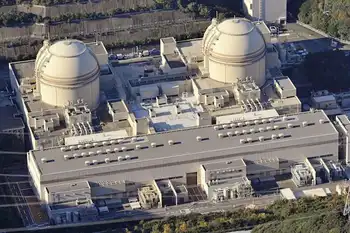
KHNP is being considered for Bulgarian Nuclear Power Plant Project
KHNP Shortlisted for Belene Nuclear Power Plant, named by the Bulgarian Energy Ministry alongside Rosatom…
View more
Alberta breaks summer electricity record, still far short of capacity
Alberta Electricity Peak Demand surged to 10,638 MW, as AESO reported record summer load from…
View more
Sign Up for Electricity Forum’s Newsletter
Stay informed with our FREE Newsletter — get the latest news, breakthrough technologies, and expert insights, delivered straight to your inbox.
Electricity Today T&D Magazine Subscribe for FREE

Stay informed with the latest T&D policies and technologies.
- Timely insights from industry experts
- Practical solutions T&D engineers
- Free access to every issue

