ABB Wins US$ 360-Million Order for Chinese Power Link; Technology Group to Build High-Voltage Power System

By The order includes two power converter stations, 28 power transformers and six smoothing reactors to reduce current fluctuations in the system. Equipment will be supplied by ABB's transformer factory in Ludvika, Sweden, and the Chinese state-owned Xi'


High Voltage Maintenance Training Online

Our customized live online or in‑person group training can be delivered to your staff at your location.
  • Live Online
  • 12 hours Instructor-led
  • Group Training Available
Regular Price:
$599
Coupon Price:
$499
Reserve Your Seat Today
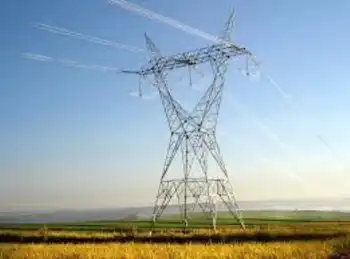
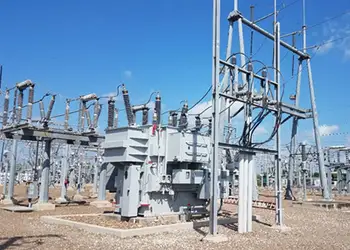
ZURICH, Switzerland -- ABB, the global power and automation technology group, has won a US$ 360-million order to build a high-voltage direct current (HVDC) power transmission system linking hydropower plants in central China to Guangdong province.

Under the terms of the contract awarded by the State Power Corporation of China, ABB will design and build a 3,000-megawatt link delivering power to the industrial region of Guangdong 940 kilometers away.

"This is our second major order in China in two years, and further evidence of ABB's desire to support Chinese economic development by offering advanced technological solutions, and by working directly with Chinese partners in the utility and equipment manufacturing industry," said ABB's president and CEO, Jorgen Centerman. "Our strong presence in this growing local market now includes 27 companies and 6,000 employees."

The two-stage project will be delivered in 32 months, cutting the normal timetable for a project this size by 30 percent. ABB is already supplying converter stations for an 890-kilometer HVDC power link between the Three Gorges power plant and Shanghai.

ABB pioneered HVDC transmission technology, which is an efficient and cost effective way of moving electricity over long distances. An HVDC system converts alternating current (AC) into direct current (DC) and transmits it to a distant location, where it is converted back to AC and distributed to consumers.

Related News
BOE Says UK Energy Price Guarantee is Key for Next Rates Call

UK Market Stability Outlook remains febrile as the Bank of England, Treasury, and OBR forecasts shape fiscal policy, interest rates, gilt yields, inflation, energy bills, and pound sterling, with Oct. 31 guidance to reassure investors.


Key Points

A view of investor confidence as BOE policy, fiscal plans, and energy aid shape inflation and interest rates.

✅ Markets await Oct. 31 fiscal statement and OBR projections

✅ Energy support design drives inflation and disposable income

✅ Pound weakness adds imported inflation; rates seen up 75 bps


Bank of England Deputy Governor Dave Ramsden said financial markets are still unsettled about the outlook for the UK and that a Treasury statement due on Oct. 31 may provide some reassurance.

Speaking to the Treasury Committee in Parliament, Ramsden said officials in government and the central bank are dealing with huge economic shocks, notably the surge in energy prices that came with Russia’s attack on Ukraine. Investors are reassessing where interest rates and the fiscal stance are headed.

“Markets remain quite febrile,” Ramsden told members of Parliament in London on Monday. “Things have not settled down yet.”

He described the events following Prime Minister Liz Truss’s ill-fated fiscal statement on Sept. 23, which set out a series of tax cuts funded by borrowing that spooked investors and triggered a rout in UK assets. Ramsden said those events damaged the UK’s credibility among investors, but reversing that program and Truss’s decision to step aside have helped the nation regain confidence.

“Credibility is hard won and easily lost,” Ramsden said. “That credibility is being recovered. That has to be followed through. A return to the kind of stability around policy making and around the framing of fiscal events will be really important.”

He said the issue with the Sept. 23 statement was that “it had one side of the fiscal arithmetic in it” and that the decision to include forecasts from the Office for Budget Responsibility will help underpin the confidence investors have in assessing the UK budget due out next week, including potential moves to end the link between gas and electricity prices for consumers.

“What we are going to get on Oct. 31 will be very important,” Ramsden said, “as it will address measures such as the price cap on household energy bills and other fiscal choices.”

“My sense is that will take account of all the statements on both the revenue and on the spending side.”

The central bank already was getting some information from Chancellor of the Exchequer Jeremy Hunt’s team about the fiscal statement due. Hunt said last week he’d curtail government plans to subsidize household fuel bills in April, when a 16% decrease in energy bills is anticipated, instead of letting it run as long as planned and replace it with a more targeted program. 

“To the extent possible, we will obviously have a little bit of time to take account of that before we make our decisions later next week,” Ramsden said.

With Truss stepping down in the next day and handing power to Rishi Sunak, it isn’t certain the Oct. 31 statement will go ahead as planned. Ramsden’s remarks confirm reports that Hunt is preparing to make the statement, amid a free electricity debate in the industry, even before Sunak names his team.

Any hint about what sort of package Hunt will offer on energy is crucial to the BOE’s forecasts. Without aid for energy, consumers will be exposed to high winter heating and electricity costs and to the full force of whatever happens in natural gas and electricity markets, and that will have a big impact on how much disposable income is available to households.

The energy plan, alongside the energy security bill, “will be a key element, as obviously it will have a bearing on the path for inflation, which is critical, but also how much additional support relative to what we were assuming at the time of the September MPC there will be for households at different points in the income distribution,” Ramsden added.

Investors currently expect the BOE to hike rates by 75 basis points next week.

Ramsden also said the BOE is watching the pound’s decline to assess how that changes the outlook for inflation.

“We have to take account of it,” Ramsden said. “When sterling deprreciaties that feeds through to imported inflation. It’s fallen quite significantly. The overall trend is down.”


Related News

View more

Warren Buffett-linked company to build $200M wind power farm in Alberta

Rattlesnake Ridge Wind Project delivers 117.6 MW in southeast Alberta for BHE Canada, a Berkshire Hathaway Energy subsidiary, using 28 turbines near Medicine Hat under a long-term PPA, supplying renewable power to 79,000 homes.


Key Points

A 117.6 MW Alberta wind farm by BHE Canada supplying 79,000 homes via 28 turbines and a long-term PPA.

✅ 28 turbines near Medicine Hat, 117.6 MW capacity

✅ Long-term PPA with a major Canadian corporate buyer

✅ Developed with RES; no subsidies; competitive pricing


A company linked to U.S. investor Warren Buffett says it will break ground on a $200-million, 117.6-megawatt wind farm in southeastern Alberta next year.

In a release, Calgary-based BHE Canada, a subsidiary of Buffett's Berkshire Hathaway Energy, says its Rattlesnake Ridge Wind project will be located southwest of Medicine Hat and will produce enough energy to supply the equivalent of 79,000 homes.

"We felt that it was time to make an investment here in Alberta," said Bill Christensen, vice-president of corporate development for BHE Canada, in an interview with the Calgary Eyeopener.

"The structure of the markets here in Alberta, including frameworks for selling renewable energy, make it so that we can invest, and do it at a profit that works for us, and at a price that works for the off-taker," Christensen explained.

Berkshire Hathaway Energy also owns AltaLink, the regulated transmission company that supplies electricity to more than 85 per cent of the Alberta population.

BHE Canada says an unnamed large Canadian corporate partner has signed a long-term power purchase agreement, similar to RBC's solar purchase arrangements, for the majority of the energy output generated by the 28 turbines at Rattlesnake Ridge.

"If you look at just the raw power price that power is going for in Alberta right now, it's averaged around $55 a megawatt hour, or 5.5 cents a kilowatt hour. And we're selling the wind power to this customer at substantially less than that, reflecting wind power's competitiveness in the market, and there's been no subsidies," Christensen said.


Positive energy outlook

Christensen said he sees a good future for Alberta's renewable energy industry, not just in wind but also in solar power growth, particularly in the southeast of the province.

But he says BHE Canada is interested in making investments in traditional energy in Alberta, too, as the province is a powerhouse for both green energy and fossil fuels overall.

"It's not a choice of one or the other. I think there is still opportunity to make investments in oil and gas," he said.

"We're really excited about having this project and hope to be able to make other investments here in Alberta to help support the economy here, amid a broader renewable energy surge across the province."

The project is being developed by U.K.-based Renewable Energy Systems, part of a trend where more energy sources make better projects for developers, which is building two other Alberta wind projects totalling 134.6 MW this year and has 750 MW of renewable energy installed or currently under construction in Canada.

BHE Canada and RES are also looking for power purchase partners for the proposed Forty Mile Wind Farm in southeastern Alberta. They say that with generation capacity of 398.5 MW, it could end up being the largest wind power project in Canada.


Related News

View more

UN: Renewable Energy Ambition in NDCs must Double by 2030

NDC Renewable Energy Ambition drives COP25 calls to align with the Paris Agreement, as IRENA urges 2030 targets toward 7.7 TW, accelerating decarbonization, energy transition, socio-economic benefits, and scalable renewables in Nationally Determined Contributions.


Key Points

Raised 2030 renewable targets in NDCs to meet Paris goals, reaching 7.7 TW efficiently and speeding decarbonization.

✅ Double current NDC renewables to align with 7.7 TW by 2030

✅ Cost effective pathway with jobs, growth, welfare gains

✅ Accelerates decarbonization and energy access per UN goals


We need an oracle to get us out of this debacle. The UN climate group has met for the 25th time. Will anything ever change?

Countries are being urged to significantly raise renewable energy ambition and adopt targets to transform the global energy system in the next round of Nationally Determined Contributions (NDCs), according to a new IRENA report by the International Renewable Energy Agency (IRENA) that will be released at the UN Climate Change Conference (COP25) in Madrid.

The report will show that renewable energy ambition within NDCs would have to more than double by 2030 to put the world in line with the Paris Agreement goals, cost-effectively reaching 7.7 terawatts (TW) of globally installed capacity by then. Today’s renewable energy pledges under the NDCs are falling short of this, targeting only 3.2 TW, even as over 30% of global electricity is already generated from renewables.

The reportNDCs in 2020: Advancing Renewables in the Power Sector and Beyondwill be released at IRENA’s official side event on enhancing NDCs and raising ambition on 11 December 2019.It will state that with over 2.3 TW installed renewable capacity today, following a record year for renewables in 2016, almost half of the additional renewable energy capacity foreseen by current NDCs has already been installed.

The analysis will also highlight that delivering on increased renewable energy ambition can be achieved in a cost-effective way and with considerable socio-economic benefits across the world.

“Increasing renewable energy targets is absolutely necessary,” said IRENA’s Director-General Francesco La Camera. “Much more is possible. There is a decisive opportunity for policy makers to step up climate action, including a fossil fuel lockdown, by raising ambition on renewables, which are the only immediate solution to meet rising energy demand whilst decarbonizing the economy and building resilience.

“IRENA’s analysis shows that a pathway to a decarbonised economy is technologically possible and socially and economically beneficial,” continued Mr. La Camera.

“Renewables are good for growth, good for job creation and deliver significant welfare benefits. With renewables, we can also expand energy access and help eradicate energy poverty by ensuring clean, affordable and sustainable electricity for all in line with the UN Sustainable Development Agenda 2030.

IRENA will promote knowledge exchange, strengthen partnerships and work with all stakeholders to catalyse action on the ground. We are engaging with countries and regions worldwide, from Ireland's green electricity push to other markets, to facilitate renewable energy projects and raise their ambitions”.

NDCs must become a driving force for an accelerated global energy transformation toward 100% renewable energy globally. The current pledges reflect neither the past decade’s rapid growth nor the ongoing market trends for renewables. Through a higher renewable energy ambition, NDCs could serve to advance multiple climate and development objectives.


Related News

View more

European Power Hits Records as Plants Start to Buckle in Heat

European Power Crisis intensifies as record electricity prices, nuclear output cuts, gas supply strain, heatwave drought, and Rhine shipping bottlenecks hit Germany, France, and Switzerland, tightening winter storage and driving long-term contracts higher.


Key Points

A surge in European power prices from heatwaves, nuclear curbs, Rhine coal limits, and reduced Russian gas supply.

✅ Record year-ahead prices in Germany and France

✅ Nuclear output curbed by warm river cooling limits

✅ Rhine low water disrupts coal logistics and generation


Benchmark power prices in Europe hit fresh records Friday as utilities are increasingly reducing electricity output in western Europe because of the hot weather. 

Next-year contracts in Germany and France, Europe’s biggest economies rose to new highs after Switzerland’s Axpo Holding AG announced curbs at one of its nuclear plants. Electricite de France SA is also reducing nuclear output because of high river temperatures and cooling water restrictions, while Uniper SE in Germany is struggling to get enough coal up the river Rhine. 

Europe is suffering its worst energy crunch in decades, and losing nuclear power is compounding the strain as gas cuts made by Russia in retaliation for sanctions drive a surge in prices. The extreme heat led to the driest July on record in France and is underscoring the impact that a warming climate is having on vital infrastructure.

Water levels on Germany’s Rhine have fallen so low that the river may effectively close soon, impacting supplies of coal to the plants next to it. The Rhone and Garonne in France and the Aare in Switzerland are all too warm to be used to cool nuclear plants effectively, forcing operators to limit energy output under environmental constraints. 

Northwest European weather forecast for the next two weeks:
relates to European Power Hits Records as Plants Start to Buckle in Heat
  
The German year-ahead contract gained as much as 2% to 413 euros a megawatt-hour on the European Energy Exchange AG. The French equivalent rose 1.9% to a record 535 euros. Long-term prices are coming under pressure because producing less power from nuclear and coal will increase the demand for natural gas, which is badly needed to fill storage sites ahead of the winter.  


France to Curb Nuclear Output as Europe’s Energy Crisis Worsens
Uniper SE said on Thursday that two of its coal-fired stations along the Rhine may need to curb output during the next few weeks as transporting coal along the Rhine becomes impossible. 

Plants on the river near Mannheim and Karlsruhe, operated by Grosskraftwerk Mannheim AG and EnBW AG, have previously struggled to source coal because of the shallow water, even as German renewables deliver more electricity than coal and nuclear at times. Both companies said generation hasn’t been affected yet. 

“The low tide is not currently affecting our generation of energy because our plants do not have the need for continuous fresh water,” a Steag GmbH spokesman said on Friday. “But the low tide level can make running plants and transporting coal more complicated than usual.”

The spokesman said though that there is slight reduction in output of about 10 to 15 megawatts, which would equate to a few percent, because of the hot temperatures. “This has been happening over some time now and is a problem for everyone because the plant system is not designed to withstand such hot temperatures,” he said.


Related News

View more

Texas produces and consumes the most electricity in the US

Texas ERCOT Power Grid leads U.S. wind generation yet faces isolated interconnection, FERC exemption, and high industrial energy use, with distinct electricity and natural gas prices managed by a single balancing authority.


Key Points

The state-run interconnection that balances Texas electricity, isolated from FERC oversight and other U.S. grids.

✅ Largest U.S. wind power producer, high industrial demand

✅ Operates one balancing authority, independent interconnection

✅ Pays lower electricity, higher natural gas vs national average


For nearly two decades, the Lone Star State has generated more wind-sourced electricity than any other state in the U.S., according to the Energy Information Administration, or EIA.

In 2022, EIA reported Texas produced more electricity than any other state and generated twice as much as second-place Florida.

However, Texas also leads the country in another category. According to EIA, Texas is the largest energy-consuming state in the nation across all sectors with more than half of the state’s energy being used by the industrial sector.

As of May 2023, Texas residents paid 43% more for natural gas and around 10% less for electricity compared to the national average, according to EIA, and in competitive areas shopping for electricity is getting cheaper as well. Commercial and industrial sectors on average for the same month paid 25% less for electricity compared to the national average.


U.S. electric system compared to Texas
The U.S. electric system is essentially split into three regions called interconnections and are managed by a total of 74 entities called balancing authorities that ensure that power supply and demand are balanced throughout the region to prevent the possibility of blackouts, according to EIA.

The three regions (Interconnections):

Eastern Interconnection: Covers all U.S. states east of the Rocky Mountains, a portion of northern Texas, and consists of 36 balancing authorities.
Western Interconnection: Covers all U.S. states west of the Rockies and consists of 37 balancing authorities.
ERCOT: Covers the majority of Texas and consists of one balancing authority (itself).

During the 2021 winter storm, Texas electric cooperatives were credited with helping maintain service in many communities.

“ERCOT is unique in that the balancing authority, interconnection, and the regional transmission organization are all the same entity and physical system,” according to EIA, a structure often discussed in analyses of Texas power grid challenges today.

With this being the case, Texas is the only state in the U.S. that balances itself, the only state that is not subject to the jurisdiction of the Federal Energy Regulatory Commission, or FERC, and the only state that is not synchronously interconnected to the grid in the rest of the United States in the event of tight grid conditions, highlighting ongoing discussions about improving Texas grid reliability before peak seasons, according to EIA.

Every other state in the U.S. is connected to a web of multiple balancing authorities that contribute to ensuring power supply and demand are met.

California, for example, was the fourth largest electricity producer and the third largest electricity consumer in the nation in 2022, according to EIA, and California imports the most electricity from other states while Pennsylvania exports the most.

Although California produces significantly less electricity than Texas, it has the ability to connect with more than 10 neighboring balancing authorities within the Western Interconnection to interchange electricity, a dynamic that can see clean states importing dirty electricity under certain market conditions. ERCOT being independent only has electricity interchange with two balancing authorities, one of which is in Mexico.

Regardless of Texas’ unique power structure compared to the rest of the nation, the vast majority of the U.S. risked electricity supplies during this summer’s high heat, as outlined in severe heat blackout risks reports, according to EIA.


Related News

View more

Some in Tennessee could be without power for weeks after strong storms hit

Middle Tennessee Power Outages disrupt 100,000+ customers as severe thunderstorms, straight-line winds, downed trees, and debris challenge Nashville crews, slow restoration amid COVID-19, and threaten more hail, flash flooding, and damaging gusts.


Key Points

Blackouts across Nashville after severe storms and winds, leaving customers without power and facing restoration delays.

✅ Straight-line winds 60-80 mph toppled trees and power lines

✅ 130,000+ customers impacted; some outages may last 1-2 weeks

✅ Restoration slowed by debris, COVID-19 protocols, and new storms


Some middle Tennessee residents could be without electricity for up to two weeks after strong thunderstorms swept through the area Sunday, knocking out power for more than 100,000 customers, a scale comparable to Los Angeles outages after a station fire.

"Straight line winds as high as 60-80 miles per hour knocked down trees, power lines and power polls, interrupting power to 130,000 of our 400,000+ customers," Nashville Electric said in a statement Monday. The utility said the outage was one of the largest on record, though Carolina power outages recently left a quarter-million without power as well.

"Restoration times will depend on individual circumstances. In some cases, power could be out for a week or two" as challenges related to coronavirus and the need for utilities adapt to climate change complicated crews' responses and more storms were expected, the statement said. "This is unfortunate timing on the heels of a tornado and as we deal with battling COVID-19."

Metropolitan Nashville and Davidson County Mayor John Cooper also noted that the power outages were especially inconvenient, a challenge similar to Hong Kong families without power during Typhoon Mangkhut, as people were largely staying home to slow the spread of coronavirus. He also pointed out that the storms came on the two month anniversary of the Nashville tornado that left at least two dozen people dead.

"Crews are working diligently to restore power and clear any debris in neighborhoods," Cooper said.

He said that no fatalities were reported in the county but sent condolences to Spring Hill, whose police department reported that firefighter Mitchell Earwood died during the storm due to "a tragic weather-related incident" while at his home and off duty. He had served with the fire department for 10 years.

The Metro Nashville Department of Public Works said it received reports of more than 80 downed trees in Davidson County.

Officials also warn that copper theft can be deadly when electrical infrastructure is damaged after storms.

The National Weather Service Nashville said a 72 mph wind gust was measured at Nashville International Airport — the fifth fastest on record.

The weather service warned that strong storms with winds of up to 75 mph, large hail, record-long lightning bolt potential seen in the U.S., and isolated flash flooding could hit middle Tennessee again Monday afternoon and night.

"Treat Severe Thunderstorm Warnings the same way you would Tornado Warnings and review storm safety tips before you JUST TAKE SHELTER," the NWS instructs. "70 mph is 70 mph whether it's spinning around in a circle or blowing in a straight line."


Related News

View more

Sign Up for Electricity Forum’s Newsletter

Stay informed with our FREE Newsletter — get the latest news, breakthrough technologies, and expert insights, delivered straight to your inbox.

Electricity Today T&D Magazine Subscribe for FREE

Stay informed with the latest T&D policies and technologies.
  • Timely insights from industry experts
  • Practical solutions T&D engineers
  • Free access to every issue

Live Online & In-person Group Training

Advantages To Instructor-Led Training – Instructor-Led Course, Customized Training, Multiple Locations, Economical, CEU Credits, Course Discounts.

Request For Quotation

Whether you would prefer Live Online or In-Person instruction, our electrical training courses can be tailored to meet your company's specific requirements and delivered to your employees in one location or at various locations.