By To-day's agreement is the result of the Request for Expressions of Interest that BC Hydro solicited from the private sector in October 2001. After reviewing 19 proposals, BC Hydro employees were informed that the discussions had narrowed to a single p


CSA Z463 Electrical Maintenance -

Our customized live online or in‑person group training can be delivered to your staff at your location.

  • Live Online
  • 6 hours Instructor-led
  • Group Training Available
Regular Price:
$249
Coupon Price:
$199
Reserve Your Seat Today
-- BC Hydro and Accenture have announced plans to offer a range of services to the utility industry throughout North America. The services, to be delivered through a newly created entity, are expected to include customer relationship management, IT, human resources, financial and procurement services.

BC Hydro and Accenture have entered into a memorandum of understanding that will enable Accenture to establish the new entity and develop a service agreement with BC Hydro. The new entity is expected to employ approximately 2,000 employees and assume BC Hydro's Customer Services (including the development of a new Customer Information System), IT services provided by Westech, Network Computing Services, HR Services, Financial Systems, Purchasing, Disbursement Services, Property Services, Business and Office Services.

"This is the next step toward creating an entity that will maintain BC Hydro's mandates of providing exceptional customer service while decreasing costs," said BC Hydro Chair and CEO, Larry Bell. "When fully operational, the new entity will provide a broad scope of services to both BC Hydro and new external customers, providing significant growth and development opportunities."

"Accenture is committed to building a strong business in British Columbia that will contribute to economic growth and provide employees with expanded career opportunities," said Charles Filewych, a Vancouver-based partner in Accenture's Utilities practice. "The new venture is an important hub offering a broad range of outsourced service capabilities to BC Hydro and the North American utilities market, and will allow BC Hydro to better focus on its core business of generating, transmitting, and distributing electricity."

"Our clients in the utilities sector are under pressure to reduce costs while improving the level of service they provide to customers, all in an increasingly competitive business environment," said Mary Tolan, Group Chief Executive of Accenture's Resources Operating Group. "We believe that through the business we are building together with BC Hydro, we will provide a full suite of outsourced capabilities that will provide BC Hydro and our North American utilities clients with an immediate opportunity to reduce costs and receive higher quality of services in a number of important areas of their business."

Related News

Emissions rise 2% in Australia amid increased pollution from electricity and transport

Australia's greenhouse gas emissions rose in Q2 as electricity and transport pollution increased, despite renewable energy growth. Net zero targets, carbon dioxide equivalent metrics, and land use changes underscore mixed trends in decarbonisation.


Key Points

About 499-500 Mt CO2-e annually, with a 2% quarterly rise led by electricity and transport.

✅ Q2 emissions rose to 127 Mt from 124.4 Mt seasonally adjusted

✅ Electricity sector up to 41.6 Mt; transport added nearly 1 Mt

✅ Land use remains a net sink; renewables expanded capacity


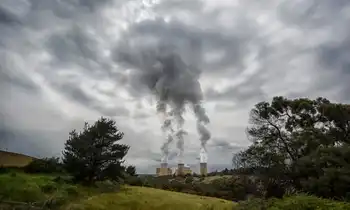
Australia’s greenhouse gas emissions rose in the June quarter by about 2% as pollution from the electricity sector and transport increased.

Figures released on Tuesday by the Morrison government showed that on a year to year basis, emissions for the 12 months to last June totalled 498.9m tonnes of carbon dioxide equivalent. That tally was down 2.1%, or 10.8m tonnes compared with the same period a year earlier.

However, on a seasonally adjusted quarterly basis, emissions increased to 127m tonnes, or just over 2%, from the 124.4m tonnes reported in the March quarter. For the year to March, emissions totalled 494.2m tonnes, underscoring the pickup in pollution in the more recent quarter even as global coal power declines worldwide.

A stable pollution rate, if not a rising one, is also implied by the government’s release of preliminary figures for the September quarter. They point to 125m tonnes of emissions in trend terms for the July-September months, bringing the year to September total to about 500m tonnes, the latest report said.

The government has made much of Australia “meeting and beating” climate targets. However, the latest statistics show mostly emissions are not in decline despite its pledge ahead of the Glasgow climate summit that the country would hit net zero by 2050, and AEMO says supply can remain uninterrupted as coal phases out over the next three decades.

“Nothing’s happening except for the electricity sector,” said Hugh Saddler, an honorary associate professor at the Australian National University. Once Covid curbs on the economy eased, such as during the current quarter, emission sources such as from transport will show a rise, he predicted.

Falling costs for new wind and solar farms, with the IEA naming solar the cheapest in history worldwide, are pushing coal and gas out of electricity generation, as well as pushing down power prices. In seasonally adjusted terms, though, emissions for that sector rose from 39.7m tonnes the March quarter to 41.6m in the June one.

Most other sectors were steady, with pollution from transport adding almost 1m tonnes in the June quarter.

On an annual basis, a 500m tonnes tally is the lowest since records began in the 1990s, and IEA reported global emissions flatlined in 2019 for context. That lower trajectory, though, is lower due much to the land sector remaining a net sink even as some experts raise questions about the true trends when it comes to land clearing.

According to the government, this sector – known as land use, land-use change and forestry – amounted to a net reduction of emissions of 24.4m tonnes, or almost negative 5% of the national total, in the year to June.

Sign up to receive an email with the top stories from Guardian Australia every morning

“The magnitude of this net sink has decreased by 0.6% (0.2 Mt CO2-e) on the previous 12 months due to an increase in emissions from agricultural soils, partially offset by a continuing decline in land clearing emissions,” the latest report said.

For its part, the government also touted the increase of renewable energy, as seen in Canada's electricity progress too, as central to driving emissions lower.

“Since 2017, Australia’s consumption of renewable energy has grown at a compound annual rate of 4.6%, with more than $40bn invested in Australia’s renewable energy sector,” Angus Taylor, the federal energy minister said, while UK net zero policy changes show a different approach. “Last year, Australia deployed new solar and wind at eight times the global per capita average.”

ANU’s Saddler said the main driver had been the 2020 Renewable Energy Target that the Coalition government had cut, and had anyway been implemented “a very considerable time ago”.

Tim Baxter, the Climate Council’s senior researcher, said “the time for leaning on the achievements of others is long since past”.

“We need a federal government willing to step up on emissions reductions and take charge with real policy, not wishlists,” he said, referring to the government’s net zero plan to rely on technologies to cut pollution in pursuit of a sustainable electric planet in practice, some of which don’t exist now.


Related News

View more

Utilities see benefits in energy storage, even without mandates

Utility Battery Storage Rankings measure grid-connected capacity, not ownership, highlighting MW, MWh, and watts per customer across PJM, MISO, and California IOUs, featuring Duke Energy, IPL, ancillary services, and frequency regulation benefits.


Key Points

Rankings that track energy storage connected to utility grids, comparing MW, MWh, and W/customer rather than ownership.

✅ Ranks by MW, MWh, and watts per customer, not asset ownership

✅ Highlights PJM, MISO cases and California IOUs' deployments

✅ Examples: Duke Energy, IPL, IID; ancillary services, frequency response


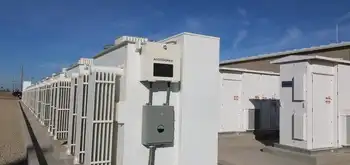
The rankings do not tally how much energy storage a utility built or owns, but how much was connected to their system. So while IPL built and owns the storage facility in its territory, Duke does not own the 16 MW of storage that connected to its system in 2016. Similarly, while California’s utilities are permitted to own some energy storage assets, they do not necessarily own all the storage facilities connected to their systems.

Measured by energy (MWh), IPL ranked fourth with 20 MWh, and Duke Energy Ohio ranked eighth with 6.1 MWh.

Ranked by energy storage watts per customer, IPL and Duke actually beat the California utilities, ranking fifth and sixth with 42 W/customer and 23 W/customer, respectively.

Duke ready for next step

Given Duke’s plans, including projects in Florida that are moving ahead, the utility is likely to stay high in the rankings and be more of a driving force in development. “Battery technology has matured, and we are ready to take the next step,” Duke spokesman Randy Wheeless told Utility Dive. “We can go to regulators and say this makes economic sense.”

Duke began exploring energy storage in 2012, and until now most of its energy storage efforts were focused on commercial projects in competitive markets where it was possible to earn revenues. Those included its 36 MW Notrees battery storage project developed in partnership with the Department of Energy in 2012 that provides frequency regulation for the Electric Reliability Council of Texas market and two 2 MW storage projects at its retired W.C. Beckjord plant in New Richmond, Ohio, that sells ancillary services into the PJM Interconnection market.

On the regulated side, most of Duke’s storage projects have had “an R&D slant to them,” Wheeless said, but “we are moving beyond the R&D concept in our regulated territory and are looking at storage more as a regulated asset.”

“We have done the demos, and they have proved out,” Wheeless said. Storage may not be ready for prime time everywhere, he said, but in certain locations, especially where it can it can be used to do more than one thing, it can make sense.

Wheeless said Duke would be making “a number of energy storage announcements in the next few months in our regulated states.” He could not provide details on those projects.

More flexible resources
Location can be a determining factor when building a storage facility. For IPL, serving the wholesale market was a driving factor in the rationale to build its 20 MW, 20 MWh storage facility in Indianapolis.

IPL built the project to address a need for more flexible resources in light of “recent changes in our resource mix,” including decreasing coal-fired generation and increasing renewables and natural gas-fired generation, as other regions plan to rely on battery storage to meet rising demand, Joan Soller, IPL’s director of resource planning, told Utility Dive in an email. The storage facility is used to provide primary frequency response necessary for grid stability.

The Harding Street storage facility in May. It was the first energy storage project in the Midcontinent ISO. But the regulatory path in MISO is not as clear as it is in PJM, whereas initiatives such as Ontario storage framework are clarifying participation. In November, IPL with the Federal Energy Regulatory Commission, asking the regulator to find that MISO’s rules for energy storage are deficient and should be revised.

Soller said IPL has “no imminent plans to install energy storage in the future but will continue to monitor battery costs and capabilities as potential resources in future Integrated Resource Plans.”

California legislative and regulatory push

In California, energy storage did not have to wait for regulations to catch up with technology. With legislative and regulatory mandates, including CEC long-duration storage funding announced recently, as a push, California’s IOUs took high places in SEPA’s rankings.

Southern California Edison and San Diego Gas & Electric were first and fourth (63.2 MW and 17.2 MW), respectively, in terms of capacity. SoCal Ed and SDG&E were first and second (104 MWh and 28.4 MWh), respectively, and Pacific Gas and Electric was fifth (17 MWh) in terms of energy.

But a public power utility, the Imperial Irrigation District (IID), ended up high in the rankings – second in capacity (30 MW) and third  in energy (20 MWh) – even though as a public power entity it is not subject to the state’s energy storage mandates.

But while IID was not under state mandate, it had a compelling regulatory reason to build the storage project. It was part of a settlement reached with FERC over a September 2011 outage, IID spokeswoman Marion Champion said.

IID agreed to a $12 million fine as part of the settlement, of which $9 million was applied to physical improvements of IID’s system.

IID ended up building a 30 MW, 20 MWh lithium-ion battery storage system at its El Centro generating station. The system went into service in October 2016 and in May, IID used the system’s 44 MW combined-cycle natural gas turbine at the generating station.

Passing savings to customers
The cost of the storage system was about $31 million, and based on its experience with the El Centro project, Champion said IID plans to add to the existing batteries. “We are continuing to see real savings and are passing those savings on to our customers,” she said.

Champion said the battery system gives IID the ability to provide ancillary services without having to run its larger generation units, such as El Centro Unit 4, at its minimum output. With gas prices at $3.59 per million British thermal units, it costs about $26,880 a day to run Unit 4, she said.

IID’s territory is in southeastern California, an area with a lot of renewable resources. IID is also not part of the California ISO and acts as its own balancing authority. The battery system gives the utility greater operational flexibility, in addition to the ability to use more of the surrounding renewable resources, Champion said.

In May, IID’s board gave the utility’s staff approval to enter into contract negotiations for a 7 MW, 4 MWh expansion of its El Centro storage facility. The negotiations are ongoing, but approval could come in the next couple months, Champion said.

The heart of the issue, though, is “the ability of the battery system to lower costs for our ratepayers,” Champion said. “Our planning section will continue to utilize the battery, and we are looking forward to its expansion,” she said.” I expect it will play an even more important role as we continue to increase our percentage of renewables.”


Related News

View more

DP Energy Sells 325MW Solar Park to Medicine Hat

Saamis Solar Park advances Medicine Hat's renewable energy strategy, as DP Energy secures AUC approval for North America's largest urban solar, repurposing contaminated land; capacity phased from 325 MW toward an initial 75 MW.


Key Points

A 325 MW solar project in Medicine Hat, Alberta, repurposing contaminated land; phased to 75 MW under city ownership.

✅ City acquisition scales capacity to 75 MW in phased build

✅ AUC approval enables construction and grid integration

✅ Reuses phosphogypsum-impacted land near fertilizer plant


DP Energy, an Irish renewable energy developer, has finalized the sale of the Saamis Solar Park—a 325 megawatt (MW) solar project—to the City of Medicine Hat in Alberta, Canada. This transaction marks the development of North America's largest urban solar initiative, while mirroring other Canadian clean-energy deals such as Canadian Solar project sales that signal market depth.

Project Development and Approval

DP Energy secured development rights for the Saamis Solar Park in 2017 and obtained a development permit in 2021. In 2024, the Alberta Utilities Commission (AUC) granted approval for construction and operation, reflecting Alberta's solar growth trends in recent years, paving the way for the project's advancement.

Strategic Acquisition by Medicine Hat

The City of Medicine Hat's acquisition of the Saamis Solar Park aligns with its commitment to enhancing renewable energy infrastructure. Initially, the project was slated for a 325 MW capacity, which would significantly bolster the city's energy supply. However, the city has proposed scaling the project to a 75 MW capacity, focusing on a phased development approach, and doing so amid challenges with solar expansion in Alberta that influence siting and timing. This adjustment aims to align the project's scale with the city's current energy needs and strategic objectives.

Utilization of Contaminated Land

An innovative aspect of the Saamis Solar Park is its location on a 1,600-acre site previously affected by industrial activity. The land, near Medicine Hat's fertilizer plant, was previously compromised by phosphogypsum—a byproduct of fertilizer production. DP Energy's decision to develop the solar park on this site exemplifies a productive reuse of contaminated land, transforming it into a source of clean energy.

Benefits to Medicine Hat

The development of the Saamis Solar Park is poised to deliver multiple benefits to Medicine Hat:

  • Energy Supply Enhancement: The project will augment the city's energy grid, much like municipal solar projects that provide local power, providing a substantial portion of its electricity needs.

  • Economic Advantages: The city anticipates financial savings by reducing carbon tax liabilities, as lower-cost solar contracts have shown competitiveness, through the generation of renewable energy.

  • Environmental Impact: By investing in renewable energy, Medicine Hat aims to reduce its carbon footprint and contribute to global sustainability efforts.

DP Energy's Ongoing Commitment

Despite the sale, DP Energy maintains a strong presence in Canada, where Indigenous-led generation is expanding, with a diverse portfolio of renewable energy projects, including solar, onshore wind, storage, and offshore wind initiatives. The company continues to focus on sustainable development practices, striving to minimize environmental impact while maximizing energy production efficiency.

The transfer of the Saamis Solar Park to the City of Medicine Hat represents a significant milestone in renewable energy development. It showcases effective land reutilization, strategic urban planning, and a shared commitment to sustainable energy solutions, aligning with federal green electricity procurement that reinforces market demand. This project not only enhances the city's energy infrastructure but also sets a precedent for integrating large-scale renewable energy projects within urban environments.


Related News

View more

Revenue from Energy Storage for Microgrids to Total More Than $22 Billion in the Next Decade

Energy Storage for Microgrids enables renewables integration via ESS, boosting resilience and reliability while supporting solar PV and wind, innovative financing, and business models, with strong growth forecast across Asia-Pacific and North America.


Key Points

Systems that store energy in microgrids to integrate renewables, boost resilience, and optimize distributed power.

✅ Integrates solar PV and wind with stable, dispatchable output

✅ Reduces costs via new financing and service business models

✅ Expands reliable power for remote, grid-constrained regions


A new report from Navigant Research examines the global market for energy storage for microgrids (ESMG), providing an analysis of trends and market dynamics in the context of the evolving digital grid landscape, with forecasts for capacity and revenue that extend through 2026.

Interest in energy storage-enabled microgrids is growing alongside an increase in solar PV and wind deployments. Although not required for microgrids to operate, energy storage systems (ESSs) have emerged as an increasingly valuable component of distributed energy networks, including virtual power plants that coordinate distributed assets, because of their ability to effectively integrate renewable generation.

“There are several key drivers resulting in the growth of energy storage-enabled microgrids globally, including the desire to improve the resilience of power supply both for individual customers and the entire grid, the need to expand reliable electricity service to new areas, rising electricity prices, and innovations in business models and financing,” says Alex Eller, research analyst with Navigant Research. “Innovations in business models and financing will likely play a key role in the expansion of the ESMG market during the coming years.”

One example of microgrid deployment for resilience is the SDG&E microgrid in Ramona built to help communities prepare for peak wildfire season.

According to the report, the most successful companies in this industry will be those that can unlock the potential of new business models to reduce the risk and upfront costs to customers. This is particularly true in Asia Pacific and North America, which are projected to be the largest regional markets for new ESMG capacity by far, a trend underscored by California's push for grid-scale batteries to stabilize the grid.

The report, “Market Data: Energy Storage for Microgrids,” outlines the key market drivers and barriers within the global ESMG market. The study provides an analysis of specific trends, including evolving grid edge trends, and market dynamics for each major world region to illustrate how different markets are taking shape. Global ESMG forecasts for capacity and revenue, segmented by region, technology, and market segment, extend through 2026. The report also briefly examines the major technology issues related to ESSs for microgrids.

Google made energy storage news recently when its parent company Alphabet announced it is hoping to revolutionize renewable energy storage using vats of salt and antifreeze. Alphabet’s secretive research lab, simply named “X,” is developing a system for storing renewable energy that would otherwise be wasted. The project, named “Malta,” is hoping its energy storage systems “has the potential to last longer than lithium-ion batteries and compete on price with new hydroelectric plants and other existing clean energy storage methods, according to X executives and researchers,” reports Bloomberg.


Related News

View more

Turkish powership to generate electricity from LNG in Senegal

Karpowership LNG powership in Senegal will supply 15% of the grid, a 235 MW floating power plant bound for Dakar, enabling fast deployment, base-load electricity, and cleaner natural gas generation for West Africa.


Key Points

A 235 MW floating plant supplying 15% of Senegal's grid with fast, reliable, lower-emission LNG electricity.

✅ 235 MW LNG-ready floating plant meets 15% of Senegal's demand

✅ Rapid deployment: commercial operations expected early October

✅ Cleaner natural gas conversion planned after six months


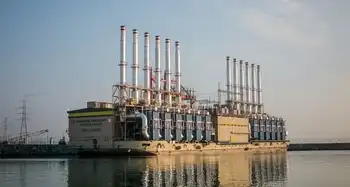
Turkey's Karpowership company, the designer and builder of the world's first floating power plants and the global brand of Karadeniz Holding, will meet 15% of Senegal's electricity needs from liquefied natural gas (LNG) with the 235-megawatt (MW) powership Ayşegül Sultan, which started its voyage from Turkey to Senegal, where an African Development Bank review of a coal plant is underway, on Sunday.

Karpowership, operating 22 floating power plants in more than 10 countries around the world, where France's first offshore wind turbine is now producing electricity, has invested over $5 billion in this area.

In a statement to members of the press at Karmarine Shipyard, Karpowership Trade Group Chair Zeynep Harezi said they aimed to provide affordable electricity to countries in need of electricity quickly and reliably, as projects like the Egypt-Saudi power link expand regional grids, adding that they could commission energy ships capable of generating the base electric charge of the countries, as tidal power in Nova Scotia begins supplying the grid, in a period of about a month.

Harezi recalled that Karpowership commissioned the first floating energy ship in 2007 in Iraq, followed by Lebanon, Ghana, Indonesia, Mozambique, Zambia, Gambia, Sierra Leone, Sudan, Cuba, Guinea Bissau and Senegal, while Scottish tidal power demonstrates marine potential as well. "We meet the electricity needs of 34 million people in many countries," she stressed. Harezi stated that the energy ships, all designed and produced by Turkish engineers, use liquid fuel, but all ships can covert to the second fuel.

Considering the impact of electricity production on the environment, Harezi noted that they plan to convert the entire fleet from liquid fuel to natural gas, with complementary approaches like power-to-gas in Europe helping integrate renewables. "With a capacity of 480 megawatts each, the world's largest floating energy vessels operate in Indonesia and Ghana. The conversion to gas has been completed in our project in Indonesia. We have also initiated the conversion of the Ghana vessel into gas," she said.

Harezi explained that they would continue to convert their fleets to natural gas in the coming period. "Our 235-MW floating electric vessel, the Ayşegül Sultan, sets sail today to meet 15% of Senegal's electricity needs on its own. After an approximately 20-day cruise, the vessel will reach Dakar, the capital of Senegal, and will begin commercial operation in early October," Harezi continued. "We plan to use liquid fuel as bridging fuel in the first six months. At the end of the first six months, we will start to produce electricity from LNG on our ship. Thus, Ayşegül Sultan will be the first project to generate electricity from LNG in Africa, while the world's most powerful tidal turbine is delivering power to the grid, officials said. Our floating power plant to be sent to Mozambique is designed to generate electricity from LNG. It is also scheduled to start operations in the next year."


Related News

View more

What 2018 Grid Edge Trends Reveal About 2019

2019 Grid Edge Trends highlight evolving demand response, DER orchestration, real-time operations, AMI data, and EV charging, as wholesale markets seek flexibility and resiliency amid tighter reserve margins and fossil baseload retirements.


Key Points

Shifts toward DER-enabled demand response and real-time, behind-the-meter flexibility.

✅ Real-time DER dispatch enhances reliability during tight reserves

✅ AMI and ICT improve forecasting, monitoring, and control of resources

✅ Demand response shifts toward aggregated behind-the-meter orchestration


Which grid edge trends will continue into 2019 as the digital grid matures and what kind of disruption is on the horizon in the coming year?

From advanced metering infrastructure endpoints to electric-vehicle chargers, grid edge venture capital investments to demand response events, hundreds of data points go into tracking new trends at the edge of the grid amid ongoing grid modernization discussions across utilities.

Trends across these variables tell a story of transition, but perhaps not yet transformation. Customers hold more power than ever before in 2019, with utilities and vendors innovating to take advantage of new opportunities behind the meter. Meanwhile, external factors can always throw things off-course, including the data center boom that is posing new power challenges, and reliability is top of mind in light of last year's extreme weather events. What does the 2018 data say about 2019?

For one thing, demand response evolved, enabled by new information and communications technology. Last year, wholesale market operators increasingly sought to leverage the dispatch of distributed energy resource flexibility in close to real time. Three independent system operators and regional transmission organizations called on demand response five times in total for relief in the summer of 2018, including the NYISO.

The demand response events called in the last 18 months send a clear message: Grid operators will continue to call events year-round. This story unfolds as reserve margins continue to tighten, fossil baseload generation retirements continue, and system operators are increasingly faced with proving the resiliency and reliability of their systems while efforts to invest in a smarter electricity infrastructure gain momentum across the country.

In 2019, the total amount of flexible demand response capacity for wholesale market participation will remain about the same. However, the way operators and aggregators are using demand response is changing as information and communications technology systems improve and utilities are using AI to adapt to electricity demands, allowing the behavior of resources to be more accurately forecasted, monitored and controlled.

These improvements are allowing customer-sited resources to offer  flexibility services closer to real-time operations and become more reactive to system needs. At the same time, traditional demand response will continue to evolve toward the orchestration of DERs as an aggregate flexible resource to better enable growing levels of renewable energy on the grid.


Related News

View more

Sign Up for Electricity Forum’s Newsletter

Stay informed with our FREE Newsletter — get the latest news, breakthrough technologies, and expert insights, delivered straight to your inbox.

Electricity Today T&D Magazine Subscribe for FREE

Stay informed with the latest T&D policies and technologies.
  • Timely insights from industry experts
  • Practical solutions T&D engineers
  • Free access to every issue

Download the 2025 Electrical Training Catalog

Explore 50+ live, expert-led electrical training courses –

  • Interactive
  • Flexible
  • CEU-cerified