Protective Relay Training - Basic
Our customized live online or in‑person group training can be delivered to your staff at your location.
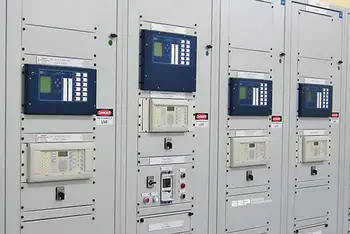
- Live Online
- 12 hours Instructor-led
- Group Training Available
Regular Price:
$699
Coupon Price:
$599
Ontario could face an energy shortfall if the provincial government doesn't soon give the green light to build new nuclear plants, Canadian nuclear industry officials say.
"Time is running out," said David Torgerson, senior vice-president and chief technology officer for Atomic Energy of Canada Ltd.
Virtually all of Ontario's electrical power grid will have to be replaced or refurbished over the next 25 years, including nuclear plants that now produce about half of the province's power, he said.
If approval for new nuclear plants doesn't come soon, they won't be ready in time to satisfy Ontario's energy needs, Torgerson said in an interview.
"We have really got to make a decision in Ontario to get the process moving," said Patrick Tighe, AECL vice-president in charge of business development.
The growing impatience of AECL officials is fuelled by the potential for sales abroad.
Both men were in London last week to pitch the Canadian Crown corporation's latest CANDU nuclear reactor to the British market. Landing the contract for new Ontario reactors, they said, would raise AECL's profile and boost their chances of selling Britain on the CANDU.
Ontario and Britain face similar energy choices.
The Ontario Power Authority recently recommended that the province spend $40 billion to produce 12,400 megawatts of electricity from nuclear plants, either with new reactors or by refurbishing existing ones.
The British government has launched a similar energy review, expected to report this summer.
At issue is what to do about Britain's 12 aging nuclear power stations, which generate about 22 per cent of the country's electricity. All but three of the stations, most of which are privately owned, will be closed by 2014.
The last is scheduled to shut down by 2035.
The nuclear industries in Ontario and Britain are pushing hard for government backing of new reactors, noting they don't produce greenhouse gases that contribute to global warming.
But opposition is just as strong.
Environmentalist David Suzuki, who advises Ontario Premier Dalton McGuinty, last week urged him to halt the building of new nuclear plants and instead opt for more conservation and renewable energy sources such as wind and solar.
"What I've said to the premier is, `Why jump into what is an expensive, unreliable technology with enormous problems, when we haven't even begun to challenge Ontario citizens and show that they can begin to reduce their demand?'" Suzuki said.
In Britain, the nuclear industry has asked for guarantees before investors take the plunge on 1,000 megawatt nuclear reactors priced at $2 billion each.
It wants a firm, long-term government commitment to nuclear power and a streamlined licensing and planning process to approve new reactors.
AECL officials say the British government must also decide how it will permanently dispose of radioactive nuclear waste. And, Prime Minister Tony Blair's government must cover all funding shortfalls for waste disposal and decommissioning nuclear plants.
Cleaning up the radioactive legacy of existing plants will cost at least $117.5 billion, the Nuclear Decommissioning Authority, an independent British government body, estimated last summer.
No country has yet disposed for the long term the intermediate and high-level radioactive waste produced by nuclear plants, although most are thinking of burying it deep underground.
In Canada, the Nuclear Waste Management Organization recently recommended that radioactive waste be kept and cooled on site before being stored in a central location underground where it can be monitored and retrieved if necessary.
But it has stopped short of picking a central storage site — a move sure to spark public opposition when it happens.
"There's no doubt that the N word is always an issue," said Tighe, referring to widespread public unease with nuclear power since the 1986 Chernobyl accident in the former Soviet Ukraine.
There have been problems with the CANDU reactor at Pickering. But AECL officials are confident the province won't consider buying reactors other than a CANDU.
"We believe strongly that the competitive advantage of CANDU is clear, and it's clearest in Ontario," Tighe said, adding that nuclear regulations, training and research are all based on the CANDU reactor.
In Ontario and Britain, AECL is pushing the new ACR 1000 model, a 1,200-megawatt reactor, as a dependable technology with the advantage of not having to be shut down when it needs to be refuelled.
AECL's record of building its heavy-water natural uranium reactor on time and on budget in South Korea, China and Romania in the past decade should also reassure British investors, Torgerson said.
Related News
Americans aren't just blocking our oil pipelines, now they're fighting Hydro-Quebec's clean power lines
Champlain Hudson Power Express connects Hydro-Québec hydropower to the New York grid via a 1.25…
View more

Electricity prices may go up by 15 per cent
Jersey Electricity Standby Charge proposes a grid-backup fee for commercial self-generators of renewable energy, with…
View more

$550 Million in Clean Energy Funding to Benefit More than 250 Million Americans
EECBG Program Funding empowers states, Tribes, and local governments with DOE grants to deploy clean…
View more

LOC Renewables Delivers First MWS Services To China's Offshore Wind Market
Pinghai Bay Offshore Wind Farm MWS advances marine warranty survey best practices, risk management, and…
View more
Paying for electricity in India: Power theft can't be business as usual
India Power Sector Payment Crisis strains utilities with electricity theft, discom arrears, coal dues, and…
View more
Nova Scotia Power says it now generates 30 per cent of its power from renewables
Nova Scotia Power Renewable Energy delivers 30% in 2018, led by wind power, hydroelectric and…
View more
Sign Up for Electricity Forum’s Newsletter
Stay informed with our FREE Newsletter — get the latest news, breakthrough technologies, and expert insights, delivered straight to your inbox.
Electricity Today T&D Magazine Subscribe for FREE

Stay informed with the latest T&D policies and technologies.
- Timely insights from industry experts
- Practical solutions T&D engineers
- Free access to every issue
