Alberta Pays Highest Electricity Rates: Study

By Canadian Press


NFPA 70e Training - Arc Flash

Our customized live online or in‑person group training can be delivered to your staff at your location.

  • Live Online
  • 6 hours Instructor-led
  • Group Training Available
Regular Price:
$199
Coupon Price:
$149
Reserve Your Seat Today
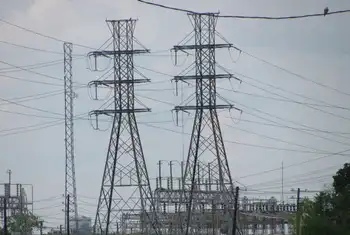
Another study has surfaced showing Albertans are paying the highest electricity rates in Canada.

The Manitoba Hydro survey of 32 cities, towns and rural areas across Canada shows seven Alberta municipalities, including Edmonton and Calgary, have the most expensive electricity rates.

Alberta opposition parties say this is further proof the Klein government bungled power deregulation.

Premier Ralph Klein says other provinces have cheaper rates because they have low-cost hydro-electric power.

But Liberal Leader Ken Nicol says the real problem is that Alberta's power prices are set according to the most expensive power plant running at the time -- which is often high-cost natural gas.

New Democrat Brian Mason says soaring energy prices have left Alberta with the highest inflation rate in Canada.

The Consumers Coalition of Alberta says deregulation should be shelved because it has failed to deliver low-cost power.

Related News

Prepare for blackouts across the U.S. as summer takes hold

US Summer Grid Blackout Risk: NERC and FERC warn of strained reliability as drought, heat waves, and transmission constraints hit MISO, hydro, and renewables, elevating blackout exposure and highlighting demand response and storage solutions.


Key Points

A forecast of summer power shortfalls across the US grid, driven by heat, drought, transmission limits, and a changing resource mix.

✅ NERC and FERC warn of elevated blackout risk and reliability gaps.

✅ MISO region strained by drought, heat, and limited hydro.

✅ Mitigations: demand response, storage, and stronger transmission.


Just when it didn’t seem things couldn’t get worse — gasoline at $5 to $8 a gallon, supply shortages in everything from baby formula to new cars — comes the devastating news that many of us will endure electricity blackouts this summer, and that the U.S. has more blackouts than other developed nations according to one study.

The alarm was sounded by the nonprofit North American Electric Reliability Corp. and the Federal Energy Regulatory Commission, following a recent power grid report card highlighting vulnerabilities.

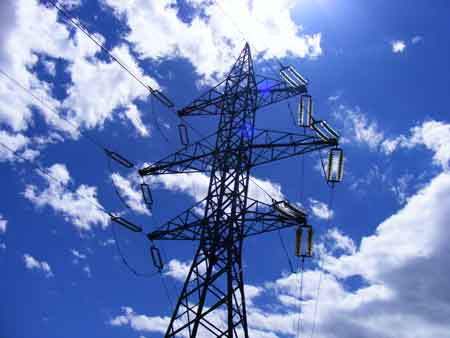
The North American electric grid is the largest machine on earth and the most complex, incorporating everything from the wonky pole you see at the roadside with a bird’s nest of wires to some of the most sophisticated engineering ever devised. It runs in real-time, even more so than the air traffic control system: All the airplanes in the sky don’t have to land at the same time, but electricity must be there at the flick of every switch.

Except it may not always be there this summer. Rod Kuckro, a respected energy journalist, says it depends on Mother Nature, with extreme weather impacts increasingly straining the grid, but the prognosis isn’t good.

Speaking on “White House Chronicle,” the weekly news and public affairs program on PBS that I host and produce, Kuckro said: “There is a confluence of factors that could affect energy supply across the majority of the (lower) 48 states. These are continued reduced hydroelectric production in the West, and the continued drought in the Southwest.”

The biggest threat to power supply, according to the NERC and the FERC, is in the vast central region, reaching from Manitoba in Canada, where grids are increasingly exposed to harsh weather in recent years, down to the Gulf of Mexico. It is served by the regional transmission organization, the Midcontinent Independent System Operator.

These operational entities are nonprofit companies that organize and distribute their regions’ bulk power for utilities. In California, it is the California Independent System Operator, working to keep the lights on as the state enters a new energy era; in the Mid-Atlantic, it is PJM; and in the Northeast, it is the New England System Independent Operator. They generate no power, but they control power flows and could initiate brownouts and blackouts.

With record storm activity and high temperatures predicted this summer, blackouts are likely to be deadly. The old, the young and the sick are all vulnerable. If the electric supply fails, with it goes everything from air conditioning to refrigeration to lights and even the ability to pump gas or access money from ATMs.

The United States, along with other modern nations, runs on electricity and when that falls short, it is catastrophic. It is chaos writ large, especially if the failure lasts more than a few hours.

On the same episode of “White House Chronicle,” Daniel Brooks, vice president of integrated grid and energy systems at the Electric Power Research Institute, also referred to a “confluence of factors” contributing to the impending electricity crisis. Brooks said, “We’re going through a significant change in terms of the energy mix and resources, and the way those resources behave under certain weather conditions.”

If power supply is stressed this summer, change in the generating mix will get a lot of political attention. At heart is the switch from fossil fuel generation to renewables. If there are power outages, a political storm will ensue. The Biden administration will be accused of speeding the switch to renewables, although the utilities don’t say that.

The weather is deteriorating, and, as experts note, the grid’s biggest challenge isn’t demand but climate change pressures that compound risks, and the grid is stretched in dealing with new realities as well as coping with old bugaboos, like the extreme difficulty in building transmission lines. Better transmission would relieve a lot of grid stress.

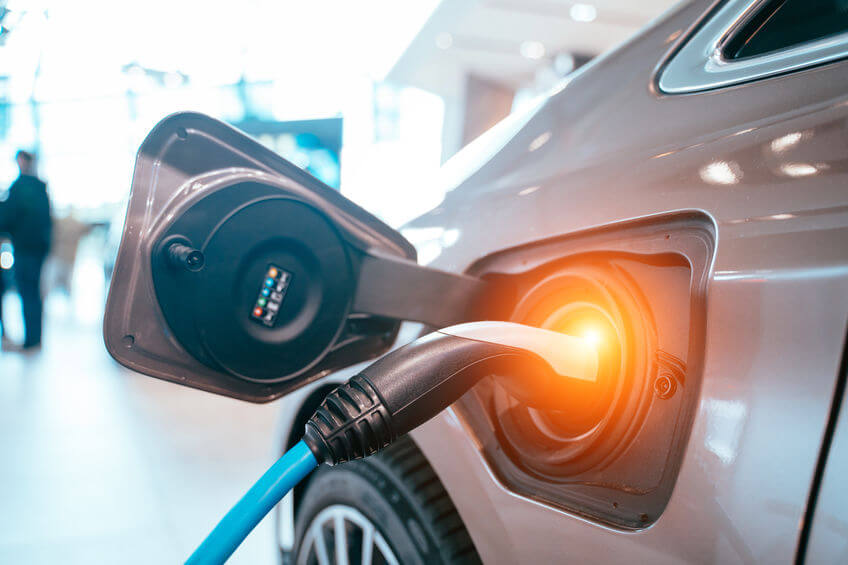
Peter Londa, president of Tantalus Systems, which helps its 260 utility customers digitize and cope with the new realities, explained some of the difficulties facing the utilities not only in the shifting sources of generation but also in the new shape of the electric demand. For example, he said, electric vehicles, particularly the much-awaited Ford F-150 Lightning pickup, could be an asset to homeowners and utilities, as California increasingly turns to batteries to stabilize its grid. During a blackout, their EVs could be used to power their homes for days. They could be a source of storage if thousands of owners signed up with their utilities in a storage program.

The fact is that utilities are facing three major shifts: in the generation to wind and solar, in customer demand, and especially in weather. Mother Nature is on a rampage and we all must adjust to that.


Related News

View more

Canada in top 10 for hydropower jobs, but doesn't rank on other renewables

Canada Renewable Energy Jobs rank top 10 in hydropower, says IRENA, but trail in solar PV, wind power, and liquid biofuels; clean tech growth, EV manufacturing, and Canada Infrastructure Bank funding signal broader carbon-neutral opportunities.


Key Points

Canada counts 61,130 clean energy roles, top 10 in hydropower, with potential in solar, wind, biofuels, and EV manufacturing.

✅ 61,130 clean energy jobs in Canada per IRENA

✅ Top 10 share in hydropower employment

✅ Growth expected in solar, wind, biofuels, and EVs


Canada has made the top 10 list of countries for the number of jobs in hydropower, but didn’t rank in three other key renewable energy technologies, according to new international figures.

Although Canada has only two per cent of the global workforce, it had one of the 10 largest slices of the world’s jobs in hydropower in 2019, says the Abu Dhabi-based International Renewable Energy Agency (IRENA)

Canada didn’t make IRENA’s other top-10 employment lists, for solar photovoltaic (PV) technology, where solar power lags by international standards, liquid biofuels or wind power, released Sept. 30. Figures from the agency show the whole sector represents 61,130 jobs across Canada, or 0.5 per cent of the world’s 11.5 million jobs in renewables.

The numbers show Canada needs to move faster to minimize the climate crisis, including by joining trade blocs that put tariffs on high-carbon goods, argued the Victoria-based BC Sustainable Energy Association after reviewing IRENA’s report. The Canadian Renewable Energy Association also said it showed the country has untapped job creation potential, even as growth projections were scaled back after Ontario scrapped a clean energy program.

But other clean tech advocates say there’s more to the story. When tallying clean energy jobs, it's worth a broader look, Clean Energy Canada argued, pointing to the recent Ford-Unifor deal that includes a $1.8-billion commitment to produce electric vehicles in Oakville, Ont.

Natural Resources Minister Seamus O'Regan’s office also pointed out the renewables employment figures from IRENA are proportional to global population. “While Canada's share of the global clean energy job market is in line with our population size, we produce almost 2.7 per cent of the world’s total primary renewable energy supply. As only 0.5 per cent of the global population, we punch above our weight,” said O'Regan's press secretary, Ian Cameron.

Canada joined IRENA in January 2019 and the country has been described by the association as an “important market” for renewables over the long term.

On Thursday, Prime Minister Justin Trudeau announced a new $10-billion “Growth Plan” to be run by the Canada Infrastructure Bank that would include “$2.5 billion for clean power to support renewable generation and storage and to transmit clean electricity between provinces, territories, and regions, including to northern and Indigenous communities.” The infrastructure bank's plan is expected to create 60,000 jobs, the government said, and in Alberta an Alberta renewables surge could power 4,500 jobs as projects scale up.

World ‘building the renewable energy revolution now’

A powerful renewables sector is not just about job creation. It is also imperative if we are to meet global climate objectives, according to the Intergovernmental Panel on Climate Change. Renewable energy sources have to make up at least a 63 per cent share of the global electricity market by mid-century to battle the more extreme effects of climate change, it said.

“The IRENA report shows that people all over of the world are building the renewable energy revolution now,” said Tom Hackney, policy adviser for the BC Sustainable Energy Association.

“Many people in Canada are doing so, too. But we need to move faster to minimize climate change. For example, at the level of trade policy, a great idea would be to develop low-carbon trading blocs that put tariffs on goods with high embodied carbon emissions.”

Canadian Renewable Energy Association president and CEO Robert Hornung said the IRENA jobs review highlights “significant job creation potential” in Canada. As governments explore how to stimulate economic recovery from the impact of the COVID-19 pandemic, said Hornung, it's important to “capitalize on Canada's untapped renewable energy resources.”

In Canada, 82 per cent of the electricity grid is already non-emitting, noted Sarah Petrevan, policy director for Clean Energy Canada.

With the federal government committing to a 90 per cent non-emitting grid by 2030, said Petrevan, more wind and solar deployment can be expected, even though solar demand has lagged in recent years, especially in the Prairies where renewables are needed to help with Canada’s coal-fired power plant phase out.

One example of renewables in the Prairies, where the provinces are poised to lead growth, is the Travers Solar project, which is expected to be constructed in Alberta through 2021, and is being touted as “Canada's largest solar farm.”

But renewables are only “one part of the broader clean energy sector,” said Petrevan. Clean Energy Canada has outlined how Canada could be electric and clean with the right choices, and has calculated clean tech supports around 300,000 jobs, projected to grow to half a million by 2030.

“We’re talking about a transition of our energy system in every sense — not just in the power we produce. So while the IRENA figures provide global context, they reflect only a portion of both our current reality and the opportunity for Canada,” she said.

The organization’s research has shown that manufacturing of electric vehicles would be one of the fastest-growing job creators over the next decade. Putting a punctuation mark on that is a recent $1.8-billion deal with Ford Motor Company of Canada to produce five models of electric vehicles in Oakville, Ont.

China ‘remains the clear leader’ in renewables jobs

With 4.3 million renewable energy jobs in 2019, or 38 per cent of all renewables jobs, China “remains the clear leader in renewable energy employment worldwide,” the IRENA report states. China has the world's largest population and the second-largest GDP.

The country is also by far the world’s largest emitter of carbon pollution, at 28 per cent of global greenhouse gas emissions, and has significant fossil fuel interests. Chinese President Xi Jinping called for a “green revolution” last month, and pledged to “achieve carbon neutrality before 2060.”

China holds the largest proportion of jobs in hydropower, with 29 per cent of all jobs, followed by India at 19 per cent, Brazil at 11 per cent and Pakistan at five per cent, said IRENA.

Canada, with 32,359 jobs in the industry, and Turkey and Colombia hold two per cent each of the world’s hydropower jobs, while Myanmar and Russia hold three per cent each and Vietnam has four per cent.

China also dominates the global solar PV workforce, with 59 per cent of all jobs, followed by Japan, the United States, India, Bangladesh, Vietnam, Malaysia, Brazil, Germany and the Philippines. There are 4,261 jobs in solar PV in Canada, IRENA calculated, and the country is set to hit a 5 GW solar milestone as capacity expands, out of a global workforce of 3.8 million jobs.

In wind power, China again leads, with 44 per cent of all jobs. Germany, the United States and India come after, with the United Kingdom, Denmark, Mexico, Spain, the Philippines and Brazil following suit. Canada has 6,527 jobs in wind power out of 1.17 million worldwide.

As for liquid biofuels, Brazil leads that industry, with 34 per cent of all jobs. Indonesia, the United States, Colombia, Thailand, Malaysia, China, Poland, Romania and the Philippines fill out the top 10. There are 17,691 jobs in Canada in liquid biofuels.


Related News

View more

Severe heat: 5 electricity blackout risks facing the entire U.S., not just Texas

Texas power grid highlights ERCOT reliability strains from extreme heat, climate change, and low wind, as natural gas and renewables balance tight capacity amid EV charging growth, heat pumps, and blackout risk across the U.S.


Key Points

Texas power grid is ERCOT-run and isolated, balancing natural gas and wind amid extreme weather and electrification.

✅ Isolated from other U.S. grids, limited import support

✅ Vulnerable to extreme heat, winter storms, low wind

✅ Demand growth from EVs and heat pumps stresses capacity


Texas has a unique state-run power grid facing a Texas grid crisis that has raised concerns, but its issues with extreme weather, and balancing natural gas and wind, hold lessons for an entire U.S. at risk for power outages from climate change.

Grid operator the Electric Reliability Council of Texas, or ERCOT, which has drawn criticism from Elon Musk recently, called on consumers to voluntarily reduce power use on Monday when dangerous heat gripped America’s second-most populous state.

The action paid off as the Texas grid avoided blackouts — and a repeat of its winter crisis — despite record or near-record temperatures that depleted electric supplies amid a broader supply-chain crisis affecting utilities this summer, and risked lost power to more than 26 million customers. ERCOT later on Monday lifted the call for conservation.

For sure, it’s a unique situation, as the state-run power grid system runs outside the main U.S. grids. Still, all Americans can learn from Texas about the fragility of a national power grid that is expected to be challenged more frequently by hot and cold weather extremes brought on by climate change, including potential reliability improvements policymakers are weighing.

The grid will also be tested by increased demand to power electric vehicles (EVs) and conversions to electric heat pumps — all as part of a transition to a “greener” future.


Why is Texas different?
ERCOT, the main, but not only, Texas grid, is unique in its state-run, and not regional, format used by the rest of the country. Because it’s an energy-rich state, Texas has been able to set power prices below those seen in other parts of the country, and its independence gives it more pricing authority, while lawmakers consider market reforms to avoid blackouts. But during unusual strain on the system, such as more people blasting their air conditioners longer to combat a record heat wave, it also has no where else to turn.

A lethal winter power shortage in February 2021, during a Texas winter storm that left many without power and water, notoriously put the state and its independent utility in the spotlight when ERCOT failed to keep residents warm and pipes from bursting. Texas’s 2021 outage left more than 200 people dead and rang up $20 billion in damage. Fossil-fuel CL00, 0.80% backers pointed to the rising use of intermittent wind power, which generates 23% of Texas’s electricity. Others said natural-gas equipment was frozen under the extreme conditions.

This week, ERCOT is asking for voluntary conservation between 2 p.m. and 8 p.m. local time daily due to record high electricity demand from the projected heat wave, and also because of low wind. ERCOT said current projections show wind generation coming in at less than 10% of capacity. ERCOT stressed that no systemwide outages are expected, and Gov. Greg Abbott has touted grid readiness heading into fall, but it was acting preemptively.

A report late last year from the North American Electric Reliability Corp. (NERC) said the Texas system without upgrades could see a power shortfall of 37% in extreme winter conditions. NERC’s outlook suggested the state and ERCOT isn’t prepared for a repeat of weather extremes.


Related News

View more

Manitoba Government Extends Pause on New Cryptocurrency Connections

Manitoba Crypto Mining Electricity Pause signals a moratorium to manage grid strain, Manitoba Hydro capacity, infrastructure costs, and electricity rates, while policymakers evaluate sustainable energy demand, and planning for data centers and blockchain operations.


Key Points

A temporary halt on mining power hookups in Manitoba to assess grid impacts, protect rates, and plan sustainable use.

✅ Applies only to new service requests; existing sites unaffected

✅ Addresses grid strain, infrastructure costs, electricity rates

✅ Enables review with Manitoba Hydro for sustainable policy


The Manitoba government has temporarily suspended approving new electricity service connections for cryptocurrency mining operations, a step similar to BC Hydro's suspension seen in a neighboring province.


The Original Pause

The pause was initially imposed in November 2022 due to concerns that the rapid influx of cryptocurrency mining operations could place significant strain on the province's electrical grid. Manitoba Hydro, the province's primary electric utility, which has also faced legal scrutiny in the Sycamore Energy lawsuit, warned that unregulated expansion of the industry could necessitate billions of dollars in infrastructure investments, potentially driving up electricity rates for Manitobans.


The Extended Pause Offers Time for Review

The extension of the pause is meant to provide the government and Manitoba Hydro with more time to assess the situation thoroughly and develop a long-term solution addressing the challenges and opportunities presented by cryptocurrency mining, including evaluating emerging options such as modular nuclear reactors that other jurisdictions are studying. The government has stated its commitment to ensuring that the long-term impacts of the industry are understood and don't unintentionally harm other electricity customers.


What Does the Pause Mean?

The pause does not affect existing cryptocurrency operations but prevents the establishment of new ones.  It applies specifically to requests for electricity service that haven't yet resulted in agreements to construct infrastructure or supply electricity, and it comes amid regional policy shifts like Alberta ending its renewable moratorium that also affect grid planning.


Concerns About Energy Demands

Cryptocurrency mining involves running high-powered computers around the clock to solve complex mathematical problems. This process is incredibly energy-intensive. Globally, the energy consumption of cryptocurrency networks has drawn scrutiny for its environmental impact, with examples such as Iceland's mining power use illustrating the scale. In Manitoba, concern focuses on potentially straining the electrical grid and making it difficult for Manitoba Hydro to plan for future growth.


Other Jurisdictions Taking Similar Steps

Manitoba is not alone in its cautionary approach to cryptocurrency mining. Several other regions and utilities have implemented restrictions or are exploring limitations on how cryptocurrency miners can access electricity, including moves by Russia to ban mining amid power deficits. This reflects a growing awareness among policymakers about the potentially destabilizing impact this industry could have on power grids and electricity markets.


Finding a Sustainable Path Forward

Manitoba Hydro has stated that it is open to working with cryptocurrency operations but emphasizes the need to do so in a way that protects existing ratepayers and ensures a stable and reliable electricity system for all Manitobans, while recognizing market uncertainties highlighted by Alberta wind project challenges in a neighboring province. The government's extension of the pause signifies its intention to find a responsible path forward, balancing the potential for economic development with the necessity of safeguarding the province's power supply.


Related News

View more

IAEA Warns of Nuclear Risks from Russian Attacks on Ukraine Power Grids

Ukraine nuclear safety risks escalate as IAEA warns of power grid attacks threatening reactor cooling, diesel generators, and Zaporizhzhia oversight, prompting UN calls for demilitarized zones to prevent radioactive releases and accidents.


Key Points

Escalating threats from grid attacks and outages that jeopardize reactor cooling, IAEA oversight, and public safety.

✅ Power grid strikes threaten reactor cooling systems.

✅ Emergency diesel generators are last defense lines.

✅ Calls grow for demilitarized zones around plants.


In early February 2025, Rafael Grossi, Director General of the International Atomic Energy Agency (IAEA), expressed grave concerns regarding the safety of Ukraine's nuclear facilities amid ongoing Russian attacks on the country's power grids, as Kyiv warned of a difficult winter without power after deadly strikes on energy infrastructure. Grossi's warnings highlight the escalating risks to nuclear safety and the potential for catastrophic accidents.

The Threat to Nuclear Safety

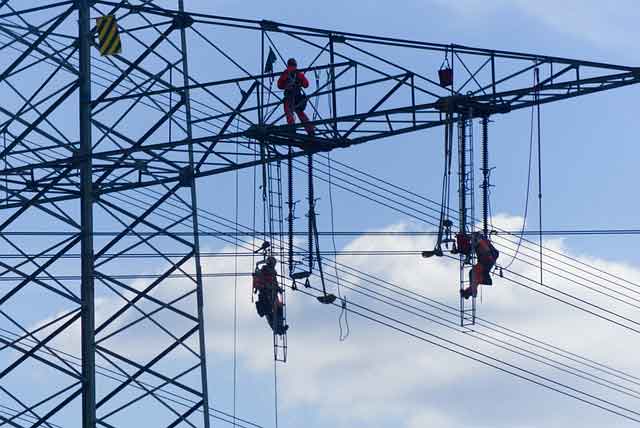
Ukraine's nuclear infrastructure, including the Zaporizhzhia Nuclear Power Plant—the largest in Europe—relies heavily on a stable power supply to maintain critical cooling systems and other safety measures. Russian military operations targeting Ukraine's energy infrastructure have led to power outages, and created hazards akin to those highlighted in downed power line safety guidance during emergency repairs, jeopardizing the safe operation of these facilities. Grossi emphasized that such disruptions could result in severe nuclear accidents if cooling systems fail.

IAEA's Response and Actions

In response to these threats, the IAEA has been actively involved in monitoring and assessing the situation. Grossi visited Kyiv to inspect electrical substations and discuss safety measures with Ukrainian officials. He underscored the necessity of ensuring uninterrupted power to nuclear plants and the critical role of emergency diesel generators as a last line of defense, and noted that maintaining staffing continuity, including measures such as staff living on site at critical facilities, may be necessary. The IAEA has also postponed the rotation of its mission at the Zaporizhzhia plant due to security concerns, as reported by Reuters.

International Concerns and Diplomatic Efforts

The international community has expressed deep concern over the potential for nuclear accidents in Ukraine, echoing earlier grid overseer warnings about systemic risks in other crises that stress energy systems. The United Nations and various countries have called for the establishment of a demilitarized zone around nuclear facilities to prevent military activities that could compromise their safety. Diplomatic efforts are ongoing to facilitate dialogue between Russia and Ukraine, aiming to ensure the protection of nuclear sites and the safety of surrounding populations.

The Zaporizhzhia Nuclear Power Plant

The Zaporizhzhia Nuclear Power Plant, located in southeastern Ukraine, has been under Russian control since early in the conflict, with Rosatom cooperation agreements reflecting broader nuclear policy priorities that frame Moscow's approach to the sector. The plant consists of six reactors and has been a focal point of international concern due to its size and the potential consequences of any incident. The IAEA has been working to maintain oversight and ensure the plant's safety amid the ongoing conflict.

Potential Consequences of Nuclear Accidents

A nuclear accident at any of Ukraine's nuclear facilities could have catastrophic consequences, including the release of radioactive materials, displacement of populations, and long-term environmental damage, with communities potentially facing weeks without electricity and basic services in the aftermath. The proximity of these plants to densely populated areas further amplifies the risks. The international community continues to monitor the situation closely, emphasizing the need for immediate action to safeguard nuclear facilities.

The ongoing conflict in Ukraine has introduced unprecedented challenges to nuclear safety. The IAEA's warnings and actions underscore the critical need for international cooperation to protect nuclear facilities from the dangers posed by military activities. Ensuring the safety of these sites is paramount to prevent potential disasters that could have far-reaching humanitarian and environmental impacts, and sustained attention to nuclear workers' safety concerns helps maintain operational readiness under strain.


Related News

View more

India is now the world’s third-largest electricity producer

India Electricity Production 2017 surged to 1,160 BU, ranking third globally; rising TWh output with 334 GW capacity, strong renewables and thermal mix, 7% CAGR in generation, and growing demand, investments, and FDI inflows.


Key Points

India's 2017 power output reached 1,160 BU, third globally, supported by 334 GW capacity, rising renewables, and 7% CAGR.

✅ 1,160 BU generated; third after China and the US

✅ Installed capacity 334 GW; 65% thermal, rising renewables

✅ Generation CAGR ~7%; demand, FDI, investments rising


India now generates around 1,160.1 billion units of electricity in financial year 2017, up 4.72% from the previous year, and amid surging global electricity demand that is straining power systems. The country is behind only China which produced 6,015 terrawatt hours (TWh. 1 TW = 1,000,000 megawatts) and the US (4,327 TWh), and is ahead of Russia, Japan, Germany, and Canada.


India’s electricity production grew 34% over seven years to 2017, and the country now produces more energy than Japan and Russia, which had 27% and 8.77% more electricity generation capacity installed, respectively, than India seven years ago.

India produced 1,160.10 billion units (BU) of electricity–one BU is enough to power 10 million households (one household using average of about 3 units per day) for a month–in financial year (FY) 2017. Electricity production stood at 1,003.525 BU between April 2017-January 2018, according to a February 2018 report by India Brand Equity Foundation (IBEF), a trust established by the commerce ministry.

#google#

With a production of 1,423 BU in FY 2016, India was the third largest producer and the third largest consumer of electricity in the world, behind China (6,015 BU) and the United States (4,327 BU).

With an annual growth rate of 22.6% capacity addition over a decade to FY 2017, renewables beat other power sources–thermal, hydro and nuclear. Renewables, however, made up only 18.79% of India’s energy, up 68.65% since 2007, and globally, low-emissions sources are expected to cover most demand growth in the coming years. About 65% of installed capacity continues to be thermal.

As of January 2018, India has installed power capacity of 334.4 gigawatt (GW), making it the fifth largest installed capacity in the world after European Union, China, United States and Japan, and with much of the fleet coal-based, imported coal volumes have risen at times amid domestic supply constraints.

The government is targeting capacity addition of around 100 GW–the current power production of United Kingdom–by 2022, as per the IBEF report.


Electricity generation grew at 7% annually

India achieved a 34.48% growth in electricity production by producing 1,160.10 BU in 2017 compared to 771.60 BU in 2010–meaning that in these seven years, electricity production in India grew at a compound annual growth rate (CAGR) of 7.03%, while thermal power plants' PLF has risen recently amid higher demand and lower hydro.


Generation capacity grew at 10% annually

Of 334.5 GW installed capacity as of January 2018–up 60% from 132.30 GW in 2007–thermal installed capacity was 219.81 GW. Hydro and renewable energy installed capacity totaled 44.96 GW and 62.85 GW, respectively, said the report.

The CAGR in installed capacity over a decade to 2017 was 10.57% for thermal power, 22.06% for renewable energy–the fastest among all sources of power–2.51% for hydro power and 5.68% for nuclear power.


Growing demand, higher investments will drive future growth

Growing population and increasing penetration of electricity connections, along with increasing per-capita usage would provide further impetus to the power sector, said the report.

Power consumption is estimated to increase from 1,160.1 BU in 2016 to 1,894.7 BU in 2022, as per the report, though electricity demand fell sharply in one recent period.

Increasing investment remained one of the driving factors of power sector growth in the country.

Power sector has a 100% foreign direct investment (FDI) permit, which boosted FDI inflows in the sector.

Total FDI inflows in the power sector reached $12.97 billion (Rs 83,713 crore) during April 2000 to December 2017, accounting for 3.52% of FDI inflows in India, the report said.


Related News

View more

Sign Up for Electricity Forum’s Newsletter

Stay informed with our FREE Newsletter — get the latest news, breakthrough technologies, and expert insights, delivered straight to your inbox.

Electricity Today T&D Magazine Subscribe for FREE

Stay informed with the latest T&D policies and technologies.
  • Timely insights from industry experts
  • Practical solutions T&D engineers
  • Free access to every issue

Download the 2025 Electrical Training Catalog

Explore 50+ live, expert-led electrical training courses –

  • Interactive
  • Flexible
  • CEU-cerified