
Substation Relay Protection Training
Our customized live online or in‑person group training can be delivered to your staff at your location.
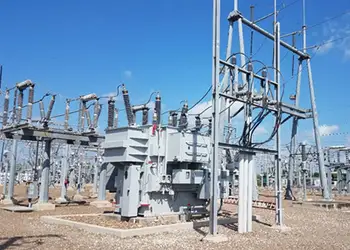
- Live Online
- 12 hours Instructor-led
- Group Training Available
Regular Price:
$699
Coupon Price:
$599
VANCOUVER
—
BC Wildfire Risk 2026 elevates concern for overhead lines and distribution assets as drought, low snowpack and above-normal temperatures set the stage for an active season in British Columbia, with early deployments and preparedness underway.
The Main Points
-
Agency warns of elevated wildfire risk for 2026.
-
Drought and low snowpack drive early, active outlook.
-
Early deployments; largest provincial wildfire workforce.
-
Overwintering fires monitored in Cariboo and Peace.
-
Smoke guidance updated; communities urged to prepare.
On Apr. 30, 2026, the BC Wildfire Service warned that drought across the Interior, the Cariboo and the Peace, combined with low snowpack and a forecast for above-normal temperatures and below-normal precipitation through May and June, elevates wildfire risk across British Columbia. The agency said fuels are primed for ignition and cautioned that, without a return to spring precipitation, an early and active season is possible for many communities.
Drought codes at season open matched or exceeded readings seen at the outset of the severe 2023 and 2024 seasons in parts of the southern Interior. Fine fuel moisture was also high across the southern half of the province. The April 1 snow survey indicated snowpack near 70 percent of normal on the South Coast and below 60 percent across much of the Interior. For power-sector planners, background such as BC drought energy production is relevant to system studies as utilities review seasonal risk.
Early-season activity to the third week of April consisted mainly of small human-caused ignitions in the southern Interior, most of which were contained quickly. Of greater concern are several overwintering fires in deep organic soils that have persisted since 2025, including in the Cariboo and Peace, which are being closely monitored for renewed surface activity.
To prepare, the service has deployed initial-attack crews and air tankers to forward operating bases several weeks earlier than a typical year. Officials report the largest standing wildfire workforce in the province's history, with expanded air assets and unit crews, and confirm that federal support and mutual-aid arrangements with neighboring jurisdictions remain available if requested.
For utilities and grid operators, an elevated wildfire season has operational implications for overhead lines, distribution corridors and substations in the same regions now flagged for drought stress. Historical demand context in BC 2021 electricity demand can help frame staffing, outage-response, and vegetation-management planning under hot and dry conditions.
Communities are being urged to prepare early by clearing combustible materials near structures, maintaining defensible space and ensuring emergency kits are ready. Local governments across the southern Interior have been hosting public information sessions on FireSmart practices and alert systems. As grid resilience planning often spans multiple hazards, bomb cyclone strikes BC coast offers additional context on severe-weather readiness relevant to coastal assets.
Officials are also tracking public health impacts from smoke, which in recent summers has affected air quality across British Columbia and beyond. Updated guidance for the 2026 season emphasizes indoor filtration, clean-air centers, and managing outdoor work during smoke events. Customer preparedness and support resources, such as those outlined in BC payment winter plan, can dovetail with summer wildfire contingencies for vulnerable ratepayers.
The BC Wildfire Service will issue regular condition and incident updates through the season, with the next major coordination meetings scheduled for mid-May to incorporate refreshed forecasts and review crew deployments. Recent peak-load experience, summarized in BC electricity demand all time high, remains pertinent as utilities assess resource adequacy and outage risk during potential fire-driven constraints.
Related News
Planning for Toronto?s Growing Electricity Needs
Toronto Grid Upgrade expands electricity capacity and reliability with new substations, upgraded transmission lines, and…
View more

New Texas will bill electric vehicle drivers an extra $200 a year
Texas EV Registration Fee adds a $200 annual charge under Senate Bill 505, offsetting lost…
View more
OEB issues decision on Hydro One's first combined T&D rates application
OEB Hydro One Rate Decision 2023-2027 sets approved transmission and distribution rates in Ontario, with…
View more

Sierra Club: Governor Abbott's Demands Would Leave Texas More Polluted and Texans in the Dark
Texas Energy Policy Debate centers on ERCOT and PUC directives, fossil fuels vs renewables, grid…
View more
Clocks are running slow across Europe because of an argument over who pays the electricity bill
European Grid Frequency Clock Slowdown has made appliance clocks run minutes behind as AC frequency…
View more
Ukraine Helps Spain Amid Blackouts
Ukraine-Spain Power Aid highlights swift international solidarity as Kyiv offers grid restoration expertise to Spain…
View more
Sign Up for Electricity Forum’s Newsletter
Stay informed with our FREE Newsletter — get the latest news, breakthrough technologies, and expert insights, delivered straight to your inbox.
Electricity Today T&D Magazine Subscribe for FREE

Stay informed with the latest T&D policies and technologies.
- Timely insights from industry experts
- Practical solutions T&D engineers
- Free access to every issue

