By --- Source, Reuters


NFPA 70e Training - Arc Flash

Our customized live online or in‑person group training can be delivered to your staff at your location.

  • Live Online
  • 6 hours Instructor-led
  • Group Training Available
Regular Price:
$199
Coupon Price:
$149
Reserve Your Seat Today
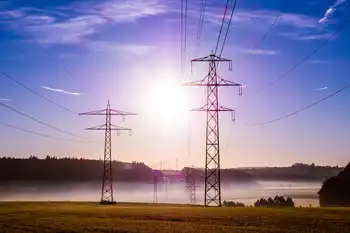
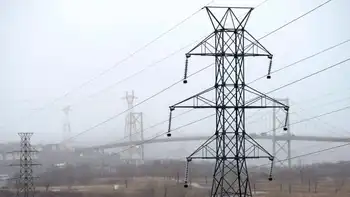
VANCOUVER, British Columbia - British Columbia should break up BC Hydro and reduce regulation to encourage private investment in the province's electrical system, according to a government report released on Monday.

The government-owned utility, which produces electricity for the provincial market and also sells power to the United States, should be split into separate generation, transmission and distribution companies, according to a task force reviewing the province's energy policy.

"British Columbia's access to expanding North American electricity markets depends up the opening of the system to more competition, thereby increasing private sector investment," according to the report.

The task force said British Columbia consumers currently pay rates that are below market levels, but restructuring the system is needed to increase energy supply and increase the province's "energy security."

The energy task force was created in August by Premier Gordon Campbell, whose Liberal Party government was elected in May with a pledge to make Canada's third-largest province more business friendly.

Campbell denied accusations during the campaign that he planned to privatize BC Hydro, and the new companies recommended by the task force would remain public corporations although they could face private competition.

BC Hydro was created in 1961 when the province took over BC Electric Corp. The utility provides about 94 percent of the province's power supply and is projecting a C$164 million profit in the current fiscal year.

The report said British Columbia must attract more private capital to increase its energy supply, which will eventually lead to lower prices.

"In particular, the electricity transmission system must be able to accommodate new energy producers and enable them to deliver their product to market on an equitable basis," the task force said.

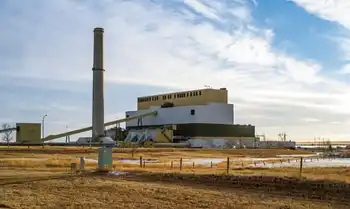
British Columbia currently relies on hydroelectric dams for the bulk of its power generation capacity, but the task force also recommended the province encourage the development of coal-burning power plants.

"Final guidelines and standards related to emissions should be developed as soon as possible, based on an appropriate balance between economic and environmental considerations," the report said.

The report recommends creating more natural gas storage capacity in the Vancouver area, saying consumers are subject to "excessive" price changes because it was one of the only major markets in North America without storage capacity.

Related News
Town of Gander forgives $250K debt from local curling club

Gander Curling Club Debt Forgiveness Agreement explained: town council tax relief, loan write-off conditions, community benefits, and economic impact, covering long-standing taxes and loans while protecting the facility with asset clauses and compliance terms.


Key Points

Town plan erasing 25 years of tax and loan debt, with conditions to keep the curling facility open for residents.

✅ Conditions: no borrowing against property without consent.

✅ Water and sewer taxes must be paid annually.

✅ If sold or use changes, debt due; transfer for $1.


Gander town council has agreed to forgive the local curling club's debt of over $250,000.

Gina Brown, chair of the town council's finance committee, says the agreement has been put in place to help the curling club survive, amid broader discussions on electricity affordability in Newfoundland and Labrador.

"When we took a look at this and realized there was a significant outstanding debt for Gander curling club … we have to mitigate," Brown told CBC Newfoundland Morning. "[Getting] what the taxpayers are owed, with also understanding and appreciating the role that that recreational facility plays in our community."

According to Brown, the debt comes from a combination of taxes and loans, going back about 25 years. She says the curling club understood there was debt, but didn't know the number was so high. The club has been in the black since 2007, but used their profits for other items like renovations.

"Like so many cases when you're dealing with an organization with a changing board, and the same for council … [people are] coming in and coming out," Brown said. "And as a result, my understanding from the curling club's perspective is they weren't aware of how much was outstanding."

Chris McLeod, president of the Gander Curling Club, told CBC the club had been trying to address the debt since he became president in 2014.

Terms of agreement
The town's agreement with the club comes with the following stipulations:

The club will not use the property as security for any form of borrowing without the town's consent.
 
The club will continue to pay water and sewer tax annually.
 
If the club sells the property, the town reserves the right to void the agreement and the debt will immediately become due in full.
 
If the club stops using the facility as a curling club, the property will be transferred to the town for $1.
McLeod says the club will not attempt to pay back the debt, as it is not part of the agreement. The only way the debt would be paid is if the building is sold, which McLeod says it won't be, and there are also no plans to use the building for anything other than a curling club.

"[The debt] is basically gone now," McLeod said.

McLeod says the move was made to help get the debt off the books, and make sure the curling club can be financially responsible in the future, similar to relief programs some utilities offered during the pandemic.

The curling club is something that encourages people. So we felt that this has to be maintained.
- Gina Brown

Brown says keeping the curling club in Gander is important for the town, and brings different benefits to the area, as regional power cooperation debates illustrate broader trends.

"They are servicing people from as young as Grade 1 to seniors," Brown said. "You need little to no equipment, you need no background. So for the town itself, for its social and health implications, as provinces advance emissions plans that can affect communities, is one. But the other thing is the economic benefit that comes from having this facility here."


The Gander Curling Club's debt forgiveness comes with several conditions. (Google Maps)
The curling club can help attract people into the community, as recreational facilities are often a key draw for families, she added, while other provinces are creating transition funds to support communities.

"When you're as a town, trying to attract people coming in … whether you're a doctor, nurse, anybody looking at the recreational facilities, the curling club is something that encourages people," Brown said. "So we felt that this has to be maintained."

Brown says the town understands they might be setting a precedent with other businesses in forgiving the debts of the curling club, as major infrastructure like B.C.'s Site C dam has faced budget overruns.

"That's another thing we had to consider, what kind of precedents are [we] establishing?" Brown said. "From our standpoint, I think one of the things about this agreement that we felt was beneficial to the town is that they have an asset, helping to avoid costly delays seen with large projects. And the asset is a great building. To us, the taxpayers are in a win-win situation."


Related News

View more

A goodwill gesture over electricity sows discord in Lebanon

Lebanon Power Barge Controversy spotlights Karadeniz Energy's Esra Sultan, Lebanon's electricity crisis, prolonged blackouts, and sectarian politics as Amal and Hezbollah clash over Zahrani vs Jiyeh docking and allocation across regions.


Key Points

A political dispute over the Esra Sultan power ship, its docking, and power allocation amid Lebanon's chronic blackouts.

✅ Karadeniz Energy lent a third barge at below-market rates.

✅ Docking disputes: Zahrani refused; Jiyeh limited; Zouq connected.

✅ Amal vs Hezbollah split exposes sectarian energy politics.


It was supposed to be a goodwill gesture from an energy company in Turkey.

This summer, the Karadeniz Energy Group lent Lebanon a floating power station to generate electricity at below-market rates to help ease the strain on the country's woefully undermaintained power sector.

Instead, the barge's arrival opened a Pandora's box of partisan mudslinging in a country hobbled by political sectarianism and dysfunction.

There have been rows over where it should dock, how to allocate its 235 megawatts of power, and even what to call the barge, echoing controversies like the Maine electric line debate that pit local politics against energy needs.

It has even driven a wedge between Lebanon's two dominant parties among Shiite Muslims: Amal and the militant group Hezbollah.

Amal, which has held the parliament speaker's seat since 1992, revealed sensationally last week it had refused to allow the boat to dock in a port in the predominantly Shiite south, even though it is one of the most underserved regions of Lebanon.

Power outages in the south can stretch on for more than 12 hours a day, much like the Gaza electricity crisis, according to regional observers.

Hezbollah, which normally stands pat with Amal in political matters, issued an exceptional statement that it had nothing to do with the matter of the barge at Zahrani port. A Hezbollah lawmaker went further to say his party disagreed on the issue with Amal.

Ali Hassan Khalil, Lebanon's Finance Minister and a leading Amal party member, said southerners wanted a permanent power station, not a stop-gap solution, in an implied dig at the rival Free Patriotic Movement, a Christian party that runs the Energy Ministry.

But critics seized on the statement as confirmation that Amal's leaders were in bed with the operators of private generators, who have been making fortunes selling electricity during blackouts at many times the state price.

"For decades there's been nothing stopping them from building a power plant," said Mohammad Obeid, a former Amal party official, in an interview with Lebanon's Al Jadeed TV station.

"Now there's a barge that's coming for three months to provide a few more hours of electricity -- and that's the issue?"

Hassan Khalil, reached by phone, refused to comment.

Nabih Berri, Amal's chief and Lebanon's parliament speaker, who has long been the subject of critical coverage from Al Jadeed's, sued the TV channel for libel on Wednesday for its reporting.

Energy Minister Cesar Abi Khalil, a Christian, lashed out at Amal, saying the ministry even changed the barge's name from Ayse, Turkish for Aisha, a name associated in Lebanon with Sunnis, to Esra Sultan, which does not carry any Shiite or Sunni connotations, to try to get it to dock in Zahrani.

Karadeniz said the barge was renamed "out of courtesy and respect to local customs and sensitivities."

"Ayse is a very common Turkish name, where such preferences are not as sensitive as in Lebanon," it said in a statement to The Associated Press.

Finally, on July 18, the barge docked in Jiyeh, a harbour south of Beirut but north of Zahrani, and in a religiously mixed Muslim area.

But two weeks later it was unmoored again, after Abi Khalil, the energy minister, said the infrastructure at Jiyeh could only handle 30 megawatts of the Esra Sultan's 235 capacity, and upgrades such as burying subsea cables are expensive.

With Zahrani closed to the Esra Sultan, it could only go to Zouq Mikhael, a port in the Christian-dominated Kesrouan region in the north, where it was plugged to the grid Tuesday night, giving the region almost 24 hours of electricity a day.

Lebanon has been contending with rolling blackouts since the days of its 1975-1990 civil war. Successive governments have failed to agree on a permanent solution for the chronic electricity failures, largely because of profiteering, endemic corruption and lack of political will, despite periodic pushes for electricity sector reform in Lebanon over the years.

In 2013, the Energy Ministry contracted with Karadeniz to buy electricity from a pair of its barges, which are still docked in Jiyeh and Zouq Mikhael.

This summer, Abi Khalil signed a new contract with Karadeniz to keep the barges for another three years. As part of the deal, Karadeniz agreed to lend Lebanon the third barge, the Esra Sultan, to produce electricity for three months at no cost - Lebanon would just have to pay for the fuel.

The company said Lebanon's internal squabbles do not affect how long the Esra Sultan would stay in Lebanon, even amid wider sector volatility and the pandemic's impact highlighted in a recent financial update. It arrived on July 18 and it will leave on Oct. 18, it said.


Related News

View more

Electric shock: China power demand drops as coronavirus shutters plants

China Industrial Power Demand 2020 highlights COVID-19 disruption to electricity consumption as factory output stalls; IHS Markit estimates losses equal to Chile's usage, impacting thermal coal, LNG, and Hubei's industrial load.


Key Points

An analysis of COVID-19's hit to China's electricity use, cutting industry demand and fuel needs for coal and LNG.

✅ 73 billion kWh loss equals Chile's annual power use

✅ Cuts translate to 30m tonnes coal or 9m tonnes LNG

✅ Hubei peak load 21 percent below plan amid shutdowns


China’s industrial power demand in 2020 may decline by as much as 73 billion kilowatt hours (kWh), according to IHS Markit, as the outbreak of the coronavirus has curtailed factory output and prevented some workers from returning to their jobs.

FILE PHOTO: Smoke is seen from a cooling tower of a China Energy ultra-low emission coal-fired power plant during a media tour, in Sanhe, Hebei province, China July 18, 2019. REUTERS/Shivani Singh
The cut represents about 1.5% of industrial power consumption in China. But, as the country is the world’s biggest electricity consumer and analyses of China's electricity appetite routinely underscore its scale, the loss is equal to the power used in the whole of Chile and it illustrates the scope of the disruption caused by the outbreak.

The reduction is the energy equivalent of about 30 million tonnes of thermal coal, at a time when China aims to reduce coal power production, or about 9 million tonnes of liquefied natural gas (LNG), IHS said. The coal figure is more than China’s average monthly imports last year while the LNG figure is a little more than one month of imports, based on customs data.

China has tried to curtail the spread of the coronavirus that has killed more than 1,400 and infected over 60,000 by extending the Lunar New Year holiday for an extra week and encouraging people to work from home, measures that contributed to a global dip in electricity demand as well.

Last year, industrial users consumed 4.85 trillion kWh electricity, accounting for 67% of the country’s total, even as India's electricity demand showed sharp declines in the region.

Xizhou Zhou, the global head of power and Renewables at IHS Markit, said that in a severe case where the epidemic goes on past March, China’s economic growth will be only 4.2% during 2020, down from an initial forecast of 5.8%, while power consumption will climb by only 3.1%, down from 4.1% initially, even as power cuts and blackouts raise concerns.

“The main uncertainty is still how fast the virus will be brought under control,” said Zhou, adding that the impact on the power sector will be relatively modest from a full-year picture in 2020, even though China's electric power woes are already clouding solar markets.

In Hubei province, the epicenter of the virus outbreak, the peak power load at the end of January was 21% less than planned, mirroring how Japan's power demand was hit during the outbreak, data from Wood Mackenzie showed.

Industrial operating rates point to a firm reduction in power consumption in China.

Utilization rates at plastic processors are between 30% and 60% and the low levels are expected to last for another two week, according to ICIS China.

Weaving machines at textile plants are operating at below 10% of capacity, the lowest in five years, ICIS data showed. China is the world’s biggest textile and garment exporter.


Related News

View more

Russian Strikes on Western Ukraine Cause Power Outages

Ukraine Energy Grid Attacks intensify as missile strikes and drone raids hit power plants, substations, and transmission lines, causing blackouts, disrupted logistics, and humanitarian strain during winter, despite repairs, air defense, and allied aid.


Key Points

Missile and drone strikes on Ukraine's power grid to force blackouts, strain civilians, and disrupt military logistics.

✅ Targets: power plants, substations, transmission lines

✅ Impacts: blackouts, heating loss, hospital strain

✅ Goals: erode morale, disrupt logistics, force aid burdens


Russia’s continued strikes on Ukraine have taken a severe toll on the country’s critical infrastructure, particularly its energy grid, as Ukraine continues to keep the lights on despite sustained bombardment. In recent months, Western Ukraine has increasingly become a target of missile and drone attacks, leading to widespread power outages and compounding the challenges faced by the civilian population. These strikes aim to cripple Ukraine's resilience during a harsh winter season and disrupt its wartime operations.

Targeting Energy Infrastructure

Russian missile and drone assaults on Ukraine’s energy grid are part of a broader strategy to weaken the country’s morale and capacity to sustain the war effort. The attacks have primarily focused on power plants, transmission lines, and substations. Western Ukraine, previously considered a relative safe haven due to its distance from front-line combat zones, is now experiencing the brunt of this campaign.

The consequences of these strikes are severe. Rolling blackouts and unplanned outages have disrupted daily life for millions of Ukrainians, though authorities say there are electricity reserves that could stabilize supply if no new strikes occur, leaving homes without heating during freezing temperatures, hospitals operating on emergency power, and businesses struggling to maintain operations. The infrastructure damage has also affected water supplies and public transportation, further straining civilian life.

Aimed at Civilian and Military Impact

Russia’s targeting of Ukraine’s power grid has dual purposes. On one hand, it aims to undermine civilian morale by creating hardships during the cold winter months, even as Ukraine works to keep the lights on this winter through contingency measures. On the other, it seeks to hinder Ukraine’s military logistics and operations, which heavily rely on a stable energy supply for transportation, communications, and manufacturing of military equipment.

These attacks coincide with a broader strategy of attritional warfare, where Moscow hopes to exhaust Ukraine’s resources and diminish its ability to continue its counteroffensive operations. By disrupting critical infrastructure, Russia increases pressure on Ukraine's allies to step up humanitarian and military aid, stretching their capacities.

Humanitarian Consequences

The impact of these power cuts on the civilian population is profound. Millions of Ukrainians are enduring freezing temperatures without consistent access to electricity or heating. Vulnerable populations, such as the elderly, children, and those with disabilities, face heightened risks of hypothermia and other health issues.

Hospitals and healthcare facilities are under immense strain, relying on backup generators that cannot sustain prolonged use. In rural areas, where infrastructure is already weaker, the effects are even more pronounced, leaving many communities isolated and unable to access essential services.

Humanitarian organizations have ramped up efforts to provide aid, including distributing generators, warm clothing, and food supplies, while many households pursue new energy solutions to weather blackouts. However, the scale of the crisis often outpaces the resources available, leaving many Ukrainians to rely on their resilience and community networks.

Ukraine's Response

Despite the challenges, Ukraine has demonstrated remarkable resilience in the face of these attacks. The government and utility companies are working around the clock to repair damaged infrastructure and restore power to affected areas. Mobile repair teams and international assistance have played crucial roles in mitigating the impact of these strikes.

Ukraine’s Western allies have also stepped in to provide support. The European Union, the United States, and other countries have supplied Ukraine with energy equipment, financial aid, and technical expertise to help rebuild its energy grid, though recent decisions like the U.S. ending support for grid restoration complicate planning and procurement. Additionally, advanced air defense systems provided by Western nations have helped intercept some of the incoming missiles and drones, though not all attacks can be thwarted.

Russia’s Escalation Strategy

Russia’s focus on Western Ukraine reflects a shift in its strategy. Previously, attacks were concentrated on front-line areas and major urban centers in the east and south. However, by targeting the western regions, Moscow seeks to disrupt the relatively stable zones where displaced Ukrainians and critical supply chains are located.

Western Ukraine is also a hub for receiving and distributing international aid and military supplies. Striking this region not only undermines Ukraine’s internal stability but also sends a message to its allies about Russia’s willingness to escalate the conflict further.

Broader Implications

The attacks on Ukraine’s energy grid have broader geopolitical implications. By targeting infrastructure, Russia intensifies the pressure on Ukraine’s allies to continue providing support, even as Kyiv has at times helped Spain amid blackouts when capacity allowed, testing their unity and resolve. The destruction also poses long-term challenges for Ukraine’s post-war recovery, as rebuilding a modern and resilient energy system will require significant investments and time.

Moreover, these attacks highlight the vulnerability of civilian infrastructure in modern warfare, echoing that electricity is civilization amid winter conditions. The deliberate targeting of non-combatant assets underscores the need for international efforts to strengthen the protection of critical infrastructure and address the humanitarian consequences of such tactics.

The Russian attacks on Western Ukraine's power grid are a stark reminder of the devastating human and economic costs of the ongoing conflict. While Ukraine continues to demonstrate resilience and adaptability, the scale of destruction underscores the need for sustained international support. As the war drags on, the focus must remain on mitigating civilian suffering, rebuilding critical infrastructure, and pursuing a resolution that ends the violence and stabilizes the region.


Related News

View more

When did BC Hydro really know about Site C dam stability issues? Utilities watchdog wants to know

BC Utilities Commission Site C Dam Questions press BC Hydro on geotechnical risks, stability issues, cost overruns, oversight gaps, seeking transparency for ratepayers and clarity on contracts, mitigation, and the powerhouse and spillway foundations.


Key Points

Inquiry seeking explanations from BC Hydro on geotechnical risks, costs, timelines and oversight for Site C.

✅ Timeline of studies, monitoring, and mitigation actions

✅ Rationale for contracts, costs, and right bank construction

✅ Implications for ratepayers, oversight, and project stability


The watchdog B.C. Utilities Commission has sent BC Hydro 70 questions about the troubled Site C dam, asking when geotechnical risks were first identified and when the project’s assurance board was first made aware of potential issues related to the dam’s stability. 

“I think they’ve come to the conclusion — but they don’t say it — that there’s been a cover-up by BC Hydro and by the government of British Columbia,” former BC Hydro CEO Marc Eliesen told The Narwhal. 

On Oct. 21, The Narwhal reported that two top B.C. civil servants, including the senior bureaucrat who prepares Site C dam documents for cabinet, knew in May 2019 that the project faced serious geotechnical problems due to its “weak foundation” and the stability of the dam was “a significant risk.” 

Get The Narwhal in your inbox!
People always tell us they love our newsletter. Find out yourself with a weekly dose of our ad‑free, independent journalism

“They [the civil servants] would have reported to their ministers and to the government in general,” said Eliesen, who is among 18 prominent Canadians calling for a halt to Site C work until an independent team of experts can determine if the geotechnical problems can be resolved and at what cost.  

“It’s disingenuous for Premier [John] Horgan to try to suggest, ‘Well, I just found out about it recently.’ If that’s the case, he should fire the public servants who are representing the province.” 

The public only found out about significant issues with the Site C dam at the end of July, when BC Hydro released overdue reports saying the project faces unknown cost overruns, schedule delays and, even as it achieved a transmission line milestone earlier, such profound geotechnical troubles that its overall health is classified as ‘red,’ meaning it is in serious trouble. 

“The geotechnical challenges have been there all these years.”

The Site C dam is the largest publicly funded infrastructure project in B.C.’s history. If completed, it will flood 128 kilometres of the Peace River and its tributaries, forcing families from their homes and destroying Indigenous gravesites, hundreds of protected archeological sites, some of Canada’s best farmland and habitat for more than 100 species vulnerable to extinction.

Eliesen said geotechnical risks were a key reason BC Hydro’s board of directors rejected the project in the early 1990s, when he was at the helm of BC Hydro.

“The geotechnical challenges have been there all these years,” said Eliesen, who is also the former Chair and CEO of Ontario Hydro, where Ontario First Nations have urged intervention on a critical electricity line, the former Chair of Manitoba Hydro and the former Chair and CEO of the Manitoba Energy Authority.

Elsewhere, a Manitoba Hydro line to Minnesota has faced potential delays, highlighting broader grid planning challenges.

The B.C. Utilities Commission is an independent watchdog that makes sure ratepayers — including BC Hydro customers — receive safe and reliable energy services, as utilities adapt to climate change risks, “at fair rates.”

The commission’s questions to BC Hydro include 14 about the “foundational enhancements” BC Hydro now says are necessary to shore up the Site C dam, powerhouse and spillways. 

The commission is asking BC Hydro to provide a timeline and overview of all geotechnical engineering studies and monitoring activities for the powerhouse, spillway and dam core areas, and to explain what specific risk management and mitigation practices were put into effect once risks were identified.

The commission also wants to know why construction activities continued on the right bank of the Peace River, where the powerhouse would be located, “after geotechnical risks materialized.” 

It’s asking if geotechnical risks played a role in BC Hydro’s decision in March “to suspend or not resume work” on any components of the generating station and spillways.

The commission also wants BC Hydro to provide an itemized breakdown of a $690 million increase in the main civil works contract — held by Spain’s Acciona S.A. and the South Korean multinational conglomerate Samsung C&T Corp. — and to explain the rationale for awarding a no-bid contract to an unnamed First Nation and if other parties were made aware of that contract. 

Peace River Jewels of the Peace Site C The Narwhal
Islands in the Peace River, known as the ‘jewels of the Peace’ will be destroyed for fill for the Site C dam or will be submerged underwater by the dam’s reservoir, a loss that opponents are sharing with northerners in community discussions. Photo: Byron Dueck

B.C. Utilities Commission chair and CEO David Morton said it’s not the first time the commission has requested additional information after receiving BC Hydro’s quarterly progress reports on the Site C dam. 

“Our staff reads them to make sure they understand them and if there’s anything in then that’s not clear we go then we do go through this, we call it the IR — information request — process,” Morton said in an interview.

“There are things reported in here that we felt required a little more clarity, and we needed a little more understanding of them, so that’s why we asked the questions.”

The questions were sent to BC Hydro on Oct. 23, the day before the provincial election, but Morton said the commission is extraordinarily busy this year and that’s just a coincidence. 

“Our resources are fairly strained. It would have been nice if it could have been done faster, it would be nice if everything could be done faster.” 

“These questions are not politically motivated,” Morton said. “They’re not political questions. There’s no reason not to issue them when they’re ready.”

The commission has asked BC Hydro to respond by Nov. 19.

Read more: Top B.C. government officials knew Site C dam was in serious trouble over a year ago: FOI docs

Morton said the independent commission’s jurisdiction is limited because the B.C. government removed it from oversight of the project. 

The commission, which would normally determine if a large dam like the Site C project is in the public’s financial interest, first examined BC Hydro’s proposal to build the dam in the early 1980s.

After almost two years of hearings, including testimony under oath, the commission concluded B.C. did not need the electricity. It found the Site C dam would have negative social and environmental impacts and said geothermal power should be investigated to meet future energy needs. 

The project was revived in 2010 by the BC Liberal government, which touted energy from the Site C dam as a potential source of electricity for California and a way to supply B.C.’s future LNG industry with cheap power.

Not willing to countenance another rejection from the utilities commission, the government changed the law, stripping the commission of oversight for the project. The NDP government, which came to power in 2017, chose not to restore that oversight.

“The approval of the project was exempt from our oversight,” Morton said. “We can’t come along and say ‘there’s something we don’t like about what you’re doing, we’re going to stop construction.’ We’re not in that position and that’s not the focus of these questions.” 

But the commission still retains oversight for the cost of construction once the project is complete, Morton said. 

“The cost of construction has to be recovered in [hydro] rates. That means BC Hydro will need our approval to recover their construction cost in rates, and those are not insignificant amounts, more than $10.7 billion, in all likelihood.” 

In order to recover the cost from ratepayers, the commission needs to be satisfied BC Hydro didn’t spend more money than necessary on the project, Morton said. 

“As you can imagine, that’s not a straight forward review to do after the fact, after a 10-year construction project or whatever it ends up being … so we’re using these quarterly reports as an opportunity to try to stay on top of it and to flag any areas where we think there may be areas we need to look into in the future.”

The price tag for the Site C dam was $10.7 billion before BC Hydro’s announcement at the end of July — a leap from $6.6 billion when the project was first announced in 2010 and $8.8 billion when construction began in 2015. 

Eliesen said the utilities commission should have been asking tough questions about the Site C dam far earlier. 

“They’ve been remiss in their due diligence activities … They should have been quicker in raising questions with BC Hydro, rather than allowing BC Hydro to be exceptionally late in submitting their reports.” 

BC Hydro is late in filing another Site C quarterly report, covering the period from April 1 to June 30. 

The quarterly reports provide the B.C. public with rare glimpses of a project that international hydro expert Harvey Elwin described as being more secretive than any hydro project he has encountered in five decades working on large dams around the world, including in China.

Read more: Site C dam secrecy ‘extraordinary’, international hydro construction expert tells court proceeding

Morton said the commission could have ordered regular reporting for the Site C project if it had its previous oversight capability.

“Then we would have had the ability to follow up and ultimately order any delinquent reports to be filed. In this circumstance, they are being filed voluntarily. They can file it as late as they choose. We don’t have any jurisdiction.” 

In addition to the six dozen questions, the commission has also filed confidential questions with BC Hydro. Morton said confidential information could include things such as competitive bid information. “BC Hydro itself may be under a confidentiality agreement not to disclose it.” 

With oversight, the commission would also have been able to drill down into specific project elements,  Morton said. 

“We would have wanted to ensure that the construction followed what was approved. BC Hydro wouldn’t have the ability to make significant changes to the design and nature of the project as they went along.”

BC Hydro has been criticized for changing the design of the Site C dam to an L-shape, which Eliesen said “has never been done anywhere in the world for an earthen dam.” 

Morton said an empowered commission could have opted to hold a public hearing about the design change and engage its own technical consultants, as it did in 2017 when the new NDP government asked it to conduct a fast-tracked review of the project’s economics. 


Construction Site C Dam
A recent report by a U.S. energy economist found cancelling the Site C dam project would save BC Hydro customers an initial $116 million a year, with increasing savings growing over time. Photo: Garth Lenz / The Narwhal

The commission’s final report found the dam could cost more than $12 billion, that BC Hydro had a historical pattern of overestimating energy demand and that the same amount of energy could be produced by a suite of renewables, including wind and proposed pumped storage such as the Meaford project, for $8.8 billion or less. 

The NDP government, under pressure from construction trade unions, opted to continue the project, refusing to disclose key financial information related to its decision. 

When the geotechnical problems were revealed in July, the government announced the appointment of former deputy finance minister Peter Milburn as a special Site C project advisor who will work with BC Hydro and the Site C project assurance board to examine the project and provide the government with independent advice.

Eliesen said BC Hydro and the B.C. government should never have allowed the recent diversion of the Peace River to take place given the tremendous geotechnical challenges the project faces and its unknown cost and schedule for completion. 

“It’s a disgrace and scandalous,” he said. “You can halt the river diversion, but you’ve got another four or five years left in construction of the dam. What are you going to do about all the cement you’ve poured if you’ve got stability problems?”

He said it’s counter-productive to continue with advice “from the same people who have been wrong, wrong, wrong,” without calling in independent global experts to examine the geotechnical problems. 

“If you stop construction, whether it takes three or six months, that’s the time that’s required in order to give yourself a comfort level. But continuing to do what you’ve been doing is not the right course. You should have to sit back.”

Eliesen said it reminded him of the Pete Seeger song Waist Deep in the Big Muddy, which tells the story of a captain ordering his troops to keep slogging through a river because they will soon be on dry ground. After the captain drowns, the troops turn around.

“It’s a reflection of the fact that if you don’t look at what’s new, you just keep on doing what you’ve been doing in the past and that, unfortunately, is what’s happening here in this province with this project.”


Related News

View more

TCA Electric Leads Hydrogen Crane Project at Vancouver Port

Hydrogen Fuel Cell Crane Port of Vancouver showcases zero-emission RTG technology by DP World, TCA Electric, and partners, using hydrogen-electric fuel cells, battery energy storage, and regenerative capture to decarbonize container handling operations.


Key Points

A retrofitted RTG crane powered by hydrogen fuel cells, batteries, and regeneration to cut diesel use and CO2 emissions.

✅ Dual fuel cell system charges high-voltage battery

✅ Regenerative capture reduces energy demand and cost

✅ Pilot targets zero-emission RTG fleets by 2040


In a groundbreaking move toward sustainable logistics, TCA Electric, a Chilliwack-based industrial electrical contractor, is at the forefront of a pioneering hydrogen fuel cell crane project at the Port of Vancouver. This initiative, led by DP World in collaboration with TCA Electric and other partners, marks a significant step in decarbonizing port operations and showcases the potential of hydrogen technology in heavy-duty industrial applications.

A Vision for Zero-Emission Ports

The Port of Vancouver, Canada's largest port, has long been a hub for international trade. However, its operations have also contributed to substantial greenhouse gas emissions, even as DP World advances an all-electric berth in the U.K., primarily from diesel-powered Rubber-Tired Gantry (RTG) cranes. These cranes are essential for container handling but are significant sources of CO₂ emissions. At DP World’s Vancouver terminal, 19 RTG cranes account for 50% of diesel consumption and generate over 4,200 tonnes of CO₂ annually. 

To address this, the Vancouver Fraser Port Authority and the Province of British Columbia have committed to transforming the port into a zero-emission facility by 2050, supported by provincial hydrogen investments that accelerate clean energy infrastructure across B.C. This ambitious goal has spurred several innovative projects, including the hydrogen fuel cell crane pilot. 

TCA Electric’s Role in the Hydrogen Revolution

TCA Electric's involvement in this project underscores its expertise in industrial electrification and commitment to sustainable energy solutions. The company has been instrumental in designing and implementing the electrical systems that power the hydrogen fuel cell crane. This includes integrating the Hydrogen-Electric Generator (HEG), battery energy storage system, and regenerative energy capture technologies. The crane operates using compressed gaseous hydrogen stored in 15 pressurized tanks, which feed a dual fuel cell system developed by TYCROP Manufacturing and H2 Portable. This system charges a high-voltage battery that powers the crane's electric drive, significantly reducing its carbon footprint. 

The collaboration between TCA Electric, TYCROP, H2 Portable, and HTEC represents a convergence of local expertise and innovation. These companies, all based in British Columbia, have leveraged their collective knowledge to develop a world-first solution in the industrial sector, while regional pioneers like Harbour Air's electric aircraft illustrate parallel progress in aviation. TCA Electric's leadership in this project highlights its role as a key enabler of the province's clean energy transition. 

Demonstrating Real-World Impact

The pilot project began in October 2023 with the retrofitting of a diesel-powered RTG crane. The first phase included integrating the hydrogen-electric system, followed by a one-year field trial to assess performance metrics such as hydrogen consumption, energy generation, and regenerative energy capture rates. Early results have been promising, with the crane operating efficiently and emitting only steam, compared to the 400 kilograms of CO₂ produced by a comparable diesel unit. 

If successful, this project could serve as a model for decarbonizing port operations worldwide, mirroring investments in electric trucks at California ports that target landside emissions. DP World plans to consider converting its fleet of RTG cranes in Vancouver and Prince Rupert to hydrogen power, aligning with its global commitment to achieve carbon neutrality by 2040.

Broader Implications for the Industry

The success of the hydrogen fuel cell crane pilot at the Port of Vancouver has broader implications for the shipping and logistics industry. It demonstrates the feasibility of transitioning from diesel to hydrogen-powered equipment in challenging environments, and aligns with advances in electric ships on the B.C. coast. The project's success could accelerate the adoption of hydrogen technology in other ports and industries, contributing to global efforts to reduce carbon emissions and combat climate change.

Moreover, the collaboration between public and private sectors in this initiative sets a precedent for future partnerships aimed at advancing clean energy solutions. The support from the Province of British Columbia, coupled with the expertise of companies like TCA Electric and utility initiatives such as BC Hydro's vehicle-to-grid pilot underscore the importance of coordinated efforts in achieving sustainability goals.

Looking Ahead

As the field trial progresses, stakeholders are closely monitoring the performance of the hydrogen fuel cell crane. The data collected will inform decisions on scaling the technology and integrating it into broader port operations. The success of this project could pave the way for similar initiatives in other regions, complementing the province's move to electric ferries with CIB support, promoting the widespread adoption of hydrogen as a clean energy source in industrial applications.

TCA Electric's leadership in this project exemplifies the critical role of skilled industrial electricians in driving the transition to sustainable energy solutions. Their expertise ensures the safe and efficient implementation of complex systems, making them indispensable partners in the journey toward a zero-emission future.

The hydrogen fuel cell crane pilot at the Port of Vancouver represents a significant milestone in the decarbonization of port operations. Through innovative partnerships and local expertise, this project is setting the stage for a cleaner, more sustainable future in global trade and logistics.


Related News

View more

Sign Up for Electricity Forum’s Newsletter

Stay informed with our FREE Newsletter — get the latest news, breakthrough technologies, and expert insights, delivered straight to your inbox.

Electricity Today T&D Magazine Subscribe for FREE

Stay informed with the latest T&D policies and technologies.
  • Timely insights from industry experts
  • Practical solutions T&D engineers
  • Free access to every issue

Live Online & In-person Group Training

Advantages To Instructor-Led Training – Instructor-Led Course, Customized Training, Multiple Locations, Economical, CEU Credits, Course Discounts.

Request For Quotation

Whether you would prefer Live Online or In-Person instruction, our electrical training courses can be tailored to meet your company's specific requirements and delivered to your employees in one location or at various locations.