By Synex International has three wholly owned subsidiary companies covering: the development and marketing of business intelligence and accounting related software; the development and operation of electrical power facilities; and engineering consulting


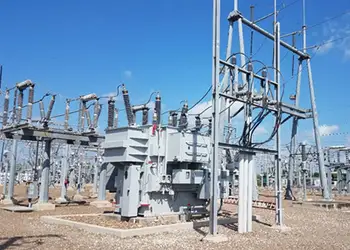
Substation Relay Protection Training

Our customized live online or in‑person group training can be delivered to your staff at your location.

  • Live Online
  • 12 hours Instructor-led
  • Group Training Available
Regular Price:
$699
Coupon Price:
$599
Reserve Your Seat Today
Toronto, Ontario -- Synex International confirms that BC Hydro has executed two long-term Electricity Purchase Agreements with its wholly owned subsidiary, Synex Energy Resources Ltd, covering the purchase of electricity from two hydroelectric plants to be located on Vancouver Island.

BC Hydro is sponsoring these plants under its 'Green Power' initiative and has provided information in BC Hydro News, dated February 19, 2002, on its web site.

The proposed plants are to be located at the Village of Tahsis and near the Town of Gold River with installed capacities of 2.9 MW and 3.8 MW respectively. Work on these projects is entering the regulatory phase with operation of both plants scheduled to commence by January 2004.

Related News

Environmentalist calls for reduction in biomass use to generate electricity

Nova Scotia Biomass Energy faces scrutiny as hydropower from Muskrat Falls via the Maritime Link increases, raising concerns over carbon emissions, biodiversity, ratepayer costs, and efficiency versus district heating in the province's renewable mix.


Key Points

Electricity from wood chips and waste wood in Nova Scotia, increasingly questioned as hydropower from the Maritime Link grows.

✅ Hydropower deliveries reduce need for biomass on the grid

✅ Biomass is inefficient, costly, and impacts biodiversity

✅ District heating offers better use of forestry residuals


The Ecology Action Centre's senior wilderness coordinator is calling on the Nova Scotia government to reduce the use of biomass to generate electricity now that more hydroelectric power is flowing into the province.

In 2020, the government of the day signed a directive for Nova Scotia Power to increase its use of biomass to generate electricity, including burning more wood chips, waste wood and other residuals from the forest industry. At the time, power from Muskrat Falls hydroelectric project in Labrador was not flowing into the province at high enough levels to reach provincial targets for electricity generated by renewable resources.

In recent months, however, the Maritime Link from Muskrat Falls has delivered Nova Scotia's full share of electricity, and, in some cases, even more, as the province also pursues Bay of Fundy tides projects to diversify supply.

Ray Plourde with the Ecology Action Centre said that should be enough to end the 2020 directive.

Ray Plourde is senior wilderness coordinator for the Ecology Action Centre. (CBC)
Biomass is "bad on a whole lot of levels," said Plourde, including its affects on biodiversity and the release of carbon into the atmosphere, he said. The province's reliance on waste wood as a source of fuel for electricity should be curbed, said Plourde.

"It's highly inefficient," he said. "It's the most expensive electricity on the power grid for ratepayers."

A spokesperson for the provincial Natural Resources and Renewables Department said that although the Maritime Link has "at times" delivered adequate electricity to Nova Scotia, "it hasn't done so consistently," a context that has led some to propose an independent planning body for long-term decisions.

"These delays and high fossil fuel prices mean that biomass remains a small but important component of our renewable energy mix," Patricia Jreiga said in an email, even as the province plans to increase wind and solar projects in the years ahead.

But to Plourde, that explanation doesn't wash.

The Nova Scotia Utility and Review Board recently ruled that Nova Scotia Power could begin recouping costs of the Maritime Link project from ratepayers. As for the rising cost of fossil fuels, Ploude noted that the inefficiency of biomass means there's no deal to be had using it as a fuel source.

"Honestly, that sounds like a lot of obfuscation," he said of the government's position.

No update on district heating plans
At the time of the directive, government officials said the increased use of forestry byproducts at biomass plants in Point Tupper and Brooklyn, N.S., including the nearby Port Hawkesbury Paper mill, would provide a market for businesses struggling to replace the loss of Northern Pulp as a customer. Brooklyn Power has been offline since a windstorm damaged that plant in February, however. Repairs are expected to be complete by the end of the year or early 2023.

Ploude said a better use for waste wood products would be small-scale district heating projects, while others advocate using more electricity for heat in cold regions.

Although the former Liberal government announced six public buildings to serve as pilot sites for district heating in 2020, and a list of 100 other possible buildings that could be converted to wood heat, there have been no updates.

"Currently, we're working with several other departments to complete technical assessments for additional sites and looking at opportunities for district heating, but no decisions have been made yet," provincial spokesperson Steven Stewart said in an email.


Related News

View more

Energy experts: US electric grid not designed to withstand the impacts of climate change

Summer Power Grid Reliability and Climate Risk drives urgent planning as extreme heat, peak demand, drought, and aging infrastructure strain ERCOT, NERC regions, risking outages without renewables integration and climate-informed grid modeling.


Key Points

Assessment of how extreme weather and demand stress the US grid, informing climate-smart planning to reduce outages.

✅ Many operators rely on historical weather, not climate projections

✅ NERC flags elevated blackout risk amid extreme heat and drought

✅ Renewables and storage can boost capacity and cut emissions


As heat ramps up ahead of what forecasters say will be a hotter than normal summer, electricity experts and officials are warning that states may not have enough power to meet demand in the coming months. And many of the nation's grid operators are also not taking climate change into account in their planning, despite available grid resilience guidance that could inform upgrades, even as extreme weather becomes more frequent and more severe.

Power operators in the Central US, in their summer readiness report, have already predicted "insufficient firm resources to cover summer peak forecasts." That assessment accounted for historical weather and the latest NOAA outlook that projects for more extreme weather this summer.

But energy experts say that some power grid operators are not considering how the climate crisis is changing our weather — including more frequent extreme events — and that is a problem if the intent is to build a reliable power grid while accelerating investing in carbon-free electricity across markets.

"The reality is the electricity system is old and a lot of the infrastructure was built before we started thinking about climate change," said Romany Webb, a researcher at Columbia University's Sabin Center for Climate Change Law. "It's not designed to withstand the impacts of climate change."

Webb says many power grid operators use historical weather to make investment decisions, rather than the more dire climate projections, simply because they want to avoid the possibility of financial loss, even as climate-related credit risks for nuclear plants are being flagged, for investing in what might happen versus what has already happened. She said it's the wrong approach and it makes the grid vulnerable.

"We have seen a reluctance on the part of many utilities to factor climate change into their planning processes because they say the science around climate change is too uncertain," Webb said. "The reality is we know climate change is happening, we know the impact it has in terms of more severe heatwaves, hurricanes, drought, with recent hydropower constraints in British Columbia illustrating the risks, and we know that all of those things affect the electricity system so ignoring those impacts just makes the problems worse."

An early heatwave knocked six power plants offline in Texas earlier this month. Residents were asked to limit electricity use, keeping thermostats at 78 degrees or higher and, as extreme heat boosts electricity bills for consumers, avoid using large appliances at peak times. The Electric Reliability Council of Texas, or ERCOT, in its seasonal reliability report, said the state's power grid is prepared for the summer and has "sufficient" power for "normal" summer conditions, based on average weather from 2006 to 2020.

But NOAA's recently released summer outlook forecasts above average temperatures for every county in the nation.

"We are continuing to design and site facilities based on historical weather patterns that we know in the age of climate change are not a good proxy for future conditions," Webb said.

When asked if the agency is creating a blind spot for itself by not accounting for extreme weather predictions, an ERCOT spokesperson said the report "uses a scenario approach to illustrate a range of resource adequacy outcomes based on extreme system conditions, including some extreme weather scenarios."

The North American Electric Reliability Corporation, or NERC — a regulating authority that oversees the health of the nation's electrical infrastructure — has a less optimistic projection.

In a recent seasonal reliability report, NERC placed Texas at "elevated risk" for blackouts this summer. It also reported that while much of the nation will have adequate electricity this summer, several markets are at risk of energy emergencies.

California grid operators, who recently avoided widespread rolling blackouts as heat strained the grid, in its summer reliability report also based its readiness analysis on "the most recent 20 years of historical weather data." The report also notes the assessment "does not fully reflect more extreme climate induced load and supply uncertainties."

Compounding the US power grid's supply and demand problem is drought: NERC says there's been a 2% loss of reliable hydropower from the nation's power-producing dams. Add to that the rapid retirement of many coal power plants — all while nearly everything from toothbrushes to cars are now electrified. Energy experts say adding more renewables into the mix will have the dual impact of cutting climate change inducing greenhouse gas emissions but also increasing the nation's power supply, aligning with efforts such as California's 100% carbon-free mandate that aim to speed the transition.


Related News

View more

EV Fires Raise Health Concerns for Firefighters

EV Firefighter Cancer Risks: lithium-ion battery fires, toxic metals like nickel and chromium, hazardous smoke plumes, and prolonged exposure threaten first responders; SCBA use, decontamination, and evidence-based protocols help reduce occupational health impacts.


Key Points

Health hazards from EV battery fires exposing responders to toxic metals and smoke, elevating long-term cancer risk.

✅ Nickel and chromium in EV smoke linked to lung and sinus cancers

✅ Use SCBA, on-scene decon, and post-incident cleaning to cut exposure

✅ Adopt EV fire SOPs: cooling, monitoring, isolation, air monitoring


As electric vehicles (EVs) become more popular, the EV fire risks to firefighters are becoming an increasing concern. These fires, fueled by the high-capacity lithium-ion batteries in EVs, produce dangerous chemical exposures that could have serious long-term health implications for first responders.

Claudine Buzzo, a firefighter and cancer survivor, knows firsthand the dangers that come with the profession. She’s faced personal health battles, including rare pancreatic cancer and breast cancer, both of which she attributes to the hazards of firefighting. Now, as EV adoption increases and some research links adoption to fewer asthma-related ER visits in local communities, Buzzo and her colleagues are concerned about how EV fires might add to their already heavy exposure to harmful chemicals.

The fire risks associated with EVs are different from those of traditional gasoline-powered vehicles. Dr. Alberto Caban-Martinez, who is leading a study at the Sylvester Comprehensive Cancer Center, explains that the high concentrations of metals released in the smoke from an EV fire are linked to various cancers. For instance, nickel, a key component in EV batteries, is associated with lung, nasal, and laryngeal cancers, while chromium, another metal found in some EV batteries, is linked to lung and sinus cancers.

Research from the Firefighter Cancer Initiative indicates that the plume of smoke from an EV fire contains significantly higher concentrations of these metals than fires from traditional vehicles. This raises the risk of long-term health problems for firefighters who respond to such incidents.

While the Electric Vehicle Association acknowledges the risks associated with various types of vehicle fires, they maintain that the lithium-ion batteries in EVs may not present a significantly higher risk than other common fire hazards, even as broader assessments suggest EVs are not a silver bullet for climate goals. Nonetheless, the growing body of research is causing concern among health experts, urging for further studies into how these new types of fires could affect firefighter health and how upstream electricity generation, where 18% of electricity in 2019 came from fossil fuels in Canada, factors into overall risk perceptions.

Fire departments and health researchers are working to understand the full scope of these risks and are emphasizing the importance of protective gear, such as self-contained breathing apparatuses, to minimize exposure during EV fire responses, while also considering questions like grid impacts during charging operations and EV sustainability improvements in different regions.


Related News

View more

Ex-SpaceX engineers in race to build first commercial electric speedboat

Arc One Electric Speedboat delivers zero-emission performance, quiet operation, and reduced maintenance, leveraging battery propulsion, aerospace engineering, and venture-backed innovation to cut noise pollution, fuel costs, and water contamination in high-performance marine recreation.


Key Points

Arc One Electric Speedboat is a battery-powered, zero-emission craft offering quiet, high-performance marine cruising.

✅ 475 hp, 24 ft hull, about 40 mph top speed

✅ Cuts noise, fumes, and water contamination vs gas boats

✅ Backed by Andreessen Horowitz; ex-SpaceX engineers


A team of former SpaceX rocket engineers have joined the race to build the first commercial electric speedboat.

The Arc Boat company announced it had raised $4.25m (£3m) in seed funding to start work on a 24ft 475-horsepower craft that will cost about $300,000.

The LA-based company, which is backed by venture capital firm Andreessen Horowitz (an early backer of Facebook and Airbnb), said the first model of the Arc One boat would be available for sale by the end of the year.

Mitch Lee, Arc’s chief executive, said he wanted to build electric boats because of the impact conventional petrol- or diesel-powered boats have on the environment.

“They not only get just two miles to the gallon, they also pump a lot of those fumes into the water,” Lee said. “In addition, there is the huge noise pollution factor [of conventional boats] and that is awful for the marine life. With gas-powered boats it’s not just carbon emissions into the air, it’s also polluting the water and causing noise pollution. Electric boats, like electric ships clearing the air on the B.C. coast, eliminate all that.”

Lee said electric vessels would also reduce the hassle of boat ownership. “I love being out on the water, being on a boat is so much fun, but owning a boat is so awful,” he said. “I have always believed that electric boats make sense. They will be quicker, quieter and way cheaper and easier to operate and maintain, with access options like an electric boat club in Seattle lowering barriers for newcomers.”

While the first models will be very expensive, Lee said the cost was mostly in developing the technology and cheaper versions would be available in the future, mirroring advances in electric aviation seen across the industry. “It is very much the Tesla approach – we are starting up market and using that income to finance research and development and work our way down market,” he said.

Lee said the technology could be applied to larger craft, and even ferries could run on electricity in the future, as projects for battery-electric high-speed ferries begin to scale.

“We started in February with no team, no money and no warehouse,” he said. “By December we are going to be selling the Arc One, and we are hiring aggressively because we want to accelerate the adoption of electric boats across a whole range of craft, including an electric-ready ferry on Kootenay Lake.”

Lee founded the company with fellow mechanical engineer Ryan Cook. Cook, the company’s chief technology officer, was previously the lead mechanical engineer at Elon Musk’s space exploration company SpaceX where he worked on the Falcon 9 rocket, the world’s first orbital class reusable rocket. In parallel, Harbour Air's electric aircraft highlights cross-sector electrification. Apart from Lee, all of Arc’s employees have some experience working at SpaceX.

The Arc boat, which would have a top speed of 40 mph, joins a number of startups rushing to make the first large-scale production of electric-powered speedboats, while a Vancouver seaplane airline demonstrates complementary progress with a prototype electric aircraft. The Monaco Yacht Club this month held a competition for electric boat prototypes to “instigate a new vision and promote all positive approaches to bring yachting into line” with global carbon dioxide emission reduction targets. Sweden’s Candela C-7 hydrofoil boat was crowned the fastest electric vessel.


Related News

View more

Zapping elderly brains with electricity improves short-term memory — for almost an hour

Transcranial electrical stimulation synchronizes brain waves to bolster working memory, aligning neural oscillations across the prefrontal and temporal cortex. This noninvasive brain stimulation may counter cognitive aging by restoring network coupling and improving short-term recall.


Key Points

Transcranial electrical stimulation applies scalp currents to synchronize brain waves, briefly enhancing working memory.

✅ Synchronizes prefrontal-temporal networks to restore coupling

✅ Noninvasive tES/tACS protocols show rapid, reversible gains

✅ Effects lasted under an hour; durability remains to be tested


To read this sentence, you hold the words in your mind for a few seconds until you reach the period. As you do, neurons in your brain fire in coordinated bursts, generating electrical waves that let you hold information for as long as it is needed, much as novel devices can generate electricity from falling snow under specific conditions. But as we age, these brain waves start to get out of sync, causing short-term memory to falter. A new study finds that jolting specific brain areas with a periodic burst of electricity might reverse the deficit—temporarily, at least.

The work makes “a strong case” for the idea that out-of-sync brain waves in specific regions can drive cognitive aging, says Vincent Clark, a neuroscientist at the University of New Mexico in Albuquerque, who was not involved in the research. He adds that the brain stimulation approach in the study may result in a new electrical therapy for age-related deficits in working memory.

Working memory is “the sketchpad of the mind,” allowing us to hold information in our minds over a period of seconds. This short-term memory is critical to accomplishing everyday tasks such as planning and counting, says Robert Reinhart, a neuroscientist at Boston University who led the study. Scientists think that when we use this type of memory, millions of neurons in different brain areas communicate through coupled bursts of activity, a form of electrical conduction that coordinates timing across networks. “Cells that fire together, wire together,” Reinhart says.

But despite its critical role, working memory is a fragile cognitive resource that declines with age, Reinhart says. Previous studies had suggested that reduced working-memory performance in the elderly is linked to uncoupled activity in different brain areas. So Reinhart and his team set out to test whether recoupling brain waves in older adults could boost the brain’s ability to temporarily store information, a systems-level coordination challenge akin to efforts to use AI for energy savings on modern power grids.

To do so, the researchers used jolts of weak electrical current to synchronize waves in the prefrontal and temporal cortex—two brain areas critical for cognition, a targeted approach not unlike how grids use batteries to stabilize power during strain—and applied the current to the scalps of 42 healthy people in their 60s and 70s who showed no signs of decline in mental ability. Before their brains were zapped, participants looked at a series of images: an everyday object, followed briefly by a blank screen, and then either an identical or a modified version of the same object. The goal was to spot whether the two images were different.

Then the participants took the test again, while their brains were stimulated with a current. After about 25 minutes of applying electricity, participants were on average more accurate at identifying changes in the images than they were before the stimulation. Following stimulation, their performance in the test was indistinguishable from that of a group of 42 people in their 20s. And the waves in the prefrontal and temporal cortex, which had previously been out of sync in most of the participants, started to fire in sync, the researchers report today in Nature Neuroscience, a synchronization imperative reminiscent of safeguards that prevent power blackouts on threatened grids. No such effects occurred in a second group of older people who received jolts of current that didn’t synchronize waves in the prefrontal and temporal cortex.

By using bursts of current to knock brain waves out of sync, the researchers also modulated the brain chatter in healthy people in their 20s, making them slower and less accurate at spotting differences in the image test.

“This is a very nice and clear demonstration of how functional connections underlie memory in younger adults and how alterations … can lead to memory reductions in older adults,” says Cheryl Grady, a cognitive neuroscientist at the Rotman Research Institute at Baycrest in Toronto, Canada. It’s also the first time that transcranial stimulation has been shown to restore working memory in older people, says Michael O’Sullivan, a neuroscientist at the University of Queensland in Brisbane, Australia, though electricity in medicine extends far beyond neurostimulation.

But whether brain zapping could turbocharge the cognitive abilities of seniors or help improve the memories of people with diseases like Alzheimer’s is still unclear: In the study, the positive effects on working memory lasted for just under an hour—though Reinhart says that’s as far as they recorded in the experiment. The team didn’t see the improvements decline toward the end, so he suspects that the cognitive boost may last for longer. Still, researchers say much more work has to be done to better understand how the stimulation works.

Clark is optimistic. “No pill yet developed can produce these sorts of effects safely and reliably,” he says. “Helping people is the ultimate goal of all of our research, and it’s encouraging to see that progress is being made.”


Related News

View more

Sub-Saharan Africa has a huge electricity problem - but with challenge comes opportunity

Sub-Saharan Africa Energy Access faces critical deficits; SDG7, clean energy finance, off-grid solar, and microgrids drive electrification for health, education, and economy amid World Bank and IEA efforts to expand reliable, affordable power.


Key Points

Reliable, affordable power in sub-Saharan Africa via renewables, off-grid solar, and SDG7-led electrification.

✅ SDG7 targets universal, modern energy access by 2030

✅ Off-grid solar and microgrids boost rural electrification

✅ Health, education, and business depend on reliable power


Sub-Saharan Africa has an electricity problem. While the world as a whole has made great strides when it comes to providing access to electricity and moving toward universal electricity access worldwide (the world average is now 90 per cent with access, up from 83 per cent in 2010), southern and western African states still lag far behind.

According to Tracking SDG7: The Energy Progress Report, produced by a consortium of organisations including the World Bank, the International Energy Agency and the World Health Organization, 759 million people were without electricity in 2019 and threequarters of them were based in sub-Saharan Africa. At just seven per cent, South Sudan had the lowest access figures; Chad, Burundi and Malawi were only marginally higher. What’s more, due to a combination of factors, the situation is getting worse. In total, the region’s access deficit increased from 556 million people in 2010 to 570 million people in 2019.

These days, being without electricity has an impact on every sphere of life. The Covid-19 pandemic only served to put this into sharper relief. Intermittent electricity meant vaccination doses that rely on cold storage were impossible to deliver and, as more than 70 per cent of the health facilities in sub-Saharan Africa have no access to reliable electricity, the problem was vast. But even without a global pandemic, having no power stymies opportunity in every field, from education to economics.

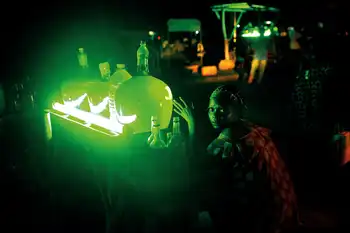
French photojournalist Pascal Maitre, who has spent much of his career writing about sub-Saharan Africa, wanted to document the problems faced by people in areas with no electricity. He thought particularly carefully about the location for his project. ‘First, I was thinking I could take images in the Democratic Republic of the Congo,’ he says. ‘But then I thought that if you chose a place that has war, it’s logical that electricity won’t really work. So, instead, I wanted to find a place that is quite stable. I decided to go to Benin, where they have a democracy. It is a good example of a country that’s not in really bad shape but where they still have this problem. Also, I didn’t want to go to a place that is very remote, where it is normal not to have good service. So I decided to go to a place around 50 kilometres from the capital that you can get to by road.’

Maitre visited several villages in the region, as well as making trips to Chad and Senegal, and encountered the full range of limitations engendered by the power shortage. From teachers struggling to conduct lessons in the dark to midwives forced to work with only the weak light from a phone, the situation was clearly unacceptable. ‘People were very, very, very upset,’ he says. ‘I conducted a lot of interviews in different villages and lack of electricity touches education, economy, business, security and also emigration, because people have to move to big cities or maybe to Europe to get jobs.’

Where once the situation might have been accepted as the norm, people today are fully aware of the ways in which they are held back by the lack of power. As Maitre remembers: ‘A guy said to me one day, “Do you think it is normal that last time my wife delivered a baby, the midwife had to hold her phone between her teeth in order to see what she was doing?” You feel very frustrated.’ He adds that the fact that most people now have mobile phones only highlights the hardship. ‘Before, maybe it was not so frustrating. But now, most of these people have cellphones. The cellphone company puts antennae everywhere so the phones work, but people cannot recharge their phones. They have to go to the market, where someone will come with a generator to recharge.’

Governments and global organisations are very aware of the problem across the world as a whole. Sustainable Development Goal 7 (SDG7) – one of the 17 goals set out in 2015 by the United Nations General Assembly – was designed to ensure universal access to affordable, reliable, sustainable and modern energy by 2030, underscoring the push for clean, affordable and sustainable electricity for all by 2030. As part of this goal, international financial flows to developing countries in support of clean energy reached US$17 billion in 2018. As a result, some areas have seen huge improvement. According to the Energy Progress Report, in Latin America and the Caribbean, and in Eastern and South-Eastern Asia, the advance of electrification has been enough to approach universal access. By 2019, in Western Asia and North Africa, and Central and South Asia, 94 and 95 per cent of the population respectively had access to electricity.

But these statistics only serve to emphasise just how bad the situation is in sub-Saharan Africa, where electricity systems are unlikely to go green this decade according to several analyses. As the report states: ‘While renewable energy has demonstrated remarkable resilience during the pandemic, the unfortunate fact is that gains in energy access throughout Africa are being reversed: the number of people lacking access to electricity is set to increase in 2020, making basic electricity services unaffordable for up to 30 million people who had previously enjoyed access.’

The small silver lining is that if the situation is dealt with properly, the region could build a renewable-energy system from the ground up, rather than having to undergo the costly and complex transitions underway in developed countries. In rural areas, small-scale or off-grid renewable systems (mostly solar) are expected to play an important role, as highlighted by a recent IRENA report on decarbonisation, in increasing access. In fact, solar panels are already used in many areas. In 2019, 105 million people had access to off-grid solar solutions, up from 85 million in 2016, and almost half lived in sub-Saharan Africa, with 17 million in Kenya and eight million in Ethiopia.

Rachel Kyte is currently serving as the 14th dean of the Fletcher School at Tufts University in the USA, but her CV is long. She was previously CEO of the UN-affiliated Sustainable Energy for All (SeforALL), as well as the World Bank Group vice president and special envoy for climate change, leading the run-up to the Paris Agreement. According to her, a focus on renewables is absolutely essential, both for wider efforts to tackle climate change, with some advocating a fossil fuel lockdown to drive a climate revolution, but also for the people of sub-Saharan Africa. ‘The fossil fuel industry has said it will just extend the centralised fossil-fuel power systems that we have today to reach these people,’ she says.


Related News

View more

Sign Up for Electricity Forum’s Newsletter

Stay informed with our FREE Newsletter — get the latest news, breakthrough technologies, and expert insights, delivered straight to your inbox.

Electricity Today T&D Magazine Subscribe for FREE

Stay informed with the latest T&D policies and technologies.
  • Timely insights from industry experts
  • Practical solutions T&D engineers
  • Free access to every issue

Live Online & In-person Group Training

Advantages To Instructor-Led Training – Instructor-Led Course, Customized Training, Multiple Locations, Economical, CEU Credits, Course Discounts.

Request For Quotation

Whether you would prefer Live Online or In-Person instruction, our electrical training courses can be tailored to meet your company's specific requirements and delivered to your employees in one location or at various locations.