B.C. Hydro Denies Gouging Charges

By B.C. Hydro has previously disclosed that Powerex is owed about $300 million by both Pacific Gas & Electric Co., a utility that filed for bankruptcy protection from creditors last week, and Southern Californian Edison.


Substation Relay Protection Training

Our customized live online or in‑person group training can be delivered to your staff at your location.

  • Live Online
  • 12 hours Instructor-led
  • Group Training Available
Regular Price:
$699
Coupon Price:
$599
Reserve Your Seat Today

California claims utility charged too much for its power

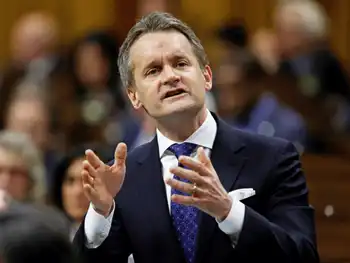
Vancouver, B.C. -- B.C. Hydro officials vehemently have denied complaints from California that the Crown corporation inflated the price of electricity it sold to the Golden State.A report prepared by the operator of the state's reporting grid said B.C. Hydro reaped $176 million US in "excessive" profits by price gouging California utilities.The California Independent System Operator (Cal-ISO) studied utility pricing for 20 large suppliers between May and November. The report was filed with the United States Federal Energy Regulatory Commission in Washington on March 22.Parts of the report -- principally an allegation that power suppliers overcharged Californian utilities more than $6 billion US in December -- were made public on the commission's Web site.The chair of B.C. Hydro, Brian Smith, said California created its own problems.The study claimed Powerex, B.C. Hydro's electricity export subsidiary, inflated its prices last year.Smith said the prices charged by Powerex were entirely in line with market conditions."Indeed, the ISO's market surveillance committee, whose responsibility it is to monitor the markets, has never claimed that Powerex's bids were in any way inappropriate," said Smith in a prepared statement.The high prices are the result of the California government's partial deregulation of power, along with poor supply and high demand, he said.The Los Angeles Times said it had obtained confidential portions of the report and Wednesday published a story that said B.C. Hydro leads the list of companies that profit more than what should be earned in a healthy, competitive market.B.C. Hydro has previously disclosed that Powerex is owed about $300 million by both Pacific Gas & Electric Co., a utility that filed for bankruptcy protection from creditors last week, and Southern Californian Edison.

Related News
IAEA Reviews Belarus’ Nuclear Power Infrastructure Development

Belarus Nuclear Power Infrastructure Review evaluates IAEA INIR Phase 3 readiness at Ostrovets NPP, VVER-1200 reactors, legal and regulatory framework, commissioning, safety, emergency preparedness, and energy diversification in a low-carbon program.


Key Points

An IAEA INIR Phase 3 assessment of Belarus readiness to commission and operate the Ostrovets NPP with VVER-1200 units.

✅ Reviews legal, regulatory, and institutional arrangements

✅ Confirms Phase 3 readiness for safe commissioning and operation

✅ Highlights good practices in peer reviews and emergency planning


An International Atomic Energy Agency (IAEA) team of experts today concluded a 12-day mission to Belarus to review its infrastructure development for a nuclear power programme. The Integrated Nuclear Infrastructure Review (INIR) was carried out at the invitation of the Government of Belarus.

Belarus, seeking to diversify its energy production with a reliable low-carbon source, and aware of the benefits of energy storage for grid flexibility, is building its first nuclear power plant (NPP) at the Ostrovets site, about 130 km north-west of the capital Minsk. The country has engaged with the Russian Federation to construct and commission two VVER-1200 pressurised water reactors at this site and expects the first unit to be connected to the grid this year.

The INIR mission reviewed the status of nuclear infrastructure development using the Phase 3 conditions of the IAEA’s Milestones Approach. The Ministry of Energy of Belarus hosted the mission.

The INIR team said Belarus is close to completing the required nuclear power infrastructure for starting the operation of its first NPP. The team made recommendations and suggestions aimed at assisting Belarus in making further progress in its readiness to commission and operate it, including planning for integration with variable renewables, as advances in new wind turbines are being deployed elsewhere to strengthen the overall energy mix.

“This mission marks an important step for Belarus in its preparations for the introduction of nuclear power,” said team leader Milko Kovachev, Head of the IAEA’s Nuclear Infrastructure Development Section. “We met well-prepared, motivated and competent professionals ready to openly discuss all infrastructure issues. The team saw a clear drive to meet the objectives of the programme and deliver benefits to the Belarusian people, such as supporting the country’s economic development, including growth in EV battery manufacturing sectors.”

The team comprised one expert from Algeria and two experts from the United Kingdom, as well as seven IAEA staff. It reviewed the status of 19 nuclear infrastructure issues using the IAEA evaluation methodology for Phase 3 of the Milestones Approach, noting that regional integration via an electricity highway can shape planning assumptions as well. It was the second INIR mission to Belarus, who hosted a mission covering Phases 1 and 2 in 2012.

Prior to the latest mission, Belarus prepared a Self-Evaluation Report covering all infrastructure issues and submitted the report and supporting documents to the IAEA.

The team highlighted areas where further actions would benefit Belarus, including the need to improve institutional arrangements and the legal and regulatory framework, drawing on international examples of streamlined licensing for advanced reactors to ensure a stable and predictable environment for the programme; and to finalize the remaining arrangements needed for sustainable operation of the nuclear power plant.

The team also identified good practices that would benefit other countries developing nuclear power in the areas of programme and project coordination, the use of independent peer reviews, cooperation with regulators from other countries, engagement with international stakeholders and emergency preparedness, and awareness of regional initiatives such as new electricity interconnectors that can enhance system resilience.

Mikhail Chudakov, IAEA Deputy Director General and Head of the Department of Nuclear Energy attended the Mission’s closing meeting. “Developing the infrastructure required for a nuclear power programme requires significant financial and human resources, and long lead times for preparation and the approval of major transmission projects that support clean power flows, and the construction activities,” he said. “Belarus has made commendable progress since the decision to launch a nuclear power programme 10 years ago.”

“Hosting the INIR mission, Belarus demonstrated its transparency and genuine interest to receive an objective professional assessment of the readiness of its nuclear power infrastructure for the commissioning of the country’s first nuclear power plant,” said Mikhail Mikhadyuk, Deputy Minister of Energy of the Republic of Belarus. ”The recommendations and suggestions we received will be an important guidance for our continuous efforts aimed at ensuring the highest level of safety and reliability of the Belarusian NPP."


Related News

View more

The Haves and Have-Nots of Electricity in California

California Public Safety Power Shutoffs highlight wildfire prevention as PG&E outages disrupt schools, businesses, and rural communities, driving generator use, economic hardship, and emergency preparedness across Northern California during high-wind events.


Key Points

Utility outages to reduce wildfire risk during extreme winds, impacting homes and businesses in high-risk California.

✅ PG&E cuts power during high winds to prevent wildfires

✅ Costs rise for generators, fuel, batteries, and spoiled food

✅ Rural, low-income communities face greater economic losses


The intentional blackout by California’s largest utility this week put Forest Jones out of work and his son out of school. On Friday morning Mr. Jones, a handyman and single father, sat in his apartment above a tattoo parlor waiting for the power to come back on and for school to reopen.

“I’ll probably lose $400 or $500 dollars because of this,” said Mr. Jones, who lives in the town of Paradise, which was razed by fire last year and is slowly rebuilding. “Things have been really tough up here.”

Millions of people were affected by the blackout, which spanned the outskirts of Silicon Valley to the forests of Humboldt County near the Oregon border. But the outage, which the power company said was necessary to reduce wildfire risk across the region, also drew a line between those who were merely inconvenienced and those who faced a major financial hardship.

To have the lights on, the television running and kitchen appliances humming is often taken for granted in America, even as U.S. grid during coronavirus questions persisted. During California’s blackout it became an economic privilege.

The economic impacts of the shut-off were especially acute in rural, northern towns like Paradise, where incomes are a fraction of those in the San Francisco Bay Area.

Both wealthy and poorer areas were affected by the blackout but interviews across the state suggested that being forced off the grid disproportionately hurt the less affluent. One family in Humboldt County said they had spent $150 on batteries and water alone during the shutdown.

“To be prepared costs money,” Sue Warhaftig, a massage therapist who lives in Mill Valley, a wealthy suburb across the Golden Gate Bridge from San Francisco. Ms. Warhaftig spent around two days without electricity but said she had been spared from significant sacrifices during the blackout.

She invested in a generator to keep the refrigerator running and to provide some light. She cooked in the family’s Volkswagen camper van in her driveway. At night she watched Netflix on her phone, which she was able to charge with the generator. Her husband, a businessman, is in London on a work trip. Her two sons, both grown, live in Southern California and Seattle.

“We were inconvenienced but life wasn’t interrupted,” Ms. Warhaftig said. “But so many people’s lives were.

Pacific Gas & Electric restored power to large sections of Northern California on Friday, including Paradise, where the electricity came back on in the afternoon. But hundreds of thousands of people in other areas remained in the dark. The carcasses of burned cars still littered the landscape around Paradise, where 86 people died in the Camp Fire last year, some of them while trying to escape.

Officials at power company said that by Saturday they hoped to have restored power to 98 percent of the customers who were affected.

The same dangerous winds that spurred the shut-off in Northern California have put firefighters to work in the south. The authorities in Los Angeles County ordered the evacuation of nearly 100,000 people on Friday as the Saddleridge Fire burned nearly 5,000 acres and destroyed 25 structures. The Sandalwood Fire, which ignited Thursday in Riverside County, had spread to more than 800 acres and destroyed 74 structures by Friday afternoon.

While this week’s outage was the first time many customers in Northern California experienced a deliberate power shut-off, residents in and around Paradise have had their power cut four times in recent months, residents say.

Many use a generator, but running one has become increasingly expensive with gasoline now at more than $4 a gallon in California.

On Friday, Dennis and Viola Timmer drove up the hill to their home in Magalia, a town adjacent to Paradise, loaded with $102 dollars of gasoline for their generators. It was their second gasoline run since the power went out Tuesday night.

The couple, retired and on a fixed income after Mr. Timmer’s time in the Navy and in construction, said the power outage had severely limited their ability to do essential tasks like cooking, or to leave the house.

“You know what it feels like? You’re in jail,” said Ms. Timmer, 72. “You can’t go anywhere with the generators running.”

Since the generators are not powerful enough to run heat or air conditioning, the couple slept in their den with an electric space heater.

“It’s really difficult because you don’t have a normal life,” Ms. Timmer said. “You’re trying to survive.”

To be sure, the shutdown has affected many people regardless of economic status, and similar disruptions abroad, like a London power outage that disrupted routines, show how widespread such challenges can be. The areas without power were as diverse as the wealthy suburbs of Silicon Valley, the old Gold Rush towns of the Sierra Nevada, the East Bay of San Francisco and the seaside city of Arcata.

Ms. Cahn’s cellphone ran out of power during the blackout and even when she managed to recharge it in her car cell service was spotty, as it was in many areas hit by the blackout.

Accustomed to staying warm at night with an electric blanket, Ms. Cahn slept under a stack of four blankets.

“I’m doing what I have to do which is not doing very much,” she said.

Further south in Marin City, Chanay Jackson stood surrounded by fumes from generators still powering parts of the city.

She said that food stamps were issued on the first of the month and that many residents who had to throw away food were out of luck.

“They’re not going to issue more food stamps just because the power went out,” Ms. Jackson said. “So they’re just screwed until next month.”

Strong winds have many times in the past caused power lines to come in contact with vegetation, igniting fires that are then propelled by the gusts, and hurricanes elsewhere have crippled infrastructure with Louisiana grid rebuild after Laura according to state officials. This was the case with the Camp Fire.

Since higher elevations had more extreme winds many of the neighborhoods where power was turned off this week were in hills and canyons, including in the Sierra Nevada.

The shut-off, which by one estimate affected a total of 2.5 million people, has come under strong criticism by residents and politicians, and warnings from Cal ISO about rolling blackouts as the power grid strained. The company’s website crashed just as customers sought information about the outage. Gov. Gavin Newsom called it unacceptable. But his comments were nuanced, criticizing the way the shut-off was handled, not the rationale for it. Mr. Newsom and others said the ravages of the Camp Fire demanded preventive action to prevent a reoccurrence.

Yet the calculus of trying to avoid deadly fires by shutting off power will continue to be debated as California enters its peak wildfire season, even as electricity reliability during COVID-19 was generally maintained for most consumers.

In the city of Grass Valley, Matthew Gottschalk said he and his wife realized that a generator was essential when they calculated that they had around $500 worth of food in their fridge.

“I don’t know what we would have done,” said Mr. Gottschalk, whose power went out Tuesday night.

His neighbors are filling coolers with ice. Everyone is hoping the power will come back on soon.

“Ice is going to run out and gas is going to run out,” he said.


Related News

View more

Sustaining U.S. Nuclear Power And Decarbonization

Existing Nuclear Reactor Lifetime Extension sustains carbon-free electricity, supports deep decarbonization, and advances net zero climate goals by preserving the US nuclear fleet, stabilizing the grid, and complementing advanced reactors.


Key Points

Extending licenses keeps carbon-free nuclear online, stabilizes grid, and accelerates decarbonization toward net zero.

✅ Preserves 24/7 carbon-free baseload to meet climate targets

✅ Avoids emissions and replacement costs from premature retirements

✅ Complements advanced reactors; reduces capital and material needs


Nuclear power is the single largest source of carbon-free energy in the United States and currently provides nearly 20 percent of the nation’s electrical demand. As a result, many analyses have investigated the potential of future nuclear energy contributions in addressing climate change and investing in carbon-free electricity across the sector. However, few assess the value of existing nuclear power reactors.

Research led by Pacific Northwest National Laboratory (PNNL) Earth scientist Son H. Kim, with the Joint Global Change Research Institute (JGCRI), a partnership between PNNL and the University of Maryland, has added insight to the scarce literature and is the first to evaluate nuclear energy for meeting deep decarbonization goals amid rising credit risks for nuclear power identified by Moody's. Kim sought to answer the question: How much do our existing nuclear reactors contribute to the mission of meeting the country’s climate goals, both now and if their operating licenses were extended?

As the world races to discover solutions for reaching net zero as part of the global energy transition now underway, Kim’s report quantifies the economic value of bringing the existing nuclear fleet into the year 2100. It outlines its significant contributions to limiting global warming.

Plants slated to close by 2050 could be among the most important players in a challenge requiring all available carbon-free technology solutions—emerging and existing—alongside renewable electricity in many regions, the report finds. New nuclear technology also has a part to play, and its contributions could be boosted by driving down construction costs.  

“Even modest reductions in capital costs could bring big climate benefits,” said Kim. “Significant effort has been incorporated into the design of advanced reactors to reduce the use of all materials in general, such as concrete and steel because that directly translates into reduced costs and carbon emissions.”

Nuclear power reactors face an uncertain future, and some utilities face investor pressure to release climate reports as well.
The nuclear power fleet in the United States consists of 93 operating reactors across 28 states. Most of these plants were constructed and deployed between 1970-1990. Half of the fleet has outlived its original operating license lifetime of 40 years. While most reactors have had their licenses renewed for an additional 20 years, and some for another 20, the total number of reactors that will receive a lifetime extension to operate a full 80 years from deployment is uncertain.

Other countries also rely on nuclear energy. In France, for example, nuclear energy provides 70 percent of the country’s power supply. They and other countries must also consider extending the lifetime, retiring, or building new, modern reactors while navigating Canadian climate policy implications for electricity grids. However, the U.S. faces the potential retirement of many reactors in a short period—this could have a far stronger impact than the staggered closures other countries may experience.

“Our existing nuclear power plants are aging, and with their current 60-year lifetimes, nearly all of them will be gone by 2050. It’s ironic. We have a net zero goal to reach by 2050, yet our single largest source of carbon-free electricity is at risk of closure, as seen in New Zealand's electricity transition debates,“ said Kim.


Related News

View more

UK EV Drivers Demand Fairer Vehicle Taxes

UK EV Per-Mile Taxes are reshaping road pricing and vehicle taxation for electric cars, raising fairness concerns, climate policy questions, and funding needs for infrastructure and charging networks across the country.


Key Points

They are per-mile road charges on EVs to fund infrastructure, raising fairness, emissions, and vehicle taxation concerns.

✅ Propose tax relief or credits for EV owners

✅ Consider emission-based road user charging

✅ Invest in charging networks and road infrastructure


As the UK continues its push towards a greener future with increased adoption of electric vehicles (EVs) and surging EV interest during supply disruptions, a growing number of electric car drivers are voicing their frustration over the current tax system. The debate centers around the per-mile vehicle taxes that are being proposed and implemented, which many argue are unfairly burdensome on EV owners. This issue has sparked a broader campaign advocating for a more equitable approach to vehicle taxation, one that reflects the evolving landscape of transportation and environmental policy.

Rising Costs for Electric Car Owners

Electric vehicles have been hailed as a crucial component in the UK’s strategy to reduce carbon emissions and combat climate change. Government incentives, such as grants for EV purchases and tax breaks, have been instrumental in encouraging the shift from petrol and diesel cars to cleaner alternatives, even as affordability concerns persist among many UK consumers. However, as the number of electric vehicles on the road grows, the financial dynamics of vehicle taxation are coming under scrutiny.

One of the key issues is the introduction and increase of per-mile vehicle taxes. While these taxes are designed to account for road usage and infrastructure costs, they have been met with resistance from EV drivers who argue that they are being disproportionately affected. Unlike traditional combustion engine vehicles, electric cars typically have lower running costs compared to petrol or diesel models and, in many cases, benefit from lower or zero emissions. Yet, the current tax system does not always reflect these advantages.

The Taxation Debate

The crux of the debate lies in how vehicle taxes are structured and implemented. Per-mile taxes are intended to ensure that all road users contribute fairly to the maintenance of transport infrastructure. However, the implementation of such taxes has raised concerns about fairness and affordability, particularly for those who have invested heavily in electric vehicles.

Critics argue that per-mile taxes do not adequately take into account the environmental benefits of driving an electric car, noting that the net impact depends on the electricity generation mix in each market. While EV owners are contributing to a cleaner environment by reducing emissions, they are also facing higher taxes that could undermine the financial benefits of their greener choice. This has led to calls for a reassessment of the tax system to ensure that it aligns with the UK’s climate goals and provides a fair deal for electric vehicle drivers.

Campaigns for Fairer Taxation

In response to these concerns, several advocacy groups and individual EV owners have launched campaigns calling for a more balanced approach to vehicle taxation. These campaigns emphasize the need for a system that supports the transition to electric vehicles and recognizes their role in reducing environmental impact, drawing on ambitious EV targets abroad as useful benchmarks.

Key proposals from these campaigns include:

  1. Tax Relief for EV Owners: Advocates suggest providing targeted tax relief for electric vehicle owners to offset the costs of per-mile taxes. This could include subsidies or tax credits that acknowledge the environmental benefits of EVs and help to make up for higher road usage fees.

  2. Emission-Based Taxation: An alternative approach is to design vehicle taxes based on emissions rather than mileage. This system would ensure that those driving high-emission vehicles contribute more to road maintenance, while EV owners, who are already reducing emissions, are not penalized.

  3. Infrastructure Investments: Campaigners also call for increased investments in infrastructure that supports electric vehicles, such as charging networks and proper grid management practices that balance load. This would help to address concerns about the adequacy of current road maintenance and support the growing number of EVs on the road.

Government Response and Future Directions

The UK government faces the challenge of balancing revenue needs with environmental goals. While there is recognition of the need to update the tax system in light of increasing EV adoption, there is also a focus on ensuring that any changes are equitable and do not disincentivize the shift towards cleaner vehicles, while considering whether the UK grid can handle additional EV demand reliably.

Discussions are ongoing about how to best implement changes that address the concerns of electric vehicle owners while ensuring that the transportation infrastructure remains adequately funded. The outcome of these discussions will be critical in shaping the future of vehicle taxation in the UK and supporting the country’s broader environmental objectives.

Conclusion

As electric vehicle adoption continues to rise in the UK, the debate over vehicle taxation becomes increasingly important. The campaign for fairer per-mile taxes highlights the need for a tax system that supports the transition to cleaner transportation while also being fair to those who have made environmentally conscious choices. Balancing these factors will be key to achieving the UK’s climate goals and ensuring that all road users contribute equitably to the maintenance of transport infrastructure. The ongoing dialogue and policy adjustments will play a crucial role in shaping a sustainable and just future for transportation in the UK.


Related News

View more

Global Energy War Escalates: Price Hikes and Instability

Russia-Ukraine Energy War disrupts infrastructure, oil, gas, and electricity, triggering supply shocks, price spikes, and inflation. Global markets face volatility, import risks, and cybersecurity threats, underscoring energy security, grid resilience, and diversified supply.


Key Points

It is Russia's strategic targeting of Ukraine's energy system to disrupt supplies, raise prices, and hit global markets.

✅ Attacks weaponize energy to strain Ukraine and allies

✅ Supply shocks risk oil, gas, and electricity price spikes

✅ Urgent need for cybersecurity, grid resilience, diversification


Russia's targeting of Ukraine's energy infrastructure has unleashed an "energy war" that could lead to widespread price increases, supply disruptions, and ripple effects throughout the global energy market, felt across the continent, with warnings of Europe's energy nightmare taking shape.

This highlights the unprecedented scale and severity of the attacks on Ukrainian energy infrastructure. These attacks have disrupted power supplies, prompting increased electricity imports to keep the lights on, hindered oil and gas production, and damaged refineries, impacting Ukraine and the broader global energy system.


Energy as a Weapon

Experts claim that Russia's deliberate attacks on Ukraine's energy infrastructure represent a strategic escalation, amid energy ceasefire violations alleged by both sides, demonstrating the Kremlin's willingness to weaponize energy as part of its war effort. By crippling Ukraine's energy system, Russia aims to destabilize the country, inflict suffering on civilians, and undermine Western support for Ukraine.


Impacts on Global Oil and Gas Markets

The ongoing attacks on Ukraine's energy infrastructure could significantly impact global oil and gas markets, leading to supply shortages and dramatic price increases, even as European gas prices briefly returned to pre-war levels earlier this year, underscoring extreme volatility. Ukraine's oil and gas production, while not massive in global terms, is still significant, and its disruption feeds into existing anxieties about global energy supplies already affected by the war.


Ripple Effects Beyond Ukraine

The impacts of the "energy war" won't be limited to Ukraine or its immediate neighbours. Price increases for oil, gas, and electricity are expected worldwide, further fueling inflation and exacerbating the global cost of living crisis.  Additionally, supply disruptions could disproportionately affect developing nations and regions heavily dependent on energy imports, making targeted energy security support to Ukraine and other vulnerable importers vital.


Vulnerability of Energy Infrastructure

The attacks on Ukraine highlight the vulnerability of critical energy infrastructure worldwide, as the country prepares for winter under persistent threats. The potential for other state or non-state actors to use similar tactics raises concerns about security and long-term stability in the global energy sector.


Strengthening Resilience

Experts emphasize the urgent need for global cooperation in strengthening the resilience of energy infrastructure. Investments in cybersecurity, diverse energy sources, and decentralized grids are crucial for mitigating the risks of future attacks, with some arguing that stepping away from fossil fuels would improve US energy security over time. International cooperation will be key in identifying vulnerable areas and providing aid to nations whose infrastructure is under threat.


The Unpredictable Future of Energy

The "energy war" unleashed by Russia has injected a new level of uncertainty into the global energy market. In addition to short-term price fluctuations and supply issues, the conflict could accelerate the long-term transition towards renewable energy sources and reshape how nations approach energy security.


Related News

View more

Philippines Reaffirms Clean Energy Commitment at APEC Summit

Philippines Clean Energy Commitment underscores APEC-aligned renewables, energy transition, and climate resilience, backed by policy incentives, streamlined regulation, technology transfer, and public-private investments to boost energy security, jobs, and sustainable growth.


Key Points

It is the nation's pledge to scale renewables and build climate resilience through APEC-aligned energy policy.

✅ Policy incentives, PPPs, and streamlined permits

✅ Grid upgrades, storage, and smart infrastructure

✅ Regional cooperation on tech transfer and capacity building


At the recent Indo-Pacific Economic Cooperation (APEC) Summit, the Philippines reiterated its dedication to advancing clean energy initiatives as part of its sustainable development agenda. This reaffirmation underscores the country's commitment to mitigating climate change impacts, promoting energy security, and fostering economic resilience through renewable energy solutions, with insights from an IRENA study on the power crisis informing policy direction.

Strategic Goals and Initiatives

During the summit, Philippine representatives highlighted strategic goals aimed at enhancing clean energy adoption and sustainability practices. These include expanding renewable energy infrastructure, accelerating energy transition efforts toward 100% renewables targets, and integrating climate resilience into national development plans.

Policy Framework and Regulatory Support

The Philippines has implemented a robust policy framework to support clean energy investments and initiatives. This includes incentives for renewable energy projects, streamlined regulatory processes, and partnerships with international stakeholders, such as ADFD-IRENA funding initiatives, to leverage expertise and resources in advancing sustainable energy solutions.

Role in Regional Cooperation

As an active participant in regional economic cooperation, the Philippines collaborates with APEC member economies to promote knowledge sharing, technology transfer, and capacity building in renewable energy development, as over 30% of global electricity is now generated from renewables, reinforcing the momentum. These partnerships facilitate collective efforts to address energy challenges and achieve mutual sustainability goals.

Economic and Environmental Benefits

Investing in clean energy not only reduces greenhouse gas emissions but also stimulates economic growth and creates job opportunities in the renewable energy sector. The Philippines recognizes the dual benefits of transitioning to cleaner energy sources, with projects like the Aboitiz geothermal financing award illustrating private-sector momentum, contributing to long-term economic stability and environmental stewardship.

Challenges and Opportunities

Despite progress, the Philippines faces challenges such as energy access disparities, infrastructure limitations, and financing constraints in scaling up clean energy projects, amid regional signals like India's solar slowdown and coal resurgence that underscore transition risks. Addressing these challenges requires innovative financing mechanisms, public-private partnerships, and community engagement to ensure inclusive and sustainable development.

Future Outlook

Moving forward, the Philippines aims to accelerate clean energy deployment through strategic investments, technology innovation, and policy coherence, aligning with the U.S. clean energy market trajectory toward majority share to capture emerging opportunities. Embracing renewable energy as a cornerstone of its economic strategy positions the country to attract investments, enhance energy security, and achieve resilience against global energy market fluctuations.

Conclusion

The Philippines' reaffirmation of its commitment to clean energy at the APEC Summit underscores its leadership in promoting sustainable development and addressing climate change challenges. By prioritizing renewable energy investments and fostering regional cooperation, the Philippines aims to build a resilient energy infrastructure that supports economic growth and environmental sustainability. As the country continues to navigate its energy transition journey, collaboration and innovation will be key in realizing a clean energy future that benefits present and future generations.


Related News

View more

Sign Up for Electricity Forum’s Newsletter

Stay informed with our FREE Newsletter — get the latest news, breakthrough technologies, and expert insights, delivered straight to your inbox.

Electricity Today T&D Magazine Subscribe for FREE

Stay informed with the latest T&D policies and technologies.
  • Timely insights from industry experts
  • Practical solutions T&D engineers
  • Free access to every issue

Live Online & In-person Group Training

Advantages To Instructor-Led Training – Instructor-Led Course, Customized Training, Multiple Locations, Economical, CEU Credits, Course Discounts.

Request For Quotation

Whether you would prefer Live Online or In-Person instruction, our electrical training courses can be tailored to meet your company's specific requirements and delivered to your employees in one location or at various locations.