By    « Back


NFPA 70e Training - Arc Flash

Our customized live online or in‑person group training can be delivered to your staff at your location.

  • Live Online
  • 6 hours Instructor-led
  • Group Training Available
Regular Price:
$199
Coupon Price:
$149
Reserve Your Seat Today
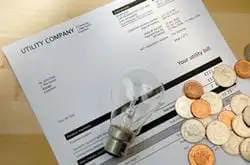
-- Utility customers in this province could soon be facing a hike in their BC Hydro bills.

The government privatization of all or part of the huge provincial utility could prove very costly for taxpayers.

Rates skyrocketed in Alberta a couple of years back when that province privatized the transmission and delivery of its electricity.

Now there is confirmation that big changes are ahead for BC Hydro.

"Independent power producers need to have access to BC Hydro's transmission lines," says Energy and Mines Minister Richard Neufeld.

"So there will be a movement to maintain the transmission portion of BC Hydro out of BC Hydro's control -- but still under provincial ownership, still owned by the Crown, by the people of British Columbia."

Last year, despite a nine-year price freeze, BC Hydro still produced a $400 million profit, while charging rates one-half to one-third of those in Alberta.

The B.C. Liberals will announce their plans for the future of the utility giant in late September or early October.

Related News

Nonstop Records For U.S. Natural-Gas-Based Electricity

U.S. Natural Gas Power Demand is surging for electricity generation amid summer heat, with ERCOT, Texas grid reserves tight, EIA reporting coal and nuclear retirements, renewables intermittency, and pipeline expansions supporting combined-cycle capacity and prices.


Key Points

It is rising use of natural gas for power, driven by summer heat, plant retirements, and new combined-cycle capacity.

✅ ERCOT reserve margin 9%, below 14% target in Texas

✅ Gas share of U.S. power near 40-43% this summer

✅ Coal and nuclear retirements shift capacity to combined cycle


As the hot months linger, it will be natural gas that is leaned on most to supply the electricity that we need to run our air conditioning loads on the grid and keep us cool.

And this is surely a great and important thing: "Heat causes most weather-related deaths, National Weather Service says."

Generally, U.S. gas demand for power in summer is 35-40% higher than what it was five years ago, with so much more coming (see Figure).

The good news is regions across the country are expected to have plenty of reserves to keep up with power demand.

The only exception is ERCOT, covering 90% of the electric load in Texas, where a 9% reserve margin is expected, below the desired 14%.

Last summer, however, ERCOT’s reserve margin also was below the desired level, yet the grid operator maintained system reliability with no load curtailments.

Simply put, other states are very lucky that Texas has been able to maintain gas at 50% of its generation, despite being more than justified to drastically increase that.

At about 1,600 Bcf per year, the flatness of gas for power demand in Texas since 2000 has been truly remarkable, especially since Lone Star State production is up 50% since then.

Increasingly, other U.S. states (and even countries) are wanting to import huge amounts of gas from Texas, a state that yields over 25% of all U.S. output.

Yet if Texas justifiably ever wants to utilize more of its own gas, others would be significantly impacted.

At ~480 TWh per year, if Texas was a country, it would be 9th globally for power use, even ahead of Brazil, a fast growing economy with 212 million people, and France, a developed economy with 68 million people.

In the near-term, this explains why a sweltering prolonged heat wave in July in Texas, with a hot Houston summer setting new electricity records, is the critical factor that could push up still very low gas prices.

But for California, our second highest gas using state, above-average snowpack should provide a stronger hydropower for this summer season relative to 2018.

Combined, Texas and California consume about 25% of U.S. gas, with Texas' use double that of California.


Across the U.S., gas could supply a record 40-43% of U.S. electricity this summer even as the EIA expects solar and wind to be larger sources of generation across the mix

Our gas used for power has increased 35-40% over the past five years, and January power generation also jumped on the year, highlighting broad momentum.

Our gas used for power has increased 35-40% over the past five years. DATA SOURCE: EIA; JTC

Indeed, U.S. natural gas for electricity has continued to soar, even as overall electricity consumption has trended lower in some years, at nearly 10,700 Bcf last year, a 16% rise from 2017 and easily the highest ever.

Gas is expected to supply 37% of U.S. power this year, even as coal-fired generation saw a brief uptick in 2021 in EIA data, versus 27% just five years ago (see Figure).

Capacity wise, gas is sure to continue to surge its share 45% share of the U.S. power system.

"More than 60% of electric generating capacity installed in 2018 was fueled by natural gas."

We know that natural gas will continue to be the go-to power source: coal and nuclear plants are retiring, and while growing, wind and solar are too intermittent, geography limited, and transmission short to compensate like natural gas can.

"U.S. coal power capacity has fallen by a third since 2010," and last year "16 gigawatts (16,000 MW) of U.S. coal-fired power plants retired."

This year, some 2,000 MW of coal was retired in February alone, with 7,420 MW expected to be closed in 2019.

Ditto for nuclear.

Nuclear retirements this year include Pilgrim, Massachusetts’s only nuclear plant, and Three Mile Island in Pennsylvania.

This will take a combined ~1,600 MW of nuclear capacity offline.

Another 2,500 MW and 4,300 MW of nuclear are expected to be leaving the U.S. power system in 2020 and 2021, respectively.

As more nuclear plants close, EIA projects that net electricity generation from U.S. nuclear power reactors will fall by 17% by 2025.

From 2019-2025 alone, EIA expects U.S. coal capacity to plummet nearly 25% to 176,000 MW, with nuclear falling 15% to 83,000 MW.

In contrast, new combined cycle gas plants will grow capacity almost 30% to around 310,000 MW.

Lower and lower projected commodity prices for gas encourage this immense gas build-out, not to mention non-stop increases in efficiency for gas-based units.

Remember that these are official U.S. Department of Energy estimates, not coming from the industry itself.

In other words, our Department of Energy concludes that gas is the future.

Our hotter and hotter summers are therefore more and more becoming: "summers for natural gas"

Ultimately, this shows why the anti-pipeline movement is so dangerous.

"Affordable Energy Coalition Highlights Ripple Effect of Natural Gas Moratorium."

In April, President Trump signed two executive orders to promote energy infrastructure by directing federal agencies to remove bottlenecks for gas transport into the Northeast in particular, where New England oil-fired generation has spiked, and to streamline federal reviews of border-crossing pipelines and other infrastructure.

Builders, however, are not relying on outside help: all they know is that more U.S. gas demand is a constant, so more infrastructure is mandatory.

They are moving forward diligently: for example, there are now some 27 pipelines worth $33 billion already in the works in Appalachia.


Related News

View more

PC Leader Doug Ford vows to fire Hydro One CEO, board if elected

Doug Ford's Hydro One firing vow targets CEO pay, the utility's board, and privatization, amid Ontario politics over electricity rates, governance, and control, raising questions about legal tools, contracts, and impacts on customers and taxpayers.


Key Points

Ford vows to oust Hydro One's CEO and board to curb pay and signal rate restraint, subject to legal and governance limits.

✅ Province lacks direct control post-privatization

✅ Possible board removals to influence executive pay

✅ Impact on rates, contracts, and shareholders unclear


Ontario PC Leader Doug Ford is vowing to fire the head of Hydro One, and its entire board if he's elected premier in June.

Ford made the announcement, calling President and CEO Mayo Schmidt, Premier "Kathleen Wynne's $6-Million dollar man," referring to his yearly salary and bonuses, which now add up to $6.2 million.

"This board and this CEO are laughing themselves to the bank," Ford said.

However, it's unclear how Ford would do that since the province does not control the company anymore.

"We don't have the ability to go out and say we are firing the CEO at Hydro One," PC energy critic Todd Smith said while speaking to reporters after Ford's remarks.

#google#

However, he said "we do have tools at our disposal in the tool box. The unfortunate thing is that Kathleen Wynne and the Liberals have just let those tools sit there for the last couple of years and [have] not taken action on things like this."

Smith declined to provide details about what those tools are, but suggested Ford would have the right to fire Hydro's board.

He said that would send a message "that we're not going to accept these salaries."

Smith says the Ontario gov still has the right to fire Hydro One board. What about their contracts? Pay them out? Smith says they don't know the details of people's contacts

We will not engage in politics,' Hydro One says

A Hydro One spokesperson said the amount customers pay to compensate the CEO's salary is the same as before privatization — two cents on each monthly bill.

"We will not engage in politics, however our customers deserve the facts," said the email statement to CBC Toronto.

"Nearly 80 per cent of the total executive compensation package is paid for by shareholders."

Ontario NDP MPP Peter Tabuns says Ford is pro-privatization, and that won't help those struggling with high hydro bills. (Michelle Siu/The Canadian Press)

Peter Tabuns, the NDP's energy critic, said his government would aim to retake public control of Hydro One to cap CEO pay and control the CEO's "outrageous salary."

But while he shares Ford's goal of cutting Schmidt's pay, Tabuns blasted what he believes would be the PC leader's approach.

"Doug Ford has no idea how to reign [sic] in the soaring hydro bills that Ontario families are facing — in fact, if his threats of further privatization include hydro, he'll drive bills and executive salaries ever higher," he said in an email statement.

The only plan we've heard from Doug Ford so far is firing people and laying off people.- Glenn Thibeault, Energy Minister

​Tabuns says his party would aim to cut hydro bills by 30 per cent.

Meanwhile, Liberal Energy Minister Glenn Thibeault said Ford's plan will do nothing to address the actual issue of keeping hydro rates low, comparing his statement Thursday to the rhetoric and actions of U.S. President Donald Trump.

"The only plan we've heard from Doug Ford so far is firing people and laying off people," Thibeault said.

"What I'm seeing a very strong prevalence to is the person running the White House. He's been doing a lot of firing as well and that's not been working out so well for them."

Wynne government has taken steps to cut hydro bills, including legislation to lower electricity rates in Ontario.

Hydro prices have shot up in recent years prompting criticism from across Ontario. Wynne made the controversial move of privatizing part of the utility beginning in 2015.

By Oct. 2017, the Ontario Liberal government's "Fair Hydro Plan" had brought down the average household electricity bill by a 25% rate cut from the peak it hit in the summer of 2016. The Wynne government has also committed to keep rate increases below inflation for the next four years, but admits bills will rise significantly in the decade that follows as a recovery rate could drive costs higher.

Ford blasted the government's moves during a Toronto news conference, echoing calls to scrap the Fair Hydro Plan and review other options.

"The party's over with the tax payer's money, we're going to start respecting the tax payers," Ford said, repeatedly saying the money spent on Hydro One salaries is "morally indefensible."


Related News

View more

Alberta Proposes Electricity Market Changes

Alberta Electricity Market Reforms aim to boost grid reliability and efficiency through a day-ahead market, transmission policy changes, clearer pricing signals, AESO oversight, and smarter siting near existing infrastructure to lower consumer costs.


Key Points

Policies add a day-ahead market and transmission fees to modernize the grid and improve reliability.

✅ Day-ahead market for clearer pricing and scheduling

✅ Up-front, non-refundable transmission payments by generators

✅ AESO to draft new rules by end of 2025


The Alberta government is implementing significant electricity policy changes to its electricity market to enhance system reliability and efficiency. These reforms aim to modernize the grid, accommodate growing energy demands, and align with best practices observed in other jurisdictions.

Proposed Market Reforms

The government has outlined several key initiatives:

  • Day-Ahead Market Implementation: Introducing a day-ahead market is intended to provide clearer pricing signals and improve the scheduling of electricity generation. This approach allows market participants to plan and commit to energy production in advance, enhancing grid stability.

  • Transmission Policy Revisions: The government proposes reforms to transmission policies, including the introduction of up-front and non-refundable transmission payments from new power generators. These payments would vary based on the proximity of new generators to existing transmission lines with available capacity. As part of a broader market overhaul, this strategy encourages the development of power plants in areas where existing infrastructure can be utilized, potentially reducing costs for consumers and businesses.

Government's Objectives

Minister of Affordability and Utilities, Nathan Neudorf, emphasized that these changes are necessary to meet growing energy demands and modernize Alberta’s electricity system. The government's goal is to create a more reliable and efficient electrical system that benefits both consumers and the broader economy.

Industry Reactions

The proposed reforms have elicited mixed reactions from industry stakeholders amid profound sector change across Alberta:

  • Renewable Energy Sector Concerns: The Canadian Renewable Energy Association (CanREA) has expressed concerns about the potential for punitive market and transmission changes, and some retailers have similarly urged caution. They advocate for policies that support the integration of renewable energy sources and ensure fair treatment within the market.

  • Regulatory Oversight: The Alberta Electric System Operator (AESO) is tasked with preparing restructured energy market rules by the end of 2025. This timeline reflects the government's commitment to a thorough and consultative approach to market reform.

Implications for Consumers

The Alberta government's proposed market changes aim to enhance the reliability and efficiency of the electricity system by considering measures such as a Rate of Last Resort to provide additional stability. By encouraging the development of power plants in areas with existing infrastructure, the reforms seek to reduce costs for consumers and businesses. However, the success of these initiatives will depend on careful implementation and ongoing engagement with all stakeholders to balance the diverse interests involved.

Alberta's proposed electricity market reforms represent a significant step toward modernizing the province's energy infrastructure. By introducing a day-ahead market and revising transmission policies, the government aims to create a more reliable and efficient electrical system and promote market competition more effectively. While these changes have generated diverse reactions, they underscore the government's commitment to addressing the evolving energy needs of Alberta's residents and businesses.


Related News

View more

Philippines Reaffirms Clean Energy Commitment at APEC Summit

Philippines Clean Energy Commitment underscores APEC-aligned renewables, energy transition, and climate resilience, backed by policy incentives, streamlined regulation, technology transfer, and public-private investments to boost energy security, jobs, and sustainable growth.


Key Points

It is the nation's pledge to scale renewables and build climate resilience through APEC-aligned energy policy.

✅ Policy incentives, PPPs, and streamlined permits

✅ Grid upgrades, storage, and smart infrastructure

✅ Regional cooperation on tech transfer and capacity building


At the recent Indo-Pacific Economic Cooperation (APEC) Summit, the Philippines reiterated its dedication to advancing clean energy initiatives as part of its sustainable development agenda. This reaffirmation underscores the country's commitment to mitigating climate change impacts, promoting energy security, and fostering economic resilience through renewable energy solutions, with insights from an IRENA study on the power crisis informing policy direction.

Strategic Goals and Initiatives

During the summit, Philippine representatives highlighted strategic goals aimed at enhancing clean energy adoption and sustainability practices. These include expanding renewable energy infrastructure, accelerating energy transition efforts toward 100% renewables targets, and integrating climate resilience into national development plans.

Policy Framework and Regulatory Support

The Philippines has implemented a robust policy framework to support clean energy investments and initiatives. This includes incentives for renewable energy projects, streamlined regulatory processes, and partnerships with international stakeholders, such as ADFD-IRENA funding initiatives, to leverage expertise and resources in advancing sustainable energy solutions.

Role in Regional Cooperation

As an active participant in regional economic cooperation, the Philippines collaborates with APEC member economies to promote knowledge sharing, technology transfer, and capacity building in renewable energy development, as over 30% of global electricity is now generated from renewables, reinforcing the momentum. These partnerships facilitate collective efforts to address energy challenges and achieve mutual sustainability goals.

Economic and Environmental Benefits

Investing in clean energy not only reduces greenhouse gas emissions but also stimulates economic growth and creates job opportunities in the renewable energy sector. The Philippines recognizes the dual benefits of transitioning to cleaner energy sources, with projects like the Aboitiz geothermal financing award illustrating private-sector momentum, contributing to long-term economic stability and environmental stewardship.

Challenges and Opportunities

Despite progress, the Philippines faces challenges such as energy access disparities, infrastructure limitations, and financing constraints in scaling up clean energy projects, amid regional signals like India's solar slowdown and coal resurgence that underscore transition risks. Addressing these challenges requires innovative financing mechanisms, public-private partnerships, and community engagement to ensure inclusive and sustainable development.

Future Outlook

Moving forward, the Philippines aims to accelerate clean energy deployment through strategic investments, technology innovation, and policy coherence, aligning with the U.S. clean energy market trajectory toward majority share to capture emerging opportunities. Embracing renewable energy as a cornerstone of its economic strategy positions the country to attract investments, enhance energy security, and achieve resilience against global energy market fluctuations.

Conclusion

The Philippines' reaffirmation of its commitment to clean energy at the APEC Summit underscores its leadership in promoting sustainable development and addressing climate change challenges. By prioritizing renewable energy investments and fostering regional cooperation, the Philippines aims to build a resilient energy infrastructure that supports economic growth and environmental sustainability. As the country continues to navigate its energy transition journey, collaboration and innovation will be key in realizing a clean energy future that benefits present and future generations.


Related News

View more

Cost of US nuclear generation at ten-year low

US Nuclear Generating Costs 2017 show USD33.50/MWh for nuclear energy, the lowest since 2008, as capital expenditures, fuel costs, and operating costs declined after license renewals and uprates, supporting a reliable, low-carbon grid.


Key Points

The 2017 US nuclear average was USD33.50/MWh, lowest since 2008, driven by reduced capital, fuel, and operating costs.

✅ Average cost USD33.50/MWh, lowest since 2008

✅ Capital, fuel, O&M costs fell sharply since 2012 peak

✅ License renewals, uprates, market reforms shape competitiveness


Average total generating costs for nuclear energy in 2017 in the USA were at their lowest since 2008, according to a study released by the Nuclear Energy Institute (NEI), amid a continuing nuclear decline debate in other regions.

The report, Nuclear Costs in Context, found that in 2017 the average total generating cost - which includes capital, fuel and operating costs - for nuclear energy was USD33.50 per megawatt-hour (MWh), even as interest in next-generation nuclear designs grows among stakeholders. This is 3.3% lower than in 2016 and more than 19% below 2012's peak. The reduction in costs since 2012 is due to a 40.8% reduction in capital expenditures, a 17.2% reduction in fuel costs and an 8.7% reduction in operating costs, the organisation said.

The year-on-year decline in capital costs over the past five years reflects the completion by most plants of efforts to prepare for operation beyond their initial 40-year licence. A few major items - a series of vessel head replacements; steam generator replacements and other upgrades as companies prepared for continued operation, and power uprates to increase output from existing plants - caused capital investment to increase to a peak in 2012. "As a result of these investments, 86 of the [USA's] 99 operating reactors in 2017 have received 20-year licence renewals and 92 of the operating reactors have been approved for uprates that have added over 7900 megawatts of electricity capacity. Capital spending on uprates and items necessary for operation beyond 40 years has moderated as most plants are completing these efforts," it says.

Since 2013, seven US nuclear reactors have shut down permanently, with the Three Mile Island debate highlighting wider policy questions, and another 12 have announced their permanent shutdown. The early closure for economic reasons of reliable nuclear plants with high capacity factors and relatively low generating costs will have long-term economic consequences, the report warns: replacement generating capacity, when needed, will produce more costly electricity, fewer jobs that will pay less, and, for net-zero emissions objectives, more pollution, it says.

NEI Vice President of Policy Development and Public Affairs John Kotek said the "hardworking men and women of the nuclear industry" had done an "amazing job" reducing costs through the institute's Delivering the Nuclear Promise campaign and other initiatives, in line with IAEA low-carbon lessons from the pandemic. "As we continue to face economic headwinds in markets which do not properly compensate nuclear plants, the industry has been doing its part to reduce costs to remain competitive," he said.

"Some things are in urgent need of change if we are to keep the nation's nuclear plants running and enjoy their contribution to a reliable, resilient and low-carbon grid. Namely, we need to put in place market reforms that fairly compensate nuclear similar to those already in place in New York, Illinois and other states," Kotek added.

Cost information in the study was collected by the Electric Utility Cost Group with prior years converted to 2017 dollars for accurate historical comparison.


Related News

View more

Working From Home Will Drive Up Electricity Bills for Consumers

Remote Work Energy Costs are rising as home offices and telecommuting boost electricity bills; utilities, broadband usage, and COVID-19-driven stay-at-home policies affect productivity, consumption patterns, and household budgets across the U.K. and Europe.


Key Points

Remote Work Energy Costs are increased household electricity and utility expenses from telecommuting and home office use.

✅ WFH shifts energy load from offices to households.

✅ Higher device, lighting, and heating/cooling usage drives bills.

✅ Broadband access gaps limit remote work equity.


Household electricity bills are set to soar, with rising residential electricity use tied to the millions of people now working at home to avoid catching the coronavirus.

Running laptops and other home appliances will cost consumers an extra 52 million pounds ($60 million) each week in the U.K., according to a study from Uswitch, a website that helps consumers compare the energy prices that utilities charge.

For each home-bound household, the pain to the pocketbook may be about 195 pounds per year extra, even as some utilities pursue pandemic cost-cutting to manage financial pressures.

The rise in price for households comes even as overall demand is falling rapidly in Europe, with wide swaths of the economy shut down to keep workers from gathering in one place, and the U.S. grid overseer issuing warnings about potential pandemic impacts on operations.

People stuck at home will plug in computers, lights and appliances when they’d normally be at the office, increasing their consumption.

With the Canadian government declaring a state of emergency due to the coronavirus, companies are enabling work-from-home structures to keep business running and help employees follow social distancing guidelines, and some utilities have even considered housing critical staff on site to maintain operations. However, working remotely has been on the rise for a while.

“The coronavirus is going to be a tipping point. We plodded along at about 10% growth a year for the last 10 years, but I foresee that this is going to really accelerate the trend,” Kate Lister, president of Global Workplace Analytics.

Gallup’s State of the Workplace 2017 study found that 43% of employees work remotely with some frequency. Research indicates that in a five-day workweek, working remotely for two to three days is the most productive. That gives the employee two to three days of meetings, collaboration and interaction, with the opportunity to just focus on the work for the other half of the week.

Remote work seems like a logical precaution for many companies that employ people in the digital economy, even as some federal agencies sparked debate with an EPA telework policy during the pandemic. However, not all Americans have access to the internet at home, and many work in industries that require in-person work.

According to the Pew Research Center, roughly three-quarters of American adults have broadband internet service at home. However, the study found that racial minorities, older adults, rural residents and people with lower levels of education and income are less likely to have broadband service at home. In addition, 1 in 5 American adults access the internet only through their smartphone and do not have traditional broadband access. 

Full-time employees are four times more likely to have remote work options than part-time employees. A typical remote worker is college-educated, at least 45 years old and earns an annual salary of $58,000 while working for a company with more than 100 employees, according to Global Workplace Analytics, and in Canada there is growing interest in electricity-sector careers among younger workers. 

New York, California and other states have enacted strict policies for people to remain at home during the coronavirus pandemic, which could change the future of work, and Canadian provinces such as Saskatchewan have documented how the crisis has reshaped local economies across sectors.

“I don’t think we’ll go back to the same way we used to operate,” Jennifer Christie, chief HR officer at Twitter, told CNBC. “I really don’t.”


Related News

View more

Sign Up for Electricity Forum’s Newsletter

Stay informed with our FREE Newsletter — get the latest news, breakthrough technologies, and expert insights, delivered straight to your inbox.

Electricity Today T&D Magazine Subscribe for FREE

Stay informed with the latest T&D policies and technologies.
  • Timely insights from industry experts
  • Practical solutions T&D engineers
  • Free access to every issue

Download the 2025 Electrical Training Catalog

Explore 50+ live, expert-led electrical training courses –

  • Interactive
  • Flexible
  • CEU-cerified