Beijing To Construct Two Transmission Lines

By


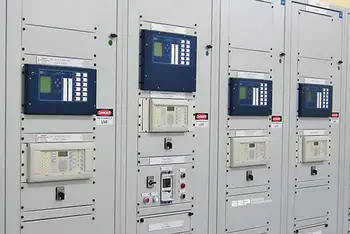
Substation Relay Protection Training

Our customized live online or in‑person group training can be delivered to your staff at your location.
  • Live Online
  • 12 hours Instructor-led
  • Group Training Available
Regular Price:
$699
Coupon Price:
$599
Reserve Your Seat Today
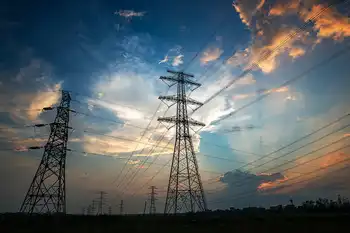
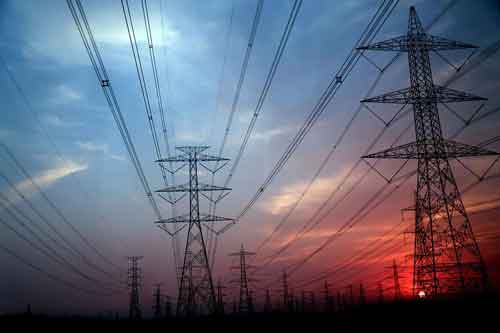
Beijing plans to invest 23 billion yuan in erecting two transmission lines this year.

The two 500,000 kV lines are: one from Tocto Power Plant in Inner Mongolia to Anding Power Plant in Beijing through Hunyuan County in Shanxi and the other, from Shentou No. 2 Power Plant in Shanxi to Fangshan Power Plant in Beijing through Baoding in Hebei. Meanwhile, renovation of the Fengzhen-Wanquan-Shunyi transmission line will start this year. The three projects are scheduled for completion by 2006.

Meanwhile, renovation of the Fengzhen-Wanquan-Shunyi transmission line will start this year. The three projects are scheduled for completion by 2006.

Related News
Alberta is a powerhouse for both green energy and fossil fuels

Alberta Renewable Energy Market is accelerating as wind and solar prices fall, corporate PPAs expand, and a deregulated, energy-only system, AESO outlooks, and TIER policy drive investment across the province.


Key Points

An open, energy-only Alberta market where wind and solar growth is driven by corporate PPAs, AESO outlooks, and TIER.

✅ Energy-only, deregulated grid enables private investment

✅ Corporate PPAs lower costs and hedge power price risk

✅ AESO forecasts and TIER policy support renewables


By Chris Varcoe, Calgary Herald

A few things are abundantly clear about the state of renewable energy in Alberta today.

First, the demise of Alberta’s Renewable Electricity Program (REP) under the UCP government isn’t going to see new projects come to a screeching halt.

In fact, new developments are already going ahead.

And industry experts believe private-sector companies that increasingly want to purchase wind or solar power are going to become a driving force behind even more projects in Alberta.

BluEarth Renewables CEO Grant Arnold, who spoke Wednesday at the Canadian Wind Energy Association conference, pointed out the sector is poised to keep building in the province, even with the end of the REP program that helped kick-start projects and triggered low power prices.

“The fundamentals here are, I think, quite fantastic — strong resource, which leads to really competitive wind prices . . . it’s now the cheapest form of new energy in the province,” he told the audience.

“Alberta is in a fundamentally good place to grow the wind power market.”

Unlike other provinces, Alberta has an open, deregulated marketplace, which create opportunities for private-sector investment and renewable power developers as well.

The recent decision by the Kenney government to stick with the energy-only market, instead of shifting to a capacity market, is seen as positive for Alberta's energy future by renewable electricity developers.

There is also increasing interest from corporations to buy wind and solar power from generators — a trend that has taken off in the United States with players such as Google, General Motors and Amazon — and that push is now emerging in Canada.

“It’s been really important in the U.S. for unlocking a lot of renewable energy development,” said Sara Hastings-Simon, founding director of the Business Renewable Centre Canada, which seeks to help corporate buyers source renewable energy directly from project developers.

“You have some companies where . . . it’s what their investors and customers are demanding. I think we will see in Alberta customers who see this as a good way to meet their carbon compliance requirements.

“And the third motivation to do it is you can get the power at a good price.”

Just last month, Perimeter Solar signed an agreement with TC Energy to supply the Calgary-based firm with 74 megawatts from its solar project near Claresholm.

More deals in the industry are being discussed, and it’s expected this shift will drive other projects forward.

There is increasing interest from corporations to buy solar and wind energy directly from generators.

“The single-biggest change has been the price of wind and solar,” Arnold said in an interview.

“Alberta looks really, really bright right now because we have an open market. All other provinces, for regulatory reasons, we can’t have this (deal) . . . between a generator and a corporate buyer of power. So Alberta has a great advantage there.”

These forces are emerging as the renewable energy industry has seen dramatic change in recent years in Alberta, with costs dropping and an array of wind and solar developments moving ahead, even as solar expansion faces challenges in the province.

The former NDP government had an aggressive target to see green energy sources make up 30 per cent of all electricity generation by 2030.

Last week, the Alberta Electric System Operator put out its long-term outlook, with its base-case scenario projecting moderate demand growth for power over the next two decades. However, the expected load growth — expanding by an average of 0.9 per cent annually until 2039 — is only half the rate seen in the past 20 years.

Natural gas will become the main generation source in the province as coal-fired power (now comprising more than one-third of generation) is phased out.

Renewable projects initiated under the former NDP government’s REP program will come online in the near term, while “additional unsubsidized renewable generation is expected to develop through competitive market mechanisms and support from corporate power purchase agreements,” the report states.

AESO forecasts installed generation capacity for renewables will almost double to about 19 per cent by 2030, with wind and solar increasing to 21 per cent by 2039.

Another key policy issue for the sector will likely come within the next few weeks when the provincial government introduces details of its new Technology Innovation and Emissions Reduction program (TIER).

The initiative will require large industrial emitters to reduce greenhouse gas emissions to a benchmark level, pay into the technology fund, or buy offsets or credits. The carbon price is expected to be around $20 to $30 a tonne, and the system will kick in on Jan. 1, 2020.

Industry players point out the decision to stick with Alberta’s energy-only market along with the details surrounding TIER, and a focus by government on reducing red tape, should all help the sector attract investment.

“It is pretty clear there is a path forward for renewables here in the province,” said Evan Wilson, regional director with the Canadian Wind Energy Association.

All of these factors are propelling the wind and solar sector forward in the province, at the same time the oil and gas sector faces challenges to grow.

But it doesn’t have to be an either/or choice for the province moving forward. We’re going to need many forms of energy in the coming decades, and Alberta is an energy powerhouse, with potential to develop more wind and solar, as well as oil and natural gas resources.

“What we see sometimes is the politics and discussion around renewables or oil becomes a deliberate attempt to polarize people,” Arnold added.

“What we are trying to show, in working in Alberta on renewable projects, is it doesn’t have to be polarizing. There are a lot of solutions.

“The combination of solutions is part of what we need to talk about.”


Related News

View more

Quebec and other provinces heading toward electricity shortage: report

Canada Electricity Shortage threatens renewable energy transition as EV adoption and building decarbonization surge; Hydro-Quebec exports, wind power expansion, demand response, and smart grid resilience shape investment and capacity planning.


Key Points

A looming supply gap in central and eastern provinces driven by EVs, heating decarbonization, exports, and limited new hydro.

✅ Hydro-Quebec capacity pressured by exports and new loads

✅ Wind power prioritized; new mega-dams deemed unworkable

✅ Smart meters boost flexibility but raise cyber risk


Quebec and other provinces in central and eastern Canada are heading toward a significant shortage of electricity to respond to the various needs of a transition to renewable energy, and Ontario's energy storage push underscores how supply is tightening across the region.

This is according to Polytechnique Montréal’s Institut de l’énergie Trottier, which published a report titled A Strategic Perspective on Electricity in Central and Eastern Canada last week.

The white paper says that at the current rate, most provinces will be incapable of meeting the electricity needs created by the increase in the number of electric vehicles, including the federal 2035 EV sales mandate that will amplify demand, and the decarbonization of building heating by 2030. “The situation worsens if we consider carbon neutrality objectives of the federal government and some provinces for 2050,” the institute says.

The researchers called on public utilities to immediately review their investment plans for the coming years in light of examples such as B.C.'s power supply challenges that accompany rapid green ambitions.

In a news conference Wednesday, Premier François Legault said the province could indeed be short on electricity as debates over Quebec's EV push continue. “We’re open to exploiting green hydrogen, if the price is good and also based on the electrical capacity we have. Because currently, we predict that in the coming years we’re going to lack electricity, so we must be prudent.”

Quebec is in a better position than other provinces because it is the largest hydroelectricity producer in the country. But that energy source also attracts new clients that have contributed to increased demand over the coming years, including data centres, cryptocurrency miners and greenhouses.

Report co-author Normand Mousseau said that while Hydro-Québec largely has the capacity to meet demand from electric vehicles, even amid EV shortages and wait times for buyers, heating and manufacturers, export contracts to the United States “risk reducing its leeway.”

Hydro-Québec will therefore have to find new sources of electricity, and Mousseau said the answer isn’t new dams.

“The reservoirs give an immense flexibility to the network, but we don’t have the capacity today to flood territories like we have done in the past,” said Mousseau, the institute’s scientific director. “From an environmental viewpoint and a social accessibility one, it’s unworkable.”

The solution would be more wind turbines, he said, adding construction could happen at “very competitive rates” and if there’s a surplus, “we can sell it without issue because other provinces are in an even worse situation than ours,” a reality echoed by eco groups in Northern Ontario sustainability discussions focused on the grid’s future.

The researchers propose solutions based on six themes: regulations, pricing, demand management, data, support for implementation and resilience.

In the resilience category, the report notes that innovative technology like smart meters makes the network more flexible, with pilots such as EV-to-grid integration in Nova Scotia illustrating emerging options, but also increases the risk of cyberattacks. The more extreme weather caused by climate change also increases the risks of damage to infrastructure while at the same time increasing demand.


Related News

View more

The German economy used to be the envy of the world. What happened?

Germany's Economic Downturn reflects an energy crisis, deindustrialization risks, export weakness, and manufacturing stress, amid Russia gas loss, IMF and EU recession forecasts, and debates over electricity price caps and green transition.


Key Points

An economic contraction from energy price shocks, export weakness, and bottlenecks in manufacturing and digitization.

✅ Energy shock after loss of cheap Russian gas

✅ Exports slump amid China slowdown and weak demand

✅ Policy gridlock on power price cap and permits


Germany went from envy of the world to the worst-performing major developed economy. What happened?

For most of this century, Germany racked up one economic success after another, dominating global markets for high-end products like luxury cars and industrial machinery, selling so much to the rest of the world that half the economy ran on exports.

Jobs were plentiful, the government’s financial coffers grew as other European countries drowned in debt, and books were written about what other countries could learn from Germany.

No longer. Now, Germany is the world’s worst-performing major developed economy, with both the International Monetary Fund and European Union expecting it to shrink this year.

It follows Russia’s invasion of Ukraine and the loss of Moscow’s cheap Russian gas that underpinned industry — an unprecedented shock to Germany’s energy-intensive industries, long the manufacturing powerhouse of Europe.

The sudden underperformance by Europe’s largest economy has set off a wave of criticism, handwringing and debate about the way forward.

Germany risks “deindustrialization” as high energy costs and government inaction on other chronic problems threaten to send new factories and high-paying jobs elsewhere, said Christian Kullmann, CEO of major German chemical company Evonik Industries AG.

From his 21st-floor office in the west German town of Essen, Kullmann points out the symbols of earlier success across the historic Ruhr Valley industrial region: smokestacks from metal plants, giant heaps of waste from now-shuttered coal mines, a massive BP oil refinery and Evonik’s sprawling chemical production facility.

These days, the former mining region, where coal dust once blackened hanging laundry, is a symbol of the energy transition, as the power sector’s balancing act continues with wind turbines and green space.

The loss of cheap Russian natural gas needed to power factories “painfully damaged the business model of the German economy,” Kullmann told The Associated Press. “We’re in a situation where we’re being strongly affected — damaged — by external factors.”

After Russia cut off most of its gas to the European Union, spurring an energy crisis in the 27-nation bloc that had sourced 40% of the fuel from Moscow, the German government asked Evonik to turn to coal by keeping its 1960s coal-fired power plant running a few months longer.

The company is shifting away from the plant — whose 40-story smokestack fuels production of plastics and other goods — to two gas-fired generators that can later run on hydrogen amid plans to become carbon neutral by 2030 and following the nuclear phase-out of recent years.

One hotly debated solution: a government-funded cap on industrial electricity prices to get the economy through the renewable energy transition, amid an energy crisis that even saw a temporary nuclear extension to stabilize supply.

The proposal from Vice Chancellor Robert Habeck of the Greens Party has faced resistance from Chancellor Olaf Scholz, a Social Democrat, and pro-business coalition partner the Free Democrats. Environmentalists say it would only prolong reliance on fossil fuels, while others advocate a nuclear option to meet climate goals.

Kullmann is for it: “It was mistaken political decisions that primarily developed and influenced these high energy costs. And it can’t now be that German industry, German workers should be stuck with the bill.”

The price of gas is roughly double what it was in 2021, with a senior official arguing nuclear would do little to solve that gas issue, hurting companies that need it to keep glass or metal red-hot and molten 24 hours a day to make glass, paper and metal coatings used in buildings and cars.

A second blow came as key trade partner China experiences a slowdown after several decades of strong economic growth.

These outside shocks have exposed cracks in Germany’s foundation that were ignored during years of success, including lagging use of digital technology in government and business and a lengthy process to get badly needed renewable energy projects approved.


Related News

View more

Britain got its cleanest electricity ever during lockdown

UK Clean Electricity Record as wind, solar, and biomass boost renewable energy output, slashing carbon emissions and wholesale power prices during lockdown, while lower demand challenges grid balancing and drives a drop to 153 g/kWh.


Key Points

A milestone where wind, solar and biomass lifted renewables, cutting carbon intensity to 153 g/kWh during lockdown.

✅ Carbon intensity averaged 153 g/kWh in Q2 2020.

✅ Renewables output rose 32% via wind, solar, biomass.

✅ Wholesale power prices slumped 42% amid lower demand.


U.K electricity has never been cleaner. As wind, solar and biomass plants produced more power than ever in the second quarter, with a new wind generation record set, carbon emissions fell by a third from a year earlier, according to Drax Electric Insight’s quarterly report. Power prices slumped 42 per cent as demand plunged during lockdown. Total renewable energy output jumped 32 per cent in the period, as wind became the main source of electricity at times.

“The past few months have given the country a glimpse into the future for our power system, with higher levels of renewable energy, as wind led the power mix, and lower demand making for a difficult balancing act,”said  Iain Staffell, from Imperial College London and lead author of the report.

The findings of the report point to the impact energy efficiency can have on reducing emissions, as coal's share fell to record lows across the electricity system. Millions of people furloughed or working from home and shuttered shops up and down the country resulted in daily electricity demand dropping about 10% and being about four gigawatts lower than expected in the three months through June.

Average carbon emissions fell to a new low of 153 grams per kWh of electricity consumed over the quarter, as coal-free generation records were extended, even though low-carbon generation stalled in 2019, according to the report.


Related News

View more

Alberta creates fund to help communities hit by coal phase-out

Alberta Coal Community Transition Fund backs renewables, natural gas, and economic diversification, offering grants, workforce retraining, and community development to municipalities and First Nations as Alberta phases out coal-fired power by 2030.


Key Points

A provincial grant helping coal-impacted communities diversify, retrain workers, and transition to renewables by 2030.

✅ Grants for municipalities and First Nations

✅ Supports diversification and job retraining

✅ Focus on renewables, natural gas, and new sectors


The Coal Community Transition Fund is open to municipalities and First Nations affected as Alberta phases out coal-fired electricity by 2030 under the federal coal plan to focus on renewables and natural gas.

Economic Development Minister Deron Bilous says the government wants to ensure these communities thrive through the transition, aligning with views that fossil-fuel workers support the energy transition across the economy.

“Residents in our communities have concerns about the transition away from coal, even as discussions about phasing out fossil fuels in B.C. unfold nationally,” Rod Shaigec, mayor of Parkland County, said.

“They also have ideas on how we can mitigate the impacts on workers and diversify our economy, including clean energy partnerships to create new employment opportunities for affected workers. We are working to address those concerns and support their ideas. This funding means we can make those ideas a reality in various economic sectors of opportunity.”

The coal-mining town of Hanna, northeast of Calgary, has already received $450,000 through the program to work on economic diversification, exploring options like bridging the Alberta-B.C. electricity gap that could support new industries.

The application deadline for the coal transition fund is the end of November.

A provincial advisory panel is also expected to report back this fall on ways to create new jobs and retrain workers during the coal phase-out.


Related News

View more

France and Germany arm wrestle over EU electricity reform

EU Electricity Market Reform CFDs seek stable prices via contracts for difference, balancing renewables and nuclear, shielding consumers, and boosting competitiveness as France and Germany clash over scope, grid expansion, and hydrogen production.


Key Points

EU framework using contracts for difference to stabilize power prices, support renewables and nuclear, and protect users.

✅ Guarantees strike prices for new low-carbon generation

✅ Balances consumer protection with industrial competitiveness

✅ Disputed scope: nuclear inclusion, grids, hydrogen eligibility


Despite record temperatures this October, Europe is slowly shifting towards winter - its second since the Ukraine war started and prompted Russia to cut gas supplies to the continent amid an energy crisis that has reshaped policy.

After prices surged last winter, when gas and electricity bills “nearly doubled in all EU capitals”, the EU decided to take emergency measures to limit prices.

In March, the European Commission proposed a reform to revamp the electricity market “to boost renewables, better protect consumers and enhance industrial competitiveness”.

However, France and Germany are struggling to find a compromise as rolling back prices is tougher than it appears and the clock is ticking as European energy ministers prepare to meet on 17 October in Luxembourg.


The controversy around CFDs
At the heart of the issue are contracts for difference (CFDs).

By providing a guaranteed price for electricity, CFDs aim to support investment in renewable energy projects.

France - having 56 nuclear reactors - is lobbying for nuclear energy to be included in the CFDs, but this has caught the withering eye of Germany.

Berlin suspects Paris of wanting an exception that would give its industry a competitive advantage and plead that it should only apply to new investments.


France wants ‘to regain control of the price’
The disagreement is at the heart of the bilateral talks in Hamburg, which started on Monday, between the French and German governments.

French President Emmanuel Macron promised “to regain control of the price of electricity, at the French and European level” and outlined a new pricing scheme in a speech at the end of September.

As gas electricity is much more expensive than nuclear electricity, France might be tempted to switch to a national system rather than a European one after a deal with EDF on prices to be more competitive economically.

However, France is "confident" that it will reach an agreement with Germany on electricity market reforms, Macron said on Friday.

Siding with France are other pro-nuclear countries such as Hungary, the Czech Republic and Poland, while Germany can count on the support of Austria, Luxembourg, Belgium and Italy amid opposition from nine EU countries to treating market reforms as a price fix.

But even if a last-minute agreement is reached, the two countries’ struggles over energy are creeping into all current European negotiations on the subject.

Germany wants a massive extension of electricity grids on the continent so that it can import energy; France is banking on energy sovereignty and national production.

France wants to be able to use nuclear energy to produce clean hydrogen, while Germany is reluctant, and so on.


Related News

View more

Sign Up for Electricity Forum’s Newsletter

Stay informed with our FREE Newsletter — get the latest news, breakthrough technologies, and expert insights, delivered straight to your inbox.

Electricity Today T&D Magazine Subscribe for FREE

Stay informed with the latest T&D policies and technologies.
  • Timely insights from industry experts
  • Practical solutions T&D engineers
  • Free access to every issue

Download the 2025 Electrical Training Catalog

Explore 50+ live, expert-led electrical training courses –

  • Interactive
  • Flexible
  • CEU-cerified