New Jersey Power Generator Loses Bid to Supply Electricity to New York Utility

By


Protective Relay Training - Basic

Our customized live online or in‑person group training can be delivered to your staff at your location.

  • Live Online
  • 12 hours Instructor-led
  • Group Training Available
Regular Price:
$699
Coupon Price:
$599
Reserve Your Seat Today
-- The power-generating division of New Jersey's largest utility lost out Tuesday in its bid for a 10-year, $1 billion contract to supply electricity to New York's Consolidated Edison Inc.

Con Ed awarded the contract to Astoria Energy LLC, a subsidiary of SCS Energy LLC, which will supply 500 megawatts of capacity power from a new, natural gas-fired power plant to be built in Astoria, N.Y., starting in 2006. SCS Energy is a privately owned energy development company based in Concord, Mass.

The decision was a major setback for PSEG Power, which has spent the past two years developing the capacity to generate and deliver power to a Con Ed substation on Manhattan's West Side from its plant in Ridgefield.

"It is a disappointment," said Neil Brown, a spokesman for PSEG Power, an unregulated division of Newark-based Public Service Enterprise Group. "We thought we made a very competitive offer to Con Ed, but they made a different decision. We don't have details, but that's business."

In its announcement, Con Ed said Astoria Energy was selected "from a number of competing developers because of the project's efficient design, its beneficial impact on our electric system reliability, and for its ability to deliver power at a price that will benefit our customers." Despite the loss, PSEG will continue with the project, at least for now, Brown said. "We think it still has potential to offer needed benefits to the market in New York City, but at some point down the line, we have to make the decision whether to commit the capital to complete it. There's no question the city needs additional capacity, energy to meet current and future demand." PSEG will now explore "other avenues to supply that energy," Brown said. That could mean selling it through the New York power pool or to other suppliers.

For now, the electricity will continue being sold through the PJM Interconnection LLC, a regional power poll serving New Jersey and other Middle Atlantic states.

Con Ed's decision comes just two weeks after PSEG cleared a major hurdle, approval from the New York Public Service Commission of the company's application to construct the transmission line under the Hudson River. "We have all the permits we need on this side of the river," Brown said. "All we need is [approval from] the Army Corps of Engineers." The 345-kilovolt line, which would cost $100 million to build, was designed to start at PSEG Power's Bergen generating station in Ridgefield, follow an existing railroad right of way and the New York Susquehanna & Western Railroad tunnel, and enter the Hudson at Edgewater. Unit 2 at the station, which began operations last summer, was constructed specifically to supply power to New York.

Related News
Mike Sangster to Headline Invest in African Energy Forum

TotalEnergies Africa Energy Strategy 2025 spotlights oil, gas, LNG, and renewables, with investments in Namibia, Congo, Mozambique, Uganda, Morocco, and South Africa, driving upstream growth, clean energy, and energy transition partnerships.


Key Points

An investment roadmap uniting oil, gas, LNG, and renewables to speed Africa's upstream growth and energy transition.

✅ Keynote by Mike Sangster at IAE Paris 2025.

✅ Oil, gas, LNG projects across Namibia, Congo, Mozambique, Uganda.

✅ Scaling renewables: solar, wind, green ammonia for export.


Mike Sangster, Senior Vice President for Africa at TotalEnergies, will play a pivotal role in the upcoming Invest in African Energy (IAE) Forum, which will take place in Paris on May 13-14, 2025. As a key figure in one of the world’s largest energy companies, Sangster's participation in the forum is expected to offer crucial insights into Africa’s evolving energy landscape, particularly in the areas of oil, gas, and renewable energy.

TotalEnergies' Role in Africa's Energy Landscape

TotalEnergies has long been a major player in Africa’s energy sector, driving development across both emerging and established markets. The company has a significant footprint in countries such as Namibia, the Republic of Congo, Libya, Mozambique, Uganda, and South Africa. TotalEnergies’ investments span both traditional oil and gas projects as well as renewable energy initiatives, reflecting its commitment to a more diversified energy future for Africa.

In Namibia, for instance, TotalEnergies is advancing its Venus-1 discovery, with plans to produce its first oil by the end of the decade. The company is also heavily involved in the Orange Basin exploration. Meanwhile, in the Republic of Congo, TotalEnergies is investing $600 million to enhance deepwater production at its Moho Nord field.

Beyond oil and gas, the company is expanding its renewable energy portfolio across the continent. This includes significant solar, wind, and hydropower projects, such as the 500 MW Sadada solar project in Libya, a 216 MW solar plant with battery storage in South Africa, and a 1 GW wind and solar project in Morocco designed to produce green ammonia for export.

The Invest in African Energy Forum

The IAE Forum, which TotalEnergies’ Sangster will headline, is an exclusive event aimed at facilitating investment between African energy markets and global investors, including discussions on COVID-19 funding for electricity access mechanisms that emerged, and their relevance to current capital flows. With a focus on fostering partnerships and discussions about the future of energy in Africa, the event will bring together industry experts, project developers, investors, and policymakers for two days of intensive engagement.

The forum will also serve as a crucial platform for sharing perspectives on the role of private investment, as outlined in the IEA investment outlook for Africa's power systems, in Africa’s energy future, strategies for unlocking new upstream opportunities, and the transition to a more sustainable energy system. This makes Sangster's participation, as someone directly involved in both conventional and renewable energy projects across the continent, particularly significant.

TotalEnergies' Diversified Strategy in Africa

Sangster’s keynote address and participation in an exclusive fireside chat will provide an in-depth look into TotalEnergies’ strategy for Africa. His insights will touch upon the company's ongoing projects in the oil and gas sectors, as well as its renewable energy investments. TotalEnergies has committed to making its portfolio more sustainable, underscored by its recent VSB acquisition to expand renewables capabilities, while continuing to be a leader in the energy transition.

One of the company’s notable projects is the Mozambique LNG initiative, a $20 billion venture aimed at supplying liquefied natural gas to international markets. Additionally, TotalEnergies is gearing up for the first oil from its Tilenga field in Uganda, which will be transported through the East African Crude Oil Pipeline (EACOP), the longest heated crude oil pipeline in the world.

In South Africa, TotalEnergies is constructing one of the largest renewable energy projects, a 216 MW solar power plant with integrated battery storage. This project is expected to significantly contribute to the country’s clean energy ambitions. Furthermore, in Morocco, TotalEnergies is developing a major wind and solar facility that will produce green ammonia, aligning with its broader strategy to provide solutions for Europe’s energy needs.

Africa’s Energy Transition

The forum’s timing could not be more critical, given the pressing need for an energy transition in Africa. While the continent remains heavily reliant on fossil fuels for its energy needs, there is growing momentum toward incorporating renewable energy sources, a point reinforced by the IRENA renewables report on decarbonisation and quality of life, which highlights the transformative potential. Africa’s vast natural resources, combined with global investments and partnerships, position the continent as a key player in the global shift toward sustainable energy.

However, Africa faces unique challenges in transitioning to renewable energy, reflecting a broader Sub-Saharan electricity challenge that also presents opportunity, across many markets. These challenges include a lack of infrastructure, financial constraints, and the need for increased political stability in certain regions. The IAE Forum provides an opportunity to address these barriers, with industry leaders like Sangster offering solutions based on real-world experiences and investments.

As the energy sector continues to evolve globally, and even if electricity systems are unlikely to go fully green this decade according to some outlooks, Africa's potential remains vast. The continent’s diverse energy resources, from oil and gas to renewables, offer a unique opportunity to build a more sustainable and resilient energy future. The Invest in African Energy Forum serves as an important platform for global stakeholders to collaborate, learn, and invest in the energy transformation taking place across the continent.

Mike Sangster’s insights at the forum will undoubtedly shape discussions on how companies like TotalEnergies are navigating the intersection of universal electricity access goals, sustainability, and economic growth in Africa. With Africa’s energy needs expected to increase exponentially in the coming decades, ensuring that these needs are met sustainably and equitably will be a priority for both policymakers and private investors.

As the global energy landscape continues to shift, the Invest in African Energy Forum provides a critical space for shaping the future of Africa’s energy sector, offering invaluable opportunities for investment, innovation, and collaboration.


Related News

View more

Economic Crossroads: Bank Earnings, EV Tariffs, and Algoma Steel

Canada Economic Crossroads highlights bank earnings trends, interest rates, loan delinquencies, EV tariffs on Chinese imports, domestic manufacturing, Algoma Steel decarbonization, sustainability, and housing market risks shaping growth, investment, consumer prices, and climate policy.


Key Points

An overview of how bank earnings, EV tariffs, and Algoma Steel's transition shape Canada's economy.

✅ Higher rates lift margins but raise delinquencies and housing risks

✅ EV tariffs aid domestic makers but pressure consumer prices

✅ Algoma invests to decarbonize, boosting efficiency and compliance


In a complex economic landscape, recent developments have brought attention to several pivotal issues affecting Canada's business sector. The Globe and Mail’s latest report delves into three major topics: the latest bank earnings, the implications of new tariffs on Chinese electric vehicles (EVs), and Algoma Steel’s strategic maneuvers. These factors collectively paint a picture of the challenges and opportunities facing Canada's economy.

Bank Earnings Reflect Economic Uncertainty

The recent financial reports from major Canadian banks have revealed a mixed picture of the nation’s economic health. As the Globe and Mail reports, earnings results show robust performances in some areas while highlighting growing concerns in others. Banks have generally posted strong quarterly results, buoyed by higher interest rates which have improved their net interest margins. This uptick is largely attributed to the central bank's monetary policies aimed at combating inflation and stabilizing the economy.

However, the positive earnings are tempered by underlying economic uncertainties. Rising loan delinquencies and a slowing housing market are areas of concern. Increased interest rates, while beneficial for banks’ margins, have also led to higher borrowing costs for consumers and businesses. This dynamic has the potential to impact overall economic growth and consumer confidence.

Tariffs on Chinese EVs: A Strategic Shift

Another significant development is the imposition of new tariffs on Chinese electric vehicles. This move is part of a broader strategy to protect domestic automotive industries and address trade imbalances, aligning with public support for tariffs in key sectors. The tariffs are expected to increase the cost of Chinese EVs in Canada, which could have several implications for the market.

On one hand, the tariffs might provide a temporary boost to Canadian and North American manufacturers by reducing competition from lower-priced Chinese imports. This protectionist measure could encourage investments in local production and innovation, mirroring tariff threats boosting support for energy projects in other sectors. However, the increased cost of Chinese EVs may also lead to higher prices for consumers, potentially slowing the adoption of electric vehicles—a critical goal in Canada’s climate strategy.

The tariffs come at a time when the Canadian government is keen on accelerating the transition to electric mobility to meet its environmental targets, even as a critical crunch in electrical supply raises questions about grid readiness. Balancing the protection of domestic industries with the broader goal of reducing emissions will be a significant challenge moving forward.

Algoma Steel’s Strategic Evolution

In the steel industry, Algoma Steel has been making headlines with its strategic initiatives aimed at transforming its operations, in a broader shift toward clean grids and industrial decarbonization. The Globe and Mail highlights Algoma Steel's efforts to modernize its production processes and shift towards more sustainable practices. This includes significant investments in technology and infrastructure to enhance production efficiency and reduce environmental impact.

Algoma's focus on reducing carbon emissions aligns with broader industry trends towards sustainability. The company’s efforts are part of a larger push within the steel sector to address climate change and meet regulatory requirements. As one of Canada’s leading steel producers, Algoma’s actions could set a precedent for the industry, showcasing how traditional manufacturing sectors can adapt to evolving environmental standards.

Implications and Future Outlook

The interplay of these developments reflects a period of significant transition for Canada's economy, shaped in part by U.S. policy where Biden is seen as better for Canada's energy sector by some analysts. For banks, the challenge will be to navigate the balance between profitability and potential risks from a changing economic environment. The new tariffs on Chinese EVs represent a strategic shift with mixed implications for the automotive market, potentially influencing both domestic production and consumer prices. Meanwhile, Algoma Steel’s push towards sustainability could serve as a model for other industries seeking to align with environmental goals.

As these issues unfold, stakeholders across sectors will need to stay informed and adaptable. For policymakers, the challenge will be to support domestic industries while fostering innovation and sustainability, including the dilemma over electricity rates and innovation they must weigh. For businesses, the focus will be on navigating financial pressures and leveraging opportunities for growth. Consumers, in turn, will face the impact of these developments in their daily lives, from the cost of borrowing to the price of electric vehicles.

In summary, Canada’s current economic landscape is characterized by a blend of financial resilience, strategic adjustments, and evolving industry practices, amid policy volatility such as a tariff threat delaying Quebec's green energy bill earlier this year. As the country navigates these crossroads, the outcomes of these developments will play a crucial role in shaping the future economic environment.


Related News

View more

There's a Russia-Sized Mystery in China's Electricity Sector

China Power Demand-Emissions Gap highlights surging grid demand outpacing renewables, with coal filling shortages despite record solar, wind, EV charging, and hydrogen growth, threatening decarbonization targets and net-zero pathways through 2030.


Key Points

China's power demand outpaces renewables, keeping coal dominant and raising emissions risk through the 2020s.

✅ Record solar and wind still lag fast grid demand growth

✅ Coal fills gaps as EV charging and hydrogen loads rise

✅ Forecasts diverge: CEC bullish vs IEA, BNEF conservative


Here’s a new obstacle that could prevent the world finally turning the corner on climate change: Imagine that over the coming decade a whole new economy the size of Russia were to pop up out of nowhere. With the world’s fourth-largest electricity sector and largest burden of power plant emissions after China, the U.S. and India, this new economy on its own would be enough to throw out efforts to halt global warming — especially if it keeps on growing through the 2030s.

That’s the risk inherent in China’s seemingly insatiable appetite for grid power, as surging electricity demand is putting systems under strain worldwide.

From the cracking pace of renewable build-out last year, you might think the country had broken the back of its carbon addiction. A record 55 gigawatts of solar power and 48 gigawatts of wind were connected — comparable to installing the generation capacity of Mexico in less than 12 months. This year will see an even faster pace, with 93 GW of solar and 50 GW of wind added, according to a report last week from the China Electricity Council, an industry association.

That progress could in theory see the country’s power sector emissions peak within months, rather than the late-2020s date the government has hinted at. Combined with a smaller quantity of hydro and nuclear, low-emissions sources will probably add about 310 terawatt-hours to zero-carbon generation this year. That 3.8% increase would be sufficient to power the U.K.

Countries that have reached China’s levels of per-capita electricity consumption (already on a par with most of Europe) typically see growth rates at less than half that level, even as global power demand has surged past pre-pandemic levels in recent years. Grid supply could grow at a faster pace than Brazil, Iran, South Korea or Thailand managed over the past decade without adding a ton of additional carbon to the atmosphere.

There’s a problem with that picture, however. If electricity demand grows at an even more headlong pace, there simply won’t be enough renewables to supply the grid. Fossil fuels, overwhelmingly coal, will fill the gap, a reminder of the iron law of climate dynamics in energy transitions.

Such an outcome looks distinctly possible. Electricity consumption in 2021 grew at an extraordinary rate of 10%, and will increase again by between 5% and 6% this year, according to the CEC. That suggests the country is on pace to match the CEC’s forecasts of bullish grid demand over the coming decade, with generation hitting 11,300 terawatt-hours in 2030. External analysts, such as the International Energy Agency and BloombergNEF, envisage a more modest growth to around 10,000 TWh. 

The difference between those two outlooks is vast — equivalent to all the electricity produced by Russia or Japan. If the CEC is right and the IEA and BloombergNEF are wrong, even the furious rate of renewable installations we’re seeing now won’t be enough to rein in China’s power-sector emissions.

Who’s correct? On one hand, it’s fair to say that power planners usually err on the side of overestimation. If your forecast for electricity demand is too high, state-owned generators will be less profitable than they otherwise would have been — but if it’s too low, you’ll see power cuts and shutdowns like China witnessed last autumn, with resulting power woes affecting supply chains beyond its borders.

On the other hand, the decarbonization of China’s economy itself should drive electricity demand well above what we’ve seen in the past, with some projections such as electricity meeting 60% of energy use by 2060 pointing to a profound shift. Some 3.3 million electric vehicles were sold in 2021 and BloombergNEF estimates a further 5.7 million will be bought in 2022. Every million EVs will likely add in the region of 2 TWh of load to the grid. Those sums quickly mounts up in a country where electric drivetrains are taking over a market that shifts more than 25 million new cars a year.

Decarbonizing industry, a key element on China’s road to zero emissions, could also change the picture. The IEA sees the country building 25 GW of electolysers to produce hydrogen by 2030, enough to consume some 200 TWh on their own if run close to full-time.

That’s still not enough to justify the scale of demand being forecast, though. China is already one of the least efficient countries in the world when it comes to translating energy into economic growth, and despite official pressure on the most wasteful, so called “dual-high” industries such as steel, oil refining, glass and cement, its targets for more thrifty energy usage remain pedestrian.

The countries that have decarbonized fastest are those, such as Germany, the U.K and the U.S., where Americans are using less electricity, that have seen power demand plateau or even decline, giving new renewable power a chance to swap out fossil-fired generators without chasing an ever-increasing burden on the grid. China’s inability to do this as its population peaks and energy consumption hits developed-country levels isn’t a sign of strength.

Instead, it’s a sign of a country that’s chronically unable to make the transition away from polluting heavy industry and toward the common prosperity and ecological civilization that its president keeps promising. Until China reins in that credit-fueled development model, the risks to its economy and the global climate will only increase.


Related News

View more

Power Outage Disrupts Travel at BWI Airport

BWI Power Outage caused flight delays, cancellations, and diversions after a downed power line near Baltimore/Washington International. BGE crews responded as terminal operations, security screening, and boarding slowed, exposing infrastructure gaps and backup power needs.


Key Points

A downed power line disrupted BWI, causing delays, diversions, and slowed operations after power was restored by noon.

✅ Downed power line near airport spurred terminal-wide disruptions

✅ 150+ delays, dozens of cancellations; diversions to nearby airports

✅ BGE response, backup power gaps highlight infrastructure resilience


On the morning of March 3, 2025, a major power outage at Baltimore/Washington International Thurgood Marshall Airport (BWI) caused significant disruptions to air travel, much like the London morning outage that upended routines, affecting both departing and incoming flights. The outage, which began around 7:40 a.m., was caused by a downed power line near the airport, according to officials from Baltimore Gas and Electric Company. Although power was restored by noon, the effects were felt for several hours, resulting in flight delays, diversions, and a temporary disruption to airport operations.

Flight Disruptions and Delays

The outage severely impacted operations at BWI, with more than 150 flights delayed and dozens more canceled. The airport, which serves as a major hub for both domestic and international travel, was thrown into chaos, similar to the Atlanta airport blackout that snarled operations, as power outages affected various critical areas, including parts of the main terminal and an adjacent parking garage. The downed power line created a ripple effect throughout the airport’s operations, delaying not only the check-in and security screening processes but also the boarding of flights. In addition to the delays, some inbound flights had to be diverted to nearby airports, further complicating an already strained travel schedule.

With the disruption affecting vital functions of the airport, passengers were advised to stay in close contact with their airlines for updated flight statuses and to prepare for longer-than-usual wait times.

Impact on Passengers

As power began to return to different parts of the terminal, airport officials reported that airlines were improvising solutions to continue the deplaning process, such as using air stairs to help passengers exit planes that were grounded due to the power outage, a reminder of how transit networks can stall during grid failures, as seen with the London Underground outage that frustrated commuters. This created further delays for passengers attempting to leave the airport or transfer to connecting flights.

Many passengers, who were left stranded in the terminal, faced long lines at ticket counters, security checkpoints, and concessions as the airport worked to recover from the loss of power, a situation mirrored during the North Seattle outage that affected thousands. The situation was compounded by the fact that while power was restored by midday, the airport still struggled to return to full operational capacity, creating significant inconvenience for travelers.

Power Restoration and Continued Delays

By around noon, officials confirmed that power had been fully restored across the main terminal. However, the full return to normalcy was far from immediate. Airport staff continued to work on clearing backlogs and assisting passengers, but the effects of the outage lingered throughout the day. Passengers were warned to expect continued delays at ticket counters, security lines, and concessions as the airport caught up with the disruption caused by the morning’s power outage.

For many travelers, the experience was a reminder of how dependent airports and airlines are on uninterrupted power to function smoothly. The disruption to BWI serves as a case study in the potential vulnerabilities of critical infrastructure that is not immune to the effects of power failure, including weather-driven events like the windstorm outages that can sever lines. Moreover, it highlights the difficulties of recovering from such incidents while managing the expectations of a large number of stranded passengers.

Investigations into the Cause of the Outage

As of the latest reports, Baltimore Gas and Electric Company (BGE) crews were still investigating the cause of the power line failure, including weather-related factors seen when strong winds in the Miami Valley knocked out power. While no definitive cause had been provided by early afternoon, BGE spokesperson Stephanie Weaver confirmed that the company was working diligently to restore service. She noted that the downed line had caused widespread disruptions to electrical service in the area, which were exacerbated by the airport’s significant reliance on a stable power supply.

BWI officials remained in close contact with BGE to monitor the situation and ensure that necessary precautions were taken to prevent further disruptions. With power largely restored by midday, focus turned to the logistical challenges of clearing the resulting delays and assisting passengers in resuming their travel plans.

Response from the Airport and Airlines

In response to the power outage, BWI officials encouraged travelers to remain patient, a familiar message during prolonged events like Houston's extended outage in recent months, and continue checking their flight statuses. Although flight tracking websites and social media posts provided timely updates, passengers were urged to expect long delays throughout the day as the airport struggled to return to full capacity.

Airlines, for their part, worked swiftly to accommodate affected passengers, although the situation created a ripple effect across the airport's operations. With delayed flights and diverted planes, air traffic control and ground crews had to adjust flight schedules accordingly, resulting in even more congestion at the airport. Airlines coordinated with the airport to prioritize urgent cases, and some flights were re-routed to other nearby airports to mitigate the strain on the terminal.

Long-Term Effects on Airport Infrastructure

This incident underscores the importance of maintaining resilient infrastructure at key transportation hubs like BWI. Airports are vital nodes in the air travel network, and any disruption, whether from power failure or other factors, can have far-reaching consequences on both domestic and international travel. Experts suggest that BWI and other major airports should consider implementing backup power systems and other safeguards to ensure that they can continue to function smoothly during unforeseen disruptions.

While BWI officials were able to resolve the situation relatively quickly, the power outage left many passengers frustrated and inconvenienced. This incident serves as a reminder of the need for airports and utilities to have robust contingency plans in place to handle emergencies and prevent delays from spiraling into more significant disruptions.

The power outage at Baltimore/Washington International Airport highlights the vulnerability of critical infrastructure to power failures and the cascading effects such disruptions can have on travel. Although power was restored by noon, the delays, diversions, and logistical challenges faced by passengers underscore the need for greater resilience in airport operations. With travel back on track, BWI and other airports will likely revisit their contingency plans to ensure that they are better prepared for future incidents that could affect air travel.


Related News

View more

Solar Becomes #3 Renewable Electricity Source In USA

U.S. Solar Generation 2017 surpassed biomass, delivering 77 million MWh versus 64 million MWh, trailing only hydro and wind; driven by PV expansion, capacity additions, and utility-scale and small-scale growth, per EIA.


Key Points

It was the year U.S. solar electricity exceeded biomass, hitting 77 million MWh and trailing only hydro and wind.

✅ Solar: 77 million MWh; Biomass: 64 million MWh (2017, EIA)

✅ PV expansion; late-year capacity additions dampen annual generation

✅ Hydro: 300 and wind: 254 million MWh; solar thermal ~3 million MWh


Electricity generation from solar resources in the United States reached 77 million megawatthours (MWh) in 2017, surpassing for the first time annual generation from biomass resources, which generated 64 million MWh in 2017. Among renewable sources, only hydro and wind generated more electricity in 2017, at 300 million MWh and 254 million MWh, respectively. Biomass generating capacity has remained relatively unchanged in recent years, while solar generating capacity has consistently grown.

Annual growth in solar generation often lags annual capacity additions because generating capacity tends to be added late in the year. For example, in 2016, 29% of total utility-scale solar generating capacity additions occurred in December, leaving few days for an installed project to contribute to total annual generation despite being counted in annual generating capacity additions. In 2017, December solar additions accounted for 21% of the annual total. Overall, solar technologies operate at lower annual capacity factors and experience more seasonal variation than biomass technologies.

Biomass electricity generation comes from multiple fuel sources, such as wood solids (68% of total biomass electricity generation in 2017), landfill gas (17%), municipal solid waste (11%), and other biogenic and nonbiogenic materials (4%).These shares of biomass generation have remained relatively constant in recent years, even as renewables' rise in 2020 across the grid.

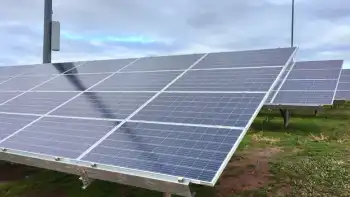
Solar can be divided into three types: solar thermal, which converts sunlight to steam to produce power; large-scale solar photovoltaic (PV), which uses PV cells to directly produce electricity from sunlight; and small-scale solar, which are PV installations of 1 megawatt or smaller. Generation from solar thermal sources has remained relatively flat in recent years, at about 3 million MWh, even as renewables surpassed coal in 2022 nationwide. The most recent addition of solar thermal capacity was the Crescent Dunes Solar Energy plant installed in Nevada in 2015, and currently no solar thermal generators are under construction in the United States.

Solar photovoltaic systems, however, have consistently grown in recent years, as indicated by 2022 U.S. solar growth metrics across the sector. In 2014, large-scale solar PV systems generated 15 million MWh, and small-scale PV systems generated 11 million MWh. By 2017, annual electricity from those sources had increased to 50 million MWh and 24 million MWh, respectively, with projections that solar could reach 20% by 2050 in the U.S. mix. By the end of 2018, EIA expects an additional 5,067 MW of large-scale PV to come online, according to EIA’s Preliminary Monthly Electric Generator Inventory, with solar and storage momentum expected to accelerate. Information about planned small-scale PV systems (one megawatt and below) is not collected in that survey.


Related News

View more

Egypt, Eni ink MoU on hydrogen production projects

Egypt-ENI Hydrogen MoU outlines joint feasibility studies for green and blue hydrogen using renewable energy, carbon capture, and CO2 storage, targeting domestic demand, exports, and net-zero goals within Egypt's energy transition.


Key Points

A pact to study green and blue hydrogen in Egypt, leveraging renewables, CO2 storage, and export/demand pathways.

✅ Feasibility study for green and blue hydrogen projects

✅ Uses renewables, SMR, carbon capture, and CO2 storage

✅ Targets local demand, exports, and net-zero alignment


The Egyptian Electricity Holding Company (EEHC) and the Egyptian Natural Gas Holding Company (EGAS) signed a memorandum of understanding (MoU) with the Italian energy giant Eni to assess the technical and commercial feasibility of green and blue hydrogen production projects in Egypt, which many see as central to power companies' future strategies worldwide today.

Under the MoU, a study will be conducted to assess joint projects for the production of green hydrogen using electricity generated from renewable energy and supported by regional electricity interconnections where relevant, and blue hydrogen using the storage of CO2 in depleted natural gas fields, according to a statement by the Ministry of Petroleum on Thursday.

The study will also estimate the potential local market consumption of hydrogen and export opportunities, taking cues from Ontario's hydrogen economy proposal to align electricity rates for growth.

This agreement is part of Eni's objective to achieve zero net emissions by 2050 and Egypt's strategy towards diversifying the energy mix and developing hydrogen projects in collaboration with major international companies, taking note of Italy's green hydrogen initiatives in Sicily as a comparable effort.

It signed the deal with Egyptian Natural Gas Holding (EGAS) and Egyptian Electricity Holding Co. (EEHC).

The companies will carry out a joint study on producing renewable energy powered green hydrogen, informed by electrolyzer investments in similar projects, where applicable. They will also work on blue hydrogen. This involves reforming natural gas and capturing the resulting CO2, in this instance in depleted natural gas fields.

The study will also consider domestic hydrogen use and export options, including funding models like the Hydrogen Innovation Fund now in Ontario.

Eni said the MoU was in line with its plans to eliminate net emissions and emissions cancel emission intensity by 2050. The company noted the agreement was in line with Egypt’s plan for the energy transition, in which it pursues hydrogen plans with major international companies, alongside broader clean-tech collaboration such as Tesla cooperation discussions in Dubai, to accelerate progress.


Related News

View more

Sign Up for Electricity Forum’s Newsletter

Stay informed with our FREE Newsletter — get the latest news, breakthrough technologies, and expert insights, delivered straight to your inbox.

Electricity Today T&D Magazine Subscribe for FREE

Stay informed with the latest T&D policies and technologies.
  • Timely insights from industry experts
  • Practical solutions T&D engineers
  • Free access to every issue

Live Online & In-person Group Training

Advantages To Instructor-Led Training – Instructor-Led Course, Customized Training, Multiple Locations, Economical, CEU Credits, Course Discounts.

Request For Quotation

Whether you would prefer Live Online or In-Person instruction, our electrical training courses can be tailored to meet your company's specific requirements and delivered to your employees in one location or at various locations.