BPA Says Hydro In U.S. Northwest Adequate

By Reuters


Protective Relay Training - Basic

Our customized live online or in‑person group training can be delivered to your staff at your location.

  • Live Online
  • 12 hours Instructor-led
  • Group Training Available
Regular Price:
$699
Coupon Price:
$599
Reserve Your Seat Today
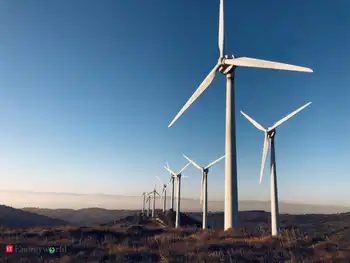
Hydro power generation this year in the Pacific Northwest looks set to match the average seen in years past, the region's biggest electricity provider said recently.

"We don't think there will be any problems meeting our energy needs," said Mike Hansen, a spokesman for Bonneville Power Administration (BPA), the Portland, Oregon-based federal agency that markets energy from the region's giant dams.

Hydro power accounts for about 75 percent of the electricity used in Northwest states like Washington, Oregon and Idaho.

"The region's runoff is lower compared with last year. But the flip side is that demand is down because of the economic downturn and that is making it easier to meet our energy demand," he said.

Hansen said water conditions in the region averaged about 105 million acre feet per year over the past 30 years, generating some 7,000 megawatts a year.

This year the region is likely to end the so-called hydro season this month at around 90 million acre feet of water, below last year's 103 million acre feet but well above the 58 million acre feet seen in 2001, when the region was hit by its worst drought in 50 years.

In mid-June, BPA said improved Northwest hydro conditions played a role behind a drop in a proposed rate increase it initially announced in February due in part to the agency's poor fiscal outlook.

BPA said wholesale power rates it charges its utility-based customers could rise by about 5 percent from current rates over the next three years instead of the 15 percent announced in February.

The rate increase, if approved by the Federal Energy Regulation Commission, would take hold Oct. 1. Rates are reviewed every six months to take into account changes in market conditions, such as hydro electric output.

New power supplies have also added to the Northwest's relatively stable power supplies.

In January, the Northwest Power Planning Council said the region had added about 3,200 megawatts of new generation since January 2000 when power prices rose sharply amid California's energy problems and the region's drought shortly after.

Related News
Canadian Manufacturers and Exporters Congratulates the Ontario Government for Taking Steps to Reduce Electricity Prices

Ontario Global Adjustment Deferral offers COVID-19 electricity bill relief to industrial and commercial consumers not on the RPP, aligning GA to March levels for Class A and Class B manufacturers to improve cash flow.


Key Points

A temporary GA deferral easing electricity costs for Ontario industrial and commercial users not on the RPP.

✅ Sets Class B GA at $115/MWh; Class A gets equal percentage cut.

✅ Applies April-June 2020; automatic bill adjustments and credits.

✅ Deferred charges repaid over 12 months starting January 2021.


Manufacturers welcome the Government of Ontario's decision to defer a portion of Global Adjustment (GA) charges as part of support for industrial and commercial electricity consumers that do not participate in the Regulated Price Plan.

"Manufacturers are pleased the government listened to Canadian Manufacturers & Exporters (CME) member recommendations and is taking action to reduce Ontario electricity bills immediately," said Dennis Darby, President & CEO of CME.

"The majority of manufacturers have identified cash flow as their top concern during the crisis, "added Darby. "The GA system would have caused a nearly $2 billion cost surge to Ontario manufacturers this year. This new initiative by the government is on top of the billions in support already provided to help manufacturers weather this unprecedented storm, while other provinces accelerate British Columbia's clean energy shift to drive long-term competitiveness. All these measures are a great start in helping businesses of all sizes stay afloat during the crisis and, keeping Ontarians employed."

"We call on the Ontario government to continue to consider the impact of electricity costs on the manufacturing sector, even after the COVID-19 crisis is resolved," stated Darby. "High prices are putting Ontario manufacturers at a significant competitive disadvantage and, discourages investments." A recent report from London Economics International (LEI) found that when compared to jurisdictions with similar manufacturing industries, Ontario's electricity prices can be up to 75% more expensive, underscoring the importance of planning for Toronto's growing electricity needs to maintain affordability.

To provide companies with temporary immediate relief on their electricity bills, the Ontario government is deferring a portion of Global Adjustment (GA) charges for industrial and commercial electricity consumers that do not participate in the Regulated Price Plan (RPP), starting from April 2020, as some regions saw reduced electricity demand from widespread remote work during the pandemic. The GA rate for smaller industrial and commercial consumers (i.e., Class B) has been set at $115 per megawatt-hour, which is roughly in line with the March 2020 value. Large industrial and commercial consumers (i.e., Class A) will receive the same percentage reduction in GA charges as Class B consumers.

The Ontario government intends to keep this relief in place through the end of June 2020, alongside investments like smart grid technology in Sault Ste. Marie to support reliability, subject to necessary extensions and approvals to implement this initiative.

Industrial and commercial electricity consumers will automatically see this relief reflected on their bills. Consumers who have already received their April bill should see an adjustment on a future bill.

Related initiatives include developing cyber standards for electricity sector IoT devices to strengthen system security.

The government intends to bring forward subsequent amendments that would, if approved, recover the deferred GA charges (excluding interest) from industrial and commercial electricity consumers, as Toronto prepares for a surge in electricity demand amid continued growth, over a 12-month period beginning in January 2021.


Related News

View more

Ottawa won't oppose halt to Site C work pending treaty rights challenge

Site C Dam Injunction signals Ottawa's neutrality while B.C. reviews a hydroelectric dam project on the Peace River, amid First Nations treaty rights claims, federal approval defenses, and scrutiny of environmental assessment and Crown consultation.


Key Points

A legal request to pause Site C while courts weigh First Nations treaty rights, environmental review, and approvals.

✅ Ottawa neutral on injunction; still defends federal approvals

✅ First Nations cite treaty rights over Peace River territory

✅ B.C. jurisdiction, environmental assessment and Crown consultation at issue


The federal government is not going to argue against halting construction of the controversial Site C hydroelectric dam in British Columbia while a B.C. court decides if the project violates constitutionally protected treaty rights.


Work on Site C suspended prior to First Nations lawsuit

However a spokeswoman for Environment Minister Catherine McKenna said Monday the government will continue to defend the federal approval given for the project in December 2014, even though that approval was given using an environmental review process McKenna herself has said is fundamentally flawed.

The Site C project is an 1,100-megawatt dam and generating station on the Peace River in northern B.C. that will flood parts of the traditional territory of the West Moberly and Prophet River First Nations.

#google#

In January, they filed a civil court case against the provincial government, B.C. Hydro and the federal government asking a judge to decide if their rights were being violated by the dam. A few weeks later, West Moberly asked the court for an injunction to halt construction pending the outcome of the rights case, similar to other contested transmission projects like the Maine electricity corridor debate in New England.

On May 11, lawyers for Attorney General Jody Wilson-Raybould filed a notice that Canada would remain neutral on the question of the injunction, meaning Canada won't argue against the idea of postponing construction for months, if not years, while the rights case winds through the court.

Wilson-Raybould has been silent on Site C since being named Canada's minister of justice in 2015, but in 2012, when she was the B.C. regional chief for the Assembly of First Nations, she said the project was "running roughshod" over treaty rights. The Justice Department on Monday directed questions to Environment and Climate Change Canada.


Defence of environmental assessment

McKenna's spokeswoman, Caroline Theriault, said the injunction request is just a procedural step regarding construction and that it is B.C. jurisdiction not federal.

However, she said Canada will defend the environmental assessment and Crown consultation processes and the federally issued permits required for construction.


B.C. auditor general set to scrutinize Site C dam project

McKenna has legislation before the House of Commons to overhaul the process for environmental assessment of major projects like hydro dams and pipelines, arguing the former government's procedures had skewed too far towards proponents. The overhaul includes requiring traditional Indigenous knowledge be taken into account, a consideration also central to the Columbia River Treaty talks underway on both sides of the border.

However, Theriault said the commitment to overhaul the process also included a promise not to revisit projects that had already been approved, such as Site C.

"The federal environmental assessment process for the Site C project has already been upheld in other court actions," said Theriault.


'It feels kind of odd'

West Moberly Chief Roland Wilson said he was both excited and yet concerned by Canada's decision last week not to oppose the injunction.

"It feels kind of odd and makes me wonder what they're up to," Wilson said.

However he said all he has ever wanted was for the project to be stopped until the question of rights can be answered. Wilson said two previous dams on the Peace River already flooded 80 per cent of the functional land within West Moberly's territory and that Site C will flood half of what's left. That land is used for fishing and hunting and there is also concern the dam will allow mercury to leak into Moberly Lake, he said.


Retiree undaunted by steep odds against his petition to stop Site C dam

Construction began in 2015 and more than $2.4 billion has already been spent on a project that will at the earliest, not be completed until 2024 and will cost an estimated $10 billion total, with cost overrun risks underscored by the Muskrat Falls ratepayer agreement in Atlantic Canada.

The province continues to argue against the injunction and will also fight the rights case, even as Alberta suspends power purchase talks with B.C. over energy disputes. Premier John Horgan campaigned on a promise to review the Site C approval. A B.C. Utilities Commission report in November found there are alternatives to building it and that it will go over budget. Nevertheless Horgan in December said he had to let construction continue because cancelling the project would be too costly both for the province and its electricity consumers, despite the B.C. rate freeze announced around the same period.


Related News

View more

Florida Court Blocks Push to Break Electricity Monopolies

Florida Electricity Deregulation Ruling highlights the Florida Supreme Court decision blocking a ballot measure on retail choice, preserving utility monopolies for NextEra and Duke Energy, while similar deregulation efforts arise in Virginia and Arizona.


Key Points

A high court decision removing a retail choice ballot measure, keeping Florida utility monopolies intact for incumbents.

✅ Petition language deemed misleading for 2020 ballot

✅ Preserves NextEra and Duke Energy market dominance

✅ Similar retail choice pushes in VA and AZ


Florida’s top court ruled against a proposed constitutional amendment that would have allowed customers to pick their electricity provider, even as Florida solar incentives face rejection by state leaders, threatening monopolies held by utilities such as NextEra Energy Inc. and Duke Energy Corp.

In a ruling Thursday, the court said the petition’s language is “misleading” and doesn’t comply with requirements to be included on the 2020 ballot, reflecting debates over electricity pricing changes at the federal level. The measure’s sponsor, Citizens for Energy Choice, said the move ends the initiative, even as electricity future advocacy continues nationwide.

“While we were confident in our plan to gather the remaining signatures required, we cannot overcome this last obstacle,” the group’s chair, Alex Patton, noting ongoing energy freedom in the South efforts, said in a statement.

The proposed measure was one of several efforts underway to deregulate U.S. electricity markets, including New York’s review of retail energy markets this year. Earlier this week, two Virginia state lawmakers unveiled a bill to allow residents and businesses to pick their electricity provider, threatening Dominion Energy Inc.’s longstanding local monopoly. And in Arizona, where Arizona Public Service Co. has long reigned, regulators are considering a similar move, while in New England Hydro-Quebec’s export bid has been energized by a court decision.


Related News

View more

External investigators looking into alleged assaults by Manitoba Hydro workers

Manitoba Hydro Allegations Investigation reveals RCMP and OPP probes into 1960s abuses in northern Manitoba, affecting Fox Lake Cree Nation, citing racism, discrimination, sexual assault, and oversight by the IIU and Clean Environment Commission.


Key Points

A coordinated probe into historic abuses tied to Manitoba Hydro projects, led by OPP and IIU after RCMP referral.

✅ OPP to investigate historical cases involving Hydro staff and contractors.

✅ IIU to examine any allegations implicating Manitoba RCMP officers.

✅ Findings follow CEC report on racism and abuse near Fox Lake.


Manitoba RCMP have called in outside investigators to probe alleged assaults linked to hydro projects in the province’s north during the 1960s.

RCMP say any historical criminal investigations involving Manitoba Hydro employees or contractors will be handled by the Ontario Provincial Police.

The Independent Investigation Unit of Manitoba, the province’s police watchdog, will investigate any allegations involving RCMP officers.

A report released last month by an arm’s-length review agency outlined racism, discrimination and sexual abuse at the Crown-owned utility’s work sites dating back decades, while projects like Site C COVID-19 updates provide contemporary examples of reporting.

Much of the development at that time was centered around the community of Gillam and the nearby Fox Lake Cree Nation.

The report said the presence of a largely male construction workforce led to the sexual abuse of Indigenous women, some of whom said their complaints were ignored by the RCMP, and in a different context, Hydro One worker injury highlights safety risks in the sector.

Premier Brian Pallister says his government is taking the right approach to addressing alleged sexual assaults and racism by Manitoba Hydro workers against members of a remote northern First Nation, while pandemic cost-cutting at Manitoba Hydro has shaped recent operations.

Pallister made his first public comments about the allegations after a private meeting with Prime Minister Justin Trudeau on Tuesday evening, as COVID-19 reshaped Saskatchewan and other Prairie priorities were in focus.

The allegations, made by members of Fox Lake Cree Nation, were revealed in a report produced by the Clean Environment Commission. The report was released by the provincial government in August, although it was completed in May.

Allegations against Manitoba Hydro workers: What you need to know

"My reaction would be that's deplorable behaviour, and I have to admit, my puzzlement is why this wasn't investigated sooner or didn't come to light sooner," Pallister said, adding that he believes his government has taken the right approach by referring the information to the RCMP.

Some members of Fox Lake Cree Nation say the government didn't give them any advance notice of the release of the report, so the community was traumatized when it hit the news.

Pallister said his government didn't want to delay the release of the report.

'Pure trauma': Fox Lake members stricken after hasty release of troubling report

"I think the right thing to do is release the report. A lot of this information was in the public domain over the last number of weeks and months anyway. It wasn't the case of it being new in that respect," he said.

However, he accepted criticism of the timeline of the report's release.

"I would rather accept those criticisms, than accept the argument that we were in any way covering up information that is important to be released," he said.

Fox Lake Chief Walter Spence has said he expects Pallister to visit the community.

The premier said Tuesday he was not sure of the effectiveness of such a trip.

"I think most of the communities would prefer that there be electricity jobs for young Canadians created in their communities, that there be better water, many other tangible things rather than symbolism," he said.

"That's what I'm hearing and I've been in dozens of First Nations communities in the last two years."


Related News

View more

COVID-19 closures: It's as if Ottawa has fallen off the electricity grid

Ontario Electricity Demand Drop During COVID-19 reflects a 1,000-2,000 MW decline as IESO balances the grid, shifts peak demand later, throttles generators and baseload nuclear, and manages exports amid changing load curves.


Key Points

An about 10% reduction in Ontario's load, shifting peaks and requiring IESO grid balancing measures.

✅ Demand down 1,000-2,000 MW; roughly 10% below normal.

✅ Peak shifts later in morning as home use rises.

✅ IESO throttles generators; baseload nuclear stays online.


It’s as if the COVID-19 epidemic had tripped a circuit breaker, shutting off all power to a city the size of Ottawa.

Virus-induced restrictions that have shut down large swaths of normal commercial life across Canada has led to a noticeable drop in demand for power in Ontario and reflect a global demand dip according to reports, insiders said on Friday.

Terry Young, vice-president with the Independent Electricity System Operator, said planning was underway for further declines in usage and for whether Ontario will embrace more clean power in the long term, given the delicate balance that needs to be maintained between supply and demand.

“We’re now seeing demand that is running about 1,000 to 2,000 megawatts less than we would normally see,” Young said. “You’re essentially seeing a city the size of Ottawa drop off demand during the day.”

At the high end, a 2,000 megawatt reduction would be close to the equivalent peak demand of Ottawa and London, Ont., combined.

The decline, in the order of 10 per cent from the 17,000 to 18,000 megawatts of usage that might normally be expected and similar to the UK’s 10% drop reported during lockdowns, began last week, Young said. The downward trend became more noticeable as governments and health authorities ordered non-essential businesses to close and people to stay home. However, residential and hospital usage has climbed.

Experts say frequent hand-washing and staying away from others is the most effective way to curb the spread of the highly contagious coronavirus, which poses a special risk to older people and those with underlying health conditions. As a result, factories and other big users have reduced production or closed entirely.

Because electricity cannot be stored, generators need to throttle back their output as domestic demand shrinks and exports to places such as the United States, including New York City, which is also being hit hard by the coronavirus, fall.

“We’re watching this carefully,” Young said. “We’re able to manage this drop, but it’s something we obviously have to keep watching…and making sure we’re not over-generating electricity.”

Turning off generation, especially for nuclear plants, is an intensive process, as are restarts and would likely happen only if the downward demand trend intensifies significantly, amid concerns over Ontario’s electricity getting dirtier if baseload is displaced. However, one of North America’s largest generators, Bruce Power near Kincardine, Ont., said it had a large degree of flexibility to scale down or up.

“We have the ability to provide one-third of our output as a dynamic response, which is unique to our facility,” said James Scongack, an executive vice-president with Bruce Power. “We developed this coming out of the 2008 downturn and it’s been a critical system asset for the last decade.”

“We don’t see there being a scenario where our baseload will not be needed,” he said, even as some warn Ontario may be short of electricity in the coming years.

The province’s publicly owned Ontario Power Generation said it was also in conversations with the system operator, which provides direction to generators, and is often cited in the Ontario election discussion.

One clear shift in normal work-day usage with so many people staying at home has been the change in demand patterns. Typically, Young said, there’s a peak from about 7 a.m. to 8 a.m. as people wake and get ready to go to work or school. The peak is now occurring later in the morning, Young said.


Related News

View more

Alberta's Last Coal Plant Closes, Embracing Clean Energy

Alberta Coal Phase-Out signals a clean energy transition, replacing coal with natural gas and renewables, cutting greenhouse gas emissions, leveraging a carbon levy, and supporting workers in Alberta's evolving electricity market.


Key Points

Alberta Coal Phase-Out moves power from coal to lower-emission natural gas and renewables to reduce grid emissions.

✅ Last coal plant closed: Genesee Generating Station, Sept 30, 2023

✅ Shift to natural gas and renewables lowers emissions

✅ Carbon levy and incentives accelerated clean power build-out


The closure of the Genesee Generating Station on September 30, 2023, marked a significant milestone in Alberta's energy history, as the province moved to retire coal power by 2023 ahead of its 2030 provincial deadline. The Genesee, located near Calgary, was the province's last remaining coal-fired power plant. Its closure represents the culmination of a multi-year effort to transition Alberta's electricity sector away from coal and towards cleaner sources of energy.

For decades, coal was the backbone of Alberta's electricity grid. Coal-fired plants were reliable and relatively inexpensive to operate. However, coal also has a significant environmental impact. The burning of coal releases greenhouse gases, including carbon dioxide, a major contributor to climate change. Coal plants also produce air pollutants such as sulfur dioxide and nitrogen oxide, which can cause respiratory problems and acid rain, and in some regions electricity is projected to get dirtier as gas use expands.

In recognition of these environmental concerns, the Alberta government began to develop plans to phase out coal-fired power generation in the early 2000s. The government implemented a number of policies to encourage the shift from coal to cleaner energy such as natural gas and renewable energy. These policies included providing financial incentives for the construction of new natural gas plants and renewable energy facilities, as well as imposing a carbon levy on coal-fired generation.

The phase-out of coal was also driven by economic factors. The cost of natural gas has declined significantly in recent years, making it a more competitive fuel source for electricity generation as producers switch to gas under evolving market conditions. Additionally, the Alberta government faced increasing pressure from the federal government to reduce greenhouse gas emissions.

The transition away from coal has not been without its challenges. Coal mining and coal-fired power generation have long been important parts of Alberta's economy. The closure of coal plants has resulted in job losses in the affected communities. The government has implemented programs to help workers transition to new jobs in the clean energy sector.

Despite these challenges, the closure of the Genesee Generating Station is a positive development for Alberta's environment and climate. Coal-fired power generation is one of the largest sources of greenhouse gas emissions in Alberta, and recent wind generation outpacing coal underscores the sector's transformation. The closure of the Genesee is expected to result in a significant reduction in emissions, helping Alberta to meet its climate change targets.

The transition away from coal also presents opportunities for Alberta. The province has vast natural gas resources, which can be used to generate electricity with lower emissions than coal. Alberta is also well-positioned to develop renewable energy sources, such as wind power and solar power. These renewable energy sources can help to further reduce emissions and create new jobs in the clean energy sector.

The closure of the Genesee Generating Station is a significant milestone in Alberta's energy history. It represents the end of an era for coal-fired power generation in the province, a shift mirrored by the UK's last coal station going offline earlier this year. However, it also marks the beginning of a new era for Alberta's energy sector. By transitioning to cleaner sources of energy, Alberta can reduce its environmental impact and create a more sustainable energy future.


Related News

View more

Sign Up for Electricity Forum’s Newsletter

Stay informed with our FREE Newsletter — get the latest news, breakthrough technologies, and expert insights, delivered straight to your inbox.

Electricity Today T&D Magazine Subscribe for FREE

Stay informed with the latest T&D policies and technologies.
  • Timely insights from industry experts
  • Practical solutions T&D engineers
  • Free access to every issue

Live Online & In-person Group Training

Advantages To Instructor-Led Training – Instructor-Led Course, Customized Training, Multiple Locations, Economical, CEU Credits, Course Discounts.

Request For Quotation

Whether you would prefer Live Online or In-Person instruction, our electrical training courses can be tailored to meet your company's specific requirements and delivered to your employees in one location or at various locations.