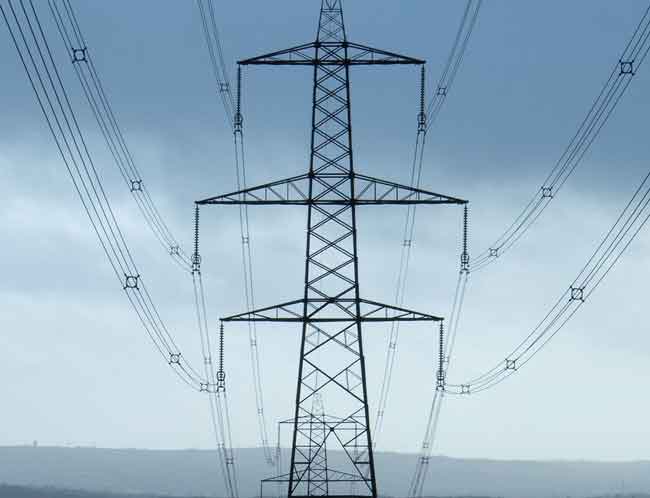
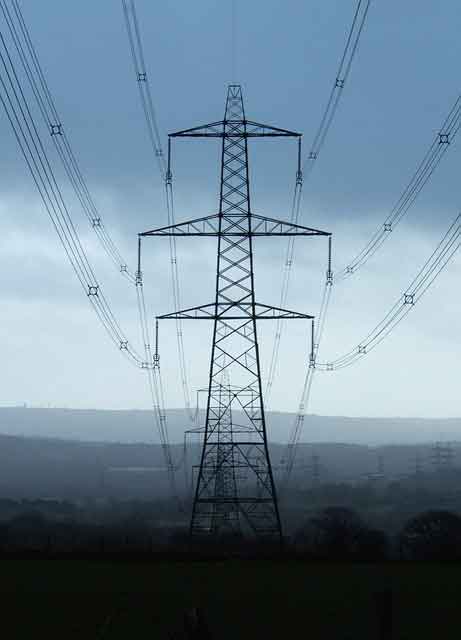
Selling power to Guyana to be hard for Brazil

By Efe


Substation Relay Protection Training

Our customized live online or in‑person group training can be delivered to your staff at your location.
  • Live Online
  • 12 hours Instructor-led
  • Group Training Available
Regular Price:
$699
Coupon Price:
$599
Reserve Your Seat Today
Guyana wants to buy electricity from neighboring Brazil but Brasilia's ambassador to Guyana, Ney Do Prado Dieguez, said recently that reaching a power-purchase agreement was not a foregone conclusion.

Dieguez said the existing accord between Venezuela and Brazil would have to be re-negotiated before Brasilia could acquire more power from the Guri Dam to sell to Guyana.

"It's not very easy to do because we have international agreements with Venezuela and so we would have to negotiate this in a tripartite way," the Brazilian envoy said.

The 4,000 residents of the Guyanese township of Lethem near the Guyana-Brazil border presently are getting two six-hour periods of electricity from a diesel generator after the nearby three-year-old Chinese-made hydroelectricity plant was heavily damaged more than six weeks ago by a mudslide caused by heavy rain.

With repairs to the hydroelectric dam expected to take at least one year, Guyana Prime Minister Samuel Hinds has said the government was exploring the possibility of connecting the Lethem power grid to the Brazilian grid in Bon Fin across the Takatu River that forms the countries' mutual border.

While willing to explore any possibilities of selling power to Lethem, the Brazilian ambassador said the power available to Bon Fin in Roraima State was "very limited ... (and) not very cheap."

"It's a question of conducting a study. A lot of people in the area are being affected," Dieguez said.

The government is conducting geological and topographical surveys at the Moco Moco hydroelectricity plant, before a team of Chinese engineers arrives here in about six weeks.

Related News
Seven small UK energy suppliers must pay renewables fees or risk losing licence

Ofgem Renewables Obligations drive supplier payments for renewables fees, feed-in tariffs, and renewable generation, with non-payment risking supply licences amid the price cap and volatile wholesale prices across the UK energy market.


Key Points

Mandatory payments by suppliers funding renewables via feed-in tariffs; non-payment can trigger supply licence revoking.

✅ Covers Renewables Obligation and Feed-in Tariff scheme compliance.

✅ Non-payment can lead to Ofgem action and licence loss.

✅ Affected by price cap and wholesale price volatility.


Seven small British energy suppliers owe a total of 34 million pounds ($43.74 million) in renewables fees, amid a renewables backlog that has stalled projects, and could face losing their supply licences if they cannot pay, energy regulator Ofgem reports.

Under Britain’s energy market rules, suppliers of energy must meet so-called renewables obligations and feed-in tariffs, including households' ability to sell solar power back to energy firms, which are imposed on them by the government to help fund renewable power generation.

Several small energy companies have gone bust over the past two years, a trend echoed by findings from a global utility study on renewable priorities, as they struggled to pay the renewables fees and as their profits were affected by a price cap on the most commonly used tariffs and fluctuating wholesale prices, even as a 10 GW contract brings new renewable capacity onto the UK grid.

Ofgem has called on the companies to make necessary payments by Oct. 31, as moves to offer community-generated power to all UK customers progress.

“If they do not pay Ofgem could start the process of revoking their licences to supply energy,” it said in a statement, as offshore wind power continues to scale nationwide.

The seven suppliers are, amid debates over clean energy impacts, Co-Operative Energy Limited; Flow Energy Limited; MA Energy Limited; Nabuh Energy Limited; Robin Hood Energy Limited; Symbio Energy Limited and Tonik Energy Limited. ($1 = 0.7773 pounds)


Related News

View more

Tesla reduces Solar + home battery pricing following California blackouts

Tesla Solar and Powerwall Discount offers a ~10% installation price cut amid PG&E blackouts, helping California homeowners with solar panels, battery storage, and backup power, while supporting renewable energy and resilient Supercharger infrastructure.


Key Points

A ~10% installation discount on Tesla solar panels and Powerwall batteries to boost backup power during PG&E blackouts.

✅ ~10% off installation for solar plus Powerwall

✅ Helps during PG&E shutoffs and wildfire mitigation

✅ Supports resilience, backup power, and EV charging


Pacific Gas & Electric’s (PG&E) shutoff of electric supply to residents in California’s Bay Area has caught the attention of Tesla and SpaceX CEO Elon Musk, who, while highlighting a huge future for Tesla Energy in coming years, has announced that he would be offering a price reduction of approximately 10% for a solar panel and Tesla Powerwall battery installation. The discount will be available to anyone interested in powering their homes with solar energy, not just the 800,000 affected homes in the Bay Area.

After initially tweeting a link to Tesla’s Solar page on Tesla.com, Musk added that he would be offering a “~10% price reduction” in installation price for solar panels and Powerwall batteries for anyone, as California explores EVs for grid stability during emergencies, including those who have lost power in response to PG&E’s power shutoff. The blackout induced by the California-based power company is a part of an effort to reduce the possibility of wildfires. PG&E lines were the cause of multiple fires in the past, so the company is taking every necessary precaution to reduce the probability of its lines causing another fire in the future.

Tesla Solar recently offered a subscription program that would allow homeowners to lease panels for a fraction of the cost. The service is available to both residential and commercial customers, and costs as little as $45 a month in some states, particularly appealing in California where EV sales top 20% recently. The option to lease solar panels carries no long-term contracts that would tie down customers to a lengthy commitment.

Wildfires have always been an issue in California. Currently, fires are ripping through Los Angeles county, presumably caused by the winds of the Autumn season. The effort to reduce the environmental impact of forest fires in the state has been increasingly more prevalent over the years. But 2019 is a different story, underscoring that California may need a much bigger grid to support electrification, considering the previous year was noted as the deadliest wildfire season in California’s history. Over 8,500 fires destroyed over 1.89 million acres of land burned due to fires, causing the California Department of Forestry and Fire Protection to spend $432 million through the end of August 2018, according to the Associated Press.

In reaction to the news of the power shutoffs, Tesla added words of advice to vehicle affected owners on its app. The company posted a message encouraging drivers to keep their vehicles charged to 100% and highlighted that EVs can power homes for up to three days during outages, in order to prevent interruptions in driving. Those who are driving ICE vehicles are feeling the effects of the blackout too, as gas stations in California’s affected region have begun to shut down. Musk also tweeted that he would be installing Tesla Powerpacks at all Supercharger stations in the affected region, a move that can help ease strain on state power grids during outages, in order to allow owners to charge their vehicles.

In addition to the efforts that Tesla has already put into place, Musk plans to transition all Supercharger stations to solar power as soon as possible. But the sunny climate of California offers residents a great opportunity to move from gas and electric, even as some warn of a looming green car wreck in the state, to a more eco-friendly, sun-powered option. Tesla solar will completely eliminate power blackouts that are used to control wildfires in California.


Related News

View more

Texas utility companies waiving fees; city has yet to act

Texas Utility COVID-19 Relief suspends disconnections, waives late fees, extends payment plans, and supports broadband access as electric, gas, and internet providers help customers during the statewide emergency with speed upgrades and student WiFi initiatives.


Key Points

Texas utilities pause disconnections, waive fees, expand access, and offer flexible payment plans during COVID-19.

✅ Disconnections and late fees suspended by gas, power, internet.

✅ Payment plans and deferred balances after emergency.

✅ Bandwidth caps lifted; student WiFi access for remote learning.


In response to the COVID-19 pandemic, Texas utility companies have taken unprecedented steps to keep customers' lights on, gas flowing, and online connections stable -- even if they can't pay, amid concerns over pandemic electricity shutoffs nationwide.

Meantime, Palestine City Council members plan to discuss hardship measures Monday, as some states such as New Jersey and New York implement moratoriums on shut-offs, but have no plans yet to ease the burden of paying two other essential services during the statewide emergency -- trash collection and water. Those services are billed through the city.

For many residents, money will be tight after the statewide emergency declaration. Businesses are cutting back or closing. Workers are staying home to avoid the coronavirus.

"We are putting our customers first," Larry Ball, spokesman for Atmos Energy, a Dallas-based natural gas company, told the Herald-Press Friday. "The safety of all of our customers has always been our first priority."

While the declared emergency remains in effect, Atmos has suspended all late fees and customer disconnections, a step similar to PG&E's shutoff moratorium in California.

"Atmos Energy's commitment to safety, paired with our culture, have led us during unique times," Kevin Akers, Atmos President and CEO said. "This will be no different."

Internet Service Providers SuddenLink and Centurylink have similarly suspended all disconnections and late fees. Additionally, Centurylink, a global company serving 36 states, has promised to scrap bandwidth limits, while ensuring the highest speeds possible.

SuddenLink, a division of Altice Business, is also partnering with school districts in their service area to offer its Student WiFi product free for 60 days. That will allow students who have school-issued devices, but no dedicated home Internet access, the ability to use the Optimum WiFi Hot Spot Network to access their school's network and resources.

Electric companies such as TXU and Houston-based Gexa Energy also are working to keep customers safe and connected, and Entergy's relief fund highlights additional support for customers.

During the declared emergency, Gexa is waiving all disconnection and reconnection fees, as well as late fees, a policy focus that later intersected with debates over a proposed electricity market bailout in Texas. Payment plans will be set up for customers, after the crisis ends, Gexa Energy officials said.

"Everyone needs their power on," a Gexa spokesman said. "That is our number one priority."

TXU, based in Irving, is waiving late fees, extending payment due dates with no down-payment required, and deferring customer balances over multiple installments, while some retailers like Griddy underscored the risks of variable-rate plans.

If customers still can't pay, TXU officials said, the company will keep their lights on, a commitment underscored after the Texas winter storm outages exposed vulnerabilities. Customers in need should call 800-242-9113.

"The coronavirus is causing uncertainty and many hardships," Scott Hudson, president of TXU energy, said. "We are committed to serving our communities."


Related News

View more

Cheap material converts heat to electricity

Polycrystalline Tin Selenide Thermoelectrics enable waste heat recovery with ZT 3.1, matching single crystals while cutting costs, powering greener car engines, industrial furnaces, and thermoelectric generators via p-type and emerging n-type designs.


Key Points

Low-cost tin selenide devices that turn waste heat into power, achieving ZT 3.1 and enabling p-type and n-type modules.

✅ Oxygen removal prevents heat-leaking tin oxide grain skins.

✅ Polycrystalline ingots match single-crystal ZT 3.1 at lower cost.

✅ N-type tin selenide in development to pair with p-type.


So-called thermoelectric generators turn waste heat into electricity without producing greenhouse gas emissions, providing what seems like a free lunch. But despite helping power the Mars rovers, the high cost of these devices has prevented their widespread use. Now, researchers have found a way to make cheap thermoelectrics that work just as well as the pricey kind. The work could pave the way for a new generation of greener car engines, industrial furnaces, and other energy-generating devices.

“This looks like a very smart way to realize high performance,” says Li-Dong Zhao, a materials scientist at Beihang University who was not involved with the work. He notes there are still a few more steps to take before these materials can become high-performing thermoelectric generators. However, he says, “I think this will be used in the not too far future.”

Thermoelectrics are semiconductor devices placed on a hot surface, like a gas-powered car engine or on heat-generating electronics using thin-film converters to capture waste heat. That gives them a hot side and a cool side, away from the hot surface. They work by using the heat to push electrical charges from one to the other, a process of turning thermal energy into electricity that depends on the temperature gradient. If a device allows the hot side to warm up the cool side, the electricity stops flowing. A device’s success at preventing this, as well as its ability to conduct electrons, feeds into a score known as the figure of merit, or ZT.

 Over the past 2 decades, researchers have produced thermoelectric materials with increasing ZTs, while related advances such as nighttime solar cells have broadened thermal-to-electric concepts. The record came in 2014 when Mercouri Kanatzidis, a materials scientist at Northwestern University, and his colleagues came up with a single crystal of tin selenide with a ZT of 3.1. Yet the material was difficult to make and too fragile to work with. “For practical applications, it’s a non-starter,” Kanatzidis says.

So, his team decided to make its thermoelectrics from readily available tin and selenium powders, an approach that, once processed, makes grains of polycrystalline tin selenide instead of the single crystals. The polycrystalline grains are cheap and can be heated and compressed into ingots that are 3 to 5 centimeters long, which can be made into devices. The polycrystalline ingots are also more robust, and Kanatzidis expected the boundaries between the individual grains to slow the passage of heat. But when his team tested the polycrystalline materials, the thermal conductivity shot up, dropping their ZT scores as low as 1.2.

In 2016, the Northwestern team discovered the source of the problem: an ultrathin skin of tin oxide was forming around individual grains of polycrystalline tin selenide before they were pressed into ingots. And that skin acted as an express lane for the heat to travel from grain to grain through the material. So, in their current study, Kanatzidis and his colleagues came up with a way to use heat to drive any oxygen away from the powdery precursors, leaving pristine polycrystalline tin selenide, whereas other devices can generate electricity from thin air using ambient moisture.

The result, which they report today in Nature Materials, was not only a thermal conductivity below that of single-crystal tin selenide but also a ZT of 3.1, a development that echoes nighttime renewable devices showing electricity from cold conditions. “This opens the door for new devices to be built from polycrystalline tin selenide pellets and their applications to be explored,” Kanatzidis says.

Getting through that door will still take some time. The polycrystalline tin selenide the team makes is spiked with sodium atoms, creating what is known as a “p-type” material that conducts positive charges. To make working devices, researchers also need an “n-type” version to conduct negative charges.

Zhao’s team recently reported making an n-type single-crystal tin selenide by spiking it with bromine atoms. And Kanatzidis says his team is now working on making an n-type polycrystalline version. Once n-type and p-type tin selenide devices are paired, researchers should have a clear path to making a new generation of ultra-efficient thermoelectric generators. Those could be installed everywhere from automobile exhaust pipes to water heaters and industrial furnaces to scavenge energy from some of the 65% of fossil fuel energy that winds up as waste heat. 


Related News

View more

New York State Moratorium on Utility Disconnections During Emergencies

New York Utility Disconnection Ban protects residents during state emergencies, covering electric, gas, water, telecommunications, cable, and internet services, with penalties for noncompliance and options like deferred payment agreements and consumer protections.


Key Points

A proposed law barring shutoffs in state emergencies across electric, gas, water, telecom, cable, and internet.

✅ Applies during declared state and local emergencies statewide.

✅ Covers electric, gas, water, telecom, cable, and internet services.

✅ Noncompliance triggers penalties; payment plans required for arrears.


Governor Andrew M. Cuomo has announced a proposal to prohibit utility disconnections in regions that are under a state of emergency, addressing the energy insecurity many households face, as part of the 2021 State of the State. The Governor will propose legislation that will apply to electric, gas, water, telecommunications, cable and internet services. Utilities that fail to comply will be subject to penalties.

“In a year in which we dealt with an unprecedented pandemic, ferocious storms added insult to injury by knocking out power for hundreds of thousands of New Yorkers,” Governor Cuomo said. “Utility companies provide essential services, and we need to make sure they continue to provide them, rain or shine. That’s why we’re proposing legislation to make sure that New Yorkers, especially those living in regions under states of emergency, have access to these critical services to provide for themselves and their families.”

Governor Cuomo has taken a series of actions to protect New Yorkers’ access to utilities during the COVID-19 pandemic, including a suspension of shut-offs in New York and New Jersey, among other measures. Last year, the Governor signed legislation extending a moratorium that prevents utility companies from disconnecting utilities to residential households that are struggling with their bills due to the COVID-19 pandemic, a move mirrored by reconnection efforts in Ontario by Hydro One. Utility companies must instead offer these individuals a deferred payment agreement on any past-due balance. 

On November 19, Governor Cuomo announced that Con Edison now faces $25 million in penalties and possible license revocation from the New York State Public Service Commission, amid a broader review of retail energy markets by state regulators, following an investigation into the utility’s failed response during large-scale power outages in Manhattan and Brooklyn in July 2019. On November 2, Governor Cuomo announced that more than $328 million in home heating aid is now available, similar to Ontario bill support during the pandemic, for low- and middle-income New Yorkers who need assistance keeping their homes warm during the coming winter season.

The Governor has previously enacted some of the strongest and most progressive consumer protection and assistance programs in the country, including smart streetlights in Syracuse that reduce energy costs, and other initiatives. Governor Cuomo established New York’s energy affordability policy in 2016, as states pursue renewable energy ambitions that can affect rates, underscoring the need for affordability. The policy extended energy bill support to more than 152,000 additional New York families, ensuring that more than 920,000 New York families spend no more than 6 percent of their income on energy bills. Through this program, New York commits more than $238 million annually helping to keep the lights and heat on for our most vulnerable New Yorkers, while actively striving to expand coverage to additional families.


Related News

View more

Ontario unveils new tax breaks, subsidized hydro plan to spur economic recovery from COVID-19

Ontario COVID-19 Business Tax Relief outlines permanent Employer Health Tax exemptions, lower Business Education Tax rates, optional municipal property tax cuts, and hydro bill subsidies to support small businesses, industrial and commercial recovery.


Key Points

A provincial package of tax breaks and hydro subsidies to help small, industrial, and commercial businesses recover.

✅ Permanent Employer Health Tax exemption to $1M payroll

✅ Lower Business Education Tax rates for 94% of firms

✅ Hydro subsidies cut medium-large rates by 14-16%


The Ontario government's latest plan to help businesses survive and recover from the COVID-19 pandemic includes a suite of new tax breaks for small businesses and $1.3 billion to subsidize electricity bills for industrial and commercial operations.

The new measures were announced Thursday as part of Ontario's 2020 budget, which sets new provincial records for both spending and deficit projections.

The government of Premier Doug Ford says the budget will address barriers impeding long-term growth, ensuring the province forges a path to a full recovery from the pandemic.

"When the pandemic is over, Ontario will come back with a vengeance, stronger and more prosperous than ever before," Ford said at an afternoon news conference.

Small businesses with payrolls under $1 million will no longer have to pay the Employer Health Tax. The province temporarily raised the exemption from $490,000 to $1 million earlier this year, but the government is now making the change permanent.

The higher exemption means that about 90 per cent of Ontario businesses will no longer have to pay the tax, amounting to about $360 million by 2022, according to the province.

"We have heard from employers across Ontario that this measure helped them keep workers on the job during COVID-19," Finance Minister Rod Phillips told the legislature.

The 2020 budget lowers rates for the Business Education Tax (BET), a property tax earmarked for public education. More than 200,000 Ontario businesses, or 94 per cent, will see a lower rate.

"I believe this budget takes some significant initial steps to help stabilize the economy and help businesses, especially small businesses," said Toronto Mayor John Tory in a statement. Tory's office estimates that reductions to the BET will result in $117 million in lower taxes for commercial properties in Canada's largest city.

Municipal governments will also be permitted to reduce property taxes for small businesses, should they choose to do so. The province says it will "consider matching these reductions," which could amount to $385 million in tax relief by 2023.

Finance Minister Rod Phillips tabled the largest spending plan in Ontario history on Thursday afternoon. (Frank Gunn/The Canadian Press)
Municipalities currently have few options to provide targeted relief to local businesses. Guelph Mayor Cam Guthrie, chair of Ontario's Big City Mayors, said the prospect of lowering property taxes will likely be welcomed by local governments across the province.

"I really am looking forward to looking into that because it would give targeted relief to these businesses that have been asking for something from local governments for the past nine months," he said in an interview.

Tax cuts 'won't help a boarded up business,' NDP says
The 2020 budget does not contain any new direct funding for small businesses or their employees. NDP leader Andrea Horwath, who has proposed to make hydro public again, said those types of funding would help businesses more than potential tax reductions.

"A future hydro or tax cut won't help a boarded up business and it certainly won't help the folks that used to work there," Horwath said.

"Those measures are great if you're a company that's doing really well ... but let's face it, main streets across Ontario are crumbling."

Ontario did reveal on Thursday more details about a previously announced $300-million fund to support businesses in Toronto, Ottawa, Peel Region and York Region, which were placed under modified Stage 2 restrictions this fall. The money can be used to cover property taxes and energy bills for eligible businesses.

In a similar move, B.C. provided a three-month break on electricity bills for residents and businesses during the pandemic.

An undetermined amount of the $300 million will also be made available to businesses that are placed under "control" and "lockdown" rules, which are the two most severe restrictions in the province's updated reopening guidelines announced in October.

No regions are currently under these restrictions.

Elsewhere, B.C. saw commercial electricity consumption plummet during the COVID-19 pandemic.

Government to subsidize hydro bills for industrial businesses
The Ford government, which earlier oversaw a Hydro One leadership overhaul, is also taking aim at what it calls "job-killing electricity prices" in Ontario's industrial and commercial sectors.

The budget includes a $1.3 billion investment over three years to subsidize their hydro bills, a move praised by Canadian Manufacturers & Exporters as supportive of industry, which the province says have been inflated due to contracts signed by the previous Liberal government to purchase electricity generated by wind, solar and bioenergy.

"This is the legacy that is making our businesses uncompetitive," Phillips told reporters Thursday afternoon.

Ontario says its $1.3-billion investment to subsidize electricity bills will offset expensive contracts for green energy signed by the previous Liberal government. (Patrick Pleul/dpa via Associated Press)
The investment will lower rates for medium- and large-sized business by between 14 and 16 per cent, and follows an OEB decision on Hydro One rates that affects transmission and distribution costs, according to Ontario's calculations. Phillips said those rates will be among the lowest of any jurisdiction in the Great Lakes region.

The provincial government said the investment is necessary for Ontario to recover from the COVID-19 downturn. The Ford government expects that no further subsidies will be required by around 2040.


Related News

View more

Sign Up for Electricity Forum’s Newsletter

Stay informed with our FREE Newsletter — get the latest news, breakthrough technologies, and expert insights, delivered straight to your inbox.

Electricity Today T&D Magazine Subscribe for FREE

Stay informed with the latest T&D policies and technologies.
  • Timely insights from industry experts
  • Practical solutions T&D engineers
  • Free access to every issue

Live Online & In-person Group Training

Advantages To Instructor-Led Training – Instructor-Led Course, Customized Training, Multiple Locations, Economical, CEU Credits, Course Discounts.

Request For Quotation

Whether you would prefer Live Online or In-Person instruction, our electrical training courses can be tailored to meet your company's specific requirements and delivered to your employees in one location or at various locations.