Brazil's Light requests extension on debt payments

By Reuters


NFPA 70b Training - Electrical Maintenance

Our customized live online or in‑person group training can be delivered to your staff at your location.

  • Live Online
  • 12 hours Instructor-led
  • Group Training Available
Regular Price:
$699
Coupon Price:
$599
Reserve Your Seat Today
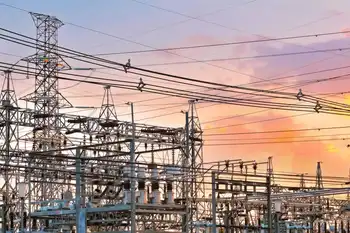
Rio de Janeiro's main power distributor, Light Servicos de Electricidade said recently it was requesting an extension on debt payments with creditors due to an ongoing liquidity crisis.=

Brazil's Light requests extension on debt payments The company, which is owned by French state utility Electricite de France, said in a statement that it had been unable to pay its debts by a July 1 deadline, but that it was still negotiating with creditors.

Light is the latest debt casualty in Brazil's power sector, which was plunged into crisis last year when companies' large dollar-denominated debts were magnified by a currency slump and power rationing brought several firms to the brink of ruin.

Light also said it was dispensing with the services of Citigroup Global Markets, which it had hired in April to help it sort out its debt problems.

The company, which posted a loss in the first quarter, ended March with a total net debt of 4.82 billion reais ($1.7 billion).

Related News

Electricity prices rise more than double EU average in first half of 2021

Estonia energy prices 2021 show sharp electricity hikes versus the EU average, mixed natural gas trends, kWh tariffs on Nord Pool spiking, and VAT, taxes, and support measures shaping household bills.


Key Points

EU-high electricity growth, early gas dip, then Nord Pool spikes; taxes, VAT, and subsidies shaped energy bills.

✅ Electricity up 7% on year; EU average 2.8% in H1 2021.

✅ Gas fell 1% in H1; later spiked with global market.

✅ VAT, taxes, excise and aid impacted household costs.


Estonia saw one of the highest rates in growth of electricity prices in the first half of 2021, compared with the same period in key trends in 2020 across Europe. These figures were posted before the more recent, record level of electricity and natural gas prices; the latter actually dropped slightly in Estonia in the first half of the year.

While electricity prices rose 7 percent on year in the first half of 2021 in Estonia, the average for the EU as a whole, where energy prices drove inflation across the bloc, stood at 2.8 percent over the same period, BNS reports.

Hungary (€10 per 100 Kwh) and Bulgaria (€10.20 per 100 Kwh) saw the lowest electricity prices EU-wide, while at €31.9 per KWH, Germany's power prices posted the most expensive rate, while Denmark, Belgium and Ireland also had high prices, in excess of €25 per Kwh.

Slovenia saw the highest electricity price rise, at 15 percent, and even the United States' electricity prices saw their steepest rise in decades during the same era, while Estonia was in third place, joint with Romania at 7 percent as noted, and behind Poland (8 percent).

Lithuania, on the other hand, experienced the third highest electricity price fall over the first half of 2021, compared with the same period in 2020, at 6 percent, behind only Cyprus (7 percent) and the Netherlands (10 percent, largely due to a tax cut).

Urmas Reinsalu: VAT on electricity, gas and heating needs to be lowered
The EU average price of electricity was €21.9 percent per Kwh, with taxes and excise accounting for 39 percent of this, even as prices in Spain surged across the day-ahead market.

Estonia has also seen severe electricity price rises in the second half of the year so far, with records set and then promptly broken several times earlier in October, while an Irish electricity provider raised prices amid similar pressures, and a support package for low income households rolled out for the winter season (October to March next year). The price on the Nord Pool market as of €95.01 per Kwh; a day earlier it had stood at €66.21 per Kwh, while on October 19 the price was €140.68 per Kwh.

Gas prices
Natural gas prices to household, meanwhile, dropped in Estonia over the same period, at a sharper rate (1 percent) than the EU average (0.5 percent), according to Eurostat.

Gas prices across the EU were lowest in Lithuania (€2.8 per 100 Kwh) and highest in the Netherlands (€9.6 per KWH), while the highest growth was seen in Denmark (19 percent), in the first half of 2021.

Natural gas prices dropped in 20 member states, however, with the largest drop again coming in Lithuania (23 percent).

The average price of natural gas EU-side in the first half of 2021 was €6.4, and taxes and excise duties accounted on average for 36 percent of the total.

The second half of the year has seen steep gas price rises in Estonia, largely the result of increases on the world market, though European gas benchmarks later fell to pre-Ukraine war levels.


Related News

View more

Gaza’s sole electricity plant shuts down after running out of fuel

Gaza Power Plant Shutdown underscores the Gaza Strip's fuel ban, Israeli blockade, and electricity crisis, cutting megawatts, disrupting hospitals and quarantine centers, and exposing fragile energy supply, GEDCO warnings, and public health risks.


Key Points

An abrupt halt of Gaza's sole power plant due to a fuel ban, deepening the electricity crisis and straining hospitals.

✅ Israeli fuel ban halts Gaza's only power plant

✅ Available supply drops far below 500 MW demand

✅ Hospitals and COVID-19 quarantine centers at risk


The only electricity plant in the Gaza Strip shut down yesterday after running out of fuel banned from entering the besieged enclave by the Israeli occupation, Gaza Electricity Distribution Company announced.

“The power plant has shut down completely,” the company said in a brief statement, as disruptions like China power cuts reveal broader grid vulnerabilities.

Israel banned fuel imports into Gaza as part of punitive measures over the launching incendiary balloons from the Strip.

On Sunday, GEDCO warned that the industrial fuel for the electricity plant would run out, mirroring Lebanon's fuel shortage challenges, on Tuesday morning.

Since 2007, the Gaza Strip suffered under a crippling Israeli blockade that has deprived its roughly two million inhabitants of many vital commodities, including food, fuel and medicine, and regional strains such as Iraq's summer electricity needs highlight broader power insecurity.

As a result, the coastal enclave has been reeling from an electricity crisis, similar to when the National Grid warned of short supply in other contexts.

The Gaza Strip needs some 500 megawatts of electricity – of which only 180 megawatts are currently available – to meet the needs of its population, while Iran supplies about 40% of Iraq's electricity in the region.

Spokesman of the Ministry of Health in Gaza, Ashraf Al Qidra, said the lack of electricity undermines offering health services across Gaza’s hospitals.

He also warned that the lack of electricity would affect the quarantine centres used for coronavirus patients, reinforcing the need to keep electricity options open during the pandemic.

Gaza currently has three sources of electricity: Israel, which provides 120 megawatts and is advancing coal use reduction measures; Egypt, which supplies 32 megawatts; and the Strip’s sole power plant, which generates between 40 and 60 megawatts.


Related News

View more

Iran eyes transmitting electricity to Europe as region’s power hub

Iran Electricity Grid Synchronization enables regional interconnection, cross-border transmission, and Caspian-Europe energy corridors, linking Iraq, Azerbaijan, Russia, and Qatar to West Asia and European markets with reliable, flexible power exchange.


Key Points

Iran's initiative to link West Asian and European power grids for trade, transit, reliability, and regional influence.

✅ Synchronizes grids with Iraq, Azerbaijan, Russia, and potential Qatar link

✅ Enables east-to-Europe electricity transit via Caspian energy corridors

✅ Backed by gas-fueled and combined-cycle generation capacity


Following a plan for becoming West Asia’s electricity hub, Iran has been taking serious steps for joining its electricity network with neighbors in the past few years.

The Iranian Energy Ministry has been negotiating with the neighboring countries including Iraq for the connection of their power networks with Iran, discussing Iran-Iraq energy cooperation as well as ties with Russia, Afghanistan, Azerbaijan, and Qatar to make them enable to import or transmit their electricity to new destination markets through Iran.

The synchronization of power grids with the neighboring countries, not only enhances Iran’s electricity exchanges with them, but it will also increase the political stance of the country in the region.

So far, Iran’s electricity network has been synchronized with Iraq, where Iran is supplying 40% of Iraq's power today, and back in September, the Energy Minister Reza Ardakanian announced that the electricity networks of Russia and Azerbaijan are the next in line for becoming linked with the Iranian grid in the coming months.

“Within the next few months, the study project of synchronization of the electricity networks of Iran, Azerbaijan, and Russia will be completed and then the executive operations will begin,” the minister said.

Meanwhile, Ardakanian and Qatari Minister of State for Energy Affairs Saad Sherida Al-Kaabi held an online meeting in late September to discuss joining the two countries' electricity networks via sea.

During the online meeting, Al-Kaabi said: "Electricity transfer between the two countries is possible and this proposal should be worked on.”

Now, taking a new step toward becoming the region’s power hub, Iran has suggested becoming a bridge between East and Europe for transmitting electricity.

In a virtual conference dubbed 1st Caspian Europe Forum hosted by Berlin on Thursday, the Iranian energy minister has expressed the country’s readiness for joining its electricity network with Europe.

"We are ready to connect Iran's electricity network, as the largest power generation power in West Asia, with the European countries and to provide the ground for the exchange of electricity with Europe," Ardakanian said addressing the online event.

Iran's energy infrastructure in the oil, gas, and electricity sectors can be used as good platforms for the transfer of energy from east to Europe, he noted.

In the event, which was aimed to study issues related to the development of economic cooperation, especially energy, between the countries of the Caspian Sea region, the official added that Iran, with its huge energy resources and having skilled manpower and advanced facilities in the field of energy, can pave the ground for the prosperity of international transport and energy corridors.

"In order to help promote communication between our landlocked neighbors with international markets, as Uzbekistan aims to export power to Afghanistan across the region, we have created a huge transit infrastructure in our country and have demonstrated in practice our commitment to regional development and peace and stability," Ardakanian said.

He pointed out that having a major percentage of proven oil and gas resources in the world, regional states need to strengthen relations in a bid to regulate production and export policies of these huge resources and potentially play a role in determining the price and supply of these resources worldwide.

“EU countries can join our regional cooperation in the framework of bilateral or multilateral mechanisms such as ECO,” he said.

Given the growing regional and global energy needs and the insufficient investment in the field, with parts of Central Asia facing severe electricity shortages today, as well as Europe's increasing needs, this area can become a sustainable area of cooperation, he noted.

Ardakanian also said that by investing in energy production in Iran, Europe can meet part of its future energy needs on a sustainable basis.

In Iraq, plans for nuclear power plants are being pursued to tackle chronic electricity shortages, reflecting parallel efforts to diversify generation.

Iran currently has electricity exchange with Armenia, Azerbaijan, Iraq, where grid rehabilitation deals have been finalized, Turkmenistan, and Afghanistan.

The country’s total electricity exports vary depending on the hot and cold seasons of the year, since during the hot season which is the peak consumption period, the country’s electricity exports decreases, however electrical communication with neighboring countries continues.

Enjoying abundant gas resources, which is the main fuel for the majority of the country’s power plants, Iran has the capacity to produce about 85,500 megawatts [85.5 gigawatts (GW)] of electricity.

Currently, combined cycle power plants account for the biggest share in the country’s total power generation capacity as Iran is turning thermal plants to combined cycle to save energy, followed by gas power plants.


Related News

View more

High Natural Gas Prices Make This The Time To Build Back Better - With Clean Electricity

Build Back Better Act Energy Savings curb volatile fossil fuel heating bills by accelerating electrification and renewable electricity, insulating households from natural gas, propane, and oil price spikes while cutting emissions and lowering energy costs.


Key Points

BBBA policies expand clean power and electrification to curb volatility, lower bills, and cut emissions.

✅ Tax credits for renewables, EVs, and efficient all-electric homes

✅ Shields households from natural gas, propane, and heating oil spikes

✅ Cuts methane, lowers bills, and improves grid reliability and jobs


Experts are forecasting serious sticker shock from home heating bills this winter. Nearly 60 percent of United States’ households heat their homes with fossil fuels, including natural gas, propane, or heating oil, and these consumers are expected to spend much more this winter because of fuel price increases.

That could greatly burden many families and businesses already operating on thin margins. Yet homes that use electricity for heating and cooking are largely insulated from the pain of volatile fuel markets, and they’re facing dramatically lower price increases as a result.

Projections say cost increases for households could range anywhere from 22% to 94% more, depending on the fuel used for heating and the severity of the winter temperatures. But the added expenditures for the 41% of U.S. households using electricity for heating are much less stark—these consumers will see only a 6% price increase on average. The projected fossil fuel price spikes are largely due to increased demand, limited supply, declining fuel stores, and shifting investment priorities in the face of climate change.

The fossil fuel industry is already seizing this moment to use high prices to persuade policymakers to vote against clean energy policies, particularly the Build Back Better Act (BBBA). Spokespeople with ties to the fossil fuel industry and some consumer groups are trying to pin higher fuel prices on the proposed legislation even before it has passed, even as analyses show the energy crisis is not spurring a green revolution on its own, let alone begun impacting fuel markets. But the claim the BBBA would cost Americans and the economy is false.

The facts tell a different story. Adopting smart climate policies and accelerating the clean energy transition are precisely the solutions to counter this vicious cycle by ending our dependance on volatile fossil fuels. The BBBA will ensure reliable, affordable clean electricity for millions of Americans, in line with a clean electricity standard many experts advocate—a key strategy for avoiding future vulnerability. Unlike fossil fuels subject to the whims of a global marketplace, wind and sunshine are always free. So renewable-generated electricity comes with an ultra-low fixed price decades into the future.

By expanding clean energy and electric vehicle tax credits, creating new incentives for efficient all-electric homes, and dedicating new funding for state and local programs, the BBBA provides practical solutions that build on lessons from Biden's climate law to protect Americans from price shocks, save consumers money, and reduce emissions fueling dangerous climate change.


What’s really causing the gas price spikes?
The U.S. Energy Information Administration’s winter 2021 energy price forecasts project that homes heated with natural gas, fuel oil, and propane will see average price increases of 30%, 43%, and 54%, respectively. Those who heat their homes with electricity, on the other hand, should expect a modest 6% increase. At the pump, drivers are seeing some of the highest gas prices in nearly a decade as the U.S. energy crisis ripples through electricity, gas, and EV markets today. And the U.S. is not alone. Countries around the globe are experiencing similar price jumps, including Britain's high winter energy costs this season.

A closer look confirms the cause of these high prices is not clean energy or climate policies—it’s fossil fuels themselves.  

First, the U.S. (and the world) are just now feeling the effects of the oil and gas industry’s reduced fuel production and spending due to the pandemic. COVID-19 brought the world’s economies to a screeching halt, and most countries have not returned to pre-COVID economic activity. During the past 20 months, the oil and gas industry curtailed its production to avoid oversupply as demand fell to all-time lows. Just as businesses were reopening, stored fuel was needed to meet high demand for cooling during 2021’s hottest summer on record, driving sky-high summer energy bills for many households. February’s Texas Big Freeze also disrupted gas distribution and production.

The world is moving again and demand for goods and services is rebounding to pre-pandemic levels. But even with higher energy demand, OPEC announced it would not inject more oil into the economy. Major oil companies have also held oil and gas spending flat in 2021, with their share of overall upstream spending at 25%, compared with nearly 40% in the mid-2010s. And as climate change threats loom in the financial world, investors are reducing their exposure to the risks of stranded assets, increasingly diversifying and divesting from fossil fuels. 

Second, despite strong and sustained growth for renewable energy, energy storage, and electric vehicles, the relatively slow pace to adopt fossil fuel alternatives at scale has left U.S. households and businesses tethered to an industry well-known for price volatility. Today, some oil drillers are using profits from higher gas prices to pay back debt and reward shareholders as demanded by investors, instead of increasing supply. Rising prices for a limited commodity in high demand is generating huge profits for many of the world’s largest companies at the expense of U.S. households.

Because 48% of homes use fossil gas for heating and another 10% heat with propane and fuel oil, more than half of U.S. households will feel the impact of rising prices on their home energy bills. One in four U.S. households continues to experience a high energy burden (meaning their energy expenses consume an inordinate amount of their income), including risks of pandemic power shut-offs that deepen energy insecurity, and many are still experiencing financial hardships exacerbated by the pandemic. Those with inefficient fossil-fueled appliances, homes, and cars will be hardest hit, and many families with fixed- and lower-incomes could be forced to choose between heat or other necessities.

We have the solutions—the BBBA will unlock their benefits for all households

Short-term band-aids may be enticing, but long-term policies are the only way out of this negative feedback loop. Clean energy and building electrification will prevent more costly disasters in the future, but they’re the very solutions the fossil fuel industry fights at every turn. All-electric homes and vehicles are a natural hedge against the price spikes we’re experiencing today since renewables are inherently devoid of fuel-related price fluctuations.

RMI analysis shows all-electric single-family homes in all regions of the country have lower energy bills than a comparable mixed fuel-homes (i.e., electricity and gas). Electric vehicles also save consumers money. Research from University of California, Berkeley and Energy Innovation found consumers could save a total of $2.7 trillion in 2050—or $1,000 per year, per household for the next 30 years—if we accelerate electric vehicle deployment in the coming decade.

The BBBA would help deliver these consumer savings by expanding and expediting clean energy, while ensuring equitable adoption among lower-income households and underserved communities. Extending and expanding clean energy tax credits; new incentives for electric vehicles (including used electric vehicles); and new incentives for energy efficient homes and all-electric appliances (and electrical upgrades) will reduce up-front costs and spur widespread adoption of all-electric homes, buildings, and cars.

A combination of grants, incentives, and programs will promote private sector investments in a decarbonized economy, while also funding and supporting state and local governments already leading the way. The BBBA also allocates dedicated funding and makes important modifications (such as higher rebate amounts and greater point-of-purchase availability) to ensure these technologies are available to low-income households, underserved urban and rural communities, tribes, frontline communities, and people living in multifamily housing.

Finally, the BBBA proposes to make oil and gas polluters pay for the harm they are causing to people’s health and the climate through a methane fee. This fee would cost companies less than 1% of their revenue, meaning the industry would retain over 99% of its profits. In return return we’d see substantial reductions of a powerful greenhouse gas and a healthier environment in communities living near fossil fuel production. These benefits also come with a stronger economy—Energy Innovation analysis shows the methane fee would create more than 70,000 jobs by 2050 and boost gross domestic product more than $250 billion from 2023 to 2050.

The facts speak for themselves. Gas prices are rising because of reasons totally unrelated to smart climate and clean energy policies, which research shows actually lower costs. For the first time in more than a decade, America has the opportunity to enact a comprehensive energy policy that will yield measurable savings to consumers and free us from oil and gas industry control over our wallets.

The BBBA will help the U.S. get off the fossil fuel rollercoaster and achieve a stable energy future, ensuring that today’s price spikes will be a thing of the past. Proving, once and for all, that the solution to our fossil fuel woes is not more fossil fuels.


Related News

View more

Wind has become the ‘most-used’ source of renewable electricity generation in the US

U.S. Wind Generation surpassed hydroelectric output in 2019, EIA data shows, becoming the top renewable electricity source, driven by PTC incentives, expanded capacity, and utility-scale projects across states, boosting the national electricity mix.


Key Points

U.S. Wind Generation is the nation's top renewable, surpassing hydro as EIA-tracked capacity grows under PTC incentives.

✅ EIA: wind topped hydro in 2019, over 300M MWh generated

✅ PTC credits spurred growth in utility-scale wind projects

✅ 103 GW installed; 77% added in the last decade


Last year saw wind power surging in the U.S. to overtake hydroelectric generation for the first time, according to data from the U.S. Energy Information Administration (EIA).

Released Wednesday, the figures from the EIA’s “Electric Power Monthly” report show that yearly wind generation hit a little over 300 million megawatt hours (MWh) in 2019. This was roughly 26 million MWh more than hydroelectric production.

Wind now represents the “most-used renewable electricity generation source” in the U.S., the EIA said, and renewables hit a 28% monthly record in April in later data.

Overall, total renewable electricity generation — which includes sources such as solar's 4.7% share in 2022 as one example, geothermal and landfill gas — at utility scale facilities hit more than 720 million MWh in 2019, compared to just under 707 million MWh in 2018. To put things in perspective, generation from coal came to more than 966 million MWh in 2019, while renewables surpassed coal in 2022 nationally according to later analyses.

According to the EIA’s “Today in Energy” briefing, which was also published Wednesday, generation from wind power has grown “steadily” across the last decade, and by 2020, renewables became the second-most prevalent source in the U.S. power mix.

This, it added, was partly down to the extension of the Production Tax Credit, or PTC, amid favorable government plans supporting solar and wind growth. According to the EIA, the PTC is a system which gives operators a tax credit per kilowatt hour of renewable electricity production. It applies for the first 10 years of a facility’s operation.

At the end of 2019, the country was home to 103 gigawatts (GW) of wind capacity, with 77% of this being installed in the last decade, and wind capacity surpassed hydro in 2016 according to industry data. The U.S. is home 80 GW of hydroelectric capacity, according to the EIA.

“The past decade saw a steady increase in wind capacity across the country and we capped the decade with a monumental achievement for the industry in reaching more than 100 GW,” Tom Kiernan, the American Wind Energy Association’s CEO, said in a statement issued Thursday.

“And more wind energy is coming, as the industry is well into investing $62 billion in new projects over the next few years that put us on the path to achieving 20 percent of the nation’s electricity mix in 2030,” Kiernan went on to state.

“As a result, wind is positioned to remain the largest renewable energy generator in the country for the foreseeable future.”


Related News

View more

Over 30% of Global Electricity from Renewables

Global Renewable Electricity Milestone signals solar, wind, hydro, and geothermal surpass 30% of power generation, driven by falling costs, battery storage, smart grids, and ambitious policy targets that strengthen energy security and decarbonization.


Key Points

It marks renewables exceeding 30% of global power, enabled by cheaper tech, storage, and strong policy.

✅ Costs of solar and wind fall, boosting competitiveness

✅ Storage and smart grids improve reliability and flexibility

✅ Policies target decarbonization while ensuring just transition


A recent report by the energy think tank Ember marks a significant milestone in the global energy transition. For the first time ever, according to their analysis, renewable energy sources like solar, wind, hydro, and geothermal now account for more than 30% of the world's electricity generation, a milestone echoed by wind and solar growth globally. This achievement signifies a pivotal shift towards a cleaner and more sustainable energy future.

The report attributes this growth to several key factors. Firstly, the cost of renewable energy technologies like solar panels and wind turbines has plummeted in recent years, making them increasingly competitive with traditional fossil fuels. Secondly, advancements in battery storage technology are facilitating the integration of variable renewable sources like solar and wind into the grid, addressing concerns about reliability. Thirdly, a growing number of countries are implementing ambitious renewable energy targets and policies, driven by environmental concerns and the desire for energy security.

The rise of renewables is not uniform across the globe. Europe leads the pack, with the European Union generating a staggering 44% of its electricity from renewable sources in 2023. Countries like Denmark, Germany, and Spain are at the forefront of this clean energy revolution. Developing nations are also starting to embrace renewables, driven by factors like falling technology costs and the need for affordable electricity access.

However, challenges remain. Fossil fuels still dominate the global energy mix, accounting for roughly two-thirds of electricity generation. Integrating a higher proportion of variable renewables into the grid necessitates robust storage solutions and smart grid technologies. Additionally, the transition away from fossil fuels needs to be managed carefully to ensure a just and equitable outcome for workers in the coal, oil, and gas sectors.

Despite these challenges, the report by Ember paints an optimistic picture. The rapid growth of renewables demonstrates their increasing viability and underscores the global commitment to a cleaner energy future, and in the United States, for example, renewables are projected to reach one-fourth of U.S. electricity generation, reinforcing this trajectory. The report also highlights the economic benefits of renewables, with new jobs created in the clean energy sector and reduced reliance on volatile fossil fuel prices.

Looking ahead, continued technological advancements, supportive government policies, and increased investment in renewable energy infrastructure are all crucial for further growth, with scenarios such as BNEF's 2050 outlook suggesting wind and solar could provide half of electricity, underscoring the importance of sustained effort. Furthermore, international cooperation is essential to ensure a smooth and equitable global energy transition. Developed nations can play a vital role by sharing technology and expertise with developing countries.

The 30% milestone is a significant step forward, but it's just the beginning. As the world strives to combat climate change and ensure energy security for future generations, renewables are poised to play a central role in powering a sustainable future, with wind and solar surpassing coal in the U.S. offering a clear signal of the shift. The report by Ember serves as a powerful reminder that a clean energy future is not just a dream, but a rapidly unfolding reality.


Related News

View more

Sign Up for Electricity Forum’s Newsletter

Stay informed with our FREE Newsletter — get the latest news, breakthrough technologies, and expert insights, delivered straight to your inbox.

Electricity Today T&D Magazine Subscribe for FREE

Stay informed with the latest T&D policies and technologies.
  • Timely insights from industry experts
  • Practical solutions T&D engineers
  • Free access to every issue

Download the 2025 Electrical Training Catalog

Explore 50+ live, expert-led electrical training courses –

  • Interactive
  • Flexible
  • CEU-cerified