Protective Relay Training - Basic
Our customized live online or in‑person group training can be delivered to your staff at your location.

- Live Online
- 12 hours Instructor-led
- Group Training Available
Regular Price:
$699
Coupon Price:
$599
The projected cost of cleaning up the sites of Britain's old nuclear power stations is likely to leap to more than 70 billion pounds when new figures are published early this year.
The Nuclear Decommissioning Authority (NDA), set up last April to supervise state-owned nuclear plants, said it was "almost certain" that its initial estimate of 56 billion pounds - itself the equivalent of a charge of 800 pounds for every adult and child in the country - would have to be revised upwards.
Inflation alone is likely to push the costs up to almost 58 billion pounds - but a closer look at conditions in some of the older nuclear sites, particularly Sellafield and Dounreay, has convinced inspectors the figure published in the NDA's strategy document last year was too low. The 56 billion pounds figure is itself only an estimate of the costs of clearing up the former state- run civil nuclear programme. It does not include the weapons establishment at Aldermaston, run by the Ministry of Defence, or privately-owned nuclear plants such as Sizewell B.
Previously unpublished figures for individual sites, supplied by the NDA, show that Sellafield, Britain's largest nuclear complex, is currently estimated to cost another pounds 31 billion before it is finally closed down - a figure that is likely to increase drastically. Commercial operations at the site are due to end in 2016, but it will be another 134 years before the site is finally made safe.
One of the biggest decisions facing the British government in 2006 is whether to order the building of a new generation of nuclear power stations, as the last of the old state-owned plants goes out of action. Supporters of the nuclear industry say their case has been strengthened by global warming and by the rising price of gas, because nuclear power will give Britain a domestic source of energy that does not emit carbon dioxide. They also say new stations will be built with decommissioning in mind, leaving behind lower long- term costs.
But opponents say that building new power stations does not make economic sense. "The cost is just absolutely astronomical," the former environment minister Michael Meacher said recently. "I wouldn't be surprised if it was somewhere of the order of pounds 70 billion or pounds 80 billion. Okay, so it's over a long period of time, but it's still going to have to be paid.
"It's financially insane, unless there is absolutely no alternative and the truth is that the alternative is there. It is renewable energy, like wind, and solar energy and tidal power. People talk about this as if it is something a bit exotic and marginal, but that is because it has not had investment anything like the amount that has been poured into nuclear power."
Tony Blair warned in his new year's message that energy policy would be one of the "big choices" the government would face this year. The Prime Minister sought to take a world lead during 2005 in the campaign to prevent global warming, but had to face the embarrassing fact that emissions of carbon dioxide have been increasing in Britain, making it very unlikely that the government would meet its self-imposed target to cut CO2 emissions by 2010 to 20 per cent below the 1990 level. That alone is thought to have convinced Mr Blair of the case for reverting to nuclear power.
Brian Wilson, a former energy minister and advocate of nuclear power, said that the current crisis in the Ukraine was a warning of the consequences of depending too heavily on imported fuel. He pointed out that by 2020, 70 per cent of the UK's electricity would come from gas, and 90 per cent of that would be imported. The Environment Secretary, Margaret Beckett, is more sceptical of the case for nuclear power, arguing that it would be impossible to build new power stations and have them producing electricity soon enough to help the government meet its 2010 target for CO2 emissions.
The Environment minister, Elliot Morley, is another sceptic. He told a recent seminar: "I don't think nuclear development is economically viable, and since no one is offering to pay, it would certainly need to have financial support from the government."
Related News
Why electric buses haven't taken over the world—yet
Electric Buses reduce urban emissions and noise, but require charging infrastructure, grid upgrades, and depot…
View more
Ukraine Prepares for Winter Amid Energy Challenges
Ukraine Winter Energy Resilience focuses on energy security, grid repairs, renewable power, EU support, heating…
View more
Hydro-Quebec begins talks for $185-billion strategy to wean the province off fossil fuels
Hydro-Québec $185-Billion Clean Energy Plan accelerates hydroelectric upgrades, wind power expansion, solar and battery storage,…
View more
Magnitude 5 quake strikes near Iran nuclear plant
Iran Bushehr Earthquake rattles southern province near the Bushehr nuclear power plant, USGS reports M5.1…
View more
Energy authority clears TEPCO to restart Niigata nuclear plant
TEPCO Kashiwazaki-Kariwa restart plan clears NRA fitness review, anchored by a seven-point safety code, Niigata…
View more
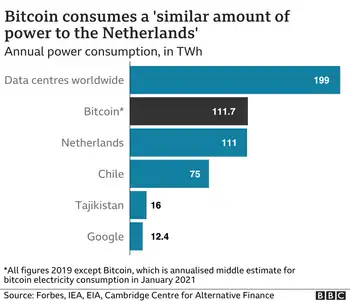
How Bitcoin's vast energy use could burst its bubble
Bitcoin Energy Consumption drives debate on blockchain mining, proof-of-work, carbon footprint, and emissions, with CCAF…
View more
Sign Up for Electricity Forum’s Newsletter
Stay informed with our FREE Newsletter — get the latest news, breakthrough technologies, and expert insights, delivered straight to your inbox.
Electricity Today T&D Magazine Subscribe for FREE

Stay informed with the latest T&D policies and technologies.
- Timely insights from industry experts
- Practical solutions T&D engineers
- Free access to every issue
