NFPA 70B Training - 2026 Edition - Electrical Maintenance Program Compliance
Our customized live online or in‑person group training can be delivered to your staff at your location.

- Live Online
- 12 hours Instructor-led
- Group Training Available
Regular Price:
$699
Coupon Price:
$599
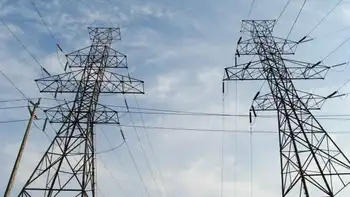
Sturdy as steel, California's power lines climb mountains and straddle valleys. But the people who run them are at a crossroads over who should control those lines in the years ahead.
Federal regulators -- the same ones California battled over how to tame the state's energy crisis -- have their own plan for the electric grid.
They want it swept up into a multistate transmission organization that would be regulated in Washington, D.C. The change would be part of a broader effort by the Federal Energy Regulatory Commission to create four regional super-grids to run high-voltage transmission lines nationwide.
FERC expects the giant regional grids to advance its longtime goal -- more competition in the electric industry, which it says will boost efficiency and save consumers money.
Those who support state control and many advocates for smaller consumers worry that what will happen, instead, is that the best deals will flow to the largest buyers and that states with low-cost power will lose it to higher-priced neighbors.
"What's in play here is an effort by an industry to totally deregulate their industry in all phases of it, so they can basically do as they please," said state Sen. Joe Dunn, D-Santa Ana, who is chairing a committee investigating price manipulation.
He says California must oppose regional transmission until federal regulators prove they have truly conquered every effort at manipulating the market to force up prices.
The push for regional transmission organizations, or "RTOs," has alarmed regulators in many states. It has become enmeshed in a case pending before the U.S. Supreme Court and in the debate over the future of deregulation.
What's at stake is much more than who runs the grid. It also could affect how the electric industry evolves nationwide.
Transmission itself adds a tiny percentage of cost to the average electric bill, but it is the vehicle that can pry open the grid to more competition.
"Unless you have access to transmission, you don't get the product delivered," said Peter
Esposito, regulatory counsel for Dynegy Inc., a generating company that is backing the federal drive to create four big RTOs.
Power producers such as Dynegy, trading companies and some of the nation's largest electricity users are pushing hard for regional transmission.
"All consumers will benefit from having competitive markets," said John Hughes, director of technical affairs for the Electricity Consumers Resource Council, which represents big corporate power users.
His organization joined Enron Corp. in arguing before the Supreme Court in October that FERC has not gone far enough in forcing states to hand over the transmission reins to the federal government.
Led by New York, nine states argued that FERC already has gone too far, intruding into retail transmission issues which were long left to state regulators. A ruling is expected by June.
"This is going to be a huge, precedent-setting decision that we're all awaiting," said Loretta Lynch, president of the California Public Utilities Commission.
"It does get to the heart of the question: Are we going to coordinate or cooperate, or is FERC just going to tell us" what to do?
FERC Chairman Pat Wood has said that the case is virtually irrelevant, because federal regulators already are so far down the road to regional transmission. He has vowed to seek more authority from Congress if the court tries to limit FERC.
California, in a friend of the court brief supporting New York, said federal authority has severely limited California's alternatives for "pulling back from the precipice" of the state's "electric utility disaster."
It pointed out that running disputes with FERC are unresolved, including who has authority to appoint the board for the state
Independent System Operator, which runs much of California's electric grid.
The ISO, with its headquarters in Folsom, is a not-for-profit corporation created by the state but regulated by FERC. It was formed in 1997 to run the transmission lines owned by the state's three big for-profit utilities, giving every buyer and seller equal access to the grid. At the time, some imagined the ISO could someday become the backbone of a much larger regional transmission grid.
Instead, today it is at a crossroads, with no clear vision of what might unfold.
"Things are in such flux that it is very, very hard to know," said Elena Schmid, the ISO's vice president of corporate and strategic development.
"We have the largest utility bankrupt; we have the largest marketer bankrupt; we have settlements going on with the other large utility; we have the Power Exchange that's gone out of business; we have the state buying power. ... I just don't feel it would be at all fair to ask us what's going to happen."
At this point, Schmid said, the agency just wants to concentrate on keeping electrons flowing in California and keeping lines of communication open to other grid controllers across the West. As part of that effort, it sponsored a transmission conference in November to study ways that different agencies might coordinate their market-monitoring efforts to ensure no one is playing games to drive up prices.
Many attendees were skeptical.
"We do not have any faith that the California ISO is independent," said Gary Ackerman, head of the Western Power Trading Forum, which represents generators and traders.
"We have a mutant here that is nothing like what we planned and that cannot survive."
Advocates of open markets distrust the ISO because they believe it became a tool of Gov. Gray Davis when he forced out its old stakeholder board, chosen through a compromise process spelled out under deregulation law, and appointed a new five-member board.
Other Western states, where moves have begun in the Northwest and Southwest to create transmission organizations, are equally wary of California.
"No one else wants to have California included in their RTO," said Richard A. Rosen, vice president of the Tellus Institute, a policy research firm based in Boston.
"Given the unfortunate history, both political and otherwise ... everyone feels it would be a huge hassle to deal with California," he said.
Recognizing such reluctance, FERC issued an order in November saying the West might be able to be divided among three smaller regional grids, under a larger umbrella organization, as long as the "seams" at each boundary are smooth. But for the long term, it hasn't abandoned its vision of larger organizations.
Many predict that it will be two or three years before it becomes clear how far the nation will go toward more unified grids, in the wake what are seen as twin blows to deregulation -- the California meltdown and Enron's bankruptcy.
It is likely that the first super grids will form elsewhere, they say, and California, once seen as a power leader, will be a follower.
Related News
Perry presses ahead on advanced nuclear reactors
Advanced Nuclear Reactors drive U.S. clean energy with small modular reactors, a new test facility…
View more
Reliability of power winter supply puts Newfoundland 'at mercy of weather': report
Labrador Island Link Reliability faces scrutiny as Nalcor Energy and General Electric address software issues;…
View more
Washington State Ferries' Hybrid-Electric Upgrade
Washington State Hybrid-Electric Ferries advance green maritime transit with battery-diesel propulsion, lower emissions, and fleet…
View more
Closure of 3 Southern California power plants likely to be postponed
California Gas Plant Extensions keep Ormond Beach, AES Alamitos, and Huntington Beach on standby for…
View more
Ontario Reducing Burden on Industrial Electricity Ratepayers
Ontario Industrial Electricity Pricing Reforms aim to cut regulatory burden for industrial ratepayers through an…
View more

BC Hydro launches program to help coronavirus-affected customers with their bills
BC Hydro COVID-19 Bill Relief provides payment deferrals, no-penalty payment plans, Crisis Fund grants up…
View more
Sign Up for Electricity Forum’s Newsletter
Stay informed with our FREE Newsletter — get the latest news, breakthrough technologies, and expert insights, delivered straight to your inbox.
Electricity Today T&D Magazine Subscribe for FREE

Stay informed with the latest T&D policies and technologies.
- Timely insights from industry experts
- Practical solutions T&D engineers
- Free access to every issue

