CEA Calls for Policies to Enable Greater Electricity Investments

By CEA


Protective Relay Training - Basic

Our customized live online or in‑person group training can be delivered to your staff at your location.

  • Live Online
  • 12 hours Instructor-led
  • Group Training Available
Regular Price:
$699
Coupon Price:
$599
Reserve Your Seat Today
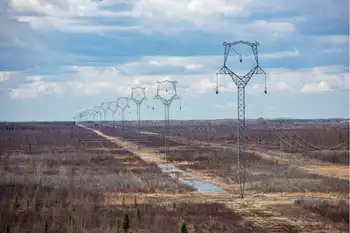
“Governments and regulatory agencies need to take action to foster greater investment in electricity infrastructure”, according to Hans Konow, President of the Canadian Electricity Association (CEA). Canada’s electricity industry has been promoting a comprehensive electricity policy framework that includes fiscal, regulatory and policy actions aimed at improving the investment climate to ensure future electricity supply.

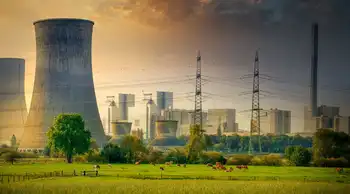
While electricity demand has continued to grow, investments into upgrading the infrastructure have not kept pace. As a result, there is significant electricity transmission congestion in a number of regions in North America. Over the longer term, there will also be requirements to build new generation to meet increasing electricity demand and replace aging plants. It is estimated that over 20,000 megawatts of new generation per decade will be needed in Canada to the year 2020.

“The electricity blackout last week highlighted to all stakeholders the critical need to put in place policies and regulatory conditions which will support the industry in making the crucial investments required to upgrade the North American electricity system. In addition to the immediate need to address transmission congestion, demand forecasts clearly indicate that significant new investment will be required for new and replacement generation” said Konow.

“Looking forward at electricity supply and demand over the next 20 years, already tight supply/demand balances in several regions will be exacerbated. More comfortable margins elsewhere will disappear unless there is significant new investment in generation, transmission and distribution” according to Mr. Konow.

The five-point CEA plan calls for an electricity policy framework which would include:

Establishing an investment climate to ensure future electricity supply;

Moving government and industry towards smart and effective regulation;

Working to ensure a sustainable future for the next generation;

Fostering innovation and accelerating skills development;

Building a strong Canadian electricity system while strengthening our North American institutional arrangements.

The electricity system is an economic engine that underpins and enables economic growth in all sectors of the economy. Ensuring a robust and reliable Canadian electricity system is of critical importance to all Canadians.

Related News

U.S. offshore wind power about to soar

US Offshore Wind Lease Sales signal soaring renewable energy growth, drawing oil and gas developers, requiring BOEM auctions, seismic surveying, transmission planning, with $70B investment, 8 GW milestones, and substantial job creation in coastal communities.


Key Points

BOEM-run auctions granting areas for offshore wind, spurring projects, investment, and jobs in federal waters.

✅ $70B investment needed by 2030 to meet current demand

✅ 8 GW early buildout could create 40,000 US jobs

✅ Requires BOEM auctions, seismic surveying, transmission corridors


Recent offshore lease sales demonstrate that not only has offshore wind arrived in the U.S., but it is clearly set to soar, as forecasts point to a $1 trillion global market in the coming decades. The level of participation today, especially from seasoned offshore oil and gas developers, exemplifies that the offshore industry is an advocate for the 'all of the above' energy portfolio.

Offshore wind could generate 160,000 direct, indirect and induced jobs, with 40,000 new U.S. jobs with the first 8 gigawatts of production, while broader forecasts see a quarter-million U.S. wind jobs within four years.

In fact, a recent report from the Special Initiative on Offshore Wind (SIOW), said that offshore wind investment in U.S. waters will require $70 billion by 2030 just based on current demand, and the UK's rapid scale-up offers a relevant benchmark.

Maintaining this tremendous level of interest from offshore wind developers requires a reliable inventory of regularly scheduled offshore wind sales and the ability to develop those resources. Coastal communities and extreme environmental groups opposing seismic surveying and the issuance of incidental harassment authorizations under the Marine Mammal Protection Act may literally take the wind out of these sales. Just as it is for offshore oil and gas development, seismic surveying is vital for offshore wind development, specifically in the siting of wind turbines and transmission corridors.

Unfortunately, a long-term pipeline of wind lease sales does not currently exist. In fact, with the exception of a sale proposed offshore New York offshore wind or potentially California in 2020, there aren't any future lease sales scheduled, leaving nothing upon which developers can plan future investments and prompting questions about when 1 GW will be on the grid nationwide.

NOIA is dedicated to working with the Bureau of Ocean Energy Management and coastal communities, consumers, energy producers and other stakeholders, drawing on U.K. wind lessons where applicable, in working through these challenges to make offshore wind a reality for millions of Americans.


Related News

View more

San Diego Gas & Electric Orders Mitsubishi Power Emerald Storage Solution

SDG&E Mitsubishi Power Energy Storage adds a 10 MW/60 MWh BESS in Pala, boosting grid reliability, renewable integration, and flexibility with EMS and SCADA controls, LFP safety chemistry, NERC CIP compliance, UL 9540 standards.


Key Points

A 10 MW/60 MWh BESS for SDG&E in Pala that enhances grid reliability, renewables usage, and operational flexibility.

✅ Emerald EMS/SCADA meets NERC CIP, IEC/ISA 62443, NIST 800-53

✅ LFP chemistry with UL 9540 and UL 9540A safety compliance

✅ Adds capacity, energy, and ancillary services to CA grid


San Diego Gas & Electric Company (SDG&E), a regulated public utility that provides energy service to 3.7 million people, has awarded Mitsubishi Power an order for a 10 megawatt (MW) / 60 megawatt-hour (MWh) energy storage solution for its Pala-Gomez Creek Energy Storage Project in Pala, California. The battery energy storage system (BESS) will add capacity to help meet high energy demand, support grid reliability and operational flexibility, underscoring the broader benefits of energy storage now recognized by utilities, maximize use of renewable energy, and help prevent outages during peak demand.

The BESS project is Mitsubishi Power’s eighth in California, bringing total capacity to 280 MW / 1,140 MWh of storage to help meet California’s clean energy goals with reliable power to complement renewables, alongside emerging solutions like a California green hydrogen microgrid for added resilience.

Mitsubishi Power’s Emerald storage solution for SDG&E includes full turnkey design, engineering, procurement, and construction, as well as a 10-year long-term service agreement, aligning with CEC long-duration storage funding initiatives underway. It is scheduled to be online in early 2023.

The project will repower an existing energy storage site. It will employ Mitsubishi Power’s Emerald Integrated Plant Controller, which is an Energy Management System (EMS) and Supervisory Control and Data Acquisition (SCADA) system with real-time BESS operation and a monitoring/supervisory control platform. Mitsubishi Power leverages its decades of technology monitoring and diagnostics to turn data into actionable insights to maximize reliability, a priority as regions like Ontario increasingly rely on battery storage to meet rising demand. The Mitsubishi Power Emerald Integrated Plant Controller complies with North American Electric Reliability Corporation critical infrastructure protection (NERC CIP) standards and meets the highest security certification in the energy storage industry (IEC/ISA 62443, NIST 800-53) for maximum protection from cybersecurity risks and vulnerabilities.

For added physical safety, Mitsubishi Power’s solution employs lithium iron phosphate (LFP) battery chemistry, aligning with BESS adoption in New York where safety and performance are critical. Compared with other chemistries, LFP provides longer life and superior thermal stability and chemical stability, while meeting UL 9540 and UL 9540A safety standards.

Fernando Valero, Director, Advanced Clean Technology, SDG&E, said, “SDG&E is committed to achieving net-zero greenhouse gas emissions by 2045. We are increasing our portfolio of energy storage assets, including virtual power plant models, to reach this goal. These assets enhance grid reliability and operational flexibility while maximizing our use of abundant renewable energy sources in California.”

Tom Cornell, Senior Vice President, Energy Storage Solutions, Mitsubishi Power Americas, said, “As more and more renewables come online during the energy transition, BESS solutions are essential to support a reliable and stable grid. We look forward to providing SDG&E with our BESS solution to add capacity, energy, and ancillary services to California’s grid. Mitsubishi Power’s Emerald storage solutions are enabling a smarter and more resilient energy future for our customers in California and around the globe, with projects like an energy storage demonstration in India underscoring this momentum.”


Related News

View more

How Alberta’s lithium-laced oil fields can fuel the electric vehicle revolution

Alberta Lithium Brine can power EV batteries via direct lithium extraction, leveraging oilfield infrastructure and critical minerals policy to build a low-carbon supply chain with clean energy, lower emissions, and domestic manufacturing advantages.


Key Points

Alberta lithium brine is subsurface saline water rich in lithium, extracted via DLE to supply EV batteries.

✅ Uses direct lithium extraction from oilfield brines

✅ Leverages Alberta infrastructure and skilled workforce

✅ Supports EV battery supply chain with lower emissions


After a most difficult several months, Canadians are cautiously emerging from their COVID-19 isolation and confronting a struggling economy.
There’s a growing consensus that we need to build back better from COVID-19, and to position for the U.S. auto sector’s pivot to electric vehicles as supply chains evolve. Instead of shoring up the old economy as we did following the 2008 financial crisis, we need to make strategic investments today that will prepare Canada for tomorrow’s economy.

Tomorrow’s energy system will look very different from today’s — and that tomorrow is coming quickly. The assets of today’s energy economy can help build and launch the new industries required for a low-carbon future. And few opportunities are more intriguing than the growing lithium market.

The world needs lithium – and Alberta has plenty

It’s estimated that three billion tonnes of metals will be required to generate clean energy by 2050. One of those key metals – lithium, a light, highly conductive metal – is critical to the construction of battery electric vehicles (BEV). As global automobile manufacturers design hundreds of new BEVs, demand for lithium is expected to triple in the next five years alone, a trend sharpened by pandemic-related supply risks for automakers.

Most lithium today originates from either hard rock or salt flats in Australia and South America. Alberta’s oil fields hold abundant deposits of lithium in subsurface brine, but so far it’s been overlooked as industrial waste. With new processing technologies and growing concerns about the security of global supplies, this is set to change. In January, Canada and the U.S. finalized a Joint Action Plan on Critical Minerals to ensure supply security for critical minerals such as lithium and to promote supply chains closer to home, aligning with U.S. efforts to secure EV metals among allies worldwide.

This presents a major opportunity for Canada and Alberta. Lithium brine will be produced much like the oil that came before it. This lithium originates from many of the same reservoirs responsible for driving both Alberta’s economy and the broader transportation fuel sector for decades. The province now has extensive geological data and abundant infrastructure, including roads, power lines, rail and well sites. Most importantly, Alberta has a highly trained workforce. With very little retooling, the province could deliver significant volumes of newly strategic lithium.

Specialized technologies known as direct lithium extraction, or DLE, are being developed to unlock lithium-brine resources like those in Canada. In Alberta, E3 Metals* has formed a development partnership with U.S. lithium heavyweight Livent Corporation to advance and pilot its DLE technology. Prairie Lithium and LiEP Energy formed a joint venture to pilot lithium extraction in Saskatchewan. And Vancouver’s Standard Lithium is already piloting its own DLE process in southern Arkansas, where the geology is very similar to Alberta and Saskatchewan.

Heavy on quality, light on emissions

All lithium produced today has a carbon footprint, most of which can be tied back to energy-intensive processing. The purity of lithium is essential to battery safety and performance, but this comes at a cost when lithium is mined with trucks and shovels and then refined in coal-heavy China.

As automakers look to source more sustainable raw materials, battery recycling will complement responsible extraction, and Alberta’s experience with green technologies such as renewable electricity and carbon capture and storage can make it one of the world’s largest suppliers of zero-carbon lithium.

Beyond raw materials

The rewards would be considerable. E3 Metals’ Alberta project alone could generate annual revenues of US$1.8 billion by 2030, based on projected production and price forecasts. This would create thousands of direct jobs, as initiatives like a lithium-battery workforce initiative expand training, and many more indirectly.

To truly grow this industry, however, Canada needs to move beyond its comfort zone. Rather than produce lithium as yet another raw-commodity export, Canadians should be manufacturing end products, such as batteries, for the electrified economy, with recent EV assembly deals underscoring Canada’s momentum. With nickel and cobalt refining, graphite resources and abundant petrochemical infrastructure already in place, Canada must aim for a larger piece of the supply chain.

By 2030, the global battery market is expected to be worth $116 billion annually. The timing is right to invest in a strategic commodity and grow our manufacturing sector. This is why the Alberta-based Energy Futures Lab has called lithium one of the ‘Five big ideas for Alberta’s economic recovery.’  The assets of today’s energy economy can be used to help build and launch new resource industries like lithium, required for the low-carbon energy system of the future.

Industry needs support

To do this, however, governments will have to step up the way they did a generation ago. In 1975, the Alberta government kick-started oil-sands development by funding the Alberta Oil Sands Technology and Research Authority. AOSTRA developed a technology called SAGD (steam-assisted gravity drainage) that now accounts for 80% of Alberta’s in situ oil-sands production.

Canada’s lithium industry needs similar support. Despite the compelling long-term economics of lithium, some industry investors need help to balance the risks of pioneering such a new industry in Canada. The U.S. government has recognized a similar need, with the Department of Energy’s recent US$30 million earmarked for innovation in critical minerals processing and the California Energy Commission’s recent grants of US$7.8 million for geothermal-related lithium extraction.

To accelerate lithium development in Canada, this kind of leadership is needed. Government-assisted financing could help early-stage lithium-extraction technologies kick-start a whole new industry.

Aspiring lithium producers are also looking for government’s help to repurpose inactive oil and gas wells. The federal government has earmarked $1 billion for cleaning up inactive Alberta oil wells. Allocating a small percentage of that total for repurposing wells could help transform environmental liabilities into valuable clean-energy assets.

The North American lithium-battery supply chain will soon be looking for local sources of supply, and there is room for Canada-U.S. collaboration as companies turn to electric cars, strengthening regional resilience.


Related News

View more

Germany turns to coal for a third of its electricity

Germany's Coal Reliance reflects an energy crisis, soaring natural gas prices, and a nuclear phase-out, as Destatis data show higher coal-fired electricity despite growing wind and solar generation, impacting grid stability and emissions.


Key Points

Germany's coal reliance is more coal power due to gas spikes and a nuclear phase-out, despite wind and solar growth.

✅ Coal share near one-third of electricity, per Destatis

✅ Gas-fired output falls as prices soar after Russia's invasion

✅ Wind and solar rise; grid stability and recession risks persist


Germany is relying on highly-polluting coal for almost a third of its electricity, as the impact of government policies, reflecting an energy balancing act for the power sector, and the war in Ukraine leads producers in Europe’s largest economy to use less gas and nuclear energy.

In the first six months of the year, Germany generated 82.6 kWh of electricity from coal, up 17 per cent from the same period last year, according to data from Destatis, the national statistics office, published on Wednesday. The leap means almost one-third of German electricity generation now comes from coal-fired plants, up from 27 per cent last year. Production from natural gas, which has tripled in price to €235 per megawatt hour since Russia’s invasion in late February, fell 18 per cent to only 11.7 per cent of total generation.

Destatis said that the shift from gas to coal was sharper in the second quarter. Coal-fired electricity increased by an annual rate of 23 per cent in the three months to June, while electricity generation from natural gas fell 19 per cent.

The figures highlight the challenge facing European governments in meeting clean energy goals after the Kremlin announced this week that the Nordstream 1 pipeline that takes Russian gas to Germany would remain closed until Europe removed sanctions on the country’s oil.

Germany has been trying to reduce its reliance on coal, which releases almost twice as many emissions as gas and more than 60 times those of nuclear energy, according to estimates from the Intergovernmental Panel on Climate Change, though grid expansion challenges have slowed renewable build-out in recent years.

Chancellor Olaf Scholz said the opposition CDU bore “complete responsibility” for the exit from coal and nuclear power that formed part of his predecessor Angela Merkel’s Energiewende policies, amid a continuing nuclear option debate in climate policy, which in turn raised reliance on Russian gas. At the beginning of this year, more than 50 per cent of Germany’s gas imports came from Russia, a figure that fell slightly over the opening half of 2022.

But CDU leader Friedrich Merz accused the government of “madness” over its decision to idle the country’s three remaining nuclear power stations from the end of this year, though officials have argued that nuclear would do little to solve the gas issue in the short term.

Electricity generation from nuclear energy has already halved after three of the six nuclear power plants that were still in operation at the end of 2021 were closed during the first half of this year. Berlin said on Monday it would keep on standby two of its remaining three nuclear power stations, a move to extend nuclear power during the energy crisis, which were all due to close at the end of the year.

The German government has warned of the risk of electricity shortages this winter. “We cannot be sure that, in the event of grid bottlenecks in neighbouring countries, there will be enough power plants available to help stabilise our electricity grid in the short term,” said German economy minister Robert Habeck on Monday.

However Scholz said that, after raising gas storage levels to 86 per cent of capacity, Germany would “probably get through this winter, despite all the tension”.

One bright spot from the data was the increase in use of renewable energy, highlighting a recent renewables milestone in Germany. The proportion of electricity generated from wind power generation rose by 18 per cent to 25 per cent of all electricity generation, while solar energy production increased 20 per cent.

Ángel Talavera, head of Europe economics at the consultancy Oxford Economics, said that the success in moving away from gas towards other energy sources “means that the risks of hard energy rationing over the winter are less severe now, even with little to no Russian gas flows”.

However, economists still expect a recession in the eurozone’s largest economy, amid a deteriorating German economy outlook over the near term, as a large part of the impact comes via higher prices and because industries and households still rely on gas for heating.

Separate official data also published on Wednesday showed that German industrial production slid 0.3 per cent between June and July. Production at Germany’s most energy intensive industries fell almost 7 per cent in the five months after Russia’s invasion of Ukraine.

“The demand destruction caused by the surge in prices will still send the German economy into recession over the winter,” said Talavera.


Related News

View more

Two new electricity interconnectors planned for UK

Ofgem UK Electricity Interconnectors will channel subsea cables, linking Europe, enabling energy import/export, integrating offshore wind via multiple-purpose interconnectors, boosting grid stability, capacity, and investment under National Grid analysis to 2030 targets.


Key Points

Subsea links between the UK and Europe that trade power, integrate offshore wind, and reinforce grid capacity.

✅ Two new subsea interconnector bids open in 2025

✅ Pilot for multiple-purpose links to offshore wind clusters

✅ National Grid to assess optimal routes, capacity, and locations


Ofgem has opened bids to build two electricity interconnectors between the UK and continental Europe as part of the broader UK grid transformation now underway.

The energy regulator said this would “bring forward billions of pounds of investment” in the subsea cables, such as the Lake Erie Connector, which can import cheaper energy when needed and export surplus power from the UK when it is available.

Developers will be invited to submit bids to build the interconnectors next year. Ofgem will additionally run a pilot scheme for ‘multiple-purpose interconnectors’, which are used to link clusters of offshore wind farms and related innovations like an offshore vessel chargepoint to an interconnector.

This forms part of the UK Government drive to more than double capacity by 2030, and to manage rising electric-vehicle demand, as discussed in EV grid impacts, in support of its target of quadrupling offshore wind capacity by the same date.

Interconnectors provide some 7 per cent of UK electricity demand. The UK so far has seven electricity interconnectors linked to Ireland, France, Belgium, the Netherlands and Norway, while projects like the Ireland-France connection illustrate broader European grid integration.

Balfour Beatty won a £90m contract for onshore civil engineering works on the Viking Link Norway interconnector, which is due to come into operation in 2023, while London Gateway's all-electric berth highlights related port electrification.

It said that interconnector developers have in the past been allowed to propose their preferred design, connection location and sea route to the connecting country. Ofgem has now said it may decide to consider only those projects that meet its requirements based on an analysis of location and capacity needs by National Grid.

Ofgem has not specified that the new interconnectors must link to any specific place or country, but may do so later, as priorities like the Cyprus electricity highway illustrate emerging directions.


Related News

View more

Electricity deal clinches $100M bitcoin mining operation in Medicine Hat

Medicine Hat Bitcoin Mining Deal delivers 42 MW electricity to Hut 8, enabling blockchain data centres, cryptocurrency mining expansion, and economic diversification in Alberta with low-cost power, land lease, and rapid construction near Unit 16.


Key Points

A pact to supply 42 MW and lease land, enabling Hut 8's blockchain data centres and crypto mining growth in Alberta.

✅ 42 MW electricity from city; land lease near Unit 16

✅ Hut 8 expands to 60.7 MW; blockchain data centres

✅ 100 temporary jobs; 42 ongoing roles in Alberta


The City of Medicine Hat has agreed to supply electricity and lease land to a Toronto-based cryptocurrency mining company, at a time when some provinces are pausing large new crypto loads in a deal that will see $100 million in construction spending in the southern Alberta city.

The city will provide electric energy capacity of about 42 megawatts to Hut 8 Mining Corp., which will construct bitcoin mining facilities near the city's new Unit 16 power plant.

The operation is expected to be running by September and will triple the company's operating power to 60.7 megawatts, Hut 8 said, amid broader investments in new turbines across Canada.

#google#

"The signing of the electricity supply agreement and the land lease represents a key component in achieving our business plan for the roll-out of our BlockBox Data Centres in low-cost energy jurisdictions," said the company's board chairman, Bill Tai, in a release.

"[Medicine Hat] offers stable, cost-competitive utility rates and has been very welcoming and supportive of Hut 8's fast-paced growth plans."

In bitcoin mining operations, rows upon rows of power-consuming computers are used to solve mathematical puzzles in exchange for bitcoins and confirm crytopcurrency transactions. The verified transactions are then added to the public ledger known as the blockchain.

Hut 8's existing 18.7-megawatt mining operation at Drumheller, Alta. — a gated compound filled with rows of shipping containers housing the computers — has so far mined 750 bitcoins. Bitcoin was trading Tuesday morning for about $11,180.

Medicine Hat Mayor Ted Clugston says the deal is part of the city's efforts to diversify its economy.

We've made economic development a huge priority down here because we were hit very, very hard by the oil and gas decline," he said, noting that being the generator and vendor of its own electricity puts the city in a uniquely good position.

"Really we're just turning gas into electricity and they're taking that electricity and turning it into blockchain, or ones and zeroes."

Elsewhere in Canada, using more electricity for heat has been urged by green energy advocates, reflecting broader electrification debates.

Hut 8 says construction of the facility is starting right away and will create about 100 temporary jobs. The project is expected to be finished by the third-quarter of this year.

The Medicine Hat mining operation will generate 42 ongoing jobs for electricians, general labourers, systems technicians and security staff.


Related News

View more

Sign Up for Electricity Forum’s Newsletter

Stay informed with our FREE Newsletter — get the latest news, breakthrough technologies, and expert insights, delivered straight to your inbox.

Electricity Today T&D Magazine Subscribe for FREE

Stay informed with the latest T&D policies and technologies.
  • Timely insights from industry experts
  • Practical solutions T&D engineers
  • Free access to every issue

Download the 2025 Electrical Training Catalog

Explore 50+ live, expert-led electrical training courses –

  • Interactive
  • Flexible
  • CEU-cerified