CEA Chair Recommends Initiatives for NA Electricity Trade

By CNW Telbec


NFPA 70e Training - Arc Flash

Our customized live online or in‑person group training can be delivered to your staff at your location.
  • Live Online
  • 6 hours Instructor-led
  • Group Training Available
Regular Price:
$199
Coupon Price:
$149
Reserve Your Seat Today
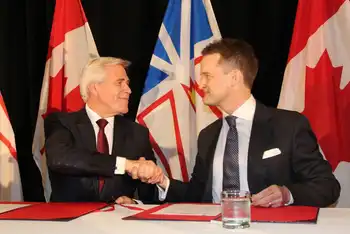
David Mann, CEO of Emera Inc. and Chairman of the Canadian Electricity Association (CEA) called for changes to the Canada-U.S. electricity relationship in order to improve regional markets to the benefit of consumers in both countries. His comments were made at the Canadian Embassy Energy Conference in Washington, DC.

Mr. Mann noted that "increased integration of the U.S./Canadian marketplace will help to reduce the uncertainty in North American energy markets through greater efficiency, increased energy security, more predictable regulation and policy, lower costs, and better environmental benefits."

He suggested that while the world is focusing its attention on the Middle East, "Americans should note that the single most significant energy trading relationship in the world is between Canada and the United States."

Mr. Mann characterized the trading relationship as amounting to over 1.6 billion CDN$ daily with energy constituting approximately 15% of that trade. Canada is America's largest supplier of energy, accounting for 94% of natural gas imports, nearly 100% of electricity imports, and more crude and refined oil products than any other foreign supplier.

"The North American electricity industry - traditionally perceived as a model of stability in both Canada and the United States - is in a state of uncertainty unlike anything it has experienced in its over 100 years of existence," stated Mr. Mann. "To provide for a secure energy future, we must address the problems that have resulted in this uncertainty in our industry."

CEA has made a number of recommendations it believes will contribute to greater investor confidence and reduced uncertainty in the marketplace. Mr. Mann reviewed some of those recommendations:

1.) We must explore avenues for increased participation in Regional Transmission Organizations (RTOs) and increased harmonization of market rules. CEA applauds efforts by FERC and Congress to efficiency in wholesale electricity markets.

2.) CEA recommends the development of a North American strategy to manage Greenhouse Gas emissions. A North American approach to climate change allows for the recognition of the unique characteristics of North American energy production.

3.) Opportunities should be identified to further harmonize strategies to manage the cross-border impacts of NOx, SOx, mercury and particulate matter air emissions.

4.) The application of a North American-wide technology neutral approach to measure environmental performance for electricity systems should be pursued.

5.) We should explore measures to enhance cross-border transmission transfer capability, such as opportunities to streamline the transmission siting process.

6.) Further coordination of existing efforts on critical infrastructure protection would serve as an effective model for protecting the energy industry's critical assets.

7.) Finally, CEA supports legislative recognition of NERC's role as the self-governing international organization for developing and enforcing mandatory reliability standards for the evolving North American electricity industry.

Mr. Mann expressed confidence that the current energy trading relationship between the United States and Canada contains the framework for achieving these objectives. "By addressing the seven points we have identified, and similar suggestions from other sectors, we can anticipate and avoid barriers to cross-border trade, we can identify opportunities for greater cooperation and coordination in our respective energy markets, and we can maximize the opportunities offered by an extraordinarily successful bilateral relationship to help secure a healthy energy future for energy customers across North America."

Related News
BC Hydro Expects To See Electricity Usage Rise This Holiday Season

BC Hydro Holiday Electricity Usage is set to rise as energy demand increases during peak 4-10 pm on Christmas and Boxing Day, driven by larger gatherings, more cooking, and eased COVID-19 restrictions province-wide.


Key Points

Expected rise in power demand on Christmas and Boxing Day evenings versus 2020, driven by larger gatherings and cooking.

✅ Peak hours 4-10 pm expected to rise in provincial load.

✅ 2020 saw 4% and 7% drops vs 2019 on Christmas and Boxing Day.

✅ Holiday lighting adds ~3% to use; switching to LED can save ~$40.


BC Hydro data showed residential electricity load in the Cariboo and throughout the province, even as drought affects generation dynamics heading into winter, dropped on Christmas Day and Boxing Day in 2020.

Northern Community Relations Manager, Bob Gammer, said the decrease was due in part to more people following the COVID-19 restrictions and not getting together for big meals, even though 2018 Earth Hour usage increased elsewhere illustrates how behavior can sometimes raise demand.

However, this year Gammer said between 4 and 10 pm on those two days, BC Hydro does expect to see a change in overall usage, aligning with all-time high demand trends reported recently in B.C.

“On Christmas Day and Boxing Day, we expect to see increases through those hours and a little bit more so between 4 and 10 pm we should see the amount of power being consumed across the province, as record-breaking 2021 demand indicated earlier, going up compared to what it was on those two days last year.”

In 2020 on Christmas Day evening hydro usage dropped by over 4 percent and Boxing Day evening decreased by 7 percent compared to 2019, whereas regions like Calgary's winter demand have seen spikes during extreme cold.

Gammer added after BC Hydro surveyed their customers and introduced a winter payment plan, they expect to see a lot more cooking happening on Christmas Day and Boxing Day this year as people are intending to have larger gatherings and visit friends.

We asked Gammer about hydro usage when it comes to homes decked out for the holidays, and how that compares to newer loads like crypto mining activity in B.C.

“The Christmas lighting displays people have, not just indoors but outdoors as well, what we’re seeing is about a 3 percent increase in electricity consumption overall through the Christmas season. If people switch, if you still have older lights that are incandescent, switch those over to LED, and through the season it could wind up saving you $40 in electricity just switching over about 8 strings of lights to LED.”


Related News

View more

America’s Electricity is Safe From the Coronavirus—for Now

US Grid Pandemic Response coordinates control rooms, grid operators, and critical infrastructure, leveraging hydroelectric plants, backup control centers, mutual assistance networks, and deep cleaning protocols to maintain reliability amid reduced demand and COVID-19 risks.


Key Points

US Grid Pandemic Response encompasses measures by utilities and operators to safeguard power reliability during COVID-19

✅ Control rooms staffed on-site; operators split across backup centers

✅ Health screenings, deep cleaning, and isolation protocols mitigate contagion

✅ Reduced demand and mutual assistance improve grid resilience


Control rooms are the brains of NYPA’s power plants, which are mostly hydroelectric and supply about a quarter of all the electricity in New York state. They’re also a bit like human petri dishes. The control rooms are small, covered with frequently touched switches and surfaces, and occupied for hours on end by a half-dozen employees. Since social distancing and telecommuting isn’t an option in this context, NYPA has instituted regular health screenings and deep cleanings to keep the coronavirus out.

The problem is that each power plant relies on only a handful of control room operators. Since they have a specialized skill set, they can’t be easily replaced if they get sick. “They are very, very critical,” says Gil Quiniones, NYPA president and CEO. If the pandemic worsens, Quiniones says that NYPA may require control room operators to live on-site at power plants to reduce the chance of the virus making it in from the outside world. It sounds drastic, but Quiniones says NYPA has done it before during emergencies—once during the massive 2003 blackout, and again during Hurricane Sandy.

Meanwhile, PJM is one of North America’s nine regional grid operators and manages the transmission lines that move electricity from power plants to millions of customers in 13 states on the Eastern seaboard, including Washington, DC. PJM has had a pandemic response plan on the books for 15 years, but Mike Bryson, senior vice president of operations, says that this is the first time it’s gone into full effect. As of last week, about 80 percent of PJM’s 750 full-time employees have been working from home. But PJM also requires a skeleton crew of essential workers to be on-site at all times in its control centers. As part of its emergency planning, PJM built a backup control center years ago, and now it is splitting control center operators between the two to limit contact.

Past experience with large-scale disasters has helped the energy sector keep the lights on and ventilators running during the pandemic. Energy is one of 16 sectors that the US government has designated as “critical infrastructure,” which also includes the communications industry, transportation sector, and food and water systems. Each is seen as vital to the country and therefore has a duty to maintain operations during national emergencies.

“We need to be treated as first responders,” says Scott Aaronson, the vice president of security and preparedness at the Edison Electric Institute, a trade group representing private utilities. “Everybody's goal right now is to keep the public healthy, and to keep society functioning as best we can. A lack of electricity will certainly create a challenge for those goals.”

America’s electricity grid is a patchwork of regional grid operators connecting private and state-owned utilities. This means simply figuring out who’s in charge and coordinating among the various organizations is one of the biggest challenges to keeping the electricity flowing during a national emergency, according to Aaronson.

Generally, a lot of this responsibility falls on formal energy organizations like the nonprofit North American Electric Reliability Corporation and the Federal Energy Regulatory Commission. But during the coronavirus outbreak, an obscure organization run by the CEOs of electric utilities called the Electricity Subsector Coordinating Council has also served as a primary liaison between the federal government and the thousands of utility companies around the US. Aaronson says the organization has been meeting twice a week for the past three weeks to ensure that utilities are implementing best practices in their response to the coronavirus, as well as to inform the government of material needs to keep the energy sector running smoothly.

This tight-knit coordination will be especially important if the pandemic gets worse, as many forecasts suggest it will. Most utilities belong to at least one mutual assistance group, an informal network of electricity suppliers that help each other out during a catastrophe. These mutual assistance networks are usually called upon following major storms that threaten prolonged outages. But they could, in principle, be used to help during the coronavirus pandemic too. For example, if a utility finds itself without enough operators to manage a power plant, it could conceivably borrow trained operators from another company to make sure the power plant stays online.

So far, utilities and grid operators have managed to make it work on their own. There have been a handful of coronavirus cases reported at power plants, but they haven’t yet affected these plants’ ability to deliver energy. The challenges of running a power plant with a skeleton crew is partially offset by the reduced power demand as businesses shut down and more people work from home, says Robert Hebner, the director of the Center for Electromechanics at the University of Texas. “The reduced demand for power gives utilities a little breathing room,” says Hebner.

A recent study by the University of Chicago’s Energy Policy Institute found that electricity demand in Italy has plunged by 18 percent following the severe increase in coronavirus cases in the country. Energy demand in China also plummeted as a result of the pandemic. Bryson, at PJM, says the grid operator has seen about a 6 percent decrease in electricity demand in recent weeks, but expects an even greater drop if the pandemic gets worse.

Generally speaking, problems delivering electricity in the US occur when the grid is overloaded or physically damaged, such as during California wildfires or a hurricane.

An open question among coronavirus researchers is whether there will be a second wave of the pandemic later this year. During the Spanish flu pandemic in the early 20th century, the second wave turned out to be deadlier than the first. If the coronavirus remerges later this year, it could be a serious threat to reliable electricity in the US, says John MacWilliams, a former associate deputy secretary of the Department of Energy and a senior fellow at Columbia University’s Center on Global Energy Policy.

“If this crisis extends into the fall, we're going to hit hurricane season along the coasts,” MacWilliams says. “Utilities are doing a very good job right now, but if we get unlucky and have an active hurricane season, they're going to get very stressed because the number of workers that are available to repair damage and restore power will become more limited.”

This was a sentiment echoed by Bryson at PJM. “Any one disaster is manageable, but when you start layering them on top of each other, it gets much more challenging,” he adds. The US electricity grid struggles to handle major storms as it is, and these challenges will be heightened if too many workers are home sick. In this sense, the energy sector’s ability to deliver the electricity needed to keep manufacturing medical supplies or keep ventilators running depends to a large extent on our ability to flatten the curve today. The coronavirus is bad enough without having to worry about the lights going out.


Related News

View more

US Dept. of Energy awards Washington state $23.4 million to strengthen infrastructure

Washington Grid Resilience Grant funds DOE-backed modernization to harden Washington's electric grid against extreme weather, advancing clean energy, affordable and reliable electricity, and community resilience under the Bipartisan Infrastructure Law via projects and utility partnerships.


Key Points

A $23.4M DOE grant to modernize Washington's grid, boost weather resilience, and deliver clean, reliable power.

✅ Targets outages, reliability, and community resilience statewide.

✅ Prioritizes disadvantaged areas and quality clean energy jobs.

✅ Backed by Bipartisan Infrastructure Law and DOE funding.


Washington state has received a $23.4 million Grid Resilience State and Tribal Formula Grant from the U.S. Department of Energy (DOE) to modernize the electric grid through smarter electricity infrastructure and reduce impacts due to extreme weather and natural disasters. Grid Resilience State and Tribal Formula Grants aim to ensure the reliability of power sector infrastructure so that communities have access to affordable, reliable, clean electricity.

“Electricity is an essential lifeline for communities. Improving our systems by reducing disruptive events is key as we cross the finish line of a 100% clean electricity grid and ensure equitable benefits from the clean energy economy reach every community,” said Gov. Jay Inslee.

The federal funding for energy resilience will enhance and expand ongoing current grid modernization and resilience efforts throughout the state. For example, working directly with rural and typical end-of-the-line customers to develop resilience plans and collaborating with communities and utilities, including smart city efforts in Spokane as examples, on building resilient and renewable infrastructure for essential services.

“This is a significant opportunity to supplement our state investments in building a robust, resilient electric grid that supports our long-term vision for clean, affordable and reliable electricity – the foundation for economic growth and job creation that strengthens our communities and keeps Washington globally competitive. It shows once again that we are maximizing the federal funding being made available by the Biden-Harris Administration to invest in the country’s infrastructure,” said Washington State Department of Commerce Director Mike Fong.

Across the border, British Columbia's clean energy shift adds regional momentum for resilient, low-carbon power.

Goals include:

Reducing the frequency, duration and impact of outages as climate change impacts on the grid intensify while enhancing resiliency in historically disadvantaged communities.
Strengthening prosperity by expanding well-paying, safe clean energy jobs accessible to all workers and ensuring investments have a positive effect on quality job creation and equitable economic development.

Building a community of practice and maximizing project scalability by identifying pathways for scaling innovations such as integrating solar into the grid across programs.

“The Grid Resilience Formula Grants will enable communities in Washington to protect households and businesses from blackouts or power shutdowns during extreme weather,” said Maria Robinson, Director, Grid Deployment Office, U.S. Department of Energy. “Projects selected through this program will benefit communities by creating good-paying jobs to deliver clean, affordable, and reliable energy across the country.”

DOE has also announced $34 million for grid improvements to bolster reliability nationwide.

“An innovative, reliable, and efficient power grid is vital to Washington’s continued economic growth and for community resilience especially in disadvantaged areas,” said U.S. Rep. Strickland, Co-Lead of the bipartisan Grid Innovation Caucus. “The funding announced today will invest in our energy grid, support good-paying jobs, and means a cleaner, more energy-efficient future.”

Funded through the Bipartisan Infrastructure Law and administered by DOE’s Grid Deployment Office, with related efforts such as California grid upgrades advancing nationwide, the Grid Resilience State and Tribal Formula Grants distribute funding to states, territories, and federally recognized Indian Tribes, over five years based on a formula that includes factors such as population size, land area, probability and severity of disruptive events, and a locality’s historical expenditures on mitigation efforts. Priority will be given to projects that generate the greatest community benefit providing clean, affordable, and reliable energy.


Related News

View more

Trump's Pledge to Scrap Offshore Wind Projects

Trump Offshore Wind Pledge signals a push for deregulation over renewable energy, challenging climate policy, green jobs, and coastal development while citing marine ecosystems, navigation, and energy independence amid state-federal permitting and legal hurdles.


Key Points

Trump's vow to cancel offshore wind projects favors deregulation and fossil fuels, impacting climate policy and jobs.

✅ Day-one plan to scrap offshore wind leases and permits

✅ Risks to renewable targets, grid mix, and coastal supply chains

✅ Likely court fights and state-federal regulatory conflicts


During his tenure as President of the United States, Donald Trump made numerous promises and policy proposals, many of which sparked controversy and debate. One such pledge was his vow to scrap offshore wind projects on "day one" of his presidency. This bold statement, while appealing to certain interests, raised concerns about its potential impact on U.S. offshore wind growth and environmental conservation efforts.

Trump's opposition to offshore wind projects stemmed from various factors, including his skepticism towards renewable energy, even as forecasts point to a $1 trillion offshore wind market in coming years, concerns about aesthetics and property values, and his focus on promoting traditional energy sources like coal and oil. Throughout his presidency, Trump prioritized deregulation and sought to roll back environmental policies introduced by previous administrations, arguing that they stifled economic growth and hindered American energy independence.

The prospect of scrapping offshore wind projects drew mixed reactions from different stakeholders. Supporters of Trump's proposal pointed to potential benefits such as preserving scenic coastal landscapes, protecting marine ecosystems, and addressing concerns about navigational safety and national security. Critics, however, raised valid concerns about the implications of such a decision on the renewable energy sector, including progress toward getting 1 GW on the grid nationwide, climate change mitigation efforts, and job creation in the burgeoning green economy.

Offshore wind energy has emerged as a promising source of clean, renewable power with the potential to reduce greenhouse gas emissions and diversify the energy mix. Countries like Denmark, the United Kingdom, and Germany have made significant investments in offshore wind in Europe, demonstrating its viability as a sustainable energy solution. In the United States, offshore wind projects have gained traction in states like Massachusetts, New York, and New Jersey, where coastal conditions are conducive to wind energy generation.

Trump's pledge to scrap offshore wind projects on "day one" of his presidency raised questions about the feasibility and legality of such a move. While the president has authority over certain aspects of energy policy and regulatory oversight, the development of offshore wind projects often involves multiple stakeholders, including state governments, local communities, private developers, and federal agencies, and actions such as Interior's move on Vineyard Wind illustrate federal leverage in permitting. Any attempt to halt or reverse ongoing projects would likely face legal challenges and regulatory hurdles, potentially delaying or derailing implementation.

Moreover, Trump's stance on offshore wind projects reflected broader debates about the future of energy policy, environmental protection, and economic development. While some argued for prioritizing fossil fuel extraction and traditional energy infrastructure, others advocated for a transition towards clean, renewable energy sources, drawing on lessons from the U.K. about wind deployment, to mitigate climate change and promote sustainable development. The Biden administration, which succeeded the Trump presidency, has signaled a shift towards a more climate-conscious agenda, including support for renewable energy initiatives and commitments to rejoin international agreements like the Paris Climate Accord.

In hindsight, Trump's pledge to scrap offshore wind projects on "day one" of his presidency underscores the complexities of energy policy and the importance of balancing competing interests and priorities. While concerns about aesthetics, property values, and environmental impact are valid, addressing the urgent challenge of climate change requires bold action and innovation in the energy sector. Offshore wind energy presents an opportunity, as seen in the country's biggest offshore wind farm approved in New York, to harness the power of nature in a way that is both environmentally responsible and economically beneficial. As the United States navigates its energy future, finding common ground and forging partnerships will be essential to ensure a sustainable and prosperous tomorrow.


Related News

View more

Investing in a new energy economy for Montana

Montana New Energy Economy integrates grid modernization, renewable energy, storage, and demand response to cut costs, create jobs, enable electric transportation, and reduce emissions through utility-scale efficiency, real-time markets, and distributed resources.


Key Points

Plan to modernize Montana's grid with renewables, storage and efficiency to lower costs, cut emissions and add jobs.

✅ Grid modernization enables real-time markets and demand response

✅ Utility-scale renewables paired with storage deliver firm power

✅ Efficiency and DERs cut peaks, costs, and pollution


Over the next decade, Montana ratepayers will likely invest over a billion dollars into what is now being called the new energy economy.

Not since Edison electrified a New York City neighborhood in 1882 have we had such an opportunity to rethink the way we commercially produce and consume electric energy.

Looking ahead, the modernization of Edison’s grid will lower the consumer costs, creating many thousands of permanent, well-paying jobs. It will prepare the grid for significant new loads like America going electric in transportation, and in doing so it will reduce a major source of air pollution known to directly threaten the core health of Montana and the planet.

Energy innovation makes our choices almost unrecognizable from the 1980s, when Montana last built a large, central-station power plant. Our future power plants will be smaller and more modular, efficient and less polluting — with some technologies approaching zero operating emissions.

The 21st Century grid will optimize how the supply and demand of electricity is managed across larger interconnected service areas. Utilities will interact more directly with their consumers, with utility trends guiding a new focus on providing a portfolio of energy services versus simply spinning an electric meter. Investments in utility-scale energy efficiency — LED streetlights, internet-connected thermostats, and tightening of commercial building envelopes among many — will allow consumers to directly save on their monthly bills, to improve their quality of life, and to help utilities reduce expensive and excessive peaks in demand.

The New Energy Economy will be built not of one single technology, but of many — distributed over a modernized grid across the West that approaches a real-time energy market, as provinces pursue market overhauls to adapt — connecting consumers, increasing competition, reducing cost and improving reliability.

Boldly leading the charge is a new and proven class of commercial generation powered by wind and solar energy, the latter of which employs advanced solid-state electronics, free fuel and no emissions or moving parts. Montana is blessed with wind and solar energy resources, so this is a Made-in-Montana energy choice. Note that these plants are typically paired with utility-scale energy storage investments — also an essential building block of the 21st century grid — to deliver firm, on-demand electric service.

Once considered new age and trendy, these production technologies are today competent and shovel-ready. Their adoption will build domestic energy independence. And, they are aggressively cost-competitive. For example, this year the company ISO New England — operator of a six-state grid covering all of New England — released an all-source bid for new production capacity. Unexpectedly, 100% of the winning bids were large solar electric power and storage projects, as coal and nuclear disruptions continue to shape markets. For the first time, no applications for fossil-fueled generation cleared auction.

By avoiding the burning of traditional fuels, the new energy technologies promise to offset and eventually eliminate the current 1,500 million metric tons of damaging greenhouse gases — one-quarter of the nation’s total — that are annually injected into the atmosphere by our nation’s current electric generation plants. The first step to solving the toughest and most expensive environmental issues of our day — be they costly wildfires or the regional drought that threatens Montana agriculture and outdoor recreation — is a thoughtful state energy policy, built around the new energy economy, that avoids pitfalls like the Wyoming clean energy bill now proposed.

Important potential investments not currently ready for prime time are also on the horizon, including small and highly efficient nuclear innovation in power plants — called small modular reactors (SMR) — designed to produce around-the-clock electric power with zero toxic emissions.

The nation’s first demonstration SMR plant is scheduled to be built sometime late this decade. Fingers are crossed for a good outcome. But until then, experts agree that big questions on the future commercial viability of nuclear remain unanswered: What will be SMR’s cost of electricity? Will it compete? Where will we source the refined fuel (most uranium is imported), and what will be the plan for its safe, permanent disposal?

So, what is Montana’s path forward? The short answer is: Hopefully, all of the above.

Key to Montana’s future investment success will be a respectful state planning process that learns from Texas grid improvements to bolster reliability.

Montanans deserve a smart and civil and bipartisan conversation to shape our new energy economy. There will be no need, nor place, for parties that barnstorm the state about "radical agendas" and partisan name calling – that just poisons the conversation, eliminates creative exchange and pulls us off task.

The task is to identify and vet good choices. It’s about permanently lowering energy costs to consumers. It’s about being business smart and business friendly. It’s about honoring the transition needs of our legacy energy communities. And, it’s about stewarding our world-class environment in earnest. That’s the job ahead.


Related News

View more

Japan opens part of last town off-limits since nuclear leaks

Futaba Partial Reopening marks limited access to the Fukushima exclusion zone, highlighting radiation decontamination progress, the train station restart, and regional recovery ahead of the Tokyo Olympics after the 2011 nuclear disaster and evacuation.


Key Points

A lift of entry bans in Futaba, signaling Fukushima recovery, decontamination progress, and a train station restart.

✅ Unrestricted access to 2.4 km² around Futaba Station

✅ Symbolic step ahead of Tokyo Olympics torch relay

✅ Decommissioning and decontamination to span decades


Japan's government on Wednesday opened part of the last town that had been off-limits due to radiation since the Fukushima nuclear disaster nine years ago, in a symbolic move to show the region's recovery ahead of the Tokyo Olympics, even as grid blackout risks have drawn scrutiny nationwide.

The entire population of 7,000 was forced to evacuate Futaba after three reactors melted down due to damage at the town's nuclear plant caused by a magnitude 9. 0 quake and tsunami March 11, 2011.

The partial lifting of the entry ban comes weeks before the Olympic torch starts from another town in Fukushima, as new energy projects like a large hydrogen system move forward in the prefecture. The torch could also arrive in Futaba, about 4 kilometres (2.4 miles) from the wrecked nuclear plant.

Unrestricted access, however, is only being allowed to a 2.4 square-kilometre (less than 1 square-mile) area near the main Futaba train station, which will reopen later this month to reconnect it with the rest of the region for the first time since the accident. The vast majority of Futaba is restricted to those who get permission for a day visit.

The three reactor meltdowns at the town's Fukushima Dai-ichi nuclear power plant spewed massive amounts of radiation that contaminated the surrounding area and at its peak, forced more than 160,000 people to flee, even as regulators later granted TEPCO restart approval for a separate Niigata plant elsewhere in Japan.

The gate at a checkpoint was opened at midnight Tuesday, and Futaba officials placed a signboard at their new town office, at a time when the shutdown of Germany's last reactors has reshaped energy debates abroad.

“I'm overwhelmed with emotion as we finally bring part of our town operations back to our home town," said Futaba Mayor Shiro Izawa. “I pledge to steadily push forward our recovery and reconstruction."

Town officials say they hope to see Futaba’s former residents return, but prospects are grim because of lingering concern about radiation, and as Germany's nuclear exit underscores shifting policies abroad. Many residents also found new jobs and ties to communities after evacuating, and only about 10% say they plan to return.

Futaba's registered residents already has decreased by 1,000 from its pre-disaster population of 7,000. Many evacuees ended up in Kazo City, north of Tokyo, after long bus trips, various stopovers and stays in shelters at an athletic arena and an abandoned high school. The town's government reopened in a makeshift office in another Fukushima town of Iwaki, while abroad projects like the Bruce reactor refurbishment illustrate long-term nuclear maintenance efforts.

Even after radiation levels declined to safe levels, the region's farming and fishing are hurt by lingering concerns among consumers and retailers. The nuclear plant is being decommission in a process that will take decades, with spent fuel removal delays extending timelines, and it is building temporary storage for massive amounts of debris and soil from ongoing decontamination efforts.


Related News

View more

Sign Up for Electricity Forum’s Newsletter

Stay informed with our FREE Newsletter — get the latest news, breakthrough technologies, and expert insights, delivered straight to your inbox.

Electricity Today T&D Magazine Subscribe for FREE

Stay informed with the latest T&D policies and technologies.
  • Timely insights from industry experts
  • Practical solutions T&D engineers
  • Free access to every issue

Download the 2025 Electrical Training Catalog

Explore 50+ live, expert-led electrical training courses –

  • Interactive
  • Flexible
  • CEU-cerified