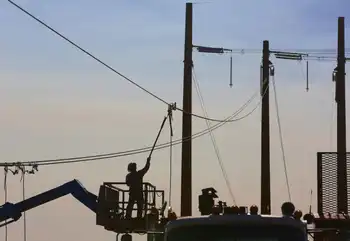
Poor Utility Cooperation led to blackout, CEO says

By ASSOCIATED PRESS


Protective Relay Training - Basic

Our customized live online or in‑person group training can be delivered to your staff at your location.

  • Live Online
  • 12 hours Instructor-led
  • Group Training Available
Regular Price:
$699
Coupon Price:
$599
Reserve Your Seat Today
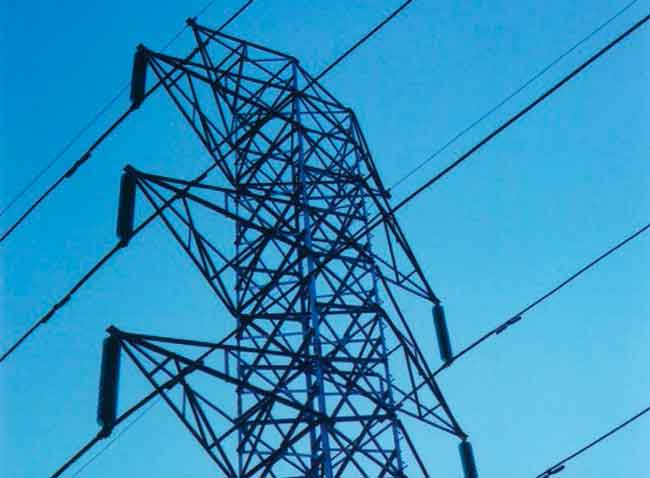
WASHINGTON — A breakdown in communication and co-operation among Midwest utilities contributed significantly to the worst power blackout in North American history, a utility executive has told congressional investigators.

Government and industry officials, testifying at congressional hearings that begin today, will say it's too early to pinpoint the cause of the Aug. 14 blackout that cascaded from Ohio through Michigan and into parts of Ontario, then engulfed New York state.

But the governors of Ohio and Michigan will join the call for Congress to enact new federal electricity grid reliability standards, replacing the voluntary standards that most now agree are inadequate.

In a letter to House of Representatives investigators, the chief executive of a major Michigan utility says he is convinced that a power plant shutdown and transmission line failures in Ohio "were the triggering event for the blackout" and that an "apparent failure in communication" was a major reason the problem spread.

"For some reason, the required level of communications and co-ordination failed on Aug. 14," Anthony Earley Jr., chairman and chief executive officer of DTE Energy, wrote the House Energy and Commerce Committee. He said this "apparent breakdown in communications between the Ohio utilities and other utility systems" must be dealt with.

Earley, whose Detroit Edison serves five million people in southeastern Michigan, complained that "Michigan utilities did not have timely or adequate warnings about deteriorating systems condition in Ohio" during the hour before the blackout.

He said Detroit Edison did not begin to detect anything unusual until 4:06 p.m., five minutes before the blackout hit full force in all or parts of eight states. Investigators said the first of five transmission line failures in Ohio began occurring an hour earlier.

In a separate letter to House investigators, FirstEnergy Corp., the Ohio-based company whose generating plant and transmission line failures have been at the centre of the blackout investigation, dismissed the notion that a single event triggered the blackout.

"The events of the day . . . involved thousands of separate and discrete incidents across a widespread multisystem region," H. Peter Burg, FirstEnergy's chairman and chief executive, wrote the committee.

In a presentation today to financial analysts in New York, First Energy's chief financial officer, Richard Marsh, said, "There is probably no single straw that broke the camel's back. We think what happened is a combination of events, not an isolated event on anybody's line or any one operator."

Executives of the International Transmission Co., which operates transmission lines in Michigan, also have complained that their engineers did not receive even a courtesy call from Ohio utility officials about their line problems prior to the blackout.

When ITC found out about the problems on the Ohio lines, "it was at the point of no return" and too late to act, Michigan Gov. Jennifer Granholm will tell the lawmakers. She says in prepared remarks that had Michigan grid operators been warned, "they might have been able to craft a contingency plan . . . and avoid the cascading failures."

The grid's reliability should not depend on a courtesy call, Ohio Gov. Bob Taft says in his testimony. "Frankly," his text says, ``in the 21st century a system that relies on courtesy calls is clearly outdated and must be modernized."

The hearing today by the House Energy and Commerce Committee will be the first congressional inquiry into the blackout, which has spawned renewed interest in Congress to act to increase the reliability of the country's aging power transmission systems.

"We're very concerned that there are shortcomings in the system. The grid is designed to handle multiple disturbances without going down. But clearly for whatever reason the system failed this time," said Ken Johnson, a committee spokesman.

Energy Secretary Spencer Abraham, co-chairman with Natural Resources Minister Herb Dhaliwal of a U.S.-Canada task force investigating the blackout and the lead-off witness at the hearing, will reiterate his recommendation for Congress to enact mandatory reliability standards to be enforced by the government.

Taft and Granholm will support such standards, as will Pat Wood, chairman of the Federal Energy Regulatory Commission. "Currently there is no direct federal authority or responsibility for the reliability of the transmission grid," Wood says in testimony prepared for the hearing.

"The electrical system in this country must include a system of accountability. We need to know who is responsible for what," says Granholm.

Representative Billy Tauzin (R — La.), the committee's chairman, has said he hopes to have a broad range of electricity proposals as part of a broader energy bill ready for approval by the end of the month.

Some Democrats want to avoid getting the electricity measures entangled with other, controversial energy issues such as whether to drill for oil in the Arctic National Wildlife Refuge.

Representative John Dingell (D — Mich.) said today he will introduce separate legislation this week that would require the electricity industry to comply with mandatory transmission standards. But Tauzin wants to include the new requirements as part of a broader package of electricity provisions to be passed as part of comprehensive energy legislation. Therefore, he and other Republicans will oppose Dingell's bill.

Related News
Hydro-Quebec begins talks for $185-billion strategy to wean the province off fossil fuels

Hydro-Québec $185-Billion Clean Energy Plan accelerates hydroelectric upgrades, wind power expansion, solar and battery storage, pumped storage, and 5,000 km transmission lines to decarbonize Quebec, boost grid resilience, and attract bond financing and Indigenous partnerships.


Key Points

Plan to grow renewables, harden the grid, and fund Quebec's decarbonization with major investments.

✅ $110B new generation, $50B grid resilience by 2035

✅ Triple wind, add solar, batteries, and pumped storage

✅ 5,000 km lines, bond financing, Indigenous partnerships


Hydro-Québec is in the preliminary stages of dialogue with various financiers and potential collaborators to strategize the implementation of a $185-billion initiative aimed at transitioning Quebec away from fossil fuel dependency.

As the leading hydroelectric power producer in Canada, Hydro-Québec is set to allocate up to $110 billion by 2035 towards the development of new clean energy facilities, building on its hydropower capacity expansion in recent years, with an additional $50 billion dedicated to enhancing the resilience of its power grid, as revealed in a strategy announced last November. The remainder of the projected expenditure will cover operational costs.

This ambitious initiative has garnered significant interest from the financial sector, with the province's recent electricity for industrial projects also drawing attention, as noted by CEO Michael Sabia during a conference call with journalists where the utility's annual financial outcomes were discussed. Sabia reported receiving various proposals to fund the initiative, though specific partners were not disclosed. He expressed confidence in securing the necessary capital for the project's success.

Sabia highlighted three immediate strategies to increase power output: identifying new sites for hydroelectric projects while upgrading turbines at existing facilities, such as the Carillon Generating Station upgrade now underway for enhanced efficiency, expanding wind energy production threefold, and promoting energy conservation among consumers to optimize current power usage.

Additionally, Hydro-Québec aims to augment its solar and battery energy production and is planning to establish a pumped-storage hydroelectric plant to support peak demand periods. The utility also intends to construct 5,000 kilometers of new transmission lines, address Quebec-to-U.S. transmission constraints where feasible, and is set to double its capital expenditure to $16 billion annually, a significant increase from the investment levels during the James Bay hydropower project construction in the 1970s and 1980s.

To fund part of this expansive plan, Hydro-Québec will continue to access the bond market, having issued $3.7 billion in notes to investors last year despite facing several operational hurdles due to adverse weather conditions.

For the year 2023, Hydro-Québec reported a net income of $3.3 billion, marking a 28% decrease from the previous year's record of $4.56 billion. Factors such as insufficient snow cover, reduced spring runoff, and higher temperatures resulted in lower water levels in reservoirs, leading to a reduction in power exports and a $547-million decrease in external market sales compared to the previous year.

The utility experienced its lowest export volume in a decade but managed to leverage hedging strategies to secure 10.3 cents per kWh for exported power to markets including New Brunswick via recent NB Power agreements that expand interprovincial deliveries, nearly twice the average market rate, through forward contracts that cover up to half of its export volume for about a year in advance.

The success of Sabia's plan will partly depend on the cooperation of First Nations communities, as the proposed infrastructure developments are likely to traverse their ancestral territories. Relationships with some communities are currently tense, exemplified by the Innu of Labrador's $4-billion lawsuit against Hydro-Québec for damages related to land flooding for reservoir construction, and broader regional tensions in Newfoundland and Labrador that persist in the power sector.

Sabia has committed to involving First Nations and Inuit communities as partners in clean energy ventures, offering them ongoing financial benefits rather than one-off settlements, a principle he refers to as "economic reconciliation."

Recently, the Quebec government reached an agreement with the Innu of Pessamit, pledging $45 million to support local community development. This agreement outlines solutions for managing a nearby hydropower reservoir, such as the La Romaine complex in the region, and includes commitments for wind energy development.

Sabia is optimistic about building stronger, more positive relationships with various Indigenous communities, anticipating significant progress in the coming months and viewing this year as a potential milestone in transforming these relationships for the better.


Related News

View more

Global electric power demand surges above pre-pandemic levels

Global Power Sector CO2 Surge 2021 shows electricity demand outpacing renewable energy, with coal and fossil fuels rebounding, undermining green recovery goals and climate change targets flagged by the IEA and IPCC.


Key Points

Record rise in power sector CO2 in 2021 as demand outpaced renewables and coal rebounded, undermining a green recovery.

✅ Electricity demand rose 5% above pre-pandemic levels

✅ Fossil fuels supplied 61% of power; coal led the rebound

✅ Wind and solar grew 15% but lagged demand


Carbon dioxide emissions from the global electric power sector surged past pre-pandemic levels to record highs in the first half of 2021, according to new research by London-based environmental think tank Ember.

Electricity demand and emissions are now 5% higher than where they were before the Covid-19 outbreak, which prompted worldwide lockdowns that led to a temporary drop in global greenhouse gas emissions. Electricity demand also surpassed the growth of renewable energy, and surging electricity demand is putting power systems under strain, the analysis found.

The findings signal a failure of countries to achieve a so-called “green recovery” that would entail shifting away from fossil fuels toward renewable energy, though European responses to Covid-19 have accelerated the electricity system transition by about a decade, to avoid the worst consequences of climate change.

The report found that 61% of the world’s electricity still came from fossil fuels in 2020. Five G-20 countries had more than 75% of their electricity supplied from fossil fuels last year, with Saudi Arabia at 100%, South Africa at 89%, Indonesia at 83%, Mexico at 75% and Australia at 75%.

Coal generation did fall a record 4% in 2020, but overall coal supplied 43% of the additional energy demand between 2019 and 2020, with soaring electricity and coal use underscoring persistent demand pressures. Asia currently generates 77% of the world’s coal electricity and China alone generates 53%, up from 44% in 2015.

The world’s transition out of coal power, which contributes to roughly 30% of the world’s greenhouse gas emissions, is happening far too slowly to avoid the worst impacts of climate change, the study warned. And the International Energy Agency forecasts coal generation will rebound in 2021 as electricity demand picks up again, even as renewables are poised to eclipse coal by 2025 according to other analyses.

“Progress is nowhere near fast enough. Despite coal’s record drop during the pandemic, it still fell short of what is needed,” Ember lead analyst Dave Jones said in a statement.

Jones said coal power usage must collapse by 80% by the end of the decade to avoid dangerous levels of global warming above 1.5 degrees Celsius (2.7 degrees Fahrenheit).

“We need to build enough clean electricity to simultaneously replace coal and electrify the global economy,” Jones said. “World leaders have yet to wake up to the enormity of the challenge.”

The findings come ahead of a major U.N. climate conference in Glasgow, Scotland, in November, where negotiators will push for more ambitious climate action and emissions reduction pledges from nations.

Without immediate, rapid and large-scale reductions to global emissions, scientists of the Intergovernmental Panel on Climate Change warn that the average global temperature will likely cross the 1.5 degrees Celsius threshold within 20 years.

The study also highlighted some upsides. Wind and solar generation, for instance, rose by 15% in 2020, and low-emissions sources are set to cover almost all the growth in global electricity demand in the next three years, producing nearly a tenth of the world’s electricity last year and doubling production since 2015.

Some countries now get about 10% of their electricity from wind and solar, including India, China, Japan, Brazil. The U.S. and Europe have experienced the biggest growth in wind and solar, and in the EU, wind and solar generated more electricity than gas last year, with Germany at 33% and the U.K. leads the G20 for wind power at 29%.


Related News

View more

Want Clean And Universal Electricity? Create The Incentives To Double The Investment, World Leaders Say

IRENA Climate Investment Platform accelerates renewable energy financing through de-risking, bankable projects, and public-private partnerships, advancing Paris Agreement goals via grid integration, microgrids, and decarbonization while expanding access, jobs, and sustainable economic growth.


Key Points

A global platform linking bankable renewable projects with finance, derisking and partners to scale decarbonization.

✅ Connects developers with banks, funds, and insurers

✅ Promotes de-risking via policy, PPAs, and legal frameworks

✅ Targets Paris goals with grid, microgrids, and off-grid access


The heads-of-state and energy ministers from more than 120 nations just met in Abu Dhabi and they had one thing in common: a passion to increase the use of renewable energy to reduce the threat from global warming — one that will also boost economic output and spread prosperity. Access to finance, though, is critical to this goal. 

Indeed, the central message to emerge from the conference hosted by the International Renewable Energy Agency (IRENA) this week in the United Arab Emirates is that a global energy transition is underway that has the potential to revitalize economies and to lift people out of poverty. But such a conversion requires international cooperation and a common desire to address the climate cause. 

“The renewable energy sector created jobs employing 11 million people in 2019 and provided off-grid solutions, having helped bring the number of people with no access to electricity to under 1 billion,” the current president of the UN General Assembly Tiijani Muhammad-Bande of Nigeria told the audience. 

Today In: Business
While renewables are improving energy access and reducing inequities, they also have the potential to curb CO2 emissions globally. The goal is to shrink them by 45% by 2030 and 90% by 2050, with Canada's net-zero race highlighting the role of renewable energy in achieving those targets. Getting there, though, requires progressive government policies that will help to attract financing. 

According to IRENA, investment in the clean energy sector is now at $330 billion a year. But if the 2050 goals are to be reached, those levels must nearly double to $750 billion annually. The green energy sector does not want to compete with the oil and gas sectors but rather, it is seeking to diversify fuel sources — a strategy that could help make electricity systems more resilient to climate risks. To hit the Paris agreement’s targets, it says that renewable energy deployment must increase by a factor of six.  

To that end, IRENA is forming a “climate investment platform” that will bring ideas to the table and then introduce prospective parties. It will focus on those projects that it believes are “bankable.”

It’s about helping project developers find banks, private companies and pension funds to finance their worthy projects, IRENA Director General Francesco La Camera said in response to this reporter’s question. Moreover, he said that the platform would work to ensure there is a sound legal structure and that there is legislative support to “de-risk” the investments. 

“Overcoming investment needs for energy transformation infrastructure is one of the most notable barriers to the achievement of national goals,” La Camera says. “Therefore, the provision of capital to support the adoption of renewable energy is key to low-carbon sustainable economic development and plays a central role in bringing about positive social outcomes.”

If the monies are to flow into new projects, governments have to create an environment where innovation is to be rewarded: tax incentives for renewables along with the design and implementation of transition plans. The aim is to scale up which in turn, leads to new jobs and greater economic productivity — a payback of three-to-seven times the initial investment.  

The path of least resistance, for now, is off-grid green energy solutions, or providing electricity to rural areas by installing solar panels that may connect to localized microgrids. Africa, which has a half-billion people without reliable electricity, would benefit. However, “If you want to go to scale and have bankable projects, you have to be connected to the grid,” Moira Wahba, with the UN Development Program, told this writer. “That requires large capital and private enterprise.”

Public policy must thus work to create the knowledge base and the advocacy to help de-risk the investments. Government’s role is to reassure investors that they will not be subject to arbitrary laws or the crony allocation of contracts. Risk takers know there are no guarantees. But they want to compete on a level playing. 

Analyzing Risk Profiles

He is speaking during the World Energy Future Summit. 
Sultan Al Jabber, chief executive of Abu Dhabi’s national oil company, Adnoc, who is also the former ... [+]ABU DHABI SUSTAINABILITY WEEK
How do foreign investors square the role of utilities that are considered safe and sound with their potential expansion into new fields such as investing in carbon-free electricity and in new places? The elimination of risk is not possible, says Mohamed Jameel Al Ramahi, chief executive officer of UAE-based Masdar. But the need to decarbonize is paramount. The head of the renewable energy company says that every jurisdiction has its own risk profile but that each one must be fully transparent while also properly structuring their policies and regulations. And there needs to be insurance for political risks. 

The United States and China, for example, are already “de-risked,” because they are deploying “gigawatts of renewables,” he told this writer. “When we talk about doubling the amount of needed investment, we have to take into account the risk profile of the whole world. If it is a high-risk jurisdiction, it will be difficult to bring in foreign capital.” 

The most compelling factor that will drive investment is whether the global community can comply with the Paris agreement, says Dr. Thani Ahmed Al Zeyoudi, Minister of the Ministry of Climate Change and the Environment for the United Arab Emirates. The goal is to limit increases to 2 degrees Celsius by mid-century, with the understanding that the UN’s latest climate report emphasizes that positive results are urgently needed. 

One of the most effective mechanisms is the public-private model. Governments, for example, are signing long-term power purchase agreements, giving project developers the necessary income they need to operate, and in the EU plans to double electricity use by 2050 are reinforcing these commitments. They can also provide grants and bring in international partners such as the World Bank. 

“We are seeing the impact of climate change with the various extreme events: the Australian fires, the cyclones and the droughts,” the minister told reporters. “We can no longer pass this to future generations to deal with.” 

The United Arab Emirates is not just talking about it, adds Sultan Al Jabber, chief executive of Abu Dhabi’s national oil company, Adnoc, who is also the former head of subsidiary Masdar. It is acting now, and across Europe Big Oil is turning electric as traditional players pivot too. His comments came during Abu Dhabi’s Sustainability Week at the World Future Energy Summit. The country is “walking the walk” by investing in renewable projects around the globe and it is growing its own green energy portfolio. Addressing climate change is “right” while it is also making “perfect economic sense.” 

The green energy transition has taken root in advanced economies while it is making inroads in the developing world — a movement that has the twin effect of addressing climate change and creating economic opportunities, and one that aligns with calls to transform into a sustainable electric planet for long-term prosperity. But private investment must double, which requires proactive governments to limit unnecessary risks and to craft the incentives to attract risk-takers. 


Related News

View more

Electricity and water do mix: How electric ships are clearing the air on the B.C. coast

Hybrid Electric Ships leverage marine batteries, LNG engines, and clean propulsion to cut emissions in shipping. From ferries to cargo vessels, electrification and sustainability meet IMO regulations, Corvus Energy systems, and dockside fast charging.


Key Points

Hybrid electric ships use batteries with diesel or LNG engines to cut fuel and emissions and meet stricter IMO rules.

✅ LNG or diesel gensets recharge marine battery packs.

✅ Cuts CO2, NOx, and particulate emissions in port and at sea.

✅ Complies with IMO standards; enables quiet, efficient operations.


The river is running strong and currents are swirling as the 150-metre-long Seaspan Reliant slides gently into place against its steel loading ramp on the shores of B.C.'s silty Fraser River.

The crew hustles to tie up the ship, and then begins offloading dozens of transport trucks that have been brought over from Vancouver Island.

While it looks like many vessels working the B.C. coast, below decks, the ship is very different. The Reliant is a hybrid, partly powered by electricity, and joins BC Ferries' hybrid ships in the region, the seagoing equivalent of a Toyota Prius.

Down below decks, Sean Puchalski walks past a whirring internal combustion motor that can run on either diesel or natural gas. He opens the door to a gleaming white room full of electrical cables and equipment racks along the walls.

"As with many modes of transportation, we're seeing electrification, from electric planes to ferries," said Puchalski, who works with Corvus Energy, a Richmond, B.C. company that builds large battery systems for the marine industry.

In this case, the batteries are recharged by large engines burning natural gas.

"It's definitely the way of the future," said Puchalski.

The 10-year-old company's battery system is now in use on 200 vessels around the world. Business has spiked recently, driven by the need to reduce emissions, and by landmark projects such as battery-electric high-speed ferries taking shape in the U.S.

"When you're building a new vessel, you want it to last for, say, 30 years. You don't want to adopt a technology that's on the margins in terms of obsolescence," said Puchalski. "You want to build it to be future-proof."


Dirty ships

For years, the shipping industry has been criticized for being slow to clean up its act. Most ships use heavy fuel oil, a cheap, viscous form of petroleum that produces immense exhaust. According to the European Commission, shipping currently pumps out about 940 million tonnes of CO2 each year, nearly three per cent of the global total.

That share is expected to climb even higher as other sectors reduce emissions.

When it comes to electric ships, Scandinavia is leading the world. Several of the region's car and passenger ferries are completely battery powered — recharged at the dock by relatively clean hydro power, and projects such as Kootenay Lake's electric-ready ferry show similar progress in Canada.


Tougher regulations and retailer pressure

The push for cleaner alternatives is being partly driven by worldwide regulations, with international shipping regulators bringing in tougher emission standards after a decade of talk and study, while financing initiatives are helping B.C. electric ferries scale up.

At the same time, pressure is building from customers, such as Mountain Equipment Co-op, which closely tracks its environmental footprint. Kevin Lee, who heads MEC's supply chain, said large companies are realizing they are accountable for their contributions to climate change, from the factory to the retail floor.

"You're hearing more companies build it into their DNA in terms of how they do business, and that's cool to see," said Lee. "It's not just MEC anymore trying to do this, there's a lot more partners out there."

In the global race to cut emissions, all kinds of options are on the table for ships, including giant kites being tested to harvest wind power at sea, and ports piloting hydrogen-powered cranes to cut dockside emissions.

Modern versions of sailing ships are also being examined to haul cargo with minimal fuel consumption.

But in practical terms, hybrids and, in the future, pure electrics are likely to play a larger role in keeping the propellers turning along Canada's coast, with neighboring fleets like Washington State Ferries' upgrade underscoring the shift.


Related News

View more

Two new electricity interconnectors planned for UK

Ofgem UK Electricity Interconnectors will channel subsea cables, linking Europe, enabling energy import/export, integrating offshore wind via multiple-purpose interconnectors, boosting grid stability, capacity, and investment under National Grid analysis to 2030 targets.


Key Points

Subsea links between the UK and Europe that trade power, integrate offshore wind, and reinforce grid capacity.

✅ Two new subsea interconnector bids open in 2025

✅ Pilot for multiple-purpose links to offshore wind clusters

✅ National Grid to assess optimal routes, capacity, and locations


Ofgem has opened bids to build two electricity interconnectors between the UK and continental Europe as part of the broader UK grid transformation now underway.

The energy regulator said this would “bring forward billions of pounds of investment” in the subsea cables, such as the Lake Erie Connector, which can import cheaper energy when needed and export surplus power from the UK when it is available.

Developers will be invited to submit bids to build the interconnectors next year. Ofgem will additionally run a pilot scheme for ‘multiple-purpose interconnectors’, which are used to link clusters of offshore wind farms and related innovations like an offshore vessel chargepoint to an interconnector.

This forms part of the UK Government drive to more than double capacity by 2030, and to manage rising electric-vehicle demand, as discussed in EV grid impacts, in support of its target of quadrupling offshore wind capacity by the same date.

Interconnectors provide some 7 per cent of UK electricity demand. The UK so far has seven electricity interconnectors linked to Ireland, France, Belgium, the Netherlands and Norway, while projects like the Ireland-France connection illustrate broader European grid integration.

Balfour Beatty won a £90m contract for onshore civil engineering works on the Viking Link Norway interconnector, which is due to come into operation in 2023, while London Gateway's all-electric berth highlights related port electrification.

It said that interconnector developers have in the past been allowed to propose their preferred design, connection location and sea route to the connecting country. Ofgem has now said it may decide to consider only those projects that meet its requirements based on an analysis of location and capacity needs by National Grid.

Ofgem has not specified that the new interconnectors must link to any specific place or country, but may do so later, as priorities like the Cyprus electricity highway illustrate emerging directions.


Related News

View more

UK peak power prices rise to second highest level since 2018

UK Peak Power Prices surged as low wind speeds forced National Grid to rely on gas-fired plants and coal generation, amid soaring wholesale gas prices and weak wind generation during the energy crisis.


Key Points

UK Peak Power Prices are electricity costs at peak hours, driven by wind output, gas reliance, and market dynamics.

✅ Spikes when wind generation drops and demand rises.

✅ Driven by gas-fired plants, coal backup, and wholesale gas prices.

✅ Moderate as wind output recovers and interconnectors supply.


Low wind speeds pushed peak hour power prices to the second highest level for at least three years on Monday, a move consistent with UK electricity prices hitting a 10-year high earlier this year, as Britain’s grid was forced to increase its reliance on gas-fired power plants and draw on coal generation.

Calm weather this year has exacerbated the energy price crisis in the UK, as gas-fired power stations have had to pick up the slack from wind farms. Energy demand has surged as countries open up from pandemic restrictions, which together with lower supplies from Russia to western Europe, has sent wholesale gas prices soaring.

Power prices in the UK for the peak evening period between 5pm and 6pm on Monday surpassed £2,000 per megawatt hour, only the second time they have exceeded that level in recent years.

This was still below the levels reached at the height of the gas price crisis in mid-September, when they hit £2,500/MWh, according to the energy consultancy Cornwall Insight, whose records date back to 2018.

Low wind speeds were the main driver behind Monday’s price spike, although expectations of a pick-up in wind generation on Tuesday, after recent record wind generation days, should push them back down to similar levels seen in recent weeks, analysts said.

Despite the expansion of renewables, such as wind and solar, over the past decade, with instances of wind leading the power mix in recent months, gas remains the single biggest source of electricity generation in Britain, typically accounting for nearly 40 per cent of output.

At lunchtime on Monday, gas-fired power plants were producing nearly 55 per cent of electricity, while coal accounted for 3 per cent, reflecting more power from wind than coal in 2016 milestones. Britain’s wind farms were contributing 1.67 gigawatts or just over 4 per cent, according to data from the Drax Electrics Insights website. Over the past 12 months, wind farms have produced 21 per cent of the UK’s electricity on average.

National Grid, which manages the UK’s electricity grid, has been forced on a number of occasions in recent months to ask coal plants to fire up to help offset the loss of wind generation, after issuing a National Grid short supply warning to the market. The government announced in June that it planned to bring forward the closure of the remaining coal stations to the end of September 2024.

Ministers also committed this year to making Britain’s electricity grid “net zero carbon” by 2035, and milestones such as when wind was the main source underline the transition, although some analysts have pointed out that would not signal the end of gas generation.

Since the start of the energy crisis in August, 20 energy suppliers have gone bust as they have struggled to secure the electricity and gas needed to supply customers at record wholesale prices, with further failures expected in coming weeks.

Phil Hewitt, director of the consultancy EnAppSys, said Monday’s high prices would further exacerbate pressures on those energy suppliers that do not have adequate hedging strategies. “This winter is a good time to be a generator,” he added.

Energy companies including Orsted of Denmark and SSE of the UK have reported some of the lowest wind speeds for at least two decades this year, even though record output during Storm Malik highlighted the system's volatility.

According to weather modelling group Vortex, the strength of the wind blowing across northern Europe has fallen by as much as 15 per cent on average in places this year, which some scientists suggest could be due to climate change.


Related News

View more

Sign Up for Electricity Forum’s Newsletter

Stay informed with our FREE Newsletter — get the latest news, breakthrough technologies, and expert insights, delivered straight to your inbox.

Electricity Today T&D Magazine Subscribe for FREE

Stay informed with the latest T&D policies and technologies.
  • Timely insights from industry experts
  • Practical solutions T&D engineers
  • Free access to every issue

Live Online & In-person Group Training

Advantages To Instructor-Led Training – Instructor-Led Course, Customized Training, Multiple Locations, Economical, CEU Credits, Course Discounts.

Request For Quotation

Whether you would prefer Live Online or In-Person instruction, our electrical training courses can be tailored to meet your company's specific requirements and delivered to your employees in one location or at various locations.