OEB seeks comment

By Canada News Wire


NFPA 70e Training - Arc Flash

Our customized live online or in‑person group training can be delivered to your staff at your location.

  • Live Online
  • 6 hours Instructor-led
  • Group Training Available
Regular Price:
$199
Coupon Price:
$149
Reserve Your Seat Today
The Ontario Energy Board is seeking comment on the issues which are proposed to be heard in the review of the Ontario Power Authority's (OPA) Integrated Power System Plan (IPSP).

The IPSP notice published by the OPA today at the Board's direction also includes information about how the public will be able to participate in the first of two phases in the Board's review of the OPA's application.

In phase 1, the Board will develop an issues list for its review of the IPSP and procurement processes, to determine which issues will be addressed at the subsequent hearing in phase 2. Parties wishing to comment on the proposed issues list must provide their comments in writing to the Board within 30 days of the last date of publication of the notice. The Board will hear oral submissions on the issues at a later date in phase 1 of its review of the application.

When the Board receives an application, it directs the applicant to publish notice of the application and provide public access to the application and supporting documents. The Board has directed the OPA to publish a notice for phase 1. The notice will appear in newspapers throughout the province starting today. In addition, the OPA will serve a copy of the notice, the application, the evidence and any amendments, in addition to the proposed issues list, on the Band office of all of the First Nations in the province.

Related News
America’s Electricity is Safe From the Coronavirus—for Now

US Grid Pandemic Response coordinates control rooms, grid operators, and critical infrastructure, leveraging hydroelectric plants, backup control centers, mutual assistance networks, and deep cleaning protocols to maintain reliability amid reduced demand and COVID-19 risks.


Key Points

US Grid Pandemic Response encompasses measures by utilities and operators to safeguard power reliability during COVID-19

✅ Control rooms staffed on-site; operators split across backup centers

✅ Health screenings, deep cleaning, and isolation protocols mitigate contagion

✅ Reduced demand and mutual assistance improve grid resilience


Control rooms are the brains of NYPA’s power plants, which are mostly hydroelectric and supply about a quarter of all the electricity in New York state. They’re also a bit like human petri dishes. The control rooms are small, covered with frequently touched switches and surfaces, and occupied for hours on end by a half-dozen employees. Since social distancing and telecommuting isn’t an option in this context, NYPA has instituted regular health screenings and deep cleanings to keep the coronavirus out.

The problem is that each power plant relies on only a handful of control room operators. Since they have a specialized skill set, they can’t be easily replaced if they get sick. “They are very, very critical,” says Gil Quiniones, NYPA president and CEO. If the pandemic worsens, Quiniones says that NYPA may require control room operators to live on-site at power plants to reduce the chance of the virus making it in from the outside world. It sounds drastic, but Quiniones says NYPA has done it before during emergencies—once during the massive 2003 blackout, and again during Hurricane Sandy.

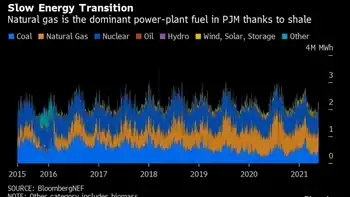
Meanwhile, PJM is one of North America’s nine regional grid operators and manages the transmission lines that move electricity from power plants to millions of customers in 13 states on the Eastern seaboard, including Washington, DC. PJM has had a pandemic response plan on the books for 15 years, but Mike Bryson, senior vice president of operations, says that this is the first time it’s gone into full effect. As of last week, about 80 percent of PJM’s 750 full-time employees have been working from home. But PJM also requires a skeleton crew of essential workers to be on-site at all times in its control centers. As part of its emergency planning, PJM built a backup control center years ago, and now it is splitting control center operators between the two to limit contact.

Past experience with large-scale disasters has helped the energy sector keep the lights on and ventilators running during the pandemic. Energy is one of 16 sectors that the US government has designated as “critical infrastructure,” which also includes the communications industry, transportation sector, and food and water systems. Each is seen as vital to the country and therefore has a duty to maintain operations during national emergencies.

“We need to be treated as first responders,” says Scott Aaronson, the vice president of security and preparedness at the Edison Electric Institute, a trade group representing private utilities. “Everybody's goal right now is to keep the public healthy, and to keep society functioning as best we can. A lack of electricity will certainly create a challenge for those goals.”

America’s electricity grid is a patchwork of regional grid operators connecting private and state-owned utilities. This means simply figuring out who’s in charge and coordinating among the various organizations is one of the biggest challenges to keeping the electricity flowing during a national emergency, according to Aaronson.

Generally, a lot of this responsibility falls on formal energy organizations like the nonprofit North American Electric Reliability Corporation and the Federal Energy Regulatory Commission. But during the coronavirus outbreak, an obscure organization run by the CEOs of electric utilities called the Electricity Subsector Coordinating Council has also served as a primary liaison between the federal government and the thousands of utility companies around the US. Aaronson says the organization has been meeting twice a week for the past three weeks to ensure that utilities are implementing best practices in their response to the coronavirus, as well as to inform the government of material needs to keep the energy sector running smoothly.

This tight-knit coordination will be especially important if the pandemic gets worse, as many forecasts suggest it will. Most utilities belong to at least one mutual assistance group, an informal network of electricity suppliers that help each other out during a catastrophe. These mutual assistance networks are usually called upon following major storms that threaten prolonged outages. But they could, in principle, be used to help during the coronavirus pandemic too. For example, if a utility finds itself without enough operators to manage a power plant, it could conceivably borrow trained operators from another company to make sure the power plant stays online.

So far, utilities and grid operators have managed to make it work on their own. There have been a handful of coronavirus cases reported at power plants, but they haven’t yet affected these plants’ ability to deliver energy. The challenges of running a power plant with a skeleton crew is partially offset by the reduced power demand as businesses shut down and more people work from home, says Robert Hebner, the director of the Center for Electromechanics at the University of Texas. “The reduced demand for power gives utilities a little breathing room,” says Hebner.

A recent study by the University of Chicago’s Energy Policy Institute found that electricity demand in Italy has plunged by 18 percent following the severe increase in coronavirus cases in the country. Energy demand in China also plummeted as a result of the pandemic. Bryson, at PJM, says the grid operator has seen about a 6 percent decrease in electricity demand in recent weeks, but expects an even greater drop if the pandemic gets worse.

Generally speaking, problems delivering electricity in the US occur when the grid is overloaded or physically damaged, such as during California wildfires or a hurricane.

An open question among coronavirus researchers is whether there will be a second wave of the pandemic later this year. During the Spanish flu pandemic in the early 20th century, the second wave turned out to be deadlier than the first. If the coronavirus remerges later this year, it could be a serious threat to reliable electricity in the US, says John MacWilliams, a former associate deputy secretary of the Department of Energy and a senior fellow at Columbia University’s Center on Global Energy Policy.

“If this crisis extends into the fall, we're going to hit hurricane season along the coasts,” MacWilliams says. “Utilities are doing a very good job right now, but if we get unlucky and have an active hurricane season, they're going to get very stressed because the number of workers that are available to repair damage and restore power will become more limited.”

This was a sentiment echoed by Bryson at PJM. “Any one disaster is manageable, but when you start layering them on top of each other, it gets much more challenging,” he adds. The US electricity grid struggles to handle major storms as it is, and these challenges will be heightened if too many workers are home sick. In this sense, the energy sector’s ability to deliver the electricity needed to keep manufacturing medical supplies or keep ventilators running depends to a large extent on our ability to flatten the curve today. The coronavirus is bad enough without having to worry about the lights going out.


Related News

View more

EIA expects solar and wind to be larger sources of U.S. electricity generation this summer

US Summer Electricity Outlook 2022 projects rising renewable energy generation as utility-scale solar and wind capacity additions surge, while coal declines and natural gas shifts amid higher fuel prices and regional supply constraints.


Key Points

An EIA forecast of summer 2022 power: more solar and wind, less coal, and shifting gas use amid higher fuel prices.

✅ Solar +10 million MWh; wind +8 million MWh vs last summer

✅ Coal generation -20 million MWh amid supply constraints, retirements

✅ Gas prices near $9/MMBtu; slight national gen decline


In our Summer Electricity Outlook, a supplement to our May 2022 Short-Term Energy Outlook, we expect the largest increases in U.S. electric power sector generation this summer will come from renewable energy sources such as wind and solar generation. These increases are the result of new capacity additions. We forecast utility-scale solar generation between June and August 2022 will grow by 10 million megawatthours (MWh) compared with the same period last summer, and wind generation will grow by 8 million MWh. Forecast generation from coal and natural gas declines by 26 million MWh this summer, although natural gas generation could increase in some electricity markets where coal supplies are constrained.

For recent context, overall U.S. power generation in January rose 9.3% year over year, the EIA reports.

Wind and solar power electric-generating capacity has been growing steadily in recent years. By the start of June, we estimate the U.S. electric power sector will have 65 gigawatts (GW) of utility-scale solar-generating capacity, a 31% increase in solar capacity since June 2021. Almost one-third of this new solar capacity will be built in the Texas electricity market. The electric power sector will also have an estimated 138 GW of wind capacity online this June, which is a 12% increase from last June.

Along with growth in renewables capacity, we expect that an additional 6 GW of new natural gas combined-cycle generating capacity will come online by June 2022, an increase of 2% from last summer. Despite this increase in capacity, we expect natural gas-fired electricity generation at the national level will be slightly (1.3%) lower than last summer.

We forecast the price of natural gas delivered to electric generators will average nearly $9 per million British thermal units between June and August 2022, which would be more than double the average price last summer. The higher expected natural gas prices and growth in renewable generation will likely lead to less natural gas-fired generation in some regions of the country.

In contrast to renewables and natural gas, the electricity industry has been steadily retiring coal-fired power plants over the past decade. Between June 2021 and June 2022, the electric power sector will have retired 6 GW (2%) of U.S. coal-fired generating capacity.

In previous years, higher natural gas prices would have resulted in more coal-fired electricity generation across the fleet. However, coal-fired power plants have been limited in their ability to replenish their historically low inventories in recent months as a result of mine closures, rail capacity constraints, and labor market tightness. These coal supply constraints, along with continued retirement of generating capacity, contribute to our forecast that U.S. coal-fired generation will decline by 20 million MWh (7%) this summer. In some regions of the country, these coal supply constraints may lead to increased natural gas-fired electricity generation despite higher natural gas prices.


Related News

View more

Washington State Ferries' Hybrid-Electric Upgrade

Washington State Hybrid-Electric Ferries advance green maritime transit with battery-diesel propulsion, lower emissions, and fleet modernization, integrating charging infrastructure and reliable operations across WSF routes to meet climate goals and reduce fuel consumption.


Key Points

New WSF vessels using diesel-battery propulsion to cut emissions, improve efficiency, and sustain reliable ferry service.

✅ Hybrid diesel-battery propulsion reduces fuel use and CO2

✅ Larger vessels with efficient batteries and charging upgrades

✅ Compatible with WSF docks, maintenance, and safety standards


Washington State is embarking on an ambitious update to its ferry fleet, introducing hybrid-electric boats that represent a significant leap toward greener and more sustainable transportation. The state’s updated plans reflect a commitment to reducing carbon emissions and enhancing environmental stewardship while maintaining the efficiency and reliability of its vital ferry services.

The Washington State Ferries (WSF) system, one of the largest in the world, has long been a critical component of the state’s transportation network, linking various islands and coastal communities with the mainland. Traditionally powered by diesel engines, the ferries are responsible for significant greenhouse gas emissions. In response to growing environmental concerns and legislative pressure, WSF is now turning to hybrid-electric technology similar to battery-electric high-speed ferries seen elsewhere to modernize its fleet and reduce its carbon footprint.

The updated plans for the hybrid-electric boats build on earlier efforts to introduce cleaner technologies into the ferry system. The new designs incorporate advanced hybrid-electric propulsion systems that combine traditional diesel engines with electric batteries. This hybrid approach allows the ferries to operate on electric power during certain segments of their routes, reducing reliance on diesel fuel and cutting emissions as electric ships on the B.C. coast have demonstrated during similar operations.

One of the key features of the updated plans is the inclusion of larger and more capable hybrid-electric ferries, echoing BC Ferries hybrid ships now entering service in the region. These vessels are designed to handle the demanding operational requirements of the Washington State Ferries system while significantly reducing environmental impact. The new boats will be equipped with state-of-the-art battery systems that can store and utilize electric power more efficiently, leading to improved fuel economy and lower overall emissions.

The transition to hybrid-electric ferries is driven by both environmental and economic considerations. On the environmental side, the move aligns with Washington State’s broader goals to combat climate change and reduce greenhouse gas emissions, including programs like electric vehicle rebate program that encourage cleaner travel across the state. The state has set ambitious targets for reducing carbon emissions across various sectors, and upgrading the ferry fleet is a crucial component of achieving these goals.

From an economic perspective, hybrid-electric ferries offer the potential for long-term cost savings. Although the initial investment in new technology can be substantial, with financing models like CIB support for B.C. electric ferries helping spur adoption and reduce barriers for agencies, the reduced fuel consumption and lower maintenance costs associated with hybrid-electric systems are expected to lead to significant savings over the lifespan of the vessels. Additionally, the introduction of greener technology aligns with public expectations for more sustainable transportation options.

The updated plans also emphasize the importance of integrating hybrid-electric technology with existing infrastructure. Washington State Ferries is working to ensure that the new vessels are compatible with current docking facilities and maintenance practices. This involves updating docking systems, as seen with Kootenay Lake electric-ready ferry preparations, to accommodate the specific needs of hybrid-electric ferries and training personnel to handle the new technology.

Public response to the hybrid-electric ferry initiative has been largely positive, with many residents and environmental advocates expressing support for the move towards greener transportation. The new boats are seen as a tangible step toward reducing the environmental impact of one of the state’s most iconic transportation services. The project also highlights Washington State’s commitment to innovation and leadership in sustainable transportation, alongside global examples like Berlin's electric flying ferry that push the envelope in maritime transit.

However, the transition to hybrid-electric ferries is not without its challenges. Implementing new technology requires careful planning and coordination, including addressing potential technical issues and ensuring that the vessels meet all safety and operational standards. Additionally, there may be logistical challenges associated with integrating the new ferries into the existing fleet and managing the transition without disrupting service.

Despite these challenges, the updated plans for hybrid-electric boats represent a significant advancement in Washington State’s efforts to modernize its transportation system. The initiative reflects a growing trend among transportation agencies to embrace sustainable technologies and address the environmental impact of traditional transportation methods.

In summary, Washington State’s updated plans for hybrid-electric ferries mark a crucial step towards a more sustainable and environmentally friendly transportation network. By incorporating advanced hybrid-electric technology, the state aims to reduce carbon emissions, improve fuel efficiency, and align with its broader climate goals. While challenges remain, the initiative demonstrates a commitment to innovation and underscores the importance of transitioning to greener technologies in the quest for a more sustainable future.


Related News

View more

Washington AG Leads Legal Challenge Against Trump’s Energy Emergency

Washington-Led Lawsuit Against Energy Emergency challenges President Trump's executive order, citing state rights, environmental reviews, permitting, and federal overreach; coalition argues record energy output undermines emergency claims in Seattle federal court.


Key Points

Multistate suit to void Trump's energy emergency, alleging federal overreach and weakened environmental safeguards.

? Challenges executive order's legal basis and scope

? Claims expedited permitting skirts environmental reviews

? Seeks to halt emergency permits for non-emergencies


In a significant legal move, Washington State Attorney General Nick Brown has spearheaded a coalition of 15 states in filing a lawsuit against President Donald Trump's executive order declaring a national energy emergency. The lawsuit, filed in federal court in Seattle on May 9, 2025, challenges the legality of the emergency declaration, which aims to expedite permitting processes for fossil fuel projects in pursuit of an energy dominance vision by bypassing key environmental reviews.

Background of the Energy Emergency Declaration

President Trump's executive order, issued on January 20, 2025, asserts that the United States faces an inadequate and unreliable energy grid, particularly affecting the Northeast and West Coast regions. The order directs federal agencies, including the Army Corps of Engineers and the Department of the Interior, to utilize "any lawful emergency authorities" to facilitate the development of domestic energy resources, with a focus on oil, gas, and coal projects. This includes expediting reviews under the Clean Water Act, Endangered Species Act, the National Environmental Policy Act, and the National Historic Preservation Act, potentially reducing public input and environmental oversight.

Legal Grounds for the Lawsuit

The coalition of states, led by Washington and California, argues that the emergency declaration is an overreach of presidential authority, echoing disputes over the Affordable Clean Energy rule in federal courts. They contend that U.S. energy production is already at record levels, and the declaration undermines state rights and environmental protections. The lawsuit seeks to have the executive order declared unlawful and to halt the issuance of emergency permits for non-emergency projects. 

Implications for Environmental Protections

Critics of the energy emergency declaration express concern that it could lead to significant environmental degradation. By expediting permitting processes, including geothermal permitting, and reducing public participation, the order may allow projects to proceed without adequate consideration of their impact on water quality, wildlife habitats, and cultural resources. Environmental advocates argue that such actions could set a dangerous precedent, enabling future administrations to bypass essential environmental safeguards under the guise of national emergencies, even as the EPA advances new pollution limits for coal and gas plants to address the climate crisis.

Political and Legal Reactions

The Trump administration defends the executive order, asserting that the president has the authority to declare national emergencies and that the energy emergency is necessary to address perceived deficiencies in the nation's energy infrastructure and potential electricity pricing changes debated by industry groups. However, legal experts suggest that the broad application of emergency powers in this context may face challenges in court. The outcome of the lawsuit could have significant implications for the balance of power between state and federal authorities, as well as the future of environmental regulations in the United States.

The legal challenge led by Washington State Attorney General Nick Brown represents a critical juncture in the ongoing debate over energy policy and environmental protection. As the lawsuit progresses through the courts, it will likely serve as a bellwether for future conflicts between state and federal governments regarding the scope of executive authority and the preservation of environmental standards, amid ongoing efforts to expand uranium and nuclear energy programs nationwide. The outcome may set a precedent for how national emergencies are declared and managed, particularly concerning their impact on state governance and environmental laws.


Related News

View more

Investigation reveals power company 'gamed' $100M from Ontario's electricity system

Goreway Power Station Overbilling exposed by Ontario Energy Board shows IESO oversight failures, GCG gaming, and $100M in inappropriate payments at the Brampton natural gas plant, penalized with fines and repayments impacting Ontario ratepayers.


Key Points

Goreway exploited IESO GCG flaws, causing about $100M in improper payouts and fines.

✅ OEB probe flagged $89M in ineligible start-up O&M charges

✅ IESO fined Goreway $10M; majority of excess costs recovered

✅ Audit found $200M in overbilling across nine generators


Hydro customers shelled out about $100 million in "inappropriate" payments to a natural gas plant that exploited flaws in how Ontario manages its private electricity generators, according to the Ontario Energy Board.

The company operating the Goreway Power Station in Brampton "gamed" the system for at least three years, according to an investigation by the provincial energy regulator. 

The investigation also delivers stinging criticism of the provincial government's Independent Electricity System Operator (IESO), slamming it for a lack of oversight. The probe by the Ontario Energy Board's market surveillance panel was completed nearly a year ago, but was only made public in November because it was buried on its website without a news release. CBC News is the first media outlet to report on the investigation.  

The excess payments to Goreway Power Station included:

  • $89 million in ineligible expenses billed as the costs of firing up power production. 
  • $5.6 million paid in three months from a flaw in how IESO calculated top-ups for the company committing to generate power a day in advance.   
  • Of $11.2 million paid to compensate the company for IESO ordering it to start or stop generating power, the investigation concluded "a substantial portion ... was the result of gaming."  

Most privately-owned natural gas-fired plants in the province do not generate electricity constantly, but start and stop production in response to fluctuating market demand, even as the energy minister has requested an halt to natural gas generation across the grid.  IESO pays them a premium for the costs of firing up production, through what it calls "generation cost guarantee" programs. 

But the investigation found IESO did little checking into the details of Goreway Power Station's billings. 

Goreway Power Station, located near Highway 407 in Brampton, Ont., is an 875 megawatt natural gas power plant. (Goreway)

"Conservatively, at least $89 million of Goreway's submissions were clearly ineligible by any reasonable measure," concludes the report.

"Goreway routinely submitted what were obviously inappropriate expenses to be reimbursed by the IESO, and ultimately borne by Ontario ratepayers,"

The investigation panel found an "extraordinary pattern" to these billings by Goreway Power Station, suggesting the IESO should have caught on sooner. The company submitted more than $100 million in start-up operating and maintenance costs during the three-year period investigated — more than all other gas-fired generators in the province combined. The company's costs per start-up were more than double the next most expensive power generator. 

"Goreway repeatedly exploited defects in the GCG (generation cost guarantee) program, and in doing so received at least $89 million in gamed GCG payments." 

Company fined $10M

The investigation covered a three-year period from when Goreway Power Station began generating power in June 2009. Investigators said that delays in releasing documents slowed down their probe, and they only obtained all the records they needed in April 2016.

The investigating panel does not have the power to impose penalties on companies it found broke the rules. 

The IESO fined Goreway Power Station $10 million. The company has also repaid IESO "a substantial portion" of the excess payments it received during its first six years of operating, but the exact figure is blacked out in the investigation report that was made public. 

The control room from which the provincial government's Independent Electricity System Operator manages Ontario's power supply. The agency is also responsible for managing contracts with private power producers.(IESO)

"Goreway does not agree with many of the draft report's findings and conclusions, including any suggestion that Goreway engaged in gaming or that it deliberately misled the IESO," writes lawyer George Vegh on behalf of the company in a response to the investigation report, dated Aug. 1.

"Goreway has implemented initiatives designed to ensure that compliance is a chief operating principle."     

The power station, located near Highway 407 in Brampton, is a joint venture between Toyota Tsusho Corp. and JERA Co. Inc. During the period under scrutiny, the project was run by Toyota Tsusho and Chubu Electric Power Inc., both headquartered in Japan. 

Investigators fear 'same situation' exists today

The report blames the provincially-controlled IESO for creating a system with defects that allowed the over-billing. 

"Goreway was able to — and repeatedly did — exploit these defects," says the investigation report. It goes on to explain the flaws "have created opportunities for exploitation, to the serious financial disadvantage of Ontario's ratepayers," even as greening Ontario's grid could entail massive costs.

The investigation suggests IESO hasn't made adequate changes to ensure it won't happen again, at a time when an analysis of a dirtier grid is raising concerns.   

"Goreway stands as a clear example of how generators are able to exploit the generation costs guarantee regime," says the report.

"The Panel is concerned that the same situation remains in place today." 

PC energy critic Todd Smith raised CBC News' report on the Goreway Power Station in Tuesday's question period. (Ontario Legislature)

After CBC News broke the story Tuesday, the provincial government was forced to respond in question period, amid a broader push for new gas plants to boost electricity production. 

"Here we have yet another gas plant scandal in Peel region that's costing electricity customers over $100 million," said PC energy critic Todd Smith. He slammed "the incompetence of a government that once again failed to look out for electricity customers." 

Economic Development Minister Brad Duguid said: "There is no excuse for any company in this province to ever game the system."

Nine companies overbilled $200M: audit 

The IESO found out about the overbilling "some time ago," said Duguid.

"They fully investigated, they've recovered most of the cost, they delivered a $10 million fine — the biggest fine on record."

The program that Goreway exploited became the subject of an audit that the IESO launched in 2011. The agency uncovered $200 million in ineligible billings by nine power producers, wrote the IESO vice president for policy Terry Young in an email to CBC News.

The IESO has recovered up to 85 per cent of those ineligible costs, Young noted.

Reforms to the design of the the program have removed the potential for overpayments and made it more efficient, he said, even as Ontario weighs embracing clean power more broadly. Last year, its total annual costs dropped to $23 million, down from $61 million in 2014.


Related News

View more

Maritime Link sends first electricity between Newfoundland, Nova Scotia

Maritime Link HVDC Transmission connects Newfoundland and Nova Scotia to the North American grid, enabling renewable energy imports, subsea cable interconnection, Muskrat Falls hydro power delivery, and lower carbon emissions across Atlantic Canada.


Key Points

A 500 MW HVDC intertie linking Newfoundland and Nova Scotia to deliver Muskrat Falls hydro power.

✅ 500 MW capacity using twin 170 km subsea HVDC cables

✅ Interconnects Newfoundland and Nova Scotia to the North American grid

✅ Enables Muskrat Falls hydro imports, cutting CO2 and costs


For the first time, electricity has been sent between Newfoundland and Nova Scotia through the new Maritime Link.

The 500-megawatt transmission line — which connects Newfoundland to the North American energy grid for the first time and echoes projects like the New England Clean Power Link underway — was tested Friday.

"This changes not only the energy options for Newfoundland and Labrador but also for Nova Scotia and Atlantic Canada," said Rick Janega, the CEO of Emera Newfoundland and Labrador, which owns the link.

"It's an historic event in our eyes, one that transforms the electricity system in our region forever."


'On time and on budget'

It will eventually carry power from the Muskrat Falls hydro project in Labrador, where construction is running two years behind schedule and $4 billion over budget, a context in which the Manitoba Hydro line to Minnesota has also faced delay, to Nova Scotia consumers. It was supposed to start producing power later this year, but the new deadline is 2020 at the earliest.

The project includes two 170-kilometre subsea cables across the Cabot Strait between Cape Ray in southwestern Newfoundland and Point Aconi in Cape Breton.

The two cables, each the width of a two-litre pop bottle, can carry 250 megawatts of high voltage direct current, and rest on the ocean floor at depths up to 470 metres.

This reel of cable arrived in St. John's back in April aboard the Norwegian vessel Nexans Skagerrak, after the first power cable reached Nova Scotia earlier in the project. (Submitted by Emera NL)

The Maritime Link also includes almost 50 kilometres of overland transmission in Nova Scotia and more than 300 kilometres of overland transmission in Newfoundland, paralleling milestones on Site C transmission work in British Columbia.

The link won't go into commercial operation until January 1.

Janega said the $1.6-billion project is on time and on budget.

"We're very pleased to be in a position to be able to say that after seven years of working on this. It's quite an accomplishment," he said.

This Norwegian vessel was used to transport the 5,500 tonne subsea cable. (Submitted by Emera NL)

Once in service, the link will improve electrical interconnections between the Atlantic provinces, aligning with climate adaptation guidance for Canadian utilities.

"For Nova Scotia it will allow it to achieve its 40 per cent renewable energy target in 2020. For Newfoundland it will allow them to shut off the Holyrood generating station, in fact using the Maritime Link in advance of the balance of the project coming into service," Janega said.

Karen Hutt, president and CEO of Nova Scotia Power, which is owned by Emera Inc., calls it a great day for Nova Scotia.

"When it goes into operation in January, the Maritime Link will benefit Nova Scotia Power customers by creating a more stable and secure system, helping reduce carbon emissions, and enabling NSP to purchase power from new sources," Hutt said in a statement.


Related News

View more

Sign Up for Electricity Forum’s Newsletter

Stay informed with our FREE Newsletter — get the latest news, breakthrough technologies, and expert insights, delivered straight to your inbox.

Electricity Today T&D Magazine Subscribe for FREE

Stay informed with the latest T&D policies and technologies.
  • Timely insights from industry experts
  • Practical solutions T&D engineers
  • Free access to every issue

Live Online & In-person Group Training

Advantages To Instructor-Led Training – Instructor-Led Course, Customized Training, Multiple Locations, Economical, CEU Credits, Course Discounts.

Request For Quotation

Whether you would prefer Live Online or In-Person instruction, our electrical training courses can be tailored to meet your company's specific requirements and delivered to your employees in one location or at various locations.