CSA Z463 Electrical Maintenance -

Our customized live online or in‑person group training can be delivered to your staff at your location.

  • Live Online
  • 6 hours Instructor-led
  • Group Training Available
Regular Price:
$249
Coupon Price:
$199
Reserve Your Seat Today
-- The unfunded debt left by the former Ontario Hydro has increased during the past year, newly released financial statements show.

Related News

Opinion: The dilemma over electricity rates and innovation

Canadian Electricity Innovation drives a customer-centric, data-driven grid, integrating renewable energy, EVs, storage, and responsive loads to boost reliability, resilience, affordability, and sustainability while aligning regulators, utilities, and policy for decarbonization.


Key Points

A plan to modernize the grid, aligning utilities, regulators, and tech to deliver clean, reliable, affordable power.

✅ Smart grid supports EVs, storage, solar, and responsive loads.

✅ Innovation funding and regulatory alignment cut long-term costs.

✅ Resilience rises against extreme weather and outage risks.


For more than 100 years, Canadian electricity companies had a very simple mandate: provide reliable, safe power to all. Keep the lights on, as some would say. And they did just that.

Today, however, they are expected to also provide a broad range of energy services through a data-driven, customer-centric system operations platform that can manage, among other things, responsive loads, electric vehicles, storage devices and solar generation. All the while meeting environmental and social sustainability — and delivering on affordability.

Not an easy task, especially amid a looming electrical supply crunch that complicates planning.

That’s why this new mandate requires an ironclad commitment to innovation excellence. Not simply replacing “like with like,” or to make incremental progress, but to fundamentally reimagine our electricity system and how Canadians relate to it.

Our innovators in the electricity sector are stepping up to the plate and coming up with ingenious ideas, thanks to an annual investment of some $20 billion.

#google#

But they are presented with a dilemma.

Although Canada enjoys among the cleanest, most reliable electricity in the world, we have seen a sharp spike in its politicization. Electricity rates have become the rage and a top-of-mind issue for many Canadians, as highlighted by the Ontario hydro debate over rate plans. Ontario’s election reflects that passion.

This heightened attention places greater pressure on provincial governments, who regulate prices, and in jurisdictions like the Alberta electricity market questions about competition further influence those decisions. In turn, they delegate down to the actual regulators where, at their public hearings, the overwhelming and almost exclusive objective becomes: Keeping costs down.

Consequently, innovation pilot applications by Canadian electricity companies are routinely rejected by regulators, all in the name of cost constraints.

Clearly, electricity companies must be frugal and keep rates as low as possible.

No one likes paying more for their electricity. Homeowners don’t like it and neither do businesses.

Ironically, our rates are actually among the lowest in the world. But the mission of our political leaders should not be a race to the basement suite of prices. Nor should cheap gimmicks masquerade as serious policy solutions. Not if we are to be responsible to future generations.

We must therefore avoid, at all costs, building on the cheap.

Without constant innovation, reliability will suffer, especially as we battle more extreme weather events. In addition, we will not meet the future climate and clean energy targets such as the Clean Electricity Regulations for 2050 that all governments have set and continuously talk about. It is therefore incumbent upon our governments to spur a dynamic culture of innovation. And they must sync this with their regulators.

This year’s federal budget failed to build on the 2017 investments. One-time public-sector funding mechanisms are not enough. Investments must be sustained for the long haul.

To help promote and celebrate what happens when innovation is empowered by utilities, the Canadian Electricity Association has launched Canada’s first Centre of Excellence on electricity. The centre showcases cutting-edge development in how electricity is produced, delivered and consumed. Moreover, it highlights the economic, social and environmental benefits for Canadians.

One of the innovations celebrated by the centre was developed by Nova Scotia’s own NS Power. The company has been recognized for its groundbreaking Intelligent Feeder Project that generates power through a combination of a wind farm, a substation, and nearly a dozen Tesla batteries, reflecting broader clean grid and battery trends across Canada.

Political leaders must, of course, respond to the emotions and needs of their electors. But they must also lead.

That’s why ongoing long-term investments must be embedded in the policies of federal, provincial and territorial governments, and their respective regulatory systems. And Canada’s private sector cannot just point the finger to governments. They, too, must deliver, by incorporating meaningful innovation strategies into their corporate cultures and vision.

That’s the straightforward innovation challenge, as it is for the debate over rates.

But it also represents a generational opportunity, because if we get innovation right we will build that better, greener future that Canadians aspire to.

Sergio Marchi is president and CEO of the Canadian Electricity Association. He is a former Member of Parliament, cabinet minister, and Canadian Ambassador to the World Trade Organization and United Nations in Geneva.


Related News

View more

Power Outages to Mitigate Wildfire Risks

Colorado Wildfire Power Shutoffs reduce ignition risk through PSPS, grid safety protocols, data-driven forecasts, and emergency coordination, protecting communities, natural resources, and infrastructure during extreme fire weather fueled by drought and climate change.


Key Points

Planned PSPS outages cut power in high-risk areas to prevent ignitions, protect residents, and boost wildfire resilience.

✅ PSPS triggered by forecasts, fuel moisture, and fire danger indices.

✅ Utilities coordinate alerts, timelines, and critical facility support.

✅ Paired with forest management, education, and rapid response.


Colorado, known for its stunning landscapes and outdoor recreation, has implemented proactive measures to reduce the risk of wildfires by strategically shutting off power in high-risk areas, similar to PG&E wildfire shutoffs implemented in California during extreme conditions. This approach, while disruptive, aims to safeguard communities, protect natural resources, and mitigate the devastating impacts of wildfires that have become increasingly prevalent in the region.

The decision to initiate power outages as a preventative measure against wildfires underscores Colorado's commitment to proactive fire management and public safety, aligning with utility disaster planning practices that strengthen grid readiness. With climate change contributing to hotter and drier conditions, the state faces heightened wildfire risks, necessitating innovative strategies to minimize ignition sources and limit fire spread.

Utility companies, in collaboration with state and local authorities, identify areas at high risk of wildfire based on factors such as weather forecasts, fuel moisture levels, and historical fire data. When conditions reach critical thresholds, planned power outages, also known as Public Safety Power Shutoffs (PSPS), are implemented to reduce the likelihood of electrical equipment sparking wildfires during periods of extreme fire danger, particularly during windstorm-driven outages that elevate ignition risks.

While power outages are a necessary precautionary measure, they can pose challenges for residents, businesses, and essential services that rely on uninterrupted electricity, as seen when a North Seattle outage affected thousands last year. To mitigate disruptions, utility companies communicate outage schedules in advance, provide updates during outages, and coordinate with emergency services to ensure the safety and well-being of affected communities.

The implementation of PSPS is part of a broader strategy to enhance wildfire resilience in Colorado. In addition to reducing ignition risks from power lines, the state invests in forest management practices, wildfire prevention education, and emergency response capabilities, including continuity planning seen in the U.S. grid COVID-19 response, to prepare for and respond to wildfires effectively.

Furthermore, Colorado's approach to wildfire prevention highlights the importance of community preparedness and collaboration, and utilities across the region adopt measures like FortisAlberta precautions to sustain critical services during emergencies. Residents are encouraged to create defensible space around their properties, develop emergency evacuation plans, and stay informed about wildfire risks and response protocols. Community engagement plays a crucial role in building resilience and fostering a collective effort to protect lives, property, and natural habitats from wildfires.

The effectiveness of Colorado's proactive measures in mitigating wildfire risks relies on a balanced approach that considers both short-term safety measures and long-term fire prevention strategies. By integrating technology, data-driven decision-making, and community partnerships, the state aims to reduce the frequency and severity of wildfires while enhancing overall resilience to wildfire impacts.

Looking ahead, Colorado continues to refine its wildfire management practices in response to evolving environmental conditions and community needs, drawing on examples of localized readiness such as PG&E winter storm preparation to inform response planning. This includes ongoing investments in fire detection and monitoring systems, research into fire behavior and prevention strategies, and collaboration with neighboring states and federal agencies to coordinate wildfire response efforts.

In conclusion, Colorado's decision to implement power outages as a preventative measure against wildfires demonstrates proactive leadership in wildfire risk reduction and public safety. By prioritizing early intervention and community engagement, the state strives to safeguard vulnerable areas, minimize the impact of wildfires, and foster resilience in the face of increasing wildfire threats. As Colorado continues to innovate and adapt its wildfire management strategies, its efforts serve as a model for other regions grappling with the challenges posed by climate change and wildfire risks.


Related News

View more

Irving Oil invests in electrolyzer to produce hydrogen from water

Irving Oil hydrogen electrolyzer expands green hydrogen capacity at the Saint John refinery with Plug Power technology, cutting carbon emissions, enabling clean fuel for buses, and supporting Atlantic Canada decarbonization and renewable grid integration.


Key Points

A 5 MW Plug Power unit at Irving's Saint John refinery producing low-carbon hydrogen via electrolysis.

✅ Produces 2 tonnes/day, enough to fuel about 60 hydrogen buses

✅ Uses grid power; targets cleaner supply via renewables and nuclear

✅ First Canadian refinery investing in electrolyzer technology


Irving Oil is expanding hydrogen capacity at its Saint John, N.B., refinery in a bid to lower carbon emissions and offer clean energy to customers.

The family-owned company said Tuesday it has a deal with New York-based Plug Power Inc. to buy a five-megawatt hydrogen electrolyzer that will produce two tonnes of hydrogen a day — equivalent to fuelling 60 buses with hydrogen — using electricity from the local grid and drawing on examples such as reduced electricity rates proposed in Ontario to grow the hydrogen economy.

Hydrogen is an important part of the refining process as it's used to lower the sulphur content of petroleum products like diesel fuel, but most refineries produce hydrogen using natural gas, which creates carbon dioxide emissions and raises questions explored in hydrogen's future for power companies in the energy sector.

"Investing in a hydrogen electrolyzer allows us to produce hydrogen in a very different way," Irving director of energy transition Andy Carson said in an interview.

"Instead of using natural gas, we're actually using water molecules and electricity through the electrolysis process to produce ... a clean hydrogen."

Irving plans to continue to work with others in the province to decarbonize the grid amid pressures like Ontario's push into energy storage as electricity supply tightens and ensure the electricity being used to power its hydrogen electrolyzer is as clean as possible, he said.

N.B. Power's electrical system includes 14 generating stations powered by hydro, coal, oil, wind, nuclear and diesel. The utility has committed to increasing its renewable energy sources and exploring innovations such as EV-to-grid integration piloted in Nova Scotia.

Irving said it will be the first oil refinery in Canada to invest in electrolyzer technology, as Ontario's Hydrogen Innovation Fund supports broader deployment nationwide.

The company said its goal is to offer hydrogen fuelling infrastructure in Atlantic Canada, complementing N.L.'s fast-charging network for EV drivers in the region.

"This kind of investment allows us to not just move to a cleaner form of hydrogen in the refinery. It also allows us to store and make hydrogen available to the marketplace," Carson said.

Federal watchdog warns Canada's 2030 emissions target may not be achievable
The hydrogen technology will help Irving "unlock pent up demand for hydrogen as an energy transition fuel for logistics organizations," he said.

Alberta also aims to expand its hydrogen production over the coming years, alongside British Columbia's $900 million hydrogen project moving ahead on the West Coast. 

Those plans lean on the development of carbon capture and storage (CCS) technology that aims to trap the emissions created when producing hydrogen from natural gas.


Related News

View more

Yukon eyes connection to B.C. electricity grid

Yukon-BC Electricity Intertie could link Yukon to BC's hydroelectric power, enabling renewable energy integration, net-zero grid goals by 2035, transmission expansion for mining, and stronger Arctic energy security through a coast-to-coast network.


Key Points

A link connecting Yukon's grid to BC hydro to import renewables, cut emissions, and strengthen northern energy security.

✅ Enables renewable imports to meet 2035 net-zero electricity target

✅ Supports mining growth with reliable, low-carbon power

✅ Enhances Arctic energy security via national grid integration


Yukon's energy minister says Canada's push for more green energy and a net-zero electricity grid should spark renewed interest in connecting the territory's power to British Columbia, home to the Electric Highway network.

Minister of Energy, Mines and Resources John Streicker says linking the territory's power grid to the south would help with the national move to renewable energy, including new wind turbines being added in the Yukon, support the mineral extraction required for green projects, and improve northern energy and Arctic security.

"We're getting to the moment in time when we will want an electricity grid which stretches from coast to coast to coast. … I think that the moment is coming for this — it's sort of a nation-building moment. And I think that from the Yukon's perspective, we're very interested," Streicker said in an interview.

The idea of a link, originally proposed to span 763 kilometres between Whitehorse and Iskut, B.C., was first floated in 2016 but sat on the shelf after a viability study put the price tag at as much as $1.7 billion, even as a study indicates B.C. may need to double its power output to electrify all road vehicles.


Two years later, Yukon's then-energy-minister Ranj Pillai — now premier — mused again about the possibility of connecting to power from B.C., where green energy ambitions include the Site C hydro dam.

The idea appeared to have been resurrected at this year's Western Premiers' Conference in June, with both Pillai and B.C. Premier David Eby publicly mentioning early conversations about grid development and interties.

At the conference, Eby said British Columbia was fortunate to have the ability to support other jurisdictions with its hydro electricity.

"So certainly part of the conversation was how do we support each other in sharing our strength, including emerging hydrogen projects across the province?" he said.

"And one of those that British Columbia was able to put on the table is if we can find ways to enter ties with, for example, with the Yukon, to support them in their efforts to access more electricity to grow their economy and decarbonize their electrical grid, then that's very good news for everybody."

The federal government has set a target of making the country's electricity grid net-zero by 2035, while jurisdictions like the N.W.T. plan for more residents to drive electric vehicles as part of the transition.


Related News

View more

Turkish powership to generate electricity from LNG in Senegal

Karpowership LNG powership in Senegal will supply 15% of the grid, a 235 MW floating power plant bound for Dakar, enabling fast deployment, base-load electricity, and cleaner natural gas generation for West Africa.


Key Points

A 235 MW floating plant supplying 15% of Senegal's grid with fast, reliable, lower-emission LNG electricity.

✅ 235 MW LNG-ready floating plant meets 15% of Senegal's demand

✅ Rapid deployment: commercial operations expected early October

✅ Cleaner natural gas conversion planned after six months


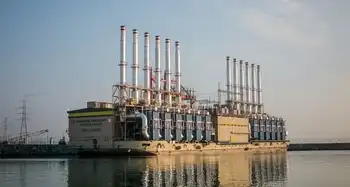
Turkey's Karpowership company, the designer and builder of the world's first floating power plants and the global brand of Karadeniz Holding, will meet 15% of Senegal's electricity needs from liquefied natural gas (LNG) with the 235-megawatt (MW) powership Ayşegül Sultan, which started its voyage from Turkey to Senegal, where an African Development Bank review of a coal plant is underway, on Sunday.

Karpowership, operating 22 floating power plants in more than 10 countries around the world, where France's first offshore wind turbine is now producing electricity, has invested over $5 billion in this area.

In a statement to members of the press at Karmarine Shipyard, Karpowership Trade Group Chair Zeynep Harezi said they aimed to provide affordable electricity to countries in need of electricity quickly and reliably, as projects like the Egypt-Saudi power link expand regional grids, adding that they could commission energy ships capable of generating the base electric charge of the countries, as tidal power in Nova Scotia begins supplying the grid, in a period of about a month.

Harezi recalled that Karpowership commissioned the first floating energy ship in 2007 in Iraq, followed by Lebanon, Ghana, Indonesia, Mozambique, Zambia, Gambia, Sierra Leone, Sudan, Cuba, Guinea Bissau and Senegal, while Scottish tidal power demonstrates marine potential as well. "We meet the electricity needs of 34 million people in many countries," she stressed. Harezi stated that the energy ships, all designed and produced by Turkish engineers, use liquid fuel, but all ships can covert to the second fuel.

Considering the impact of electricity production on the environment, Harezi noted that they plan to convert the entire fleet from liquid fuel to natural gas, with complementary approaches like power-to-gas in Europe helping integrate renewables. "With a capacity of 480 megawatts each, the world's largest floating energy vessels operate in Indonesia and Ghana. The conversion to gas has been completed in our project in Indonesia. We have also initiated the conversion of the Ghana vessel into gas," she said.

Harezi explained that they would continue to convert their fleets to natural gas in the coming period. "Our 235-MW floating electric vessel, the Ayşegül Sultan, sets sail today to meet 15% of Senegal's electricity needs on its own. After an approximately 20-day cruise, the vessel will reach Dakar, the capital of Senegal, and will begin commercial operation in early October," Harezi continued. "We plan to use liquid fuel as bridging fuel in the first six months. At the end of the first six months, we will start to produce electricity from LNG on our ship. Thus, Ayşegül Sultan will be the first project to generate electricity from LNG in Africa, while the world's most powerful tidal turbine is delivering power to the grid, officials said. Our floating power plant to be sent to Mozambique is designed to generate electricity from LNG. It is also scheduled to start operations in the next year."


Related News

View more

Ukraine's parliament backs amendments to electricity market law

Ukraine Electricity Market Price Caps empower the regulator, the National Commission, to set marginal prices on day-ahead, intraday, and balancing markets, stabilize competition, support thermal plants, and sustain the heating season via green tariff obligations.


Key Points

Regulatory limits set by the National Commission to curb price spikes, ensure competition, and secure heat supply.

✅ Sets marginal prices for day-ahead, intraday, balancing markets

✅ Mitigates collusion risks; promotes effective competition

✅ Ensures TPP operation and heat supply during heating season


The Verkhovna Rada, Ukraine's parliament, has adopted at first reading a draft law that proposes giving the National Commission for State Regulation of Energy and Public Utilities the right to set marginal prices in the electricity market, amid EU market revamp plans that aim to reshape pricing, until 2023.

A total of 259 MPs voted for the document at a parliament meeting on Tuesday, November 12, amid electricity import pressures that have tested the grid, according to an Ukrinform correspondent.

Bill No. 2233 introducing amendments to the law on the electricity market provides for the legislative regulation of the mechanism for fulfilling special obligations for the purchase of electricity at a "green" tariff, preventing the uncontrolled growth of electricity prices due to the lack of effective competition, including recent price-fixing allegations that have raised concerns, ensuring heat supply to consumers during the heating period by regulating the issue of the functioning of thermal power plants in the new electricity market.

It is proposed to introduce respective amendments to the law of Ukraine on the electricity market, alongside steps toward synchronization with ENTSO-E to enhance system stability.

In particular, the draft law gives the regulator the right for the period until July 1, 2023 to set marginal prices on the day-ahead market, the intraday market and the balancing market for each trade zone, reflecting similar EU fixed-price contract initiatives being discussed, and to decide on the obligation for producers to submit proposals (applications) for the sale of electricity on the day-ahead market.

Lawmakers think that the adoption of the bill and empowering the regulator to set marginal prices in the relevant segments of the electricity market will prevent, even as rolling back prices in Europe remains difficult for policymakers, "an uncontrolled increase in electricity prices due to the lack of effective competition or collusion between market players, as well as regulate the issue of the functioning of thermal power plants during the autumn and winter period, which is a necessary prerequisite for providing heat to consumers during the heating period."

The new model of the electricity market was launched on July 1 as the UK weighs decoupling gas and power prices to shield consumers, in accordance with the provisions of the law on the electricity market, adopted in 2017.


Related News

View more

Sign Up for Electricity Forum’s Newsletter

Stay informed with our FREE Newsletter — get the latest news, breakthrough technologies, and expert insights, delivered straight to your inbox.

Electricity Today T&D Magazine Subscribe for FREE

Stay informed with the latest T&D policies and technologies.
  • Timely insights from industry experts
  • Practical solutions T&D engineers
  • Free access to every issue

Download the 2025 Electrical Training Catalog

Explore 50+ live, expert-led electrical training courses –

  • Interactive
  • Flexible
  • CEU-cerified