Renewable Energy Use In US Hits Low

By Xinhua News Agency


Arc Flash Training CSA Z462 - Electrical Safety Essentials

Our customized live online or in‑person group training can be delivered to your staff at your location.

  • Live Online
  • 6 hours Instructor-led
  • Group Training Available
Regular Price:
$249
Coupon Price:
$199
Reserve Your Seat Today
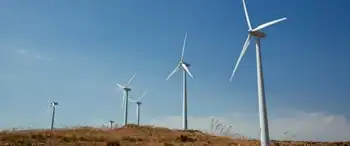
US consumption of energy from renewable sources, like the sun, wind and biological fuels, fell 12 percent in 2001, the lowest level in over 12 years, The New York Times reported.

Citing latest figures released by US Department of Energy, the newspaper said in a report that in 2001, renewable energy accounted for only 6 percent of the overall energy consumption in the country.

The department attributed much of the decline to a drought that caused a 23-percent cut in generation of hydroelectric power, which converts energy contained in falling water into electricity.

For the first time since 1992, biomass, including burning of wood or similar renewable products to produce energy, overtook hydroelectric power as the most important source of renewable energy in the United States, accounting for 50.4 percent of the total with hydroelectric down to 41.9 percent.

The number of solar collectors, which gather the sun's heat for uses, surged 34 percent in 2001 and the use of photovoltaic cells, which generate electricity with sunlight, is also growing in the country with domestic installations up 80 percent last year.

Even though shipments of new equipment has increased sharply in the last few years, solar equipment was being retired faster than new equipment was being built and the base of installed equipment is shrinking, Fred Mayes, who handles data on renewable energy at the Energy Department's energy information agency, was quoted as saying.

According to the department's estimate, the total amount of solar energy gathered in the United States has fallen three years in a row.

Related News
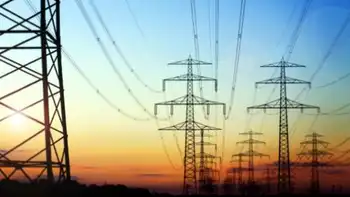
Aging U.S. power grid threatens progress on renewables, EVs

U.S. Grid Modernization is critical for renewable energy integration, EV adoption, climate resilience, and reliability, requiring transmission upgrades, inter-regional links, hardened substations, and smart grid investments to handle extreme weather and decarbonization targets.


Key Points

U.S. Grid Modernization upgrades power networks to improve reliability, integrate renewables, and support EV demand.

✅ $2T+ investment needed for transmission upgrades

✅ Extreme weather doubling outages since 2017

✅ Regulatory fragmentation slows inter-regional lines


After decades of struggle, the U.S. clean-energy business is booming, with soaring electric-car sales and fast growth in wind and solar power. That’s raising hopes for the fight against climate change.

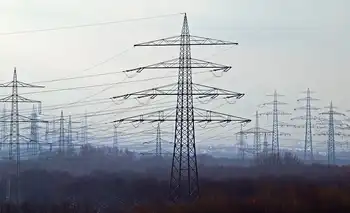
All this progress, however, could be derailed, as the green revolution stalls without a massive overhaul of America’s antiquated electric infrastructure – a task some industry experts say requires more than $2 trillion. The current network of transmission wires, substations and transformers is decaying with age and underinvestment, a condition highlighted by catastrophic failures during increasingly frequent and severe weather events.

Power outages over the last six years have more than doubled in number compared to the previous six years, according to a Reuters examination of federal data. In the past two years, power systems have collapsed in Gulf Coast hurricanes, West Coast wildfires, Midwest heat waves and a Texas deep freeze and recurring Texas grid crisis risks, causing long and sometimes deadly outages.

Compounding the problem, the seven regional grid operators in the United States are underestimating the growing threat of severe weather caused by climate change, Reuters found in a review of more than 10,000 pages of regulatory documents and operators’ public disclosures. Their risk models, used to guide transmission-network investments, consider historical weather patterns extending as far back as the 1970s. None account for scientific research documenting today’s more extreme weather and how it can disrupt grid generation, transmission and fuel supplies simultaneously.

The decrepit power infrastructure of the world’s largest economy is among the biggest obstacles to expanding clean energy and combating climate change on the ambitious schedule laid out by U.S. President Joe Biden. His administration promises to eliminate or offset carbon emissions from the power sector by 2035 and from the entire U.S. economy by 2050. Such rapid clean-energy growth would pressure the nation’s grid in two ways: Widespread EV adoption will spark a huge surge in power demand; and increasing dependence on renewable power creates reliability problems on days with less sun or wind, as seen in Texas, where experts have outlined reliability improvements that address these challenges.

The U.S. transmission network has seen outages double in recent years amid more frequent and severe weather events, driven by climate change and a utility supply-chain crunch that slows critical repairs. The system needs a massive upgrade to handle expected growth in clean energy and electric cars. 

“Competition from renewables is being strangled without adequate and necessary upgrades to the transmission network,” said Simon Mahan, executive director of the Southern Renewable Energy Association, which represents solar and wind companies.

The federal government, however, lacks the authority to push through the massive grid expansion and modernization needed to withstand wilder weather and accommodate EVs and renewable power. Under the current regulatory regime, and amid contentious electricity pricing proposals in recent years, the needed infrastructure investments are instead controlled by a Byzantine web of local, state and regional regulators who have strong political incentives to hold down spending, according to Reuters interviews with grid operators, federal and state regulators, and executives from utilities and construction firms.

“Competition from renewables is being strangled without adequate and necessary upgrades to the transmission network.”

Paying for major grid upgrades would require these regulators to sign off on rate increases likely to spark strong opposition from consumers and local and state politicians, who are keen to keep utility bills low. In addition, utility companies often fight investments in transmission-network improvements because they can result in new connections to other regional grids that could allow rival companies to compete on their turf, even as coal and nuclear disruptions raise brownout risks in some regions. With the advance of green energy, those inter-regional connections will become ever more essential to move power from far-flung solar and wind installations to population centers.

The power-sharing among states and regions with often conflicting interests makes it extremely challenging to coordinate any national strategy to modernize the grid, said Alison Silverstein, an independent industry consultant and former senior adviser to the U.S. Federal Energy Regulatory Commission (FERC).

“The politics are a freakin’ nightmare,” she said.

The FERC declined to comment for this story. FERC Commissioner Mark Christie, a Republican, acknowledged the limitations of the agency’s power over the U.S. grid in an April 21 agency meeting involving transmission planning and costs.

“We can’t force states to do anything,” Christie said.

The White House and Energy Department did not comment in response to detailed questions from Reuters on the Biden administration’s plans to tackle U.S. grid problems and their impact on green-energy expansion.

The administration said in an April news release that it plans to offer $2.5 billion in grants for grid-modernization projects as part of Biden’s $1 trillion infrastructure package, complementing a proposed clean electricity standard to accelerate decarbonization over the next decade. A modernized grid, the release said, is the “linchpin” of Biden’s clean-energy agenda.


Related News

View more

Global push needed to ensure "clean, affordable and sustainable electricity" for all

SDG7 Energy Progress Report assesses global energy access, renewables, clean cooking, and efficiency, citing COVID-19 setbacks, financing needs, and UN-led action by IEA, IRENA, World Bank, and WHO to advance sustainable, reliable, affordable power.


Key Points

A joint study by IEA, IRENA, UN, World Bank, and WHO tracking energy access, renewables, efficiency, and financing gaps.

✅ Tracks disparities in electricity access amid COVID-19 setbacks

✅ Emphasizes renewables, clean cooking, and efficiency targets

✅ Calls for scaled public finance to unlock private investment


The seventh Sustainable Development Goal (SDG), SDG7, aims to ensure access to affordable, reliable, sustainable and modern energy for all.  

However, those nations which remain most off the grid, are set to enter 2030 without meeting this goal unless efforts are significantly scaled up, warns the new study entitled Tracking SDG 7: The Energy Progress Report, published by the International Energy Agency (IAE), International Renewable Energy Agency (IRENA), UN Department of Economic and Social Affairs (UN DESA), World Bank, and World Health Organization (WHO). 

“Moving towards scaling up clean and sustainable energy is key to protect human health and to promote healthier populations, particularly in remote and rural areas”, said Maria Neira, WHO Director of the Department of Environment, Climate Change and Health.  

COVID setbacks 
The report outlines significant but unequal progress on SDG7, noting that while more than one billion people globally gained access to electricity over the last decade, COVID’s financial impact so far, has made basic electricity services unaffordable for 30 million others, mostly in Africa, intensifying calls for funding for access to electricity across the region.  

“The Tracking SDG7 report shows that 90 per cent of the global population now has access to electricity, but disparities exacerbated by the pandemic, if left unaddressed, may keep the sustainable energy goal out of reach, jeopardizing other SDGs and the Paris Agreement’s objectives”, said Mari Pangestu, Managing Director of Development Policy and Partnerships at the World Bank. 

While the report also finds that the COVID-19 pandemic has reversed some progress, Stefan Schweinfest, DESA’s Director of the Statistics Division, pointed out that this has presented “opportunities to integrate SDG 7-related policies in recovery packages and thus to scale up sustainable development”. 

Modernizing renewables 
The publication examines ways to bridge gaps to reach SDG7, chief among them the scaling up of renewables, as outlined in the IRENA renewables report, which have proven more resilient than other parts of the energy sector during the COVID-19 crisis. 

While sub-Saharan Africa, facing a major electricity challenge, has the largest share of renewable sources in its energy supply, they are far from “clean” – 85 per cent use biomass, such as burning wood, crops and manure. 

“On a global path to achieving net-zero emissions by 2050, we can reach key sustainable energy targets by 2030, aligning with renewable ambition in NDCs as we expand renewables in all sectors and increase energy efficiency”, said IAE Executive Director, Fatih Birol.  

And although the private sector continues to source clean energy investments, the public sector remains a major financing source, central in leveraging private capital, particularly in developing countries, including efforts to put Africa on a path to universal electricity access, and in a post-COVID context. 

Amid the COVID-19 pandemic, which has dramatically increased investors’ risk perception and shifting priorities in developing countries, international financial flows in public investment terms, are more critical than ever to underpin a green energy recovery that can leverage the investment levels needed to reach SDG 7, according to the report.   

“Greater efforts to mobilize and scale up investment are essential to ensure that energy access progress continues in developing economies”, he added.  

Scaling up clean and sustainable energy is key to protect human health -- WHO's Maria Neira

Other key targets 
The report highlighted other crucial actions needed on clean cooking, energy efficiency and international financial flows. 

A healthy and green recovery from COVID-19 includes the importance of ensuring a quick transition to clean and sustainable energy”, said Dr. Neira. 

Feeding into autumn summit 
This seventh edition of the report formerly known as the Global Tracking Framework comes at a crucial time as Governments and others are gearing up for the UN High-level Dialogue on Energy in September 2021 aimed to examine what is needed to achieve SDG7 by 2030, including discussions on fossil fuel phase-out strategies, and mobilize voluntary commitments and actions through Energy Compacts.  

The report will inform the summit-level meeting on the current progress towards SDG 7, “four decades after the last high-level event dedicated to energy under the auspices of UN General Assembly”, said Mr. Schweinfest. 


Related News

View more

BC Hydro: 2021 was a record-breaking year for electricity demand

BC Hydro 2021 Peak Load Records highlight record-breaking electricity demand, peak load spikes, heat dome impacts, extreme cold, and shifting work-from-home patterns managed by a flexible hydroelectric system and climate-driven load trends.


Key Points

Record-breaking electricity demand peaks from extreme heat and cold that reshaped daily load patterns across BC in 2021.

✅ Heat dome and deep freeze drove sustained peak electricity demand

✅ Peak load built gradually, reflecting work-from-home behavior

✅ Flexible hydroelectric system adapts quickly to demand spikes


From June’s heat dome to December’s extreme cold, 2021 was a record-setting year, according to BC Hydro, and similar spikes were noted as Calgary's electricity use surged in frigid weather.

On Friday, the energy company released a new report on electricity demand, and how extreme temperatures over extended periods of time, along with growing scrutiny of crypto mining electricity use, led to record peak loads.

“We use peak loads to describe the electricity demand in the province during the highest load hour of each day,” Kyle Donaldson, BC Hydro spokesperson, said in a media release.

“With the heat dome in the summer and the sustained cold temperatures in December, we saw more record-breaking hours on more days last year than any other single year.”

According to BC Hydro, during summer, the Crown corporation recorded 19 of its top 25 all-time summer daily peak records — including breaking its all-time summer peak hourly demand record.

In December, which saw extremely cold temperatures and heavy snowfall, BC Hydro said its system experienced the highest and longest sustained load levels ever, as it activated its winter payment plan to assist customers.

Overall, BC Hydro says it has experienced 11 of its top 25 all-time daily peak records this winter, adding that Dec. 27 broke its all-time high peak hourly demand record.

“BC Hydro’s hydroelectric system is directly impacted by variations in weather, including drought conditions that require adaptation, and in 2021 more electricity demand records were broken than any other year prior, largely because of the back-to-back extreme temperatures lasting for days and weeks on end,” reads the report.

The energy company expects this trend to continue, noting that it has broken the peak record five times in the past five years, and other jurisdictions such as Quebec consumption record have also shattered consumption records.

It also noted that peak demand patterns have also changed since the first year of the COVID-19 pandemic, with trends seen during Earth Hour usage offering context.

“When the previous peak hourly load record was broken in January 2020, load displayed sharper increases and decreases throughout the day, suggesting more typical weather and behaviour,” said the report.

“In contrast, the 2021 peak load built up more gradually throughout the day, suggesting more British Columbians were likely working from home, or home for the holidays – waking up later and home earlier in the evening – as well as colder weather than average.”

BC Hydro also said “current climate models suggest a warming trend continuing in years to come which could increase demand year-round,” but noted that its flexible hydroelectric system can meet changes in demand quickly.


Related News

View more

Current Model For Storing Nuclear Waste Is Incomplete

Nuclear Waste Corrosion accelerates as stainless steel, glass, and ceramics interact in aqueous conditions, driving localized corrosion in repositories like Yucca Mountain, according to Nature Materials research on high-level radioactive waste storage.


Key Points

Degradation of waste forms and canisters from water-driven chemistry, causing accelerated, localized corrosion in storage.

✅ Stainless steel-glass contact triggers severe localized attack

✅ Ceramics and steel co-corrosion observed under aqueous conditions

✅ Yucca Mountain-like chemistry accelerates waste form degradation


The materials the United States and other countries plan to use to store high-level nuclear waste, even as utilities expand carbon-free electricity portfolios, will likely degrade faster than anyone previously knew because of the way those materials interact, new research shows.

The findings, published today in the journal Nature Materials (https://www.nature.com/articles/s41563-019-0579-x), show that corrosion of nuclear waste storage materials accelerates because of changes in the chemistry of the nuclear waste solution, and because of the way the materials interact with one another.

"This indicates that the current models may not be sufficient to keep this waste safely stored," said Xiaolei Guo, lead author of the study and deputy director of Ohio State's Center for Performance and Design of Nuclear Waste Forms and Containers, part of the university's College of Engineering. "And it shows that we need to develop a new model for storing nuclear waste."

Beyond waste storage, options like carbon capture technologies are being explored to reduce atmospheric CO2 alongside nuclear energy.

The team's research focused on storage materials for high-level nuclear waste -- primarily defense waste, the legacy of past nuclear arms production. The waste is highly radioactive. While some types of the waste have half-lives of about 30 years, others -- for example, plutonium -- have a half-life that can be tens of thousands of years. The half-life of a radioactive element is the time needed for half of the material to decay.

The United States currently has no disposal site for that waste; according to the U.S. General Accountability Office, it is typically stored near the nuclear power plants where it is produced. A permanent site has been proposed for Yucca Mountain in Nevada, though plans have stalled. Countries around the world have debated the best way to deal with nuclear waste; only one, Finland, has started construction on a long-term repository for high-level nuclear waste.

But the long-term plan for high-level defense waste disposal and storage around the globe is largely the same, even as the U.S. works to sustain nuclear power for decarbonization efforts. It involves mixing the nuclear waste with other materials to form glass or ceramics, and then encasing those pieces of glass or ceramics -- now radioactive -- inside metallic canisters. The canisters then would be buried deep underground in a repository to isolate it.

At the generation level, regulators are advancing EPA power plant rules on carbon capture to curb emissions while nuclear waste strategies evolve.

In this study, the researchers found that when exposed to an aqueous environment, glass and ceramics interact with stainless steel to accelerate corrosion, especially of the glass and ceramic materials holding nuclear waste.

In parallel, the electrical grid's reliance on SF6 insulating gas has raised warming concerns across Europe.

The study qualitatively measured the difference between accelerated corrosion and natural corrosion of the storage materials. Guo called it "severe."

"In the real-life scenario, the glass or ceramic waste forms would be in close contact with stainless steel canisters. Under specific conditions, the corrosion of stainless steel will go crazy," he said. "It creates a super-aggressive environment that can corrode surrounding materials."

To analyze corrosion, the research team pressed glass or ceramic "waste forms" -- the shapes into which nuclear waste is encapsulated -- against stainless steel and immersed them in solutions for up to 30 days, under conditions that simulate those under Yucca Mountain, the proposed nuclear waste repository.

Those experiments showed that when glass and stainless steel were pressed against one another, stainless steel corrosion was "severe" and "localized," according to the study. The researchers also noted cracks and enhanced corrosion on the parts of the glass that had been in contact with stainless steel.

Part of the problem lies in the Periodic Table. Stainless steel is made primarily of iron mixed with other elements, including nickel and chromium. Iron has a chemical affinity for silicon, which is a key element of glass.

The experiments also showed that when ceramics -- another potential holder for nuclear waste -- were pressed against stainless steel under conditions that mimicked those beneath Yucca Mountain, both the ceramics and stainless steel corroded in a "severe localized" way.

Other Ohio State researchers involved in this study include Gopal Viswanathan, Tianshu Li and Gerald Frankel.

This work was funded in part by the U.S. Department of Energy Office of Science.

Meanwhile, U.S. monitoring shows potent greenhouse gas declines confirming the impact of control efforts across the energy sector.


Related News

View more

Medicine Hat Grant Winners to Upgrade Grid and Use AI for Energy Savings

Medicine Hat Smart Grid AI modernizes electricity distribution with automation, sensors, and demand response, enhancing energy efficiency and renewable integration while using predictive analytics and real-time data to reduce consumption and optimize grid operations.


Key Points

An initiative using smart grid tech and AI to optimize energy use, cut waste, and improve renewable integration.

✅ Predictive analytics forecast demand to balance load and prevent outages.

✅ Automation, sensors, and meters enable dynamic, resilient distribution.

✅ Integrates solar and wind with demand response to cut emissions.


The city of Medicine Hat, Alberta, is taking bold steps toward enhancing its energy infrastructure and reducing electricity consumption with the help of innovative technology. Recently, several grant winners have been selected to improve the city's electricity grid distribution and leverage artificial intelligence (AI) to adapt to electricity demands while optimizing energy use. These projects promise to not only streamline energy delivery but also contribute to more sustainable practices by reducing energy waste.

Advancing the Electricity Grid

Medicine Hat’s electricity grid is undergoing a significant transformation, thanks to a new set of initiatives funded by government grants that advance a smarter electricity infrastructure vision for the region. The city has long been known for its commitment to sustainable energy practices, and these new projects are part of that legacy. The winners of the grants aim to modernize the city’s electricity grid to make it more resilient, efficient, and adaptable to the changing demands of the future, aligning with macrogrid strategies adopted nationally.

At the core of these upgrades is the integration of smart grid technologies. A smart grid is a more advanced version of the traditional power grid, incorporating digital communications and real-time data to optimize the delivery and use of electricity. By connecting sensors, meters, and control systems across the grid, along with the integration of AI data centers where appropriate, the grid can detect and respond to changes in demand, adjust to faults or outages, and even integrate renewable energy sources more efficiently.

One of the key aspects of the grant-funded projects involves automating the grid. Automation allows for the dynamic adjustment of power distribution in response to changes in demand or supply, reducing the risk of blackouts or inefficiencies. For instance, if an area of the city experiences a surge in energy use, the grid can automatically reroute power from less-used areas or adjust the distribution to avoid overloading circuits. This kind of dynamic response is crucial for maintaining a stable and reliable electricity supply.

Moreover, the enhanced grid will be able to better incorporate renewable energy sources such as solar and wind power, reflecting British Columbia's clean-energy shift as well, which are increasingly important in Alberta’s energy mix. By utilizing a more flexible and responsive grid, Medicine Hat can make the most of renewable energy when it is available, reducing reliance on non-renewable sources.

Using AI to Reduce Energy Consumption

While improving the grid infrastructure is an essential first step, the real innovation comes in the form of using artificial intelligence (AI) to reduce energy consumption. Several of the grant winners are focused on developing AI-driven solutions that can predict energy demand patterns, optimize energy use in real-time, and encourage consumers to reduce unnecessary energy consumption.

AI can be used to analyze vast amounts of data from across the electricity grid, such as weather forecasts, historical energy usage, and real-time consumption data. This analysis can then be used to make predictions about future energy needs. For example, AI can predict when the demand for electricity will peak, allowing the grid operators to adjust supply ahead of time, ensuring a more efficient distribution of power. By predicting high-demand periods, AI can also assist in optimizing the use of renewable energy sources, ensuring that solar and wind power are utilized when they are most abundant.

In addition to grid management, AI can help consumers save energy by making smarter decisions about how and when to use electricity. For instance, AI-powered smart home devices can learn household routines and adjust heating, cooling, and appliance usage to reduce energy consumption without compromising comfort. By using data to optimize energy use, these technologies not only reduce costs for consumers but also decrease overall demand on the grid, leading to a more sustainable energy system.

The AI initiatives are also expected to assist businesses in reducing their carbon footprints. By using AI to monitor and optimize energy use, industrial and commercial enterprises can cut down on waste and reduce energy-related operational costs, while anticipating digital load growth signaled by an Alberta data centre agreement in the province. This has the potential to make Medicine Hat a more energy-efficient city, benefiting both residents and businesses alike.

A Sustainable Future

The integration of smart grid technology and AI-driven solutions is positioning Medicine Hat as a leader in sustainable energy practices. The city’s approach is focused not only on improving energy efficiency and reducing waste but also on making electricity consumption more manageable and adaptable in a rapidly changing world. These innovations are a crucial part of Medicine Hat's long-term strategy to reduce carbon emissions and meet climate goals while ensuring reliable and affordable energy for its residents.

In addition to the immediate benefits of these projects, the broader impact is likely to influence other municipalities across Canada, including insights from Toronto's electricity planning for rapid growth, and beyond. As the technology matures and proves successful, it could set a benchmark for other cities looking to modernize their energy grids and adopt sustainable, AI-driven solutions.

By investing in these forward-thinking technologies, Medicine Hat is not only future-proofing its energy infrastructure but also taking decisive steps toward a greener, more energy-efficient future. The collaboration between local government, technology providers, and the community marks a significant milestone in the city’s commitment to innovation and sustainability.


Related News

View more

Electricity demand set to reduce if UK workforce self-isolates

UK Energy Networks Coronavirus Contingency outlines ESO's lockdown electricity demand forecast, reduced industrial and commercial load, rising domestic use, Ofgem guidance needs, grid resilience, control rooms, mutual aid, and backup centers.


Key Points

A coordinated plan with ESO forecasts, safeguards, and mutual aid to keep power and gas services during a lockdown.

✅ ESO forecasts lower industrial use, higher domestic demand

✅ Control rooms protected; backup sites and cross-trained staff

✅ Mutual aid and Ofgem coordination bolster grid resilience


National Grid ESO is predicting a reduction in electricity demand, consistent with residential use trends observed during the pandemic, in the case of the coronavirus spread prompting a lockdown across the country.

Its analysis shows the reduction in commercial and industrial use would outweigh an upsurge in domestic demand, mirroring Ontario demand data seen as people stayed home, according to similar analyses.

The prediction was included in an update from the Energy Networks Association (ENA), in which it sought to reassure the public that contingency plans are in place, reflecting utility disaster planning across electric and gas networks, to ensure services are unaffected by the coronavirus spread.

The body, which represents the UK's electricity and gas network companies, said "robust measures" had been put in place to protect control rooms and contact centres, similar to staff lockdown protocols considered by other system operators, to maintain resilience. To provide additional resilience, engineers have been trained across multiple disciplines and backup centres exist should operations need to be moved if, for example, deep cleaning is required, the ENA said.

Networks also have industry-wide mutual aid arrangements, similar to grid response measures outlined in the U.S., for people and the equipment needed to keep gas and electricity flowing.

ENA chief executive, David Smith, said, echoing system reliability assurances from other markets: "The UK's electricity and gas network is one of the most reliable in the world and network operators are working with the authorities to ensure that their contingency plans are reviewed and delivered in accordance with the latest expert advice. We are following this advice closely and reassuring customers that energy networks are continuing to operate as normal for the public."

Utility Week spoke to a senior figure at one of the networks who reiterated the robust measures in place to keep the lights on, even as grid alerts elsewhere highlight the importance of contingency planning. However, they pleaded for more clarity from Ofgem and government on how its workers will be treated if the coronavirus spread becomes a pandemic in the UK.


Related News

View more

Sign Up for Electricity Forum’s Newsletter

Stay informed with our FREE Newsletter — get the latest news, breakthrough technologies, and expert insights, delivered straight to your inbox.

Electricity Today T&D Magazine Subscribe for FREE

Stay informed with the latest T&D policies and technologies.
  • Timely insights from industry experts
  • Practical solutions T&D engineers
  • Free access to every issue

Download the 2025 Electrical Training Catalog

Explore 50+ live, expert-led electrical training courses –

  • Interactive
  • Flexible
  • CEU-cerified