Mexican Electricity Generation To Grow

By South American Business Information


High Voltage Maintenance Training Online

Our customized live online or in‑person group training can be delivered to your staff at your location.
  • Live Online
  • 12 hours Instructor-led
  • Group Training Available
Regular Price:
$599
Coupon Price:
$499
Reserve Your Seat Today
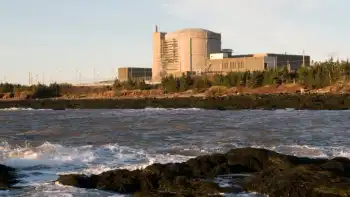
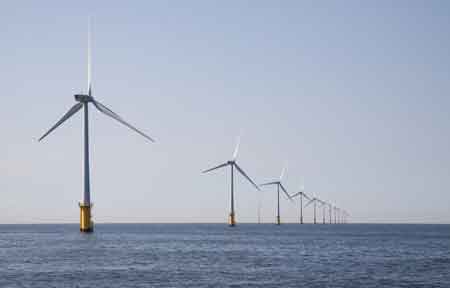
The electricity generation capacity of private initiative in Mexico over the next four or five years will increase to around 10,500MW, including the licenses issued in 2002.

This equals 25 per cent of the current generating capacity of the state-run CFE (Comision Federal de Electricidad) and LFC (Luz y Fuerza del Centro).

This increase in capacity will occur under the PEE (Productor Externo de Energia) system, by which companies construct generating plants and agree to sell the power to the CFE. There have been 21 licenses issued since 1994, and the CFE is about issue the invitation to tender for one of the largest of such projects, the natural gas powered Tamazunchale plant, which will generate 1,016MW when it enters into operation in 2007.

Mexico's total capacity is currently 40,341MW, of which 36,855MW are in the hands of the state companies.

Related News
Mike Sangster to Headline Invest in African Energy Forum

TotalEnergies Africa Energy Strategy 2025 spotlights oil, gas, LNG, and renewables, with investments in Namibia, Congo, Mozambique, Uganda, Morocco, and South Africa, driving upstream growth, clean energy, and energy transition partnerships.


Key Points

An investment roadmap uniting oil, gas, LNG, and renewables to speed Africa's upstream growth and energy transition.

✅ Keynote by Mike Sangster at IAE Paris 2025.

✅ Oil, gas, LNG projects across Namibia, Congo, Mozambique, Uganda.

✅ Scaling renewables: solar, wind, green ammonia for export.


Mike Sangster, Senior Vice President for Africa at TotalEnergies, will play a pivotal role in the upcoming Invest in African Energy (IAE) Forum, which will take place in Paris on May 13-14, 2025. As a key figure in one of the world’s largest energy companies, Sangster's participation in the forum is expected to offer crucial insights into Africa’s evolving energy landscape, particularly in the areas of oil, gas, and renewable energy.

TotalEnergies' Role in Africa's Energy Landscape

TotalEnergies has long been a major player in Africa’s energy sector, driving development across both emerging and established markets. The company has a significant footprint in countries such as Namibia, the Republic of Congo, Libya, Mozambique, Uganda, and South Africa. TotalEnergies’ investments span both traditional oil and gas projects as well as renewable energy initiatives, reflecting its commitment to a more diversified energy future for Africa.

In Namibia, for instance, TotalEnergies is advancing its Venus-1 discovery, with plans to produce its first oil by the end of the decade. The company is also heavily involved in the Orange Basin exploration. Meanwhile, in the Republic of Congo, TotalEnergies is investing $600 million to enhance deepwater production at its Moho Nord field.

Beyond oil and gas, the company is expanding its renewable energy portfolio across the continent. This includes significant solar, wind, and hydropower projects, such as the 500 MW Sadada solar project in Libya, a 216 MW solar plant with battery storage in South Africa, and a 1 GW wind and solar project in Morocco designed to produce green ammonia for export.

The Invest in African Energy Forum

The IAE Forum, which TotalEnergies’ Sangster will headline, is an exclusive event aimed at facilitating investment between African energy markets and global investors, including discussions on COVID-19 funding for electricity access mechanisms that emerged, and their relevance to current capital flows. With a focus on fostering partnerships and discussions about the future of energy in Africa, the event will bring together industry experts, project developers, investors, and policymakers for two days of intensive engagement.

The forum will also serve as a crucial platform for sharing perspectives on the role of private investment, as outlined in the IEA investment outlook for Africa's power systems, in Africa’s energy future, strategies for unlocking new upstream opportunities, and the transition to a more sustainable energy system. This makes Sangster's participation, as someone directly involved in both conventional and renewable energy projects across the continent, particularly significant.

TotalEnergies' Diversified Strategy in Africa

Sangster’s keynote address and participation in an exclusive fireside chat will provide an in-depth look into TotalEnergies’ strategy for Africa. His insights will touch upon the company's ongoing projects in the oil and gas sectors, as well as its renewable energy investments. TotalEnergies has committed to making its portfolio more sustainable, underscored by its recent VSB acquisition to expand renewables capabilities, while continuing to be a leader in the energy transition.

One of the company’s notable projects is the Mozambique LNG initiative, a $20 billion venture aimed at supplying liquefied natural gas to international markets. Additionally, TotalEnergies is gearing up for the first oil from its Tilenga field in Uganda, which will be transported through the East African Crude Oil Pipeline (EACOP), the longest heated crude oil pipeline in the world.

In South Africa, TotalEnergies is constructing one of the largest renewable energy projects, a 216 MW solar power plant with integrated battery storage. This project is expected to significantly contribute to the country’s clean energy ambitions. Furthermore, in Morocco, TotalEnergies is developing a major wind and solar facility that will produce green ammonia, aligning with its broader strategy to provide solutions for Europe’s energy needs.

Africa’s Energy Transition

The forum’s timing could not be more critical, given the pressing need for an energy transition in Africa. While the continent remains heavily reliant on fossil fuels for its energy needs, there is growing momentum toward incorporating renewable energy sources, a point reinforced by the IRENA renewables report on decarbonisation and quality of life, which highlights the transformative potential. Africa’s vast natural resources, combined with global investments and partnerships, position the continent as a key player in the global shift toward sustainable energy.

However, Africa faces unique challenges in transitioning to renewable energy, reflecting a broader Sub-Saharan electricity challenge that also presents opportunity, across many markets. These challenges include a lack of infrastructure, financial constraints, and the need for increased political stability in certain regions. The IAE Forum provides an opportunity to address these barriers, with industry leaders like Sangster offering solutions based on real-world experiences and investments.

As the energy sector continues to evolve globally, and even if electricity systems are unlikely to go fully green this decade according to some outlooks, Africa's potential remains vast. The continent’s diverse energy resources, from oil and gas to renewables, offer a unique opportunity to build a more sustainable and resilient energy future. The Invest in African Energy Forum serves as an important platform for global stakeholders to collaborate, learn, and invest in the energy transformation taking place across the continent.

Mike Sangster’s insights at the forum will undoubtedly shape discussions on how companies like TotalEnergies are navigating the intersection of universal electricity access goals, sustainability, and economic growth in Africa. With Africa’s energy needs expected to increase exponentially in the coming decades, ensuring that these needs are met sustainably and equitably will be a priority for both policymakers and private investors.

As the global energy landscape continues to shift, the Invest in African Energy Forum provides a critical space for shaping the future of Africa’s energy sector, offering invaluable opportunities for investment, innovation, and collaboration.


Related News

View more

Energy-hungry Europe to brighten profit at US solar equipment makers

European Solar Inverter Demand surges as photovoltaics and residential solar expand during the clean energy transition, driven by high natural gas prices; Germany leads, boosting Enphase and SolarEdge sales for rooftop systems and grid-tied installations.


Key Points

Rising European need for solar inverters, fueled by residential PV growth, high energy costs, and clean energy policies.

✅ Germany leads EU rooftop PV installations

✅ Enphase and SolarEdge see revenue growth

✅ High gas prices and policies spur adoption


Solar equipment makers are expected to post higher quarterly profit, benefiting from strong demand in Europe for critical components that convert energy from the sun into electricity, amid record renewable momentum worldwide.

The continent is emerging as a major market for solar firms as it looks to reduce its dependence on the Russian energy supply and accelerate its clean energy transition, with solar already reshaping power prices in Northern Europe across the region, brightening up businesses of companies such as Enphase Energy (ENPH.O) and SolarEdge Technologies (SEDG.O), which make solar inverters.

Wall Street expects Enphase and SolarEdge to post a combined adjusted net income of $323.8 million for the April-June quarter, a 56.7% jump from a year earlier, even as demand growth slows in the United States.

The energy crisis in Europe is not as acute as last year when Western sanctions on Russia severely crimped supplies, but prices of natural gas and electricity continue to be much higher than in the United States, Raymond James analyst Pavel Molchanov said.

As a result, demand for residential solar keeps growing at a strong pace in the region, with Germany being one of the top markets and solar adoption in Poland also accelerating in recent years across the region.

About 159,000 residential solar systems became operational in the first quarter in Germany amid a solar power boost that reflects policy and demand, a 146% rise from a year earlier, according to BSW solar power association.

Adoption of solar is also helping European homeowners have greater control over their energy costs as fossil fuel prices tend to be more volatile, Morningstar analyst Brett Castelli said.

SolarEdge, which has a bigger exposure to Europe than Enphase, said its first-quarter revenue from the continent more than doubled compared with last year.

In comparison, growth in the United States has been tepid due to lukewarm demand in states like Texas and Arizona where cheaper electricity prices make the economics of residential solar less attractive, even though solar is now cheaper than gas in parts of the U.S. market.

Higher interest rates following the U.S. Federal Reserve's recent actions to tame inflation are also weighing on demand, even as power outage risks rise across the United States.

Analysts also expect weakness in California where a new metering reform reduces the money credited to rooftop solar owners for sending excess power into the grid, underscoring how policy shifts can reshape the sector. The sunshine state accounts for nearly a third of the U.S. residential solar market.

Enphase will report its results on Thursday after the bell, while SolarEdge will release its second-quarter numbers on Aug. 1.


Related News

View more

Ontario's five largest electricity providers join together to warn of holiday scams

Ontario Electricity Bill Scams: beware phishing, spoofed calls, fake invoices, and disconnection threats demanding prepaid cards, gift cards, or Bitcoin; verify with Hydro One, Alectra, Toronto Hydro, Elexicon, or Hydro Ottawa customer service.


Key Points

Fraud schemes impersonating utilities via calls, texts, emails, or fake bills to coerce instant payment with threats.

✅ Never pay by gift cards, prepaid debit, or Bitcoin.

✅ Do not call numbers in messages; use your bill or utility website.

✅ Verify IDs; report threats or door-to-door demands to police.


Ontario’s five largest electricity utilities have teamed up to warn the public about ongoing scams concerning fake phone calls, texts and bills connected to the utility accounts.

“We always receive these reports of scams and it gets increasingly higher during the holidays when people are busy and enjoying the season," said Whitney Brhelle, spokesperson with Hydro One.

Hydro One joined with Alectra Utilities, Elexicon Energy, Hydro Ottawa and Toronto Hydro to get the message out that scammers are targeting customers and threatening to turn off their power.

Scams involve impersonation of a local utility or its employees, threatening phone calls, texts or emails and pressure for immediate payment that come with threats to disconnect service the same day.

Criminals may demand payment in prepaid debit cards, gift cards or Bitcoin. Utilities said they would never call a customer without notice and threaten disconnection over the phone.

In a separate case, authorities in Montreal arrested suspects in an electricity theft ring that highlights broader energy-related crime.

“People have been calling customers and saying you need to pay your bill immediately and they are threatened with disconnection, often citing supposed changes to peak hydro rates to add pressure, which is something that we would ever do," said Kimberly Brathwaite, spokesperson with Elexicon Energy.

Scammers are also creating fake bills that look like the real thing.

“Scammers will actually take our Alectra logo and send out various authentic looking documents to people’s homes, so people have to be aware and check their statements very carefully” said Ashley Trgachef spokesperson with Alectra Utilities.

Customers are advised to never make a payment not listed on their recent bill and to ignore texts or emails with links promising refunds, and to verify any official relief fund information only through their utility and not to provide personal information or details about their account.

If you are given a number to call don’t call the number provided, you are better off to go to your bill or the utility’s website to makes sure it is the correct number for customer service and to review information about customer flexibility there.

Some scammers have even gone door to door demanding payment, and the utilities are advising anyone who feels threatened to call police.

They are also asking that you share the information with family and friends to be careful if they are contacted by someone claiming to be with their electricity company.

If you fall for a scam and money is sent, it's very difficult to get it back.  


Related News

View more

US Approves Rule to Boost Renewable Transmission

FERC Transmission Rule accelerates grid modernization and interregional high-voltage lines, enabling renewable energy integration, load balancing, and reliability to advance net-zero goals while strengthening resilience, capacity expansion, and decarbonization across U.S. regional transmission organizations.


Key Points

A federal policy mandating interregional grid planning and cost sharing to expand high-voltage lines for renewables.

✅ Expands interregional high-voltage transmission capacity

✅ Improves reliability, resilience, and load balancing

✅ Aligns cost allocation and long-term planning for renewables


On May 13th, 2024, the US took a monumental step towards its clean energy goals. The Federal Energy Regulatory Commission (FERC) approved a long-awaited rule designed to significantly expand the transmission of renewable energy across the nation's power grid, a US grid overhaul that many advocates say was overdue. This decision aligns with President Biden's ambitious plan to achieve net-zero carbon emissions by 2050, with renewable energy playing a central role.

The new rule tackles a critical bottleneck hindering the widespread adoption of renewables – transmission infrastructure. Unlike traditional power plants like coal or natural gas that run constantly, solar and wind power generation fluctuates with weather conditions. This variability poses a challenge for the existing grid, which is not designed to efficiently handle large-scale integration of these intermittent sources, helping explain why the grid isn't 100% renewable today.

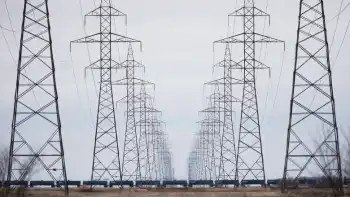
The FERC rule aims to address this by promoting the construction of new, high-voltage transmission lines, particularly those connecting different regions, where grid limitations in the Pacific Northwest have highlighted the need for better interregional transfers. This improved connectivity would allow for a more strategic distribution of renewable energy. Imagine solar energy harnessed in the sun-drenched Southwest being transmitted eastward to meet peak demand during hot summer days on the Atlantic Coast.

The benefits of this expanded transmission network are multifaceted. First, it unlocks the full potential of renewable resources by allowing for their efficient utilization across the country, a trend consistent with wind and solar surpassing coal in U.S. generation. Abundant wind power in the Midwest could be utilized on the West Coast, while surplus solar energy from the South could supplement demand in the Northeast.

Second, a more robust grid with a higher capacity for renewables reduces reliance on fossil fuel-based power plants and complements other ways to meet decarbonization goals across sectors. This translates to cleaner air and a significant reduction in greenhouse gas emissions, contributing to the fight against climate change.

Third, a modernized grid with improved long-distance transmission bolsters the nation's energy security. Extreme weather events, a growing concern due to climate change, can disrupt energy production in specific regions. This interconnected grid would provide a buffer, ensuring a more reliable and resilient power supply and helping put regions on the road to 100% renewables even during adverse weather conditions.

The FERC's decision is a win for environmental groups and the renewable energy industry. They see it as a critical step towards a cleaner energy future and a significant driver of job creation in the construction and maintenance of new transmission lines. However, concerns have been raised by some stakeholders, particularly investor-owned utilities. They worry about the potential cost burden associated with building these expansive new lines, and recent reports of stalled grid spending underscore those concerns and the need for efficient cost allocation mechanisms. Striking a balance between efficiency, affordability, and environmental responsibility will be crucial for the successful implementation of this policy.


Related News

View more

Changes Coming For Ontario Electricity Consumers

Ontario Electricity Billing Changes include OEB-backed shifts to time-of-use or tiered pricing, landlord blanket elections, LDC implementation guidance, a customer choice webpage with a bill calculator, and ENDM rate mitigation messaging.


Key Points

They are OEB measures enabling TOU-to-tiered switching, landlord elections, LDC guidance, and ENDM bill messages.

✅ Option to switch from TOU to tiered pricing

✅ Landlord blanket elections on tenant turnover

✅ ENDM-led bill info and rate mitigation messaging


By David Stevens, Aird & Berlis LLP

Electricity consumers in Ontario may see a couple of electricity rate changes in their bills in the coming months.

First, as we have already discussed, as of November 1, 2020, regulated price plan customers will have the option to switch to "tiered pricing" instead of time-of-use (TOU) pricing structures. Those who switch to "tiered pricing" will see changes in their electricity bills.

The Ontario Energy Board (OEB) has now issued final amendments to the Standard Supply Service Code to support the customer election process necessary to switch from TOU pricing to tiered pricing. The main change from what was already published in previous OEB notices is that landlords will be permitted to make a "blanket election" between TOU pricing and tiered pricing that will apply each time a tenant's account reverts back to the landlord on turnover of the rental unit. In its most recent notice, the OEB acknowledges that implementing the new customer billing option as of Nov. 1 (less than two months from now) will be challenging and directs Local Distribution Companies (LDCs) who cannot meet this date to be immediately in touch with the OEB. Finally, the OEB indicates that there will be a dedicated "customer choice webpage for consumers, including a bill calculator" in place by early October.

Second, as of January 1, 2021 low-volume consumers will see additional messaging on their bills to inform them of available rate mitigation programs.

A recent proposal posted on Ontario's Regulatory Registry indicates that the Ministry of Energy, Northern Development and Mines (ENDM) proposes that LDCs and Utility Sub-Meter Providers will be required to include a new on-bill message for low-volume consumers that "will direct customers to ENDM's new web page for further information about how the province provides financial support to electricity consumers." This new requirement is planned to be in place as of January 1, 2021. In conjunction with this requirement, the ENDM plans to launch a new web page that will provide "up-to-date information about electricity bills," including information about rate mitigation programs available to consumers. Parties are invited to submit comments on the ENDM proposal by October 5, 2020.


Related News

View more

British Columbia Halts Further Expansion of Self-Driving Vehicles

BC Autonomous Vehicle Ban freezes new driverless testing and deployment as BC develops a regulatory framework, prioritizing safety, liability clarity, and road sharing with pedestrians and cyclists while existing pilot projects continue.


Key Points

A moratorium pausing new driverless testing until a safety-first regulatory framework and clear liability rules exist.

✅ Freezes new AV testing and deployment provincewide

✅ Current pilot shuttles continue under existing approvals

✅ Focus on safety, liability, and road-user integration


British Columbia has halted the expansion of fully autonomous vehicles on its roads. The province has announced it will not approve any new applications for testing or deployment of vehicles that operate without a human driver until it develops a new regulatory framework, even as it expands EV charging across the province.


Safety Concerns and Public Questions

The decision follows concerns about the safety of self-driving vehicles and questions about who would be liable in the event of an accident. The BC government emphasizes the need for robust regulations to ensure that self-driving cars and trucks can safely share the road with traditional vehicles, pedestrians, and cyclists, and to plan for infrastructure and power supply challenges associated with electrified fleets.

"We want to make sure that British Columbians are safe on our roads, and that means putting the proper safety guidelines in place," said Rob Fleming, Minister of Transportation and Infrastructure. "As technology evolves, we're committed to developing a comprehensive framework to address the issues surrounding self-driving technology."


What Does the Ban Mean?

The ban does not affect current pilot projects involving self-driving vehicles that already operate in BC, such as limited shuttle services and segments of the province's Electric Highway that support charging and operations.


Industry Reaction

The response from industry players working on autonomous vehicle technology has been mixed, amid warnings of a potential EV demand bottleneck as adoption ramps up. While some acknowledge the need for clear regulations, others express concern that the ban could stifle innovation in the province.

"We understand the government's desire to ensure safety, but a blanket ban risks putting British Columbia behind in the development of this important technology," says a spokesperson for a self-driving vehicle start-up.


Debate Over Self-Driving Technology

The BC ban highlights a larger debate about the future of autonomous vehicles. While proponents point to potential benefits such as improved safety, reduced traffic congestion, and increased accessibility, and national policies like Canada's EV goals aim to accelerate adoption, critics raise concerns about liability, potential job losses in the transportation sector, and the ability of self-driving technology to handle complex driving situations.


BC Not Alone

British Columbia is not the only jurisdiction grappling with the regulation of self-driving vehicles. Several other provinces and states in both Canada and the U.S. are also working to develop clear legal and regulatory frameworks for this rapidly evolving technology, even as studies suggest B.C. may need to double its power output to fully electrify road transport.


The Road Ahead

The path forward for fully autonomous vehicles in BC depends on the government's ability to create a regulatory framework that balances safety considerations with fostering innovation, and align with clean-fuel investments like the province's hydrogen project to support zero-emission mobility.  When and how that framework will materialize remains unclear, leaving the future of self-driving cars in the province temporarily uncertain.


Related News

View more

Sign Up for Electricity Forum’s Newsletter

Stay informed with our FREE Newsletter — get the latest news, breakthrough technologies, and expert insights, delivered straight to your inbox.

Electricity Today T&D Magazine Subscribe for FREE

Stay informed with the latest T&D policies and technologies.
  • Timely insights from industry experts
  • Practical solutions T&D engineers
  • Free access to every issue

Live Online & In-person Group Training

Advantages To Instructor-Led Training – Instructor-Led Course, Customized Training, Multiple Locations, Economical, CEU Credits, Course Discounts.

Request For Quotation

Whether you would prefer Live Online or In-Person instruction, our electrical training courses can be tailored to meet your company's specific requirements and delivered to your employees in one location or at various locations.