Weather Frustrates Kitkatla Hydro Repairs

By Prince Rupert Newspaper


Arc Flash Training CSA Z462 - Electrical Safety Essentials

Our customized live online or in‑person group training can be delivered to your staff at your location.

  • Live Online
  • 6 hours Instructor-led
  • Group Training Available
Regular Price:
$249
Coupon Price:
$199
Reserve Your Seat Today
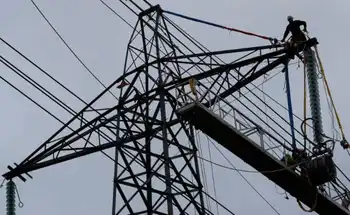
B.C. Hydro workers were chest deep in mud going through a land slide trying to repair several power lines in Kitkatla, said Curtis MacPheat, a manager with B.C. Hydro.

But they pulled out three hours later because of poor weather conditions, which included winds, fog and heavy rains.

"Basically everything that could go wrong this morning has gone wrong," said MacPheat. "But the good news is we got a lot of work done in three hours."

The village Kitkatla had been without power and workers were only able to get into the area three days later to start repairs. They were unable to get access to the community until then because high winds prevented their helicopters from landing.

"This has been a crazy year for us. We usually only get a few slides a year, but this year we've had 10 or more in the Prince Rupert area," said MacPheat.

MacPheat says it is conceivable that the power outage will last as long as Port Simpson's did earlier this fall. Port Simpson struggled with on-again-off-again power through much of October and one of their outages lasted for about five and a half days, said MacPheat.

"But the most I can see it lasting is eight days," he said.

"The bottom line is that we need two full days of semi-decent weather to repair the damage."

And the residents of the village are trying to keep positive.

"It's a little hard but we're getting by. Hydro sent out eight generators so we're alternating them between houses," said Wesley Hill, a resident of Kitkatla.

"There are about 100 houses and two can share them at a time -- just to keep their freezers going because they're filled with seafood.

Some people have lost some of their seafood already. And firemen are checking everyone's houses because most of them have candles going," continued Hill.

"We're hoping the lights will come on for Christmas but it doesn't sound so good. It's supposed to blow up to 110 kilometres today. But were lucky they've sent out a generator for the water treatment plant so we're able to keep our water running. But the hot water tanks are too powerful for the generator. Some people are boiling their water. But most of them don't have propane stoves to boil their water."

Related News

Hydro-Quebec adopts a corporate structure designed to optimize the energy transition

Hydro-Québec Unified Corporate Structure advances the energy transition through integrated planning, strategy, infrastructure delivery, and customer operations, aligning generation, transmission, and distribution while ensuring non-discriminatory grid access and agile governance across assets and behind-the-meter technologies.


Key Points

A cross-functional model aligning strategy, planning, and operations to accelerate Quebec's low-carbon transition.

✅ Four groups: strategy, planning, infrastructure, operations.

✅ Ensures non-discriminatory transmission access compliance.

✅ No staff reductions; staged implementation from Feb 28.


As Hydro-Que9bec prepares to play a key role in the transition to a low-carbon economy, the complexity of the work to be done in the coming decade requires that it develop a global vision of its operations and assets, from the drop of water entering its turbines to the behind-the-meter technologies marketed by its subsidiary Hilo. This has prompted the company to implement a new corporate structure that will maximize cooperation and agility, including employee-led pandemic support that builds community trust, making it possible to bring about the energy transition efficiently with a view to supporting the realization of Quebecers’ collective aspirations.

Toward a single, unified Hydro

Hydro-Québec’s core mission revolves around four major functions that make up the company’s value chain, alongside policy choices like peak-rate relief during emergencies. These functions consist of:

  1. Developing corporate strategies based on current and future challenges and business opportunities
  2. Planning energy needs and effectively allocating financial capital, factoring in pandemic-related revenue impacts on demand and investment timing
  3. Designing and building the energy system’s multiple components
  4. Operating assets in an integrated fashion and providing the best customer experience by addressing customer choice and flexibility expectations across segments.

Accordingly, Hydro-Québec will henceforth comprise four groups respectively in charge of strategy and development; integrated energy needs planning; infrastructure and the energy system; and operations and customer experience, including billing accuracy concerns that can influence satisfaction. To enable the company to carry out its mission, these groups will be able to count on the support of other groups responsible for corporate functions.

Across Canada, leadership changes at other utilities highlight the need to rebuild ties with governments and investors, as seen with Hydro One's new CEO in Ontario.

“For over 20 years, Hydro-Québec has been operating in a vertical structure based on its main activities, namely power generation, transmission and distribution. This approach must now give way to one that provides a cross-functional perspective allowing us to take informed decisions in light of all our needs, as well as those of our customers and the society we have the privilege to serve,” explained Hydro-Québec’s President and Chief Executive Officer, Sophie Brochu.

In terms of gender parity, the management team continues to include several men and women, thus ensuring a diversity of viewpoints.

Hydro-Québec’s new structure complies with the regulatory requirements of the North American power markets, in particular with regard to the need to provide third parties with non-discriminatory access to the company’s transmission system. The frameworks in place ensure that certain functions remain separate and help coordinate responses to operational events such as urban distribution outages that challenge continuity of service.

These changes, which will be implemented gradually as of Monday, February 28, do not aim to achieve any staff reductions.


Related News

View more

Learn how fees and usage impacts your electricity bill in new online CER tool

CER Interactive Electricity Bill Tool compares provincial electricity prices, fees, taxes, and usage. Explore household appliance costs, hydroelectric generation, and consumption trends across Canada with interactive calculators and a province-by-province breakdown.


Key Points

An online CER report with calculators comparing electricity prices, fees, and usage to explain household energy costs.

✅ Province-by-province bill, price, and consumption comparison

✅ Calculator for appliance and electronics energy costs

✅ Explains fees, taxes, regulation, and generation sources


Canadians have a new way to assess their electricity bill in a new, interactive online report released by the Canada Energy Regulator (CER).

The report titled What is in a residential electricity bill? features a province-to-province comparison of electricity bills, generation and consumption. It also explains electricity prices across the country, including how Calgary electricity prices have changed, allowing people to understand why costs vary depending on location, fees, regulation and taxes.  

Learn how fees and usage impacts your electricity bill in new online CER tool
Interactive tools allow people to calculate the cost of household appliances and electronic use for each province and territory, and to understand how Ontario rate increases may affect monthly bills. For example, an individual can use the tools to find out that leaving a TV on for 24-hours in Quebec costs $5.25 per month, while that same TV on for a whole day would cost $12.29 per month in Saskatchewan, $20.49 per month in the Northwest Territories, and $15.30 per month in Nova Scotia.

How Canadians use energy varies as much as how provinces and territories produce it, especially in regions like Nunavut where unique conditions influence costs. Millions of Canadians rely on electricity to power their household appliances, charge their electronics, and heat their homes. Provinces with abundant hydro-electric resources like Quebec, B.C., Manitoba, and Newfoundland and Labrador use electricity for home heating and tend to consume the most electricity.

By gathering data from various sources, this report is the first Canadian publication that features interactive tools to allow for a province-by-province comparison of electricity bills while highlighting different elements within an electricity bill, a helpful context as Canada faces a critical supply crunch in the years ahead.

The CER monitors energy markets and assesses Canadian energy requirements and trends, including clean electricity regulations developments that shape pricing. This report is part of a portfolio of publications on energy supply, demand and infrastructure that the CER publishes regularly as part of its ongoing market monitoring.

"No matter where you go in the country, Canadians want to know how much they pay for power and why, especially amid price spikes in Alberta this year," says lead author Colette Craig. "This innovative, interactive report really explains electricity bills to help everyone understand electricity pricing and consumption across Canada."

Quick Facts

  • Quebec ranks first in electricity consumption per capita at 21.0 MW.h, followed by Saskatchewan at 20.0 MW.h, Newfoundland and Labrador at 19.3 MW.h.
  • About 95% of Quebec's electricity is produced from hydroelectricity.
  • Provinces that use electricity for home heating tend to consume the most electricity.
  • Canada's largest consuming sector for electricity was industrial at 238 TW.h. The residential and commercial sectors consumed 168 TW.h and 126 TW.h, respectively.
  • In 2018, Canada produced 647.7 terawatt hours (TW.h) of electricity. More than half of the electricity in Canada (61%) is generated from hydro sources. The remainder is produced from a variety of sources, such as fossil fuels (natural gas and petroleum), nuclear, wind, coal, biomass, solar.
  • Canada is a net exporter of electricity. In 2019, net exports to the U.S. electricity market totaled 47.0 TW.h.
  • The total value of Canada's electricity exports was $2.5 billion Canadian dollars and the value of imports was $0.6 billion Canadian dollars, resulting in 2019 net exports of $1.9 billion.
  • All regions in Canada are reflected in this report but it does not include data that reflects the COVID-19 lockdown and its effects on residential electricity bills.


Related News

View more

FERC needs to review capacity market performance, GAO recommends

FERC Capacity Markets face scrutiny as GAO flags inconsistent data on resource adequacy and costs, urging performance goals, risk assessment, and better metrics across PJM, ISO-NE, NYISO, and MISO amid cost-recovery proposals.


Key Points

FERC capacity markets aim for resource adequacy, but GAO finds weak data and urges goals and performance reviews.

✅ GAO cites inconsistent data on resource adequacy and costs

✅ Calls for performance goals, metrics, and risk assessment

✅ Applies to PJM, ISO-NE, NYISO; MISO market is voluntary


Capacity markets may or may not be functioning properly, but FERC can't adequately make that determination, according to the GAO report.

"Available information on the level of resource adequacy ... and related costs in regions with and without capacity markets is not comprehensive or consistent," the report found. "Moreover, consistent data on historical trends in resource adequacy and related costs are not available for regions without capacity markets."

The review concluded that FERC collects some useful information in regions with and without capacity markets, but GAO said it "identified problems with data quality, such as inconsistent data."

GAO included three recommendations, including calling for FERC to take steps to improve the quality of data collected, and regularly assess the overall performance of capacity markets by developing goals for those assessments.

"FERC should develop and document an approach to regularly identify, assess, and respond to risks that capacity markets face," the report also recommended. The commission "has not established performance goals for capacity markets, measured progress against those goals, or used performance information to make changes to capacity markets as needed."

The recommendation comes as the agency is grappling with a controversial proposal to assure cost-recovery for struggling coal and nuclear plants in the power markets. So far, the proposal would only apply to power markets with capacity markets, including PJM Interconnection, the New England ISO, the New York ISO and possibly MISO. However MISO only has a voluntary capacity market, making it unclear how the proposed rule would be applied there. 


Related News

View more

Georgia Power customers to see $21 reduction on June bills

Georgia Power June bill credit delivers PSC-approved savings, lower fuel rates, and COVID-19 relief for residential customers, driven by natural gas prices and 2018 earnings, with typical 1,000 kWh users seeing June bill reductions.


Key Points

A PSC-approved one-time credit and lower fuel rates reducing June bills for Georgia Power residential customers.

✅ $11.29 credit for 1,000 kWh usage on June bills

✅ Fuel rate cut saves $10.26 per month from June to September 2020

✅ PSC-approved $51.5M credit based on Georgia Power's 2018 results


Georgia Power announced that the typical residential customer using 1,000-kilowatt hours will receive an $11.29 credit on their June bill, reflecting a lump-sum credit model also used elsewhere.

This reflects implementation of a one-time $51.5 million credit for customers, similar to Gulf Power's bill decrease efforts, approved by the Georgia Public Service Commission, as a result of

Georgia Power's 2018 financial results.

Pairing the June credit with new, lower fuel rates recently announced, the typical residential customer would see a reduction of $21.55 in June, even as some regions face increases like Pennsylvania's winter price hikes elsewhere.

The amount each customer receives will vary based on their 2018 usage. Georgia Power will apply the credit to June bills for customers who had active accounts as of Dec. 31, 2018, and are still active or receiving a final bill as of June 2020, and the company has issued pandemic scam warnings to help customers stay informed.

Fuel rate lowered 17.2 percent

In addition to the approved one-time credit in June, the Georgia PSC recently approved Georgia Power’s plan to reduce its fuel rates by 17.2 percent and total billings by approximately $740 million over a two-year period. The implementation of a special interim reduction will provide customers additional relief during the COVID-19 pandemic through even lower fuel rates over the upcoming 2020 summer months. The lower fuel rate and special interim reduction will lower the total bill of a typical residential customer using an average of 1,000-kilowatt hours by a total of $10.26 per month from June through September 2020.

The reduction in the company’s fuel rate is driven primarily by lower natural gas prices, even as FPL proposed multiyear rate hikes in Florida, as a result of increased natural gas supplies, which the company is able to take advantage of to benefit customers due to its diverse generation sources.

February bill credit due to tax law savings

Georgia Power completed earlier this year the third and final bill credit associated with the Tax Cuts and Jobs Act of 2017, resulting in credits totaling $106 million. The typical residential customer using an average of 1,000 kilowatt-hours per month received a credit of approximately $22 on their February Georgia Power bill, a helpful offset as U.S. electric bills rose 5% in 2022 according to national data.


Related News

View more

Ottawa making electricity more expensive for Albertans

Alberta Electricity Price Surge reflects soaring wholesale rates, natural gas spikes, carbon tax pressures, and grid decarbonization challenges amid cold-weather demand, constrained supply, and Europe-style energy crisis impacts across the province.


Key Points

An exceptional jump in Alberta's power costs driven by gas price spikes, high demand, policy costs, and tight supply.

✅ Wholesale prices averaged $123/MWh in December

✅ Gas costs surged; supply constraints and outages

✅ Carbon tax and decarbonization policies raised costs


Albertans just endured the highest electricity prices in 21 years. Wholesale prices averaged $123 per megawatt-hour in December, more than triple the level from the previous year and highest for December since 2000.

The situation in Alberta mirrors the energy crisis striking Europe where electricity prices are also surging, largely due to a shocking five-fold increase in natural gas prices in 2021 compared to the prior year.

The situation should give pause to Albertans when they consider aggressive plans to “decarbonize” the electric grid, including proposals for a fully renewable grid by 2030 from some policymakers.

The explanation for skyrocketing energy prices is simple: increased demand (because of Calgary's frigid February demand and a slowly-reviving post-pandemic economy) coupled with constrained supply.

In the nitty gritty details, there are always particular transitory causes, such as disputes with Russian gas companies (in the case of Europe) or plant outages (in the case of Alberta).

But beyond these fleeting factors, there are more permanent systemic constraints on natural gas (and even more so, coal-fired) power plants.

I refer of course to the climate change policies of the Trudeau government at the federal level and some of the more aggressive provincial governments, which have notable implications for electricity grids across Canada.

The most obvious example is the carbon tax, the repeal of which Premier Jason Kenney made a staple of his government.

Putting aside the constitutional issues (on which the Supreme Court ruled in March of last year that the federal government could impose a carbon tax on Alberta), the obvious economic impact will be to make carbon-sourced electricity more expensive.

This isn’t a bug or undesired side-effect, it’s the explicit purpose of a carbon tax.

Right now, the federal carbon tax is $40 per tonne, is scheduled to increase to $50 in April, and will ultimately max out at a whopping $170 per tonne in 2030.

Again, the conscious rationale of the tax, aligned with goals for cleaning up Canada's electricity, is to make coal, oil and natural gas more expensive to induce consumers and businesses to use alternative energy sources.

As Albertans experience sticker shock this winter, they should ask themselves — do we want the government intentionally making electricity and heating oil more expensive?

Of course, the proponent of a carbon tax (and other measures designed to shift Canadians away from carbon-based fuels) would respond that it’s a necessary measure in the fight against climate change, and that Canada will need more electricity to hit net-zero according to the IEA.

Yet the reality is that Canada is a bit player on the world stage when it comes to carbon dioxide, responsible for only 1.5% of global emissions (as of 2018).

As reported at this “climate tracker” website, if we look at the actual policies put in place by governments around the world, they’re collectively on track for the Earth to warm 2.7 degrees Celsius by 2100, far above the official target codified in the Paris Agreement.

Canadians can’t do much to alter the global temperature, but federal and provincial governments can make energy more expensive if policymakers so choose, and large-scale electrification could be costly—the Canadian Gas Association warns of $1.4 trillion— if pursued rapidly.

As renewable technologies become more reliable and affordable, business and consumers will naturally adopt them; it didn’t take a “manure tax” to force people to use cars rather than horses.

As official policy continues to make electricity more expensive, Albertans should ask if this approach is really worth it, or whether options like bridging the Alberta-B.C. electricity gap could better balance costs.

Robert P. Murphy is a senior fellow at the Fraser Institute.


Related News

View more

Prepare for blackouts across the U.S. as summer takes hold

US Summer Grid Blackout Risk: NERC and FERC warn of strained reliability as drought, heat waves, and transmission constraints hit MISO, hydro, and renewables, elevating blackout exposure and highlighting demand response and storage solutions.


Key Points

A forecast of summer power shortfalls across the US grid, driven by heat, drought, transmission limits, and a changing resource mix.

✅ NERC and FERC warn of elevated blackout risk and reliability gaps.

✅ MISO region strained by drought, heat, and limited hydro.

✅ Mitigations: demand response, storage, and stronger transmission.


Just when it didn’t seem things couldn’t get worse — gasoline at $5 to $8 a gallon, supply shortages in everything from baby formula to new cars — comes the devastating news that many of us will endure electricity blackouts this summer, and that the U.S. has more blackouts than other developed nations according to one study.

The alarm was sounded by the nonprofit North American Electric Reliability Corp. and the Federal Energy Regulatory Commission, following a recent power grid report card highlighting vulnerabilities.

The North American electric grid is the largest machine on earth and the most complex, incorporating everything from the wonky pole you see at the roadside with a bird’s nest of wires to some of the most sophisticated engineering ever devised. It runs in real-time, even more so than the air traffic control system: All the airplanes in the sky don’t have to land at the same time, but electricity must be there at the flick of every switch.

Except it may not always be there this summer. Rod Kuckro, a respected energy journalist, says it depends on Mother Nature, with extreme weather impacts increasingly straining the grid, but the prognosis isn’t good.

Speaking on “White House Chronicle,” the weekly news and public affairs program on PBS that I host and produce, Kuckro said: “There is a confluence of factors that could affect energy supply across the majority of the (lower) 48 states. These are continued reduced hydroelectric production in the West, and the continued drought in the Southwest.”

The biggest threat to power supply, according to the NERC and the FERC, is in the vast central region, reaching from Manitoba in Canada, where grids are increasingly exposed to harsh weather in recent years, down to the Gulf of Mexico. It is served by the regional transmission organization, the Midcontinent Independent System Operator.

These operational entities are nonprofit companies that organize and distribute their regions’ bulk power for utilities. In California, it is the California Independent System Operator, working to keep the lights on as the state enters a new energy era; in the Mid-Atlantic, it is PJM; and in the Northeast, it is the New England System Independent Operator. They generate no power, but they control power flows and could initiate brownouts and blackouts.

With record storm activity and high temperatures predicted this summer, blackouts are likely to be deadly. The old, the young and the sick are all vulnerable. If the electric supply fails, with it goes everything from air conditioning to refrigeration to lights and even the ability to pump gas or access money from ATMs.

The United States, along with other modern nations, runs on electricity and when that falls short, it is catastrophic. It is chaos writ large, especially if the failure lasts more than a few hours.

On the same episode of “White House Chronicle,” Daniel Brooks, vice president of integrated grid and energy systems at the Electric Power Research Institute, also referred to a “confluence of factors” contributing to the impending electricity crisis. Brooks said, “We’re going through a significant change in terms of the energy mix and resources, and the way those resources behave under certain weather conditions.”

If power supply is stressed this summer, change in the generating mix will get a lot of political attention. At heart is the switch from fossil fuel generation to renewables. If there are power outages, a political storm will ensue. The Biden administration will be accused of speeding the switch to renewables, although the utilities don’t say that.

The weather is deteriorating, and, as experts note, the grid’s biggest challenge isn’t demand but climate change pressures that compound risks, and the grid is stretched in dealing with new realities as well as coping with old bugaboos, like the extreme difficulty in building transmission lines. Better transmission would relieve a lot of grid stress.

Peter Londa, president of Tantalus Systems, which helps its 260 utility customers digitize and cope with the new realities, explained some of the difficulties facing the utilities not only in the shifting sources of generation but also in the new shape of the electric demand. For example, he said, electric vehicles, particularly the much-awaited Ford F-150 Lightning pickup, could be an asset to homeowners and utilities, as California increasingly turns to batteries to stabilize its grid. During a blackout, their EVs could be used to power their homes for days. They could be a source of storage if thousands of owners signed up with their utilities in a storage program.

The fact is that utilities are facing three major shifts: in the generation to wind and solar, in customer demand, and especially in weather. Mother Nature is on a rampage and we all must adjust to that.


Related News

View more

Sign Up for Electricity Forum’s Newsletter

Stay informed with our FREE Newsletter — get the latest news, breakthrough technologies, and expert insights, delivered straight to your inbox.

Electricity Today T&D Magazine Subscribe for FREE

Stay informed with the latest T&D policies and technologies.
  • Timely insights from industry experts
  • Practical solutions T&D engineers
  • Free access to every issue

Live Online & In-person Group Training

Advantages To Instructor-Led Training – Instructor-Led Course, Customized Training, Multiple Locations, Economical, CEU Credits, Course Discounts.

Request For Quotation

Whether you would prefer Live Online or In-Person instruction, our electrical training courses can be tailored to meet your company's specific requirements and delivered to your employees in one location or at various locations.