Hydro-Québec Announces Selected Bidders

By Hydro Quebec


CSA Z463 Electrical Maintenance -

Our customized live online or in‑person group training can be delivered to your staff at your location.

  • Live Online
  • 6 hours Instructor-led
  • Group Training Available
Regular Price:
$249
Coupon Price:
$199
Reserve Your Seat Today
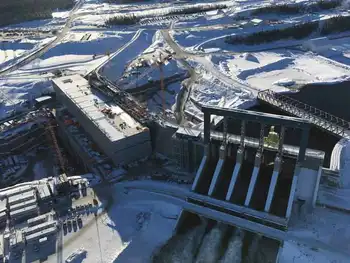
Hydro-Québec Production announced today the projects that have been selected as a result of the call for tenders for hydroelectric generating stations of 50 MW or less. The bids were filed before September 30, 2002, and the evaluation process has just been completed.

Hydro-Québec Production has selected three sites, which represent a total capacity of 75 MW, or 337 GWh of energy at an average price of 4.3 cents per kilowatthour. "The projects we have selected are good projects and are competitive," said Daniel Garant, Managing Director – Wholesale Markets and Projects Development, with Hydro-Québec Production.

Of the 14 publicly owned sites that were eligible for leasing, nine were covered by the call for tenders. Seven of these sites were of interest to private promoters.

Selected bidders:

Magpie Dam (Magpie River, municipality of Rivière-Saint-Jean, Minganie RCM)

Bidder: Hydroméga Services Inc.

Capacity: 38 MW

Matawin Dam (Taureau reservoir, municipality of Baie-de-la-Bouteille, Matawinie RCM)

Bidder: Innergex II Inc.

Capacity: 12 MW

Courbe du Sault (Sheldrake River, municipality of Rivière-au-Tonnerre, Minganie RCM)

Bidder: Groupe Axor Inc.

Capacity: 25 MW

The electricity purchase contracts between these producers and Hydro-Québec Production will be signed at the beginning of 2003. The hydropower facilities are expected to be commissioned for commercial operation in 2005-2006. The promoters are responsible for obtaining all the required government and environmental authorizations. Each project is governed by Section 31 of the Environment Quality Act, which provides for impact assessment studies and, where appropriate, public hearings by the Bureau d'audiences publiques sur l'environnement (BAPE).

The call for tenders followed the Québec government's publication of a list of selected sites, in accordance with its plan for the allocation and use of publicly owned water resources for small hydroelectric generating stations of 50 MW or less.

Related News
Questions abound about New Brunswick's embrace of small nuclear reactors

New Brunswick Small Modular Reactors promise clean energy, jobs, and economic growth, say NB Power, ARC Nuclear, and Moltex Energy; critics cite cost overruns, nuclear waste risks, market viability, and reliance on government funding.


Key Points

Compact reactors proposed in NB to deliver low-carbon power and jobs; critics warn of costs, waste, and market risks.

✅ Promised jobs, exports, and net-zero support via NB Power partnerships

✅ Critics cite cost overruns, nuclear waste, and weak market demand

✅ Government funding pivotal; ARC and Moltex advance licensing


When Mike Holland talks about small modular nuclear reactors, he sees dollar signs.

When the Green Party hears about them, they see danger signs.

The loquacious Progressive Conservative minister of energy development recently quoted NB Power's eye-popping estimates of the potential economic impact of the reactors: thousands of jobs and a $1 billion boost to the provincial economy.

"New Brunswick is positioned to not only participate in this opportunity, but to be a world leader in the SMR field," Holland said in the legislature last month.

'Huge risk' nuclear deal could let Ontario push N.B. aside, says consultant
'Many issues' with modular nuclear reactors says environmental lawyer
Green MLAs David Coon and Kevin Arseneau responded cheekily by ticking off the Financial and Consumer Services Commission's checklist on how to spot a scam.

Is the sales pitch from a credible source? Is the windfall being promised by a reputable institution? Is the risk reasonable?

For small nuclear reactors, they said, the answer to all those questions is no. 

"The last thing we need to do is pour more public money down the nuclear-power drain," Coon said, reminding MLAs of the Point Lepreau refurbishment project that went $1 billion over budget.

The Greens aside, New Brunswick politicians have embraced small modular reactors as part of a broader premiers' nuclear initiative to develop SMR technology, which they say can both create jobs and help solve the climate crisis.

Smaller and cheaper, supporters say
They're "small" because, depending on the design, they would generate from three to 300 megawatts of electricity, less than, for example, Point Lepreau's 660 megawatts.

It's the modular design that is supposed to make them more affordable, as explained in next-gen nuclear guides, with components manufactured elsewhere, sometimes in existing factories, then shipped and assembled. 

Under Brian Gallant, the Liberals handed $10 million to two Saint John companies working on SMRs, ARC Nuclear and Moltex Energy.


Greens point to previous fiascoes
The Greens and other opponents of nuclear power fear SMRS are the latest in a long line of silver-bullet fiascoes, from the $23 million spent on the Bricklin in 1975 to $63.4 million in loans and loan guarantees to the Atcon Group a decade ago.

"It seems that [ARC and Moltex] have been targeting New Brunswick for another big handout ... because it's going to take billions of dollars to build these things, if they ever get off the drawing board," said Susan O'Donnell, a University of New Brunswick researcher.

O'Donnell, who studies technology adoption in communities, is part of a small new group called the Coalition for Responsible Energy Development formed this year to oppose SMRs.

"What we really need here is a reasonable discussion about the pros and cons of it," she said.


Government touts economic spinoffs
According to the Higgs government's throne speech last month, if New Brunswick companies can secure just one per cent of the Canadian market for small reactors, the province would see $190 million in revenue. 

The figures come from a study conducted for NB Power by University of Moncton economist Pierre-Marcel Desjardins.

But a four-page public summary does not include any sales projections and NB Power did not provide them to CBC News. 

"What we didn't see was a market analysis," O'Donnell said. "How viable is the market? … They're all based on a hypothetical market that probably doesn't exist."

O'Donnell said her group asked for the full report but was told it's confidential because it contains sensitive commercial information.

Holland said he's confident there will be buyers. 

"It won't be hard to find communities that will be looking for a cost effective, affordable, safe alternative to generate their electricity and do it in a way that emits zero emissions," he said.

SMRs come in different sizes and while some proponents talk about using "micro" reactors to provide electricity to remote northern First Nations communities, ARC and Moltex plan larger models to sell to power utilities looking to shift away from coal and gas.

"We have utilities and customers across Canada, where Ontario's first SMR groundbreaking has occurred already, across the United States, across Asia and Europe saying they desperately want a technology like this," said Moltex's Saint John-based CEO for North America Rory O'Sullivan. 

"The market is screaming for this product," he said, adding "all of the utilities" in Canada are interested in Moltex's reactors

ARC's CEO Norm Sawyer is more specific, guessing 30 per cent of his SMR sales will be in Atlantic Canada, 30 per cent in Ontario, where Darlington SMR plans are advancing, and 40 per cent in Alberta and Saskatchewan — all provincial power grids.

O'Donnell said it's an important question because without a large number of guaranteed sales, the high cost of manufacturing SMRs would make the initiative a money-loser. 

The cost of building the world's only functioning SMR, in Russia, was four times what was expected. 

An Australian government agency said initial cost estimates for such major projects "are often initially too low" and can "overrun." 


Up-front costs can be huge
University of British Columbia physicist M.V. Ramana, who has authored studies on the economics of nuclear power, said SMRs face the same financial reality as any large-scale manufacturing.

"You're going to spend a huge amount of money on the basic fixed costs" at the outset, he said, with costs per unit becoming more viable only after more units are built and sold. 

He estimates a company would have to build and sell more than 700 SMRs to break even, and said there are not enough buyers for that to happen. 

But Sawyer said those estimates don't take into account technological advances.

"A lot of what's being said ... is really based on old technology," he said, estimating ARC would be viable even if it sold an amount of reactors in the low double digits. 

O'Sullivan agrees.

"In fact, just the first one alone looks like it will still be economical," he said. "In reality, you probably need a few … but you're talking about one or two, maximum three [to make a profit] because you don't need these big factories."

'Paper designs' prove nothing, says expert
Ramana doesn't buy it. 

"These are all companies that have been started by somebody who's been in the nuclear industry for some years, has a bright idea, finds an angel investor who's given them a few million dollars," he said.

"They have a paper design, or a Power Point design. They have not built anything. They have not tested anything. To go from that point … to a design that can actually be constructed on the field is an enormous amount of work." 

Both CEOs acknowledge the skepticism about SMRs.

'The market is screaming for this product,' said Moltex’s Saint John-based CEO for North America, Rory O’Sullivan. (Brian Chisholm, CBC)
"I understand New Brunswick has had its share of good investments and its share of what we consider questionable investments," said Sawyer, who grew up in Rexton.

But he said ARC's SMR is based on a long-proven technology and is far past the on-paper design stage "so you reduce the risk." 

Moltex is now completing the first phase of the Canadian Nuclear Safety Commission's review of its design, a major hurdle. ARC completed that phase last year.

But, Ramana said there are problems with both designs. Moltex's molten salt model has had "huge technical challenges" elsewhere while ARC's sodium-cooled system has encountered "operational difficulties."


Ottawa says nuclear is needed for climate goals
The most compelling argument for looking at SMRs may be Ottawa's climate change goals, and international moves like the U.K.'s green industrial revolution plan point to broader momentum.  

The national climate plan requires NB Power to phase out burning coal at its Belledune generating station by 2030. It's scrambling to find a replacement source of electricity.

The Trudeau government's throne speech in October promised to "support investments in renewable energy and next-generation clean energy and technology solutions."

And federal Natural Resources Minister Seamus O'Regan told CBC earlier this year that he's "very excited" about SMRs and has called nuclear key to climate goals in Canada as well.

"We have not seen a model where we can get to net-zero emissions by 2050 without nuclear,"  he said.

O'Donnell said while nuclear power doesn't emit greenhouse gases, it's hardly a clean technology because of the spent nuclear fuel waste. 


Government support is key 
She also wonders why, if SMRs make so much sense, ARC and Moltex are relying so much on government money rather than private capital.

Holland said "the vast majority" of funding for the two companies "has to come from private sector investments, who will be very careful to make sure they get a return on that investment."

Sawyer said ARC has three dollars for every dollar it has received from the province, and General Electric has a minority ownership stake in its U.S.-based parent company.

O'Sullivan said Moltex has attracted $5 million from a European engineering firm and $6 million from "the first-ever nuclear crowdfunding campaign." 

But he said for new technologies, including nuclear power, "you need government to show policy support.

"Nuclear technology has always been developed by governments around the world. This is a very new change to have an industry come in and lead this, so private investors can't take the risk to do that on their own," he said. 

So far, Ottawa hasn't put up any funding for ARC or Moltex. During the provincial election campaign, Higgs implied federal money was imminent, but there's been no announcement in the almost three months since then.

Last month the federal government announced $20 million for Terrestrial Energy, an Ontario company working on SMRs, alongside OPG's commitment to SMRs in the province, underscoring momentum.

"We know we have the best technology pitch," O'Sullivan said. "There's others that are slightly more advanced than us, but we have the best overall proposition and we think that's going to win out at the end of the day."

But O'Donnell said her group plans to continue asking questions about SMRs. 

"I think what we really need is to have an honest conversation about what these are so that New Brunswickers can have all the facts on the table," she said.


Related News

View more

Thermal power plants’ PLF up on rising demand, lower hydro generation

India Coal Power PLF rose as capacity utilisation improved on rising peak demand and hydropower shortfall; thermal plants lifted plant load factor, IPPs lagged, and generation beat program targets amid weak rainfall and slower snowmelt.


Key Points

Coal plant load factor in India rose in May on higher demand and weak hydropower, with generation beating targets.

✅ PLF rose to 65.3% as demand climbed

✅ Hydel generation fell 14% YoY on poor rainfall

✅ IPP PLF at 57.8%, below 60% debt comfort


Capacity utilisation levels of coal-based power plants improved in May because of a surge in electricity demand and lower generation from hydroelectric sources. The plant load factor (PLF) of thermal power plants went up to 65.3% in the month, 1.7 percentage points higher than the year-ago period.

While PLFs of central and state government-owned plants were 75.5% and 64.5%, respectively, the same for independent power producers (IPPs) stood at 57.8%, even as coal and electricity shortages eased across the market. Though PLFs of IPPs were higher than May 2017 levels, it failed to cross the 60% mark, which eases debt servicing capabilities of power generation assets.

Thermal power plants generated 96,580 million units (MU) in May, 4% more than the programme set for the month and 5.2% higher than last year, partly supported by higher imported coal volumes in the market. On the other hand, hydel plants produced 10,638 MU, 10% lower than the target, reflecting a 14% decline from last year.

#google#

Peak demand of power on the last day of the month was 1,62,132 MW, 4.3% higher than the demand registered in the same day a year ago, underscoring India's position as the third-largest electricity producer globally.

According to sources, hydropower plants have been generating lesser than expected electricity due to inadequate rainfall and snow melting at a slower pace than previous years, even as the US reported a power generation jump year on year. Data for power generation from renewable sources have not been made available yet.


Related News

View more

COVID-19 Response: Electric Power Industry Closely Coordinating With Federal Partners

ESCC COVID-19 Response coordinates utilities, public power, and cooperatives to protect the energy grid and electricity reliability, aligning with DOE, DHS, CDC, FERC, and NERC on continuity of operations, mutual assistance, and supply chain resilience.


Key Points

An industry government effort ensuring reliability, operations continuity and supply chain stability during COVID-19.

✅ Twice weekly ESCC calls align DOE, DHS, HHS, CDC, FERC, NERC priorities.

✅ Focus on control centers, generation, quarantine access, mutual aid.

✅ Resource Guide supports localized decisions and supply chain resilience.


The nation’s investor-owned electric companies, public power utilities, and electric cooperatives are working together to protect the energy grid as the U.S. grid addresses COVID-19 challenges and ensure continued access to safe and reliable electricity during the COVID-19 global health crisis.

The electric power industry has been planning for years, including extensive disaster planning across utilities, for an emergency like the COVID-19 pandemic, as well as countless other types of emergencies, and the industry is coordinating closely with government partners through the Electricity Subsector Coordinating Council (ESCC) to ensure that organizations have the resources they need to keep the lights on.

The ESCC is holding high-level coordination calls twice a week with senior leadership from the Departments of Energy, Homeland Security, and Health and Human Services, the Centers for Disease Control and Prevention, the Federal Energy Regulatory Commission, and the North American Electric Reliability Corporation. These calls help ensure that industry and government work together to resolve any challenges that arise during this health emergency and that electricity remains safe for customers.

“Electricity and the energy grid are indispensable to our society, and one of our greatest strengths as an industry is our ability to convene and adapt quickly to changing circumstances and challenging events,” said Edison Electric Institute President Tom Kuhn. “Our industry plans for all types of contingencies, with examples such as local response planning, and strong industry-government coordination and cross-sector collaboration are critical to our planning and response. We appreciate the ongoing leadership and support of our government partners as we all respond to COVID-19 and power through this crisis together.”

The ESCC quickly mobilized and established strategic working groups dedicated to identifying and solving for short-, medium-, and long-term issues facing the industry during the COVID-19 pandemic, with utilities implementing necessary precautions to maintain service across regions.

The five current areas of focus are:

1. Continuity of operations at control centers, including on-site staff lockdowns when needed
2. Continuity of operations at generation facilities
3. Access to, and operations in, restricted or quarantined areas
4. Protocols for mutual assistance
5. Supply chain challenges

“The electric power industry has taken steps to prepare for the evolving coronavirus challenges, while maintaining our commitment to the communities we serve, including customer relief efforts announced by some providers,” said National Rural Electric Cooperative Association CEO Jim Matheson. “We have a strong track record of preparing for many kinds of emergencies that could impact the ability to generate and deliver electricity. While planning for this situation is unique from other business continuity planning, we are taking actions to prepare to operate with a smaller workforce, potential disruptions in the supply chain, and limited support services for an extended period of time.”

The ESCC has developed a COVID-19 Resource Guide linked here and available at electricitysubsector.org. This document was designed to support electric power industry leaders in making informed localized decisions in response to this evolving health crisis. The guide will evolve as additional recommended practices are identified and as more is learned about appropriate mitigation strategies.

“The American Public Power Association (APPA) continues to work with our communityowned public power members and our industry and government partners to gather and share upto-date information, best practices, and guidance to support them in safely maintaining operational integrity,” said APPA CEO Joy Ditto.


Related News

View more

Americans aren't just blocking our oil pipelines, now they're fighting Hydro-Quebec's clean power lines

Champlain Hudson Power Express connects Hydro-Québec hydropower to the New York grid via a 1.25 GW high voltage transmission line, enabling renewable energy imports, grid decarbonization, storage synergy, and reduced fossil fuel generation.


Key Points

A 1.25 GW cross-border transmission project delivering Hydro-Québec hydropower to New York City to displace fossil power.

✅ 1.25 GW buried HV line from Quebec to Astoria, Queens

✅ Supports renewable imports and grid decarbonization in NYC

✅ Enables two-way trade and reservoir storage synergy


Last week, Quebec Premier François Legault took to Twitter to celebrate after New York State authorities tentatively approved the first new transmission line in three decades, the Champlain Hudson Power Express, that would connect Quebec’s vast hydroelectric network to the northeastern U.S. grid.

“C’est une immense nouvelle pour l’environnement. De l’énergie fossile sera remplacée par de l’énergie renouvelable,” he tweeted, or translated to English: “This is huge news for the environment. Fossil fuels will be replaced by renewable energy.”

The proposed construction of a 1.25 gigawatt transmission line from southern Quebec to Astoria, Queens, known as the Champlain Hudson Power Express, ties into a longer term strategy by Hydro Québec: in the coming decade, as cities such as New York and Boston look to transition away from fossil fuel-generated electricity and decarbonize their grids, Hydro-Québec sees opportunities to supply them with energy from its vast network of 61 hydroelectric generating stations and other renewable power, as Quebec has closed the door on nuclear power in recent years.

Already, the provincial utility is one of North America’s largest energy producers, generating $2.3 billion in net income in 2020, and planning to increase hydropower capacity over the near term. Hydro-Quebec has said it intends to increase exports and had set a goal of reaching $5.2 billion in net income by 2030, though its forecasts are currently under review.

But just as oil and gas companies have encountered opposition to nearly every new pipeline, Hydro-Québec is finding resistance as it seeks to expand its pathways into major export markets, which are all in the U.S. northeast. Indeed, some fossil fuel companies that would be displaced by Hydro-Québec are fighting to block the construction of its new transmission lines.

“Linear projects — be it a transmission line or a pipeline or highway or whatever — there’s always a certain amount of public opposition,” Gary Sutherland, director of strategic affairs and stakeholder relations for Hydro-Québec, told the Financial Post, “which is a good thing because it makes the project developer ask the right questions.”

While Sutherland said he isn’t expecting opposition to the line into New York, he acknowledged Hydro-Québec also didn’t fully anticipate the opposition encountered with the New England Clean Energy Connect, a 1.2 gigawatt transmission line that would cost an estimated US$950 million and run from Quebec through Maine, eventually connecting to Massachusetts’ grid.

In Maine, natural gas and nuclear energy companies, which stand to lose market share, and also environmentalists, who oppose logging through sensitive habitat, both oppose the project.

In August, Maine’s highest court invalidated a lease for the land where the lines were slated to be built, throwing permits into question. Meanwhile, Calpine Corporation and Vistra Energy Corp., both Texas-based companies that operate natural gas plants in Maine, formed a political action committee called Mainers for Local Power. It has raised nearly US$8 million to fight the transmission line, according to filings with the Maine Ethics Commission.

Neither Calpine nor Vistra could be reached for comment by the time of publication.

“It’s been 30 years since we built a transmission line into the U.S. northeast,” said Sutherland. “In that time we have increased our exports significantly … but we haven’t been able to build out the corresponding transmission to get that energy from point A to point B.”

Indeed, since 2003, Hydro-Québec’s exports outside the province have grown from roughly two terrawatts per year to more than 30 terrawatts, including recent deals with NB Power to move more electricity into New Brunswick. The provincial utility produces around 210 terrawatts annually, but uses less than 178 terrawatts in Quebec.

Linear projects — be it a transmission line or a pipeline or highway or whatever — there’s always a certain amount of public opposition

In Massachusetts, it has signed contracts to supply 9.4 terrawatts annually — an amount roughly equivalent to 8 per cent of the New England region’s total consumption. Meanwhile, in New York, Hydro-Québec is in the final stages of negotiating a 25-year contract to sell 10.4 terawatts — about 20 per cent of New York City’s annual consumption.

In his tweets, Legault described the New York contract as being worth more than $20 billion over 25 years, although Hydro Québec declined to comment on the value because the contract is still under negotiation and needs approval by New York’s Public Services Commission — expected by mid-December.

Both regions are planning to build out solar and wind power to meet their growing clean energy needs and reach ambitious 2030 decarbonization targets. New York has legislated a goal of 70 per cent renewable power by that time, while Massachusetts has called for a 50 per cent reduction in emissions in the same period.

Hydro-Quebec signage is displayed on a manhole cover in Montreal. PHOTO BY BRENT LEWIN/BLOOMBERG FILES
According to a 2020 paper titled “Two Way Trade in Green Electrons,” written by three researchers at the Center for Energy and Environmental Policy Research at the Massachusetts’ Institute for Technology, Quebec’s hydropower, which like fossil fuels can be dispatched, will help cheaply and efficiently decarbonize these grids.

“Today transmission capacity is used to deliver energy south, from Quebec to the northeast,” the researchers wrote, adding, “…in a future low-carbon grid, it is economically optimal to use the transmission to send energy in both directions.”

That is, once new transmission lines and wind and solar power are built, New York and Massachusetts could send excess energy into Quebec where it could be stored in hydroelectric reservoirs until needed.

“This is the future of this northeast region, as New York state and New England are decarbonizing,” said Sutherland. “The only renewable energies they can put on the grid are intermittent, so they’re going to need this backup and right to the north of them, they’ve got Hydro-Québec as backup.”

Hydro-Québec already sells roughly 7 terrawatts of electricity per year into New York on the spot market, but Sutherland says it is constrained by transmission constraints that limit additional deliveries.

And because transmission lines can cost billions of dollars to build, he said Hydro-Québec needs the security of long-term contracts that ensure it will be paid back over time, aligning with its broader $185-billion transition strategy to reduce reliance on fossil fuels.

Sutherland expressed confidence that the Champlain Hudson Power Express project would be constructed by 2025. He noted its partners, Blackstone-backed Transmission Developers, have been working on the project for more than a decade, and have already won support from labour unions, some environmental groups and industry.

The project calls for a barge to move through Lake Champlain and the Hudson River, and dig a trench while unspooling and burying two high voltage cables, each about 10-12 centimetres in diameter. In certain sections of the Hudson River, known to have high concentrations of PCP pollutants, the cable would be buried underground alongside the river.


Related News

View more

London Underground Power Outage Disrupts Rush Hour

London Underground Power Outage 2025 disrupted Tube lines citywide, with a National Grid voltage dip causing service suspensions, delays, and station closures; TfL recovery efforts spotlight infrastructure resilience, contingency planning, and commuter safety communications.


Key Points

A citywide Tube disruption on May 12, 2025, triggered by a National Grid voltage dip, exposing resilience gaps.

✅ Bakerloo, Waterloo & City, Northern suspended; Jubilee disrupted.

✅ Cause: brief National Grid fault leading to a voltage dip.

✅ TfL focuses on recovery, communication, and resilience upgrades.


On May 12, 2025, a significant power outage disrupted the London Underground during the afternoon rush hour, affecting thousands of commuters across the city. The incident highlighted vulnerabilities in the city's transport infrastructure, echoing a morning outage in London reported earlier, and raised concerns about the resilience of urban utilities.

The Outage and Its Immediate Impact

The power failure occurred around 2:30 PM, leading to widespread service suspensions and delays on several key Tube lines. The Bakerloo and Waterloo & City lines were completely halted, while the Jubilee line experienced disruptions between London Bridge and Finchley Road. The Northern line was also suspended between Euston and Kennington, as well as south of Stockwell. Additionally, Elizabeth Line services between Abbey Wood and Paddington were suspended. Some stations were closed for safety reasons due to the lack of power.

Commuters faced severe delays, with many stranded in tunnels or on platforms. The lack of information and communication added to the confusion, as passengers were left uncertain about the cause and duration of the disruptions.

Cause of the Power Failure

Transport for London (TfL) attributed the outage to a brief fault in the National Grid's transmission network. Although the fault was resolved within seconds, it caused a voltage dip that affected local distribution networks, leading to the power loss in the Underground system.

The incident underscored the fragility of the city's transport infrastructure, particularly the aging electrical and signaling systems that are vulnerable to such faults, as well as weather-driven events like a major windstorm outage that can trigger cascading failures. While backup systems exist, their capacity to handle sudden disruptions remains a concern.

Broader Implications for Urban Infrastructure

This power outage is part of a broader pattern of infrastructure challenges facing London. In March 2025, a fire at an electrical substation in Hayes led to the closure of Heathrow Airport, affecting over 200,000 passengers, while similar disruptions at BWI Airport have underscored aviation vulnerabilities. These incidents have prompted discussions about the resilience of the UK's energy and transport networks.

Experts argue that aging infrastructure, coupled with increasing demand and climate-related stresses, poses significant risks to urban operations, as seen in a North Seattle outage and in Toronto storm-related outages that tested local grids. There is a growing call for investment in modernization and diversification of energy sources to ensure reliability and sustainability.

TfL's Response and Recovery Efforts

Following the outage, TfL worked swiftly to restore services. By 11 PM, all but one line had resumed operations, with only the Elizabeth Line continuing to experience severe delays. TfL officials acknowledged the inconvenience caused to passengers and pledged to investigate the incident thoroughly, similar to the Atlanta airport blackout inquiry conducted after a major outage, to prevent future occurrences.

In the aftermath, TfL emphasized the importance of clear communication with passengers during disruptions and committed to enhancing its contingency planning and infrastructure resilience.

Public Reaction and Ongoing Concerns

The power outage sparked frustration among commuters, many of whom took to social media to express their dissatisfaction, echoing sentiments during Houston's extended outage about communication gaps and delays. Some passengers reported being trapped in tunnels for extended periods without clear guidance from staff.

The incident has reignited debates about the adequacy of London's transport infrastructure and the need for comprehensive upgrades. While TfL has initiated reviews and improvement plans, the public remains concerned about the potential for future disruptions and the city's preparedness to handle them.

The May 12 power outage serves as a stark reminder of the vulnerabilities inherent in urban infrastructure. As London continues to grow and modernize, ensuring the resilience of its transport and energy networks will be crucial. This includes investing in modern technologies, enhancing communication systems, and developing robust contingency plans to mitigate the impact of future disruptions. For now, Londoners are left reflecting on the lessons learned from this incident and hoping for a more reliable and resilient transport system in the future.


Related News

View more

How Bitcoin's vast energy use could burst its bubble

Bitcoin Energy Consumption drives debate on blockchain mining, proof-of-work, carbon footprint, and emissions, with CCAF estimates in terawatt hours highlighting electricity demand, fossil fuel reliance, and sustainability concerns for data centers and cryptocurrency networks.


Key Points

Electricity used by Bitcoin proof-of-work mining, often fossil-fueled, estimated by CCAF in terawatt hours.

✅ CCAF: 40-445 TWh, central estimate ~130 TWh

✅ ~66% of mining electricity sourced from fossil fuels

✅ Proof-of-work increases hash rate, energy, and emissions


The University of Cambridge Centre for Alternative Finance (CCAF) studies the burgeoning business of cryptocurrencies.

It calculates that Bitcoin's total energy consumption is somewhere between 40 and 445 annualised terawatt hours (TWh), with a central estimate of about 130 terawatt hours.

The UK's electricity consumption is a little over 300 TWh a year, while Argentina uses around the same amount of power as the CCAF's best guess for Bitcoin, as countries like New Zealand's electricity future are debated to balance demand.

And the electricity the Bitcoin miners use overwhelmingly comes from polluting sources, with the U.S. grid not 100% renewable underscoring broader energy mix challenges worldwide.

The CCAF team surveys the people who manage the Bitcoin network around the world on their energy use and found that about two-thirds of it is from fossil fuels, and some regions are weighing curbs like Russia's proposed mining ban amid electricity deficits.

Huge computing power - and therefore energy use - is built into the way the blockchain technology that underpins the cryptocurrency has been designed.

It relies on a vast decentralised network of computers.

These are the so-called Bitcoin "miners" who enable new Bitcoins to be created, but also independently verify and record every transaction made in the currency.

In fact, the Bitcoins are the reward miners get for maintaining this record accurately.

It works like a lottery that runs every 10 minutes, explains Gina Pieters, an economics professor at the University of Chicago and a research fellow with the CCAF team.

Data processing centres around the world, including hotspots such as Iceland's mining strain, race to compile and submit this record of transactions in a way that is acceptable to the system.

They also have to guess a random number.

The first to submit the record and the correct number wins the prize - this becomes the next block in the blockchain.

Estimates for bitcoin's electricity consumption
At the moment, they are rewarded with six-and-a-quarter Bitcoins, valued at about $50,000 each.

As soon as one lottery is over, a new number is generated, and the whole process starts again.

The higher the price, says Prof Pieters, the more miners want to get into the game, and utilities like BC Hydro suspending new crypto connections highlight grid pressures.

"They want to get that revenue," she tells me, "and that's what's going to encourage them to introduce more and more powerful machines in order to guess this random number, and therefore you will see an increase in energy consumption," she says.

And there is another factor that drives Bitcoin's increasing energy consumption.

The software ensures it always takes 10 minutes for the puzzle to be solved, so if the number of miners is increasing, the puzzle gets harder and the more computing power needs to be thrown at it.

Bitcoin is therefore actually designed to encourage increased computing effort.

The idea is that the more computers that compete to maintain the blockchain, the safer it becomes, because anyone who might want to try and undermine the currency must control and operate at least as much computing power as the rest of the miners put together.

What this means is that, as Bitcoin gets more valuable, the computing effort expended on creating and maintaining it - and therefore the energy consumed - inevitably increases.

We can track how much effort miners are making to create the currency.

They are currently reckoned to be making 160 quintillion calculations every second - that's 160,000,000,000,000,000,000, in case you were wondering.

And this vast computational effort is the cryptocurrency's Achilles heel, says Alex de Vries, the founder of the Digiconomist website and an expert on Bitcoin.

All the millions of trillions of calculations it takes to keep the system running aren't really doing any useful work.

"They're computations that serve no other purpose," says de Vries, "they're just immediately discarded again. Right now we're using a whole lot of energy to produce those calculations, but also the majority of that is sourced from fossil energy, and clean energy's 'dirty secret' complicates substitution."

The vast effort it requires also makes Bitcoin inherently difficult to scale, he argues.

"If Bitcoin were to be adopted as a global reserve currency," he speculates, "the Bitcoin price will probably be in the millions, and those miners will have more money than the entire [US] Federal budget to spend on electricity."

"We'd have to double our global energy production," he says with a laugh, even as some argue cheap abundant electricity is getting closer to reality today. "For Bitcoin."

He says it also limits the number of transactions the system can process to about five per second.

This doesn't make for a useful currency, he argues.

Rising price of bitcoin graphic
And that view is echoed by many eminent figures in finance and economics.

The two essential features of a successful currency are that it is an effective form of exchange and a stable store of value, says Ken Rogoff, a professor of economics at Harvard University in Cambridge, Massachusetts, and a former chief economist at the International Monetary Fund (IMF).

He says Bitcoin is neither.

"The fact is, it's not really used much in the legal economy now. Yes, one rich person sells it to another, but that's not a final use. And without that it really doesn't have a long-term future."

What he is saying is that Bitcoin exists almost exclusively as a vehicle for speculation.

So, I want to know: is the bubble about to burst?

"That's my guess," says Prof Rogoff and pauses.

"But I really couldn't tell you when."


Related News

View more

Sign Up for Electricity Forum’s Newsletter

Stay informed with our FREE Newsletter — get the latest news, breakthrough technologies, and expert insights, delivered straight to your inbox.

Electricity Today T&D Magazine Subscribe for FREE

Stay informed with the latest T&D policies and technologies.
  • Timely insights from industry experts
  • Practical solutions T&D engineers
  • Free access to every issue

Live Online & In-person Group Training

Advantages To Instructor-Led Training – Instructor-Led Course, Customized Training, Multiple Locations, Economical, CEU Credits, Course Discounts.

Request For Quotation

Whether you would prefer Live Online or In-Person instruction, our electrical training courses can be tailored to meet your company's specific requirements and delivered to your employees in one location or at various locations.