Emera Invests $75 Million More in NS Power

By Canada News Wire


Substation Relay Protection Training

Our customized live online or in‑person group training can be delivered to your staff at your location.

  • Live Online
  • 12 hours Instructor-led
  • Group Training Available
Regular Price:
$699
Coupon Price:
$599
Reserve Your Seat Today
Emera Inc. announced today that it has invested $75.0 million in new equity in its subsidiary, Nova Scotia Power Inc.

NSPI is building a stronger balance sheet, and this additional equity is a major step in that process," said Ron Smith, Senior Vice-President and Chief Financial Officer. The equity infusion was funded by the proceeds of Emera's recent $156 million common share offering.

Emera Inc. is a diversified energy and services company, with 550,000 customers and $4.0 billion in assets. The company has two wholly-owned regulated electric utility subsidiaries, Nova Scotia Power Inc. and Bangor Hydro-Electric Company. Nova Scotia Power supplies over 95 per cent of the electric generation, transmission and distribution in Nova Scotia. Bangor Hydro provides electricity transmission and distribution service to 110,000 customers in eastern Maine. It is a member of the New England Power Pool, and is interconnected with the other New England utilities to the south and with New Brunswick Power to the north.

Related News
Entergy Creates COVID-19 Emergency Relief Fund to Help Customers in Need

Entergy COVID-19 Emergency Relief Fund provides financial assistance to ALICE households, low-income seniors, and disabled customers via United Way grants for rent, mortgage, utilities, food, and bill payment support during COVID-19, alongside a disconnect moratorium.


Key Points

A shareholder-funded program offering essential grants and bill support to Entergy customers affected by COVID-19.

✅ Shareholders commit $700,000; grants distributed via United Way partners.

✅ Focus on ALICE families, low-income seniors, and disabled customers.

✅ Disconnects suspended; bill tools and LIHEAP advocacy underway.


In an effort to help working families experiencing financial hardships as a result of the coronavirus pandemic, the Entergy Charitable Foundation has established the COVID-19 Emergency Relief Fund, recognizing the need for electricity across communities.

"The health and safety of our customers, employees and communities is Entergy's top priority," said Leo Denault, chairman and CEO of Entergy Corporation. "For more than 100 years, Entergy has never wavered in our commitment to supporting our customers and the communities we serve. This pandemic is no different. During this challenging time, we are helping lessen the impact of this crisis on the most vulnerable in our communities. I strongly encourage our business partners to join us in this effort."

As devastating and disruptive as this crisis is for everyone, we know from past experience that those most heavily impacted are ALICE households (low-wage working families) and low-income elderly and disabled customers, who often face energy insecurity during such events - roughly 40%-50% of Entergy's customer base.

"We know from experience that working families and low-income elderly and disabled customers are hardest hit during times of crisis," said Patty Riddlebarger, vice president of Entergy's corporate social responsibility. "We are working quickly to make funds available to community partners that serve vulnerable households to lessen the economic impact of the COVID-19 crisis and ensure that families have the resources they need to get by during this time of uncertainty."

To support our most vulnerable customers, Entergy shareholders are committing $700,000 to the COVID-19 Emergency Relief Fund to help qualifying customers with basic needs such as food and nutrition, rent and mortgage assistance, and other critical needs, alongside measures like Texas utilities waiving fees that ease household costs, until financial situations become more stable. Grants from the fund will be provided to United Way organizations and other nonprofit partners across Entergy's service area that are providing services to impacted households.

Company shareholders will also match employee contributions to the COVID-19 relief efforts of local United Way organizations up to $100,000 to maximize impact.

In addition to establishing the COVID-19 Emergency Relief Fund, Entergy is taking additional steps to support and protect our customers during this crisis, similar to PG&E's pandemic response measures, including:

With support from our regulators, we are temporarily suspending customer disconnects, as seen in New Jersey and New York policies, as we continue to monitor the situation.

We are working with our network of community advocates, as the industry coordination with federal partners continues, to request a funding increase of the Low Income Home Energy Assistance Program to help alleviate financial hardships caused by COVID-19 on vulnerable households.

We are developing bill payment solutions and tools to help customers pay their accumulated balances once the disconnect moratorium is lifted.

Already in place to support vulnerable customers is Entergy's The Power to Care program, which provides emergency bill payment assistance to seniors and disabled individuals. To mark the 20th anniversary of Entergy's low-income customer initiative, the limit of shareholders' dollar for dollar match of customer donations was increased from $500,000 to $1 million per year. Shareholders continue to match employee donations dollar for dollar with no limit.


Related News

View more

The German economy used to be the envy of the world. What happened?

Germany's Economic Downturn reflects an energy crisis, deindustrialization risks, export weakness, and manufacturing stress, amid Russia gas loss, IMF and EU recession forecasts, and debates over electricity price caps and green transition.


Key Points

An economic contraction from energy price shocks, export weakness, and bottlenecks in manufacturing and digitization.

✅ Energy shock after loss of cheap Russian gas

✅ Exports slump amid China slowdown and weak demand

✅ Policy gridlock on power price cap and permits


Germany went from envy of the world to the worst-performing major developed economy. What happened?

For most of this century, Germany racked up one economic success after another, dominating global markets for high-end products like luxury cars and industrial machinery, selling so much to the rest of the world that half the economy ran on exports.

Jobs were plentiful, the government’s financial coffers grew as other European countries drowned in debt, and books were written about what other countries could learn from Germany.

No longer. Now, Germany is the world’s worst-performing major developed economy, with both the International Monetary Fund and European Union expecting it to shrink this year.

It follows Russia’s invasion of Ukraine and the loss of Moscow’s cheap Russian gas that underpinned industry — an unprecedented shock to Germany’s energy-intensive industries, long the manufacturing powerhouse of Europe.

The sudden underperformance by Europe’s largest economy has set off a wave of criticism, handwringing and debate about the way forward.

Germany risks “deindustrialization” as high energy costs and government inaction on other chronic problems threaten to send new factories and high-paying jobs elsewhere, said Christian Kullmann, CEO of major German chemical company Evonik Industries AG.

From his 21st-floor office in the west German town of Essen, Kullmann points out the symbols of earlier success across the historic Ruhr Valley industrial region: smokestacks from metal plants, giant heaps of waste from now-shuttered coal mines, a massive BP oil refinery and Evonik’s sprawling chemical production facility.

These days, the former mining region, where coal dust once blackened hanging laundry, is a symbol of the energy transition, as the power sector’s balancing act continues with wind turbines and green space.

The loss of cheap Russian natural gas needed to power factories “painfully damaged the business model of the German economy,” Kullmann told The Associated Press. “We’re in a situation where we’re being strongly affected — damaged — by external factors.”

After Russia cut off most of its gas to the European Union, spurring an energy crisis in the 27-nation bloc that had sourced 40% of the fuel from Moscow, the German government asked Evonik to turn to coal by keeping its 1960s coal-fired power plant running a few months longer.

The company is shifting away from the plant — whose 40-story smokestack fuels production of plastics and other goods — to two gas-fired generators that can later run on hydrogen amid plans to become carbon neutral by 2030 and following the nuclear phase-out of recent years.

One hotly debated solution: a government-funded cap on industrial electricity prices to get the economy through the renewable energy transition, amid an energy crisis that even saw a temporary nuclear extension to stabilize supply.

The proposal from Vice Chancellor Robert Habeck of the Greens Party has faced resistance from Chancellor Olaf Scholz, a Social Democrat, and pro-business coalition partner the Free Democrats. Environmentalists say it would only prolong reliance on fossil fuels, while others advocate a nuclear option to meet climate goals.

Kullmann is for it: “It was mistaken political decisions that primarily developed and influenced these high energy costs. And it can’t now be that German industry, German workers should be stuck with the bill.”

The price of gas is roughly double what it was in 2021, with a senior official arguing nuclear would do little to solve that gas issue, hurting companies that need it to keep glass or metal red-hot and molten 24 hours a day to make glass, paper and metal coatings used in buildings and cars.

A second blow came as key trade partner China experiences a slowdown after several decades of strong economic growth.

These outside shocks have exposed cracks in Germany’s foundation that were ignored during years of success, including lagging use of digital technology in government and business and a lengthy process to get badly needed renewable energy projects approved.


Related News

View more

Understanding the Risks of EV Fires in Helene Flooding

EV Flood Fire Risks highlight climate change impacts, lithium-ion battery hazards, water damage, post-submersion inspection, first responder precautions, manufacturer safeguards, and insurance considerations for extreme weather, flood-prone areas, and hurricane aftermaths.


Key Points

Water-exposed EV lithium-ion batteries may ignite later, requiring inspection, isolation, and trained responders.

✅ Avoid driving through floodwaters; park on high ground.

✅ After submersion, isolate vehicle; seek qualified inspection.

✅ Inform first responders and insurers about EV water damage.


As climate change intensifies the frequency and severity of extreme weather events, concerns about electric vehicle (EV) safety in flood-prone areas have come to the forefront. Recent warnings from officials regarding the risks of electric vehicles catching fire due to flooding from Hurricane Idalia underscore the need for heightened awareness and preparedness among consumers and emergency responders, as well as attention to grid reliability during disasters.

The alarming incidents of EVs igniting after being submerged in floodwaters have raised critical questions about the safety of these vehicles during severe weather conditions. While electric vehicles are often touted for their environmental benefits and lower emissions, it is crucial to understand the potential risks associated with their battery systems when exposed to water, even as many drivers weigh whether to buy an electric car for daily use.

The Risks of Submerging Electric Vehicles

Electric vehicles primarily rely on lithium-ion batteries, which can be sensitive to water exposure. When these batteries are submerged, they risk short-circuiting, which may lead to fires. Unlike traditional gasoline vehicles, where fuel may leak out, the sealed nature of an EV’s battery can create hazardous situations when compromised. Experts warn that even after water exposure, the risk of fire can persist, sometimes occurring days or weeks later.

Officials emphasize the importance of vigilance in flood-prone areas, including planning for contingencies like mobile charging and energy storage that support recovery. If an electric vehicle has been submerged, it is crucial to have it inspected by a qualified technician before attempting to drive it again. Ignoring this can lead to catastrophic consequences not only for the vehicle owner but also for surrounding individuals and properties.

Official Warnings and Recommendations

In light of these dangers, safety officials have issued guidelines for electric vehicle owners in flood-prone areas. Key recommendations include:

  1. Avoid Driving in Flooded Areas: The most straightforward advice is to refrain from driving through flooded streets, which can not only damage the vehicle but also pose risks to personal safety.

  2. Inspection After Flooding: If an EV has been submerged, owners should seek immediate professional inspection. Technicians can evaluate the battery and electrical systems for damage and determine if the vehicle is safe to operate.

  3. Inform Emergency Responders: In flood situations, informing emergency personnel about the presence of electric vehicles can help them mitigate risks during rescue operations, including firefighter health risks that may arise. First responders are trained to handle conventional vehicles but may need additional precautions when dealing with EVs.

Industry Response and Innovations

In response to rising concerns, electric vehicle manufacturers are working to enhance the safety features of their vehicles. This includes developing waterproof battery enclosures and improving drainage systems to prevent water intrusion, as well as exploring vehicle-to-home power for resilience during outages. Some manufacturers are also investing in research to improve battery chemistry, making them more resilient in extreme conditions.

The automotive industry recognizes that consumer education is equally important, particularly around utility impacts from mass-market EVs that affect planning. Manufacturers and safety organizations are encouraged to disseminate information about proper EV maintenance, the importance of inspections after flooding, and safety protocols for both owners and first responders.

The Role of Insurance Companies

As the risks associated with electric vehicle flooding become more apparent, insurance companies are also reassessing their policies. With increasing incidences of extreme weather, insurers are likely to adapt coverage options related to water damage and fire risks specific to electric vehicles. Policyholders should consult with their insurance providers to ensure they understand their coverage in the event of flooding.

Preparing for the Future

With the increasing adoption of electric vehicles, it is vital to prepare for the challenges posed by climate change and evolving state power grids capacity. Community awareness campaigns can play a significant role in educating residents about the risks and safety measures associated with electric vehicles during flooding events. By fostering a well-informed public, the likelihood of accidents and emergencies can be reduced.


Related News

View more

4 ways the energy crisis hits U.S. electricity, gas, EVs

U.S. Energy Crunch disrupts fuel and power markets, driving natural gas price spikes, coal resurgence, utility mix shifts, supply chain strains for EV batteries, and inflation pressures, complicating climate policy, OPEC outreach and LNG trade


Key Points

Supply-demand gaps raise fuel costs, revive coal, strain EV materials, and complicate U.S. climate policy and plans.

✅ Natural gas spikes shift generation from gas to coal

✅ Supply chain shortages hit nickel, silicon, and chips

✅ Policy tensions between price relief and decarbonization


A global energy crunch is creating pain for people struggling to fill their tanks and heat their homes, as well as roiling the utility industry’s plans to change its mix of generation and complicating the Biden administration’s plans to tackle climate change.

The ripple effects of a surge in natural gas prices include a spike in coal use and emissions that counter clean energy targets. High fossil fuel prices also are translating into high prices and a supply crunch for key minerals like silicon used in clean energy projects. On a call with investors yesterday, a Tesla Inc. executive said the company is having a hard time finding enough nickel for batteries.

The crisis could pose political problems for the Biden administration, which spent the last few months fending off criticism about rising fuel prices and inflation (Energywire, Oct. 14).

“Energy issues at this moment are as salient to the American public as they have been in quite some time,” said Christopher Borick, who directs the Muhlenberg College Institute of Public Opinion in Pennsylvania, where Biden stopped yesterday to pitch his infrastructure plan.

While gasoline prices have gotten headlines all summer, natural gas prices have risen faster than motor fuels, more than doubling from an average $1.92 per thousand cubic feet in September 2020 to $5.16 last month. By comparison, gasoline prices have risen about 55 percent in the last year, to $3.36 per gallon nationwide this week, according to AAA.

The roots of the problem go back to the beginning of the pandemic and the recession in 2020. Oil and gas prices fell so fast then that many producers, particularly in the U.S., simply stopped drilling.

Oil companies began predicting a few months later that the abrupt shutdown would eventually lead to shortages and price spikes when the economy recovered. Those predictions turned out to be accurate.

With the economy beginning to recover, demand for gas has gone up, but there’s not enough supply to go around.

While the U.S. energy crunch isn’t as severe as Europe’s energy crisis today, and analysts predict that gas prices will gradually fall next year, consumers could be in for a rough couple of months.

Here’s four ways the global energy crisis is impacting the United States, from the electricity sector to the political landscape:

What are the political repercussions?
For the Biden administration, the energy price hikes come amid fears of rising inflation and persistent supply bottlenecks at the nation’s ports as its climate ambitions face headwinds in Congress.

“The confluence of energy prices, logistical challenges and the need to move on climate have raised this to the top tier,” said Borick, who in the past has polled on energy and environmental issues in Pennsylvania.

Borick noted the administration is facing counterpressures: Even as it pushes to decarbonize the nation’s electric system, it wants to keep gas prices in check. High gasoline prices have been linked to declining political approval ratings, including for presidents, even if much of the price hikes are beyond their control.

White House press secretary Jen Psaki said earlier this month that the administration can take steps to address what it called “short-term supply issues,” but also needs to focus on the long term — and climate.

In hopes of capping prices, the White House has spoken with members of OPEC about increasing oil production — though OPEC has little control over natural gas prices. And earlier this month, the administration talked to U.S. oil and gas producers about helping to bring down prices.

That comes even as environmentalists have pushed Biden to ban federal fossil fuel leasing and drilling and stop new projects.

The moves to curb prices have prompted ridicule from Republicans, who have accused Biden of declaring war on U.S. energy by canceling the Keystone XL pipeline.

“The Biden administration won’t say it out loud, yet let’s admit it: There is a crisis,” Sen. John Barrasso (R-Wyo.) said this week on the Senate floor. “It is one that Joe Biden and his administration has created. It is a crisis of Joe Biden’s own making.”

The situation has also resurfaced comparisons to former President Carter, who struggled politically in the 1970s with gasoline shortages and other energy pressures. Some political scientists say, though, the comparison between the two isn’t apples to apples.

"In 1979, the crisis began with the Iranian Revolution, producing a supply shortage. In the USA, some states rationed the supply. That’s not occurring now. Oil prices were also regulated, another difference, “ said Terry Madonna, a senior fellow in residence for political affairs at Millersville University.

A Morning Consult poll released yesterday carried warning signs for Democrats with worries about the economy on the rise across the political spectrum.

Voters, however, were evenly split on how Biden is handling energy. Forty-two percent of respondents approve of Biden’s energy policy, compared with 45 percent who disapproved. The margin of error is 2 percentage points.

Will the electricity mix change?
Higher gas prices are giving coal a boost in some markets.

Atlanta-based Southern Co. told CNBC earlier this week, for instance, that coal was about 17 percent of the company’s power mix last year. That has changed in 2021.

“The unintended consequence of high gas prices is that coal becomes more economic, and so my sense is … our coal production has bumped up above 20 percent,” Southern CEO Tom Fanning said. “Now, how long that’ll persist, I don’t know.”

Fanning said “what we’re seeing right now, and the real challenge in America, is this notion of energy in transition.”

But the U.S. power sector has been evolving for years, with more renewables and less coal on the grid, and experts say the current energy crunch won’t change long-term utility trends in the industry.

“In general, I wouldn’t place too much emphasis on short-term fluctuations,” Jay Apt, a professor at Carnegie Mellon University, said in an email. “There is still a robust supply chain for most components needed for low-pollution power, including renewables.”

In fact, elevated fossil fuel prices, and high natural gas prices in particular, could accelerate the move toward wind, solar and batteries in some areas. That’s because power plants that run on coal and natural gas can be affected by rising and volatile fuel prices, as illustrated by the recent move in commodities globally. That means higher costs to run the facilities, even if power prices often climb along with gas prices.

“If I were a utility planner, this would cause me to double down on new generation from [wind] and solar and storage as opposed to building additional natural gas plants where, you know, I could be having these super high and volatile operating costs,” said Bri-Mathias Hodge, an associate professor in the Department of Electrical, Computer and Energy Engineering at the University of Colorado, Boulder.

Ed Hirs, an energy fellow at the University of Houston, said the current global situation doesn’t change the U.S. power sector’s overall move toward generation with lower operating costs.

For example, he said nuclear and coal plants can require hundreds of employees, and both have fuel costs. Hirs said a gas facility also needs fuel and may need dozens of employees. Wind and solar facilities often need a smaller number of workers and don’t require fuel in their operations, he noted.

“Eventually the cheap wins out,” Hirs said.

That isn’t even factoring in climate change — the reason world leaders are seeking to slash greenhouse gas emissions. Indeed, lowering emissions remains a priority among many states and big companies in the U.S.

Over the next 10 to 15 years, Hirs said, a key question will be whether battery technology can compete economically in terms of backing up renewables. He said a national carbon price, if enacted, would aid renewables and enhance returns on batteries.

“The real battle is going to be between natural gas and battery storage,” Hirs said.

Apt and M. Granger Morgan, who’s also a Carnegie Mellon professor, noted in a Hill piece last month that the U.S. gets about 40 percent of its power from carbon-free sources, including nuclear.

“Modelers and many power system operators agree that it is possible that renewables can cost-effectively make up roughly 80% of electricity generation,” the professors wrote, adding that other sources could include “storage and gas turbines powered with hydrogen, synfuels, or natural gas with carbon capture.”

What about EVs and renewables?
As for electric vehicles, executives with Tesla said on a call yesterday that supply-chain problems are the major brake on production for both vehicles and batteries.

Chief Financial Officer Zachary Kirkhorn said that the company’s factories aren’t running at full capacity because of an ongoing shortage of semiconductor chips. Customers are waiting longer for vehicles, he said, and wait lists are growing.

The challenges extend to raw materials. In batteries, Kirkhorn said, the company is having trouble finding enough nickel, and in vehicles, it is scrounging for aluminum. He said the problem is "not small," and that prices may rise as supply contracts come up for renewal.

The supply problems are creating "cost headwinds," he said, and so are rising labor costs. Tesla is not immune from the worker shortages that are plaguing the entire U.S. economy.

The production woes aren’t limited to Tesla: Automakers around the world have have had their output crimped by the chip shortage that accompanied the economic rebound after pandemic lockdowns. Unlike many other automakers, Tesla hasn’t been forced to pause its factory lines.

Tesla said it is poised to greatly expand its production of batteries for the electric grid — with a caveat.

Last month, Tesla broke ground on a new California factory to make Megapack, its 3 megawatt-per-hour lithium-ion batteries for use by power companies. That future factory’s capacity, 40 gigawatt per hour a year, is vastly more than the 3 GWh it made in the last calendar year.

However, today’s supply-chain problems are braking the making of both Megapack and Powerwall, Tesla’s battery for homes, Kirkhorn said. He added that production will increase "as soon as parts allow us."

Other advocates for EVs and renewable power expressed little concern about the supply crunch’s meaning for their industries, noting that higher prices alone don’t automatically trigger a broader green revolution on their own.

Those problems likely wouldn’t change the immediate course of the energy transition, researchers said.

"Short-term trends, week to week or even month to month, don’t matter much for investors or policy makers," wrote John Graham, a former budget official with the Bush administration and professor at Indiana University’s O’Neill School of Public and Environmental Affairs, in an email to E&E News.

The crunch may give policymakers a glimpse of the future, however, according to one minerals analyst.

"This isn’t going to be an outlier. I think increasingly you’re going to see pockets of the world start to feel these strains," said Andrew Miller, product director at Benchmark Mineral Intelligence, which focuses its research on battery minerals and battery supply chains.

The U.S. and its allies are only now beginning to develop their own supply chains for batteries and other key clean energy technologies, he noted. "The issue you’re facing, and this is one coming over time, is to have the platform in place. You have to have the supply chain of raw materials," he said.

"I think you’re going to see the most turbulence over the coming decade. … It’s not going to be a smooth transition,” added Miller.

How long will gas prices stay high?
The gap between natural gas demand and supply has led to severe price spikes in Europe, where utilities and other gas buyers have to compete against China for cargoes of liquefied natural gas, according to a research note from IHS Markit Ltd.

Here in the U.S., the causes are the same, but the results aren’t as extreme. Less than 10 percent of domestic gas production is exported as LNG, so American customers don’t have to compete as much against overseas buyers.

Instead, gas-hungry sectors of the economy have run into another problem, IHS analyst Matthew Palmer said in an interview. Gas producers have been cautious about increasing their output, largely because of pressure from investors to limit their spending.

“That theme has really put a governor on production,” he said.

The disconnect will likely mean higher home gas bills and higher electric prices this winter, although deep freeze events or warm weather could disrupt the trend, he said. The U.S. Energy Information Administration is predicting that average heating bills for homes that use gas furnaces will rise 30 percent this winter.

This comes as U.S. gas supply remains high, according to a biennial assessment from the Potential Gas Committee, a group of volunteer geoscientists, engineers and other experts.

Including reserves, future gas supply in the U.S. stands at a record 3,863 trillion cubic feet, up 25 tcf from levels reported in 2019, the group said Tuesday at an event co-hosted with the American Gas Association.

Of that total, so-called technically recoverable resources — or those in the ground but not yet recovered — are 3,368 tcf, the PGC said, down less than 0.2 percent from the last assessment.

The amount of technically recoverable gas went relatively unchanged from year-end 2018 for several reasons, including a lack of company activity in exploration efforts last year due to COVID, said Alexei Milkov, the group’s executive director.

Another factor is that basins mature and shale plays “cannot increase in resources forever,” said Milkov, also a professor of geology and geological engineering at the Colorado School of Mines.

Still, Milkov added, “We cannot tell you right now if we are on a new plateau, or if we are going to start seeing more growth in gas resources again, right, because it’s a complex issue.”

The EIA predicts that gas production will increase and prices will begin to drop in 2022.

David Flaherty, CEO of the Republican polling firm Magellan Strategies in Colorado, said prices could particularly hit seniors. But he said he expected the energy crunch to ease in the U.S. well before the election.

“By early summer, this is likely to be behind us,” he said.


Related News

View more

Canada will need more electricity to hit net-zero: IEA report

Canada Clean Electricity Expansion is urged by the IEA to meet net-zero targets, scaling non-emitting generation, electrification, EV demand, and grid integration across provinces to decarbonize industry, buildings, and transport while ensuring reliability and affordability.


Key Points

An IEA-backed pathway for Canada to scale non-emitting power, electrification, and grid links to meet net-zero goals.

✅ Double or triple clean generation to replace fossil fuels

✅ Integrate provincial grids to decarbonize dependent regions

✅ Manage EV and heating loads with reliability and affordability


Canada will need more electricity capacity if it wants to hit its climate targets, and cleaning up Canada's electricity will be critical, according to a new report from the International Energy Agency (IEA).

The report offers mainly a rosy picture of Canada's overall federal energy policy. But, the IEA draws attention to Canada's increasing future electricity demands, and ultimately, calls on Canada to leverage its non-emitting energy potential and expand renewable energy to hit its climate targets.  

"Canada's wealth of clean electricity and its innovative spirit can help drive a secure and affordable transformation of its energy system and help realize its ambitious goals," stated Fatih Birol, the IEA executive director, in a news release.

The IEA notes that Canada has one of the cleanest energy grids globally, with 83 per cent of electricity coming from non-emitting sources in 2020. But this reflects nationwide progress in electricity to date; the report warns this is not a reason for Canada to rest on its laurels. More electricity will be needed to displace fossil fuels if Canada wants to hit its 2030 targets, the report states, and "even deeper cuts" will be required to reach net-zero by 2050.

"Perhaps more significantly, however, Canada will need to ensure sufficient new clean generation capacity to meet the sizeable levels of electrification that its net-zero targets imply."

Investing in new coal, oil and gas projects must stop to hit climate goals, global energy agency says
The Liberals have promised to create a 100 percent net-zero-emitting electricity system by 2035, with regulating oil and gas emissions and electric car sales as part of the plan; by then, every new light-duty vehicle sold in Canada will be a zero-emission vehicle. The switch from gas guzzlers to plug-in electric vehicles will create new pressures on Canada's electrical grid, as will any turn away from fossil natural gas for home heating.

To meet these challenges, the IEA warns, Canada would need to double or triple the power generated from non-emitting sources compared to today, a shift whose cost could reach $1.4 trillion according to the Canadian Gas Association. 

"Such a shift will require significant regulatory action," the report states, highlighting the need for climate policy for electricity grids to guide implementation, and that will require the federal government to work closely with provinces and territories that control power generation and distribution.

The report notes that the further integration of territorial and provincial electrical grids could allow fossil fuel-dependent provinces, like Alberta, to decarbonize and electrify their economies.

The report, entitled Canada 2022 Energy Policy Review, offers what it calls an "in-depth" look at the commitments Canada has made to transform its energy policy. Since the IEA conducted its last review in 2015, Canada has committed to cutting greenhouse gas emissions by 40 to 45 per cent from 2005 levels by 2030 and achieving net-zero by 2050 under an extended national target.

The IEA is well-known for the production of its annual World Energy Outlook. The Paris-based autonomous intergovernmental organization provides analysis, data, and policy recommendations to promote global energy security and sustainability. Canada is a part of the intergovernmental body, which also conducts peer reviews of its members' energy policy.


Oil and gas emissions rising
Natural Resources Minister Jonathan Wilkinson responded to the report in the IEA news release.

"This report acknowledges Canada's ambitious efforts and historic investments to develop pathways to achieve net-zero emissions by 2050 and ensure a transition that aligns with our shared objective of limiting global warming to 1.5 degrees Celsius," Wilkinson's statement read.

The report notes that — despite that objective — absolute emissions from Canadian oil and gas extraction went up 26 per cent between 2000 and 2019, largely from increased production.

Minister of Natural Resources Jonathan Wilkinson responds to a question at a news conference after the federal cabinet was sworn in, in Ottawa, on Oct. 26, 2021. (Justin Tang/The Canadian Press)
"Canada will need to reconcile future growth in oil sands production with increasingly strict greenhouse gas requirements," the report states.

On the plus side, the IEA found emissions per barrel of oilsands crude have decreased by 20 per cent in the last decade from technical and operational improvements.

The improving carbon efficiency of the oilsands is a "trend that is expected to continue at even higher rates," said Ben Brunnen, vice-president of oilsands, fiscal and economic policy at the Canadian Association of Petroleum Producers.

That may become important, the IEA report notes, as energy investors and buyers look for low-carbon assets and more countries adopt net-zero policies.

Further innovation, such as carbon capture and storage, could help to turn things around for Canada's oil patch, the report says. The Liberals have also said they will place a hard cap on oil and gas emissions from production, but that does not include the burning of the fossil fuels. 

In 2021, the IEA released a report that determined to achieve net-zero by 2050, among many steps, investments needed to end in coal mines, oil and gas wells. Thursday's report, however, made no mention of that, which disappointed at least one environmental group.

"A glaring omission was that this assessment says nothing about production. We know that the most important thing we can do is to stop using and producing oil and gas," said Julia Levin, a senior climate and energy program manager at Environmental Defence.

"And yet that was absent from this report, and that really is a glaring omission, which is completely out of line with their [the IEA's] own work."


Related News

View more

Saskatchewan to credit solar panel owners, but not as much as old program did

Saskatchewan Solar Net Metering Program lets rooftop solar users offset at retail rate while earning 7.5 cents/kWh credits for excess energy; rebates are removed, SaskPower balances grid costs with a 100 kW cap.


Key Points

An updated SaskPower plan crediting rooftop solar at 7.5 cents/kWh, offsetting usage at retail rate, without rebates.

✅ Excess energy credited at 7.5 cents/kWh

✅ Offsets on-site use at retail electricity rates

✅ Up to 100 kW generation; no program capacity cap


Saskatchewan has unveiled a new program that credits electricity customers for generating their own solar power, but it won’t pay as much as an older program did or reimburse them with rebates for their costs to buy and install equipment.

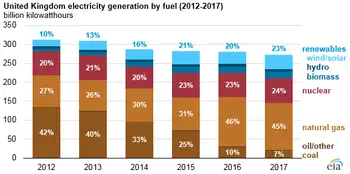
The new net metering program takes effect Nov. 1, and customers will be able to use solar to offset their own power use at the retail rate, similar to UK households' right to sell power in comparable schemes, though program details differ.

But they will only get 7.5 cents per kilowatt hour credit on their bills for excess energy they put back into the grid, as seen in Duke Energy payment changes in other jurisdictions, rather than the 14 cents in the previous program.

Dustin Duncan, the minister responsible for Crown-owned SaskPower, says the utility had to consider the interests of people wanting to use rooftop solar and everyone else who doesn’t have or can’t afford the panels, who he says would have to make up for the lost revenue.

Duncan says the idea is to create a green energy option, with wind power gains highlighting broader competitiveness, while also avoiding passing on more of the cost of the system to people who just cannot afford solar panels of their own.

Customers with solar panels will be allowed to generate up to 100 kilowatts of power against their bills.

“It’s certainly my hope that this is going to provide sustainability for the industry, as illustrated by Alberta's renewable surge creating jobs, that they have a program that they can take forward to their potential customers, while at the same time ensuring that we’re not passing onto customers that don’t have solar panels more cost to upkeep the grid,” Duncan said Tuesday.

Saskatchewan NDP leader Ryan Meili said he believes eliminating the rebate and cutting the excess power credit will kill the province’s solar energy, a concern consistent with lagging solar demand in Canada in recent national reports, he said.

“(Duncan) essentially made it so that any homeowner who wants to put up panels would take up to twice as long to pay it back, which effectively prices everybody in the small part of the solar production industry — the homeowners, the farms, the small businesses, the small towns — out of the market,” Meili said.

The province’s old net metering program hit its 16 megawatt capacity ahead of schedule, forcing the program to shut down, while disputes like the Manitoba Hydro solar lawsuit have raised questions about program management elsewhere. It also had a rebate of 20 per cent of the cost of the system, but that rebate has been discontinued.

The new net metering program won’t have any limit on program capacity, or an end date.

According to Duncan, the old program would have had a net negative impact to SaskPower of about $54 million by 2025, but this program will be much less — between $4 million and $5 million.

Duncan said other provinces either have already or are in the process of moving away from rebates for solar equipment, including Nova Scotia's proposed solar charge and similar reforms, and away from the one-to-one credits for power generation.


Related News

View more

Sign Up for Electricity Forum’s Newsletter

Stay informed with our FREE Newsletter — get the latest news, breakthrough technologies, and expert insights, delivered straight to your inbox.

Electricity Today T&D Magazine Subscribe for FREE

Stay informed with the latest T&D policies and technologies.
  • Timely insights from industry experts
  • Practical solutions T&D engineers
  • Free access to every issue

Download the 2025 Electrical Training Catalog

Explore 50+ live, expert-led electrical training courses –

  • Interactive
  • Flexible
  • CEU-cerified