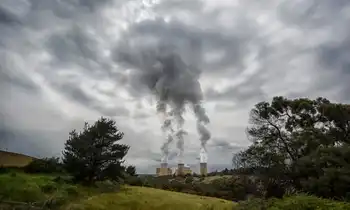
By DuPont Canada also reduced its total emissions by approximately 85 per cent, from 1990 to 2001. This reduction substantially exceeds our 50 per cent reduction goal established in 1990, and is particularly significant since production volumes incr


NFPA 70e Training - Arc Flash

Our customized live online or in‑person group training can be delivered to your staff at your location.

  • Live Online
  • 6 hours Instructor-led
  • Group Training Available
Regular Price:
$199
Coupon Price:
$149
Reserve Your Seat Today
-- DuPont Canada Inc., a leading diversified science company, today announced that it has joined the Green Electricity Leaders Coalition of Ontario (GELCO) as a Bronze Level member.

The Green Electricity Leaders Coalition of Ontario is an initiative of Friends of the Earth Canada, a charitable, non-profit, environmental organization. GELCO was established to recognize and reward corporate leadership in creating an active market for green electricity in Ontario -- electricity produced from renewable, low-impact sources such as solar, wind, small run-of-the-river hydro, land fill and bio-mass.

DuPont Canada has joined GELCO as a Bronze level member based on the company's clear goals and targets for the sourcing of 10 per cent of its energy requirements from renewables. Interface Flooring Canada, the largest commercial carpet manufacturer in Canada, and Toronto Hydro Corporation, are also joining GELCO.

The global E.I. du Pont company has publicly declared that, by the year 2010, its energy requirements will remain flat, 10 per cent of its energy needs will be met through renewable sources, and it will achieve 25 per cent of revenues from non-depletable resources. DuPont Canada's intention is to fully support the achievement of these goals.

Dave Colcleugh, Chairman, President and Chief Executive Officer of DuPont Canada stated: "DuPont Canada has established challenging new sustainable growth goals for 2010 addressing all three aspects of sustainability: economic, social and environmental responsibility. From an energy perspective, we will continue to aggressively pursue energy efficiency. We remain committed to finding cost-effective means of obtaining 10 per cent of our energy requirements from renewable sources."

DuPont Canada is working with VisionQuest Wind Energy, Suncor, and Ontario Power Generation to explore greater use of renewable energy sources. For many years, the company has demonstrated industry leadership on energy conservation through its work with the Canadian Industry Program for Energy Conservation (CIPEC), the Office of Energy Efficiency (OEE), and the Voluntary Challenge & Registry (VCR). In fact, DuPont Canada was a second-time winner of the VCR's Leadership award.

Related News
Irving Oil invests in electrolyzer to produce hydrogen from water

Irving Oil hydrogen electrolyzer expands green hydrogen capacity at the Saint John refinery with Plug Power technology, cutting carbon emissions, enabling clean fuel for buses, and supporting Atlantic Canada decarbonization and renewable grid integration.


Key Points

A 5 MW Plug Power unit at Irving's Saint John refinery producing low-carbon hydrogen via electrolysis.

✅ Produces 2 tonnes/day, enough to fuel about 60 hydrogen buses

✅ Uses grid power; targets cleaner supply via renewables and nuclear

✅ First Canadian refinery investing in electrolyzer technology


Irving Oil is expanding hydrogen capacity at its Saint John, N.B., refinery in a bid to lower carbon emissions and offer clean energy to customers.

The family-owned company said Tuesday it has a deal with New York-based Plug Power Inc. to buy a five-megawatt hydrogen electrolyzer that will produce two tonnes of hydrogen a day — equivalent to fuelling 60 buses with hydrogen — using electricity from the local grid and drawing on examples such as reduced electricity rates proposed in Ontario to grow the hydrogen economy.

Hydrogen is an important part of the refining process as it's used to lower the sulphur content of petroleum products like diesel fuel, but most refineries produce hydrogen using natural gas, which creates carbon dioxide emissions and raises questions explored in hydrogen's future for power companies in the energy sector.

"Investing in a hydrogen electrolyzer allows us to produce hydrogen in a very different way," Irving director of energy transition Andy Carson said in an interview.

"Instead of using natural gas, we're actually using water molecules and electricity through the electrolysis process to produce ... a clean hydrogen."

Irving plans to continue to work with others in the province to decarbonize the grid amid pressures like Ontario's push into energy storage as electricity supply tightens and ensure the electricity being used to power its hydrogen electrolyzer is as clean as possible, he said.

N.B. Power's electrical system includes 14 generating stations powered by hydro, coal, oil, wind, nuclear and diesel. The utility has committed to increasing its renewable energy sources and exploring innovations such as EV-to-grid integration piloted in Nova Scotia.

Irving said it will be the first oil refinery in Canada to invest in electrolyzer technology, as Ontario's Hydrogen Innovation Fund supports broader deployment nationwide.

The company said its goal is to offer hydrogen fuelling infrastructure in Atlantic Canada, complementing N.L.'s fast-charging network for EV drivers in the region.

"This kind of investment allows us to not just move to a cleaner form of hydrogen in the refinery. It also allows us to store and make hydrogen available to the marketplace," Carson said.

Federal watchdog warns Canada's 2030 emissions target may not be achievable
The hydrogen technology will help Irving "unlock pent up demand for hydrogen as an energy transition fuel for logistics organizations," he said.

Alberta also aims to expand its hydrogen production over the coming years, alongside British Columbia's $900 million hydrogen project moving ahead on the West Coast. 

Those plans lean on the development of carbon capture and storage (CCS) technology that aims to trap the emissions created when producing hydrogen from natural gas.


Related News

View more

Peterborough Distribution sold to Hydro One for $105 million.

Peterborough Distribution Inc. Sale to Hydro One delivers a $105 million deal pending Ontario Energy Board approval, a 1% distribution rate cut, five-year rate freeze, job protections, and a new operations centre and fleet facility.


Key Points

A $105M acquisition of PDI by Hydro One, with OEB review, rate freeze, job protections, and a new operations centre.

✅ $105 million purchase; Ontario Energy Board approval required

✅ 1% distribution rate cut and a five-year rate freeze

✅ New operations centre; PDI employees offered roles at Hydro One


The City of Peterborough said Wednesday it has agreed to sell Peterborough Distribution Inc. to Hydro One for $105 million, amid a period when Hydro One shares fell after leadership changes.

The deal requires approval from the Ontario Energy Board before it can proceed.

According to the city, the deal includes a one per cent distribution rate reduction and a five-year freeze in distribution rates for customers, plus:

  • A second five-year period with distribution rate increases limited to inflation and an earnings sharing mechanism to offset rates in year 11 and onward
  • Protections for PDI employees with employees receiving employment offers to move to Hydro One
  • A sale price of $105 million
  • An agreement to develop a regional operations centre and new fleet maintenance facility in Peterborough

“Hydro One was unique in its ability to offer new investment and job creation in our community through the addition of a new operations centre to serve customers throughout the broader region,” Mayor Daryl Bennett said.

“We’re surrounded by Hydro One territory — in fact, we already have Hydro One customers within the City of Peterborough and new subdivisions will be in Hydro One territory. Hydro One will be able to create efficiencies by better utilizing its existing infrastructure, benefiting customers and supporting growth.”

The sale comes after months of negotiations amid investor concerns about Hydro One’s uncertainties. At one point, it looked like the sale wouldn’t go through, after it was announced that Hydro One had walked away from the bargaining table.

City council approved the sale of PDI in December 2016, despite a strong public opposition and debate over proposals to make hydro public again among some parties.

Elsewhere in Canada, political decisions around utilities have also sparked debate, as seen when Manitoba Hydro faced controversy over policy shifts.


Related News

View more

Electricity blackouts spark protests in Iranian cities

Iran Power Outage Protests surge as electricity blackouts, drought, and a looming heat wave spark unrest in Tehran, Shiraz, and more, with chants against leadership, strikes, and sanctions-driven economic pressures mounting.


Key Points

Protests across Iran over blackouts, drought, and economic strain challenge authorities and demand accountability.

✅ Rolling blackouts blamed on drought, heat wave, and surging demand.

✅ Chants target leadership amid strikes and wage, water shortages.

✅ Legitimacy questioned after low-turnout election and sanctions.


There have been protests in a number of cities in Iran amid rising public anger over widespread electricity blackouts.

Videos on social media appeared to show crowds in Shar-e Rey near Tehran, Shiraz, Amol and elsewhere overnight.

Some people can be heard shouting "Death to the dictator" and "Death to Khamenei" - a reference to Supreme Leader Ayatollah Ali Khamenei.

The government has apologised for the blackouts, which it has blamed on a severe drought and high demand.

Elsewhere, similar outages have had political repercussions, as a widespread power outage in Taiwan prompted a minister's resignation earlier this year.

President Hassan Rouhani explained in televised remarks on Tuesday morning that the drought meant most of the country's hydroelectric power plants were not operating, placing more pressure on thermal power plants, and that electricity consumption had surged as people used air conditioning to cope with the intense summer heat.

"I apologise to our dear people who have faced problems and suffering in the past few days and I urge them to co-operate [by cutting their electricity use]. People complain about power outages and they are right," Mr Rouhani said.

A video that has gone viral in recent days shows a woman complaining about the blackouts and corruption at a government office in the northern city of Gorgan and demanding that her comments be conveyed to "higher-ups like Mr Rouhani". "The only thing you have done is forcing hijab on us," she shouts.

The president has promised that the government will seek to resolve the problems within the next two or three weeks.

However, a power sector spokesman warned on Monday that consumption was exceeding the production capacity of Iran's power plants by 11GW, and said a "looming heat wave" could make the situation worse, as seen in Iraq's summer electricity crunch this year.

Iranians have also been complaining about water shortages and the non-payment of wages by some local authorities, while thousands of people working in Iran's oil industry have been on strike over pay and conditions, as officials discuss further energy cooperation with Iraq to ease supply pressures.

There was already widespread discontent at government corruption and the economic hardship caused by sanctions that were reinstated when the US abandoned a nuclear deal with Iran three years ago, even as Iran supplies about 40% of Iraq's electricity through cross-border sales.

Analysts say that after the historically low turnout in last month's presidential election, when more than half of the eligible voters stayed at home, the government is facing a serious challenge to its legitimacy.

Mr Rouhani will be succeeded next month by Ebrahim Raisi, a hard-line cleric close to Ayatollah Khamenei who won 62% of the vote after several prominent contenders were disqualified, while Iran finalizes power grid deals with Iraq to bolster regional ties.

The 60-year-old former judiciary chief has presented himself as the best person to combat corruption and solve Iran's economic problems, including ambitions to transmit electricity to Europe as a regional power hub.

But many Iranians and human rights activists have pointed to his human rights record, accusing him of playing a role in the executions of thousands of political prisoners in the 1980s and in the deadly crackdowns on mass anti-government protests in 2009 and 2019.


Related News

View more

India's electricity demand falls at the fastest pace in at least 12 years

India Industrial Output Slowdown deepens as power demand slumps, IIP contracts, and electricity, manufacturing, and mining weaken; capital goods plunge while RBI rate cuts struggle to lift GDP growth, infrastructure, and fuel demand.


Key Points

A downturn where IIP contracts as power demand, manufacturing, mining, and capital goods fall despite RBI rate cuts.

✅ IIP fell 4.3% in Sep, worst since Feb 2013.

✅ Power demand dropped for a third month, signaling weak industry.

✅ Capital goods output plunged 20.7%, highlighting weak investment.


India's power demand fell at the fastest pace in at least 12 years in October, signalling a continued decline in the industrial output, mirroring how China's power demand dropped when plants were shuttered, according to government data. Electricity has about 8% weighting in the country's index for industrial production.

India needs electricity to fuel its expanding economy and has at times rationed coal supplies when demand surged, but a third decline in power consumption in as many months points to tapering industrial activity in a nation that aims to become a $5 trillion economy by 2024.

India's industrial output fell at the fastest pace in over six years in September, adding to a series of weak indicators that suggests that the country’s economic slowdown is deep-rooted and interest rate cuts alone may not be enough to revive growth.

Annual industrial output contracted 4.3% in September, government data showed on Monday. It was the worst performance since a 4.4% contraction in February 2013, according to Refinitiv data.

Analysts polled by Reuters had forecast industrial output to fall 2% for the month.

“A contraction of industrial production by 4.3% in September is serious and indicative of a significant slowdown as both investment and consumption demand have collapsed,” said Rupa Rege Nitsure, chief economist of L&T Finance Holdings.

The industrial output figure is the latest in a series of worrying economic data in Asia's third largest economy, which is also the world's third-largest electricity producer as well.

Economists say that weak series of data could mean economic growth for July-September period will remain near April-June quarter levels of 5%, which was a six-year low, and some analysts argue for rewiring India's electricity to bolster productivity. The Indian government is likely to release April-September economic growth figures by the end of this month.

Subdued inflation and an economic slowdown have prompted the Reserve Bank of India (RBI) to cut interest rates by a total of 135 basis points this year, while coal and electricity shortages eased in recent months.

“These are tough times for the RBI, as it cannot do much about it but there will be pressures on it to act ...Blunt tools like monetary policy may not be effective anymore,” Nitsure said.

Data showed in September mining sector fell 8.5%, while manufacturing and electricity fell 3.9% and 2.6% respectively, even as imported coal volumes rose during April-October. Capital goods output during the month fell 20.7%, indicating sluggish demand.

“IIP (Index of Industrial Production) growth in October 2019 is also likely to be in negative territory and only since November 2019 one can expect mild IIP expansion, said Devendra Kumar Pant, Chief Economist and Senior Director, Public Finance, India Ratings & Research (Fitch Group).

Infrastructure output, which comprises eight main sectors, in September showed a contraction of 5.2%, the worst in 14 years, even as global daily electricity demand fell about 15% during pandemic lockdowns.

India's fuel demand fell to its lowest in more than two years in September, with consumption of diesel to its lowest levels since January 2017. Diesel and gasoline together make up over 7.4% of the IIP weightage.

In 2019/20 India's fuel demand — also seen as an indicator of economic and industrial activity — is expected to post the slowest growth in about six years.


Related News

View more

For Hydro-Québec, selling to the United States means reinventing itself

Hydro-Quebec hydropower exports deliver low-carbon electricity to New England, sparking debate on greenhouse gas accounting, grid attributes, and REC-style certificates as Quebec modernizes monitoring to verify emissions, integrate renewables, and meet ambitious climate targets.


Key Points

Low-carbon electricity to New England, with improved emissions tracking and verifiable grid attributes.

✅ Deep, narrow reservoirs cut lifecycle GHGs in cold boreal waters

✅ Attribute certificates trace source, type, and carbon intensity

✅ Contracts require facility-level tagging for compliance


For 40 years, through the most vicious interprovincial battles, even as proposals for bridging the Alberta-B.C. gap aimed to improve grid resilience, Canadians could agree on one way Quebec is undeniably superior to the rest of the country.

It’s hydropower, and specifically the mammoth dam system in Northern Quebec that has been paying dividends since it was first built in the 70s. “Quebec continues to boast North America’s lowest electricity prices,” was last year’s business-as-usual update in one trade publication, even as Newfoundland's rate strategy seeks relief for consumers.

With climate crisis looming, that long-ago decision earns even more envy and reflects Canada's electricity progress across the grid today. Not only do they pay less, but Quebeckers also emit the least carbon per capita of any province.

It may surprise most Canadians, then, to hear how most of New England has reacted to the idea of being able to buy permanently into Quebec’s power grid.

​​​​​​Hydro-Québec’s efforts to strike major export deals have been rebuffed in the U.S., by environmentalists more than anyone. They question everything about Quebec hydropower, including asking “is it really low-carbon?”

These doubts may sound nonsensical to regular Quebeckers. But airing them has, in fact, pushed Hydro-Québec to learn more about itself and adopt new technology.

We know far more about hydropower than we knew 40 years ago, including whether it’s really zero-emission (it’s not), how to make it as close to zero-emission as possible, and how to account for it as precisely as new clean energies like solar and wind, underscoring how cleaning up Canada's electricity is vital to meeting climate pledges.

The export deals haven’t gone through yet, but they’ve already helped drag Hydro-Québec—roughly the fourth-biggest hydropower system on the planet—into the climate era.

Fighting to export
One of the first signs of trouble for Quebec hydro was in New Hampshire, almost 10 years ago. People there began pasting protest signs on their barns and buildings. One citizens’ group accused Hydro of planning a “monstrous extension cord” across the state.

Similar accusations have since come from Maine, Massachusetts and New York.

The criticism isn’t coming from state governments, which mostly want a more permanent relationship with Hydro-Québec. They already rely on Quebec power, but in a piecemeal way, topping up their own power grid when needed (with the exception of Vermont, which has a small permanent contract for Quebec hydropower).

Last year, Quebec provided about 15 percent of New England’s total power, plus another substantial amount to New York, which is officially not considered to be part of New England, and has its own energy market separate from the New England grid.

Now, northeastern states need an energy lynch pin, rather than a top-up, with existing power plants nearing the end of their lifespans. In Massachusetts, for example, one major nuclear plant shut down this year and another will be retired in 2021. State authorities want a hydro-based energy plan that would send $10 billion to Hydro-Québec over 20 years.

New England has some of North America’s most ambitious climate goals, with every state in the region pledging to cut emissions by at least 80 percent over the next 30 years.

What’s the downside? Ask the citizens’ groups and nonprofits that have written countless op-eds, organized petitions and staged protests. They argue that hydropower isn’t as clean as cutting-edge clean energy such as solar and wind power, and that Hydro-Québec isn’t trying hard enough to integrate itself into the most innovative carbon-counting energy system. Right as these other energy sources finally become viable, they say, it’s a step backwards to commit to hydro.

As Hydro-Québec will point out, many of these critics are legitimate nonprofits, but others may have questionable connections. The Portland Press Herald in Maine reported in September 2018 that a supposedly grassroot citizens’ group called “Stand Up For Maine” was actually funded by the New England Power Generators Association, which is based in Boston and represents such power plant owners as Calpine Corp., Vistra Energy and NextEra Energy.

But in the end, that may not matter. Arguably the biggest motivator to strike these deals comes not from New England’s needs, but from within Quebec. The province has spent more than $10 billion in the last 15 years to expand its dam and reservoir system, and in order to stay financially healthy, it needs to double its revenue in the next 10 years—a plan that relies largely on exports.

With so much at stake, it has spent the last decade trying to prove it can be an energy of the future.

“Learning as you go”
American critics, justified or not, have been forcing advances at Hydro for a long time.

When the famously huge northern Quebec hydro dams were built at James Bay—construction began in the early 1970s—the logic was purely economic. The term “climate change” didn’t exist. The province didn’t even have an environment department.

The only reason Quebec scientists started trying to measure carbon emissions from hydro reservoirs was “basically because of the U.S.,” said Alain Tremblay, a senior environmental advisor at Hydro Quebec.


Alain Tremblay, senior environmental advisor at Hydro-Québec. Photograph courtesy of Hydro-Québec
In the early 1990s, Hydro began to export power to the U.S., and “because we were a good company in terms of cost and efficiency, some Americans didn't like that,” he said—mainly competitors, though he couldn’t say specifically who. “They said our reservoirs were emitting a lot of greenhouse gases.”

The detractors had no research to back up that claim, but Hydro-Québec had none to refute it, either, said Tremblay. “At that time we didn’t have any information, but from back-of-the envelope calculations, it was impossible to have the emissions the Americans were expecting we have.”

So research began, first to design methods to take the measurements, and then to carry them out. Hydro began a five-year project with a Quebec university.

It took about 10 years to develop a solid methodology, Tremblay said, with “a lot of error and learning-as-you-go.” There have been major strides since then.

“Twenty years ago we were taking a sample of water, bringing it back to the lab and analyzing that with what we call a gas chromatograph,” said Tremblay. “Now, we have an automated system that can measure directly in the water,” reading concentrations of CO2 and methane every three hours and sending its data to a processing centre.

The tools Hydro-Québec uses are built in California. Researchers around the world now follow the same standard methods.

At this point, it’s common knowledge that hydropower does emit greenhouse gases. Experts know these emissions are much higher than previously thought.

Workers on the Eastmain-1 project environmental monitoring program. Photography courtesy of Alain Tremblay.
​But Hydro-Québec now has the evidence, also, to rebut the original accusations from the early 1990s and many similar ones today.

“All our research from Université Laval [found] that it’s about a thousand years before trees decompose in cold Canadian waters,” said Tremblay.

Hydro reservoirs emit greenhouse gases because vegetation and sometimes other biological materials, like soil runoff, decay under the surface.

But that decay depends partly on the warmth of the water. In tropical regions, including the southern U.S., hydro dams can have very high emissions. But in boreal zones like northern Quebec (or Manitoba, Labrador and most other Canadian locations with massive hydro dams), the cold, well-oxygenated water vastly slows the process.

Hydro emissions have “a huge range,” said Laura Scherer, an industrial ecology professor at Leiden University in the Netherlands who led a study of almost 1,500 hydro dams around the world.

“It can be as low as other renewable energy sources, but it can also be as high as fossil fuel energy,” in rare cases, she said.

While her study found that climate was important, the single biggest factor was “sizing and design” of each dam, and specifically its shape, she said. Ideally, hydro dams should be deep and narrow to minimize surface area, perhaps using a natural valley.

Hydro-Québec’s first generation of dams, the ones around James Bay, were built the opposite way—they’re wide and shallow, infamously flooding giant tracts of land.


Alain Tremblay, senior environmental advisor at Hydro-Québec testing emission levels. Photography courtesy of Alain Tremblay
Newly built ones take that new information into account, said Tremblay. Its most recent project is the Romaine River complex, which will eventually include four reservoirs near Quebec’s northeastern border with Labrador. Construction began in 2016.

The site was picked partly for its topography, said Tremblay.

“It’s a valley-type reservoir, so large volume, small surface area, and because of that there’s a pretty limited amount of vegetation that’s going to be flooded,” he said.

There’s a dramatic emissions difference with the project built just before that, commissioned in 2006. Called Eastmain, it’s built near James Bay.

“The preliminary results indicate with the same amount of energy generated [by Romaine] as with Eastmain, you’re going to have about 10 times less emissions,” said Tremblay.

Tracing energy to its source
These signs of progress likely won’t satisfy the critics, who have publicly argued back and forth with Hydro about exactly how emissions should be tallied up.

But Hydro-Québec also faces a different kind of growing gap when it comes to accounting publicly for its product. In the New England energy market, a sophisticated system “tags” all the energy in order to delineate exactly how much comes from which source—nuclear, wind, solar, and others—and allows buyers to single out clean power, or at least the bragging rights to say they bought only clean power.

Really, of course, it’s all the same mix of energy—you can’t pick what you consume. But creating certificates prevents energy producers from, in worst-case scenarios, being able to launder regular power through their clean-power facilities. Wind farms, for example, can’t oversell what their own turbines have produced.

What started out as a fraud prevention tool has “evolved to make it possible to also track carbon emissions,” said Deborah Donovan, Massachusetts director at the Acadia Center, a climate-focused nonprofit.

But Hydro-Québec isn’t doing enough to integrate itself into this system, she says.

It’s “the tool that all of our regulators in New England rely on when we are confirming to ourselves that we’ve met our clean energy and our carbon goals. And…New York has a tool just like that,” said Donovan. “There isn’t a tracking system in Canada that’s comparable, though provinces like Nova Scotia are tapping the Western Climate Initiative for technical support.”

Hydro Quebec Chénier-Vignan transmission line crossing the Outaouais river. Photography courtesy of Hydro-Québec
Developing this system is more a question of Canadian climate policy than technology.

Energy companies have long had the same basic tracking device—a meter, said Tanya Bodell, a consultant and expert in New England’s energy market. But in New England, on top of measuring “every time there’s a physical flow of electricity” from a given source, said Bodell, a meter “generates an attribute or a GIS certificate,” which certifies exactly where it’s from. The certificate can show the owner, the location, type of power and its average emissions.

Since 2006, Hydro-Québec has had the ability to attach the same certificates to its exports, and it sometimes does.

“It could be wind farm generation, even large hydro these days—we can do it,” said Louis Guilbault, who works in regulatory affairs at Hydro-Québec. For Quebec-produced wind energy, for example, “I can trade those to whoever’s willing to buy it,” he said.

But, despite having the ability, he also has the choice not to attach a detailed code—which Hydro doesn’t do for most of its hydropower—and to have it counted instead under the generic term of “system mix.”

Once that hydropower hits the New England market, the administrators there have their own way of packaging it. The market perhaps “tries to determine emissions, GHG content,” Guilbault said. “They have their own rules; they do their own calculations.”

This is the crux of what bothers people like Donovan and Bodell. Hydro-Québec is fully meeting its contractual obligations, since it’s not required to attach a code to every export. But the critics wish it would, whether by future obligation or on its own volition.

Quebec wants it both ways, Donovan argued; it wants the benefits of selling low-emission energy without joining the New England system of checks and balances.

“We could just buy undifferentiated power and be done with it, but we want carbon-free power,” Donovan said. “We’re buying it because of its carbon content—that’s the reason.”

Still, the requirements are slowly increasing. Under Hydro-Québec’s future contract with Massachusetts (which still has several regulatory steps to go through before it’s approved) it’s asked to sell the power’s attributes, not just the power itself. That means that, at least on paper, Massachusetts wants to be able to trace the energy back to a single location in Quebec.

“It’s part of the contract we just signed with them,” said Guilbault. “We’re going to deliver those attributes. I’m going to select a specific hydro facility, put the number in...and transfer that to the buyers.”

Hydro-Québec says it’s voluntarily increasing its accounting in other ways. “Even though this is not strictly required,” said spokeswoman Lynn St. Laurent, Hydro is tracking its entire output with a continent-wide registry, the North American Renewables Registry.

That registry is separate from New England’s, so as far as Bodell is concerned, the measure doesn’t really help. But she and others also expect the entire tracking system to grow and mature, perhaps integrating into one. If it had been created today, in fact, rather than in the 1990s, maybe it would use blockchain technology rather than a varied set of administrators, she said.

Counting emissions through tracking still has a long way to go, as well, said Donovan, and it will increasingly matter in Canada's race to net-zero as standards tighten. For example, natural gas is assigned an emissions number that’s meant to reflect the emissions when it’s consumed. But “we do not take into account what the upstream carbon emissions are through the pipeline leakage, methane releases during fracking, any of that,” she said.

Now that the search for exactitude has begun, Hydro-Québec won’t be exempt, whether or not Quebeckers share that curiosity. “We don’t know what Hydro-Québec is doing on the other side of the border,” said Donovan.


Related News

View more

It's CHEAP but not necessarily easy: Crosbie introduces PCs' Newfoundland electricity rate reduction strategy

Crosbie Hydro Energy Action Plan outlines rate mitigation for Muskrat Falls, leveraging Nalcor oil revenues, export sales, Holyrood savings, and potential Hydro-Quebec taxation to keep Newfoundland and Labrador electricity rates near 14.67 cents/kWh.


Key Points

PC plan to cap post-Muskrat rates by using Nalcor revenues, exports, and savings, with optional Accord funds.

✅ $575.4M yearly to hold rates near 14.67 cents/kWh

✅ Sources: Nalcor oil $231M, Holyrood $150M, rates/dividends $123.4M

✅ Options: export sales, restructuring, Atlantic Accord, HQ tax


Newfoundland and Labrador PC Leader Ches Crosbie says Muskrat Falls won't drive up electricity rates, a goal consistent with an agreement to shield ratepayers from cost overruns, if he's elected premier.

According to Crosbie, who presented the party's Crosbie Hydro Energy Action Plan — acronym CHEAP — at a press conference Monday, $575.4 million is needed per year in order to keep rates from ballooning past 14.67 cents per kilowatt hour.

Here's where he thinks the money could come from:

  • Hydro rates and dividends — $123.4 million
  • Export sales — $40.1 million
  • Nalcor restructuring — $30 million
  • Holyrood savings — $150  million
  • Nalcor oil revenue — $231 million

The oil money, Crosbie said, isn't going into government coffers but being invested into the offshore which, he said, is a good place for it.

"But the plan from the beginning around Muskrat Falls was that if there was need for it — for mitigation for rates — that those revenues and operating cash flows from Nalcor oil and gas would be available to be recycled into rate mitigation, as reflected in a recent financial update on the pandemic's impact. and that's what we're going to have to do," he said.

According to Crosbie, his numbers come from the preliminary stage of the Public Utilities Board process, even as rate mitigation talks have lacked public details.

This is a recent aerial view of the Muskrat Falls project in central Labrador. The project is more than 90 per cent complete, with first power forecast for late 2019, alongside Ottawa's $5.2B support for the project. (Nalcor)

"I'm telling you this is the best information available to anyone outside of government," he said. "We're working on what we can."

The PUB estimated Nalcor restructuring could save between $10 million and $15 million, according to Crosbie, but he figures there's "enough duplication and overpayment involved in the way things are now set up that we can find $30 million there."

Currently, provincial ratepayers pay about 12 cents per kilowatt hour as electricity users have started paying for Muskrat Falls costs.

Crosbie's $575.4-million figure would put rates at 14.67 cents per kilowatt-hour in 2021, where his plan pledges to keep them.

A recent Public Utilities Board Report says there's a potential $10 million to $15 million in savings from Nalcor, but Crosbie says he can find $30 million. (CBC)

"The promise is that Muskrat Falls, when it comes online — comes in service — will not increase your rates. Between now and when that happens there are rate increases already in the pipeline up to that level of [14.67 cents per kilowatt-hour] … so that is the baseline target rate at which rates will be kept.

"In other words, Muskrat will not drive up prices for electricity to consumers beyond that point."

In addition to those savings, Crosbie's plan outlined two further steps.

"We think it could be done out of the resources that I've just identified now, but if there's a problem with that, and as a temporary measure, we can use a modest amount of the Atlantic Accord review, fiscal review, revenues," he said.


Plan 'nothing new'

Premier Dwight Ball slammed the plan at the House of Assembly on Monday, saying it lacked insight.

"It was a copy and paste exercise," he told reporters. "There's nothing new in that plan. Not at all."

"We're not leaving any stone unturned of where the opportunity would be to actually generate revenue," he said.  "We are genuinely concerned about rate mitigation and we've got to get a plan in place."


Potential to tax Hydro-Québec

Crosbie also said there's potential to tax Hydro-Québec.

According to Crosbie, tax exemptions that expired in 2016 allow the province to tax exports from the Upper Churchill, which, he said, could result in "hundreds of millions or billions" in revenue.

"It's not my philosophy to immediately go and do that because that would generate litigation — who needs more of that? — but we do need to let Quebec know that we're very aware of that, and aware of that opportunity, and invite them to come talk about a whole host of issues," Crosbie said.

Crosbie said the tax would also have to be applied to domestic consumption.

"But so massive is the potential revenue from the Upper Churchill export that there would be ways to mitigate that and negate the effect of that on consumers in the province."

Crosbie said with the Atlantic Accord revenue, he could still present a balanced budget by 2022.


Related News

View more

Sign Up for Electricity Forum’s Newsletter

Stay informed with our FREE Newsletter — get the latest news, breakthrough technologies, and expert insights, delivered straight to your inbox.

Electricity Today T&D Magazine Subscribe for FREE

Stay informed with the latest T&D policies and technologies.
  • Timely insights from industry experts
  • Practical solutions T&D engineers
  • Free access to every issue

Live Online & In-person Group Training

Advantages To Instructor-Led Training – Instructor-Led Course, Customized Training, Multiple Locations, Economical, CEU Credits, Course Discounts.

Request For Quotation

Whether you would prefer Live Online or In-Person instruction, our electrical training courses can be tailored to meet your company's specific requirements and delivered to your employees in one location or at various locations.