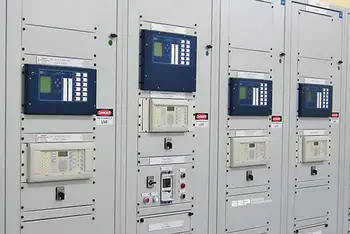
Protective Relay Training - Basic
Our customized live online or in‑person group training can be delivered to your staff at your location.
- Live Online
- 12 hours Instructor-led
- Group Training Available
Regular Price:
$699
Coupon Price:
$599
Half of the Dutch population supports an expansion of nuclear power after a government official indicated the intention to build a second nuclear power station, Dutch news agency ANP reported recently.
According to a recent Internet-based poll carried out by the Maurice de Hond organization, 49 percent of the respondents were in favor of more nuclear power while 37 percent were against.
ANP failed to say how many people gave their opinions and tell of the error margin of the poll.
The poll was conducted after junior environment minister Pieter van Geel gave a strong indication at the weekend that the coalition government wants to end the country's traditional reluctance towards nuclear power.
The Netherlands has one operating nuclear power station at Borssele in Zeeland Province. The government decided last year to rescind an earlier decision to close it down and the plant will remain operational until 2033.
Van Geel said on Sunday that a second nuclear power station was a realistic option to meet the country's energy needs and commitments to cut greenhouse gas emissions.
The opinion poll found that a massive 97 percent of respondents were in favor of more government investment in alternative energy sources, with 72 percent in support of wind turbines. Some 67 percent said they were in favor of a wind park in the North Sea.
Dutch households are seeing a rise in energy expenses, according to Statistics Netherlands (CBS).
Dutch households paid an average of 7.5 percent more for gas and electricity in January than the previous month, CBS said.
Electricity and gas prices have been climbing steadily in the Netherlands in recent years. On average, households now pay 65 percent more than in 2000 for energy. Gas bills have increased by 85 percent since 2000, while electricity prices increased by 40 percent during the same period, it said.
Related News

Chester County Landfill Converts Methane to Renewable Gas
SECCRA Waga Energy RNG Partnership captures landfill methane with WAGABOX, upgrades biogas to pipeline-quality RNG,…
View more
"Energy war": Ukraine tries to protect electricity supply before winter
Ukraine Power Grid Resilience details preparations for winter blackouts, airstrike defense, decentralized generation, backup generators,…
View more

Trump Is Seen Replacing Obama’s Power Plant Overhaul With a Tune-Up
Clean Power Plan Rollback signals EPA's shift to inside-the-fence efficiency at coal plants, emphasizing heat-rate…
View more
Class-action lawsuit: Hydro-Québec overcharged customers up to $1.2B
Hydro-QuE9bec Class-Action Lawsuit alleges overbilling and monopoly abuse, citing RE9gie de l'E9nergie rate increases, Quebec…
View more

Electricity Grids Can Handle Electric Vehicles Easily - They Just Need Proper Management
EV Grid Capacity Management shows how smart charging, load balancing, and off-peak pricing align with…
View more
How Energy Use Has Evolved Throughout U.S. History
U.S. Energy Transition traces the shift from coal and oil to natural gas, nuclear power,…
View more
Sign Up for Electricity Forum’s Newsletter
Stay informed with our FREE Newsletter — get the latest news, breakthrough technologies, and expert insights, delivered straight to your inbox.
Electricity Today T&D Magazine Subscribe for FREE

Stay informed with the latest T&D policies and technologies.
- Timely insights from industry experts
- Practical solutions T&D engineers
- Free access to every issue

