By New York Times


Electrical Testing & Commissioning of Power Systems

Our customized live online or in‑person group training can be delivered to your staff at your location.

  • Live Online
  • 12 hours Instructor-led
  • Group Training Available
Regular Price:
$599
Coupon Price:
$499
Reserve Your Seat Today
Congress Moves Toward Mandating Rules for Electricity

WASHINGTON — Spurred by the Aug. 14 blackout, Congress is approaching action on an energy bill that would make a major change in the electric system, creating government rules for companies that generate, transmit or distribute power.

But if the leadership gets its way, Congress will be voting before anyone can say whether violations of the existing rules, which are voluntary and set by an industry group, had anything to do with the power failure that left tens of millions of people in the dark from Michigan and Ontario to Connecticut. For its part, the industry is heading in a different direction and changing its procedures.

The Energy Department and its Canadian counterpart, the Ministry of Natural Resources, have promised to issue a report on the blackout's causes in the next two to three weeks, and the heads of both agencies are refusing to discuss their findings now. But two people involved in the work of the American-Canadian task force investigating the blackout said they did not believe it had been shown that any participant in the electric system broke any rules, implying that the problem was not the voluntary nature of the rules, but the rules themselves.

For now, though, Congress seems likely to take the blackout as a cue to pass an energy bill with mandatory standards. Republican leaders hope to unveil a measure long before the investigation is completed. And the bill is likely to get a warm reception from the administration.

"The operators, the people who use this transmission grid, have to be held to the highest standards of behavior, and it can't just be a voluntary kind of commitment," Energy Secretary Spencer Abraham said at a news conference in Ottawa on Oct. 17. "It has to be one in which people understand there is enforcement."

Herb Dhaliwal, the Canadian natural resources minister, said Canada would consider mandatory standards as well.

But a few moments later Mr. Abraham acknowledged that one purpose of the report was to "indicate if standards that currently exist have been followed, or if the problems were exclusively of a sort that current standards didn't address."

As Congress forges ahead to make the rules mandatory, the organization that has provided much of the expertise for the investigation, the North American Electric Reliability Council, a Canadian-American group that sets voluntary standards for the electricity industry, has headed in a different direction. The group, known as Nerc, sent a letter to its members on Oct. 15 calling for changes to improve reliability, but these were changes in procedure, not rules.

Among them were quicker communication of voltage problems and plans for companies that generate, transmit or distribute power to manage voltage — the electrical equivalent of water pressure — in the transmission grid to be able to handle unforeseen fluctuations.

Nerc also told members to "establish an automated method to alert power system operators and technical support personnel" when power system status has significantly changed, or when alarms are not being received or sounded. On Aug. 14, a computer problem at FirstEnergy in Ohio prevented operators there from seeing some alarms that could have alerted them to developing problems.

The letter also called on electric companies to ensure that operators know not only that they have the authority to intentionally black out some customers in emergencies, but also that they are "expected to exercise that authority to prevent cascading." That was a major lesson of the 1965 blackout, experts say, and blacking out one area to prevent the problem from creating a more extended collapse was one reason that the 1977 blackout was more limited, mostly to downstate New York.

Proponents of mandatory standards are not alone in using the blackout as justification.

Some people seeking to influence energy policy have suggested that the blackout shows that nuclear plants can make the system less stable, because the plants tend to shut themselves down in case of trouble and take longer to restart than other kinds of generating stations. Others have suggested that adding nuclear plants would make the system more stable, because it would allow electric generation closer to the point of consumption.

Among others enlisting the blackout to their cause are advocates of building transmission lines and giving the federal government power to force states to accept them; advocates of "distributed energy" plants that could fit into small spaces near load centers; advocates of loosening regulations to make power plants easier to build; and advocates of re-regulating the system.

One member of the task force, David J. O'Brien, who is the chief consumer advocate for electric customers in Vermont, said, "Anyone with a cause in this matter is already pointing to the blackout as evidence of their theory."

Related News
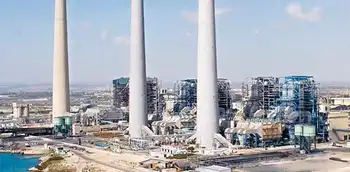
The Haves and Have-Nots of Electricity in California

California Public Safety Power Shutoffs highlight wildfire prevention as PG&E outages disrupt schools, businesses, and rural communities, driving generator use, economic hardship, and emergency preparedness across Northern California during high-wind events.


Key Points

Utility outages to reduce wildfire risk during extreme winds, impacting homes and businesses in high-risk California.

✅ PG&E cuts power during high winds to prevent wildfires

✅ Costs rise for generators, fuel, batteries, and spoiled food

✅ Rural, low-income communities face greater economic losses


The intentional blackout by California’s largest utility this week put Forest Jones out of work and his son out of school. On Friday morning Mr. Jones, a handyman and single father, sat in his apartment above a tattoo parlor waiting for the power to come back on and for school to reopen.

“I’ll probably lose $400 or $500 dollars because of this,” said Mr. Jones, who lives in the town of Paradise, which was razed by fire last year and is slowly rebuilding. “Things have been really tough up here.”

Millions of people were affected by the blackout, which spanned the outskirts of Silicon Valley to the forests of Humboldt County near the Oregon border. But the outage, which the power company said was necessary to reduce wildfire risk across the region, also drew a line between those who were merely inconvenienced and those who faced a major financial hardship.

To have the lights on, the television running and kitchen appliances humming is often taken for granted in America, even as U.S. grid during coronavirus questions persisted. During California’s blackout it became an economic privilege.

The economic impacts of the shut-off were especially acute in rural, northern towns like Paradise, where incomes are a fraction of those in the San Francisco Bay Area.

Both wealthy and poorer areas were affected by the blackout but interviews across the state suggested that being forced off the grid disproportionately hurt the less affluent. One family in Humboldt County said they had spent $150 on batteries and water alone during the shutdown.

“To be prepared costs money,” Sue Warhaftig, a massage therapist who lives in Mill Valley, a wealthy suburb across the Golden Gate Bridge from San Francisco. Ms. Warhaftig spent around two days without electricity but said she had been spared from significant sacrifices during the blackout.

She invested in a generator to keep the refrigerator running and to provide some light. She cooked in the family’s Volkswagen camper van in her driveway. At night she watched Netflix on her phone, which she was able to charge with the generator. Her husband, a businessman, is in London on a work trip. Her two sons, both grown, live in Southern California and Seattle.

“We were inconvenienced but life wasn’t interrupted,” Ms. Warhaftig said. “But so many people’s lives were.

Pacific Gas & Electric restored power to large sections of Northern California on Friday, including Paradise, where the electricity came back on in the afternoon. But hundreds of thousands of people in other areas remained in the dark. The carcasses of burned cars still littered the landscape around Paradise, where 86 people died in the Camp Fire last year, some of them while trying to escape.

Officials at power company said that by Saturday they hoped to have restored power to 98 percent of the customers who were affected.

The same dangerous winds that spurred the shut-off in Northern California have put firefighters to work in the south. The authorities in Los Angeles County ordered the evacuation of nearly 100,000 people on Friday as the Saddleridge Fire burned nearly 5,000 acres and destroyed 25 structures. The Sandalwood Fire, which ignited Thursday in Riverside County, had spread to more than 800 acres and destroyed 74 structures by Friday afternoon.

While this week’s outage was the first time many customers in Northern California experienced a deliberate power shut-off, residents in and around Paradise have had their power cut four times in recent months, residents say.

Many use a generator, but running one has become increasingly expensive with gasoline now at more than $4 a gallon in California.

On Friday, Dennis and Viola Timmer drove up the hill to their home in Magalia, a town adjacent to Paradise, loaded with $102 dollars of gasoline for their generators. It was their second gasoline run since the power went out Tuesday night.

The couple, retired and on a fixed income after Mr. Timmer’s time in the Navy and in construction, said the power outage had severely limited their ability to do essential tasks like cooking, or to leave the house.

“You know what it feels like? You’re in jail,” said Ms. Timmer, 72. “You can’t go anywhere with the generators running.”

Since the generators are not powerful enough to run heat or air conditioning, the couple slept in their den with an electric space heater.

“It’s really difficult because you don’t have a normal life,” Ms. Timmer said. “You’re trying to survive.”

To be sure, the shutdown has affected many people regardless of economic status, and similar disruptions abroad, like a London power outage that disrupted routines, show how widespread such challenges can be. The areas without power were as diverse as the wealthy suburbs of Silicon Valley, the old Gold Rush towns of the Sierra Nevada, the East Bay of San Francisco and the seaside city of Arcata.

Ms. Cahn’s cellphone ran out of power during the blackout and even when she managed to recharge it in her car cell service was spotty, as it was in many areas hit by the blackout.

Accustomed to staying warm at night with an electric blanket, Ms. Cahn slept under a stack of four blankets.

“I’m doing what I have to do which is not doing very much,” she said.

Further south in Marin City, Chanay Jackson stood surrounded by fumes from generators still powering parts of the city.

She said that food stamps were issued on the first of the month and that many residents who had to throw away food were out of luck.

“They’re not going to issue more food stamps just because the power went out,” Ms. Jackson said. “So they’re just screwed until next month.”

Strong winds have many times in the past caused power lines to come in contact with vegetation, igniting fires that are then propelled by the gusts, and hurricanes elsewhere have crippled infrastructure with Louisiana grid rebuild after Laura according to state officials. This was the case with the Camp Fire.

Since higher elevations had more extreme winds many of the neighborhoods where power was turned off this week were in hills and canyons, including in the Sierra Nevada.

The shut-off, which by one estimate affected a total of 2.5 million people, has come under strong criticism by residents and politicians, and warnings from Cal ISO about rolling blackouts as the power grid strained. The company’s website crashed just as customers sought information about the outage. Gov. Gavin Newsom called it unacceptable. But his comments were nuanced, criticizing the way the shut-off was handled, not the rationale for it. Mr. Newsom and others said the ravages of the Camp Fire demanded preventive action to prevent a reoccurrence.

Yet the calculus of trying to avoid deadly fires by shutting off power will continue to be debated as California enters its peak wildfire season, even as electricity reliability during COVID-19 was generally maintained for most consumers.

In the city of Grass Valley, Matthew Gottschalk said he and his wife realized that a generator was essential when they calculated that they had around $500 worth of food in their fridge.

“I don’t know what we would have done,” said Mr. Gottschalk, whose power went out Tuesday night.

His neighbors are filling coolers with ice. Everyone is hoping the power will come back on soon.

“Ice is going to run out and gas is going to run out,” he said.


Related News

View more

First US coal plant in years opens where no options exist

Alaska Coal-Fired CHP Plant opens near Usibelli mine, supplying electricity and district heat to UAF; remote location without gas pipelines, low wind and solar potential, and high heating demand shaped fuel choice.


Key Points

A 17 MW coal CHP at UAF producing power and campus heat, chosen for remoteness and lack of gas pipelines.

✅ 17 MW generator supplying electricity and district heat

✅ Near Usibelli mine; limited pipeline access shapes fuel

✅ Alternative options like LNG, wind, solar not cost-effective


One way to boost coal in the US: Find a spot near a mine with no access to oil or natural gas pipelines, where it’s not particularly windy and it’s dark much of the year.

That’s how the first coal-fired plant to open in the U.S. since 2015 bucked the trend in an industry that’s seen scores of facilities close in recent years. A 17-megawatt generator, built for $245 million, is set to open in April at the University of Alaska Fairbanks, just 100 miles from the state’s only coal mine.

“Geography really drove what options are available to us,” said Kari Burrell, the university’s vice chancellor for administrative services, in an interview. “We are not saying this is ideal by any means.”

The new plant is arriving as coal fuels about 25 percent of electrical generation in the U.S., down from 45 percent a decade earlier, even as some forecasts point to a near-term increase in coal-fired generation in 2021. A near-record 18 coal plants closed in 2018, and 14 more are expected to follow this year, according to BloombergNEF.

The biggest bright spot for U.S. coal miners recently has been exports to overseas power plants. At home, one of the few growth areas has been in pizza ovens.

There are a handful of other U.S. coal power projects that have been proposed, including plans to build an 850 megawatt facility in Georgia and an 895 megawatt plant in Kansas, even as a Minnesota utility reports declining coal returns across parts of its portfolio. But Ashley Burke, a spokeswoman for the National Mining Association, said she’s unaware of any U.S. plants actively under development besides the one in Alaska.


Future of power

“The future of power in the U.S. does not include coal,” Tessie Petion, an analyst for HSBC Holdings Plc, said in a research note, a view echoed by regions such as Alberta retiring coal power early in their transition.

Fairbanks sits on the banks of the Chena River, amid the vast subarctic forests in the heart of Alaska. The oil and gas fields of the state’s North slope are 500 miles north. The nearest major port is in Anchorage, 350 miles south.

The university’s new plant is a combined heat and power generator, which will create steam both to generate electricity and heat campus buildings. Before opting for coal, the school looked into using liquid natural gas, wind and solar, bio-mass and a host of other options, as new projects in Southeast Alaska seek lower electricity costs across the region. None of them penciled out, said Mike Ruckhaus, a senior project manager at the university.

The project, financed with university and state-municipal bonds, replaces a coal plant that went into service in 1964. University spokeswoman Marmian Grimes said it’s worth noting that the new plant will emit fewer emissions.

The coal will come from Usibelli Coal Mine Inc., a family-owned business that produces between 1.2 and 2 million tons per year from a mine along the Alaska railroad, according to the company’s website.

While any new plant is good news for coal miners, Clarksons Platou Securities Inc. analyst Jeremy Sussman said this one is "an isolated situation."

“We think the best producers can hope for domestically is a slow down in plant closures,” he said, even as jurisdictions like Alberta close their last coal plant entirely.


Related News

View more

N.L. lags behind Canada in energy efficiency, but there's a silver lining to the stats

Newfoundland and Labrador Energy Efficiency faces low rankings yet signs of progress: heat pumps, EV charging networks, stricter building codes, electrification to tap Muskrat Falls power and cut greenhouse gas emissions and energy poverty.


Key Points

Policies and programs improving N.L.'s energy use via electrification, EVs, heat pumps, and stronger building codes.

✅ Ranks last provincially but showing policy momentum

✅ Heat pump grants and EV charging network underway

✅ Stronger building codes and electrification can cut emissions


Ah, another day, another depressing study that places Newfoundland and Labrador as lagging behind the rest of Canada.

We've been in this place before — least-fit kids, lowest birthrate — and now we can add a new dubious distinction to the pile: a ranking of the provinces according to energy efficiency placed Newfoundland and Labrador last.

Efficiency Canada released its first-ever provincial scorecard Nov. 20, comparing energy efficiency policies among the provinces. With energy efficiency a key part of reducing greenhouse gas emissions, Newfoundland and Labrador sat in 10th place, noted for its lack of policies on everything from promoting EV uptake in Atlantic Canada to improving efficient construction codes.

But before you click away to a happier story (about, say, a feline Instagram superstar) one of the scorecard's authors says there's a silver lining to the statistics.

"It's not that Newfoundland and Labrador is doing anything badly; it's just that it could do more," said Brendan Haley, the policy director at Efficiency Canada, a new think tank based at Carleton University.

"There's just a general lack of attention to implementing efficiency policies relative to other jurisdictions, including New Brunswick's EV rebate programs on transportation."

Looking at the scorecard and comparing N.L. with British Columbia, which snagged the No. 1 spot, isn't a great look. B.C. scored 56 points out of a possible 100, while N.L. got just 15.

Haley pointed out that B.C.'s provincial government is charting progress toward 2032, when all new builds will have to be net-zero energy ready; that is, buildings that can produce as much clean energy as they consume.  

While it might not be feasible to emulate that to a T here, Haley said the province could be mandating better energy efficiency standards for new, large building projects, and, at the same time, promote electrification of such projects as a way to soak up some of that surplus Muskrat Falls electricity.

Staring down Muskrat's 'extraordinary' pressure on N.L. electricity rates

It's impossible to talk about energy efficiency in N.L. without considering that dam dilemma. As Muskrat Falls comes online, likely at the end of 2020, customer power rates are set to rise in order to pay for it, and the province is still trying to figure out the headache that is rate mitigation.

"There is a strategic choice to be made in Newfoundland and Labrador," Haley told CBC Radio's On The Go.

While having more customers using Muskrat Falls power can help with rate mitigation, including through initiatives like N.L.'s EV push to grow demand, Haley noted simply using its excess electricity for the sake of it isn't a great goal.

"That should not be an excuse, I think, to almost have a policy of wasting energy on purpose, or saying that we don't need programs that help save electricity anymore," he said.

Energy poverty
Lots of N.L. homeowners are currently feeling a chill from the spectre of rising electricity rates.

Of course, that draft could be coming from a poorly insulated and heated house, as Efficiency Canada noted 38 per cent of all households in N.L. live in what it calls "energy poverty," where they spend more than six per cent of their after-tax income on energy — that's the second highest such rate in the country.

That poverty speaks for a need for N.L.to boost efficiency incentives for vulnerable populations, although Haley noted the government is making progress. The province recently expanded its home energy savings program, doubling in the last budget year to $2 million, which gives grants to low income households for upgrades like insulation.

Can you guess what products are selling like hotcakes as Muskrat Falls looms? Heat pumps

And since Efficiency Canada compiled its scorecard, the province has introduced a $1-million heat pump program, in which 1,000 homeowners could receive $1,000 toward the purchase of a heat pump. 

That program began accepting applications Oct. 15, and one month in, has had 682 people apply, according to the Department of Municipal Affairs and Environment, along with thousands of inquiries.

Heat pump popularity
Even without that program, heat pump sales have skyrocketed in the province since 2017. That popularity doesn't come as much of a surprise to Darren Brake, the president of KSAB Construction in Corner Brook.

With more than two decades in the home building business, he's been seeing consumer demand for home energy efficiency rise to the point where a year ago, his company transitioned into only building third-party certified energy efficient homes.

"Everybody's really concerned about the escalating power costs and energy costs, I assume because of Muskrat Falls," he said.

"It's evolving now, as we speak. Everybody is all about that monthly payment."

Brake uses spray foam installation in every house he builds, to seal up any potential leaks. Without sealing the building envelope, he says, a heat pump is far less efficient. (Lindsay Bird/CBC)
And in the weakest housing market in the province in half a century, Brake has been steadily moving his, building and selling seven in the last year.

Brake's houses include heat pumps, but he said the real savings come from their heavily insulated walls, roof and floors. Homeowners looking to install a heat pump in their leaky old house, he said, won't see lower power bills in quite the same way.

"They are energy efficient, but it's more about the building envelope to make a home efficient and easy to heat. You can put a heat pump in an older home that leaks a lot of air, and you won't get the same results," he said.

Charging network coming
The other big piece to the efficiency puzzle — in the scorecard's eyes — is electric vehicles. Those could, again, use some of that Muskrat Falls energy, as well as curtail gas guzzling, but Efficiency Canada pointed to a lack of policies and incentives surrounding electrifying transportation, such as Nova Scotia's vehicle-to-grid pilot that illustrates innovation elsewhere.

Unlike Quebec or B.C., the province doesn't offer a rebate for buying EVs, even as N.W.T. encourages EVs through targeted measures, and while electric vehicles got loud applause at the House of Assembly last week, it was absent of any policy or announcement beyond the province unveiling a EV licence plate design to be used in the near future.

Electric-vehicle charging network planned for N.L. in 2020

But since the scorecard was tallied, NL Hydro has unveiled plans for a Level 3 charging network for EVs across the island, dependent on funding, with N.L.'s first fast-charging network seen as just the beginning for local drivers.

NL Hydro says while its request for proposals for an island-wide charging network closed earlier in November, there is no progress update yet, even as N.B.'s fast-charging rollout advances along the Trans-Canada. (Credit: iStock/Getty Images)
That cash appears to still be in limbo, as "we are still progressing through the funding process," said an NL Hydro spokesperson in an email, with no "additional details to release at this time."

Still, the promise of a charging network — plus the swift uptake on the heat pump program — could boost N.L.'s energy efficiency scorecard next time it's tallied, said Haley.

"It is encouraging to see the province moving forward on smart and efficient electrification," he said.


Related News

View more

India is now the world’s third-largest electricity producer

India Electricity Production 2017 surged to 1,160 BU, ranking third globally; rising TWh output with 334 GW capacity, strong renewables and thermal mix, 7% CAGR in generation, and growing demand, investments, and FDI inflows.


Key Points

India's 2017 power output reached 1,160 BU, third globally, supported by 334 GW capacity, rising renewables, and 7% CAGR.

✅ 1,160 BU generated; third after China and the US

✅ Installed capacity 334 GW; 65% thermal, rising renewables

✅ Generation CAGR ~7%; demand, FDI, investments rising


India now generates around 1,160.1 billion units of electricity in financial year 2017, up 4.72% from the previous year, and amid surging global electricity demand that is straining power systems. The country is behind only China which produced 6,015 terrawatt hours (TWh. 1 TW = 1,000,000 megawatts) and the US (4,327 TWh), and is ahead of Russia, Japan, Germany, and Canada.


India’s electricity production grew 34% over seven years to 2017, and the country now produces more energy than Japan and Russia, which had 27% and 8.77% more electricity generation capacity installed, respectively, than India seven years ago.

India produced 1,160.10 billion units (BU) of electricity–one BU is enough to power 10 million households (one household using average of about 3 units per day) for a month–in financial year (FY) 2017. Electricity production stood at 1,003.525 BU between April 2017-January 2018, according to a February 2018 report by India Brand Equity Foundation (IBEF), a trust established by the commerce ministry.

#google#

With a production of 1,423 BU in FY 2016, India was the third largest producer and the third largest consumer of electricity in the world, behind China (6,015 BU) and the United States (4,327 BU).

With an annual growth rate of 22.6% capacity addition over a decade to FY 2017, renewables beat other power sources–thermal, hydro and nuclear. Renewables, however, made up only 18.79% of India’s energy, up 68.65% since 2007, and globally, low-emissions sources are expected to cover most demand growth in the coming years. About 65% of installed capacity continues to be thermal.

As of January 2018, India has installed power capacity of 334.4 gigawatt (GW), making it the fifth largest installed capacity in the world after European Union, China, United States and Japan, and with much of the fleet coal-based, imported coal volumes have risen at times amid domestic supply constraints.

The government is targeting capacity addition of around 100 GW–the current power production of United Kingdom–by 2022, as per the IBEF report.


Electricity generation grew at 7% annually

India achieved a 34.48% growth in electricity production by producing 1,160.10 BU in 2017 compared to 771.60 BU in 2010–meaning that in these seven years, electricity production in India grew at a compound annual growth rate (CAGR) of 7.03%, while thermal power plants' PLF has risen recently amid higher demand and lower hydro.


Generation capacity grew at 10% annually

Of 334.5 GW installed capacity as of January 2018–up 60% from 132.30 GW in 2007–thermal installed capacity was 219.81 GW. Hydro and renewable energy installed capacity totaled 44.96 GW and 62.85 GW, respectively, said the report.

The CAGR in installed capacity over a decade to 2017 was 10.57% for thermal power, 22.06% for renewable energy–the fastest among all sources of power–2.51% for hydro power and 5.68% for nuclear power.


Growing demand, higher investments will drive future growth

Growing population and increasing penetration of electricity connections, along with increasing per-capita usage would provide further impetus to the power sector, said the report.

Power consumption is estimated to increase from 1,160.1 BU in 2016 to 1,894.7 BU in 2022, as per the report, though electricity demand fell sharply in one recent period.

Increasing investment remained one of the driving factors of power sector growth in the country.

Power sector has a 100% foreign direct investment (FDI) permit, which boosted FDI inflows in the sector.

Total FDI inflows in the power sector reached $12.97 billion (Rs 83,713 crore) during April 2000 to December 2017, accounting for 3.52% of FDI inflows in India, the report said.


Related News

View more

Wall Street Backs Rick Perry’s $19 Billion Data Center Venture

Wall Street backs Rick Perry’s $19 billion nuclear-powered data center venture, Fermi America, combining nuclear energy, AI infrastructure, and data centers to meet soaring electricity demand and attract major investors betting on America’s clean energy technology future.


What is "Wall Street Backs Rick Perry’s $19 Billion Nuclear-Powered Data Center Venture”?

Wall Street is backing Rick Perry’s $19 billion nuclear-powered data center venture because it combines the explosive growth of AI with the promise of clean, reliable nuclear energy.

✅ Addresses AI’s massive power demands with nuclear generation

✅ Positions Fermi America as a pioneer in energy-tech convergence

✅ Reflects investor confidence in long-term clean energy solutions

Former Texas Governor and U.S. Energy Secretary Rick Perry has returned to the energy spotlight, this time leading a bold experiment at the intersection of nuclear power and artificial intelligence. His startup, Fermi America, headquartered in Amarillo, Texas, went public this week with an initial valuation of $19 billion after its shares surged 55 percent above the opening price on the first day of trading.

The company aims to tackle one of the most pressing challenges in modern technology: the staggering energy demand of AI data centers. “Artificial intelligence, which is getting more and more embedded in all parts of our lives, the servers that host the data for artificial intelligence are stored in these massive warehouses called data centers,” said Houston Chronicle energy reporter Claire Hao. “And data centers use a ton of electricity.”

Fermi America’s plan, Hao explained, is as ambitious as it is unconventional. Fermi America has a proposal to build what it claims will be the world’s largest data center, powered by what it asserts will be the country’s largest nuclear complex. So very ambitious plans.”

According to the company’s roadmap, Fermi aims to bring its first mega reactor online by 2032, followed by three additional large reactors. In the meantime, the firm intends to integrate natural gas and solar energy by the end of next year to support early-stage operations.

While much of the energy sector’s attention has turned toward small modular reactors, Fermi’s approach focuses on traditional large-scale nuclear technology. “What Fermi is talking about building are large traditional reactors,” Hao said. “These very large traditional reactors are a tried and true technology. But the nuclear industry has a history of taking a very long time to build them, and they are also very expensive to build.” She noted that the most recent example, completed in 2023 by a Georgia utility, came in $17 billion over budget and several years late.

To mitigate such risks, Fermi has recruited specialists with international experience. “They’ve hired folks that have successfully built these projects in China and in other countries where it has been a lot smoother to build these,” Hao said. “Fermi wants to try to make it a quicker process.”

Perry’s involvement lends both visibility and controversy. In addition to co-founding the company, Griffin Perry, his son, plays a role in its management. The firm has hinted that it might even name reactors after former President Donald Trump, under whom Perry served as Secretary of Energy. Perry has framed the project as part of a national effort to regain technological ground. “He really wants to help the U.S. catch up to countries like China when it comes to delivering nuclear power for the AI race,” Hao explained. “He says we’re already behind.”

Despite the fanfare, Fermi America is still a fledgling enterprise. Founded in January and announced publicly in June, the company reported a $6.4 million loss in the first half of the year and has yet to generate any revenue. Still, its IPO exceeded expectations, opening at $21 a share and closing above $32 on the first day.

“I think that just shows there’s a lot of hype on Wall Street around artificial intelligence-related ventures,” Hao said. “Fermi, in the four months since it announced itself as a company, has found a lot of different ways to grab people’s attention.”

For now, the project represents both a technological gamble and a test of investor faith — a fusion of nuclear ambition and AI optimism that has Wall Street watching closely.


Related Articles


View more

OpenAI Expands Washington Effort to Shape AI Policy

OpenAI Washington Policy Expansion spotlights AI policy, energy infrastructure, data centers, and national security, advocating AI economic zones and a national transmission grid to advance U.S. competitiveness and align with pro-tech administration priorities.


Key Points

OpenAI's D.C. push to scale policy outreach and AI infrastructure across energy, data centers, and national security.

✅ Triples D.C. policy team to expand bipartisan engagement

✅ Advocates AI economic zones and transmission grid build-out

✅ Aligns with pro-tech leadership, prioritizing national security


OpenAI, the creator of ChatGPT, is significantly expanding its presence in Washington, D.C., aiming to influence policy decisions that will shape the future of artificial intelligence (AI) and its integration into critical sectors like energy and national security. This strategic move comes as the company seeks to position itself as a key player in the U.S. economic and security landscape, particularly in the context of global competition with China in strategic industries.

Expansion of Policy Team

To enhance its influence, OpenAI is tripling the size of its Washington policy team. While the 12-person team is still smaller compared to tech giants like Amazon and Meta, it reflects OpenAI's commitment to engaging more actively with policymakers, as debates over Biden's climate law shape the regulatory landscape. The company has recruited individuals from across the political spectrum, including former aides to President Bill Clinton and Vice President Al Gore, to ensure a diverse and comprehensive approach to policy advocacy.

Strategic Initiatives

OpenAI is promoting an ambitious plan to develop tech and energy infrastructure tailored for AI development. This initiative aims to deliver more affordable energy to data centers and reduce corporate electricity bills, which are essential for AI operations. The company is advocating for the establishment of AI economic zones and a national transmission highway to support the growing energy demands of AI technologies. By aligning these proposals with the incoming Trump administration's pro-tech stance, OpenAI seeks to secure federal support for its projects.

Engagement with the Trump Administration

The transition from the Biden administration to the incoming Trump administration presents new opportunities for OpenAI, even as state legal challenges shape early energy policy moves. The Trump administration is perceived as more favorable toward the tech industry, with appointments of Silicon Valley figures like Elon Musk and David Sacks to key positions. OpenAI is leveraging this environment to advocate for policies that support AI development and infrastructure expansion, positioning itself as a strategic asset in the U.S.-China economic and security competition.

The AI industry is increasingly viewed as a critical component of national security and economic competitiveness. OpenAI's efforts to engage with policymakers reflect a broader industry push to be recognized as a vital player in the U.S. economic and security landscape. By promoting AI as a strategic asset, OpenAI aims to secure support for its initiatives, including clean-energy projects in coal communities, and ensure that the U.S. remains at the forefront of AI innovation.

OpenAI's strategic expansion in Washington, D.C., underscores its commitment to influencing policy decisions that will shape the future of AI and its integration into critical sectors. By enhancing its policy team, advocating for infrastructure development, where Alberta's data center boom illustrates rising demand, and aligning with the incoming administration's priorities, even as energy dominance goals face real-world constraints, OpenAI aims to position itself as a key player in the evolving landscape of artificial intelligence. This proactive approach reflects the company's recognition of the importance of policy engagement in driving innovation and securing a competitive edge in the global AI arena.


Related News

View more

Sign Up for Electricity Forum’s Newsletter

Stay informed with our FREE Newsletter — get the latest news, breakthrough technologies, and expert insights, delivered straight to your inbox.

Electricity Today T&D Magazine Subscribe for FREE

Stay informed with the latest T&D policies and technologies.
  • Timely insights from industry experts
  • Practical solutions T&D engineers
  • Free access to every issue

Live Online & In-person Group Training

Advantages To Instructor-Led Training – Instructor-Led Course, Customized Training, Multiple Locations, Economical, CEU Credits, Course Discounts.

Request For Quotation

Whether you would prefer Live Online or In-Person instruction, our electrical training courses can be tailored to meet your company's specific requirements and delivered to your employees in one location or at various locations.