



By --  Source The Chicago Tribune


NFPA 70b Training - Electrical Maintenance

Our customized live online or in‑person group training can be delivered to your staff at your location.

  • Live Online
  • 12 hours Instructor-led
  • Group Training Available
Regular Price:
$699
Coupon Price:
$599
Reserve Your Seat Today
WASHINGTON--The U.S. Justice Department has launched a criminal investigation into Enron Corp., the Houston-based energy conglomerate that produced one of the most spectacular collapses in business history as it spiraled into bankruptcy late last year.

A department official confirmed Wednesday that federal prosecutors from around the country have begun probing the company's collapse. The matter has potential political significance because executives of the Texas corporation, once the world's top supplier of natural gas, have close ties to the Bush administration.

A task force comprising U.S. attorneys from Houston, New York, San Francisco and elsewhere has been formed to investigate whether the company or its principals committed fraud before Enron went bankrupt, officials said. The investigation will be run out of the Justice Department's Criminal Division in Washington.

Robert Bennett, an attorney representing Enron, downplayed the development, saying in an interview that his office has been receiving subpoenas and information requests from U.S. attorneys' offices for a while.

"The investigation has been going on for some time; what started today was the consolidation," Bennett said. "I am pleased that they are going to centralize the investigation so I can deal with one entity and not multiple entities. This is a company that, if given a chance, can come out of bankruptcy and return some value to shareholders."

The Justice Department is only the latest agency to launch an investigation into the unraveling of Enron, which was the largest electricity marketer in the U.S. The Labor Department and the Securities and Exchange Commission have begun civil investigations into possible wrongdoing by company executives. Shareholders are also taking legal action.

Congress, too, has begun investigating circumstances surrounding the firm's collapse. A Senate panel has subpoenaed documents from Enron and has scheduled a Jan. 24 hearing.

But the criminal investigation adds a new dimension, raising the specter of prison or fines for those who led the company, first as its innovative business strategy made it a spectacular success, and then as it disintegrated late last year.

White House spokeswoman Jeanie Mamo said Wednesday, "The president is concerned about Enron's bankruptcy and thinks it's important and appropriate for relevant government agencies to investigate as they see fit."

Justice Department officials would not specify what allegations its investigators are pursuing, but several avenues of investigation have presented themselves. High on the list is whether the company, or any of its officers or auditors, misrepresented the firm's financial situation. Enron has been sued by a bank for allegedly pumping up its stock value through phony earnings reports.

In addition, many have complained that Enron's employees were encouraged to buy the company's stock and then prevented from selling it as its value began plunging, yielding enormous losses. Top Enron executives, in contrast, were permitted to sell their stock near the height of its value.

And questionable dealings with energy partnerships, formed by a former Enron employee, may have helped the firm improperly hide its debt.

Bennett, a high-profile Washington attorney whose clients have included former President Bill Clinton, urged the public not to leap to conclusions.

The political side of the Enron story could add a potentially explosive element to the investigation. While the company made contributions to both political parties, it was especially closely identified with the Republicans, and Kenneth Lay, the company's chairman and chief executive officer, is a friend and supporter of President Bush.

Lay was among the top contributors to the Bush campaign, and the White House acknowledged this week that Vice President Dick Cheney or his aides met with Enron representatives six times last year. The meetings occurred as a task force headed by Cheney was crafting a national energy policy.

In addition, Rep. Henry Waxman (D-Calif.) has complained that senior Bush adviser Karl Rove, who owned $100,000 worth of Enron, discussed energy policy with Lay.

White House spokesman Ari Fleischer said Wednesday that to his knowledge no administration officials spoke to the company's executives about the specifics of its finances.

The ties between Enron and the Bush team were evident in the 2000 campaign. Lay was one of 214 Bush "Pioneers," supporters who raised at least $100,000 for the president during the campaign.

Enron worked hard to affect national policy. The firm's lobbying expenses exceeded $2 million last year, according to the Center for Public Integrity, and it got some heavy hitters for the price.

Its lobbyists and consultants included Marc Racicot, the incoming head of the Republican National Committee; Jack Quinn, former White House counsel to Clinton; and Ralph Reed, a former head of the Christian Coalition.

But all this influence could not save the company from an inglorious fate. The once high-flying energy trader filed the largest corporate bankruptcy in U.S. history on Dec. 2.

Enron's troubles were precipitated by reports of soured transactions with a series of energy partnerships run by Andrew Fastow, the company's former chief financial officer.

In November, Enron revealed that the company had shrunk its shareholder equity by $1.2 billion to buy back 55 million shares issued to the partnerships. The charge for unwinding the web of partnerships gave the company a $618 million third-quarter loss.

Indeed, one potential focus of the investigation is likely to be the off-balance-sheet partnerships and the role of Fastow and other Enron executives in developing and managing the partnerships. The partnerships hid Enron's debt, allowing it to obtain additional cash and credit to run EnronOnline, its vaunted energy trading platform.

The Justice Department also is likely to scrutinize Enron executives' handling of stock transactions. While rank-and-file employees were barred from selling Enron stock from their retirement accounts, high-level Enron officials sold more than $1 billion in stock when it was nearly at its price apex.

Allegations of wrongdoing surrounding these stock transactions are contained in a lawsuit filed by Amalgamated Bank of New York. The bank accuses Enron executives and board members of realizing $1.1 billion from the sale of Enron stock.

Enron officials have said they have done nothing wrong.

On Nov. 9, the energy company Dynegy Inc. offered to acquire Enron for $9 billion in stock and the assumption of billions of dollars in debt.

Enron hit Dynegy with a $10 billion lawsuit for allegedly reneging on a merger agreement.
Related News

Investing in a new energy economy for Montana

Montana New Energy Economy integrates grid modernization, renewable energy, storage, and demand response to cut costs, create jobs, enable electric transportation, and reduce emissions through utility-scale efficiency, real-time markets, and distributed resources.


Key Points

Plan to modernize Montana's grid with renewables, storage and efficiency to lower costs, cut emissions and add jobs.

✅ Grid modernization enables real-time markets and demand response

✅ Utility-scale renewables paired with storage deliver firm power

✅ Efficiency and DERs cut peaks, costs, and pollution


Over the next decade, Montana ratepayers will likely invest over a billion dollars into what is now being called the new energy economy.

Not since Edison electrified a New York City neighborhood in 1882 have we had such an opportunity to rethink the way we commercially produce and consume electric energy.

Looking ahead, the modernization of Edison’s grid will lower the consumer costs, creating many thousands of permanent, well-paying jobs. It will prepare the grid for significant new loads like America going electric in transportation, and in doing so it will reduce a major source of air pollution known to directly threaten the core health of Montana and the planet.

Energy innovation makes our choices almost unrecognizable from the 1980s, when Montana last built a large, central-station power plant. Our future power plants will be smaller and more modular, efficient and less polluting — with some technologies approaching zero operating emissions.

The 21st Century grid will optimize how the supply and demand of electricity is managed across larger interconnected service areas. Utilities will interact more directly with their consumers, with utility trends guiding a new focus on providing a portfolio of energy services versus simply spinning an electric meter. Investments in utility-scale energy efficiency — LED streetlights, internet-connected thermostats, and tightening of commercial building envelopes among many — will allow consumers to directly save on their monthly bills, to improve their quality of life, and to help utilities reduce expensive and excessive peaks in demand.

The New Energy Economy will be built not of one single technology, but of many — distributed over a modernized grid across the West that approaches a real-time energy market, as provinces pursue market overhauls to adapt — connecting consumers, increasing competition, reducing cost and improving reliability.

Boldly leading the charge is a new and proven class of commercial generation powered by wind and solar energy, the latter of which employs advanced solid-state electronics, free fuel and no emissions or moving parts. Montana is blessed with wind and solar energy resources, so this is a Made-in-Montana energy choice. Note that these plants are typically paired with utility-scale energy storage investments — also an essential building block of the 21st century grid — to deliver firm, on-demand electric service.

Once considered new age and trendy, these production technologies are today competent and shovel-ready. Their adoption will build domestic energy independence. And, they are aggressively cost-competitive. For example, this year the company ISO New England — operator of a six-state grid covering all of New England — released an all-source bid for new production capacity. Unexpectedly, 100% of the winning bids were large solar electric power and storage projects, as coal and nuclear disruptions continue to shape markets. For the first time, no applications for fossil-fueled generation cleared auction.

By avoiding the burning of traditional fuels, the new energy technologies promise to offset and eventually eliminate the current 1,500 million metric tons of damaging greenhouse gases — one-quarter of the nation’s total — that are annually injected into the atmosphere by our nation’s current electric generation plants. The first step to solving the toughest and most expensive environmental issues of our day — be they costly wildfires or the regional drought that threatens Montana agriculture and outdoor recreation — is a thoughtful state energy policy, built around the new energy economy, that avoids pitfalls like the Wyoming clean energy bill now proposed.

Important potential investments not currently ready for prime time are also on the horizon, including small and highly efficient nuclear innovation in power plants — called small modular reactors (SMR) — designed to produce around-the-clock electric power with zero toxic emissions.

The nation’s first demonstration SMR plant is scheduled to be built sometime late this decade. Fingers are crossed for a good outcome. But until then, experts agree that big questions on the future commercial viability of nuclear remain unanswered: What will be SMR’s cost of electricity? Will it compete? Where will we source the refined fuel (most uranium is imported), and what will be the plan for its safe, permanent disposal?

So, what is Montana’s path forward? The short answer is: Hopefully, all of the above.

Key to Montana’s future investment success will be a respectful state planning process that learns from Texas grid improvements to bolster reliability.

Montanans deserve a smart and civil and bipartisan conversation to shape our new energy economy. There will be no need, nor place, for parties that barnstorm the state about "radical agendas" and partisan name calling – that just poisons the conversation, eliminates creative exchange and pulls us off task.

The task is to identify and vet good choices. It’s about permanently lowering energy costs to consumers. It’s about being business smart and business friendly. It’s about honoring the transition needs of our legacy energy communities. And, it’s about stewarding our world-class environment in earnest. That’s the job ahead.


Related News

View more

Texas utility companies waiving fees; city has yet to act

Texas Utility COVID-19 Relief suspends disconnections, waives late fees, extends payment plans, and supports broadband access as electric, gas, and internet providers help customers during the statewide emergency with speed upgrades and student WiFi initiatives.


Key Points

Texas utilities pause disconnections, waive fees, expand access, and offer flexible payment plans during COVID-19.

✅ Disconnections and late fees suspended by gas, power, internet.

✅ Payment plans and deferred balances after emergency.

✅ Bandwidth caps lifted; student WiFi access for remote learning.


In response to the COVID-19 pandemic, Texas utility companies have taken unprecedented steps to keep customers' lights on, gas flowing, and online connections stable -- even if they can't pay, amid concerns over pandemic electricity shutoffs nationwide.

Meantime, Palestine City Council members plan to discuss hardship measures Monday, as some states such as New Jersey and New York implement moratoriums on shut-offs, but have no plans yet to ease the burden of paying two other essential services during the statewide emergency -- trash collection and water. Those services are billed through the city.

For many residents, money will be tight after the statewide emergency declaration. Businesses are cutting back or closing. Workers are staying home to avoid the coronavirus.

"We are putting our customers first," Larry Ball, spokesman for Atmos Energy, a Dallas-based natural gas company, told the Herald-Press Friday. "The safety of all of our customers has always been our first priority."

While the declared emergency remains in effect, Atmos has suspended all late fees and customer disconnections, a step similar to PG&E's shutoff moratorium in California.

"Atmos Energy's commitment to safety, paired with our culture, have led us during unique times," Kevin Akers, Atmos President and CEO said. "This will be no different."

Internet Service Providers SuddenLink and Centurylink have similarly suspended all disconnections and late fees. Additionally, Centurylink, a global company serving 36 states, has promised to scrap bandwidth limits, while ensuring the highest speeds possible.

SuddenLink, a division of Altice Business, is also partnering with school districts in their service area to offer its Student WiFi product free for 60 days. That will allow students who have school-issued devices, but no dedicated home Internet access, the ability to use the Optimum WiFi Hot Spot Network to access their school's network and resources.

Electric companies such as TXU and Houston-based Gexa Energy also are working to keep customers safe and connected, and Entergy's relief fund highlights additional support for customers.

During the declared emergency, Gexa is waiving all disconnection and reconnection fees, as well as late fees, a policy focus that later intersected with debates over a proposed electricity market bailout in Texas. Payment plans will be set up for customers, after the crisis ends, Gexa Energy officials said.

"Everyone needs their power on," a Gexa spokesman said. "That is our number one priority."

TXU, based in Irving, is waiving late fees, extending payment due dates with no down-payment required, and deferring customer balances over multiple installments, while some retailers like Griddy underscored the risks of variable-rate plans.

If customers still can't pay, TXU officials said, the company will keep their lights on, a commitment underscored after the Texas winter storm outages exposed vulnerabilities. Customers in need should call 800-242-9113.

"The coronavirus is causing uncertainty and many hardships," Scott Hudson, president of TXU energy, said. "We are committed to serving our communities."


Related News

View more

Electric Ferries Power Up B.C. with CIB Help

BC Ferries Electrification accelerates zero-emission vessels, Canada Infrastructure Bank financing, and fast charging infrastructure to cut greenhouse gas emissions, lower operating costs, and reduce noise across British Columbia's Island-class routes.


Key Points

BC Ferries Electrification is the plan to deploy zero-emission ferries and charging, funded by CIB, to reduce emissions.

✅ $75M CIB loan funds four electric ferries and chargers

✅ Cuts 9,000 tonnes CO2e annually on short Island-class routes

✅ Quieter service, lower operating costs, and redeployed hybrids


British Columbia is taking a significant step towards a cleaner transportation future with the electrification of its ferry fleet. BC Ferries, the province's ferry operator, has secured a $75 million loan from the Canada Infrastructure Bank (CIB) to fund the purchase of four zero-emission ferries and the necessary charging infrastructure to support them.

This marks a turning point for BC Ferries, which currently operates a fleet reliant on diesel fuel. The new Island-class electric ferries will be deployed on shorter routes, replacing existing hybrid ships on those routes. These hybrid ferries will then be redeployed on routes that haven't yet been converted to electric, maximizing their lifespan and efficiency.

Environmental Benefits

The transition to electric ferries is expected to deliver significant environmental benefits. The new vessels are projected to eliminate an estimated 9,000 tonnes of greenhouse gas emissions annually, and electric ships on the B.C. coast already demonstrate similar gains, contributing to British Columbia's ambitious climate goals. Additionally, the quieter operation of electric ferries will create a more pleasant experience for passengers and reduce noise pollution for nearby communities.

Economic Considerations

The CIB loan plays a crucial role in making this project financially viable. The low-interest rate offered by the CIB will help to keep ferry fares more affordable for passengers. Additionally, the long-term operational costs of electric ferries are expected to be lower than those of diesel-powered vessels, providing economic benefits in the long run.

Challenges and Opportunities

While the electrification of BC Ferries is a positive development, there are some challenges to consider. The upfront costs of electric ferries and charging infrastructure are typically higher than those of traditional options, though projects such as the Kootenay Lake ferry show growing readiness. However, advancements in battery technology are constantly lowering costs, making electric ferries a more cost-effective choice over time.

Moreover, the transition presents opportunities for job creation in the clean energy sector, with complementary initiatives like the hydrogen project broadening demand. The development, construction, and maintenance of electric ferries and charging infrastructure will require skilled workers, potentially creating a new avenue for economic growth in British Columbia.

A Pioneering Example

BC Ferries' electrification initiative sets a strong precedent for other ferry operators worldwide, including Washington State Ferries pursuing hybrid-electric upgrades. This project demonstrates the feasibility and economic viability of transitioning to cleaner marine transportation solutions. As battery technology and charging infrastructure continue to develop, we can expect to see more widespread adoption of electric ferries across the globe.

The collaboration between BC Ferries and the CIB paves the way for a greener future for BC's transportation sector, where efforts like Harbour Air's electric aircraft complement marine electrification. With cleaner air, quieter operation, and a positive impact on climate change, this project is a win for the environment, the economy, and British Columbia as a whole.


Related News

View more

Nissan accepting electricity from EVs as payment for parking

Nissan V2G Parking lets EV drivers pay with electricity via bidirectional charging at the Yokohama Nissan Pavilion, showcasing vehicle-to-grid, smart energy trading, and integrated mobility experiences like Ariya rides and Formula E simulators.


Key Points

A program where EV owners use V2G to pay for parking by discharging power at Nissan's Yokohama Pavilion.

✅ Pay for parking with EV energy via V2G

✅ Powered by Nissan LEAFs and solar at the Pavilion

✅ Showcases Ariya, Formula E, ProPILOT, and I2V tech


Nissan is letting customers pay for parking with electricity by discharging power from their electric car’s battery pack, a concept similar to how EV owners sell electricity back to the grid in other programs. In what the company claims to be a global first, owner of electric cars can trade energy for a parking space at Nissan Pavilion exhibition space in Yokohama, Japan, echoing how parked EVs earn from Europe's grids in comparable schemes.

The venue that showcases Nissan's future technologies, opened its doors to public on August 1 and will remain so through October 23, underscoring how stored EV energy can power buildings in broader applications. “(It) is a place where customers can see, feel, and be inspired by (the company's) near-future vision for society and mobility," says CEO Makoto Uchida. “As the world shifts to electric mobility, EVs will be integrated into society in ways that go beyond just transportation."

Apart from the innovate parking experience, people visiting the pavilion can also virtually experience the thrill of Formula E electric street racing or go for a ride in the all-new Ariya electric crossover, similar to demos at the Everything Electric show in Vancouver. Other experiences include ProPILOT advanced driver assistance system as well as Nissan’s Invisible-to-Visible (I2V) technology, which combines information from the real and virtual worlds to assist drivers, themes also explored at an EV education centre in Toronto for public outreach.

A mobility hub in front of the Pavilion offers a variety of services including EV car-sharing. The Pavilion also operates a cafe operated on power supplied by Nissan LEAF electric cars and solar energy, showcasing vehicle-to-building charging benefits on site.

As part of its Nissan NEXT transformation plan, the company plans to expand its global lineup of EVs and aims to sell more than 1 million electrified vehicles a year by the end of fiscal 2023, aligning with the American EV boom and the challenge of scaling charging infrastructure.


Related News

View more

Solar-powered pot: Edmonton-area producer unveils largest rooftop solar array

Freedom Cannabis solar array powers an Acheson cannabis facility with 4,574 rooftop panels, a 1,830-kilowatt system by Enmax, cutting greenhouse gas emissions, lowering energy costs, and advancing renewable energy, sustainability, and operational efficiency in Edmonton.


Key Points

A 1,830-kW rooftop solar system with 4,574 panels, cutting GHG emissions and energy costs at the Acheson facility.

✅ 1,830-kW array offsets 1,000+ tonnes GHG annually

✅ Supplies ~8% of annual power; saves $200k-$300k per year

✅ 4,574 rooftop panels installed by Enmax in Acheson


Electricity consumption is one of the biggest barriers to going green in the cannabis industry, where the energy demands of cannabis cultivation often complicate sustainability, but an Edmonton-area pot producer has come up with a sunny solution.

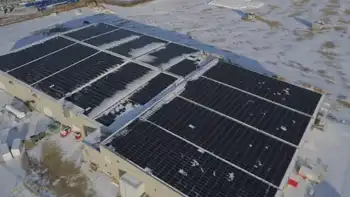
Freedom Cannabis unveiled the largest rooftop solar system used by a cannabis facility in Canada at its 126,000-square foot Acheson location, 20 kilometres west of Edmonton, as solar power in Alberta continues to surge, on Tuesday.

The "state-of-the-art" 1,830-kilowatt solar array—made up of 4,574 panels—was supplied by Enmax and will offset more than 1,000 tonnes of greenhouse gas emissions each year, reflecting how new Alberta solar facilities are undercutting natural gas on price, the company said.

The state-of-the-art solar array—made up of 4,574 panels—was supplied by Enmax and will offset more than 1,000 tonnes of greenhouse gas emissions at Freedom Cannabis every year. Nov. 12, 2019. (Freedom Cannabis)

That will supply roughly eight per cent of the building's annual power consumption and reduce costs by $200,000 to $300,000 annually.

"This strategy will supplement our operating costs for power by up to eight to 10 per cent, so it is something that in time will save us costs on power requirements," said Troy Dezwart, co-founder of Freedom Cannabis.

Dezwart said sustainability was an important issue to the company from its outset, aligning with an Alberta renewable energy surge that is expected to power thousands of jobs.

"We're fortunate enough to be able to have these types of options and pursue them," said Dezwart.

The entire system cost Freedom Cannabis $2.6 million to build, but nearly a million of that came from a provincial rebate program that has since been cancelled by the UCP government, even as a federal green electricity deal with an Edmonton company signals ongoing support.

The company cited a 2017 report that found cannabis growers in the U.S. used enough electricity to power 1.7-million homes, and said cannabis-related power consumption is expected to increase by 1,250 per cent in Ontario over the next five years, even though Canadian solar demand has been lagging overall.

“It’s more important than ever for businesses to manage their energy footprint, and solar is an important part of that solution,” Enmax director Jason Atkinson, said. “This solar installation will help reduce operating costs and offset a significant portion of GHG emissions for decades to come.”

Freedom says it has other initiatives underway to reduce its footprint, in a region planning the Edmonton airport solar farm among other projects, including water remediation and offering 100 per cent recyclable cannabis packaging tins.

The company's first crops are expected to go to market in December.


Related News

View more

Wartsila to Power USA’s First Battery-Electric High-Speed Ferries

San Francisco Battery-Electric Ferries will deliver zero-emission, high-speed passenger service powered by Wartsila electric propulsion, EPMS, IAS, batteries, and shore power, advancing maritime decarbonization under the REEF program and USCG Subchapter T standards.


Key Points

They are the first US zero-emission high-speed passenger ferries using integrated electric propulsion and shore power

✅ Dual 625 kW motors enable up to 24-knot service speeds

✅ EPMS, IAS, DC hub, and shore power streamline operations

✅ Built to USCG Subchapter T for safety and compliance


Wartsila, a global leader in sustainable marine technology, has been selected to supply the electric propulsion system for the United States' first fully battery-electric, zero-emission high-speed passenger ferries. This significant development marks a pivotal step in the decarbonization of maritime transport, aligning with California's ambitious environmental goals, including recent clean-transport investments across ports and corridors.

A Leap Toward Sustainable Maritime Transport

The project, commissioned by All American Marine (AAM) on behalf of San Francisco Bay Ferry, involves the construction of three 150-passenger ferries, reflecting broader U.S. advances like the Washington State Ferries hybrid upgrade now underway. These vessels will operate on new routes connecting the rapidly developing neighborhoods of Treasure Island and Mission Bay to downtown San Francisco. The ferries are part of the Rapid Electric Emission Free (REEF) Ferry Program, a comprehensive initiative by San Francisco Bay Ferry to transition its fleet to zero-emission propulsion technology. The first vessel is expected to join the fleet in early 2027.

Wärtsilä’s Role in the Project

Wärtsilä's involvement encompasses the supply of a comprehensive electric propulsion system, including the Energy and Power Management System (EPMS), integrated automation system (IAS), batteries, DC hub, transformers, electric motors, and shore power supply. This extensive scope underscores Wärtsilä’s expertise in providing integrated solutions for emission-free marine transportation. The company's extensive global experience in developing and supplying integrated systems and solutions for zero-emission high-speed vessels, as seen with electric ships on the B.C. coast operating today, was a key consideration in the selection process.

Technical Specifications of the Ferries

The ferries will be 100 feet (approximately 30 meters) in length, with a beam of 26 feet and a draft of 5.9 feet. Each vessel will be powered by dual 625-kilowatt electric motors, enabling them to achieve speeds of up to 24 knots. The vessels will be built to U.S. Coast Guard Subchapter T standards, ensuring compliance with stringent safety regulations.

Environmental and Operational Benefits

The transition to battery-electric propulsion offers numerous environmental and operational advantages. Electric ferries produce zero emissions during operation, as demonstrated by Berlin's electric ferry deployments, significantly reducing the carbon footprint of maritime transport. Additionally, electric propulsion systems are generally more efficient and require less maintenance compared to traditional diesel engines, leading to lower operational costs over the vessel's lifespan.

Broader Implications for Maritime Decarbonization

This project is part of a broader movement toward sustainable maritime transport in the United States. San Francisco Bay Ferry has also approved the purchase of two larger 400-passenger battery-electric ferries for transbay routes, further expanding its commitment to zero-emission operations. The agency has secured approximately $200 million in funding from local, state, and federal sources, echoing infrastructure bank support seen in B.C., to support these initiatives, including vessel construction and terminal electrification.

Wartsila’s involvement in this project highlights the company's leadership in the maritime industry's transition to sustainable energy solutions, including hybrid-electric pathways like BC Ferries' new hybrids now in service. With a proven track record in supplying integrated systems for zero-emission vessels, Wärtsilä is well-positioned to support the global shift toward decarbonized maritime transport.

As the first fully battery-electric high-speed passenger ferries in the United States, these vessels represent a significant milestone in the journey toward sustainable and environmentally responsible maritime transportation, paralleling regional advances such as the Kootenay Lake electric-ready ferry entering service. The collaboration between Wärtsilä, All American Marine, and San Francisco Bay Ferry exemplifies the collective effort required to realize a zero-emission future for the maritime industry.

The deployment of these battery-electric ferries in San Francisco Bay not only advances the city's environmental objectives but also sets a precedent for other regions to follow. With continued innovation and collaboration, the maritime industry can look forward to a future where sustainable practices are the standard, not the exception.


Related News

View more

Sign Up for Electricity Forum’s Newsletter

Stay informed with our FREE Newsletter — get the latest news, breakthrough technologies, and expert insights, delivered straight to your inbox.

Electricity Today T&D Magazine Subscribe for FREE

Stay informed with the latest T&D policies and technologies.
  • Timely insights from industry experts
  • Practical solutions T&D engineers
  • Free access to every issue

Download the 2025 Electrical Training Catalog

Explore 50+ live, expert-led electrical training courses –

  • Interactive
  • Flexible
  • CEU-cerified