By -- Source Reuters


Arc Flash Training CSA Z462 - Electrical Safety Essentials

Our customized live online or in‑person group training can be delivered to your staff at your location.

  • Live Online
  • 6 hours Instructor-led
  • Group Training Available
Regular Price:
$249
Coupon Price:
$199
Reserve Your Seat Today
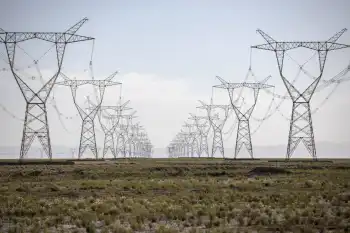
MADRID - The EU commissioner who oversees energy policy on Monday threatened to liberalise Europe's non-residential gas and electricity markets by decree if member states fail to reach an agreement on their own.

``If there is no agreement I am prepared to propose opening the gas and electricy markets by decree,'' Loyola de Palacio told reporters in Madrid.

European Union member states have an agreement to liberalise the gas and electricity markets for industrial users by 2005. An attempt to move that forward to 2003 fell apart last year due to opposition from France.

The European Council is set to take up the issue again on March 15-16, when leaders hold their spring summit in Barcelona, and energy ministers will hold their own council meeting in June.

``If the EU Council, for whatever reason, blocks this opening, the Commission will not allow this to happen,'' Palacio said. ``We consider the liberlisation of gas and electricity essential for competitiveness. I am willing to use all the means at my disposal.''

Related News

Sub-Saharan Africa has a huge electricity problem - but with challenge comes opportunity

Sub-Saharan Africa Energy Access faces critical deficits; SDG7, clean energy finance, off-grid solar, and microgrids drive electrification for health, education, and economy amid World Bank and IEA efforts to expand reliable, affordable power.


Key Points

Reliable, affordable power in sub-Saharan Africa via renewables, off-grid solar, and SDG7-led electrification.

✅ SDG7 targets universal, modern energy access by 2030

✅ Off-grid solar and microgrids boost rural electrification

✅ Health, education, and business depend on reliable power


Sub-Saharan Africa has an electricity problem. While the world as a whole has made great strides when it comes to providing access to electricity and moving toward universal electricity access worldwide (the world average is now 90 per cent with access, up from 83 per cent in 2010), southern and western African states still lag far behind.

According to Tracking SDG7: The Energy Progress Report, produced by a consortium of organisations including the World Bank, the International Energy Agency and the World Health Organization, 759 million people were without electricity in 2019 and threequarters of them were based in sub-Saharan Africa. At just seven per cent, South Sudan had the lowest access figures; Chad, Burundi and Malawi were only marginally higher. What’s more, due to a combination of factors, the situation is getting worse. In total, the region’s access deficit increased from 556 million people in 2010 to 570 million people in 2019.

These days, being without electricity has an impact on every sphere of life. The Covid-19 pandemic only served to put this into sharper relief. Intermittent electricity meant vaccination doses that rely on cold storage were impossible to deliver and, as more than 70 per cent of the health facilities in sub-Saharan Africa have no access to reliable electricity, the problem was vast. But even without a global pandemic, having no power stymies opportunity in every field, from education to economics.

French photojournalist Pascal Maitre, who has spent much of his career writing about sub-Saharan Africa, wanted to document the problems faced by people in areas with no electricity. He thought particularly carefully about the location for his project. ‘First, I was thinking I could take images in the Democratic Republic of the Congo,’ he says. ‘But then I thought that if you chose a place that has war, it’s logical that electricity won’t really work. So, instead, I wanted to find a place that is quite stable. I decided to go to Benin, where they have a democracy. It is a good example of a country that’s not in really bad shape but where they still have this problem. Also, I didn’t want to go to a place that is very remote, where it is normal not to have good service. So I decided to go to a place around 50 kilometres from the capital that you can get to by road.’

Maitre visited several villages in the region, as well as making trips to Chad and Senegal, and encountered the full range of limitations engendered by the power shortage. From teachers struggling to conduct lessons in the dark to midwives forced to work with only the weak light from a phone, the situation was clearly unacceptable. ‘People were very, very, very upset,’ he says. ‘I conducted a lot of interviews in different villages and lack of electricity touches education, economy, business, security and also emigration, because people have to move to big cities or maybe to Europe to get jobs.’

Where once the situation might have been accepted as the norm, people today are fully aware of the ways in which they are held back by the lack of power. As Maitre remembers: ‘A guy said to me one day, “Do you think it is normal that last time my wife delivered a baby, the midwife had to hold her phone between her teeth in order to see what she was doing?” You feel very frustrated.’ He adds that the fact that most people now have mobile phones only highlights the hardship. ‘Before, maybe it was not so frustrating. But now, most of these people have cellphones. The cellphone company puts antennae everywhere so the phones work, but people cannot recharge their phones. They have to go to the market, where someone will come with a generator to recharge.’

Governments and global organisations are very aware of the problem across the world as a whole. Sustainable Development Goal 7 (SDG7) – one of the 17 goals set out in 2015 by the United Nations General Assembly – was designed to ensure universal access to affordable, reliable, sustainable and modern energy by 2030, underscoring the push for clean, affordable and sustainable electricity for all by 2030. As part of this goal, international financial flows to developing countries in support of clean energy reached US$17 billion in 2018. As a result, some areas have seen huge improvement. According to the Energy Progress Report, in Latin America and the Caribbean, and in Eastern and South-Eastern Asia, the advance of electrification has been enough to approach universal access. By 2019, in Western Asia and North Africa, and Central and South Asia, 94 and 95 per cent of the population respectively had access to electricity.

But these statistics only serve to emphasise just how bad the situation is in sub-Saharan Africa, where electricity systems are unlikely to go green this decade according to several analyses. As the report states: ‘While renewable energy has demonstrated remarkable resilience during the pandemic, the unfortunate fact is that gains in energy access throughout Africa are being reversed: the number of people lacking access to electricity is set to increase in 2020, making basic electricity services unaffordable for up to 30 million people who had previously enjoyed access.’

The small silver lining is that if the situation is dealt with properly, the region could build a renewable-energy system from the ground up, rather than having to undergo the costly and complex transitions underway in developed countries. In rural areas, small-scale or off-grid renewable systems (mostly solar) are expected to play an important role, as highlighted by a recent IRENA report on decarbonisation, in increasing access. In fact, solar panels are already used in many areas. In 2019, 105 million people had access to off-grid solar solutions, up from 85 million in 2016, and almost half lived in sub-Saharan Africa, with 17 million in Kenya and eight million in Ethiopia.

Rachel Kyte is currently serving as the 14th dean of the Fletcher School at Tufts University in the USA, but her CV is long. She was previously CEO of the UN-affiliated Sustainable Energy for All (SeforALL), as well as the World Bank Group vice president and special envoy for climate change, leading the run-up to the Paris Agreement. According to her, a focus on renewables is absolutely essential, both for wider efforts to tackle climate change, with some advocating a fossil fuel lockdown to drive a climate revolution, but also for the people of sub-Saharan Africa. ‘The fossil fuel industry has said it will just extend the centralised fossil-fuel power systems that we have today to reach these people,’ she says.


Related News

View more

British Columbia Fuels Up for the Future with $900 Million Hydrogen Project

H2 Gateway Hydrogen Network accelerates clean energy in B.C., building electrolysis plants and hydrogen fueling stations for zero-emission vehicles, heavy-duty trucks, and long-haul transit, supporting decarbonization, green hydrogen supply, and infrastructure investment.


Key Points

A $900M B.C. initiative by HTEC to build electrolysis plants and 20 hydrogen fueling stations for zero-emission transport.

✅ $900M project with HTEC, CIB, and B.C. government

✅ 3 electrolysis plants plus byproduct liquefaction in North Vancouver

✅ Up to 20 stations; 14 for heavy-duty vehicles in B.C. and Alberta


British Columbia is taking a significant step towards a cleaner future with a brand new $900 million project. This initiative, spearheaded by hydrogen company HTEC and supported by the CIB in B.C. and the B.C. government, aims to establish a comprehensive hydrogen network across the province. This network will encompass both hydrogen production plants and fueling stations, marking a major leap in developing hydrogen infrastructure in B.C.

The project, dubbed "H2 Gateway," boasts several key components. At its core lies the construction of three brand new electrolysis hydrogen production plants. These facilities will be strategically located in Burnaby, Nanaimo, and Prince George, ensuring a wide distribution of hydrogen fuel. An additional facility in North Vancouver will focus on liquefying byproduct hydrogen, maximizing resource efficiency.

The most visible aspect of H2 Gateway will undoubtedly be the network of hydrogen fueling stations. The project envisions up to 20 stations spread across British Columbia and Alberta, complementing the province's Electric Highway build-out, with 18 being situated within B.C. itself. This extensive network will significantly enhance the accessibility of hydrogen fuel, making it a more viable option for motorists. Notably, 14 of these stations will be designed to handle heavy-duty vehicles, catering to the transportation sector's clean energy needs.

The economic and environmental benefits of H2 Gateway are undeniable. The project is expected to generate nearly 300 jobs, aligning with recent grid job creation efforts, providing a much-needed boost to the B.C. economy. More importantly, the widespread adoption of hydrogen fuel promises significant reductions in greenhouse gas emissions. Hydrogen-powered vehicles produce zero tailpipe emissions, making them a crucial tool in combating climate change.

British Columbia's investment in hydrogen infrastructure aligns with a global trend. As countries strive to achieve ambitious climate goals, hydrogen is increasingly viewed as a promising clean energy source. Hydrogen fuel cells offer several advantages over traditional electric vehicles, and while B.C. leads the country in going electric, they boast longer driving ranges and shorter refueling times, making them particularly attractive for long-distance travel and heavy-duty applications.

While H2 Gateway represents a significant step forward, challenges remain. The production of clean hydrogen, often achieved through electrolysis using renewable energy sources, faces power supply challenges and requires substantial initial investment. Additionally, the number of hydrogen-powered vehicles on the road is still relatively low.

However, projects like H2 Gateway are crucial in overcoming these hurdles. By creating a robust hydrogen infrastructure, B.C. is sending a strong signal to the industry and, alongside BC Hydro's EV charging expansion across southern B.C., is building a comprehensive clean transportation network. This investment will not only benefit the environment but also incentivize the development and adoption of hydrogen-powered vehicles. As the technology matures and production costs decrease, hydrogen fuel has the potential to revolutionize transportation and play a key role in a sustainable future.

The road ahead for hydrogen may not be entirely smooth, but British Columbia's commitment to H2 Gateway demonstrates a clear vision. By investing in clean energy infrastructure, the province is not only positioning itself as a leader in the fight against climate change, with Canada and B.C. investing in green energy solutions to accelerate progress, but also paving the way for a more sustainable transportation landscape.


Related News

View more

Global CO2 emissions 'flatlined' in 2019, says IEA

2019 Global CO2 Emissions stayed flat, IEA reports, as renewable energy growth, wind and solar deployment, nuclear output, and coal-to-gas switching in advanced economies offset increases elsewhere, supporting climate goals and clean energy transitions.


Key Points

33 gigatonnes, unchanged YoY, as advanced economies cut power emissions via renewables, gas, and nuclear.

✅ IEA reports emissions flat at 33 Gt despite 2.9% GDP growth

✅ Advanced economies cut power-sector CO2 via wind, solar, gas

✅ Nuclear restarts and mild weather aided reductions


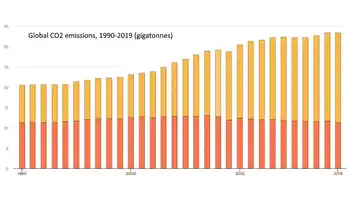
Despite widespread expectations of another increase, global energy-related CO2 emissions stopped growing in 2019, according to International Energy Agency (IEA) data released today. After two years of growth, global emissions were unchanged at 33 gigatonnes in 2019, a notable marker in the global energy transition narrative even as the world economy expanded by 2.9%.

This was primarily due to declining emissions from electricity generation in advanced economies, thanks to the expanding role of renewable sources (mainly wind and solar across many markets), fuel switching from coal to natural gas, and higher nuclear power generation, the Paris-based organisation says in the report.

"We now need to work hard to make sure that 2019 is remembered as a definitive peak in global emissions, not just another pause in growth," said Fatih Birol, the IEA's executive director. "We have the energy technologies to do this, and we have to make use of them all."

Higher nuclear power generation in advanced economies, particularly in Japan and South Korea, avoided over 50 Mt of CO2 emissions. Other factors included milder weather in several countries, and slower economic growth in some emerging markets. In China, emissions rose but were tempered by slower economic growth and higher output from low-carbon sources of electricity. Renewables continued to expand in China, and 2019 was also the first full year of operation for seven large-scale nuclear reactors in the country.

A significant decrease in emissions in advanced economies in 2019 offset continued growth elsewhere. The USA recorded the largest emissions decline on a country basis, with a fall of 140 million tonnes, or 2.9%. US emissions are now down by almost 1 gigatonne from their peak in 2000. Emissions in the European Union fell by 160 million tonnes, or 5%, in 2019 driven by reductions in the power sector as electricity producers move away from coal in the generation mix. Japan’s emissions fell by 45 million tonnes, or around 4%, the fastest pace of decline since 2009, as output from recently restarted nuclear reactors increased.

Emissions in the rest of the world grew by close to 400 million tonnes in 2019, with almost 80% of the increase coming from countries in Asia where coal-fired power generation continued to rise, and in Australia emissions rose 2% due to electricity and transport. Coal-fired power generation in advanced economies declined by nearly 15%, reflecting a sharp fall in coal-fired electricity across multiple markets, as a result of growth in renewables, coal-to-gas switching, a rise in nuclear power and weaker electricity demand.

The IEA will publish a World Energy Outlook Special Report in June that will map out how to cut global energy-related carbon emissions by one-third by 2030 and put the world on track for longer-term climate goals, a pathway that, in Canada, will require more electricity to hit net-zero. It will also hold an IEA Clean Energy Transitions Summit in Paris on 9 July, bringing together key government ministers, CEOs, investors and other major stakeholders.

Birol will discuss the results published today tomorrow at an IEA Speaker Series event at its headquarters with energy and climate ministers from Poland, which hosted COP24 in Katowice; Spain, which hosted COP25 in Madrid; and the UK, which will host COP26 in Glasgow this year, as greenhouse gas concentrations continue to break records worldwide.


Related News

View more

Washington AG Leads Legal Challenge Against Trump’s Energy Emergency

Washington-Led Lawsuit Against Energy Emergency challenges President Trump's executive order, citing state rights, environmental reviews, permitting, and federal overreach; coalition argues record energy output undermines emergency claims in Seattle federal court.


Key Points

Multistate suit to void Trump's energy emergency, alleging federal overreach and weakened environmental safeguards.

? Challenges executive order's legal basis and scope

? Claims expedited permitting skirts environmental reviews

? Seeks to halt emergency permits for non-emergencies


In a significant legal move, Washington State Attorney General Nick Brown has spearheaded a coalition of 15 states in filing a lawsuit against President Donald Trump's executive order declaring a national energy emergency. The lawsuit, filed in federal court in Seattle on May 9, 2025, challenges the legality of the emergency declaration, which aims to expedite permitting processes for fossil fuel projects in pursuit of an energy dominance vision by bypassing key environmental reviews.

Background of the Energy Emergency Declaration

President Trump's executive order, issued on January 20, 2025, asserts that the United States faces an inadequate and unreliable energy grid, particularly affecting the Northeast and West Coast regions. The order directs federal agencies, including the Army Corps of Engineers and the Department of the Interior, to utilize "any lawful emergency authorities" to facilitate the development of domestic energy resources, with a focus on oil, gas, and coal projects. This includes expediting reviews under the Clean Water Act, Endangered Species Act, the National Environmental Policy Act, and the National Historic Preservation Act, potentially reducing public input and environmental oversight.

Legal Grounds for the Lawsuit

The coalition of states, led by Washington and California, argues that the emergency declaration is an overreach of presidential authority, echoing disputes over the Affordable Clean Energy rule in federal courts. They contend that U.S. energy production is already at record levels, and the declaration undermines state rights and environmental protections. The lawsuit seeks to have the executive order declared unlawful and to halt the issuance of emergency permits for non-emergency projects. 

Implications for Environmental Protections

Critics of the energy emergency declaration express concern that it could lead to significant environmental degradation. By expediting permitting processes, including geothermal permitting, and reducing public participation, the order may allow projects to proceed without adequate consideration of their impact on water quality, wildlife habitats, and cultural resources. Environmental advocates argue that such actions could set a dangerous precedent, enabling future administrations to bypass essential environmental safeguards under the guise of national emergencies, even as the EPA advances new pollution limits for coal and gas plants to address the climate crisis.

Political and Legal Reactions

The Trump administration defends the executive order, asserting that the president has the authority to declare national emergencies and that the energy emergency is necessary to address perceived deficiencies in the nation's energy infrastructure and potential electricity pricing changes debated by industry groups. However, legal experts suggest that the broad application of emergency powers in this context may face challenges in court. The outcome of the lawsuit could have significant implications for the balance of power between state and federal authorities, as well as the future of environmental regulations in the United States.

The legal challenge led by Washington State Attorney General Nick Brown represents a critical juncture in the ongoing debate over energy policy and environmental protection. As the lawsuit progresses through the courts, it will likely serve as a bellwether for future conflicts between state and federal governments regarding the scope of executive authority and the preservation of environmental standards, amid ongoing efforts to expand uranium and nuclear energy programs nationwide. The outcome may set a precedent for how national emergencies are declared and managed, particularly concerning their impact on state governance and environmental laws.


Related News

View more

U.S. Ends Support for Ukraine’s Energy Grid Restoration

US Termination of Ukraine Energy Grid Support signals a policy shift: USAID halts aid for grid restoration amid Russia attacks, impacting energy security, infrastructure resilience, winter readiness, and negotiations leverage with Moscow and allies.


Key Points

A US policy reversal ending USAID support for Ukraine's grid, impacting energy security, resilience, and leverage.

✅ USAID halt reduces funds for grid restoration and winter prep

✅ Policy shift may weaken Kyiv's leverage in talks with Russia

✅ Ukraine seeks EU, IFIs, private capital for energy resilience


The U.S. government has recently decided to terminate its support for Ukraine's energy grid restoration, a critical initiative managed by the U.S. Agency for International Development (USAID). This decision, reported by NBC News, comes at a time when Ukraine is grappling with significant challenges to its energy infrastructure due to ongoing Russian attacks. The termination of support was reportedly finalized before Ukrainian President Volodymyr Zelensky's scheduled visit to Washington, marking a significant shift in U.S. policy and raising concerns about the broader implications for Ukraine's energy resilience and its negotiations with Russia.

The Critical Role of U.S. Support

Since Russia's invasion of Ukraine, the country’s energy infrastructure has been one of the primary targets of military strikes. Russia has launched numerous attacks on Ukraine's power generation facilities, substations, and power lines, causing power outages across multiple regions. These attacks have led to significant material losses, with damage reaching billions of dollars. As part of its commitment to Ukraine, the U.S. government, through USAID, had been instrumental in funding restoration efforts aimed at rebuilding and reinforcing Ukraine’s energy grid.

USAID's support was crucial in helping Ukraine withstand the damage inflicted by Russian missile strikes. This aid was not just about restoring basic services but also about fortifying the energy grid to ensure that Ukraine could continue functioning amidst the war and keep the lights on this winter as temperatures drop. The U.S. contribution to Ukraine's energy sector, alongside international support, helped reduce the immediate vulnerabilities faced by Ukraine's civilians and industries.

The Abrupt Change in U.S. Policy

The decision to cut support for energy grid restoration is seen as a sharp reversal in U.S. policy, particularly as the Biden administration has previously shown strong backing for Ukraine in the aftermath of the invasion. This shift in policy was reportedly made by the U.S. State Department, which directed USAID to halt its involvement in the energy sector.

According to NBC News, USAID officials expressed concern about the timing of this decision. One official noted that terminating support for Ukraine’s energy grid restoration would severely undermine the U.S. government's ability to negotiate on issues like ceasefires and peace talks with Russia. The official argued that such a move would signal to Russia that the U.S. is backing away from its long-term investments in Ukraine, potentially weakening Ukraine's position in the ongoing war.

The abrupt end to this support is also seen as a blow to the morale of Ukraine’s government and people. Ukraine had been heavily reliant on the U.S. for resources to repair its critical infrastructure, and the decision to cut this support without warning has created uncertainty about the future of such recovery efforts.

Ukraine’s Response and Search for Alternatives

In response to the termination of U.S. support, Ukrainian officials have been seeking alternative sources of funding to continue the restoration of their energy grid. Deputy Prime Minister Olha Stefanishyna reported that Ukraine has already reached preliminary agreements with other international partners to secure financial support for energy resilience, cyber defense, and recovery programs including new energy solutions for winter blackouts.

These efforts come at a time when Ukraine is working to rebuild its war-torn economy and safeguard critical sectors like energy and infrastructure. The termination of U.S. support for energy restoration projects underscores the growing pressure on Ukraine to diversify its sources of aid and not become overly dependent on any one nation. Ukrainian leaders are in ongoing talks with European governments, international financial institutions, and private investors to ensure that essential programs do not stall due to the lack of funding from the U.S., as energy cooperation grows and Ukraine helps Spain amid blackouts in solidarity.

Implications for Ukraine’s Energy Security

Ukraine's energy security remains a critical issue in the context of the ongoing conflict with Russia. The war has made the country’s energy infrastructure vulnerable to repeated attacks, and the restoration of this infrastructure is essential for ensuring that Ukraine can keep the lights on and recover in the long term. The U.S. has been one of the largest contributors to Ukraine's energy security efforts, and its withdrawal could force Ukraine to look for other partners who may not have the same level of financial or technological resources.

This development also raises questions about the future of U.S. involvement in Ukraine's recovery efforts more broadly. As the war continues and winter looms over the battlefront for frontline communities, the need for reliable and sustained support from international partners will only increase. If the U.S. significantly scales back its aid, Ukraine may face even greater challenges in maintaining its energy infrastructure and achieving long-term recovery.

Moving Forward

The termination of U.S. support for Ukraine’s energy grid restoration serves as a reminder of the complexities involved in international aid and geopolitics during wartime. As Ukraine faces the ongoing realities of the war, it must adapt to a shifting international landscape where traditional allies may not always be reliable sources of support. Ukraine’s leadership will need to be strategic in its search for alternative sources of aid, while also focusing on strengthening its energy grid, managing electricity reserves to stabilize supply, and reducing its vulnerabilities to Russian attacks.

While the end of U.S. support for Ukraine's energy restoration is a significant setback, it also underscores the urgent need for Ukraine to diversify its international partnerships. The future of Ukraine’s energy resilience may depend on how effectively it can navigate these changing dynamics while maintaining the support of the international community in the fight against Russian aggression.


Related News

View more

The City of Vancouver is hosting an ABB FIA Formula E World Championship race next year, organizers have announced

Vancouver Formula E 2022 delivers an all-electric, net-zero motorsport event in False Creek, featuring sustainability initiatives, clean mobility showcases, concerts, and tourism boosts, with major economic impact, jobs, and a climate action conference.


Key Points

A net-zero, all-electric race in False Creek, uniting EV motorsport with sustainability, concerts, and local jobs.

✅ Net-zero, all-electric FIA championship round in Canada

✅ False Creek street circuit with concerts and green mobility expo

✅ Projected $80M impact and thousands of local jobs


The City of Vancouver is hosting an ABB FIA Formula E World Championship race next year, organizers have announced, aligning with the city's EV-ready policy to accelerate adoption.

The all-electric race is being held in the city's False Creek neighbourhood over the 2022 July long weekend as green energy investments accelerate nationwide, according to promoter OSS Group Inc.

Earlier this year, Vancouver city council voted unanimously in support of a multi-day Formula E event that would include a conference on climate change and sustainability amid predicted EV-demand bottlenecks in B.C.

"Formula E is a win on so many levels, from being a net-zero event that supports sustainable transportation to being a huge boost for our hard-hit tourism sector, our residents, who can access rebates for home and workplace charging, and our local economy," Coun. Sarah Kirby-Yung said in a news release Thursday.

As the region advances sustainable mobility, B.C.'s EV charging expansion continues to lead the country.

The promoter said the Formula E race will bring $80 million in economic value and thousands of jobs to the city, with infrastructure like new EV chargers at YVR also underway, but did not provide any details on how it came to those estimates.

More details on the events surrounding the race, including planned concerts and other EV showcases like Everything Electric, are expected to be announced in the fall.

The last time a Formula E World Championship event came to Canada was the Montreal ePrix in 2017. Montreal Mayor Valerie Plante later cancelled planned Formula E events for 2018 and 2019, citing cost overruns and sponsorship troubles.


Related News

View more

Sign Up for Electricity Forum’s Newsletter

Stay informed with our FREE Newsletter — get the latest news, breakthrough technologies, and expert insights, delivered straight to your inbox.

Electricity Today T&D Magazine Subscribe for FREE

Stay informed with the latest T&D policies and technologies.
  • Timely insights from industry experts
  • Practical solutions T&D engineers
  • Free access to every issue

Download the 2025 Electrical Training Catalog

Explore 50+ live, expert-led electrical training courses –

  • Interactive
  • Flexible
  • CEU-cerified