By -- Source, South Florida Sun-Sentinel


NFPA 70b Training - Electrical Maintenance

Our customized live online or in‑person group training can be delivered to your staff at your location.

  • Live Online
  • 12 hours Instructor-led
  • Group Training Available
Regular Price:
$699
Coupon Price:
$599
Reserve Your Seat Today
BOCA RATON, Fla.--A power struggle is brewing over power poles in Boca Raton.

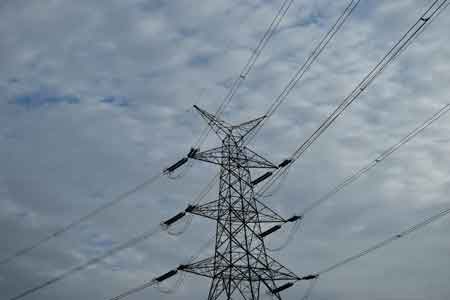
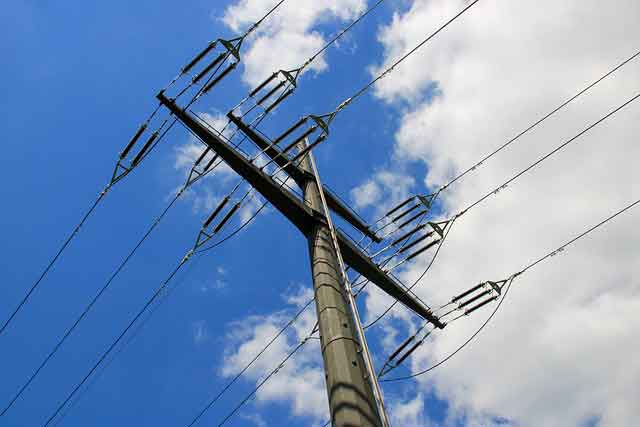
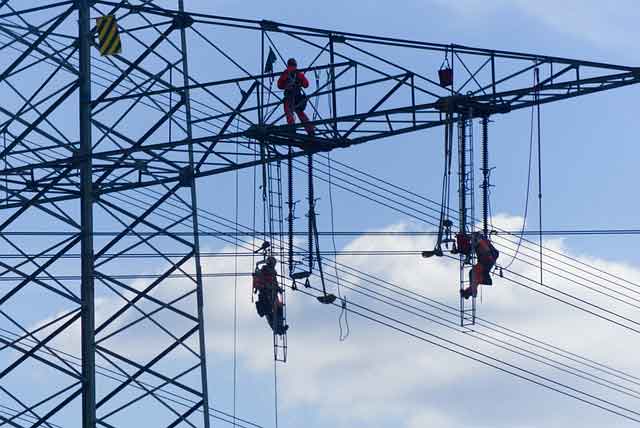
A proposed ordinance that could give the City Council the ability to limit electric poles -- and other types of structures taller than 50 feet -- near neighborhoods is to be considered tonight. The proposal is the latest salvo in the city's battle against Florida Power & Light Co., which has proposed erecting a 90-foot, 230-kilovolt transmission line in areas west of Boca Raton and close to some neighborhoods on the city's northwest side.

"I think the whole point is we wish to be included in the decision-making process of where they're going to go," said Councilman Dave Freudenberg, who proposed the ordinance and lives in a neighborhood near the proposed power line route. The council is scheduled to vote on the ordinance tonight after its second public hearing on the issue. The meeting is at 6 p.m. at City Hall, 201 W. Palmetto Park Road.

The ordinance was first proposed in October after Camino Real Community Church submitted plans for a 100-foot cellular phone tower located in a cross on their property. Electric poles were added to the list of items requiring City Council's approval after the FPL plan generated controversy.

The church has objected to the proposed ordinance, although there is a question about whether it would even be affected because the cellular tower cross already got approval from the city's Planning & Zoning Board.

Some city officials hope that the ordinance will hinder or stop the utility company's efforts to put power poles near Boca Raton neighborhoods.

FPL has proposed an 11-mile electric line that would travel north along U.S. 441 from the Rainberry substation near Glades Road, then go east along Yamato Road before heading north on Jog Road. The $7.5 million project also calls for rebuilding electric lines in the area of Jog and Clint Moore roads and adding a new substation at the intersection of Clint Moore Road and Military Trail. It also would include a new power line between the Pinewood substation on U.S. 441 north of Clint Moore Road and a transmission line a mile to the west.

Construction on the power line is supposed to be completed by summer 2003.

Freudenberg predicts FPL will mount a legal challenge to the ordinance.

The company has already questioned the city's legal authority to enact the height restriction.

The poles do not lend themselves to local zoning or conditional-use determinations by City Council and can only be regulated by the state Public Service Commission, FPL attorney Jean Howard wrote in a letter to the city.

"Electric facilities follow the growth within the state. Everyone wants and needs electric service. Yet very few wish to have the electric lines on their property or adjacent right-of-way," Howard wrote.

Related News
B.C.'s Green Energy Ambitions Face Power Supply Challenges

British Columbia Green Grid Constraints underscore BC Hydro's rising imports, peak demand, electrification, hydroelectric variability, and transmission bottlenecks, challenging renewable energy expansion, energy security, and CleanBC targets across industry and zero-emission transportation.


Key Points

They are capacity and supply limits straining B.C.'s clean electrification, driving imports and risking reliability.

✅ Record 25% imports in FY2024 raise emissions and costs

✅ Peak demand and transmission limits delay new connections

✅ Drought reduces hydro output; diversified generation needed


British Columbia's ambitious green energy initiatives are encountering significant hurdles due to a strained electrical grid and increasing demand, with a EV demand bottleneck adding pressure. The province's commitment to reducing carbon emissions and transitioning to renewable energy sources is being tested by the limitations of its current power infrastructure.

Rising Demand and Dwindling Supply

In recent years, B.C. has experienced a surge in electricity demand, driven by factors such as population growth, increased use of electric vehicles, and the electrification of industrial processes. However, the province's power supply has struggled to keep pace, and one study projects B.C. would need to at least double its power output to electrify all road vehicles. In fiscal year 2024, BC Hydro imported a record 13,600 gigawatt hours of electricity, accounting for 25% of the province's total consumption. This reliance on external sources, particularly from fossil-fuel-generated power in the U.S. and Alberta, raises concerns about energy security and sustainability.

Infrastructure Limitations

The current electrical grid is facing capacity constraints, especially during peak demand periods, and regional interties such as a proposed Yukon connection are being discussed to improve reliability. A report from the North American Electric Reliability Corporation highlighted that B.C. could be classified as an "at-risk" area for power generation as early as 2026. This assessment underscores the urgency of addressing infrastructure deficiencies to ensure a reliable and resilient energy supply.

Government Initiatives and Investments

In response to these challenges, the provincial government has outlined plans to expand the electrical system. Premier David Eby announced a 10-year, $36-billion investment to enhance the grid's capacity, including grid development and job creation measures to support local economies. The initiative focuses on increasing electrification, upgrading high-voltage transmission lines, refurbishing existing generating facilities, and expanding substations. These efforts aim to meet the growing demand and support the transition to clean energy sources.

The Role of Renewable Energy

Renewable energy sources, particularly hydroelectric power, play a central role in B.C.'s energy strategy. However, the province's reliance on hydroelectricity has its challenges. Drought conditions in recent years have led to reduced water levels in reservoirs, impacting the generation capacity of hydroelectric plants. This variability underscores the need for a diversified energy mix, with options like a hydrogen project complementing hydro, to ensure a stable and reliable power supply.

Balancing Environmental Goals and Energy Needs

B.C.'s commitment to environmental sustainability is evident in its policies, such as the CleanBC initiative, which aims to phase out natural gas heating in new homes by 2030 and achieve 100% zero-emission vehicle sales by 2035, supported by networks like B.C.'s Electric Highway that expand charging access. While these goals are commendable, they place additional pressure on the electrical grid. The increased demand from electric vehicles and electrified heating systems necessitates a corresponding expansion in power generation and distribution infrastructure.

British Columbia's green energy ambitions are commendable and align with global efforts to combat climate change. However, achieving these goals requires a robust and resilient electrical grid capable of meeting the increasing demand for power. The province's reliance on external power sources and the challenges posed by climate variability highlight the need for strategic investments in infrastructure and a diversified energy portfolio, guided by BC Hydro review recommendations to keep electricity affordable. By addressing these challenges proactively, B.C. can pave the way for a sustainable and secure energy future.


Related News

View more

Tesla reduces Solar + home battery pricing following California blackouts

Tesla Solar and Powerwall Discount offers a ~10% installation price cut amid PG&E blackouts, helping California homeowners with solar panels, battery storage, and backup power, while supporting renewable energy and resilient Supercharger infrastructure.


Key Points

A ~10% installation discount on Tesla solar panels and Powerwall batteries to boost backup power during PG&E blackouts.

✅ ~10% off installation for solar plus Powerwall

✅ Helps during PG&E shutoffs and wildfire mitigation

✅ Supports resilience, backup power, and EV charging


Pacific Gas & Electric’s (PG&E) shutoff of electric supply to residents in California’s Bay Area has caught the attention of Tesla and SpaceX CEO Elon Musk, who, while highlighting a huge future for Tesla Energy in coming years, has announced that he would be offering a price reduction of approximately 10% for a solar panel and Tesla Powerwall battery installation. The discount will be available to anyone interested in powering their homes with solar energy, not just the 800,000 affected homes in the Bay Area.

After initially tweeting a link to Tesla’s Solar page on Tesla.com, Musk added that he would be offering a “~10% price reduction” in installation price for solar panels and Powerwall batteries for anyone, as California explores EVs for grid stability during emergencies, including those who have lost power in response to PG&E’s power shutoff. The blackout induced by the California-based power company is a part of an effort to reduce the possibility of wildfires. PG&E lines were the cause of multiple fires in the past, so the company is taking every necessary precaution to reduce the probability of its lines causing another fire in the future.

Tesla Solar recently offered a subscription program that would allow homeowners to lease panels for a fraction of the cost. The service is available to both residential and commercial customers, and costs as little as $45 a month in some states, particularly appealing in California where EV sales top 20% recently. The option to lease solar panels carries no long-term contracts that would tie down customers to a lengthy commitment.

Wildfires have always been an issue in California. Currently, fires are ripping through Los Angeles county, presumably caused by the winds of the Autumn season. The effort to reduce the environmental impact of forest fires in the state has been increasingly more prevalent over the years. But 2019 is a different story, underscoring that California may need a much bigger grid to support electrification, considering the previous year was noted as the deadliest wildfire season in California’s history. Over 8,500 fires destroyed over 1.89 million acres of land burned due to fires, causing the California Department of Forestry and Fire Protection to spend $432 million through the end of August 2018, according to the Associated Press.

In reaction to the news of the power shutoffs, Tesla added words of advice to vehicle affected owners on its app. The company posted a message encouraging drivers to keep their vehicles charged to 100% and highlighted that EVs can power homes for up to three days during outages, in order to prevent interruptions in driving. Those who are driving ICE vehicles are feeling the effects of the blackout too, as gas stations in California’s affected region have begun to shut down. Musk also tweeted that he would be installing Tesla Powerpacks at all Supercharger stations in the affected region, a move that can help ease strain on state power grids during outages, in order to allow owners to charge their vehicles.

In addition to the efforts that Tesla has already put into place, Musk plans to transition all Supercharger stations to solar power as soon as possible. But the sunny climate of California offers residents a great opportunity to move from gas and electric, even as some warn of a looming green car wreck in the state, to a more eco-friendly, sun-powered option. Tesla solar will completely eliminate power blackouts that are used to control wildfires in California.


Related News

View more

Coal demand dropped in Europe over winter despite energy crisis

EU Winter Energy Mix 2022-2023 shows renewables, wind, solar, and hydro overtaking coal and gas, as demand fell amid high prices; Ember and IEA confirm lower emissions across Europe during the energy crisis.


Key Points

It describes Europe's winter power mix: reduced coal and gas, and record wind, solar, and hydro output.

✅ Coal generation fell 11% YoY; gas output declined even more.

✅ Renewables supplied 40%: wind, solar, and hydro outpaced fossil fuels.

✅ Ember and IEA confirm trends; mild winter tempered demand.


The EU burned less coal this winter during the energy crisis than in previous years, according to an analysis, quashing fears that consumption of the most polluting fossil fuel would soar as countries scrambled to find substitutes for lost supplies of Russian gas.

The study from energy think-tank Ember shows that between October 2022 and March 2023 coal generation fell 27 terawatt hours, or almost 11 per cent year on year, while gas generation fell 38 terawatt hours, as renewables crowded out gas and consumers cut electricity consumption in response to soaring prices.

Renewable energy supplies also rose, with combined wind and solar power and hydroelectric output outstripping fossil fuel generation for the first time, providing 40 per cent of all electricity supplies. The Financial Times checked Ember’s findings with the International Energy Agency, which said they broadly matched its own preliminary analysis of Europe’s electricity generation over the winter.

The study demonstrates that fears of a steep rebound in coal usage in Europe’s power mix were overstated, despite the continent’s worst energy crisis in 40 years following Russia’s full-scale invasion of Ukraine, even as stunted hydro and nuclear output in parts of Europe posed challenges.

While Russia slashed gas supplies to Europe and succeeded in boosting energy prices for consumers to record levels, the push by governments to rejuvenate old coal plants, including Germany's coal generation, to ensure the lights stayed on ultimately did not lead to increased consumption.

“With Europe successfully on the other side of this winter and major supply disruptions avoided, it is clear the threatened coal comeback did not materialise,” analysts at Ember said in the report.

“With fossil fuel generation down, EU power sector emissions during winter were the lowest they have ever been.”

Ember cautioned, however, that Europe had been assisted by a mild winter that helped cut electricity demand for heating and there was no guarantee of such weather next winter. Companies and households had also endured a lot of pain as a result of the higher prices that had led them to cut consumption, even though in some periods, such as the latest lockdown, power demand held firm in parts of Europe.

Total electricity consumption between October and March declined 94 terawatt hours, or 7 per cent, compared with the same period in winter 2021/22, continuing post-Covid transition dynamics across Europe.

“For a lot of people this winter was really hard with electricity prices that were extraordinarily high and we shouldn’t lose sight of that,” said Ember analyst Harriet Fox.


Related News

View more

Electric vehicles to transform the aftermarket … eventually

Heavy-Duty Truck Electrification is disrupting the aftermarket as diesel declines: fewer parts, regenerative braking, emissions rules, e-drives, gearboxes, and software engineering needs reshape service demand, while ICE fleets persist for years.


Key Points

Transition of heavy trucks to EV systems, reducing parts and emissions while reshaping aftermarket service and skills.

✅ 33% fewer parts; regenerative braking slashes brake wear

✅ Diesel share declines; EVs and natural gas slowly gain

✅ Aftermarket shifts to e-drives, gearboxes, software and service


Those who sell parts and repair trucks might feel uneasy when reports emerge about a coming generation of electric trucks.

There are reportedly about 33% fewer parts to consider when internal combustion engines and transmissions are replaced by electric motors. Features such as regenerative braking are expected to dramatically reduce brake wear. As for many of the fluids needed to keep components moving? They can remain in their tanks and drums.

Think of them as disruptors. But presenters during the annual Heavy Duty Aftermarket Dialogue are stressing that the changes are not coming overnight. Chris Patterson, a consultant and former Daimler Trucks North America CEO, noted that the Daimler electrification plan underscores the shift as he counts just 50 electrified heavy trucks in North America.

About 88% of today’s trucks run on diesel, with the remaining 12% mostly powered by gasoline, said John Blodgett, MacKay and Company’s vice-president of sales and marketing. Five years out, even amid talk of an EV inflection point, he expects 1% to be electric, 2% to be natural gas, 12% to be gasoline, and 84% on diesel.

But a decade from now, forecasts suggest a split of 76% diesel, 11% gasoline, 7% electric, and 5% natural gas, with a fraction of a percent relying on hydrogen-electric power. Existing internal combustion engines will still be in service, and need to be serviced, but aftermarket suppliers are now preparing for their roles in the mix, especially as Canada’s EV opportunity comes into focus for North American players.

“This is real, for sure,” said Delphi Technologies CEO Rick Dauch.

Aftermarket support is needed
“As programs are launched five to six years from now, what are the parts coming back?” he asked the crowd. “Braking and steering. The fuel injection business will go down, but not for 20-25 years.” The electric vehicles will also require a gear box and motor.

“You still have a business model,” he assured the crowd of aftermarket professionals.

Shifting emissions standards are largely responsible for the transformation that is occurring. In Europe, Volkswagen’s diesel emissions scandal and future emissions rules of Euro 7 will essentially sideline diesel-powered cars, even as electric buses have yet to take over transit systems. Delphi’s light-duty diesel business has dropped 70% in just five years, leading to plant closures in Spain, France and England.

“We’ve got a billion-dollar business in electrification, last year down $200 million because of the downturn in light-duty diesel controllers,” Dauch said. “We think we’re going to double our electrification business in five years.”

That has meant opening five new plants in Eastern European markets like Turkey, Romania and Poland alone.

Deciding when the market will emerge is no small task, however. One new plant in China offered manufacturing capacity in July 2019, but it has yet to make any electric vehicle parts, highlighting mainstream EV challenges tied to policy shifts, because the Chinese government changed the incentive plans for electric vehicles.

‘All in’ on electric vehicles
Dana has also gone “all in” on electrification, said chairman and CEO Jim Kamsickas, referring to Dana’s work on e-drives with Kenworth and Peterbilt. Its gasket business is focusing on the needs of battery cooling systems and enclosures.

But he also puts the demand for new electric vehicle systems in perspective. “The mechanical piece is still going to be there.”

The demand for the new components and systems, however, has both companies challenged to find enough capable software engineers. Delphi has 1,600 of them now, and it needs more.

“Just being a motor supplier, just being an inverter supplier, just being a gearbox supplier itself, yes you’ll get value out of that. But in the longhaul you’re going to need to have engineers,” Kamsickas said of the work to develop systems.

Dauch noted that Delphi will leave the capital-intensive work of producing batteries to other companies in markets like China and Korea. “We’re going to make the systems that are in between – inverters, chargers, battery management systems,” he said.

Difficult change
But people working for European companies that have been built around diesel components are facing difficult days. Dauch refers to one German village with a population of 1,200, about 800 of whom build diesel engine parts. That business is working furiously to shift to producing gasoline parts.

Electrification will face hurdles of its own, of course. Major cities around the world are looking to ban diesel-powered vehicles by 2050, but they still lack the infrastructure needed to charge all the cars and truck fleet charging at scale, he added.

Kamsickas welcomes the disruptive forces.

“This is great,” he said. “It’s making us all think a little differently. It’s just that business models have had to pivot – for you, for us, for everybody.”

They need to be balanced against other business demands, including evolving cross-border EV collaboration dynamics, too.

Said Kamsickas: “Working through the disruption of electrification, it’s how do you financially manage that? Oh, by the way, the last time I checked there are [company] shareholders and stakeholders you need to take care of.”

“It’s going to be tough,” Dauch agreed, referring to the changes for suppliers. “The next three to four years are really going to be game changes. “There’ll be some survivors and some losers, that’s for sure.”


Related News

View more

California Legislators Prepare Vote to Crack Down on Utility Spending

California Utility Spending Bill scrutinizes how ratepayer funds are used by utilities, targeting lobbying, advertising, wildfire prevention cost pass-throughs, and CPUC oversight to curb high electricity bills and increase accountability and transparency statewide.


Key Points

Legislation restricting utilities from using ratepayer money for lobbying and ads, with stronger CPUC oversight.

✅ Bans ratepayer-funded lobbying and political advertising

✅ Expands prohibited utility communications and influence spending

✅ Aims to curb bills, boost transparency, and CPUC accountability


California's legislators are about to vote on a bill that would impose stricter regulations on how utility companies spend the money they collect from ratepayers. This legislation directly responds to the growing discontent among Californians who are already grappling with high electricity bills, as Californians ask why electricity prices are soaring amid wildfire prevention efforts.

Consumer rights groups have been vehemently critical of how utilities have been allocating customer funds, amid growing calls for regulatory action from state officials. They allege that a substantial portion of this money is being funnelled into lobbying efforts and advertising campaigns that yield no direct benefits for the customers themselves.

The proposed bill would significantly broaden the definition of what constitutes prohibited advertising and political influence activities on the part of utility companies, separate from income-based fixed electricity charges proposals that affect rate design. This would effectively restrict the ways in which utilities can utilize customer funds for such purposes.

While consumer advocacy groups have favored the legislation, it has drawn opposition from utility companies and some labor unions, as lawmakers weigh overturning income-based utility charges in parallel debates. Opponents contend that it would hinder utilities' ability to communicate effectively with their customers and advocate for their interests. Additionally, they express concerns that the bill could result in job losses within the utility sector.

The vote on the bill is expected to take place on Monday. The outcome of the vote is uncertain, but it is sure to be a closely watched development for Californians struggling with the burden of high electricity bills, with many wondering about major changes to their electric bills in the near term.


California's Electricity Rates: A Burden for Residents

A recent report by the California Public Utilities Commission (CPUC) revealed that the average Californian household spends a significantly higher amount on electricity compared to the national average. This disparity in electricity rates can be attributed to a number of factors, including the financial costs associated with wildfire prevention measures, investments in renewable energy infrastructure, and maintenance of aging electrical grids, even as the state considers revamping electricity rates to clean the grid.


Examples of Utility Company Spending that Raise Concerns

Consumer rights groups have specifically highlighted instances where utility companies have used customer money to fund lavish executive compensation packages, sponsor professional sports teams, and finance political campaigns. They argue that these expenditures do not provide any tangible benefits to ratepayers and should not be funded through customer bills.


The Need for Accountability and Prioritization

Proponents of the bill believe that the legislation is necessary to ensure that utility companies are held accountable for how they spend customer funds. They believe that the stricter regulations would compel utilities to prioritize investments that directly improve the quality and reliability of electricity services for Californians, alongside discussions of income-based flat-fee utility bills that could reshape rate structures.

The impending vote on the bill underscores the ongoing tension between the need for reliable electricity services and the desire to keep utility rates affordable for Californians. The outcome of the vote is likely to have a significant impact on how utility companies operate in the state and how much Californians pay for their electricity.


Related News

View more

Trump Tariff Threat Delays Quebec's Green Energy Bill

Quebec Energy Bill Tariff Delay disrupts Canada-U.S. trade, renewable energy investment, hydroelectric expansion, and clean technology projects, as Trump tariffs on aluminum and steel raise costs, threatening climate targets and green infrastructure timelines.


Key Points

A policy pause in Quebec from U.S. tariff threats, disrupting clean investment, hydro expansion, and climate targets.

✅ Tariff risk inflates aluminum and steel project costs.

✅ Quebec delays clean energy legislation amid trade uncertainty.

✅ Hydroelectric reliance complicates emissions reduction timelines.


The Trump administration's tariff threat has had a significant impact on Quebec's energy sector, with tariff threats boosting support for projects even as the uncertainty resulted in the delay of a critical energy bill. Originally introduced to streamline energy development and tackle climate change, the bill was meant to help transition Quebec towards greener alternatives while fostering economic growth. However, the U.S. threat to impose tariffs on Canadian goods, including energy products, introduced a wave of uncertainty that led to a pause in the bill's legislative process.

Quebec’s energy bill had ambitious goals of transitioning to renewable sources like wind, solar, and hydroelectric power. It sought to support investments in clean technologies and the expansion of the province's clean energy infrastructure, as the U.S. demand for Canadian green power continues to grow across the border. Moreover, it emphasized the reduction of carbon emissions, an important step towards meeting Quebec's climate targets. At its core, the bill aimed to position the province as a leader in green energy development in Canada and globally.

The interruption caused by President Donald Trump's tariff rhetoric has, however, cast a shadow over the legislation. Tariffs, if enacted, would disproportionately affect Canada's energy exports, with electricity exports at risk under growing tensions, particularly in sectors like aluminum and steel, which are integral to energy infrastructure development. These tariffs could increase the cost of energy-related projects, thereby hindering Quebec's ability to achieve its renewable energy goals and reduce carbon emissions in a timely manner.

The tariff threat was seen as a part of the broader trade tensions between the U.S. and Canada, a continuation of the trade war that had escalated under Trump’s presidency. In this context, the Quebec government was forced to reconsider its legislative priorities, with policymakers citing concerns over the potential long-term consequences on the energy industry, as leaders elsewhere threatened to cut U.S.-bound electricity to exert leverage. With the uncertainty around tariffs and trade relations, the government opted to delay the bill until the geopolitical situation stabilized.

This delay underscores the vulnerability of Quebec’s energy agenda to external pressures. While the provincial government had set its sights on an ambitious green energy future, it now faces significant challenges in ensuring that its projects remain economically viable under the cloud of potential tariffs, even as experts warn against curbing Quebec's exports during the dispute. The delay in the energy bill also reflects broader challenges faced by the Canadian energy sector, which is highly integrated with the U.S. market.

The situation is further complicated by the province's reliance on hydroelectric power, a cornerstone of its energy strategy that supplies markets like New York, where tariffs could spike New York energy prices if cross-border flows are disrupted. While hydroelectric power is a clean and renewable source of energy, there are concerns about the environmental impact of large-scale dams, and these concerns have been growing in recent years. The tariff threat may prompt a reevaluation of Quebec’s energy mix and force the government to balance its environmental goals with economic realities.

The potential imposition of tariffs also raises questions about the future of North American energy cooperation. Historically, Canada and the U.S. have enjoyed a symbiotic energy relationship, with significant energy trade flowing across the border. The energy bill in Quebec was designed with the understanding that cross-border energy trade would continue to thrive. The Trump administration's tariff threat, however, casts doubt on this stability, forcing Quebec lawmakers to reconsider how they proceed with energy policy in a more uncertain trade environment.

Looking forward, Quebec's energy sector will likely need to adjust its strategies to account for the possibility of tariffs, while still pushing for a sustainable energy future, especially if Biden outlook for Canada's energy proves more favorable for the sector in the medium term. It may also open the door for deeper discussions about diversification, both in terms of energy sources and trade partnerships, as Quebec seeks to mitigate the impact of external threats. The delay in the energy bill, though unfortunate, may serve as a wake-up call for Canadian lawmakers to rethink how they balance environmental goals with global trade realities.

Ultimately, the Trump tariff threat highlights the delicate balance between regional energy ambitions and international trade dynamics. For Quebec, the delay in the energy bill could prove to be a pivotal moment in shaping the future of its energy policy.


Related News

View more

Sign Up for Electricity Forum’s Newsletter

Stay informed with our FREE Newsletter — get the latest news, breakthrough technologies, and expert insights, delivered straight to your inbox.

Electricity Today T&D Magazine Subscribe for FREE

Stay informed with the latest T&D policies and technologies.
  • Timely insights from industry experts
  • Practical solutions T&D engineers
  • Free access to every issue

Download the 2025 Electrical Training Catalog

Explore 50+ live, expert-led electrical training courses –

  • Interactive
  • Flexible
  • CEU-cerified