Former legislator eyed for PUC

By Lancaster Sunday News


Protective Relay Training - Basic

Our customized live online or in‑person group training can be delivered to your staff at your location.

  • Live Online
  • 12 hours Instructor-led
  • Group Training Available
Regular Price:
$699
Coupon Price:
$599
Reserve Your Seat Today
Former state Rep. Gibson C. Armstrong is on the governor's short list of candidates for a vacancy on the state Public Utility Commission, according to several sources in Harrisburg.

If Armstrong is confirmed by the state Senate - where his father is part of the Republican majority leadership - the former legislator would serve a five-year term as a PUC commissioner and earn $124,000 a year, or about $50,000 more than he earned as a legislator.

When contacted about his possible nomination, Armstrong said "It's an honor to be considered, and right now there are several opportunities I'm looking into."

He declined to comment further but forwarded a January 19 letter written on his behalf to Gov. Ed Rendell by a former Colorado PUC commissioner.

"Mr. Armstrong's credentials, integrity and commitment to a sound energy and economic future are well established and make him an outstanding choice," wrote Brent Alderfer, executive vice president of Iberdrola Renewable Energies USA.

Sources in Harrisburg who requested anonymity said some Republicans in the state Capitol are concerned Armstrong's possible nomination by Democratic Gov. Ed Rendell may prompt allegations of nepotism.

The former legislator's father is state Sen. Gibson E. Armstrong, the Republican Appropriations Committee chairman, and both he and Rendell wield considerable influence over state spending.

The five-member PUC board approves utility rate increases, rules on residential complaints about utilities and implements state energy policies, such as alternative energy initiatives.

Gib Armstrong would fill the seat formerly held by Bill Shane, whose term ended in April. His appointment would have to be approved by the state Senate.

When asked if she had a comment about Armstrong's potential nomination, Rendell spokeswoman Kate Philips said, "Nope."

Rendell has been criticized for his appointment in December of former state Sen. Joe Conti to the new post of chief executive officer of the state Liquor Control Board.

Conti's appointment to the $150,000-a-year job prompted Liquor Control Board Chairman Jonathan H. Newman to resign, claiming the selection process was too secretive.

Like Conti, Armstrong is a former Republican legislator who had a role in the controversial and now-repealed legislative pay raise of 2005.

Armstrong voted against the raise but accepted the increase through a controversial measure called "unvouchered expenses." He later returned the money to the state.

Armstrong represented the 100th District, which covers most of southern Lancaster County, from 2002 until 2006. He was defeated in the May 2006 primary by Bryan Cutler, who ran unopposed in the November general election.

During his tenure, Armstrong supported alternative energy proposals and served as chairman of the state House Alternative Energy Caucus. He also was selected by state Department of Environmental Protection Secretary Kathleen McGinty to serve as secretary of the Pennsylvania Energy Development Authority.

Sources said McGinty is backing Armstrong's nomination to the PUC because the two have similar views on promoting development of alternative energy sources.

Jim Seif, former DEP Secretary during Gov. Tom Ridge's administration, said in an e-mail that he supports Armstrong's nomination.

"I have worked with Gib on energy policy over the last several years and find him hard-working, conscientious and perceptive," Seif wrote.

"These qualities will add strength to a commission that will have enormous energy-related challenges to face in the next several years."

Related News
"It's freakishly cold": Deep freeze slams American energy sector

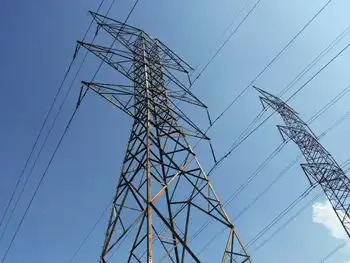
Texas Deep Freeze Energy Crisis strains grids as polar vortex triggers rolling blackouts, record natural gas and electricity prices, refinery shutdowns, WTI gains, and scarcity pricing across Texas, Oklahoma, SPP, and Mexico.


Key Points

A polar vortex slamming Texas energy: outages, record power prices, gas spikes, and reduced oil output.

✅ Record gas trades near $500/mmBtu; power hits $6,000/MWh

✅ WTI tops $60 as Texas shuts in ~1 million bpd

✅ Rolling blackouts across SPP; ERCOT scarcity pricing


A deep freeze is roiling electricity markets in more than a dozen U.S. states, leading to record-setting prices for electricity and natural gas, knocking oil production off line and shutting down some of North America’s largest refineries.

“It’s freakishly cold,” said Eric Fell, a senior natural gas analyst with Wood Mackenzie in Houston, where record cold temperatures and snow have blanketed the city, caused rolling power outages, shut down refineries and sent both natural gas and electricity prices soaring.

'It’s freakishly cold': Deep freeze slams North American energy sector

The polar vortex has led to freezing temperatures in every county in Texas, the largest energy-producing state in the U.S., and caused massive disruptions across the North American energy complex, triggering Texas power outages as far south as Mexico.

As the plunge in temperatures forced oil companies to shut in an estimated one million barrels of oil production in Texas on Monday, the West Texas Intermediate benchmark price rose above the US$60 per barrel threshold for the first time in a year to settle up 1 per cent, or US65 cents, at US$60.12 per barrel.

President Joe Biden declared an emergency on Monday, unlocking federal assistance to Texas.

People carry groceries from a local gas station on Monday in Austin, Texas. Winter storm Uri has brought historic cold weather to Texas, causing traffic delays and power outages. 

Frozen wind farms are just a small piece of Texas’s power grid woes right now.

Fell said regional natural gas and electricity prices in Oklahoma and Texas broke U.S. records over the weekend.

On Friday, Oklahoma gas transmission prices averaged US$350 per million British thermal units and Fell said one trade went as high as US$600 per mmBtu. In parts of the Texas panhandle and elsewhere, prices jumped to US$200, “all of which individually would have been new records,” Fell said, noting the previous record was US$160.

On Monday, natural gas for physical delivery in the U.S. was trading for as much as US$500 per mmBtu as demand for the heating and power plant fuel soared.  Spot gas has been trading for hundreds of dollars across the central U.S. since Thursday with a surge in heating demand triggering widespread blackouts and sending electricity prices soaring. The fuel normally trades in the region for less than US$3 per mmBtu.

Similarly, electricity prices in Texas surged to US$6,000 per megawatt hour on Monday, as U.S. power companies grapple with supply-chain constraints, which Fell said is “100 times the normal price.”

“You’re seeing scarcity pricing in power and gas. The only thing that’s different this time is it’s staying there – it’s not just an hour or two hours, it’s the whole day,” he said.

The blast of Arctic cold, which has blanketed Canada and much of the U.S., has created a massive draw on natural gas supplies, used both for home heating and industrial uses like electricity generation.

Little Rock, Ark.-based Southwest Power Pool, which coordinates electricity distribution for parts of 14 states including Oklahoma Kansas, Nebraska and even as far north as North Dakota, announced rolling blackouts across its network on Monday as a result of the power outages.

“In our history as a grid operator, this is an unprecedented event and marks the first time SPP has ever had to call for controlled interruptions of service” SPP’s executive vice-president and chief operating officer Lanny Nickell said in a release, adding the move was “a last resort” to “prevent circumstances from getting worse.”

The frigid conditions have led to a surge in natural gas prices across the continent, including in Alberta where the AECO benchmark price jumped to a seven-year high of $6.36 per thousand cubic feet last week, a price not seen since 2014.

Energy systems in Texas and Oklahoma, which are major energy exporters to other U.S. states, are built to withstand severe heat – not extreme cold. The result is a disruption to the gas supply at exactly the time the U.S. energy system is demanding those molecules.

“Given how far south it’s gone into Texas, this is where you have a lot of gas production that isn’t properly winterized,” said Jeremy McCrea, an analyst with Raymond James covering the natural gas industry.


Related News

View more

EPA Policy to limit telework emerges during pandemic

EPA Telework Policy restricts remote work, balancing work-from-home guidance during the COVID-19 pandemic with flexible schedules, union contracts, OMB guidance, and federal workforce rules, impacting managers, SES staff, and non-bargaining employees nationwide.


Key Points

A directive limiting many EPA staff to two telework days weekly, with pandemic exceptions and flexible schedules.

✅ Limits telework to two days per week for many employees

✅ Allows flexible schedules, including maxiflex, during emergencies

✅ Aligns with OMB, OPM, CDC guidance; honors union agreements


EPA has moved forward on a new policy that would restrict telework even as agency leadership has encouraged staff to work from home during the coronavirus outbreak.

The new EPA order obtained by E&E News would require employees to report to the office at least three days every week.

"Full-time employees are expected to report to the official worksite and duty station a minimum of three (3) days per week," says the order, dated as approved on Feb. 27. It went into effect March 15 — that night, EPA Administrator Andrew Wheeler authorized telework for the entire agency due to the pandemic.

The order focuses on EPA employees' work schedules and gives them new flexibilities that could come in handy during a public health emergency like the COVID-19 virus, when parts of the power sector consider on-site staffing to ensure continuity.

It also stipulates a deep reduction in EPA employees' capability to work remotely, leaving them with two days of telework per week. An agency order on telework, issued in January 2016, said staff could telework full time.

"The EPA supports the use of telework," said that order. "Regular telework may range from one day per pay period up to full time."

An EPA spokeswoman said the new order doesn't change the agency's guidance to staff to work from home during the pandemic.

"The health and safety of our employees is our top priority, and that is why we have requested that all employees telework, even as residential electricity use increases with more people at home, until at least April 3. There is no provision in the work schedules policy, telework policy or collective bargaining agreement that limits this request," said the spokeswoman.

"While EPA did implement the national work schedule policy effective 3/15/2020, it was implemented in order to provide increased work schedule flexibilities for non-bargaining unit employees who were not previously afforded flexible schedules, including maxiflex," she added.

"The implementation of the policy does not currently impact telework opportunities for EPA employees, and EPA has strongly encouraged all staff to telework," she said.

Still, the new order has caused consternation among EPA employees.

One EPA manager described it as another move by the Trump administration to restrict telework across the government.

"Amidst the COVID-19 crisis, this policy seems particularly ill-timed and unwise. It doesn't even give the administration the chance to evaluate the situation once the COVID-19 pandemic passes," said the manager.

"I think this is a dramatic change in the flexibilities available to the EPA employees without any data to support such a drastic move," the manager said. "It has huge ramifications for employees, many of whom commute over an hour each way to the office, increasing air pollution in the process."

Another EPA staffer said, "I honestly think such an order, given current circumstances, would elicit little more than a scoff and a smirk."

The person added, "How tone-deaf and heavy-handed can one administration be?"

Inside EPA first reported on the new order. E&E News obtained the memo independently.

The recently issued policy applies only to non-bargaining-unit employees, including "full-time and part-time" agency staff as well as "supervisors and managers in the competitive, excepted, Senior Level, Scientific and Professional, and Senior Executive Service positions."

In addition, the order covers "Public Health Service Officers, Schedule C, Administratively Determined employees and non-EPA employees serving on Intergovernmental Personnel Act assignments to EPA."

Nevertheless, EPA employees covered under union contracts must adhere to those contracts if the policy runs counter to them.

"If provisions of this order conflict with the provisions of a collective bargaining agreement, the provisions of the agreement must be applied," the order says.

EPA has taken a more restrictive approach with the agency's largest union, American Federation of Government Employees Council 238, which represents about 7,500 EPA employees. EPA imposed a contract on the council's bargaining unit employees last July that limited them to one day of telework per week, among other changes that triggered union protests.

EPA and AFGE have since relaunched contract negotiations, and how to handle telework is one of the issues under discussion. Both sides committed to complete those bargaining talks by April 15 and work with the Federal Service Impasses Panel if needed (Greenwire, Feb. 27).


Both sides of the telework debate
EPA's new order has been under consideration for some time.

E&E News obtained a draft version last year. The agency had circulated it for comment in July, noting the proposal "limits the number of days an employee may telework per week," among other changes (Greenwire, Sept. 12, 2019).

EPA, like other federal agencies under the Trump administration, has sought to reduce employees' telework. That effort, though, has run into the headwinds of a global pandemic, with a U.S. grid warning highlighting broader risks, leading agency leaders to reverse course and now encourage staff to work remotely in order to stop the spread of the COVID-19 virus.

Wheeler in an email last week told staff that he authorized telework for employees across the country. Federal worker unions had sought the opportunity for remote work on behalf of EPA employees, and the agency had already relaxed telework policies at various offices the prior week where the coronavirus had begun to take hold.

The EPA spokeswoman said the agency moved toward telework after guidance from other agencies.

"Consistent with [Office of Management and Budget], [Centers for Disease Control and Prevention] and [Office of Personnel Management] guidance, along with state and local directives, we have taken swift action in regions and at headquarters to implement telework for all employees. We continue to tell all employees to telework," said the spokeswoman.

Wheeler said in a later video message that his expectation was most EPA employees were working from home.

"I understand that this is a difficult and scary time for all of us," said the EPA administrator.

The coronavirus has become a real challenge for EPA, and utilities like BC Hydro Site C updates illustrate broader operational adjustments.

Agency staff have been exposed to the virus while some have tested positive, and nuclear plant workers have raised similar concerns, according to internal emails. That has led to employees self-quarantining while their colleagues worry they may next fall ill (Greenwire, March 20).

One employee said that since EPA's operations have been maintained with staff working from home, even as household electricity bills rise for many, it's harder for the Trump administration to justify restricting remote work.

"With the current climate, I think employees have shown we can keep the agency going with nearly 95% teleworking full time. It makes their argument hard to justify in light of things," said the EPA employee.

The Trump administration overall has pushed for more remote work by the federal workforce in the battle with the COVID-19 virus. The Office of Management and Budget issued guidance to agencies last week "to minimize face-to-face interactions" and "maximize telework across the nation."

Lawmakers have also pushed to expand telework for federal workers due to the virus.

Democratic senators sent a letter last week urging President Trump to issue an executive order directing agencies to use telework.

In addition, Sens. James Lankford (R-Okla.), Chris Van Hollen (D-Md.) and Kyrsten Sinema (D-Ariz.) introduced legislation that would allow federal employees to telework full time during the pandemic.

Some worry EPA's new order could further sour morale at the agency after the pandemic passes, as other utilities consider measures like unpaid days off to trim costs. Employees may leave if they can't work from home more.

"People will quit EPA over something like this. Maybe that's the goal," said the EPA manager.


Related News

View more

Australian operator warns of reduced power reserves

Australia Electricity Supply Shortfall highlights AEMO's warning of reduced reserves as coal retirements outpace capacity, risking load shedding. Calls for 1GW strategic reserves and investment in renewables, storage, and dispatchable power in Victoria.


Key Points

It is AEMO's forecast of reduced reserves, higher outage risk, and a need for 1GW strategic backup capacity.

✅ Coal retirements outpacing firm, dispatchable capacity

✅ AEMO urges 1GW strategic reserves in Victoria and South Australia

✅ Investment needed: renewables, storage, grid and reliability services


Australia’s electricity operator has warned of threats to electricity supply including a shortfall in generation and reduced power reserves on the horizon.

The Australian Energy Market Operator (AEMO) has called for further investment in the country’s energy portfolio as retiring coal plants are replaced by intermittent renewables poised to eclipse coal, leaving the grid with less back-up capacity.

AEMO has said this increases the chances of supply interruption and load shedding.

It added the federal government should target 1GW of strategic reserves in the states most at risk – Victoria and South Australia, even as the Prime Minister has ruled out taxpayer-funded power plants in the current energy battle.

CEO of the Clean Energy Council, Kane Thornton, said the shortfall in generation, reflected in a short supply of electricity, was due a decade of indecisiveness and debate leading to a “policy vacuum”.

He added: “The AEMO report revealed that the new projects added to the system under the renewable energy target will help to improve reliability over the next few years.

“We need to accept that the energy system is in transition, with lessons from dispatchable power shortages in Europe, and long term policy is now essential to ensure private investment in the most efficient new energy technology and solutions.”


Related News

View more

Trump's Oil Policies Spark Shift in Wall Street's Energy Strategy

Wall Street Fossil Fuel Pivot signals banks reassessing ESG, net-zero, and decarbonization goals, reviving oil, gas, and coal financing while recalibrating clean energy exposure amid policy shifts, regulatory rollbacks, and investment risk realignment.


Key Points

A shift as major U.S. banks ease ESG limits to fund oil, gas, coal while rebalancing alongside renewables.

✅ Banks revisit lending to oil, gas, and coal after policy shifts.

✅ ESG and net-zero commitments face reassessment amid returns.

✅ Renewables compete for capital as risk models are updated.


The global energy finance sector, worth a staggering $1.4 trillion, is undergoing a significant transformation, largely due to former President Donald Trump's renewed support for the oil, gas, and coal industries. Wall Street, which had previously aligned itself with global climate initiatives and the energy transition and net-zero goals, is now reassessing its strategy and pivoting toward a more fossil-fuel-friendly stance.

This shift represents a major change from the earlier stance, where many of the largest U.S. banks and financial institutions took a firm stance on decarbonization push, including limiting their exposure to fossil-fuel projects. Just a few years ago, these institutions were vocal supporters of the global push for a sustainable future, with many committing to support clean energy solutions and abandon investments in high-carbon energy sources.

However, with the change in administration and the resurgence of support for traditional energy sectors under Trump’s policies, these same banks are now rethinking their strategies. Financial institutions are increasingly discussing the possibility of lifting long-standing restrictions that limited their investments in controversial fossil-fuel projects, including coal mining, where emissions drop as coal declines, and offshore drilling. The change reflects a broader realignment within the energy finance sector, with Wall Street reexamining its role in shaping the future of energy.

One of the most significant developments is the Biden administration’s policy reversal, which emphasized reducing the U.S. carbon footprint in favor of carbon-free electricity strategies. Under Trump, however, there has been a renewed focus on supporting the traditional energy sectors. His administration has pushed to reduce regulatory burdens on fossil-fuel companies, particularly oil and gas, while simultaneously reintroducing favorable tax incentives for the coal and gas industries. This is a stark contrast to the Biden administration's efforts to incentivize the transition toward renewable energy and zero-emissions goals.

Trump's policies have, in effect, sent a strong signal to financial markets that the fossil-fuel industry could see a resurgence. U.S. banks, which had previously distanced themselves from financing oil and gas ventures due to the pressure from environmental activists and ESG (Environmental, Social, and Governance) investors, as seen in investor pressure on Duke Energy, are now reconsidering their positions. Major players like JPMorgan Chase and Goldman Sachs are reportedly having internal discussions about revisiting financing for energy projects that involve high carbon emissions, including controversial oil extraction and gas drilling initiatives.

The implications of this shift are far-reaching. In the past, a growing number of institutional investors had embraced ESG principles, with the goal of supporting the transition to renewable energy sources. However, Trump’s pro-fossil fuel stance appears to be emboldening Wall Street’s biggest players to rethink their commitment to green investing. Some are now advocating for a “balanced approach” that would allow for continued investment in traditional energy sectors, while also acknowledging the growing importance of renewable energy investments, a trend echoed by European oil majors going electric in recent years.

This reversal has led to confusion among investors and analysts, who are now grappling with how to navigate a rapidly changing landscape. Wall Street's newfound support for the fossil-fuel industry comes amid a backdrop of global concerns about climate change. Many investors, who had previously embraced policies aimed at curbing the effects of global warming, are now finding it harder to reconcile their environmental commitments with the shift toward fossil-fuel-heavy portfolios. The reemergence of fossil-fuel-friendly policies is forcing institutional investors to rethink their long-term strategies.

The consequences of this policy shift are also being felt by renewable energy companies, which now face increased competition for investment dollars from traditional energy sectors. The shift towards oil and gas projects has made it more challenging for renewable energy companies to attract the same level of financial backing, even as demand for clean energy continues to rise and as doubling electricity investment becomes a key policy call. This could result in a deceleration of renewable energy projects, potentially delaying the progress needed to meet the world’s climate targets.

Despite this, some analysts remain optimistic that the long-term shift toward green energy is inevitable, even if fossil-fuel investments gain a temporary boost. As the world continues to grapple with the effects of climate change, and as technological advancements in clean energy continue to reduce costs, the transition to renewables is likely to persist, regardless of the political climate.

The shift in Wall Street’s approach to energy investments, spurred by Trump’s pro-fossil fuel policies, is reshaping the $1.4 trillion global energy finance market. While the pivot towards fossil fuels may offer short-term gains, the long-term trajectory for energy markets remains firmly in the direction of renewables. The next few years will be crucial in determining whether financial institutions can balance the demand for short-term profitability with their long-term environmental responsibilities.


Related News

View more

State-owned electricity generation firm could save Britons nearly 21bn a year?

Great British Energy could cut UK electricity costs via public ownership, investing in clean energy like wind, solar, tidal, and nuclear, curbing windfall profits, stabilizing bills, and reinvesting returns through a state-backed generator.


Key Points

A proposed state-backed UK generator investing in clean power to cut costs and return gains to taxpayers.

✅ Publicly owned investment in wind, solar, tidal, and nuclear

✅ Cuts electricity bills by reducing generators' windfall profits

✅ Funded via bonds or asset buyouts; non-profit operations


A publicly owned electricity generation firm could save Britons nearly £21bn a year, according to new analysis that bolsters Labour’s case to launch a national energy company if the party gains power.

Thinktank Common Wealth has calculated that the cost of generating electricity to power homes and businesses could be reduced by £20.8bn or £252 per household a year under state ownership, according to a report seen by the Guardian.

The Labour leader, Keir Starmer, has committed to creating “a publicly owned national champion in clean energy” named Great British Energy.

Starmer is yet to lay out the exact structure of the mooted company, although he has said it would not involve nationalising existing assets, or become involved in the transmission grid or retail supply of energy.

Starmer instead hopes to create a state-backed entity that would invest in clean energy – wind, solar, tidal, nuclear, large-scale storage and other emerging technologies – creating jobs and ensuring windfalls from the growth in low carbon power feed back to the government.

The Common Wealth report, which analysed scenarios for reforming the electricity market, said that a huge saving on electricity costs could be made by buying out assets such as wind, solar and biomass generators on older contracts and running them on a non-profit basis. Funding the measure could require a government bond issuance, or some form of compulsory purchase process.

Last year the government attempted to get companies operating low carbon generators, including nuclear power plants, on older contracts to switch to contracts for difference (CfD), allowing any outsized profits to flow back to taxpayers. However, the government later decided to tax eligible firms through the electricity generator levy instead.

The Common Wealth study concluded that a publicly owned low carbon energy generator would best deliver on Britain’s climate and economic goals, would eliminate windfall profits made by generators and would cut household bills significantly.

MPs and campaigners have argued that Britain’s energy companies should be nationalised since the energy crisis, even as coal-free records have multiplied and renewables still need more support, which has resulted in North Sea oil and gas producers and electricity generators making windfall profits, and a string of retail suppliers collapsing, costing taxpayers billions. Detractors of nationalisation in energy argue it can stifle innovation and expose taxpayers to huge financial risks.

Common Wealth pointed out that more than 40% of the UK’s offshore wind generation capacity was publicly owned by overseas national entities, meaning the benefits of high electricity prices linked to the war in Ukraine had flowed back to other governments.

The study found the publicly owned generator model would create more savings than other options, including a drive for voluntary CfDs; splitting the generation market between low carbon and fossil fuel sources at a time when wind and solar have outproduced nuclear, and a “single buyer model” with nationalised retail suppliers.


Related News

View more

Kenya Power on the spot over inflated electricity bills

Kenya Power token glitches, inflated bills disrupt prepaid meters via M-Pesa paybill 888880 and third-party vendors like Vendit and Dynamo, causing delays, fast-depleting tokens, and billing estimates; customers report weekend outages and business losses.


Key Points

Service failures delaying token generation and disputed charges from estimated meter readings and slow processing.

✅ Impacts M-Pesa paybill 888880 and authorized third-party vendors

✅ Causes delays, fast-depleting tokens, weekend business closures

✅ Linked to system downtime, billing estimates, meter reading gaps


Kenya Power is again on the spotlight following claims of inflated power bills and a glitch in its electronic payment system that made it impossible to top up tokens on prepaid meters.

Thousands of customers started experiencing the hitch in tokens generation on Friday evening, with the problem extending through the weekend.

Small businesses such as barber shops that top up multiple times a week were hardest hit.

“My business usually thrives during weekends but I was forced to close early in the evening due to lack of power although I had paid for the tokens that were never generated,” said Mr John Kamau, a fast food restaurant owner in Nairobi.

Kenya Power processes up to 200,000 electronic transactions per day for power users, with 85 per cent done through its Safaricom M-Pesa paybill number 888880.

The remaining share is handled by its authorised third party vendors such as Vendit (paybill number 501200) and Dynamo (800904), which charge a premium for the transaction.

The sole electricity distributor admitted its system encountered challenges that crippled token generation across all vendors, advising customers on prepaid meters to buy the units from Kenya Power banking halls across the country until normalcy returned.


STATEMENT

“The IT team is trying to figure out where the problem was before we issue a comprehensive statement on the issue,” the firm responded to Nation queries, adding that the issue had been resolved by yesterday afternoon.

Customers who use Vendit confirmed to Nation they had successfully bought tokens yesterday afternoon.

However, there have been complaints that third party vendors process tokens almost in real time, unlike Kenya Power which, despite indicating a 30 minute delay in its service promise, sometimes takes up to six hours.  

But other users complained of inflated power bills after being slapped with abnormally high charges.


TOKENS

The holder of account number 30624694, for instance, received a post-paid bill of Sh16,765 last month, up from Sh894 the previous month.

She indulged the company and ended up paying just over Sh1,000.

There have also been complaints of tokens getting depleted too fast. For instance, one customer who normally uses Sh4,000 per month complained of her credit running out in a week.

Kenya Power maintains it cannot read all post-paid meters across the country, compelling it to make estimates for a number of customers.

The company argues it is not cost-effective to have meter readers go to all homes. The firm recently indicated plans to put all domestic consumers on prepaid meters to reduce non-payment of electricity bills and cut operation costs on meter reading and postage.


POWER CONSUMPTION

The Nairobi Securities Exchange-listed firm has also adopted a new integrated customer management system to enable consumers to self-check their power consumption and understand their electricity bill and payment obligations through a phone app.

In the past, concerns have been rife that customers often encounter delays when buying tokens through paybill number 888880, unlike through other vendors.

This has raised questions on the ownership of the vendors and the cash commissions they are entitled to, with holiday scam warnings circulating in some markets as well.


FOUL PLAY

Kenya Power has, however, denied any foul play, saying the authorisation of other vendors was to ease pressure on its payment channel, which handles 85 per cent of the nearly 200,000 transactions per day.

“In fact we have 11 vendors, including Equitel, it’s just that people are only aware of Vendit and Dynamo because they have been aggressive in their marketing,” the company said.

Kenya Power has been battling court cases over inflated power bills after it emerged that the utility firm was backdating bills worth Sh10.1 billion from last November.


Related News

View more

Sign Up for Electricity Forum’s Newsletter

Stay informed with our FREE Newsletter — get the latest news, breakthrough technologies, and expert insights, delivered straight to your inbox.

Electricity Today T&D Magazine Subscribe for FREE

Stay informed with the latest T&D policies and technologies.
  • Timely insights from industry experts
  • Practical solutions T&D engineers
  • Free access to every issue

Live Online & In-person Group Training

Advantages To Instructor-Led Training – Instructor-Led Course, Customized Training, Multiple Locations, Economical, CEU Credits, Course Discounts.

Request For Quotation

Whether you would prefer Live Online or In-Person instruction, our electrical training courses can be tailored to meet your company's specific requirements and delivered to your employees in one location or at various locations.