The Push for Fusion Power Goes On

By New York Times


NFPA 70e Training - Arc Flash

Our customized live online or in‑person group training can be delivered to your staff at your location.
  • Live Online
  • 6 hours Instructor-led
  • Group Training Available
Regular Price:
$199
Coupon Price:
$149
Reserve Your Seat Today
Brian Kappus, a physics graduate student at U.C.L.A., tipped the clear cylinder to trap some air bubbles in the clear liquid inside. He clamped the cylinder, upright, on a small turntable and set it spinning. With the flip of another switch, powerful up-and-down vibrations, 50 a second, started shaking the cylinder.

A bubble floating in the liquid — phosphoric acid — started to shine, brightening into an intense ball of light like a miniature star.

The shining bubble did not produce any significant energy, but perhaps someday it might, just like a star. A few small companies and maverick university laboratories, including this one at U.C.L.A. run by Seth Putterman, a professor of physics, are pursuing quixotic solutions for future energy, trying to tap the power of the Sun — hot nuclear fusion — in devices that fit on a tabletop.

Dr. PuttermanÂ’s approach is to use sound waves, called sonofusion or bubble fusion, to expand and collapse tiny bubbles, generating ultrahot temperatures. At temperatures hot enough, atoms can literally fuse and release even more energy than when they split in nuclear fission, now used in nuclear power plants and weapons. Furthermore, fusion is clean in that it does not produce long-lived nuclear waste.

Dr. Putterman has not achieved fusion in his experiments. He and other scientists form a small but devoted cadre interested in turning small-scale desktop fusion into usable systems. Although success is far away, the principles seem sound.

Other researchers already have working desktop fusion devices, including ones that are descendants of the Farnsworth Fusor invented four decades ago by Philo T. Farnsworth, the television pioneer.

Achieving nuclear fusion, even in a desktop device, is not particularly difficult. But building a fusion reactor that generates more energy than it consumes is far more challenging.

So far, all fusion reactors, big and small, fall short of this goal. Many fusion scientists are skeptical that small-scale alternatives hold any promise of breaking the break-even barrier.

Impulse Devices, a small company in the small town of Grass Valley, Calif., is exploring the same sound-driven fusion as Dr. Putterman, pushing forward with venture capital financing. Its president, Ross Tessien, concedes that Impulse is a high-risk investment, but the potential payoffs would be many.

“You solve the world’s pollution problems,” Mr. Tessien said. “You eliminate the need for wars. You eliminate scarcity of fuel. And it happens to be a very valuable market. So from a commercial point of view, there’s every incentive. From a moral point of view, there’s every incentive. And it’s fun and it’s exciting work.”

The Sun produces energy by continually pressing together four hydrogen atoms — a hydrogen atom has a single proton in its nucleus — into one helium atom, with a nucleus of two protons and two neutrons. A helium atom weighs less than the four original hydrogen atoms. So by Einstein’s E

mc2 equation, the change in mass is transformed into a burst of energy.

That simplest fusion reaction, four hydrogens into one helium, works for turning a ball of gas like the Sun, 865,000 miles across, into a shining star. But it is far too slow for generating energy on Earth.

Other fusion reactions do occur quickly enough. Most current fusion efforts look to combine two atoms of deuterium, a heavier version of hydrogen with an extra neutron. For reactions that can achieve break even, the researchers look to fusing deuterium with tritium, an even heavier hydrogen with two neutrons.

The appeals of fusion are many: no planet- warming gases, no radioactive-waste headache, plentiful fuel. Even though only 1 out of 6,000 hydrogen atoms in sea water molecules is the heavier deuterium, that is enough to last billions of years.

“One bucket of water out of the ocean or a lake or a river has 200 gallons of gasoline worth of energy in it,” Mr. Tessien said. “It’s the holy grail of energy technologies, and everybody has the fuel for free.”

Tritium, a short-lived radioactive isotope, has to be generated in a nuclear reactor.

The tricky part is heating the atoms to the millions of degrees needed to initiate fusion and keeping the superhot gas confined.

Mainstream science is pursuing fusion along two paths. One is the tokamak design, trapping the charged atoms within a doughnut-shape magnetic field. An international collaboration will build the latest, largest such reactor in southern France in coming years. The $10 billion international project, called ITER, could begin operating around 2025 and is intended to demonstrate that all the scientific and technological challenges have finally been tamed. Commercial tokamak reactors could perhaps follow in 10 years.

The other mainstream approach is blasting a pellet of fuel with lasers, creating conditions hot and dense enough for fusion. The National Ignition Facility at Lawrence Livermore National Laboratory in California is to start testing that idea around 2010. The cost of the center, with 192 lasers, has soared to several billion dollars. Harnessing that approach will also take decades.

The recurrent criticism of fusion is that its promise has always been decades away. The task has proved harder and more expensive than what scientists anticipated when they started in the 1950s. Even if lasers and tokamaks prove technologically feasible, giant, expensive fusion reactors could still turn out to be too expensive to be practical.

So the mavericks ask: Why not take a closer look at some alternative approaches?

“It’s really a shame the Department of Energy has such a narrowly focused program,” said Eric J. Lerner, president and sole employee of Lawrenceville Plasma Physics in New Jersey, another alternative fusion company. Mr. Lerner has received NASA financing to explore whether his dense fusion focus might be good to propel spacecraft, but nothing from the Energy Department.

The department is spending $300 million on fusion research this year, and President Bush has asked for an increase to $428 million for next yearÂ’s budget. Almost all the increase would go to ITER.

The department supports research for many approaches, said Thomas Vanek, the department’s acting director for fusion energy sciences, but that has to fit within tight budgets. “Since the mid-’90s, it has been a tough environment for fusion energy.”

Some fusion scientists argue that fundamental physics makes these alternative approaches unlikely to pay off. Some agree that financing some high-risk, high-payoff research could be worthwhile.

“I personally think there should be more of these smaller ideas funded,” said L. John Perkins, a physicist at Lawrence Livermore. “Ninety-nine might fail, but one might pay off.”

Robert W. Bussard, an independent scientist, advocates a return to the Farnsworth Fusor, otherwise known as inertial confinement fusion. Farnsworth and Robert L. Hirsch, who later ran the Office of Fusion Energy for the Atomic Energy Commission, developed a fusor consisting of two electrically charged concentric spherical grids. They accelerated charged atoms, or ions, to the center.

“It’s like the electron guns in your TV tube,” Dr. Bussard said.

In the process, positively charged ions fly through the center, slow down as they approach the positively charged outer grid, then stop and fall back toward the center like a marble rolling back and forth in a bowl. Sometimes two ions collide at the center and fuse. But too often the ions run into the grids before they fuse. Dr. Bussard, a deputy to Dr. Hirsch at the Office of Fusion Energy in the Â’70s, said he had a design eliminating the grids.

Most fusion scientists doubt Dr. BussardÂ’s assertion that he has solved all the underlying physics issues with inertial electrostatic confinement and knows how to build a working fusion power generator.

Dr. BussardÂ’s Navy grants dried up two years ago, and he is looking for investors. Dr. Bussard said he needed a few million dollars to restart his research, and $150 million to $200 million to build a fusion reactor capable of generating 100 megawatts. One megawatt is enough power for 1,000 houses.

Mr. Lerner hopes to harness a phenomenon known as dense plasma focus, which is also an old idea. Take two cylinders, put a gas between them and set off a big electric spark. The jolt heats the gas and generates extremely strong, unstable magnetic fields that compress and heat the gas to fusion temperatures.

Mr. Lerner has a three-year, $1.5 million collaboration with the Nuclear Energy Commission of Chile to research dense plasma focus. After that, $10 million and another three years would be needed for engineering development, he estimated. A result could be a compact five-megawatt generator.

“The whole device would fit inside anyone’s good-size garage.” Mr. Lerner said. “If all goes well, we hope to have our first prototype within six years.”

Skeptical physicists say too much energy is lost along the way in dense focus fusion to reach the break-even point. Mr. Lerner said his calculations showed that the very strong magnetic fields reduced the energy losses.

Dr. Putterman of U.C.L.A. and Mr. Tessien of Impulse Devices are perhaps furthest from success. They have yet to show fusion occurring. The phenomenon of glowing light as the sound-driven bubbles expand and collapse has been known since the 1930s, leading to speculation, but not proof, that the bubbles would perhaps be compressed so violently that trapped atoms might fuse.

In 2002, researchers led by Rusi P. Taleyarkhan, now a professor of nuclear engineering at Purdue University, claimed to have achieved fusion in such a system. That result has yet to be reproduced outside Dr. TaleyarkhanÂ’s laboratories.

Neither Dr. Putterman nor Mr. Tessien could duplicate that experiment.

Mr. Tessien, who started his quest for sonofusion 12 years ago, said he had abandoned using Dr. TaleyarkhanÂ’s approach and returned to his own designs. Those use steel spheres, allowing high pressures to be exerted on liquids in addition to the forces of the vibrating sound waves. He is confident that he will find fusion.

“There is zero question that fusion is hiding in some system,” he said. “I just need to figure out the right recipe.”

Dr. PuttermanÂ’s group experiments with different liquids like the phosphoric acid in the rotating cylinder. Phosphoric acid, it turns out, gives out much brighter light, but so far no fusion.

Dr. Putterman receives most of his financing from the Defense Department, although he has gotten money from novel sources, including $72,000 from the BBC, which was making a program about sonofusion.

He is philosophical about why more money is not flowing, saying the scientists have not given the doubters a reason to stop doubting. “Maybe that’s the brutal answer,” he said. “People are waiting for it to work. Maybe some explanations are simple.”

Related News
Climate change: Electrical industry's 'dirty secret' boosts warming

Sulphur Hexafluoride (SF6) Emissions drive rising greenhouse gas impacts in electrical switchgear, power grids, and renewables, with extreme global warming potential, long atmospheric lifetime, and leakage risks challenging climate targets and grid decarbonization.


Key Points

SF6 emissions are leaks from electrical switchgear and grids, a high-GWP gas with ~1,000-year lifetime.

✅ 23,500x CO2 global warming potential (GWP)

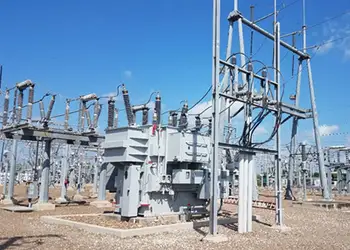
✅ Leaks from switchgear, breakers, gas-insulated substations

✅ Clean air and vacuum alternatives emerging for MV/HV


Sulphur hexafluoride, or SF6, is widely used in the electrical industry to prevent short circuits and accidents.

But leaks of the little-known gas in the UK and the rest of the EU in 2017 were the equivalent of putting an extra 1.3 million cars on the road.

Levels are rising as an unintended consequence of the green energy boom and the broader global energy transition worldwide.

Cheap and non-flammable, SF6 is a colourless, odourless, synthetic gas. It makes a hugely effective insulating material for medium and high-voltage electrical installations.

It is widely used across the industry, from large power stations to wind turbines to electrical sub-stations in towns and cities.

It prevents electrical accidents and fires.

However, the significant downside to using the gas is that it has the highest global warming potential of any known substance. It is 23,500 times more warming than carbon dioxide (CO2).

Just one kilogram of SF6 warms the Earth to the same extent as 24 people flying London to New York return.

It also persists in the atmosphere for a long time, warming the Earth for at least 1,000 years.


So why are we using more of this powerful warming gas?

The way we make electricity around the world is changing rapidly, with New Zealand's push to electrify in its energy system.

Where once large coal-fired power stations brought energy to millions, the drive to combat climate change and to move away from coal means they are now being replaced by mixed sources of power including wind, solar and gas.

This has resulted in many more connections to the electricity grid, and with EU electricity use could double by 2050, a rise in the number of electrical switches and circuit breakers that are needed to prevent serious accidents.

Collectively, these safety devices are called switchgear. The vast majority use SF6 gas to quench arcs and stop short circuits.

"As renewable projects are getting bigger and bigger, we have had to use it within wind turbines specifically," said Costa Pirgousis, an engineer with Scottish Power Renewables on its new East Anglia wind farm, which doesn't use SF6 in turbines.

"As we are putting in more and more turbines, we need more and more switchgear and, as a result, more SF6 is being introduced into big turbines off shore.

"It's been proven for years and we know how it works, and as a result it is very reliable and very low maintenance for us offshore."


How do we know that SF6 is increasing?

Across the entire UK network of power lines and substations, there are around one million kilograms of SF6 installed.

A study from the University of Cardiff found that across all transmission and distribution networks, the amount used was increasing by 30-40 tonnes per year.

This rise was also reflected across Europe with total emissions from the 28 member states in 2017 equivalent to 6.73 million tonnes of CO2. That's the same as the emissions from 1.3 million extra cars on the road for a year.

Researchers at the University of Bristol who monitor concentrations of warming gases in the atmosphere say they have seen significant rises in the last 20 years.

"We make measurements of SF6 in the background atmosphere," said Dr Matt Rigby, reader in atmospheric chemistry at Bristol.

"What we've seen is that the levels have increased substantially, and we've seen almost a doubling of the atmospheric concentration in the last two decades."


How does SF6 get into the atmosphere?

The most important means by which SF6 gets into the atmosphere is from leaks in the electricity industry.

Electrical company Eaton, which manufactures switchgear without SF6, says its research indicates that for the full life-cycle of the product, leaks could be as high as 15% - much higher than many other estimates.

Louis Schaeffer, electrical business manager at Eaton, said: "The newer gear has very low leak rates but the key question is do you have newer gear?

"We looked at all equipment and looked at the average of all those leak rates, and we didn't see people taking into account the filling of the gas. Plus, we looked at how you recycle it and return it and also included the catastrophic leaks."


How damaging to the climate is this gas?

Concentrations in the atmosphere are very small right now, just a fraction of the amount of CO2 in the air.

However, the global installed base of SF6 is expected to grow by 75% by 2030, as data-driven electricity demand surges worldwide.

Another concern is that SF6 is a synthetic gas and isn't absorbed or destroyed naturally. It will all have to be replaced and destroyed to limit the impact on the climate.

Developed countries are expected to report every year to the UN on how much SF6 they use, but developing countries do not face any restrictions on use.

Right now, scientists are detecting concentrations in the atmosphere that are 10 times the amount declared by countries in their reports. Scientists say this is not all coming from countries like India, China and South Korea.

One study found that the methods used to calculate emissions in richer countries "severely under-reported" emissions over the past two decades.


Why hasn't this been banned?

SF6 comes under a group of human-produced substances known as F-gases. The European Commission tried to prohibit a number of these environmentally harmful substances, including gases in refrigeration and air conditioning, back in 2014.


But they faced strong opposition from industries across Europe.

"In the end, the electrical industry lobby was too strong and we had to give in to them," said Dutch Green MEP Bas Eickhout, who was responsible for the attempt to regulate F-gases.

"The electric sector was very strong in arguing that if you want an energy transition, and you have to shift more to electricity, you will need more electric devices. And then you also will need more SF6.

"They used the argument that otherwise the energy transition would be slowed down."


What do regulator and electrical companies say about the gas?

Everyone is trying to reduce their dependence on the gas, and US control efforts suggest targeted policies can drive declines, as it is universally recognised as harmful to the climate.

In the UK, energy regulator Ofgem says it is working with utilities to try to limit leaks of the gas.

"We are using a range of tools to make sure that companies limit their use of SF6, a potent greenhouse gas, where this is in the interest of energy consumers," an Ofgem spokesperson told BBC News.

"This includes funding innovation trials and rewarding companies to research and find alternatives, setting emissions targets, rewarding companies that beat those targets, and penalising those that miss them."


Are there alternatives - and are they very expensive?

The question of alternatives to SF6 has been contentious over recent years.

For high-voltage applications, experts say there are very few solutions that have been rigorously tested.

"There is no real alternative that is proven," said Prof Manu Haddad from the school of engineering at Cardiff University.

"There are some that are being proposed now but to prove their operation over a long period of time is a risk that many companies don't want to take."

Medium voltage operations there are several tried-and-tested materials. Some in the industry say that the conservative nature of the electrical industry is the key reason that few want to change to a less harmful alternative.


"I will tell you, everyone in this industry knows you can do this; there is not a technical reason not to do it," said Louis Schaffer from Eaton.

"It's not really economic; it's more a question that change takes effort and if you don't have to, you won't do it."


Some companies are feeling the winds of change

Sitting in the North Sea some 43km from the Suffolk coast, Scottish Power Renewables has installed one of world's biggest wind farms, in line with a sustainable electric planet vision, where the turbines will be free of SF6 gas.

East Anglia One will see 102 of these towering generators erected, with the capacity to produce up to 714MW (megawatts) of power by 2020, enough to supply half a million homes.

Previously, an installation like this would have used switchgear supplied with SF6, to prevent the electrical accidents that can lead to fires.

Each turbine would normally have contained around 5kg of SF6, which, if it leaked into the atmosphere, would add the equivalent of around 117 tonnes of carbon dioxide. This is roughly the same as the annual emissions from 25 cars.

"In this case we are using a combination of clean air and vacuum technology within the turbine. It allows us to still have a very efficient, reliable, high-voltage network but to also be environmentally friendly," said Costa Pirgousis from Scottish Power Renewables.

"Once there are viable alternatives on the market, there is no reason not to use them. In this case, we've got a viable alternative and that's why we are using it."

But even for companies that are trying to limit the use of SF6, there are still limitations. At the heart of East Anglia One sits a giant offshore substation to which all 102 turbines will connect. It still uses significant quantities of the highly warming gas.


What happens next ?

The EU will review the use of SF6 next year and will examine whether alternatives are available. However, even the most optimistic experts don't think that any ban is likely to be put in place before 2025.


Related News

View more

Canada's Ambitious Electric Vehicle Goals

Canada 2035 Gasoline Car Ban accelerates EV adoption, zero-emission transport, and climate action, with charging infrastructure, rebates, and industry investment supporting net-zero goals while addressing affordability, range anxiety, and consumer acceptance nationwide.


Key Points

A federal policy to end new gas car sales by 2035, boosting EV adoption, emissions goals, and charging infrastructure.

✅ Ends new gas car and light-truck sales by 2035

✅ Expands charging infrastructure and grid readiness

✅ Incentives, rebates, and industry investment drive adoption


Canada has set its sights on a bold and transformative goal: to ban the sale of new gasoline-powered passenger cars and light-duty trucks by the year 2035. This ambitious target, announced by the federal government, underscores Canada's commitment to combating climate change and accelerating the adoption of electric vehicles (EVs) nationwide, supported by forthcoming EV sales regulations from Ottawa.

The Federal Initiative

Under the leadership of Prime Minister Justin Trudeau, Canada aims to significantly reduce greenhouse gas emissions from the transportation sector, which accounts for a substantial portion of the country's carbon footprint. The initiative aligns with Canada's broader climate objectives, including achieving net-zero emissions by 2050.

Driving Forces Behind the Decision

The decision to phase out internal combustion engine vehicles reflects growing recognition of the urgency to transition towards cleaner transportation alternatives, even as 2019 electricity from fossil fuels still powered a notable share of Canada's grid. Minister of Environment and Climate Change Jonathan Wilkinson emphasizes the environmental benefits of electric vehicles, citing their potential to lower emissions and improve air quality in urban centers across the country.

Challenges and Opportunities

While the move towards electric vehicles presents promising opportunities for reducing emissions, it also poses challenges. Key considerations include infrastructure development, affordability, and consumer acceptance of EV technology, amid EV shortages and wait times that can influence buying decisions. Addressing these hurdles will require coordinated efforts from government, industry stakeholders, and consumers alike.

Industry Response

The automotive industry plays a crucial role in realizing Canada's EV ambitions. Automakers are increasingly investing in electric vehicle production and innovation to meet evolving consumer demand and regulatory requirements, including cross-border Canada-U.S. collaboration on supply chains. The transition offers opportunities for job creation, technological advancement, and economic growth in the clean energy sector.

Provincial Perspectives

Provinces across Canada are pivotal in facilitating the transition to electric vehicles. Some provinces have already implemented incentives such as rebates for EV purchases, charging infrastructure investments, and policy frameworks to support emissions reduction targets, even as Quebec's EV dominance push faces scrutiny from experts. Collaborative efforts between federal and provincial governments are essential in ensuring a cohesive approach to achieving national EV goals.

Consumer Considerations

For consumers, the shift towards electric vehicles represents a paradigm shift in transportation choices. Factors such as range anxiety, charging infrastructure availability, and upfront costs, with one EV cost survey citing price as the main barrier, remain considerations for prospective buyers. Government incentives and subsidies aim to alleviate some of these concerns and promote widespread EV adoption.

Looking Ahead

As Canada navigates towards a future without gasoline-powered vehicles, stakeholders must work together to overcome challenges and capitalize on opportunities presented by the electric vehicle revolution, even as critics of the 2035 mandate question its feasibility. Continued investments in infrastructure, innovation, and consumer education will be critical in paving the way for a sustainable and prosperous automotive industry.

Conclusion

Canada's commitment to phasing out gasoline-powered vehicles by 2035 marks a pivotal moment in the country's climate action agenda. By embracing electric vehicles, Canada aims to lead by example in combatting climate change, fostering innovation, and building a greener future for generations to come. The success of this ambitious initiative hinges on collective efforts to transform the automotive landscape and accelerate towards a sustainable transportation future.


Related News

View more

Winter Storm Leaves Many In Texas Without Power And Water

Texas Power Grid Crisis strains ERCOT as extreme cold, ice storms, and heavy snow trigger rolling blackouts, load shedding, and boil-water notices, leaving millions without electricity while frozen turbines and low gas pressure hinder generation.


Key Points

A statewide emergency of outages and boil-water notices as ERCOT battles extreme cold and load shedding.

✅ Millions without power; ERCOT orders load shedding

✅ Boil-water notices in Austin, Houston, Fort Worth

✅ Frozen equipment, low gas pressure, extreme cold disrupt supply


Nearly 3 million homes and businesses in Texas remain without power, some for a third consecutive day, as severe winter weather continues to pummel the state, forcing some localities to issue boil-water notices and urge residents to reduce their electricity usage.

Heavy snowfall, ice storms and bitter temperatures continue to put an enormous strain on the state's power grid. This as the Electric Reliability Council of Texas (ERCOT), which manages roughly 75% of the Texas power grid, announced Wednesday morning that some 600,000 households had power restored overnight.

That still left another 2.7 million customers having to endure extreme cold with no indication of when the thaw would break in their homes.

"We know millions of people are suffering," ERCOT's president and CEO, Bill Magness, said in a statement Wednesday. "We have no other priority than getting them electricity. No other priority."

ERCOT also said Wednesday that it was urging local utilities to shed some 14,000 megawatts of load, which translates to roughly 2.8 million customers, to prepare for a sudden increase in demand.

"The ability to restore more power is contingent on more generation coming back online," said Dan Woodfin, the senior director of ERCOT's system operations, and utility supply-chain constraints can further complicate repair timelines for some utilities.

He said that about 185 generating units were offline, stemming from a range of factors including frozen wind turbines, low gas pressure and frozen instrumentation.

But many Texans feel abandoned by the council and power companies and they are lashing out at the local face of utilities.

The City of Austin's community-owned electric utility, Austin Energy, issued a tweet saying crews that are working to restore power are facing harassment.


"Our crews have been working 24/7 and in these elements," Austin Energy announced. "Some of our crews are reporting incidents of harassment, threatening them and even throwing things at them."

Officials pleaded with the public to remain calm. "I know people are extremely frustrated. But please, I bet of you, do not approach AE crews."

Parts of Austin are under a boil water notice, which Austin Water Director Greg Meszaros attempted to explain during a press briefing Wednesday afternoon.

"There was a large main break in that area, maybe multiple ones. We're seeing main breaks and pipes bursting by the tens of thousands. Our entire system is under stress," Meszaros said.

It's not just the Lone Star State that is being crippled by the arctic blast, with a deep freeze slamming the energy sector across the country.

At least two dozen people have died this week from weather-related incidents, according to The Associated Press.

The National Weather Service reports that more than 100 million Americans are being affected by extreme winter weather from the south central U.S. to the East Coast, including Arkansas, Louisiana, Mississippi, North Carolina, Virginia and West Virginia, and analysts warn of blackout risks nationwide during extreme heat as well.

The National Weather Service adds that cold temperatures over the nation's heartland will begin to "moderate in the coming days" but that many parts will remain 20 to 35 degrees below normal in the Great Plains, Mississippi Valley and lower Great Lakes region.

"Potential is increasing for significant icing across portions of the Mid-Atlantic, which will be very impactful, especially for those hardest hit from the previous ice storm," the National Weather Service tweeted Wednesday.

Texas Gov. Greg Abbott railed against ERCOT, and Elon Musk criticized the agency as unreliable, saying the utility "has been anything but reliable over the past 48 hours."

"This is unacceptable," Abbott added, as residents were facing rotating intentional power outages. The governor issued an executive order that will add reforms for how the power grid is managed, including grid reliability improvements under discussion, as an emergency legislative item for the state legislature to review.

The rolling power outages forced Fort Worth to extend a boil-water notice for roughly 212,000 residents. Officials said the outages affected the city's systems that both treat water and move it to customers.

Fort Worth officials said nine other localities that purchase water from the city are also affected, including Haslet, Keller, Lake Worth and Northlake.

Officials in Houston also issued a boil-water notice for the city's residents Wednesday.

"Do not drink the water without boiling it first," Houston Public Works said from its official Twitter account. "Bring all water to a boil for at least two minutes. Let it cool before using."

In Harris County, which includes Houston, Judge Lina Hidalgo warned residents about extended power outages.

"Let me give it to you straight, based on the visibility I have: Whether you have power or not right now, there is a possibility of power outages even beyond the length of this weather," Hidalgo said, according to Houston Public Media.

The NPR member station adds that county officials have also reported more than 300 cases of carbon monoxide poisoning since Monday as residents going without electricity search desperately for alternative sources of warmth.

"In no uncertain terms, this is a public health disaster and a public health emergency," Samuel Prater, an emergency physician at Memorial Hermann-Texas Medical Center, said at a news briefing Tuesday.

Prater warned residents that over the last 24 hours, emergency officials "have seen a striking increase in the number of cases related to improper heating sources," including indoor use of generators, charcoal grills, campfire stoves and other devices that are being used to warm homes. The result, he added, is carbon monoxide poisoning of entire families.

"If you think you or a loved one has become ill from carbon monoxide poisoning, first thing you need to do is get outside to fresh air," Prater said.

A woman and an 8-year-old girl are among those who have reportedly died from carbon monoxide poisoning after a vehicle was left running inside a garage in an attempt to generate heat, according to Houston's ABC affiliate.

As Texas endures further weather-related issues, including road and highway closures, there's a renewed focus on how the Texas power grid has failed, and why the grid is facing another crisis amid this prolonged cold.

The Texas electrical grid is "facing conditions that it was not designed for," said Emily Grubert, a professor at Georgia Tech whose expertise includes electric networks.

"These are really extreme conditions for the Texas grid. It's very cold. It's cold across the entire state, and it's cold for a long time. This does not happen very often," she said in an interview with NPR's Morning Edition.

"Demand really spiked both in the electricity and the natural gas systems at the same time as a lot of the generators were not able to operate because of those cold conditions, and not being prepared for it is really what's going on," Grubert said. "But a lot of grids are susceptible to really, really major failures when they are this far outside of design conditions."

Abbott told Fox News on Tuesday that with weather-related shutdowns in wind and solar energy, which account for more than 10% of the state's grid, renewable energy is partly to blame for the Texas power crisis, even as he later touted the grid's readiness heading into the fall.

"It just shows that fossil fuel is necessary for the state of Texas as well as other states to make sure that we'll be able to heat our homes in the wintertime and cool our homes in the summertime," Abbott said.

But Grubert said that "coal, gas and nuclear actually shut down because of the extreme cold due to things like instruments freezing, et cetera. So I think the overall point here is all of the fuels were really, really struggling."


Related News

View more

End of an Era: UK's Last Coal Power Station Goes Offline

UK Coal-Free Energy Transition highlights the West Burton A closure, accelerating renewable energy, wind, solar, nuclear, energy storage, smart grid upgrades, decarbonization, and net-zero goals while ensuring reliability, affordability, and a just transition for workers.


Key Points

A nationwide shift from coal power to renewables, storage, and nuclear to meet net-zero while maintaining reliability.

✅ West Burton A closure ends UK coal-fired generation

✅ Wind, solar, nuclear, storage strengthen grid resilience

✅ Government backs a just transition and worker retraining


The United Kingdom marks a historic turning point in its energy transition with the closure of the West Burton A Power Station in Nottinghamshire. This coal-fired power plant, once a symbol of the nation's industrial might, has now delivered its final watts of electricity to the grid, signalling the end of coal power generation in the UK.


A Landmark Shift Towards Clean Energy

The closure of West Burton A reflects a dramatic shift in the UK's energy landscape. Coal, the backbone of the UK's power generation for decades, is being phased out in favour of renewable energy sources like wind, solar, and nuclear. This transition aligns with the UK's ambitious net-zero emissions target, which aims to radically decarbonize the country's economy by 2050, though progress can falter, as when low-carbon generation stalled in 2019 amid changing market conditions.


Changing Energy Landscape

In the past, coal-fired power plants provided reliable, on-demand power. However, growing awareness of their significant environmental impact, particularly their contribution to climate change,  has accelerated the move away from coal. The UK government has set clear targets for eliminating coal power generation, and the industry has seen a steady decline as the share of coal fell to record lows in the electricity system.


Renewables Fill the Gap

The remarkable growth of renewable energy sources has enabled the transition away from coal. Wind and solar power, in particular, have experienced rapid development and falling costs, and in 2016 wind generated more electricity than coal for the first time. The UK now boasts substantial offshore and onshore wind farms and extensive solar installations. Additionally, investments in nuclear power and emerging energy storage technologies are increasing the reliability and diversity of the UK's power grid.


Economic and Social Impacts

The closure of the last coal-fired power station carries both economic and social impacts. While this change represents a victory for environmentalists, marked by milestones like a full week without coal power in Britain, the end of coal mining and power generation will lead to job losses in communities traditionally reliant on these industries.  The government has committed to supporting affected regions and facilitating a "just transition" for workers by retraining and creating new opportunities in the clean energy sector.


Global Implications

The UK's commitment to a coal-free future serves as a powerful example for other nations seeking to decarbonize their energy systems, including peers where Alberta's last coal plant closed recently. The nation's experience demonstrates that a transition to renewable energy sources is both possible and necessary. However, it also highlights the importance of careful planning and addressing the social and economic impacts of such a rapid energy revolution.


The Road Ahead

While the closure of West Burton A Power Station marks a historic milestone, the UK's transition to clean energy is far from complete. Maintaining a reliable and affordable energy supply, even as coal-free power records raise questions about energy bills, will require continued investment in renewable energy sources, energy storage, and advanced grid technologies.


Related News

View more

Blackout-Prone California Is Exporting Its Energy Policies To Western States, Electricity Will Become More Costly And Unreliable

California Blackouts expose grid reliability risks as PG&E deenergizes lines during high winds. Mandated solar and wind displace dispatchable natural gas, straining ISO load balancing, transmission maintenance, and battery storage planning amid escalating wildfire liability.


Key Points

California grid shutoffs stem from wildfire risk, renewables, and deferred transmission maintenance under mandates.

✅ PG&E deenergizes lines to reduce wildfire ignition during high winds.

✅ Mandated solar and wind displace dispatchable gas, raising balancing costs.

✅ Storage, reliability pricing, and grid upgrades are needed to stabilize supply.


California is again facing widespread blackouts this season. Politicians are scrambling to assign blame to Pacific Gas & Electric (PG&E) a heavily regulated utility that can only do what the politically appointed regulators say it can do. In recent years this has meant building a bunch of solar and wind projects, while decommissioning reliable sources of power and scrimping on power line maintenance and upgrades.

The blackouts are connected with the legal liability from old and improperly maintained power lines being blamed for sparking fires—in hopes that deenergizing the grid during high winds reduces the likelihood of fires. 

How did the land of Silicon Valley and Hollywood come to have developing world electricity?

California’s Democratic majority, from Gov. Gavin Newsom to the solidly progressive legislature, to the regulators they appoint, have demanded huge increases in renewable energy. Renewable electricity targets have been pushed up, and policymakers are weighing a revamp of electricity rates to clean the grid, with the state expected to reach a goal of 33% of its power from renewable sources, mostly solar and wind, by next year, and 60% of its electricity from renewables by 2030.

In 2018, 31% of the electricity Californians purchased at the retail level came from approved renewables. But when rooftop solar is added to the mix, about 34% of California’s electricity came from renewables in 2018. Solar photovoltaic (PV) systems installed “behind-the-meter” (BTM) displace utility-supplied generation, but still affect the grid at large, as electricity must be generated at the moment it is consumed. PV installations in California grew 20% from 2017 to 2018, benefiting from the state’s Self-Generation Incentive Program that offers hefty rebates through 2025, as well as a 30% federal tax credit.

Increasingly large amounts of periodic, renewable power comes at a price—the more there is, the more difficult it is to keep the power grid stable and energized. Since electricity must be consumed the instant it is generated, and because wind and solar produce what they will whenever they do, the rest of the grid’s power producers—mostly natural gas plants—have to make up any differences between supply and immediate demand. This load balancing is vital, because without it, the grid will crash and widespread blackouts will ensue.

California often produces a surplus of mandated solar and wind power, generated for 5 to 8 cents per kilowatt hour. This power displaces dispatchable power from natural gas, coal and nuclear plants, resulting in reliable power plants spending less time online and driving up electricity prices as the plants operate for fewer hours of the day. Subsidized and mandated solar power, along with a law passed in California in 2006 (SB 1638) that bans the renewal of coal-fired power contracts, has placed enormous economic pressure on the Western region’s coal power plants—among them, the nation’s largest, Navajo Generating Station. As these plants go off line, the Western power grid will become increasingly unstable. Eventually, the states that share their electric power in the Western Interconnect may have to act to either subsidize dispatchable power or place a value on reliability—something that was taken for granted in the growth of the America’s electrical system and its regulatory scheme.

California law regarding electricity explicitly states that “a violation of the Public Utilities Act is a crime” and that it is “…the intent of the Legislature to provide for the evolution of the ISO (California’s Independent System Operator—the entity that manages California’s grid) into a regional organization to promote the development of regional electricity transmission markets in the western states.” In other words, California expects to dictate how the Western grid operates.

One last note as to what drives much of California’s energy policy: politics. California State Senator Kevin de León (the author served with him in the State Assembly) drafted SB 350, the Clean Energy and Pollution Reduction Act. It became law in 2015. Sen. de León followed up with SB 100 in 2018, signed into law weeks before the 2018 election. SB 100 increased California’s renewable portfolio standard to 60% by 2030 and further requires all the state’s electricity to come from carbon-free sources by 2045, a capstone of the state’s climate policies that factor into the blackout debate.  

Sen. de León used his environmental credentials to burnish his run for the U.S. Senate against Sen. Dianne Feinstein, eventually capturing the endorsements of the California Democratic Party and billionaire environmentalist Tom Steyer, now running for president. Feinstein and de León advanced to the general in California’s jungle primary, where Feinstein won reelection 54.2% to 45.8%.

De León may have lost his race for the U.S. Senate, but his legacy will live on in increasingly unaffordable electricity and blackouts, not only in California, but in the rest of the Western United States—unless federal or state regulators begin to place a value on reliability. This could be done by requiring utility scale renewable power providers to guarantee dispatchable power, as policymakers try to avert a looming shortage of firm capacity, either through purchase agreements with thermal power plants or through the installation of giant and costly battery farms or other energy storage means.


Related News

View more

Hydro-Quebec shocks cottage owner with $5,300 in retroactive charges

Hydro-Quebec back-billing arises from analogue meter errors and estimated consumption, leading to arrears for electricity usage; disputes over access, payment plans, and potential power diversion reviews can impact cottage owners near Gatineau.


Key Points

Hydro-Quebec back-billing recovers underbilled electricity from analogue meter errors or prolonged estimated use.

✅ Triggered by inaccurate analogue meters or missed readings

✅ Based on actual usage versus prior estimated consumption

✅ Payment plans may spread arrears; theft checks may adjust


A relaxing lakefront cottage has become a powerful source of stress for an Ottawa woman who Hydro-Quebec is charging $5,300 to cover what it says are years of undercharging for electricity usage.

The utility said an old analogue power meter is to blame for years of inaccurate electricity bills for the summer getaway near Gatineau, Que.

Separate from individual billing issues, Hydro-Quebec has also reported pandemic-related losses earlier this year.

Owner Jan Hodgins does not think she should be held responsible for the mistake, nor does she understand how her usage could have surged over the years.

“I’m very hydro conscious, because I was raised that way. When you left a room, you always turned the light out,” she told CTV Montreal on Wednesday, relating her shock after receiving some hefty bills from Hydro-Quebec on Sept. 22.

Hodgins said she mainly uses the cottage on weekends, does not heat the place when she is not there, and does not use a washer or dryer, to keep her energy footprint as small as possible. She’s owned the cottage for 14 years, during which she says her monthly bill has hovered around $40.

Hydro-Quebec said it has not had an accurate reading of her usage for several years, relying instead on consumption estimates to determine what she pays. The company recently reviewed her energy consumption back to 2014, and found their estimates were not accurate.

“In the past, she was consuming about 10 to 15 kilowatt hours per day. This summer she was more around 40 kilowatt hours per day,” Marc-Antoine Pouliot with Hydro-Quebec told CTV Ottawa.

Hodgins said that means her regular bill will now be more than twice the $200 her neighbours are paying for hydro each month, even with peak hydro rates in place.

Hydro-Quebec said it will correct the bill if its technicians discover that someone is illegally diverting power nearby.

Hodgins said it’s not her fault that technicians did not check her meter in person, and chose to rely on inaccurate estimates. Pouliot argues that reaching her cottage was too difficult.

“There was too much snow. There were conditions during the winter disconnection ban period, and the consequence was that people, our workers, were not able to reach the meter,” he said.

Hydro-Quebec said it is willing to stretch out the debt into monthly payments over a year, which Hodgins said amount to $440 per month on top of her regular bill.

Utilities also caution customers about scammers threatening shutoffs during billing disputes.

“I’m on a fixed income. I don’t have that kind of money. I’m completely distraught,” she said. “I don’t know what I’m going to do.”


Related News

View more

Sign Up for Electricity Forum’s Newsletter

Stay informed with our FREE Newsletter — get the latest news, breakthrough technologies, and expert insights, delivered straight to your inbox.

Electricity Today T&D Magazine Subscribe for FREE

Stay informed with the latest T&D policies and technologies.
  • Timely insights from industry experts
  • Practical solutions T&D engineers
  • Free access to every issue

Live Online & In-person Group Training

Advantages To Instructor-Led Training – Instructor-Led Course, Customized Training, Multiple Locations, Economical, CEU Credits, Course Discounts.

Request For Quotation

Whether you would prefer Live Online or In-Person instruction, our electrical training courses can be tailored to meet your company's specific requirements and delivered to your employees in one location or at various locations.