Protective Relay Training - Basic
Our customized live online or in‑person group training can be delivered to your staff at your location.
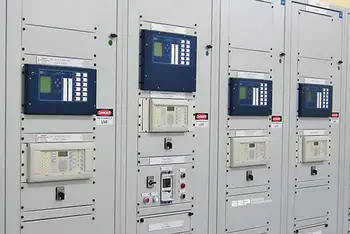
- Live Online
- 12 hours Instructor-led
- Group Training Available
Regular Price:
$699
Coupon Price:
$599
Grid companies expect few mergers or acquisitions in the U.S. electricity transmission system this year as uncertain regulations and wariness about the depressed power sector keep investors at bay.
Only a handful of grid transactions were completed last year, despite hopes investors would buy up the millions of miles of power lines from their regulated owners and pour in new money to upgrade the aging network.
Macquarie Securities USA, a unit of Australian Macquarie Group, which bought part of General Electric Structured Finance's 85 percent stake in the Michigan Electric Transmission Co. in December, expects only a handful of transactions in 2004.
"We contacted pretty much all the utilities and I think we have a good idea where they stand. We are not expecting many divestments in the short term," Chris Leslie, director of Macquarie Securities' Infrasture Group told Reuters.
Part of the lack of activity was caused by the industry's trend to move "back to basics," which had made many energy and utility companies more cautious, Leslie said.
That "back to basics" trend has emerged after the demise of the merchant energy companies, such as Reliant Resources Inc., Dynegy Inc. and Mirant Corp., which built huge numbers of new power plants and traded electricity feverishly in the deregulated wholesale markets.
The demise of Enron Corp. and the California energy crisis of 2000-2001 pushed many merchants to the brink of bankruptcy, forcing them to put power plants up for sale at a fraction of their construction values because of an oversupply of generating capacity.
"I think you've got to have a robust generation market" to support the market for power lines, Bernie Schroeder, president of Reston, Virginia-based power line company Trans-Elect Inc., told Reuters.
BLACKOUT PRESSURE
Transmission owners will have to decide whether to spend the billions of dollars for system upgrades many industry experts say are needed in the wake of the Aug. 14 blackout that cut power from the Midwest to New York and into Canada.
"There's no question that after August 14 (transmission owners) are looking at what their capital expenditures are going to be," Schroeder said.
Many of those utilities, whose parent companies were burned by their forays into the deregulated merchant market, have been forced to cut costs to conserve capital.
"People are going to start to look at transmission and say 'Is this strategic and is this something we want to spend money on?'" he added.
Ongoing battles between the Federal Energy Regulatory Commission and industry groups over power grid reliability, and between the FERC and states over control of the wires, have left investors wary of buying local grid operators.
In addition, the failure of the U.S. Congress to approve incentives for power line sales included in the energy bill that failed to pass last year has limited the number of deals.
"At some point, public policy is going to have to catch up," Schroeder said.
Trans-Elect, which operates the Michigan Electric Transmission Co.'s grid, hopes to complete one to two deals a year, focusing on regions that have developing wholesale power markets.
"The Midwest is a target-rich area for us," Schroeder said. "And there're a few interesting nibbles in the West."
Related News
It's CHEAP but not necessarily easy: Crosbie introduces PCs' Newfoundland electricity rate reduction strategy
Crosbie Hydro Energy Action Plan outlines rate mitigation for Muskrat Falls, leveraging Nalcor oil revenues,…
View more
New Hydro One CEO aims to repair relationship with Ontario government — and investors
Hydro One CEO Mark Poweska aims to rebuild ties with Ontario's provincial government, investors, and…
View more
High Costs and Long Timelines in Network Upgrades Stall Power Projects
Transmission Upgrade Delays are stalling PJM interconnections, as an NRDC analysis warns that costly network…
View more
Met Office joins REVISE to protect United Kingdom overhead transmission lines
Met Office REVISE Project will provide high-resolution weather data to refine static line ratings for…
View more
China's nuclear energy on steady development track, say experts
China Nuclear Power Expansion accelerates with reactor approvals, Hualong One and CAP1400 deployments, rising gigawatts,…
View more

The Cool Way Scientists Turned Falling Raindrops Into Electricity
Raindrop Triboelectric Energy Harvesting converts falling water into electricity using Teflon (PTFE) on indium tin…
View more
Sign Up for Electricity Forum’s Newsletter
Stay informed with our FREE Newsletter — get the latest news, breakthrough technologies, and expert insights, delivered straight to your inbox.
Electricity Today T&D Magazine Subscribe for FREE

Stay informed with the latest T&D policies and technologies.
- Timely insights from industry experts
- Practical solutions T&D engineers
- Free access to every issue
