By -- Source, Canada NewsWire


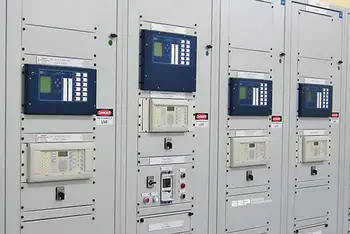
Protective Relay Training - Basic

Our customized live online or in‑person group training can be delivered to your staff at your location.

  • Live Online
  • 12 hours Instructor-led
  • Group Training Available
Regular Price:
$699
Coupon Price:
$599
Reserve Your Seat Today
The person fighting hardest to end electricity marketing rip-offs and stop hydro privatization is livid that his name is being used at the door to coerce people into signing fixed-price contracts with Direct Energy.

NDP Leader Howard Hampton fired off a letter to Direct Energy President Gary Drummond today demanding he issue a cease and desist order to all company salespeople against using Hampton's name in their door-to-door sales pitches.

Hampton first got wind of the tactic after hearing from Peter Diselets, of Sudbury, that his name and his prediction of hefty hydro rate increases if the Conservative government privatizes hydro were key ingredients in a Direct Energy marketer's pitch to him at his door. Toronto resident Gabriela Bravo also complained to the NDP about Hampton's name being used at her door.

"Obviously, without hydro privatization on the horizon, there would be no door-to-door marketers and consumers would not have to deal with their aggressive and often misleading tactics," Hampton wrote. "But as long as consumers are to be subjected to these sales techniques, I request your assurances that the name Howard Hampton will not be used in any way to coerce new customers into signing with Direct Energy."

"I want these unscrupulous companies to stop using my name to rip-off consumers," Hampton said, pointing out that one million householders who signed contracts will pay $170 more a year than those who didn't sign. "And an apology from Direct Energy would be nice."

Related News

Volkswagen's German Plant Closures

VW Germany Plant Closures For EV Shift signal a strategic realignment toward electric vehicles, sustainability, and zero-emission mobility, optimizing manufacturing, cutting ICE capacity, boosting battery production, retraining workers, and aligning with the Accelerate decarbonization strategy.


Key Points

VW is shuttering German plants to cut ICE costs and scale EV output, advancing sustainability and competitiveness.

✅ Streamlines operations; reallocates capital to EV platforms and batteries.

✅ Cuts ICE output, lowers emissions, and boosts clean manufacturing capacity.

✅ Retrains workforce amid closures; invests in software and charging tech.


Volkswagen (VW), one of the world’s largest automakers, is undergoing a significant transformation with the announcement of plant closures in Germany. As reported by The Guardian, this strategic shift is part of VW’s broader move towards prioritizing electric vehicles (EVs) and adapting to the evolving automotive market as EVs reach an inflection point globally. The decision highlights the company’s commitment to sustainability and innovation amid a rapidly changing industry landscape.

Strategic Plant Closures

Volkswagen’s decision to close several of its plants in Germany marks a pivotal moment in the company's history. These closures are part of a broader strategy to streamline operations, reduce costs, and focus on the production of electric vehicles. The move reflects VW’s response to the growing demand for EVs and the need to transition from traditional internal combustion engine (ICE) vehicles to cleaner, more sustainable alternatives.

The affected plants, which have been key components of VW’s manufacturing network, will cease production as the company reallocates resources and investments towards its electric vehicle programs. This realignment is aimed at improving operational efficiency and ensuring that VW remains competitive in a market that is increasingly oriented towards electric mobility.

A Shift Towards Electric Vehicles

The closures are closely linked to Volkswagen’s strategic shift towards electric vehicles. The automotive industry is undergoing a profound transformation as governments and consumers place greater emphasis on sustainability and reducing carbon emissions. Volkswagen has recognized this shift and is investing heavily in the development and production of EVs as part of its "Accelerate" strategy, anticipating widespread EV adoption within a decade across key markets.

The company’s commitment to electric vehicles is evident in its plans to launch a range of new electric models and increase production capacity for EVs. Volkswagen aims to become a leader in the electric mobility sector by leveraging its technological expertise and scale to drive innovation and expand its EV offerings.

Economic and Environmental Implications

The closure of VW’s German plants carries both economic and environmental implications. Economically, the move will impact the workforce and local economies dependent on these manufacturing sites. Volkswagen has indicated that it will work on providing support and retraining opportunities for affected employees, as the EV aftermarket evolves and reshapes service needs, but the transition will still pose challenges for workers and their communities.

Environmentally, the shift towards electric vehicles represents a significant positive development. Electric vehicles produce zero tailpipe emissions, which aligns with global efforts to combat climate change and reduce air pollution. By focusing on EV production, Volkswagen is contributing to the reduction of greenhouse gas emissions and supporting the transition to a more sustainable transportation system.

Challenges and Opportunities

While the transition to electric vehicles presents opportunities, it also comes with challenges. Volkswagen will need to manage the complexities of closing and repurposing its existing plants while ramping up production at new or upgraded facilities dedicated to EVs. This transition requires substantial investment in new technologies, infrastructure, and training, including battery supply strategies that influence manufacturing footprints, to ensure a smooth shift from traditional automotive manufacturing.

Additionally, Volkswagen faces competition from other automakers that are also investing heavily in electric vehicles, including Daimler's electrification plan outlining the scope of its transition. To maintain its competitive edge, VW must continue to innovate and offer attractive, high-performance electric models that meet consumer expectations.

Future Outlook

Looking ahead, Volkswagen’s focus on electric vehicles aligns with broader industry trends and regulatory pressures. Governments worldwide are implementing stricter emissions regulations and providing incentives for EV adoption, although Germany's plan to end EV subsidies has sparked debate domestically, creating a favorable environment for companies that are committed to sustainability and clean technology.

Volkswagen’s investment in electric vehicles and its strategic realignment reflect a proactive approach to addressing these trends. The company’s ability to navigate the challenges associated with plant closures and the transition to electric mobility will be critical, especially as Europe's EV slump tests demand signals, in determining its success in the evolving automotive landscape.

Conclusion

Volkswagen’s decision to close several plants in Germany and focus on electric vehicle production represents a significant shift in the company’s strategy. While the closures present challenges, they also highlight Volkswagen’s commitment to sustainability and its response to the growing demand for cleaner transportation solutions. By investing in electric vehicles and adapting its operations, Volkswagen aims to lead the way in the transition to a more sustainable automotive future. As the company moves forward, its ability to effectively manage this transition will be crucial in shaping its role in the global automotive market.


Related News

View more

Is 5G a waste of electricity? Experts say it's complicated

5G Energy Costs highlight base station power consumption, carrier electricity bills, and carbon emissions in China, while advances in energy efficiency, sleep modes, and cooling systems aim to optimize low-latency networks and reduce operational expenses.


Key Points

5G energy costs rise with power-hungry base stations, yet per-bit efficiency and sleep modes help cut bills.

✅ 5G base stations use ~4x 4G electricity

✅ Per-bit 5G energy efficiency is ~4x better than 4G

✅ Sleep modes and advanced cooling reduce OPEX and emissions


As 5G developers look desperately for a "killer app" to prove the usefulness of the superfast wireless technology, mobile carriers in China are complaining about the high energy cost of 5G signal towers.

And the situation is, according to experts, more complicated than many have thought.

The costly 5G

5G technology can be 10 or more times faster than 4G and significantly more responsive to users' input, but the speed comes at a cost.

A 5G base station consumes "four times more electricity" than its 4G counterpart, said Ding Haiyu, head of wireless and terminals at the China Mobile Research Institute, during a symposium on 5G and carbon neutrality in Beijing, a key focus for countries pursuing a net-zero grid by 2050 worldwide.

But concerning each bit of data transmitted, 5G is four times more energy-efficient than 4G, according to Ding.

This means that mobile carriers should fully occupy their 5G network for as long time as possible, but that can be hard at this moment, as many people are still holding 4G smartphones.

"When the 5G stations are running without people using them, they are really electricity guzzlers," said Zhu Qingfeng, head of power supply design at China Information Technology Designing and Consulting Institute Co., Ltd., who represents China Unicom at the symposium. "Each of the three telecom carrier giants are emitting about ten million tonnes of carbon in the air."

"We have to shut down some 5G base stations at night to reduce emission," he added.

Some utilities are testing fuel cell solutions to keep backup batteries charged much longer, supporting network resilience at lower emissions.

A representative from China Telecom said electricity bills of the nationwide carrier reached a new high of 100 billion yuan (about $15 billion) a year, mirroring the power challenges for utilities as data center demand booms elsewhere.

Getting better

While admitting the excessive cost of 5G, experts at the symposium also agreed that the situation is improving, even as climate pressures on the grid continue to mount.

Ding listed a series of recent technologies that is helping reduce the energy use of 5G, including chips of better process, automatic sleeping and wake-up of base stations and liquid nitrogen-based cooling system, and superconducting cables as part of ongoing upgrades.

"We are aiming at halving the 5G electricity cost to only two times of 4G in two years," Ding said.

Experts also discussed the possibility of making use of 5G's low latency features to help monitoring the electricity grid, thus making the digital grid smarter and more cost effective.

G's energy cost is seen as a hot topic for the incoming World 5G Convention in Beijing in early August, alongside smart grid transformation themes. Stay tuned to CGTN Digital as we bring you the latest news about the convention and 5G technology.


Related News

View more

U.S. power demand seen sliding 1% in 2023 on milder weather

EIA U.S. Power Outlook 2023-2024 forecasts lower electricity demand, softer wholesale prices, and faster renewable growth from solar and wind, with steady natural gas, reduced coal generation, slight nuclear gains, and ERCOT market moderation.


Key Points

An EIA forecast of a 2023 demand dip, 2024 rebound, lower prices, and a higher renewable share in the U.S. power mix.

✅ Demand dips to 4,000 billion kWh in 2023; rebounds in 2024.

✅ ERCOT on-peak prices average about $35/MWh versus $80/MWh in 2022.

✅ Renewables grow to 24% share; coal falls to 17%; nuclear edges up.


U.S. power consumption is expected to slip about 1% in 2023 from the previous year as milder weather slows usage from the record high hit in 2022, consistent with recent U.S. consumption trends observed over the past several years, the U.S. Energy Information Administration (EIA) said in its Short-Term Energy Outlook (STEO).

EIA projected that electricity demand is on track to slide to 4,000 billion kilowatt-hours (kWh) in 2023 from a historic high of 4,048 billion kilowatt-hours (kWh) in 2022, reflecting patterns seen during COVID-19 demand shifts in prior years, before rising to 4,062 billion kWh in 2024 as economic growth ramps up.

Less demand coupled with more electricity generation from cheap renewable power sources and lower natural gas prices is forecast to slash wholesale power prices this year, the EIA said.

The on-peak wholesale price at the North hub in Texas’ ERCOT power market is expected to average about $35 per megawatt-hour (MWh) in 2023 compared with an average of nearly $80/MWh in 2022 after the 2022 price surge in power markets.

As capacity for renewables like solar and wind ramp up and as natural gas prices ease amid the broader energy crisis pressures, the EIA said it expects coal-fired power generation to be 17% less in the spring of 2023 than in the spring of 2022.

Coal will provide an average of 17% of total U.S. generation this year, down from 20% last year, as utilities shift investments toward electricity delivery and away from new power production, the EIA said.

The share of total generation supplied by natural gas is seen remaining at about the same this year at 39%. The nuclear share of generation is seen rising slightly to 20% this year from 19% in 2022. Generation from renewable energy sources grows the most in the forecast, increasing to 24% this year from a share of 22% last year, even as residential electricity bills rose in 2022 across the U.S.


Related News

View more

Investing in a new energy economy for Montana

Montana New Energy Economy integrates grid modernization, renewable energy, storage, and demand response to cut costs, create jobs, enable electric transportation, and reduce emissions through utility-scale efficiency, real-time markets, and distributed resources.


Key Points

Plan to modernize Montana's grid with renewables, storage and efficiency to lower costs, cut emissions and add jobs.

✅ Grid modernization enables real-time markets and demand response

✅ Utility-scale renewables paired with storage deliver firm power

✅ Efficiency and DERs cut peaks, costs, and pollution


Over the next decade, Montana ratepayers will likely invest over a billion dollars into what is now being called the new energy economy.

Not since Edison electrified a New York City neighborhood in 1882 have we had such an opportunity to rethink the way we commercially produce and consume electric energy.

Looking ahead, the modernization of Edison’s grid will lower the consumer costs, creating many thousands of permanent, well-paying jobs. It will prepare the grid for significant new loads like America going electric in transportation, and in doing so it will reduce a major source of air pollution known to directly threaten the core health of Montana and the planet.

Energy innovation makes our choices almost unrecognizable from the 1980s, when Montana last built a large, central-station power plant. Our future power plants will be smaller and more modular, efficient and less polluting — with some technologies approaching zero operating emissions.

The 21st Century grid will optimize how the supply and demand of electricity is managed across larger interconnected service areas. Utilities will interact more directly with their consumers, with utility trends guiding a new focus on providing a portfolio of energy services versus simply spinning an electric meter. Investments in utility-scale energy efficiency — LED streetlights, internet-connected thermostats, and tightening of commercial building envelopes among many — will allow consumers to directly save on their monthly bills, to improve their quality of life, and to help utilities reduce expensive and excessive peaks in demand.

The New Energy Economy will be built not of one single technology, but of many — distributed over a modernized grid across the West that approaches a real-time energy market, as provinces pursue market overhauls to adapt — connecting consumers, increasing competition, reducing cost and improving reliability.

Boldly leading the charge is a new and proven class of commercial generation powered by wind and solar energy, the latter of which employs advanced solid-state electronics, free fuel and no emissions or moving parts. Montana is blessed with wind and solar energy resources, so this is a Made-in-Montana energy choice. Note that these plants are typically paired with utility-scale energy storage investments — also an essential building block of the 21st century grid — to deliver firm, on-demand electric service.

Once considered new age and trendy, these production technologies are today competent and shovel-ready. Their adoption will build domestic energy independence. And, they are aggressively cost-competitive. For example, this year the company ISO New England — operator of a six-state grid covering all of New England — released an all-source bid for new production capacity. Unexpectedly, 100% of the winning bids were large solar electric power and storage projects, as coal and nuclear disruptions continue to shape markets. For the first time, no applications for fossil-fueled generation cleared auction.

By avoiding the burning of traditional fuels, the new energy technologies promise to offset and eventually eliminate the current 1,500 million metric tons of damaging greenhouse gases — one-quarter of the nation’s total — that are annually injected into the atmosphere by our nation’s current electric generation plants. The first step to solving the toughest and most expensive environmental issues of our day — be they costly wildfires or the regional drought that threatens Montana agriculture and outdoor recreation — is a thoughtful state energy policy, built around the new energy economy, that avoids pitfalls like the Wyoming clean energy bill now proposed.

Important potential investments not currently ready for prime time are also on the horizon, including small and highly efficient nuclear innovation in power plants — called small modular reactors (SMR) — designed to produce around-the-clock electric power with zero toxic emissions.

The nation’s first demonstration SMR plant is scheduled to be built sometime late this decade. Fingers are crossed for a good outcome. But until then, experts agree that big questions on the future commercial viability of nuclear remain unanswered: What will be SMR’s cost of electricity? Will it compete? Where will we source the refined fuel (most uranium is imported), and what will be the plan for its safe, permanent disposal?

So, what is Montana’s path forward? The short answer is: Hopefully, all of the above.

Key to Montana’s future investment success will be a respectful state planning process that learns from Texas grid improvements to bolster reliability.

Montanans deserve a smart and civil and bipartisan conversation to shape our new energy economy. There will be no need, nor place, for parties that barnstorm the state about "radical agendas" and partisan name calling – that just poisons the conversation, eliminates creative exchange and pulls us off task.

The task is to identify and vet good choices. It’s about permanently lowering energy costs to consumers. It’s about being business smart and business friendly. It’s about honoring the transition needs of our legacy energy communities. And, it’s about stewarding our world-class environment in earnest. That’s the job ahead.


Related News

View more

Was there another reason for electricity shutdowns in California?

PG&E Wind Shutdown and Renewable Reliability examines PSPS strategy, wildfire risk, transmission line exposure, wind turbine cut-out speeds, grid stability, and California's energy mix amid historic high-wind events and supply constraints across service areas.


Key Points

An overview of PG&E's PSPS decisions, wildfire mitigation, and how wind cut-out limits influence grid reliability.

✅ Wind turbines reach cut-out near 55 mph, reducing generation.

✅ PSPS mitigates ignition from damaged transmission infrastructure.

✅ Baseload diversity improves resilience during high-wind events.


According to the official, widely reported story, Pacific Gas & Electric (PG&E) initiated power shutoffs across substantial portions of its electric transmission system in northern California as a precautionary measure.

Citing high wind speeds they described as “historic,” the utility claims that if it didn’t turn off the grid, wind-caused damage to its infrastructure could start more wildfires.

Perhaps that’s true. Perhaps. This tale presumes that the folks who designed and maintain PG&E’s transmission system are unaware of or ignored the need to design it to withstand severe weather events, and that the Federal Energy Regulatory Commission (FERC) and North American Electric Reliability Corp. (NERC) allowed the utility to do so.

Ignorance and incompetence happens, to be sure, but there’s much about this story that doesn’t smell right—and it’s disappointing that most journalists and elected officials are apparently accepting it without question.

Take, for example, this statement from a Fox News story about the Kincade Fires: “A PG&E meteorologist said it’s ‘likely that many trees will fall, branches will break,’ which could damage utility infrastructure and start a fire.”

Did you ever notice how utilities cut wide swaths of trees away when transmission lines pass through forests? There’s a reason for that: When trees fall and branches break, the grid can still function, and even as the electric rhythms of New York City shifted during COVID-19, operators planned for variability.

So, if badly designed and poorly maintained infrastructure isn’t the reason PG&E cut power to millions of Californians, what might have prompted them to do so? Could it be that PG&E’s heavy reliance on renewable energy means they don’t have the power to send when a “historic” weather event occurs, especially as policymakers weigh the postponed closure of three power plants elsewhere in California?


Wind Speed Limits

The two most popular forms of renewable energy come with operating limitations, which is why some energy leaders urge us to keep electricity options open when planning the grid. With solar power, the constraint is obvious: the availability of sunlight. One doesn’t generate solar power at night and energy generation drops off with increasing degrees of cloud cover during the day.

The main operating constraint of wind power is, of course, wind speed, and even in markets undergoing 'transformative change' in wind generation, operators adhere to these technical limits. At the low end of the scale, you need about a 6 or 7 miles-per-hour wind to get a turbine moving. This is called the “cut-in speed.” To generate maximum power, about a 30 mph wind is typically required. But, if the wind speed is too high, the wind turbine will shut down. This is called the “cut-out speed,” and it’s about 55 miles per hour for most modern wind turbines.

It may seem odd that wind turbines have a cut-out speed, but there’s a very good reason for it. Each wind turbine rotor is connected to an electric generator housed in the turbine nacelle. The connection is made through a gearbox that is sized to turn the generator at the precise speed required to produce 60 Hertz AC power.

The blades of the wind turbine are airfoils, just like the wings of an airplane. Adjusting the pitch (angle) of the blades allows the rotor to maintain constant speed, which, in turn, allows the generator to maintain the constant speed it needs to safely deliver power to the grid. However, there’s a limit to blade pitch adjustment. When the wind is blowing so hard that pitch adjustment is no longer possible, the turbine shuts down. That’s the cut-out speed.

Now consider how California’s power generation profile has changed. According to Energy Information Administration data, the state generated 74.3 percent of its electricity from traditional sources—fossil fuels and nuclear, amid debates over whether to classify nuclear as renewable—in 2001. Hydroelectric, geothermal, and biomass-generated power accounted for most of the remaining 25.7 percent, with wind and solar providing only 1.98 percent of the total.

By 2018, the state’s renewable portfolio had jumped to 43.8 percent of total generation, with clean power increasing and wind and solar now accounting for 17.9 percent of total generation. That’s a lot of power to depend on from inherently unreliable sources. Thus, it wouldn’t be at all surprising to learn that PG&E didn’t stop delivering power out of fear of starting fires, but because it knew it wouldn’t have power to deliver once high winds shut down all those wind turbines


Related News

View more

How Ukraine Unplugged from Russia and Joined Europe's Power Grid with Unprecedented Speed

Ukraine-ENTSO-E Grid Synchronization links Ukraine and Moldova to the European grid via secure interconnection, matching frequency for stability, resilience, and energy security, enabling cross-border support, islanding recovery, and coordinated load balancing during wartime disruptions.


Key Points

Rapid alignment of Ukraine and Moldova into the European grid to enable secure interconnection and system stability.

✅ Matches 50 Hz frequency across interconnected systems

✅ Enables cross-border support and electricity trading

✅ Improves resilience, stability, and energy security


On February 24 Ukraine’s electric grid operator disconnected the country’s power system from the larger Russian-operated network to which it had always been linked. The long-planned disconnection was meant to be a 72-hour trial proving that Ukraine could operate on its own and to protect electricity supply before winter as contingencies were tested. The test was a requirement for eventually linking with the European grid, which Ukraine had been working toward since 2017. But four hours after the exercise started, Russia invaded.

Ukraine’s connection to Europe—which was not supposed to occur until 2023—became urgent, and engineers aimed to safely achieve it in just a matter of weeks. On March 16 they reached the key milestone of synchronizing the two systems. It was “a year’s work in two weeks,” according to a statement by Kadri Simson, the European Union commissioner for energy. That is unusual in this field. “For [power grid operators] to move this quickly and with such agility is unprecedented,” says Paul Deane, an energy policy researcher at the University College Cork in Ireland. “No power system has ever synchronized this quickly before.”

Ukraine initiated the process of joining Europe’s grid in 2005 and began working toward that goal in earnest in 2017, as did Moldova. It was part of an ongoing effort to align with Europe, as seen in the Baltic states’ disconnection from the Russian grid, and decrease reliance on Russia, which had repeatedly threatened Ukraine’s sovereignty. “Ukraine simply wanted to decouple from Russian dominance in every sense of the word, and the grid is part of that,” says Suriya Jayanti, an Eastern European policy expert and former U.S. diplomat who served as energy chief at the U.S. embassy in Kyiv from 2018 to 2020.

After the late February trial period, Ukrenergo, the Ukrainian grid operator, had intended to temporarily rejoin the system that powers Russia and Belarus. But the Russian invasion made that untenable. “That left Ukraine in isolation mode, which would be incredibly dangerous from a power supply perspective,” Jayanti says. “It means that there’s nowhere for Ukraine to import electricity from. It’s an orphan.” That was a particularly precarious situation given Russian attacks on key energy infrastructure such as the Zaporizhzhia nuclear power plant and ongoing strikes on Ukraine’s power grid that posed continuing risks. (According to Jayanti, Ukraine’s grid was ultimately able to run alone for as long as it did because power demand dropped by about a third as Ukrainians fled the country.)

Three days after the invasion, Ukrenergo sent a letter to the European Network of Transmission System Operators for Electricity (ENTSO-E) requesting authorization to connect to the European grid early. Moldelectrica, the Moldovan operator, made the same request the following day. While European operators wanted to support Ukraine, they had to protect their own grids, amid renewed focus on protecting the U.S. power grid from Russian hacking, so the emergency connection process had to be done carefully. “Utilities and system operators are notoriously risk-averse because the job is to keep the lights on, to keep everyone safe,” says Laura Mehigan, an energy researcher at University College Cork.

An electric grid is a network of power-generating sources and transmission infrastructure that produces electricity and carries it from places such as power plants, wind farms and solar arrays to houses, hospitals and public transit systems. “You can’t just experiment with a power system and hope that it works,” Deane says. Getting power where it is it needed when it is needed is an intricate process, and there is little room for error, as incidents involving Russian hackers targeting U.S. utilities have highlighted for operators worldwide.

Crucial to this mission is grid interconnection. Linked systems can share electricity across vast areas, often using HVDC technology, so that a surplus of energy generated in one location can meet demand in another. “More interconnection means we can move power around more quickly, more efficiently, more cost effectively and take advantage of low-carbon or zero-carbon power sources,” says James Glynn, a senior research scholar at the Center on Global Energy Policy at Columbia University. But connecting these massive networks with many moving parts is no small order.

One of the primary challenges of interconnecting grids is synchronizing them, which is what Ukrenergo, Moldelectrica and ENTSO-E accomplished last week. Synchronization is essential for sharing electricity. The task involves aligning the frequencies of every energy-generation facility in the connecting systems. Frequency is like the heartbeat of the electric grid. Across Europe, energy-generating turbines spin 50 times per second in near-perfect unison, and when disputes disrupt that balance, slow clocks across Europe can result, reminding operators of the stakes. For Ukraine and Moldova to join in, their systems had to be adjusted to match that rhythm. “We can’t stop the power system for an hour and then try to synchronize,” Deane says. “This has to be done while the system is operating.” It is like jumping onto a moving train or a spinning ride at the playground: the train or ride is not stopping, so you had better time the jump perfectly.


Related News

View more

Sign Up for Electricity Forum’s Newsletter

Stay informed with our FREE Newsletter — get the latest news, breakthrough technologies, and expert insights, delivered straight to your inbox.

Electricity Today T&D Magazine Subscribe for FREE

Stay informed with the latest T&D policies and technologies.
  • Timely insights from industry experts
  • Practical solutions T&D engineers
  • Free access to every issue

Download the 2025 Electrical Training Catalog

Explore 50+ live, expert-led electrical training courses –

  • Interactive
  • Flexible
  • CEU-cerified