Capturing power from the air around us

By Investor's Business Daily


Protective Relay Training - Basic

Our customized live online or in‑person group training can be delivered to your staff at your location.

  • Live Online
  • 12 hours Instructor-led
  • Group Training Available
Regular Price:
$699
Coupon Price:
$599
Reserve Your Seat Today
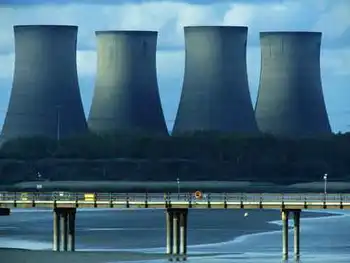
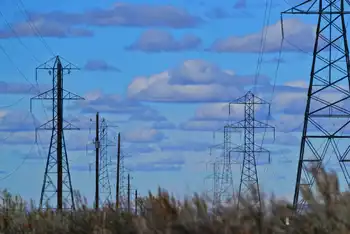
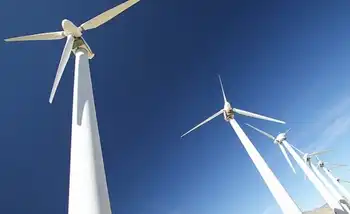
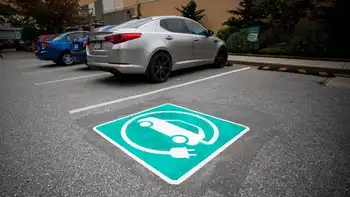
Electricity captured from the air could be used for recharging electric cars, Brazilian scientists say.

The team is working on developing special panels to capture atmospheric electricity. The method would work best in areas with high humidity, and it also works for preventing lightning strikes, the scientists said.

Related News
Washington State Ferries' Hybrid-Electric Upgrade

Washington State Hybrid-Electric Ferries advance green maritime transit with battery-diesel propulsion, lower emissions, and fleet modernization, integrating charging infrastructure and reliable operations across WSF routes to meet climate goals and reduce fuel consumption.


Key Points

New WSF vessels using diesel-battery propulsion to cut emissions, improve efficiency, and sustain reliable ferry service.

✅ Hybrid diesel-battery propulsion reduces fuel use and CO2

✅ Larger vessels with efficient batteries and charging upgrades

✅ Compatible with WSF docks, maintenance, and safety standards


Washington State is embarking on an ambitious update to its ferry fleet, introducing hybrid-electric boats that represent a significant leap toward greener and more sustainable transportation. The state’s updated plans reflect a commitment to reducing carbon emissions and enhancing environmental stewardship while maintaining the efficiency and reliability of its vital ferry services.

The Washington State Ferries (WSF) system, one of the largest in the world, has long been a critical component of the state’s transportation network, linking various islands and coastal communities with the mainland. Traditionally powered by diesel engines, the ferries are responsible for significant greenhouse gas emissions. In response to growing environmental concerns and legislative pressure, WSF is now turning to hybrid-electric technology similar to battery-electric high-speed ferries seen elsewhere to modernize its fleet and reduce its carbon footprint.

The updated plans for the hybrid-electric boats build on earlier efforts to introduce cleaner technologies into the ferry system. The new designs incorporate advanced hybrid-electric propulsion systems that combine traditional diesel engines with electric batteries. This hybrid approach allows the ferries to operate on electric power during certain segments of their routes, reducing reliance on diesel fuel and cutting emissions as electric ships on the B.C. coast have demonstrated during similar operations.

One of the key features of the updated plans is the inclusion of larger and more capable hybrid-electric ferries, echoing BC Ferries hybrid ships now entering service in the region. These vessels are designed to handle the demanding operational requirements of the Washington State Ferries system while significantly reducing environmental impact. The new boats will be equipped with state-of-the-art battery systems that can store and utilize electric power more efficiently, leading to improved fuel economy and lower overall emissions.

The transition to hybrid-electric ferries is driven by both environmental and economic considerations. On the environmental side, the move aligns with Washington State’s broader goals to combat climate change and reduce greenhouse gas emissions, including programs like electric vehicle rebate program that encourage cleaner travel across the state. The state has set ambitious targets for reducing carbon emissions across various sectors, and upgrading the ferry fleet is a crucial component of achieving these goals.

From an economic perspective, hybrid-electric ferries offer the potential for long-term cost savings. Although the initial investment in new technology can be substantial, with financing models like CIB support for B.C. electric ferries helping spur adoption and reduce barriers for agencies, the reduced fuel consumption and lower maintenance costs associated with hybrid-electric systems are expected to lead to significant savings over the lifespan of the vessels. Additionally, the introduction of greener technology aligns with public expectations for more sustainable transportation options.

The updated plans also emphasize the importance of integrating hybrid-electric technology with existing infrastructure. Washington State Ferries is working to ensure that the new vessels are compatible with current docking facilities and maintenance practices. This involves updating docking systems, as seen with Kootenay Lake electric-ready ferry preparations, to accommodate the specific needs of hybrid-electric ferries and training personnel to handle the new technology.

Public response to the hybrid-electric ferry initiative has been largely positive, with many residents and environmental advocates expressing support for the move towards greener transportation. The new boats are seen as a tangible step toward reducing the environmental impact of one of the state’s most iconic transportation services. The project also highlights Washington State’s commitment to innovation and leadership in sustainable transportation, alongside global examples like Berlin's electric flying ferry that push the envelope in maritime transit.

However, the transition to hybrid-electric ferries is not without its challenges. Implementing new technology requires careful planning and coordination, including addressing potential technical issues and ensuring that the vessels meet all safety and operational standards. Additionally, there may be logistical challenges associated with integrating the new ferries into the existing fleet and managing the transition without disrupting service.

Despite these challenges, the updated plans for hybrid-electric boats represent a significant advancement in Washington State’s efforts to modernize its transportation system. The initiative reflects a growing trend among transportation agencies to embrace sustainable technologies and address the environmental impact of traditional transportation methods.

In summary, Washington State’s updated plans for hybrid-electric ferries mark a crucial step towards a more sustainable and environmentally friendly transportation network. By incorporating advanced hybrid-electric technology, the state aims to reduce carbon emissions, improve fuel efficiency, and align with its broader climate goals. While challenges remain, the initiative demonstrates a commitment to innovation and underscores the importance of transitioning to greener technologies in the quest for a more sustainable future.


Related News

View more

Alberta gives $40M to help workers transition from coal power jobs

Alberta Coal Transition Support offers EI top-ups, 75% wage replacement, retraining, tuition vouchers, and on-site advice for workers leaving thermal coal mines and coal-fired power plants during the provincial phase-out.


Key Points

Alberta Coal Transition Support is a $40M program providing EI top-ups, retraining, and tuition vouchers to coal workers.

✅ 75% EI top-up; province requests federal alignment

✅ Tuition vouchers and retraining for displaced workers

✅ On-site transition services; about 2,000 workers affected


Alberta is putting aside $40 million to help workers losing their jobs as the province transitions away from thermal coal mines and coal-fired power plants, a shift connected to the future of work in the electricity sector over the next decade.

Labour Minister Christina Gray says the money will top up benefits to 75 per cent of a worker’s previous earnings during the time they collect employment insurance, amid regional shifts such as how COVID-19 reshaped Saskatchewan in recent months.

Alberta is asking the federal government to not claw back existing benefits as the province tops up those EI benefits, as utilities face pressures like Manitoba Hydro cost-cutting during the pandemic, while also extending EI benefits for retiring coal workers.

Gray says even if the federal government does not step up, the province will provide the funds to match that 75 per cent threshold, a contrast to problems such as Kentucky miners' cold checks seen elsewhere.

There will also be help for workers in the form of tuition vouchers, retraining programs like the Nova Scotia energy training program that connects youth to the sector, and on-site transitioning advice.

The province estimates there are 2,000 workers affected.


Related News

View more

Ontario Government Consults On Changes To Industrial Electricity Pricing And Programs

Ontario electricity pricing consultations will gather business input on OEB rate design, Industrial Conservation Initiative, dynamic pricing, global adjustment, and system costs through online feedback and sector-specific in-person sessions province-wide.


Key Points

Consultations gathering business input on rates, programs, and OEB policy to improve fairness and reduce system costs.

✅ Consults on ICI, GA, dynamic pricing structures

✅ Seeks views on OEB C&I rate design changes

✅ In-person sessions across key industrial sectors


The Ontario government has announced plans to hold consultations to seek input from businesses about industrial electricity pricing and programs. This will be done through Ontario's online consultations directory and though in-person sector-specific consultation sessions across the province. The in-person sessions will be held in all areas of Ontario, and will target "key industries," including automotive and the build-out of electric vehicle charging stations infrastructure, forestry, mining, agriculture, steel, manufacturing and chemicals.

On April 1, 2019, the Ontario government published a consultation notice for this process, confirming that it is looking for input on "electricity rate design, existing tax-based incentives, reducing system costs and regulatory and delivery costs," including related proposals such as the hydrogen rate reduction proposal under discussion. The consultation process includes a list of nine questions for respondents (and presumably participants in the in-person sessions) to address. These include questions about:

The benefits of the Industrial Conservation Initiative (described below), including how it could be changed to improve fairness and industrial competitiveness, and how it could complement programs like the Hydrogen Innovation Fund that support industrial innovation.

Dynamic pricing structures that allow for lower rates in return for responding to price signals versus a flat rate structure that potentially costs more, but is more stable and predictable, as Ontario's energy storage expansion accelerates.

Interest in an all-in commodity contract with an electricity retailer, even if it involves a risk premium.

Interested parties are invited to submit their comments before May 31, 2019.

The government's consultation announcement follows recent developments in the Ontario Energy Board's (OEB) review of electricity ratemaking for commercial and industrial customers, and intertie projects such as the Lake Erie Connector that could affect market dynamics.

In December 2018, the OEB published a paper from its Market Surveillance Panel (MSP) examining the Industrial Conservation Initiative (ICI), and potential alternative approaches. The ICI is a program that allows qualifying large industrial customers to base their global adjustment (GA) payments on their consumption during five peak demand hours in a year. Customers who find ways to reduce consumption at those times, perhaps through DERs and enabling energy storage options, will reduce their electricity costs. This shifts GA costs to other customers. The MSP found that the ICI does not fairly allocate costs to those who cause them and/or benefit from them, and recommends that a better approach should be developed.

In February 2019, the OEB released its Staff Report to the Board on Rate Design for Commercial and Industrial Electricity Customers, setting out recommendations for new rate designs for electricity commercial and industrial (C&I) rate classes as Ontario increasingly turns to battery storage to meet rising demand. As described in an earlier post, the Staff Report includes recommendations to: (i) establish a fixed distribution charge for commercial customers with demands under 10 kW; (ii) implement a demand charge (rather than the current volumetric charge) for C&I customers with demands between 10kW and 50kW; and (iii) introduce a "capacity reserve charge" for customers with load displacement generation to replace stand-by charges and provide for recognition of the benefits of this generation on the system. The OEB held a stakeholder information session in mid-March on this initiative, and interested parties are now filing submissions in response to the Staff Report.

Whether and how the OEB's processes will fit together with the government's consultation process remains to be seen.


Related News

View more

Germany's Call for Hydrogen-Ready Power Plants

Germany Hydrogen-Ready Power Plants Tender accelerates the energy transition by enabling clean energy generation, decarbonization, and green hydrogen integration through retrofit and new-build capacity, resilient infrastructure, flexible storage, and grid reliability provisions.


Key Points

Germany tender to build or convert plants for hydrogen, advancing decarbonization, energy security, and clean power.

✅ Hydrogen-ready retrofits and new-build generation capacity

✅ Supports decarbonization, grid reliability, and flexible storage

✅ Future-proof design for green hydrogen supply integration


Germany, a global leader in energy transition and environmental sustainability, has recently launched an ambitious call for tenders aimed at developing hydrogen-ready power plants. This initiative is a significant step in the country's strategy to transform its energy infrastructure and support the broader goal of a greener economy. The move underscores Germany’s commitment to reducing greenhouse gas emissions and advancing clean energy technologies.

The Need for Hydrogen-Ready Power Plants

Hydrogen, often hailed as a key player in the future of clean energy, offers a promising solution for decarbonizing various sectors, including power generation. Unlike fossil fuels, hydrogen produces zero carbon emissions when used in fuel cells or burned. This makes it an ideal candidate for replacing conventional energy sources that contribute to climate change.

Germany’s push for hydrogen-ready power plants reflects the country’s recognition of hydrogen’s potential in achieving its climate goals. Traditional power plants, which typically rely on coal, natural gas, or oil, emit substantial amounts of CO2. Transitioning these plants to utilize hydrogen can significantly reduce their carbon footprint and align with Germany's climate targets.

The Details of the Tender

The recent tender call is part of Germany's broader strategy to incorporate hydrogen into its energy mix, amid a nuclear option debate in climate policy. The tender seeks proposals for power plants that can either be converted to use hydrogen or be built with hydrogen capability from the outset. This approach allows for flexibility and innovation in how hydrogen technology is integrated into existing and new energy infrastructures.

One of the critical aspects of this initiative is the focus on “hydrogen readiness.” This means that power plants must be designed or retrofitted to operate with hydrogen either exclusively or in combination with other fuels. The goal is to ensure that these facilities can adapt to the growing availability of hydrogen and seamlessly transition from conventional fuels without significant additional modifications.

By setting such requirements, Germany aims to stimulate the development of technologies that can handle hydrogen’s unique properties and ensure that the infrastructure is future-proofed. This includes addressing challenges related to hydrogen storage, transportation, and combustion, and exploring concepts like storing electricity in natural gas pipes for system flexibility.

Strategic Implications for Germany

Germany’s call for hydrogen-ready power plants has several strategic implications. First and foremost, it aligns with the country’s broader energy strategy, which emphasizes the need for a transition from fossil fuels to cleaner alternatives, building on its decision to phase out coal and nuclear domestically. As part of its commitment to the Paris Agreement and its own climate action plans, Germany has set ambitious targets for reducing greenhouse gas emissions and increasing the share of renewable energy in its energy mix.

Hydrogen plays a crucial role in this strategy, particularly for sectors where direct electrification is challenging. For instance, heavy industry and certain industrial processes, such as green steel production, require high-temperature heat that is difficult to achieve with electricity alone. Hydrogen can fill this gap, providing a cleaner alternative to natural gas and coal.

Moreover, this initiative helps Germany bolster its leadership in green technology and innovation. By investing in hydrogen infrastructure, Germany positions itself as a pioneer in the global energy transition, potentially influencing international standards and practices. The development of hydrogen-ready power plants also opens up new economic opportunities, including job creation in engineering, construction, and technology sectors.

Challenges and Opportunities

While the push for hydrogen-ready power plants presents significant opportunities, it also comes with challenges. Hydrogen production, especially green hydrogen produced from renewable sources, remains relatively expensive compared to conventional fuels. Scaling up production and reducing costs are critical for making hydrogen a viable alternative for widespread use.

Furthermore, integrating hydrogen into existing power infrastructure, alongside electricity grid expansion, requires careful planning and investment. Issues such as retrofitting existing plants, ensuring safe handling of hydrogen, and developing efficient storage and transportation systems must be addressed.

Despite these challenges, the long-term benefits of hydrogen integration are substantial, and a net-zero roadmap indicates electricity costs could fall by a third. Hydrogen can enhance energy security, reduce reliance on imported fossil fuels, and support global climate goals. For Germany, this initiative is a step towards realizing its vision of a sustainable, low-carbon energy system.

Conclusion

Germany’s call for hydrogen-ready power plants is a forward-thinking move that reflects its commitment to sustainability and innovation. By encouraging the development of infrastructure capable of using hydrogen, Germany is taking a significant step towards a cleaner energy future. While challenges remain, the strategic focus on hydrogen underscores Germany’s leadership in the global transition to a low-carbon economy. As the world grapples with the urgent need to address climate change, Germany’s approach serves as a model for integrating emerging technologies into national energy strategies.


Related News

View more

Hydro One will keep running its U.S. coal plant indefinitely, it tells American regulators

Hydro One-Avista Merger outlines a utility acquisition shaped by Washington regulators, Colstrip coal plant depreciation, and plans for renewables, clean energy, and emissions cuts, while Montana reviews implications for jobs, ratepayers, and a 2027 closure.


Key Points

A utility deal setting Colstrip depreciation and renewables, without committing to an early coal plant closure.

✅ Washington sets 2027 depreciation for Colstrip units

✅ Montana reviews jobs, ratepayer impacts, community fund

✅ Avista seeks renewables; no binding shutdown commitment


The Washington power company Hydro One is buying will be ready to close its huge coal-fired generating station ahead of schedule, thanks to conditions put on the corporate merger by state regulators there.

Not that we actually plan to do that, the company is telling other regulators in Montana, where coal unit retirements are under debate, the huge coal-fired generating station in question employs hundreds of people. We’ll be in the coal business for a good long time yet.

Hydro One, in which the Ontario government now owns a big minority stake, is still working on its purchase of Avista, a private power utility based in Spokane. The $6.7-billion deal, which Hydro One announced in July, includes a 15 per cent share in two of the four generating units in a coal plant in Colstrip, Montana, one of the biggest in the western United States. Avista gets most of its electricity from hydro dams and gas but uses the Colstrip plant when demand for power is high and water levels at its dams are low.

#google#

Colstrip’s a town of fewer than 2,500 people whose industries are the power plant and the open-pit mines that feed it about 10 million tonnes of coal a year. Two of Colstrip’s generators, older ones Avista doesn’t have any stake in, are closing in 2022. The other two will be all that keep the town in business.

In Washington, they don’t like the coal plant and its pollution. In Montana, the future of Colstrip is a much bigger concern. The companies have to satisfy regulators in both places that letting Hydro One buy Avista is in the public interest.

Ontario proudly closed the last of our coal plants in 2014 and outlawed new ones as environmental menaces, and Alberta's coal phase-out is now slated to finish by 2023. When Hydro One said it was buying Avista, which makes about $100 million in profit a year, Premier Kathleen Wynne said she hoped Ontario’s “value system” would spread to Avista’s operations.

The settlement is “an important step towards bringing together two historic companies,” Hydro One’s chief executive Mayo Schmidt said in announcing it.

The deal has approval from the Washington Utilities and Transportation Commission staff but is subject to a vote by the group’s three commissioners. It doesn’t commit Avista to closing anything at Colstrip or selling its share. But Avista and Hydro One will budget as if the Colstrip coal burners will close in 2027, instead of running into the 2040s as their owners had once planned, a timeline that echoes debates over the San Juan Generating Station in New Mexico.

In accounting terms, they’ll depreciate the value of their share of the plant to zero over the next nine years, reflecting what they say is the end of the plant’s “useful life.” Another of Colstrip’s owners, Puget Sound Energy, has previously agreed with Washington regulators that it’ll budget for a Colstrip closure in 2027 as well.

Avista and Hydro One will look for sources of 50 megawatts of renewable electricity, including independent power projects where feasible, in the next four years and another 90 megawatts to supplement Avista’s supply once the Colstrip plant eventually closes, they promise in Washington. They’ll put $3 million into a “community transition fund” for Colstrip.

The money will come from the companies’ profits and cash, the agreement says. “Hydro One will not seek cost recovery for such funds from ratepayers in Ontario,” it says specifically.

“Ontario has always been a global leader in the transition away from dirty coal power and towards clean energy,” said Doug Howell, an anti-coal campaigner with the Sierra Club, which is a party to the agreement. “This settlement continues that tradition, paving the way for the closure of the largest single source of climate pollution in the American West by 2027, if not earlier.”

Montanans aren’t as thrilled. That state has its own public services commission, doing its own examination of the corporate merger, which has asked Hydro One and Avista to explain in detail why they want to write off the value of the Colstrip burners early. The City of Colstrip has filed a petition saying it wants in on Montana hearings because “the potential closure of (Avista’s units) would be devastating to our community.”

Don’t get too worked up, an Avista vice-president urged the Montana commission just before Easter.

“Just because an asset is depreciated does not mean that one would otherwise remove that asset from service if the asset is still performing as intended,” Jason Thackston testified in a session that dealt only with what the deal with Washington state would mean to Colstrip. We’re talking strictly about an accounting manoeuvre, not an operational commitment.

Six joint owners will have to agree to close the Colstrip generators and there’s “no other tacit understanding or unstated agreement” to do that, he said.

Besides Washington and Montana, state regulators in Idaho, including those overseeing the Idaho Power settlement process, Alaska and Oregon and multiple federal authorities have to sign off on the deal before it can happen. Hydro One hopes it’ll be done in the second half of this year.


Related News

View more

Power outage update: 252,596 remain without electricity Wednesday

North Carolina Power Outages continue after Hurricane Florence, with Wilmington and Eastern Carolina facing flooding, storm damage, and limited access as Duke Energy crews and mutual aid work on restoration across affected counties.


Key Points

Outages after Hurricane Florence, with Wilmington and Eastern Carolina hardest hit as crews restore service amid floods.

✅ Over 250,000 outages statewide as of early Wednesday

✅ Wilmington cut off by flooding, hindering utility access

✅ Duke Energy and EMC crews conduct phased restoration


Power is slowly being restored to Eastern Carolina residents after Hurricane Florence made landfall near Wilmington on Friday, September 15, a scenario echoed by storm-related outages in Tennessee in recent days.

On Monday, more than half a million people remained without power across the state, a situation comparable to post-typhoon electricity losses in Hong Kong reported elsewhere.

As of Wednesday morning at 1am, the Dept. of Public Safety reports 252,596 total power outages in North Carolina, and utilities continue warning about copper theft hazards during restoration.

More than half of those customers are in Eastern Carolina.

More than 32,000 customers are without power in Carteret County and roughly 21,000 are without power in Onslow County.

In Craven County, roughly 15,000 people remain without power Wednesday morning.

Many of the state's outages are effecting the Wilmington area, where Florence made landfall and widespread flooding is still cutting off the city from outside resources, similar to how a fire-triggered outage in Los Angeles disrupted service regionally.

Heavy rain, strong winds and now flooded roadways have hindered power crews, challenges that utility climate adaptation aims to address while many of them have out-of-state or out-of-town help working to restore power to so many people.

Here's a breakdown of current outages by utility company:

DUKE ENERGY PROGRESS - 

  • 1,350 in Beaufort Co. 
  • 10,706 in Carteret Co. 
  • 2,716 in Pamlico Co. 
  • 7,422 in Craven Co. 
  • 1,687 in Jones Co. 
  • 13,319 in Onslow Co. 
  • 7,452 in Pender Co. 
  • 48,281 in New Hanover Co. 
  • 5,257 in Duplin Co. 
  • 488 in Lenoir Co. 
  • 1,231 in Pitt Co.


JONES-ONSLOW EMC - 10,964 total 

  • 7,699 in Onslow Co. 
  • 2,366 in Pender Co. 
  • 816 in Jones Co.

TIDELAND EMC - 

  • 174 in Beaufort Co.
  • 1,521 in Craven Co.
  • 1,693 in Pamlico Co.

CARTERET-CRAVEN ELECTRIC CO OP- 

  • 21,974 in Carteret Co. 
  • 6,553 in Craven Co.
  • 216 in Jones Co.


Related News

View more

Sign Up for Electricity Forum’s Newsletter

Stay informed with our FREE Newsletter — get the latest news, breakthrough technologies, and expert insights, delivered straight to your inbox.

Electricity Today T&D Magazine Subscribe for FREE

Stay informed with the latest T&D policies and technologies.
  • Timely insights from industry experts
  • Practical solutions T&D engineers
  • Free access to every issue

Download the 2025 Electrical Training Catalog

Explore 50+ live, expert-led electrical training courses –

  • Interactive
  • Flexible
  • CEU-cerified