Casting light on Hydro secrets

By The Toronto Star


Protective Relay Training - Basic

Our customized live online or in‑person group training can be delivered to your staff at your location.

  • Live Online
  • 12 hours Instructor-led
  • Group Training Available
Regular Price:
$699
Coupon Price:
$599
Reserve Your Seat Today
The McGuinty government is finding its way on the Hydro file. Killing the Conservatives' plan to sell off safety inspection of the province's nuclear power plants ranks an A grade, even though it's not a terribly tough task to euthanize an idea not yet realized.

Lifting the cap on electricity prices was a more problematic call, given Dalton McGuinty's campaign pledge to keep electricity rates unchanged until 2006. "We're planning ahead for when the freeze ends," McGuinty said in September. The freeze ended surprisingly swiftly after election day, but marked a pragmatic and necessary move.

Here's another piece of low-hanging fruit: McGuinty's promise to make Hydro subject to freedom of information laws. The veil of secrecy descended on Hydro in the spring of 1999 after the Harris government splintered the old Hydro into five successor companies and determined that Hydro One and Ontario Power Generation would be exempt from the Freedom of Information Act. Both companies were taken, to use a Hydro expression, off the grid in FOI terms.

As a result, we were stuck with a whole lot of not knowing.

Take the refurbishment of the four "A" nuclear reactors at Pickering as an example.

We know what level of salaries and bonuses were drawn by some of the first fleet of American experts brought up by OPG to fix the nukes, thanks to provincial disclosure requirements that compel salary disclosure of the top five corporate officers. But then the first fleet called in a back-up armada of U.S. consultants whose pay-plus-bonus-plus-living expenses deals remain secret, and absent the power of freedom of information, can't be effectively probed.

At Pickering, workers past and present talk about the "Million-Dollar Club" at the site — and not without a little resentment.

How many experts were brought up from the U.S. and at what price?

We can hope that former federal energy minister Jake Epp and his committee will dig deep into this as part of his group's examination of the delays at Pickering — nothing but a schedule of unmet targets — and cost over-runs. The final report is due before Christmas. The interim report has not yet been released.

What else lies hidden? A number of former employees have asked questions about OPG's contracting of engineering services to a company called PowerSource Canada. But absent FOI disclosure, it's difficult to determine much about this outfit. It is headquartered in Toronto, or at least a sample of the company's invoices to OPG indicate that's the case. But a visit to the company's Bay Street address reveals that PowerSource rents an office from the Rostie Group, a business centre in Waterpark Place that leases furnished office space, with secretarial support services, to executives. There is no PowerSource telephone listing, nor does it have a Web site, nor could the Rostie Group receptionist locate a PowerSource phone number.

PowerSource was incorporated in Nova Scotia in May, 2002, as a numbered company, shortly before it started receiving contract work from OPG. The only officer named on the incorporation documents is Elizabeth Tran, who lists a home address in Chicago. A 1-800 telephone number on a PowerSource invoice from last November, which billed $1 million to OPG for project engineering services, connects the caller to Elizabeth Tran's voice mail. Tran did not return phone calls.

What is PowerSource and how did it end up in good favour with OPG and how did it come into being on the eve of OPG needing the kind of services it could apparently provide?

John Earl, OPG spokesperson, said PowerSource is a "talent pool company ... OPG has, as a large company, the need to draw engineering talent, engineering and specialty talents, and that's why we use companies like PowerSource." Earl said PowerSource's CEO is Elizabeth Tran.

The service contracts, Earl said, were not necessarily tendered.

"In some cases, time constraints on the project will require that we've done the contracting through various companies, PowerSource being one of them, without tender," he said.

Asked whether any OPG employees have any connection to PowerSource, Earl replied, "To the best of our investigation, none."

He added that OPG scrutinizes all such contracts to ensure compliance with the company's code of conduct.

"In the case of PowerSource, we review the contract, we audit the contract, we investigate the contract, and we do that on an ongoing basis."

In a subsequent e-mail, Earl added OPG's examination of the PowerSource contracts have found "no impropriety."

For years, the Harris and then Eves governments insisted that the Hydro companies, both transmission and generation, needed to be protected from FOI for "competitive" reasons. One-time energy minister Chris Stockwell made the same argument, until he was undone by the revelation that OPG had underwritten some of the transportation costs of that luxe European trip taken by Stockwell en famille.

In opposition, McGuinty insisted such protections must be brought to an end.

In an opinion piece in September, he wrote, "Ontario is not served properly when Ernie Eves's ministers use hydro to finance personal travel and the power companies spend billions of public dollars in complete secrecy."

Well, not complete secrecy. OPG files interim and annual financial statements as well as annual information forms that detail executive compensation.

But that's not nearly enough, which is the new Premier's broader point. The only remedy is complete transparency, and the way to assure the public of that is to reintroduce FOI ASAP.

Related News

ACCIONA Energía Launches 280 MW Wind Farm in Alberta

Forty Mile Wind Farm delivers 280 MW of renewable wind power in Alberta, with 49 Nordex turbines by ACCIONA Energía, supplying clean electricity to the grid, lowering carbon emissions, and enabling future 120 MW expansion.


Key Points

A 280 MW ACCIONA Energía wind farm in Alberta with 49 Nordex turbines, delivering clean power and cutting carbon.

✅ 280 MW via 49 Nordex N155 turbines on 108 m towers

✅ Supplies clean power to 85,000+ homes, reducing emissions

✅ Phase II could add 120 MW, reaching 400 MW capacity


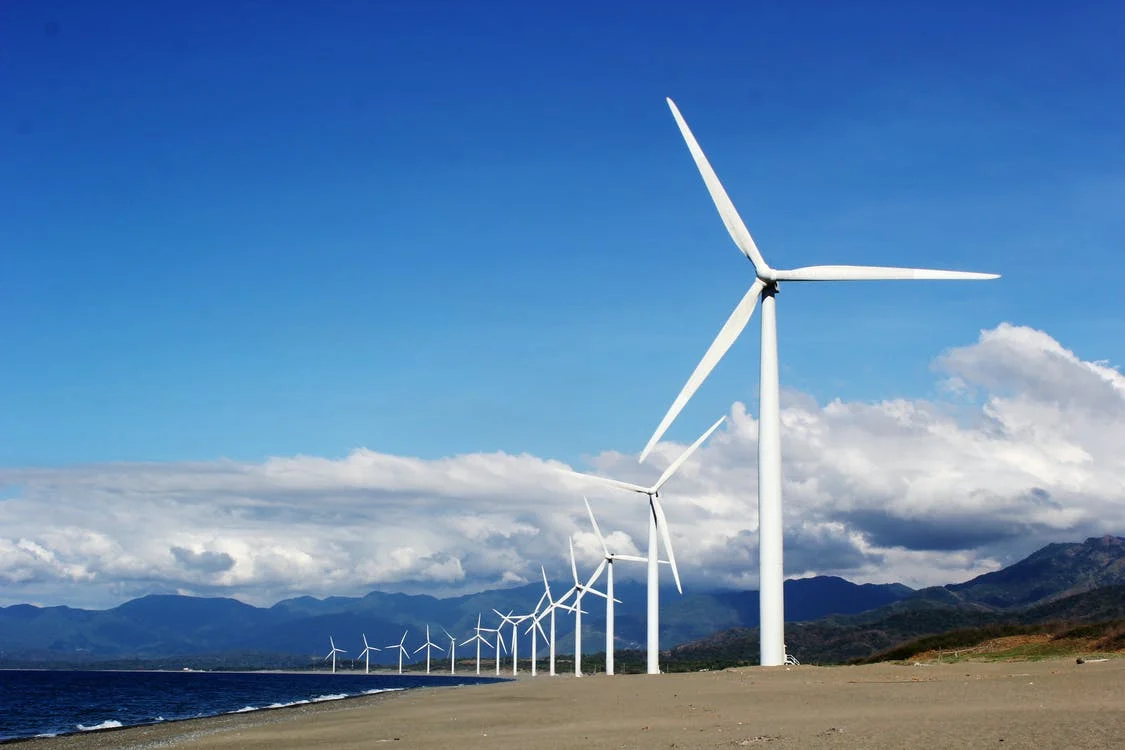
ACCIONA Energía, a global leader in renewable energy, has successfully launched its Forty Mile Wind Farm in southern Alberta, Canada, amid momentum from a new $200 million wind project announced elsewhere in the province. This 280-megawatt (MW) project, powered by 49 Nordex turbines, is now supplying clean electricity to the provincial grid and stands as one of Canada's ten largest wind farms. It also marks the company's largest wind installation in North America to date. 

Strategic Location and Technological Specifications

Situated approximately 50 kilometers southwest of Medicine Hat, the Forty Mile Wind Farm is strategically located in the County of Forty Mile No. 8. Each of the 49 Nordex N155 turbines boasts a 5.7 MW capacity and stands 108 meters tall. The project's design allows for future expansion, with a potential Phase II that could add an additional 120 MW, bringing the total capacity to 400 MW, a scale comparable to Enel's 450 MW U.S. wind farm now in operation. 

Economic and Community Impact

The Forty Mile Wind Farm has significantly contributed to the local economy. During its peak construction phase, the project created approximately 250 jobs, with 25 permanent positions anticipated upon full operation. These outcomes align with an Alberta renewable energy surge projected to power thousands of jobs across the province. Additionally, the project has injected new tax revenues into the local economy and provided direct financial support to local non-profit organizations, including the Forty Mile Family & Community Support Services, the Medicine Hat Women’s Shelter Society, and the Root Cellar Food & Wellness Hub. 

Environmental Benefits

Once fully operational, the Forty Mile Wind Farm is expected to generate enough clean energy to power more than 85,000 homes, supporting wind power's competitiveness in electricity markets today. This substantial contribution to Alberta's energy mix aligns with ACCIONA Energía's commitment to sustainability and its goal of reducing carbon emissions. The project is part of the company's broader strategy to expand its renewable energy footprint in North America and support the transition to a low-carbon economy. 

Future Prospects

Looking ahead, ACCIONA Energía plans to continue its expansion in the renewable energy sector, as peers like TransAlta add 119 MW in the U.S. to their portfolios. The success of the Forty Mile Wind Farm serves as a model for future projects and underscores the company's dedication to delivering sustainable energy solutions, even as Alberta's energy future presents periodic headwinds. With ongoing developments and a focus on innovation, ACCIONA Energía is poised to play a pivotal role in shaping the future of renewable energy in North America.

The Forty Mile Wind Farm exemplifies ACCIONA Energía's commitment to advancing renewable energy, supporting local communities, and contributing to environmental sustainability, and it benefits from evolving demand signals, including a federal green electricity contract initiative in Canada that encourages clean supply. As the project continues to operate and expand, it stands as a testament to the potential of wind energy in Canada's clean energy landscape.


Related News

View more

Britain Prepares for High Winter Heating and Electricity Costs

UK Energy Price Cap drives household electricity bills and gas prices, as Ofgem adjusts unit rates amid natural gas shortages, Russia-Ukraine disruptions, inflation, recession risks, and limited storage; government support offers only short-term relief.


Key Points

The UK Energy Price Cap limits per-unit gas and electricity charges set by suppliers and adjusted by Ofgem.

✅ Reflects wholesale natural gas costs; varies quarterly

✅ Protects consumers from sudden electricity and heating bill spikes

✅ Does not cap total annual spend; usage still determines bills


The government organization that controls the cost of energy in Great Britain recently increased what is known as a price cap on household energy bills. The price cap is the highest amount that gas suppliers can charge for a unit of energy.

The new, higher cost has people concerned that they may not be able to pay for their gas and electricity this winter. Some might pay as much as $4,188 for energy next year. Earlier this year, the price cap was at $2,320, and a 16% decrease in bills is anticipated in April.

Why such a change?

Oil and gas prices around the world have been increasing since 2021 as economies started up again after the coronavirus pandemic. More business activities required more fuel.

Then, Russia invaded Ukraine in late February, creating a new energy crisis. Russia limited the amount of natural gas it sent to European countries that needed it to power factories, produce electricity and keep homes warm.

Some energy companies are charging more because they are worried that Russia might completely stop sending gas to European countries. And in Britain, prices are up because the country does not produce much gas or have a good way to store it. As a result, Britain must purchase gas often in a market where prices are high, and ministers have discussed ending the gas-electricity price link to ease bills.

Citibank, a U.S. financial company, believes the higher energy prices will cause inflation in Britain to reach 18 percent in 2023, while EU energy inflation has also been driven higher by energy costs this year. And the Bank of England says an economic slowdown known as a recession will start later this year.

Public health and private aid organizations worry that high energy prices will cause a “catastrophe” as Britons choose between keeping their homes warm and eating enough food.

What can government do?

As prices rise, the British government plans to give people between $450 and $1,400 to help pay for energy costs, while some British MPs push to further restrict the price charged for gas and electricity. But the help is seen by many as not enough.

If the government approves more money for fuel, it will probably not come until September, as the energy security bill moves toward becoming law. That is the time the Conservative Party will select a new leader to replace Prime Minister Boris Johnson.

The Labour Party says the government should increase the amount it provides for people to pay for fuel by raising taxes on energy companies. However, the two politicians who are trying to become the next Prime Minister do not seem to support that idea.

Giovanna Speciale leads an organization called the Southeast London Community Energy group. It helps people pay their bills. She said the money will help but it is only a short-term solution to a bigger problem with Britain’s energy system. Because the system is privately run, she said, “there’s very little that the government can do to intervene in this.”

Other European countries are seeing higher energy costs, but not as high, and at the EU level, gas price cap strategies have been outlined to tackle volatility. In France, gas prices are capped at 2021 levels. In Germany, prices are up by 38 percent since last year. However, the government is reducing some taxes, which will make it easier for the average person to buy gas. In Italy, prices are going up, but the government recently approved over $8 billion to help people pay their energy bills.


Related News

View more

Ontario Poised to Miss 2030 Emissions Target

Ontario Poised to Miss 2030 Emissions Target highlights how rising greenhouse gas emissions from electricity generation and natural gas power plants threaten Ontario’s climate goals, environmental sustainability, and clean energy transition efforts amid growing economic and policy challenges.


Why is Ontario Poised to Miss 2030 Emissions Target?

Ontario Poised to Miss 2030 Emissions Target examines the province’s setback in meeting climate goals due to higher power-sector emissions and shifting energy policies.

✅ Rising greenhouse gas emissions from gas-fired electricity generation

✅ Climate policy uncertainty and missed environmental targets

✅ Balancing clean energy transition with economic pressures

Ontario’s path toward meeting its 2030 greenhouse gas emissions target has taken a sharp turn for the worse, according to internal government documents obtained by Global News. The province, once on track to surpass its reduction goals, is now projected to miss them—largely due to rising emissions from electricity generation, even as the IEA net-zero electricity report highlights rising demand nationwide.

In October 2024, the Ford government’s internal analysis indicated that Ontario was on track to reduce emissions by 28 percent below 2005 levels by 2030, effectively exceeding its target. But a subsequent update in January 2025 revealed a grim reversal. The new forecast showed an increase of about eight megatonnes (Mt) of emissions compared to the previous model, with most of the rise attributed to the province’s energy policies.

“This forecast is about 8 Mt higher than the October 2024 forecast, mainly due to higher electricity sector emissions that reflect the latest ENERGY/IESO energy planning and assumptions,” the internal document stated.

While the analysis did not specify which policy shifts triggered the change, experts point to Ontario’s growing reliance on natural gas. The use of gas-fired power plants has surged to fill temporary gaps created by nuclear refurbishment projects and other grid constraints, even as renewable energy’s role grows. In fact, natural gas generation in early 2025 reached its highest level since 2012.

The internal report cited “changing electricity generation,” nuclear power refurbishment, and “policy uncertainty” as major risks to achieving the province’s climate goals. But the situation may be even worse than the government’s updated forecast suggests.

On Wednesday, Ontario’s auditor general warned that the January projections were overly optimistic. The watchdog’s new report concluded the province could fall even further behind its 2030 emissions target, noting that reductions had likely been overestimated in several sectors, including transportation—such as electric vehicle sales—and waste management. “An even wider margin” of missed goals was now expected, the auditor said.

Environment Minister Todd McCarthy defended the government’s position, arguing that climate goals must be balanced against economic realities. “We cannot put families’ financial, household budgets at risk by going off in a direction that’s not achievable,” McCarthy said.

The minister declined to commit to new emissions targets beyond 2030—or even to confirm that the existing goals would be met—but insisted efforts were ongoing. “We are continuing to meet our commitment to at least try to meet our commitment for the 2030 target,” he told reporters. “But targets are not outcomes. We believe in achievable outcomes, not unrealistic objectives.”

Environmental advocates warn that Ontario’s reliance on fossil-fuel generation could lock the province into higher emissions for years, undermining national efforts to decarbonize Canada’s electricity grid. With cleaning up Canada’s electricity expected to play a central role in both industrial growth and climate action, the province’s backslide represents a significant setback for Canada’s overall emissions strategy.

Other provinces face similar challenges; for example, B.C. is projected to miss its 2050 targets by a wide margin.

As Ontario weighs its next steps, the tension between energy security, affordability, and environmental responsibility continues to define the province’s path toward a lower-carbon future and Canada’s 2050 net-zero target over the long term.


Related Articles


View more

Lawmakers push bill to connect Texas grid to rest of the nation

Connect the Grid Act links ERCOT to neighboring grids via high-voltage interconnections, enhancing reliability, resilience, and renewables integration. It enables power imports and exports with SPP, MISO, and the Western Interconnection under FERC oversight.


Key Points

A plan to link ERCOT with neighboring grids, improving reliability, enabling energy trade, and integrating renewables.

✅ High-voltage ties with SPP, MISO, and the Western Interconnection

✅ Enables imports during crises and exports of surplus power

✅ Brings ERCOT under FERC oversight; DoE to study Mexico links


In the aftermath of the devastating 2021 Texas blackouts, which exposed the vulnerabilities of the state's energy infrastructure, a significant legislative effort is underway to transform Texas from an energy island into a connected component of the broader U.S. power grid. Spearheaded by U.S. Representative Greg Casar, D-Austin, the proposed Connect the Grid Act is part of a push for smarter electricity infrastructure that seeks to remedy the isolation of the Electric Reliability Council of Texas (ERCOT) from neighboring power grids, a condition that significantly contributed to the crisis during Winter Storm Uri.

The blackouts, which left millions without power and resulted in significant loss of life and economic damage, underscored the inherent risks of Texas's unique energy infrastructure. Unlike the rest of the continental U.S., Texas's grid operates independently, limiting its ability to import electricity during emergencies. This isolation was a critical factor in the state's inability to respond effectively to the increased demand for power during the storm.

Recognizing the urgent need for a more resilient and integrated energy system, Rep. Casar's legislation aims to establish high-voltage connections between ERCOT and adjacent grid-operating organizations, including the Southern Power Pool, MISO, and the Western Interconnection. This would not only improve the reliability of Texas's power supply by enabling energy imports during crises but also allow the state to export surplus energy, thereby enhancing the economic efficiency and sustainability of its energy market.

The Connect the Grid Act proposes a range for the new connections' transfer capabilities, aiming to significantly boost the amount of power that can be shared between Texas and its neighbors. Such interconnectivity is anticipated to reduce energy costs for consumers by mitigating scarcity and enabling access to Texas's vast renewable energy resources, even as grid modernization affordability remains a point of debate among stakeholders. However, the bill faces opposition due to concerns over federal oversight, as it would bring ERCOT under the jurisdiction of the Federal Energy Regulatory Commission (FERC).

Some analysts note that policies such as later school start dates can ease late-summer peak demand as well.

At a press conference held at the IBEW Local 520 headquarters, Rep. Casar, along with environmental groups, labor unions, and frontline workers, highlighted the benefits of the proposed legislation. The bill also includes provisions for a Department of Energy study on the potential benefits of interconnecting with Mexico, and parallels proposals for macrogrids in Canada that seek greater reliability across borders.

The Connect the Grid Act reflects a broader national trend towards increasing the interconnectivity of regional power grids, a move deemed essential for the transition to renewable energy and combating climate change risks to the U.S. grid through expanded interconnection. By enabling the flow of clean energy from renewable-rich areas like Texas to energy-hungry urban centers, the legislation supports a more sustainable and resilient national energy infrastructure.

Critics of Texas's grid independence, including energy experts and federal regulators, have long advocated for such interconnections. They argue that increased access to neighboring grids could have mitigated the effects of the 2021 blackouts and emphasize the importance of a grid that can withstand extreme weather events. The Federal Energy Regulatory Commission and the North American Electric Reliability Corp. have both explored mandates and studies to promote electricity transfer between regional grids, while states like California grid upgrades are investing to modernize networks as well, highlighting the national importance of grid interconnectivity.

Despite the potential challenges of increased federal regulation, proponents of the Connect the Grid Act argue that the benefits of interconnection far outweigh the drawbacks. By reducing energy costs, enhancing grid reliability, and promoting renewable energy, the legislation aims to secure a more sustainable and equitable energy future for Texas and the nation.

If passed, the Connect the Grid Act would mark a historic shift in Texas's energy policy, ending the state's long-standing isolation and positioning it as a key player in the national and potentially international energy landscape, and echoes calls for a western Canadian electricity grid to strengthen regional ties. The bill sets a completion deadline of January 1, 2035, for the construction of the new connections, with other projects, like the one by Pattern Energy, potentially connecting ERCOT to parts of the Southeastern grid even earlier, by 2029. This legislative effort represents a critical step towards ensuring that Texas can meet its energy needs reliably and sustainably, while also contributing to the broader goal of transitioning to a cleaner, more resilient power system.


Related News

View more

Worker injured after GE turbine collapse

GE Wind Turbine Collapse Brazil raises safety concerns at Omega Energia's Delta VI wind farm in Maranhe3o, with GE Renewable Energy probing root-cause of turbine failure after a worker injury and similar incidents in 2024.


Key Points

An SEO focus on the Brazil GE turbine collapse, its causes, safety investigation, and related 2024 incidents.

✅ Incident at Omega Energia's Delta VI, Maranhao; one worker injured

✅ GE Renewable Energy conducts root-cause investigation and containment

✅ Fifth GE turbine collapse in 2024 across Brazil and the United States


A GE Renewable Energy turbine collapsed at a wind farm in north-east Brazil, injuring a worker and sparking a probe into the fifth such incident this year, the manufacturer confirmed.

One of the manufacturer’s GE 2.72-116 turbines collapsed at Omega Energia’s Delta VI project in Maranhão, which was commissioned in 2018.

Three GE employees were on site at the time of the collapse on Tuesday (3 September), the US manufacturer confirmed, even as U.S. offshore wind developers signal growing competitiveness with gas. 

One worker was injured and is currently receiving medical treatment, GE added.

"We are working to determine the root cause of this incident and to provide proper support as needed," it said

The turbine collapse in Brazil is the fifth such incident involving GE turbines this year, even as the UK's biggest offshore windfarm begins power supply this week, underscoring broader sector momentum.

On 16 February, a turbine collapsed at NextEra Energy Resources’ Casa Mesa wind farm in New Mexico, US, while giant wind components were being transported to a project in Saskatchewan, Canada. The site uses GE’s 2.3-116 and 2.5-127 models.

The New Mexico incident was followed by another collapse in the US — as a Scottish North Sea wind farm resumed construction after Covid-19 — this time a GE 2.4-107 unit at Tradewind Energy’s Chisholm View 2 project in Oklahoma on 21 May.

Two GE turbines then collapsed at projects in July: a 2.5-116 unit at Invenergy’s Upstreamwind farm in Nebraska on 5 July, followed by a 1.7-103 model at the Actis Group-owned Ventos de São Clemente complex in Pernambuco, north-eastern Brazil, even as tidal power in Scotland generated enough electricity to power nearly 4,000 homes.

No employees were injured in the first four turbine collapses of the year, in contrast with concerns at a Hawaii geothermal plant over potential meltdown risk.

In response to the latest incident, GE Renewable Energy added: "It is too early to speculate about the root cause of this week’s turbine collapse.

"Based on our learnings from the previous turbine collapses, we have teams in place focused on containing and resolving these issues quickly, to ensure the safe and reliable operation of our turbines."


Related News

View more

New Program Set to Fight for 'Electricity Future That Works for People and the Planet'

Energy Justice Program drives a renewables-based transition, challenging utility monopolies with legal action, promoting rooftop solar, distributed energy, public power, and climate justice to decarbonize the grid and protect communities and wildlife nationwide.


Key Points

A climate justice initiative advancing renewables, legal action, and public power to challenge utility monopolies.

✅ Challenges utility barriers to rooftop solar and distributed energy

✅ Advances state and federal policies for equitable, public power

✅ Uses litigation to curb fossil fuel dependence and protect communities


The Center for Biological Diversity on Monday rolled out a new program to push back against the nation's community- and wildlife-harming energy system that the climate advocacy group says is based on fossil fuels and a "centralized monopoly on power."

The goal of the new effort, the Energy Justice Program, is to help forge a path towards a just and renewables-based energy future informed by equitable regulation principles.

"Our broken energy system threatens our climate and our future," said Jean Su, the Energy Justice Program's new director, in a statement. "Utilities were given monopolies to ensure public access to electricity, but these dinosaur corporations are now hurting the public interest by blocking the clean energy transition, including via coal and nuclear subsidy schemes that profit off the fossil fuel era."

"In this era of climate catastrophe," she continued, "we have to stop these outdated monopolies and usher in a new electricity future that works for people and the planet."

To meet those goals, the new program will pursue a number of avenues, including using legal action to fight utilities' obstruction of clean energy efforts, helping communities advance local solar programs through energy freedom strategies in the South, and crafting energy policies on the state, federal, and international levels in step with commitments from major energy buyers to achieve a 90% carbon-free goal by 2030.

Some of that work is already underway. In June the Center filed a brief with a federal court in a bid to block Arizona power utility Salt River Project from slapping a 60-percent electricity rate hike on rooftop solar customers—amid federal efforts to reshape electricity pricing that critics say are being rushed—a move the group described (pdf) as an obstacle to achieving "the energy transition demanded by climate science."

The Center is among the groups in Energy Justice NC. The diverse coalition seeks to end the energy stranglehold in North Carolina held by Duke Energy, which continues to invest in fossil fuel projects even as it touts clean energy and grid investments in the region.

The time for a new energy system, says the Energy Justice Program, is now, as climate change impacts increasingly strain the grid.

"Amid this climate and extinction emergency," said Su, "the U.S. can't afford to stick with the same centralized, profit-driven electricity system that drove us here in the first place. We have to seize this once-in-a-generation opportunity to design a new system of accountable, equitable, truly public power."


Related News

View more

Sign Up for Electricity Forum’s Newsletter

Stay informed with our FREE Newsletter — get the latest news, breakthrough technologies, and expert insights, delivered straight to your inbox.

Electricity Today T&D Magazine Subscribe for FREE

Stay informed with the latest T&D policies and technologies.
  • Timely insights from industry experts
  • Practical solutions T&D engineers
  • Free access to every issue

Download the 2025 Electrical Training Catalog

Explore 50+ live, expert-led electrical training courses –

  • Interactive
  • Flexible
  • CEU-cerified