Iceland To Open First Hydrogen Fuel Station

By Reuters


Protective Relay Training - Basic

Our customized live online or in‑person group training can be delivered to your staff at your location.
  • Live Online
  • 12 hours Instructor-led
  • Group Training Available
Regular Price:
$699
Coupon Price:
$599
Reserve Your Seat Today
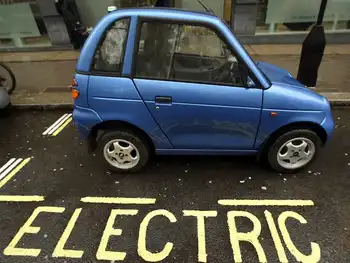
Norwegian industrial conglomerate Norsk Hydro said it had shipped the first commercial hydrogen filling station in the world for cars and buses to Iceland under a European Union-sponsored environmental project.

A Norsk Hydro spokesman said that hydrogen filling stations already exist in restricted and private use elsewhere in the world, but that the filling station for the Icelandic capital Reykjavik will be the first to be open to the public.

The station to be built with Shell and to be opened on April 24 will initially serve three DaimlerChrysler hydrogen-powered buses that will run on regular routes in the city for two years, the group said.

Spokesman Helge Stiksrud acknowledged that few hydrogen-powered cars are on the roads, and they are not in regular production, but said that most car manufacturers had developed hydrogen models.

"If a person in Iceland buys a hydrogen-driven car, he can use that filling station," Stiksrud said.

The $7 million hydrogen station that Hydro will deliver to Rejkjavik is the first result of the international joint venture, Icelandic New Energy Ltd, where Norsk Hydro has a 16.3 percent interest, the Norwegian group said in a statement.

"The company's aim is to study the possibilities for replacing fossil fuels and developing the first 'hydrogen economy' in the world," it added.

The station will use Norsk Hydro's technology, including an electrolyser -- a device that splits water into hydrogen and oxygen with electricity -- a compressor and a direct vehicle filling station, the company said. It said that the project was in line with the Iceland's goal to base all its energy production on renewable resources by 2030. The only emission from hydrogen used as fuel is water.

The Reykjavik station will be set up in connection with the EU-sponsored ECTOS project, a sister proect to the European Union's programme called CUTE, which stands for Clean Urban Transport Europe, with pilots in nine European cities.

Norsk Hydro has also earlier said it would supply a hydrogen filling station to Hamburg, one of the nine cities with a CUTE project each of which will involve tests with busses over the next few years.

The other cities are Amsterdam, Barcelona, London, Luxembourg, Madrid, Porto, Stockholm and Stuttgart.

Related News
'Unlayering' peak demand could accelerate energy storage adoption

Duration Portfolio Energy Storage aligns layered peak demand with right-sized batteries, enabling peak shaving, gas peaker replacement, and solar-plus-storage synergy while improving grid flexibility, reliability, and T&D deferral through two- to four-hour battery durations.


Key Points

An approach that layers battery durations to match peaks, cut costs, replace peakers, and boost grid reliability.

✅ Layers 2- to 4-hour batteries by peak duration

✅ Enables solar-plus-storage and peak shaving

✅ Cuts T&D upgrades, emissions, and fuel costs


The debate over energy storage replacing gas-fired peakers has raged for years, but a new approach that shifts the terms of the argument could lead to an acceleration of storage deployments.

Rather than looking at peak demand as a single mountainous peak, some analysts now advocate a layered approach that allows energy storage to better match peak needs and complement ongoing efforts to improve solar and wind power across the grid.

"You don’t have to have batteries that run to infinity."

Some developers of solar-plus-storage projects, bolstered by cheap batteries, say they can already compete head-to-head with gas-fired peakers. "I can beat a gas peaker anywhere in the country today with a solar-plus-storage power plant," Tom Buttgenbach, president and CEO of developer 8minutenergy Renewables, recently told S&P Global.

Customers are very busy these days and rebate programs need to fit the speed of their life. Participation should be quick, easy, and accessible anywhere.

Others disagree. Storage is not disruptive for generation, but will be disruptive for transmission and distribution, Kris Zadlo, executive vice president and chief development officer at Invenergy, told the audience at a Bloomberg New Energy Finance conference last spring. Invenergy, like many renewable power developers, develops generation, energy storage and transmission projects.

But there is another path that avoids the pitfalls of positions on either end of the all-or-none approach. "Do the analysis of the need itself," Ray Hohenstein, market applications director at Fluence, told Utility Dive. If the need is only two hours in duration, it may be best served by a two-hour battery. "You don’t have to have batteries that run to infinity."


Storage vs. fossil fuel peakers

Energy storage has several benefits over traditional fossil fuel peaking plants, Hohenstein said. It is instantaneous, it has no emissions and requires no fuel, and has limited infrastructure needs. It can also help the grid absorb higher levels of renewable generation by soaking up excess output, such as solar power at noon, and many planned storage additions will be paired with solar in the next few years. But the one thing energy storage cannot do, he said, is provide limitless energy.

So, instead of looking at replacing an individual peaker, Hohenstein advocated a "duration portfolio" approach that uses energy storage to shave peak load.

If the need is for 150 MW of resources that will never need to run for more than two hours at a time, then a battery is "quite cheap," significantly less than a four or eight-hour battery, said Hohenstein. "If you fill up your peak by duration layer, it could be more cost effective."


NREL research driver

Fluence’s approach is informed by research by Paul Denholm and Robert Margolis at the National Renewable Energy Laboratory (NREL), released last spring.

The NREL researchers looked at the California market where they said 11 GW of fossil fuel capacity is expected to be retired by 2029 because of new once-through-cooling requirements that are taking effect. A lot of that capacity is peaking capacity and, according to NREL’s analysis, a large fraction could be replaced with four-hour energy storage, assuming continued storage cost reductions and growth in solar installations.

The key in NREL’s research was the level of solar power penetration. There is a "synergistic" relationship between solar penetration and storage deployment, the researchers wrote, and other studies suggest wind and solar could meet 80% of U.S. demand as these trends continue.


Related News

View more

Energy Vault Secures $28M for California Green Hydrogen Microgrid

Calistoga Resiliency Centre Microgrid delivers grid resilience via green hydrogen and BESS, providing island-mode backup during PSPS events, wildfire risk, and outages, with black-start and grid-forming capabilities for reliable community power.


Key Points

A hybrid green hydrogen and BESS facility ensuring resilient, islanded power for Calistoga during PSPS and outages.

✅ 293 MWh capacity with 8.5 MW peak for critical backup

✅ Hybrid lithium-ion BESS plus green hydrogen fuel cells

✅ Island mode with black-start and grid-forming support


Energy Vault, a prominent energy storage and technology company known for its gravity storage, recently secured US$28 million in project financing for its innovative Calistoga Resiliency Centre (CRC) in California. This funding will enable the development of a microgrid powered by a unique combination of green hydrogen and battery energy storage systems (BESS), marking a significant step forward in enhancing grid resilience in the face of natural disasters such as wildfires.

Located in California's fire-prone regions, the CRC is designed to provide critical backup power during Public Safety Power Shutoff (PSPS) events—periods when utility companies proactively cut power to prevent wildfires. These events can leave communities without electricity for extended periods, making the need for reliable, independent power sources more urgent as many utilities see benefits in energy storage today. The CRC, with a capacity of 293 MWh and a peak output of 8.5 MW, will ensure that the Calistoga community maintains power even when the grid is disconnected.

The CRC features an integrated hybrid system that combines lithium-ion batteries and green hydrogen fuel cells, even as some grid-scale projects adopt vanadium flow batteries for long-duration needs. During a PSPS event or other grid outages, the system will operate in "island mode," using hydrogen to generate electricity. This setup not only guarantees power supply but also contributes to grid stability by supporting black-start and grid-forming functions. Energy Vault's proprietary B-VAULT DC battery technology complements the hydrogen fuel cells, enhancing the overall performance and resilience of the microgrid.

One of the key aspects of the CRC project is the utilization of green hydrogen. Unlike traditional hydrogen, which is often produced using fossil fuels, green hydrogen is generated through renewable energy sources like solar or wind power, with large-scale initiatives such as British Columbia hydrogen project accelerating supply, making it a cleaner and more sustainable alternative. This aligns with California’s ambitious clean energy goals and is expected to reduce the carbon footprint of the region’s energy infrastructure.

The CRC project also sets a precedent for future hybrid microgrid deployments across California and other wildfire-prone areas, with utilities like SDG&E Emerald Storage highlighting growing adoption. Energy Vault has positioned the CRC as a model for scalable, utility-scale microgrids that can be adapted to various locations facing similar challenges. Following the success of this project, Energy Vault is expanding its portfolio with additional projects in Texas, where it anticipates securing up to US$25 million in financing.

The funding for the CRC also includes the sale of an investment tax credit (ITC), a key component of the financing structure that helps make such ambitious projects financially viable. This structure is crucial as it allows companies to leverage government incentives to offset development costs, including CEC long-duration storage funding, thus encouraging further investment in green energy infrastructure.

Despite some skepticism regarding the transportation of hydrogen rather than producing it onsite, the project has garnered strong support. California’s Public Utilities Commission (CPUC) acknowledged the potential risks of transporting green hydrogen but emphasized that it is still preferable to using more harmful fuel sources. This recognition is important as it validates Energy Vault’s approach to using hydrogen as part of a broader strategy to transition to clean, reliable energy solutions.

Energy Vault's shift from its traditional gravity-based energy storage systems to battery energy storage systems, such as BESS in New York, reflects the company's adaptation to the growing demand for versatile, efficient energy solutions. The hybrid approach of combining BESS with green hydrogen represents an innovative way to address the challenges of energy storage, especially in regions vulnerable to natural disasters and power outages.

As the CRC nears mechanical completion and aims for full commercial operations by Q2 2025, it is poised to become a critical part of California’s grid resilience strategy. The microgrid's ability to function autonomously during emergencies will provide invaluable benefits not only to Calistoga but also to other communities that may face similar grid disruptions in the future.

Energy Vault’s US$28 million financing for the Calistoga Resiliency Centre marks a significant milestone in the development of hybrid microgrids that combine the power of green hydrogen and battery energy storage. This project exemplifies the future of energy resilience, showcasing a forward-thinking approach to mitigating the impact of natural disasters and ensuring a reliable, sustainable energy future for communities at risk. With its innovative use of renewable energy sources and cutting-edge technology, the CRC sets a strong example for future energy storage projects worldwide.


Related News

View more

New Hampshire rejects Quebec-Massachusetts transmission proposal

Northern Pass Project faces rejection by New Hampshire regulators, halting Hydro-Quebec clean energy transmission lines to Massachusetts; Eversource vows appeal as the Site Evaluation Committee cites development concerns and alternative routes through Vermont and Maine.


Key Points

A project to transmit Hydro-Quebec power to Massachusetts via New Hampshire, recently rejected by state regulators.

✅ New Hampshire SEC denied the transmission application

✅ Up to 9.45 TWh yearly from Hydro-Quebec to Massachusetts

✅ Eversource plans appeal; alternative routes via Vermont, Maine


Regulators in the state of New Hampshire on Thursday rejected a major electricity project being piloted by Quebec’s hydro utility and its American partner, Eversource.

Members of New Hampshire’s Site Evaluation Committee unanimously denied an application for the Northern Pass project a week after the state of Massachusetts green-lit the proposal.

Both states had to accept the project, as the transmission lines were to bring up to 9.45 terawatt hours of electricity per year from Quebec’s hydroelectric plants to Massachusetts as part of Hydro-Quebec’s export bid to New England, through New Hampshire.

The 20-year proposal was to be the biggest export contract in Hydro-Quebec’s history, in a region where Connecticut is leading a market overhaul that could affect pricing, and would generate up to $500 million in annual revenues for the provincial utility.

Hydro-Quebec’s U.S. partner, Eversource, said in a new release it was “shocked and outraged” by the New Hampshire regulators’ decision and suggested it would appeal.

“This decision sends a chilling message to any energy project contemplating development in the Granite State,” said Eversource. “We will be seeking reconsideration of the SEC’s decision, as well as reviewing all options for moving this critical clean energy project forward, including lessons from electricity corridor construction in Maine.”

The New Hampshire Union Leader reported Thursday the seven members of the evaluation committee said the project’s promoters couldn’t demonstrate the proposed energy transport lines wouldn’t interfere with the region’s orderly development.

Hydro-Quebec spokesman Serge Abergel said the decision wasn’t great news but it didn’t put a end to the negotiations between the company and the state of Massachusetts.

The hydro utility had proposed alternatives routes through Vermont and Maine amid a 145-mile transmission line debate over the corridor should the original plan fall through.

“There is a provision included in the process in the advent of an impasse, which allows Massachusetts to go back and choose the next candidate on the list,” Abergel said in an interview. “There are still cards left on the table.”


Related News

View more

California’s Solar Power Cost Shift: A Misguided Policy Threatening Energy Equity

California Rooftop Solar Cost Shift examines PG&E rate hikes, net metering changes, and utility infrastructure spending impacts on low-income households, distributed generation, and clean energy adoption, potentially raising bills and undermining grid resilience.


Key Points

A claim that rooftop solar shifts fixed grid costs to others; critics cite PG&E rates, avoided costs, and impacts.

✅ PG&E rates outpace national average, underscoring cost drivers.

✅ Net metering cuts risk burdening low- and middle-income homes.

✅ Distributed generation avoids infrastructure spend and grid strain.


California is grappling with soaring electricity prices across the state, with Pacific Gas & Electric (PG&E) rates more than double the national average and increasing at an average of 12.5% annually over the past six years. In response, Governor Gavin Newsom issued an executive order directing state energy agencies to identify ways to reduce power costs. However, recent policy shifts targeting rooftop solar users may exacerbate the problem rather than alleviate it.

The "Cost Shift" Theory

A central justification for these pricing changes is the "cost shift" theory. This theory posits that homeowners with rooftop solar panels reduce their electricity consumption from the grid, thereby shifting the fixed costs of maintaining and operating the electrical grid onto non-solar customers. Proponents argue that this leads to higher rates for those without solar installations.

However, this theory is based on a flawed assumption: that PG&E owns 100% of the electricity generated by its customers and is entitled to full profits even for energy it does not deliver. In reality, rooftop solar users supply only about half of their energy needs and still pay for the rest. Moreover, their investments in solar infrastructure reduce grid strain and save ratepayers billions by avoiding costly infrastructure projects and reducing energy demand growth, aligning with efforts to revamp electricity rates to clean the grid as well.

Impact on Low- and Middle-Income Households

The majority of rooftop solar users are low- and middle-income households. These individuals often invest in solar panels to lower their energy bills and reduce their carbon footprint. Policy changes that undermine the financial viability of rooftop solar disproportionately affect these communities, and efforts to overturn income-based charges add uncertainty about affordability and access.

For instance, Assembly Bill 942 proposes to retroactively alter contracts for millions of solar consumers, cutting the compensation they receive from providing energy to the grid, raising questions about major changes to your electric bill that could follow if their home is sold or transferred. This would force those with solar leases—predominantly lower-income individuals—to buy out their contracts when selling their homes, potentially incurring significant financial burdens.

The Real Drivers of Rising Energy Costs

While rooftop solar users are being blamed for rising electricity rates, calls for action have mounted as the true culprits lie elsewhere. Unchecked utility infrastructure spending has been a significant factor in escalating costs. For example, PG&E's rates have increased rapidly, yet the utility's spending on infrastructure projects has often been criticized for inefficiency and lack of accountability. Instead of targeting solar users, policymakers should scrutinize utility profit motives and infrastructure investments to identify areas where costs can be reduced without sacrificing service quality.

California's approach to addressing rising electricity costs by targeting rooftop solar users is misguided. The "cost shift" theory is based on flawed assumptions and overlooks the substantial benefits that rooftop solar provides to the grid and ratepayers. To achieve a sustainable and equitable energy future, the state must focus on controlling utility spending, promoting clean energy access for all, especially as it exports its energy policies across the West, and ensuring that policies support—not undermine—the adoption of renewable energy technologies.


Related News

View more

Ontario faces growing electricity supply gap, study finds

Ontario Electricity Capacity Gap threatens reliability as IESO forecasts shortfalls from the Pickering shutdown and rapid electrification, requiring new low-emission nuclear generation to meet net-zero targets, maintain baseload, and stabilize the grid.


Key Points

Expected 2030 shortfalls from Pickering closure and electrification, requiring new low-emission nuclear to meet net-zero.

✅ IESO projects a 3.6-9.5 GW capacity gap by 2030

✅ Pickering shutdown removes baseload, stressing reliability

✅ New low-emission nuclear needed to meet net-zero targets


Ontario faces an electricity supply shortage and reliability risks in the next four to eight years and will not meet net-zero objectives without building new low-emission, nuclear generation starting as soon as possible, according to a report released yesterday by the Power Workers' Union (PWU). The capacity needed to fill the expected supply gap will be equivalent to doubling the province's planned nuclear fleet in eight years.

The planned closure of the Pickering nuclear power plant in 2025 and the increase in demand from electrification of the economy are the drivers behind a capacity gap in 2030 of at least 3.6 GW which could widen to as much as 9.5 GW, Electrification Pathways for Ontario to Reduce Emissions, finds. Ontario's Independent Electricity System Operator (IESO) has since 2013 been forecasting a significant gap in the province's electricity supply due the closure of Pickering, but has been underestimating the impact of electrification, the report says.

In addition, the electrification of buildings, transport and industry sectors that will be needed to achieve goals of net-zero emissions by 2050 that being set by the federal government and civil society will see the province's electricity demand increase by at least 130% over current planning forecasts, and potentially by over 190%. Leveraging electricity, natural gas and hydrogen synergies can reduce supply needs, but 55 GW of new electricity capacity, including new large-scale nuclear plants, will still be needed by 2050 - four times Ontario's current nuclear and hydro assets - the report finds.

These findings underscore the urgent need for a paradigm shift in Ontario's electricity planning and procurement process, the authors say, adding that immediate action is needed both to mitigate the system reliability risks and enable the significant societal benefits needed to pursue net-zero objectives. Planning for procurement to replace Pickering's capacity, or to pursue life extension options, must begin as soon as possible.

"Policymakers around the world realise climate change can't be tackled without nuclear. Ontario's nuclear fleet has delivered emissions reductions for over 50 years," PWU President Jeff Parnell said. "In fact, without building new nuclear units, Ontario will miss its emission reduction targets and carbon emissions from electricity generation will rise dramatically, as explored in why Ontario's power could get dirtier today."

"This report clearly shows that Ontario cannot sustain the low-carbon status of its hydro and nuclear-based electricity system, decarbonise its economy and meet its carbon reduction targets without new nuclear or continued operation at Pickering in the near term. Most disturbing is the fact that we are already well behind and needed to start planning for this capacity yesterday," he said.

The six operating Candu reactors at Ontario Power Generation's Pickering plant have been kept in operation to provide baseload electricity during the refurbishment of units at the Darlington and Bruce plants. Currently, the company plans to shut down Pickering units 1 and 4 in 2024 and units 5 to 8 in 2025, even as Ontario moves to refurbish Pickering B to extend life.


Related News

View more

Why an energy crisis and $5 gas aren't spurring a green revolution

U.S. Energy Transition Delays stem from grid bottlenecks, permitting red tape, solar tariff uncertainty, supply-chain shocks, and scarce affordable EVs, risking deeper fossil fuel lock-in despite climate targets for renewables, transmission expansion, and decarbonization.


Key Points

Delays driven by grid limits, permitting, and supply shocks that slow renewables, transmission, EVs, and decarbonization.

✅ Grid interconnection and transmission backlogs stall renewables

✅ Tariff probes and supply chains disrupt utility-scale solar

✅ Permitting, policy gaps, and EV costs sustain fossil fuel use


Big solar projects are facing major delays. Plans to adapt the grid to clean energy are confronting mountains of red tape. Affordable electric vehicles are in short supply.

The United States is struggling to squeeze opportunity out of an energy crisis that should have been a catalyst for cleaner, domestically produced power. After decades of putting the climate on the back burner, the country is finding itself unprepared to seize the moment and at risk of emerging from the crisis even more reliant on fossil fuels.

10 steps you can take to lower your carbon footprint
The problem is not entirely unique to the United States. Across the globe, climate leaders are warning that energy shortages including coal and nuclear disruptions prompted by Russia’s unprovoked invasion of Ukraine and high gas prices driven by inflation threaten to make the energy transition an afterthought — potentially thwarting efforts to keep global temperature rise under 1.5 degrees Celsius.

“The energy crisis exacerbated by the war in Ukraine has seen a perilous doubling down on fossil fuels by the major economies,” U.N. Secretary General António Guterres said at a conference in Vienna on Tuesday, according to prepared remarks. He warned governments and investors that a failure to immediately and more aggressively embrace clean energy could be disastrous for the planet.

U.S. climate envoy John F. Kerry suggested that nations are falling prey to a flawed logic that fossil fuels will help them weather this period of instability, undermining U.S. national security and climate goals, which has seen gas prices climb to a record-high national average of $5 per gallon. “You have this new revisionism suggesting that we have to be pumping oil like crazy, and we have to be moving into long-term [fossil fuel] infrastructure building,” he said at the Time100 Summit in New York this month. “We have to push back.”

Climate envoy John F. Kerry attends the Summit of the Americas in Los Angeles on June 8. Kerry has criticized the tendency to turn toward fossil fuels in times of uncertainty. (Apu Gomes/AFP/Getty Images)
In the United States — the world’s second-largest emitter of greenhouse gases after China — the hurdles go beyond the supply-chain crisis and sanctions linked to the war in Ukraine. The country’s lofty goals for all carbon pollution to be gone from the electricity sector by 2035 and for half the cars sold to be electric by 2030 are jeopardized by years of neglect of the electrical grid, regulatory hurdles that have set projects back years, and failures by Congress and policymakers to plan ahead.
The challenges are further compounded by plans to build costly new infrastructure for drilling and exporting natural gas that will make it even harder to transition away from the fossil fuel.

“We are running into structural challenges preventing consumers and businesses from going cleaner, even at this time of high oil and gas prices,” said Paul Bledsoe, a climate adviser in the Clinton administration who now works on strategy at the Progressive Policy Institute, a center-left think tank. “It is a little alarming that even now, Congress is barely talking about clean energy.”

Consumers are eager for more wind and solar. Companies looking to go carbon-neutral are facing growing waitlists for access to green energy, and a Pew Research Center poll in late January found that two-thirds of Americans want the United States to prioritize alternative energy over fossil fuel production.

But lawmakers have balked for more than a decade at making most of the fundamental economic and policy changes such as a clean electricity standard that experts widely agree are crucial to an orderly and accelerated energy transition. The United States does not have a tax on carbon, nor a national cap-and-trade program that would reorient markets toward lowering emissions. The unraveling in Congress of President Biden’s $1.75 trillion Build Back Better plan has added to the head winds that green-energy developers face, even as climate law results remain mixed.

Vice President Harris tours electric school buses at Meridian High School in Falls Church, Va., on May 20. (Mandel Ngan/AFP/Getty Images)
“There is literally nothing pushing this forward in the U.S. beyond the tax code and some state laws,” said Heather Zichal, a former White House climate adviser who is now the chief executive of the American Clean Power Association.

The effects of the U.S. government’s halting approach are being felt by solar-panel installers, who saw the number of projects in the most recent quarter fall to the lowest level since the pandemic began. There was 24 percent less solar installed in the first quarter of 2022 than in the same quarter of 2021.

The holdup largely stems from a Commerce Department investigation into alleged tariff-dodging by Chinese manufacturers. Faced with the potential for steep retroactive penalties, hundreds of industrial-scale solar projects were frozen in early April. Weak federal policies to encourage investment in solar manufacturing left American companies ill-equipped to fill the void.

“We shut down multiple projects and had to lay off dozens of people,” said George Hershman, chief executive of SOLV Energy, which specializes in large solar installations. SOLV, like dozens of other solar companies, is now scrambling to reassemble those projects after the administration announced a pause of the tariffs.

Meanwhile, adding clean electricity to the aging power grid has become an increasingly complicated undertaking, given the failure to plan for adequate transmission lines and long delays connecting viable wind and solar projects to the electricity network.


Related News

View more

Sign Up for Electricity Forum’s Newsletter

Stay informed with our FREE Newsletter — get the latest news, breakthrough technologies, and expert insights, delivered straight to your inbox.

Electricity Today T&D Magazine Subscribe for FREE

Stay informed with the latest T&D policies and technologies.
  • Timely insights from industry experts
  • Practical solutions T&D engineers
  • Free access to every issue

Download the 2025 Electrical Training Catalog

Explore 50+ live, expert-led electrical training courses –

  • Interactive
  • Flexible
  • CEU-cerified