By For further information on IEEE-SA see: http://standards.ieee.org/.


Substation Relay Protection Training

Our customized live online or in‑person group training can be delivered to your staff at your location.

  • Live Online
  • 12 hours Instructor-led
  • Group Training Available
Regular Price:
$699
Coupon Price:
$599
Reserve Your Seat Today
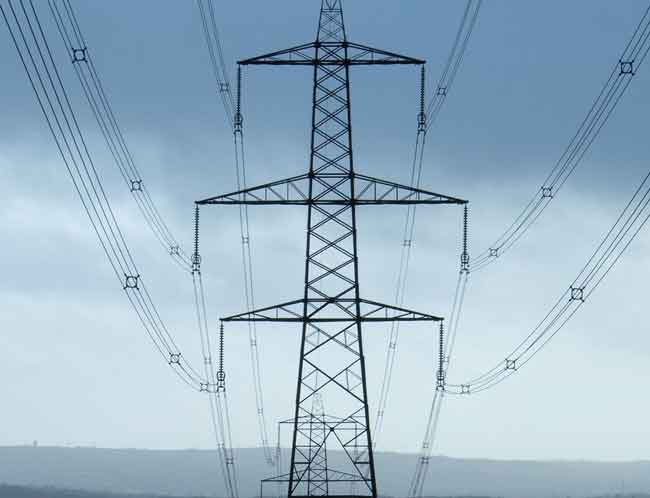
PISCATAWAY, N.J. - The Institute of Electrical and Electronics Engineers Standards Association (IEEE-SA) Standards Board has approved the start of work on three new fiber optic standards for all-dielectric, self-supporting and helically-applied cables used for communications in power grids.

The IEEE-SA Standards Board also reaffirmed the validity of the IEEE 1138-1994 standard for "Construction of Composite Fiber Optic Overhead Groundwire (OPGW) for Use on Electric Utility Power Lines." The new fiber optic cable standards will cover such items as mechanical and electrical performance, testing requirements, environmental considerations and acceptance criteria. They provide support for manufacturing, testing, procurement and quality assurance, as well as an aid in using the cable. The new standards to be developed are:

The new standards are sponsored by the Power System Committee of the Power Engineering Society. IEEE-SA Working Groups consist of volunteers from industry, government and academia, as well as from trade, scientific and IEEE organizations. Anyone with expertise in the fiber optic cable systems used by power utilities is invited to help develop these standards.

Information is available at: http://grouper.ieee.org/groups/1591/.

The IEEE Standards Association (IEEE-SA), a globally recognized standards-setting body, develops consensus standards through an open process that brings diverse parts of an industry together. It has a portfolio of more than 870 completed standards and more than 400 in development. IEEE-SA promotes the engineering process by creating, developing, integrating, sharing and applying knowledge about electro- and information technologies and sciences for the benefit of humanity and the profession.

Related News

Alberta Faces Challenges with Solar Energy Expansion

Alberta Solar Energy Expansion confronts high installation costs, grid integration and storage needs, and environmental impact, while incentives, infrastructure upgrades, and renewable targets aim to balance reliability, land use, and emissions reductions provincewide.


Key Points

Alberta Solar Energy Expansion is growth in solar tempered by costs, grid limits, environmental impact, and incentives.

✅ High capex and financing challenge utility-scale projects

✅ Grid integration needs storage, transmission, and flexibility

✅ Site selection must mitigate land and wildlife impacts


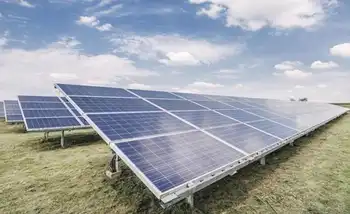
Alberta's push towards expanding solar power is encountering significant financial and environmental hurdles. The province's ambitious plans to boost solar power generation have been met with both enthusiasm and skepticism as stakeholders grapple with the complexities of integrating large-scale solar projects into the existing energy framework.

The Alberta government has been actively promoting solar energy as part of its strategy to diversify the energy mix in a province that is a powerhouse for both green energy and fossil fuels today and reduce greenhouse gas emissions. Recent developments have highlighted the potential of solar power to contribute to Alberta's clean energy goals. However, the path forward is fraught with challenges related to costs, environmental impact, and infrastructure needs.

One of the primary issues facing the solar energy sector in Alberta is the high cost of solar installations. Despite decreasing costs for solar technology in recent years, the upfront investment required for large-scale solar farms remains substantial, even as some facilities have been contracted at lower cost than natural gas in Alberta today. This financial barrier has led to concerns about the economic viability of solar projects and their ability to compete with other forms of energy, such as natural gas and oil, which have traditionally dominated Alberta's energy landscape.

Additionally, there are environmental concerns associated with the development of solar farms. While solar energy is considered a clean and renewable resource, the construction of large solar installations can have environmental implications. These include potential impacts on local wildlife habitats, land use changes, where approaches like agrivoltaics can co-locate farming and solar, and the ecological effects of large-scale land clearing. As solar projects expand, balancing the benefits of renewable energy with the need to protect natural ecosystems becomes increasingly important.

Another significant challenge is the integration of solar power into Alberta's existing energy grid. Solar energy production is variable and dependent on weather conditions, especially with Alberta's limited hydro capacity for flexibility, which can create difficulties in maintaining a stable and reliable energy supply. The need for infrastructure upgrades and energy storage solutions is crucial to address these challenges and ensure that solar power can be effectively utilized alongside other energy sources.

Despite these challenges, the Alberta government remains committed to advancing solar energy as a key component of its renewable energy strategy. Recent initiatives include financial incentives and support programs aimed at encouraging investment in solar projects and supporting a renewable energy surge that could power thousands of jobs across Alberta today. These measures are designed to help offset the high costs associated with solar installations and make the technology more accessible to businesses and homeowners alike.

Local communities and businesses are also playing a role in the growth of solar energy in Alberta. Many are exploring opportunities to invest in solar power as a means of reducing energy costs and supporting sustainability efforts and, increasingly, to sell renewable energy into the market as demand grows. These smaller-scale projects contribute to the overall expansion of solar energy and demonstrate the potential for widespread adoption across the province.

The Alberta government has also been working to address the environmental concerns associated with solar energy development. Efforts are underway to implement best practices for minimizing environmental impacts and ensuring that solar projects are developed in an environmentally responsible manner. This includes conducting environmental assessments and working with stakeholders to address potential issues before projects are approved and built.

In summary, while Alberta's solar energy initiatives hold promise for advancing the province's clean energy goals, they are also met with significant financial and environmental challenges. Addressing these issues will be crucial to the successful expansion of solar power in Alberta. The government's ongoing efforts to support solar projects through incentives and infrastructure improvements, coupled with responsible environmental practices, will play a key role in determining the future of solar energy in the province.


Related News

View more

Rio Tinto seeking solutions that transform heat from underground mines into electricity

Rio Tinto waste heat-to-electricity initiative captures underground mining thermal energy at Resolution Copper, Arizona, converting it to renewable power for cooling systems and microgrids, advancing decarbonization, energy efficiency, and the miner's 2050 carbon-neutral goal.


Key Points

A program converting underground thermal energy into on-site electricity to cut emissions and support mine cooling.

✅ Captures low-grade heat from rock and geothermal water.

✅ Generates electricity for ventilation, refrigeration, microgrids.

✅ Scalable, safe, and grid- or storage-ready for peak demand.


The world’s second-largest miner, Rio Tinto announced that it is accepting proposals for solutions that transform waste heat into electricity for reuse from its underground operations.

In a press release, the company said this initiative is aimed at drastically reducing greenhouse gas emissions, even as energy-intensive projects like bitcoin mining operations expand, so that it can achieve its goal of becoming carbon neutral by 2050.

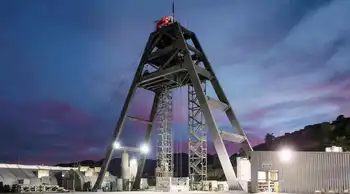
Initially, the project would be implemented at the Resolution copper mine in Arizona, which Rio owns together with BHP (ASX, LON: BHP). At this site, massive electrically-driven refrigeration and ventilation systems, aligned with broader electrified mining practices, are in charge of cooling the work environment because of the latent heat from the underground rock and groundwater. 

THE INITIATIVE IS AIMED AT REDUCING GREENHOUSE GAS EMISSIONS SO THAT RIO CAN ACHIEVE ITS GOAL OF BECOMING CARBON NEUTRAL BY 2050

“When operating, the Resolution copper mine will be a deep underground block cave mine some 7,000 feet (~2 kilometres) deep, with ambient air temperatures ranging between 168°F to 180°F (76°C to 82°C), conditions that, during heat waves, when bitcoin mining power demand can strain local grids, further heighten cooling needs, and underground water at approximately 194°F (90°C),” the media brief states.

“Rio Tinto is seeking solutions to capture and reuse the heat from underground, contributing towards powering the equipment needed to cool the operations. The solution to capture and convert this thermal energy into electrical energy, such as emerging thin-film thermoelectrics, should be safe, environmentally friendly and cost-effective.”

The miner also said that, besides capturing heat for reuse, the solution should generate electrical energy from low range temperatures below the virgin rock temperature and/or from the high thermal water coming from the underground rock, similar to using transformer waste heat for heating in the power sector. 

At the same time, the solution should be scalable and easily transported through the many miles of underground tunnels that will be built to ventilate, extract and move copper ore to the surface.

Rio requires proposals to offer the possibility of distributing the electrical energy generated back into the electrical grid from the mining operation or stored and used at a later stage when energy is required during peak use periods, especially as jurisdictions aim to use more electricity for heat in colder seasons. 


Related News

View more

The German economy used to be the envy of the world. What happened?

Germany's Economic Downturn reflects an energy crisis, deindustrialization risks, export weakness, and manufacturing stress, amid Russia gas loss, IMF and EU recession forecasts, and debates over electricity price caps and green transition.


Key Points

An economic contraction from energy price shocks, export weakness, and bottlenecks in manufacturing and digitization.

✅ Energy shock after loss of cheap Russian gas

✅ Exports slump amid China slowdown and weak demand

✅ Policy gridlock on power price cap and permits


Germany went from envy of the world to the worst-performing major developed economy. What happened?

For most of this century, Germany racked up one economic success after another, dominating global markets for high-end products like luxury cars and industrial machinery, selling so much to the rest of the world that half the economy ran on exports.

Jobs were plentiful, the government’s financial coffers grew as other European countries drowned in debt, and books were written about what other countries could learn from Germany.

No longer. Now, Germany is the world’s worst-performing major developed economy, with both the International Monetary Fund and European Union expecting it to shrink this year.

It follows Russia’s invasion of Ukraine and the loss of Moscow’s cheap Russian gas that underpinned industry — an unprecedented shock to Germany’s energy-intensive industries, long the manufacturing powerhouse of Europe.

The sudden underperformance by Europe’s largest economy has set off a wave of criticism, handwringing and debate about the way forward.

Germany risks “deindustrialization” as high energy costs and government inaction on other chronic problems threaten to send new factories and high-paying jobs elsewhere, said Christian Kullmann, CEO of major German chemical company Evonik Industries AG.

From his 21st-floor office in the west German town of Essen, Kullmann points out the symbols of earlier success across the historic Ruhr Valley industrial region: smokestacks from metal plants, giant heaps of waste from now-shuttered coal mines, a massive BP oil refinery and Evonik’s sprawling chemical production facility.

These days, the former mining region, where coal dust once blackened hanging laundry, is a symbol of the energy transition, as the power sector’s balancing act continues with wind turbines and green space.

The loss of cheap Russian natural gas needed to power factories “painfully damaged the business model of the German economy,” Kullmann told The Associated Press. “We’re in a situation where we’re being strongly affected — damaged — by external factors.”

After Russia cut off most of its gas to the European Union, spurring an energy crisis in the 27-nation bloc that had sourced 40% of the fuel from Moscow, the German government asked Evonik to turn to coal by keeping its 1960s coal-fired power plant running a few months longer.

The company is shifting away from the plant — whose 40-story smokestack fuels production of plastics and other goods — to two gas-fired generators that can later run on hydrogen amid plans to become carbon neutral by 2030 and following the nuclear phase-out of recent years.

One hotly debated solution: a government-funded cap on industrial electricity prices to get the economy through the renewable energy transition, amid an energy crisis that even saw a temporary nuclear extension to stabilize supply.

The proposal from Vice Chancellor Robert Habeck of the Greens Party has faced resistance from Chancellor Olaf Scholz, a Social Democrat, and pro-business coalition partner the Free Democrats. Environmentalists say it would only prolong reliance on fossil fuels, while others advocate a nuclear option to meet climate goals.

Kullmann is for it: “It was mistaken political decisions that primarily developed and influenced these high energy costs. And it can’t now be that German industry, German workers should be stuck with the bill.”

The price of gas is roughly double what it was in 2021, with a senior official arguing nuclear would do little to solve that gas issue, hurting companies that need it to keep glass or metal red-hot and molten 24 hours a day to make glass, paper and metal coatings used in buildings and cars.

A second blow came as key trade partner China experiences a slowdown after several decades of strong economic growth.

These outside shocks have exposed cracks in Germany’s foundation that were ignored during years of success, including lagging use of digital technology in government and business and a lengthy process to get badly needed renewable energy projects approved.


Related News

View more

COVID-19 Pandemic Puts $35 Billion in Wind Energy Investments at Risk, Says Industry Group

COVID-19 Impact on U.S. Wind Industry: disrupting wind power projects, tax credits, and construction timelines, risking rural revenues, jobs, and $35B investments; AWEA seeks Congressional flexibility as OEM shutdowns like Siemens Gamesa intensify delays.


Key Points

Pandemic disruptions threaten 25 GW of projects, $35B investment, rural revenues, jobs, and tax-credit timelines.

✅ 25 GW at risk; $35B investment jeopardized

✅ Rural taxes and land-lease payments may drop $8B

✅ AWEA seeks Congressional flexibility on tax-credit deadlines


In one of the latest examples of the havoc that the novel coronavirus is wreaking on the U.S. economy and the crisis hitting solar and wind sector alike, the American Wind Energy Association (AWEA) -- the national trade association for the U.S. wind industry -- yesterday stated its concerns that COVID-19 will "pose significant challenges to the American wind power industry." According to AWEA's calculations, the disease is jeopardizing the development of approximately 25 gigawatts of wind projects, representing $35 billion in investments, even as wind additions persist in some markets amid the pandemic.

Rural communities, where about 99% of wind projects are located, in particular, face considerable risk. The AWEA estimates that rural communities stand to lose about $8 billion in state and local tax payments and land-lease payments to private landowners. In addition, it's estimated that the pandemic threatens the loss of over 35,000 jobs, and the U.S. wind jobs outlook underscores the stakes, including wind turbine technicians, construction workers, and factory workers.

The development of wind projects is heavily reliant on the earning of tax credits, and debates over a Solar ITC extension highlight potential impacts on wind. However, in order to qualify for the current credits, project developers are bound to begin construction before Dec. 31, 2020. With local and state governments implementing various measures to stop the spread of the virus, the success of project developers' meeting this deadline is dubious, as utility-scale solar construction slows nationwide due to COVID-19. Addressing this and other challenges, the AWEA is turning to the government for help. In the trade association's press release, it states that "to protect the industry and these workers, AWEA is asking Congress for flexibility in allowing existing policies to continue working for the industry through this period of uncertainty."

Illustrating one of the ways in which COVID-19 is affecting the industry, Siemens Gamesa, a global leader in the manufacturing of wind turbines, closed a second Spanish factory this week after learning that a second of its employees had tested positive for the novel coronavirus.


Related News

View more

Trump's Canada Tariff May Spike NY Energy Prices

25% Tariff on Canadian Imports threatens New York energy markets, disrupting hydroelectric power and natural gas supply chains, raising electricity prices, increasing gas costs, and intensifying trade tensions, policy uncertainty, and cross-border logistics risks.


Key Points

A U.S. policy imposing 25% duties on Canadian goods, risking higher New York electricity and natural gas costs.

✅ Hydroelectric and gas imports face costlier cross-border flows

✅ Higher utility bills for NY households and businesses

✅ Supply chain volatility and policy uncertainty increase


President Donald Trump announced the imposition of a 25% tariff on all imports from Canada, citing concerns over drug trafficking and illegal immigration. This decision has raised significant concerns among experts and residents in New York, who warn that the tariff could lead to increased electricity and gas prices in the state.

Impact on New York's Energy Sector

New York relies heavily on energy imports from Canada, particularly electricity and natural gas. Canada is a major supplier of hydroelectric power to the northeastern United States, including New York, with its electricity exports at risk amid trade tensions. The imposition of a 25% tariff on Canadian goods could disrupt this supply chain, leading to higher energy costs for consumers and businesses in New York. Justin Wilcox, an energy analyst, stated, "If the tariff is implemented, it could lead to increased costs for electricity and gas, affecting both consumers and businesses."

Potential Economic Consequences

The increased energy costs could have broader economic implications for New York, and some experts advise against cutting Quebec's exports to avoid exacerbating market volatility. Higher electricity and gas prices may lead to increased operational costs for businesses, potentially resulting in higher prices for goods and services, while tariff threats have boosted support for Canadian energy projects that could reshape regional supply. This could exacerbate the cost-of-living challenges faced by residents and strain the state's economy.

Political and Diplomatic Reactions

The tariff has also sparked political and diplomatic reactions, including threats to cut U.S. electricity exports from Ontario that raised tensions. New York Governor Kathy Hochul expressed concern over the potential economic impact, stating, "We are closely monitoring the situation and are prepared to take necessary actions to protect New York's economy." Additionally, Canadian officials have expressed their disapproval of the tariff, and Ontario Premier Doug Ford's Washington meeting underscored ongoing discussions, emphasizing the importance of the trade relationship between the two countries.

Historical Context

This development is part of a broader pattern of trade tensions between the United States and its neighbors. In 2018, the U.S. imposed tariffs on Canadian steel and aluminum, leading to retaliatory measures from Canada. The current situation underscores the ongoing challenges in international trade relations, where a recent tariff threat delayed Quebec's green energy bill and highlighted the potential domestic impacts of such policies.

The imposition of a 25% tariff on Canadian imports by President Trump has raised significant concerns in New York regarding potential increases in electricity and gas prices. Experts warn that this could lead to higher costs for consumers and businesses, with broader economic implications for the state. As the situation develops, it will be crucial to monitor the responses from both state and federal officials, as well as how Canadians support tariffs on energy and minerals may influence policy, and the potential for diplomatic negotiations to address these trade tensions.


Related News

View more

Manchin Calls For Stronger U.S. Canada Energy And Mineral Partnership

U.S.-Canada Energy and Minerals Partnership strengthens energy security, critical minerals supply chains, and climate objectives with clean oil and gas, EV batteries, methane reductions, cross-border grid reliability, and allied trade, countering Russia and China dependencies.


Key Points

A North American alliance to secure energy, refine critical minerals, cut emissions, and fortify supply chains.

✅ Integrates oil, gas, and electricity trade for reliability

✅ Builds EV battery and critical minerals processing capacity

✅ Reduces methane, diversifies away from Russia and China


Today, U.S. Senator Joe Manchin (D-WV), Chairman of the Senate Energy and Natural Resources Committee, delivered the following remarks during a full committee hearing to examine ways to strengthen the energy and mineral partnership between the U.S. and Canada to address energy security and climate objectives.

The hearing also featured testimony from the Honorable Jason Kenney (Premier, Alberta, Canada), the Honorable Nathalie Camden (Associate Deputy Minister of Mines, Ministry of Energy and Natural Resource, Québec, Canada), the Honorable Jonathan Wilkinson (Minister, Natural Resources Canada) and Mr. Francis Bradley (President and CEO, Electricity Canada). Click here to read their testimony.

Chairman Manchin’s remarks can be viewed as prepared here or read below:

Today we’re welcoming our friends from the North, from Canada, to continue this committee’s very important conversation about how we pursue two critical goals – ensuring energy security and addressing climate change.

These two goals aren’t mutually exclusive, and it’s imperative that we address both.

We all agree that Putin has used Russia’s oil and gas resources as a weapon to inflict terrible pain on the Ukrainian people and on Europe.

And other energy-rich autocracies are taking note. We’d be fools to think Xi Jinping won’t consider using a similar playbook, leveraging China’s control over global critical minerals supply chains.

But Putin’s aggression is bringing the free world closer together, setting the stage for a new alliance around energy, minerals, and climate.
Building this alliance should start here in North America. And that’s why I’m excited to hear today about how we can strengthen the energy and minerals partnership between the U.S. and Canada.

I recently had the privilege of being hosted in Alberta by Premier Kenney, where I spent two days getting a better understanding of our energy, minerals, and manufacturing partnership through meetings with representatives from Alberta, Saskatchewan, the Northwest Territories, the federal government, and tribal and industry partners.

Canadians and Americans share a deep history and are natural partners, sharing the longest land border on the planet.

Our people fought side-by-side in two world wars. In fact, some of the uranium used by the Manhattan Project and broader nuclear innovation was mined in Canada’s Northwest Territories and refined in Ontario.

We have cultivated a strong manufacturing partnership, particularly in the automotive industry, with Canada today being our biggest export market for vehicles. Cars assembled in Canada contain, on average, more than 50% of U.S. value and parts.

Today we also trade over 58 terawatt hours of electricity, including green power from Canada across the border, 2.4 billion barrels of petroleum products, and 3.6 trillion cubic feet of natural gas each year.

In fact, energy alone represents $120 billion of the annual trade between our countries. Across all sectors the U.S. and Canada trade more than $2 billion per day.
There is no better symbol of our energy relationship than our interconnected power grid and evolving clean grids that are seamless and integral for the reliable and affordable electricity citizens and industries in both our countries depend on.

And we’re here for each other during times of need. Electricity workers from both the U.S. and Canada regularly cross the border after extreme weather events to help get the power back on.

Canada has ramped up oil exports to the U.S. to offset Russian crude after members of our committee led legislation to cut off the energy purchases fueling Putin’s war machine.

Canada is also a leading supplier of uranium and critical minerals to the U.S., including those used in advanced batteries—such as cobalt, graphite, and nickel.
The U.S-Canada energy partnership is strong, but also not without its challenges, including tariff threats that affect projects on both sides. I’ve not been shy in expressing my frustration that the Biden administration cancelled the Keystone XL pipeline.

In light of Putin’s war in Ukraine and the global energy price surge, I think a lot of us wish that project had moved forward.

But to be clear, I’m not holding this hearing to re-litigate the past. We are here to advance a stronger and cleaner U.S.-Canada energy partnership for the future.
Our allies and trading partners in Europe are begging for North American oil and gas to offset their reliance on Russia.

There is no reason whatsoever we shouldn’t be able to fill that void, and do it cleaner than the alternatives.

That’s because American oil and gas is cleaner than what is produced in Russia – and certainly in Iran and Venezuela. We can do better, and learn from our Canadian neighbors.

On average, Canada produces oil with 37% lower methane emissions than the U.S., and the Canadian federal government has set even more aggressive methane reduction targets.

That’s what I mean by climate and security not being mutually exclusive – replacing Russian product has the added benefit of reducing the emissions profile of the energy Europe needs today.

According to the International Energy Agency, stationary and electric vehicle batteries will account for about half of the mineral demand growth from clean energy technologies over the next twenty years.

Unfortunately, China controls 80% of the world’s battery material processing, 60% of the world’s cathode production, 80% of the world’s anode production, and 75% of the world’s lithium ion battery cell production. They’ve cornered the market.

I also strongly believe we need to be taking national energy security into account as we invest in climate solutions.

It makes no sense whatsoever for us to so heavily invest in electric vehicles as a climate solution when that means increasing our reliance on China, because right now we’re not simultaneously increasing our mining, processing, and recycling capacity at the same rate in the United States.

The Canadians are ahead of us on critical minerals refining and processing, and we have much to learn from them about how they’re able to responsibly permit these activities in timelines that blow ours out of the water.

I’m sure our Canadian friends are happy to export minerals to us, but let me be clear, the United States also needs to contribute our part to a North American minerals alliance.

So I’m interested in discussing how we can create an integrated network for raw minerals to move across our borders for processing and manufacturing in both of our countries, and how B.C. critical minerals decisions may affect that.

I believe there is much we can collaborate on with Canada to create a powerful North American critical minerals supply chain instead of increasing China’s geopolitical leverage.

During this time when the U.S., Canada, and our allies and friends are threatened both by dictators weaponizing energy and by intense politicization over climate issues, we must work together to chart a responsible path forward that will ensure security and unlock prosperity for our nations.

We are the superpower of the world, and blessed with abundant energy and minerals resources. We cannot just sit back and let other countries fill the void and find ourselves in a more dire situation in the years ahead.

We must be leaning into the responsible production of all the energy sources we’re going to need, and strengthening strategic partnerships – building a North American Energy Alliance.


Related News

View more

Sign Up for Electricity Forum’s Newsletter

Stay informed with our FREE Newsletter — get the latest news, breakthrough technologies, and expert insights, delivered straight to your inbox.

Electricity Today T&D Magazine Subscribe for FREE

Stay informed with the latest T&D policies and technologies.
  • Timely insights from industry experts
  • Practical solutions T&D engineers
  • Free access to every issue

Download the 2025 Electrical Training Catalog

Explore 50+ live, expert-led electrical training courses –

  • Interactive
  • Flexible
  • CEU-cerified