Indian Point Is Criticized for Shutdowns

By New York Times


High Voltage Maintenance Training Online

Our customized live online or in‑person group training can be delivered to your staff at your location.
  • Live Online
  • 12 hours Instructor-led
  • Group Training Available
Regular Price:
$599
Coupon Price:
$499
Reserve Your Seat Today
The Indian Point nuclear plant had three times as many unplanned shutdowns in a 12-month period as any other plant in the nation, an official of the Nuclear Regulatory Commission said recently.

The agency said in a report released a day before that a failure to follow protocol, insufficient quality control and poor contractor oversight contributed to the shutdowns at the plant in Buchanan, N.Y.

The report, which was first reported by The Journal News, was initiated after the plant's reactors — Indian Point 2 and 3 — experienced a combined total of eight unplanned shutdowns in a period of a year and a half, a spokesman for the regulatory commission said. The national average for shutdowns at a power plant is 0.64 per year, he said.

The Indian Point plant, in northern Westchester County on the Hudson River, has been a focus of concern since the terror attacks of Sept. 11, 2001. It was later discovered that one of the hijacked planes had flown close to the plant on its way to the World Trade Center.

The 47-page report, which examined shutdowns from late December 2001 to August 2003, says diesel generators in offices at the plant failed during the blackout of Aug. 14, forcing technical support and emergency response crews to relocate and use contingency plans. Both systems were previously identified as problematic but were never repaired, the report said.

"The failure affected their emergency response facilities, but in a real-world scenario, there was no safety implication to that," said Neil A. Sheehan, the spokesman for the regulatory commission.

The report, completed Oct. 24 after a one-month inspection, identifies six problems at the plant, including poor preventive maintenance and failure to follow emergency procedures and proper protocol in response to unplanned shutdowns.

In one case, poor protocol during a shutdown resulted in improper handling of pressure levels in the reactor coolant system, the report said. Each of the findings was categorized by the commission as posing the lowest safety risk in its four-tier category. Entergy Corporation, the New Orleans company that owns Indian Point, has 30 days to issue a response to the report, Mr. Sheehan said.

James Steets, a spokesman for Entergy, said the company plans to improve oversight of its contractors, many of whom supplement its 1,500 employees by working in such areas as high-voltage electricity repair and maintenance. He said that the long inspection and ensuing report found what he called relatively minor problems. "They really found very little," Mr. Steets said. He added that the areas cited in the report either have been addressed or are being addressed. "We're not where we want to be, but we're working toward that," he said.

But at least one environmental group said the report was one more piece of evidence that should lead to the shutting down of the plant. Kyle Rabin, a senior policy analyst for Riverkeeper, the Hudson River watchdog group, criticized both Entergy and the Nuclear Regulatory Commission for minimizing the significance of the report's findings, which he said illustrate serious safety issues at the plant.

"This is just more ammunition for elected officials representing the public in this region to call for the closing of Indian Point," he said.

Mr. Rabin said the disclosure that the backup generators had failed on Aug. 14 contradicted a statement released by Entergy that said generators at the plant had been operational. Mr. Steets said recently that the statement referred to the emergency diesel generators used for the reactors, not in offices.

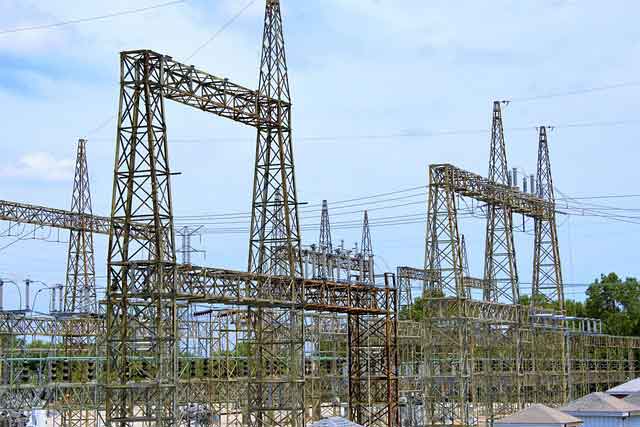
One longstanding problem at Indian Point is the switch yard, an electrical substation operated by Con Edison, where power is transmitted from the plant to the power grid, the report said. Entergy has "failed to take appropriate and timely corrective actions to avoid grid-related reactor trips," the report said. At least half of the unplanned shutdowns can be attributed to the switch yard or off-site electrical problems like the blackout, Mr. Steets said.

"More strides should have been made by now," Mr. Sheehan said. The Nuclear Regulatory Commission will conduct an annual inspection of Indian Point next spring.

The plants at Indian Point, 2 of 103 operating reactors at 68 sites in the nation, produce enough energy to power two million homes, Mr. Steets said. There are three reactors, but Indian Point 1 has been shut down since the 1970's. Indian Point 2 and 3 are licensed to operate for the next decade and are eligible to apply for license renewal, Mr. Sheehan said.

Related News

How ‘Virtual Power Plants’ Will Change The Future Of Electricity

Virtual Power Plants orchestrate distributed energy resources like rooftop solar, home batteries, and EVs to deliver grid services, demand response, peak shaving, and resilience, lowering costs while enhancing reliability across wholesale markets and local networks.


Key Points

Virtual Power Plants aggregate solar and batteries to provide grid services, cut peak costs, and boost reliability.

✅ Aggregates DERs via cloud to bid into wholesale markets

✅ Reduces peak demand, defers costly grid upgrades

✅ Enhances resilience vs outages, cyber risks, and wildfires


If “virtual” meetings can allow companies to gather without anyone being in the office, then remotely distributed solar panels and batteries can harness energy and act as “virtual power plants.” It is simply the orchestration of millions of dispersed assets within a smarter electricity infrastructure to manage the supply of electricity — power that can be redirected back to the grid and distributed to homes and businesses. 

The ultimate goal is to revamp the energy landscape, making it cleaner and more reliable. By using onsite generation such as rooftop solar and smart solar inverters in combination with battery storage, those services can reduce the network’s overall cost by deferring expensive infrastructure upgrades and by reducing the need to purchase cost-prohibitive peak power. 

“We expect virtual power plants, including aggregated home solar and batteries, to become more common and more impactful for energy consumers throughout the country in the coming years,” says Michael Sachdev, chief product officer for Sunrun Inc., a rooftop solar company, in an interview. “The growth of home solar and batteries will be most apparent in places where households have an immediate need for backup power, as they do in California, where grid reliability pressures have led utilities to turn off the electricity to reduce wildfire risk.”

Most Popular In: Energy

How Extremophile Bacteria Living In Nuclear Reactors Might Help Us Make Vaccines
Apple, Ford, McDonald’s, Microsoft Among This Summer’s Climate Leaders
What’s Next For Oil And Gas?
Home battery adoption, such as Tesla Powerwall systems, is becoming commonplace in Hawaii and in New England, he adds, because those distributed assets are improving the efficiency of the electrical network. It is a trend that is reshaping the country’s energy generation and delivery system by relying more on clean onsite generation and less on fossil fuels.

Sunrun has recently formed a business partnership with AutoGrid, which will manage Sunrun’s fleet of rechargeable batteries. It is a cloud-based system that allows Sunrun to work with utilities to dispatch its “storage fleet” to optimize the economic results. AutoGrid compiles the data and makes AI-driven forecasts that enable it to pinpoint potential trouble spots. 

But a distributed energy system, or a virtual power plant, would have 200,000 subsystems. Or, 200,000 5 kilowatt batteries would be the equivalent of one power plant that has a capacity of 1,000 megawatts. 

“A virtual power plant acts as a generator,” says Amit Narayan, chief executive officer of AutoGrid, in an interview. “It is one of the top five innovations of the decade. If you look at Sunrun, 60% of every solar system it sells in the Bay Area is getting attached to a battery. The value proposition comes when you can aggregate these batteries and market them as a generation unit. The pool of individual assets may improve over time. But when you add these up, it is better than a large-scale plant. It is like going from mainframe computers to laptops.”

The AutoGrid executive goes on to say that centralized systems are less reliable than distributed resources. While one battery could falter, 200,000 of them that operate from remote locations will prove to be more durable — able to withstand cyber attacks and wildfires. Sunrun’s Sachdev adds that the ability to store energy in batteries, as seen in California’s expanding grid-scale battery use supporting reliability, and to move it to the grid on demand creates value not just for homes and businesses but also for the network as a whole.

The good news is that the trend worldwide is to make it easier for smaller distributed assets, including energy storage for microgrids that support local resilience, to get the same regulatory treatment as power plants. System operators have been obligated to call up those power supplies that are the most cost-effective and that can be easily dispatched. But now regulators are giving virtual power plants comprised of solar and batteries the same treatment. 

In the United States, for example, the Federal Energy Regulatory Commission issued an order in 2018 that allows storage resources to participate in wholesale markets — where electricity is bought directly from generators before selling that power to homes and businesses. Under the ruling, virtual power plants are paid the same as traditional power suppliers. A federal appeals court this month upheld the commission’s order, saying that it had the right to ensure “technological advances in energy storage are fully realized in the marketplace.” 

“In the past, we have used back-up generators,” notes AutoGrid’s Narayan. “As we move toward more automation, we are opening up the market to small assets such as battery storage and electric vehicles. As we deploy more of these assets, there will be increasing opportunities for virtual power plants.” 

Virtual power plants have the potential to change the energy horizon by harnessing locally-produced solar power and redistributing that to where it is most needed — all facilitated by cloud-based software that has a full panoramic view. At the same time, those smaller distributed assets can add more reliability and give consumers greater peace-of-mind — a dynamic that does, indeed, beef-up America’s generation and delivery network.


Related News

View more

EPA: New pollution limits proposed for US coal, gas power plants reflect "urgency" of climate crisis

EPA Power Plant Emissions Rule proposes strict greenhouse gas limits for coal and gas units, leveraging carbon capture (CCS) under the Clean Air Act to cut CO2 and accelerate decarbonization of the U.S. grid.


Key Points

A proposed EPA rule setting CO2 limits for coal and gas plants, using CCS to cut power-sector greenhouse gases.

✅ Applies to existing and new coal and large gas units

✅ Targets near-zero CO2 by 2038 via CCS or retirement

✅ Cites grid, health, and climate benefits; faces legal challenges


The Biden administration has proposed new limits on greenhouse gas emissions from coal- and gas-fired power plants, its most ambitious effort yet to roll back planet-warming pollution from the nation’s second-largest contributor to climate change.

A rule announced by the Environmental Protection Agency could force power plants to capture smokestack emissions using a technology that has long been promised but is not used widely in the United States, and arrives amid changes stemming from the NEPA rewrite that affect project reviews.

“This administration is committed to meeting the urgency of the climate crisis and taking the necessary actions required,″ said EPA Administrator Michael Regan.

The plan would not only “improve air quality nationwide, but it will bring substantial health benefits to communities all across the country, especially our front-line communities ... that have unjustly borne the burden of pollution for decades,” Regan said in a speech at the University of Maryland.

President Joe Biden, whose climate agenda includes a clean electricity standard as a key pillar, called the plan “a major step forward in the climate crisis and protecting public health.”

If finalized, the proposed regulation would mark the first time the federal government has restricted carbon dioxide emissions from existing power plants, following a Trump-era replacement of Obama’s power plant overhaul, which generate about 25% of U.S. greenhouse gas pollution, second only to the transportation sector. The rule also would apply to future electric plants and would avoid up to 617 million metric tons of carbon dioxide through 2042, equivalent to annual emissions of 137 million passenger vehicles, the EPA said.

Almost all coal plants — along with large, frequently used gas-fired plants — would have to cut or capture nearly all their carbon dioxide emissions by 2038, the EPA said, a timeline that echoed concerns raised during proposed electricity pricing changes in the prior administration. Plants that cannot meet the new standards would be forced to retire.

The plan is likely to be challenged by industry groups and Republican-leaning states, much like litigation over the Affordable Clean Energy rule unfolded in recent years. They have accused the Democratic administration of overreach on environmental regulations and warn of a pending reliability crisis for the electric grid. The power plant rule is one of at least a half-dozen EPA rules limiting power plant emissions and wastewater treatment rules.

“It’s truly an onslaught” of government regulation “designed to shut down the coal fleet prematurely,″ said Rich Nolan, president and CEO of the National Mining Association.

Regan denied that the power plant rule was aimed at shutting down the coal sector, but acknowledged — even after the end to the 'war on coal' rhetoric — “We will see some coal retirements.”


Related News

View more

UK National Grid Commissions 2GW Substation

UK 2-GW Substation strengthens National Grid power transmission in Kent, enabling offshore wind integration, voltage regulation, and grid modernization to meet rising electricity demand and support the UK energy transition with resilient, reliable infrastructure.


Key Points

National Grid facility in Kent that steps voltage, regulates power, and connects offshore wind to strengthen UK grid.

✅ Adds 2 GW capacity to meet rising electricity demand

✅ Integrates offshore wind farms into transmission network

✅ Improves reliability, voltage control, and grid resilience


The United Kingdom has strengthened its national power grid with the commissioning of a major new 2-gigawatt capacity substation in Kent. This massive project, a key part of the National Grid's ongoing efforts to modernize and expand power transmission infrastructure, including plans to fast-track grid connections across critical projects, will play a critical role in supporting the UK's energy transition and growing electricity demands.


What is a Substation?

Substations are vital components of electricity grids. They serve as connection points, transforming high voltage electricity from power plants to lower voltages suitable for homes and businesses. They also help to regulate voltage levels, and, where appropriate, interface with expanding HVDC technology initiatives, ensuring stable electricity delivery.  Modern substations often act as hubs, supporting the integration of renewable power sources with the main electricity network.


Why This Substation Is Important

The new 2-gigawatt capacity substation is significant for several reasons:

  • Expanding Capacity: It adds significant capacity to the UK's grid, enabling the transmission of large amounts of electricity to where it's needed. This capacity boost is crucial for supporting growing electricity demand as the UK shifts its energy mix towards renewable sources.
  • Integrating Renewables: The substation will aid in integrating substantial amounts of offshore wind power, as projects like the Scotland-England subsea link illustrate, helping the UK achieve its ambitious clean energy goals. Offshore wind farms are a booming source of renewable energy in the UK, and ensuring reliable connections to the grid is essential in maximizing their potential.
  • Future-Proofing the Grid: The newly commissioned substation helps bolster the reliability and resilience of the UK's power transmission network, where reducing losses with superconducting cables could further enhance efficiency. It will play a key role in securing electricity supplies as older power plants are decommissioned and renewable energy sources become more dominant.


A Landmark Project

The commissioning of this substation is a major achievement for the National Grid, amid an independent operator transition underway in the sector, and UK energy infrastructure upgrades. The sheer scale of the project required extensive planning and collaboration with various stakeholders, underscoring the complexity of upgrading the nation's power grid to meet future needs.


The Path Towards a Cleaner Grid

The new substation is not an isolated project. It is part of a broader, multi-year effort by the National Grid to modernize and expand the country's power grid.  This entails building new transmission lines and urban conduits such as London's newest electricity tunnel now in service, investing in storage technologies, and adapting infrastructure to accommodate the shift towards distributed energy generation, where power is generated closer to the point of use.


Beyond Substations

While projects like the new 2-gigawatt substation are crucial, ensuring a successful energy transition requires more than just infrastructure upgrades. Continued support for renewable energy development, highlighted by recent offshore wind power milestones that demonstrate grid-readiness, investment in emerging energy storage solutions, and smart grid technology that leverages data for effective grid management are all important components of building a cleaner and more resilient energy future for the UK.


Related News

View more

ACCIONA Energía Launches 280 MW Wind Farm in Alberta

Forty Mile Wind Farm delivers 280 MW of renewable wind power in Alberta, with 49 Nordex turbines by ACCIONA Energía, supplying clean electricity to the grid, lowering carbon emissions, and enabling future 120 MW expansion.


Key Points

A 280 MW ACCIONA Energía wind farm in Alberta with 49 Nordex turbines, delivering clean power and cutting carbon.

✅ 280 MW via 49 Nordex N155 turbines on 108 m towers

✅ Supplies clean power to 85,000+ homes, reducing emissions

✅ Phase II could add 120 MW, reaching 400 MW capacity


ACCIONA Energía, a global leader in renewable energy, has successfully launched its Forty Mile Wind Farm in southern Alberta, Canada, amid momentum from a new $200 million wind project announced elsewhere in the province. This 280-megawatt (MW) project, powered by 49 Nordex turbines, is now supplying clean electricity to the provincial grid and stands as one of Canada's ten largest wind farms. It also marks the company's largest wind installation in North America to date. 

Strategic Location and Technological Specifications

Situated approximately 50 kilometers southwest of Medicine Hat, the Forty Mile Wind Farm is strategically located in the County of Forty Mile No. 8. Each of the 49 Nordex N155 turbines boasts a 5.7 MW capacity and stands 108 meters tall. The project's design allows for future expansion, with a potential Phase II that could add an additional 120 MW, bringing the total capacity to 400 MW, a scale comparable to Enel's 450 MW U.S. wind farm now in operation. 

Economic and Community Impact

The Forty Mile Wind Farm has significantly contributed to the local economy. During its peak construction phase, the project created approximately 250 jobs, with 25 permanent positions anticipated upon full operation. These outcomes align with an Alberta renewable energy surge projected to power thousands of jobs across the province. Additionally, the project has injected new tax revenues into the local economy and provided direct financial support to local non-profit organizations, including the Forty Mile Family & Community Support Services, the Medicine Hat Women’s Shelter Society, and the Root Cellar Food & Wellness Hub. 

Environmental Benefits

Once fully operational, the Forty Mile Wind Farm is expected to generate enough clean energy to power more than 85,000 homes, supporting wind power's competitiveness in electricity markets today. This substantial contribution to Alberta's energy mix aligns with ACCIONA Energía's commitment to sustainability and its goal of reducing carbon emissions. The project is part of the company's broader strategy to expand its renewable energy footprint in North America and support the transition to a low-carbon economy. 

Future Prospects

Looking ahead, ACCIONA Energía plans to continue its expansion in the renewable energy sector, as peers like TransAlta add 119 MW in the U.S. to their portfolios. The success of the Forty Mile Wind Farm serves as a model for future projects and underscores the company's dedication to delivering sustainable energy solutions, even as Alberta's energy future presents periodic headwinds. With ongoing developments and a focus on innovation, ACCIONA Energía is poised to play a pivotal role in shaping the future of renewable energy in North America.

The Forty Mile Wind Farm exemplifies ACCIONA Energía's commitment to advancing renewable energy, supporting local communities, and contributing to environmental sustainability, and it benefits from evolving demand signals, including a federal green electricity contract initiative in Canada that encourages clean supply. As the project continues to operate and expand, it stands as a testament to the potential of wind energy in Canada's clean energy landscape.


Related News

View more

US nuclear innovation act becomes law

NEIMA advances NRC regulatory modernization, creating a licensing framework for advanced reactors, improving uranium permitting, capping reactor fees, and mandating DOE planning for excess uranium, boosting transparency, accountability, and innovation across the US nuclear sector.


Key Points

NEIMA is a US law modernizing NRC rules and enabling advanced reactor licensing while reforming fees.

✅ Modernizes NRC licensing for advanced reactors

✅ Caps annual reactor fees and boosts transparency

✅ Streamlines uranium permitting; directs DOE plans


Bipartisan legislation modernising US nuclear regulation and supporting the establishment of a licensing framework for next-generation advanced reactors has been signed by US President Donald Trump, whose order boosting U.S. uranium and nuclear energy underscored the administration's focus on the sector.

The Nuclear Energy Innovation and Modernisation Act (NEIMA) became law on 14 January.

As well as directing the Nuclear Regulatory Commission (NRC) to modify the licensing process for commercial advanced nuclear reactor facilities, the bill establishes new transparency and accountability measures to the regulator's budget and fee programmes, and caps fees for existing reactors. It also directs the NRC to look at ways of improving the efficiency of uranium licensing, including investigating the safety and feasibility of extending uranium recovery licences from ten to 20 years' duration, and directs the Department of Energy, which oversees nuclear cleanup and related projects, to issue at least every ten years a long-term plan detailing the management of its excess uranium inventories.

Maria Korsnick, president and CEO of the US Nuclear Energy Institute, described NEIMA as a "significant, positive step" toward the reform of the NRC's fee collection process. "This legislation establishes a more equitable and transparent funding structure which will benefit all operating reactors and future licensees," she said. "The bill also reaffirms Congress’s support for nuclear innovation by working to establish an efficient and stable regulatory structure that is prepared to license the advanced reactors of the future."

Marilyn Kray, president-elect of the American Nuclear Society, said the passage of the legislation was a "big win" for the nation and its nuclear community. "By reforming outdated laws, NRC will now be able to invest more freely in advanced nuclear R&D and licensing activities. This in turn will accelerate deployment of cutting-edge American nuclear systems and better prepare the next generation of nuclear engineers and technologists," she said.

The bill was introduced in 2017 by Senator John Barrasso of Wyoming. It was approved by Congress on 21 December by 361 votes to 10, having been passed by the Senate the previous day, even as later Biden's climate law developments produced mixed results.

NEIMA is one of several bipartisan bills that support advanced nuclear innovation considered by the 115th US Congress, which ended on 2 January. These are: the Nuclear Energy Innovation Capabilities Act (NEICA); the Nuclear Energy Leadership Act; the Nuclear Utilisation of Keynote Energy Act; the Advanced Nuclear Fuel Availability Act, a focus sharpened by the U.S. ban on Russian uranium in the fuel market; and legislation to expedite so-called part 810 approvals, which are needed for the export of technology, equipment and components. NEICA, which supports the deployment of advanced reactors and also directs the DOE to develop a reactor-based fast neutron source for the testing of advanced reactor fuels and materials, was signed into law in October.


Related News

View more

Solar farm the size of 313 football fields to be built at Edmonton airport

Airport City Solar Edmonton will deliver a 120-megawatt, 627-acre photovoltaic, utility-scale renewable energy project at EIA, creating jobs, attracting foreign investment, and supplying clean power to Fortis Alberta and airport distribution systems.


Key Points

A 120 MW, 627-acre photovoltaic solar farm at EIA supplying clean power to Fortis Alberta and airport systems.

✅ 120 MW utility-scale project over 627 acres at EIA

✅ Feeds Fortis Alberta and airport distribution networks

✅ Drives jobs, investment, and regional sustainability


A European-based company is proposing to build a solar farm bigger than 300 CFL football fields at Edmonton's international airport, aligning with Alberta's red-hot solar growth seen across the province.

Edmonton International Airport and Alpin Sun are working on an agreement that will see the company develop Airport City Solar, a 627-acre, 120-megawatt solar farm that reflects how renewable power developers combine resources for stronger projects on what is now a canola field on the west side of the airport lands.

The solar farm will be the largest at an airport anywhere in the world, EIA said in a news release Tuesday, in a region that also hosts the largest rooftop solar array at a local producer.

"It's a great opportunity to drive economic development as well as be better for the environment," Myron Keehn, vice-president, commercial development and air service at EIA, told CBC News, even as Alberta faces challenges with solar expansion that require careful planning.

"We're really excited that [Alpin Sun] has chosen Edmonton and the airport to do it. It's a great location. We've got lots of land, we're geographically located north, which is great for us, because it allows us to have great hours of sunlight.

"As everyone knows in Edmonton, you can golf early in the morning or golf late at night in the summertime here. And in wintertime it's great, because of the snow, and the reflective [sunlight] off the snow that creates power as well."

Airport official Myron Keehn says the field behind him will become home to the world's largest solar farm at an airport. (Scott Neufeld/CBC)

The project will "create jobs, provide sustainable solar power for our region and show our dedication to sustainability," Tom Ruth, EIA president and CEO, said in the news release, while complementing initiatives by Ermineskin First Nation to expand Indigenous participation in electricity generation.

Construction is expected to begin in early 2022, as new solar facilities in Alberta demonstrate lower costs than natural gas. The solar farm would be operational by the end of that year, the release said. 

Alpin Sun says the project will bring in $169 million in foreign investment to the Edmonton metro region amid federal green electricity contracts that are boosting market certainty. 

Power generated by Airport City Solar will feed into Fortis Alberta and airport distribution systems.


Related News

View more

Sign Up for Electricity Forum’s Newsletter

Stay informed with our FREE Newsletter — get the latest news, breakthrough technologies, and expert insights, delivered straight to your inbox.

Electricity Today T&D Magazine Subscribe for FREE

Stay informed with the latest T&D policies and technologies.
  • Timely insights from industry experts
  • Practical solutions T&D engineers
  • Free access to every issue

Download the 2025 Electrical Training Catalog

Explore 50+ live, expert-led electrical training courses –

  • Interactive
  • Flexible
  • CEU-cerified