Gap In Electrical Infrastructure Investment

By Business Wire


CSA Z463 Electrical Maintenance -

Our customized live online or in‑person group training can be delivered to your staff at your location.
  • Live Online
  • 6 hours Instructor-led
  • Group Training Available
Regular Price:
$249
Coupon Price:
$199
Reserve Your Seat Today
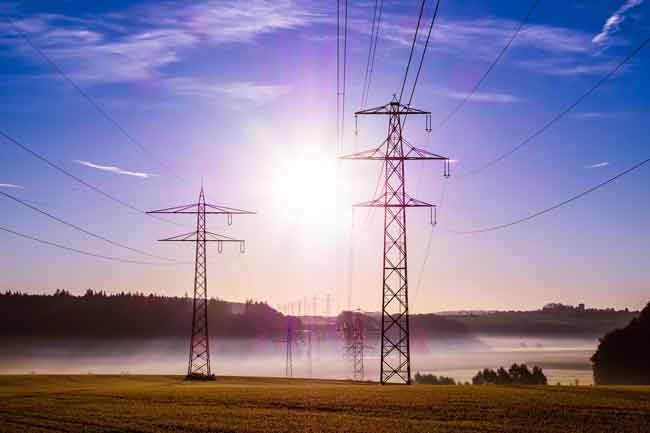
R.J. Rudden Associates, Inc. (Rudden) released a report titled, "The Next Big Crunch: T&D Capital Expenditures," describing an alarming pattern regarding the lack of spending in electric transmission and distribution infrastructure.

The author, Leonard S. Hyman, a Senior Associate at Rudden, is predicting future deterioration in electric system reliability if appropriate regulatory incentives are not provided and inadequate spending on infrastructure continues. Mr. Hyman attributes the sector's lack of activity in capital system improvements to a number of causes and describes the gap as "too large to ignore."

Citing past industry standards, Mr. Hyman states that electric utilities and transmission owners should spend about $63 billion for distribution improvements, and about $25 billion for transmission improvements, in the 2001-2005 period. However, in 2001, utilities spent only $8.5 billion on distribution and $3.7 billion on transmission, leaving balances of $54.5 billion and $21.3 billion, respectively, for 2002-2005. That averages out to $13.6 billion per year for distribution and $5.3 billion per year for transmission. Leonard asks, "Has the industry become astoundingly more efficient in managing its capital expenditures or should we expect the spending plans to rise dramatically?"

The report postulates that deregulated activities diverted money away from investing money on system improvement and replacement, in favor of steering funds toward deregulated activities with the potential promise of a higher return than regulated assets could earn. Regulators, inadvertently, encouraged the same pattern when they implemented price caps as part of bargains that liberated generating assets from regulation. Now the bill is coming due.

Financially, the utility and energy sectors are under tremendous pressure to pay off debt. Mr. Hyman predicts that filings for rate increases will be necessary to cover the costs of new capital needed for the higher level of spending required to maintain reliability.

Related News
Net-zero roadmap can cut electricity costs by a third in Germany - Wartsila

Germany net-zero roadmap charts coal phase-out by 2030, rapid renewables buildout, energy storage, and hydrogen-ready gas engines to cut emissions and lower LCOE by 34%, unlocking a resilient, flexible, low-cost power system by 2040.


Key Points

Plan to phase out coal by 2030 and gas by 2040, scaling renewables, storage, and hydrogen to cut LCOE and emissions.

✅ Coal out by 2030; gas phased 2040 with hydrogen-ready engines

✅ Add 19 GW/yr renewables; 30 GW storage by 2040

✅ 34% lower LCOE, 23% fewer emissions vs slower path


Germany can achieve significant reductions in emissions and the cost of electricity by phasing out coal in 2030 under its coal phase-out plan but must have a clear plan to ramp up renewables and pivot to sustainable fuels in order to achieve net-zero, according to a new whitepaper from Wartsila.

The modelling, published in Wärtsilä new white paper ‘Achieving net-zero power system in Germany by 2040’, compares the current plan to phase out coal by 2030 and gas by 2045 with an accelerated plan, where gas is phased out by 2040. By accelerating the path to net-zero, Germany can unlock a 34% reduction in the levelised cost of energy, as well as a 23% reduction in the total emissions, or 562 million tonnes of carbon dioxide in real terms.

The modelling offers a clear, three-step roadmap to achieve net-zero: rapidly increase renewables, energy storage and begin future-proofing gas engines in this decade; phase out coal by 2030; and phase out gas by 2040, converting remaining engines to run on sustainable fuels.

The greatest rewards are available if Germany front-loads decarbonisation. This can be done by rapidly increasing renewable capacity, adding 19 GW of wind and solar PV capacity per year. It must also add a total of 30GW of energy storage by 2040.

Håkan Agnevall, President and CEO of Wärtsilä Corporation said: “Germany stands on the precipice of a new, sustainable energy era. The new Federal Government has indicated its plans to consign coal to history by 2030. However, this is only step one. Our white paper demonstrates the need to implement a three-step roadmap to achieve net-zero. It is time to put a deadline on fossil fuels and create a clear plan to transition to sustainable fuels.”

While a rapid coal phase-out has been at the centre of recent climate policy debates, including the ongoing nuclear debate over Germany’s energy mix, the pathway to net-zero is less clear. Wärtsilä’s modelling shows that gas engines should be used to accelerate the transition by providing a short-term bridge to enable net zero and navigate the energy transition while balancing the intermittency of renewables until sustainable fuels are available at scale.

However, if Germany follows the slower pathway and reaches net-zero by 2045, it risks becoming reliant on gas as baseload power for much of the 2030s amid renewable expansion challenges that persist, potentially harming its ability to reach its climate goals. 

Creating the infrastructure to pivot to sustainable fuels is one of the greatest challenges facing the German system. The ability to convert existing capacity to run purely on hydrogen via hydrogen-ready power plants will be key to reaching net-zero by 2040 and unlocking the significant system-wide benefits on offer.

Jan Andersson, General Manager of Market Development in Germany, Wärtsilä Energy added: “To reach the 2040 target and unlock the greatest benefits, the most important thing that Germany can do is build renewables now. 19 GW is an ambitious target, but Germany can do it. History shows us that Germany has been able to achieve high levels of renewable buildout in previous years. It must now reach those levels consistently.

“Creating a clear plan which sets out the steps to net zero is essential. Renewable energy is inherently intermittent, so flexible energy capacity will play a vital role. While batteries provide effective short-term flexibility, gas is currently the only practical long-term option. If Germany is to unlock the greatest benefits from decarbonisation, it must have a clear plan to integrate sustainable fuel. From 2030, all new thermal capacity must run solely on hydrogen.”

Analysis of the last decade demonstrates that the rapid expansion of renewable energy is possible, and that renewables overtook coal and nuclear in generation. Previously, Germany has built large amounts of renewable capacity, including 8GW of solar PV in 2010 and 2011, 5.3 GW of onshore wind in 2017, and 2.5 GW of offshore wind in 2015.

The significant reductions in the cost of electricity demonstrated in the modelling are driven by the fact that renewables are far cheaper to run than coal or gas plants, even as coal still provides about a third of electricity in Germany. The initial capital investment is far outweighed by the ongoing operational expense of fossil fuel-based power.

As well as reducing emissions and costs, Germany’s rapid path to net-zero can also unlock a series of additional benefits. If coal is phased out by 2030 but capacity is not replaced by high levels of renewable energy, Germany risks becoming a significant energy importer, peaking at 162 TWh in 2035. The accelerated pathway would reduce imports by a third.

Likewise, more renewable energy will help to electrify district heating, meaning Germany can move away from carbon-intensive fuels sooner. If Germany follows the accelerated path, 57% of Germany’s heating could be electrified in 2045, compared to 10% under the slower plan.

Jan Andersson concluded: “The opportunities on offer are vast. Germany can provide the blueprint for net zero and galvanise an entire continent. Now is the time for the new government to seize the initiative.”


Related News

View more

China to build 2,000-MW Lawa hydropower station on Jinsha River

Lawa Hydropower Station approved on the Jinsha River, a Yangtze tributary, delivers 2,000 MW via four units; 784 ft dam, 12 sq mi reservoir, Sichuan-Tibet site, US$4.59b investment, Huadian stake, renewable energy generation.


Key Points

A 2,000 MW dam project on the Jinsha River with four units, a 784 ft barrier, and 8.36 billion kWh annual output.

✅ Sichuan-Tibet junction on the Jinsha River

✅ 2,000 MW capacity; four turbine-generator units

✅ 8.36 bn kWh/yr; US$4.59b total; Huadian 48% stake


China has approved construction of the 2,000-MW Lawa hydropower station, a Yangtze tributary hydropower project on the Jinsha River, multiple news agencies are reporting.

Lawa, at the junction of Sichuan province and the Tibet autonomous region, will feature a 784-foot-high dam and the reservoir will submerge about 12 square miles of land. The Jinsha River is a tributary of the Yangtze River, and the project aligns with green hydrogen development in China.

The National Development and Reform Commission of the People’s Republic of China, which also guides China's nuclear energy development as part of national planning, is reported to have said that four turbine-generator units will be installed, and the project is expected to produce about 8.36 billion kWh of electricity annually.

Total investment in the project is to be US$4.59 billion, and Huadian Group Co. Ltd. will have a 48% stake in the project, reflecting overseas power infrastructure activity, with minority stakes held by provincial firms, according to China Daily.

In other recent news in China, Andritz received an order in December 2018 to supply four 350-MW reversible pump-turbines and motor-generators, alongside progress in compressed air generation technologies, for the 1,400-MW ZhenAn pumped storage plant in Shaanxi province.


Related News

View more

Purdue: As Ransomware Attacks Increase, New Algorithm May Help Prevent Power Blackouts

Infrastructure Security Algorithm prioritizes cyber defense for power grids and critical infrastructure, mitigating ransomware, blackout risks, and cascading failures by guiding utilities, regulators, and cyber insurers on optimal security investment allocation.


Key Points

An algorithm that optimizes security spending to cut ransomware and blackout risks across critical infrastructure.

✅ Guides utilities on optimal security allocation

✅ Uses incentives to correct human risk biases

✅ Prioritizes assets to prevent cascading outages


Millions of people could suddenly lose electricity if a ransomware attack just slightly tweaked energy flow onto the U.S. power grid, as past US utility intrusions have shown.

No single power utility company has enough resources to protect the entire grid, but maybe all 3,000 of the grid's utilities could fill in the most crucial security gaps if there were a map showing where to prioritize their security investments.

Purdue University researchers have developed an algorithm to create that map. Using this tool, regulatory authorities or cyber insurance companies could establish a framework for protecting the U.S. power grid that guides the security investments of power utility companies to parts of the grid at greatest risk of causing a blackout if hacked.

Power grids are a type of critical infrastructure, which is any network - whether physical like water systems or virtual like health care record keeping - considered essential to a country's function and safety. The biggest ransomware attacks in history have happened in the past year, affecting most sectors of critical infrastructure in the U.S. such as grain distribution systems in the food and agriculture sector and the Colonial Pipeline, which carries fuel throughout the East Coast, prompting increased military preparation for grid hacks in the U.S.

With this trend in mind, Purdue researchers evaluated the algorithm in the context of various types of critical infrastructure in addition to the power sector, including electricity-sector IoT devices that interface with grid operations. The goal is that the algorithm would help secure any large and complex infrastructure system against cyberattacks.

"Multiple companies own different parts of infrastructure. When ransomware hits, it affects lots of different pieces of technology owned by different providers, so that's what makes ransomware a problem at the state, national and even global level," said Saurabh Bagchi, a professor in the Elmore Family School of Electrical and Computer Engineering and Center for Education and Research in Information Assurance and Security at Purdue. "When you are investing security money on large-scale infrastructures, bad investment decisions can mean your power grid goes out, or your telecommunications network goes out for a few days."

Protecting infrastructure from hacks by improving security investment decisions

The researchers tested the algorithm in simulations of previously reported hacks to four infrastructure systems: a smart grid, industrial control system, e-commerce platform and web-based telecommunications network. They found that use of this algorithm results in the most optimal allocation of security investments for reducing the impact of a cyberattack.

The team's findings appear in a paper presented at this year's IEEE Symposium on Security and Privacy, the premier conference in the area of computer security. The team comprises Purdue professors Shreyas Sundaram and Timothy Cason and former PhD students Mustafa Abdallah and Daniel Woods.

"No one has an infinite security budget. You must decide how much to invest in each of your assets so that you gain a bump in the security of the overall system," Bagchi said.

The power grid, for example, is so interconnected that the security decisions of one power utility company can greatly impact the operations of other electrical plants. If the computers controlling one area's generators don't have adequate security protection, as seen when Russian hackers accessed control rooms at U.S. utilities, then a hack to those computers would disrupt energy flow to another area's generators, forcing them to shut down.

Since not all of the grid's utilities have the same security budget, it can be hard to ensure that critical points of entry to the grid's controls get the most investment in security protection.

The algorithm that Purdue researchers developed would incentivize each security decision maker to allocate security investments in a way that limits the cumulative damage a ransomware attack could cause. An attack on a single generator, for instance, would have less impact than an attack on the controls for a network of generators, which sophisticated grid-disruption malware can target at scale, rather than for the protection of a single generator.

Building an algorithm that considers the effects of human behavior

Bagchi's research shows how to increase cybersecurity in ways that address the interconnected nature of critical infrastructure but don't require an overhaul of the entire infrastructure system to be implemented.

As director of Purdue's Center for Resilient Infrastructures, Systems, and Processes, Bagchi has worked with the U.S. Department of Defense, Northrop Grumman Corp., Intel Corp., Adobe Inc., Google LLC and IBM Corp. on adopting solutions from his research. Bagchi's work has revealed the advantages of establishing an automatic response to attacks, and analyses like Symantec's Dragonfly report highlight energy-sector risks, leading to key innovations against ransomware threats, such as more effective ways to make decisions about backing up data.

There's a compelling reason why incentivizing good security decisions would work, Bagchi said. He and his team designed the algorithm based on findings from the field of behavioral economics, which studies how people make decisions with money.

"Before our work, not much computer security research had been done on how behaviors and biases affect the best defense mechanisms in a system. That's partly because humans are terrible at evaluating risk and an algorithm doesn't have any human biases," Bagchi said. "But for any system of reasonable complexity, decisions about security investments are almost always made with humans in the loop. For our algorithm, we explicitly consider the fact that different participants in an infrastructure system have different biases."

To develop the algorithm, Bagchi's team started by playing a game. They ran a series of experiments analyzing how groups of students chose to protect fake assets with fake investments. As in past studies in behavioral economics, they found that most study participants guessed poorly which assets were the most valuable and should be protected from security attacks. Most study participants also tended to spread out their investments instead of allocating them to one asset even when they were told which asset is the most vulnerable to an attack.

Using these findings, the researchers designed an algorithm that could work two ways: Either security decision makers pay a tax or fine when they make decisions that are less than optimal for the overall security of the system, or security decision makers receive a payment for investing in the most optimal manner.

"Right now, fines are levied as a reactive measure if there is a security incident. Fines or taxes don't have any relationship to the security investments or data of the different operators in critical infrastructure," Bagchi said.

In the researchers' simulations of real-world infrastructure systems, the algorithm successfully minimized the likelihood of losing assets to an attack that would decrease the overall security of the infrastructure system.

Bagchi's research group is working to make the algorithm more scalable and able to adapt to an attacker who may make multiple attempts to hack into a system. The researchers' work on the algorithm is funded by the National Science Foundation, the Wabash Heartland Innovation Network and the Army Research Lab.

Cybersecurity is an area of focus through Purdue's Next Moves, a set of initiatives that works to address some of the greatest technology challenges facing the U.S. Purdue's cybersecurity experts offer insights and assistance to improve the protection of power plants, electrical grids and other critical infrastructure.


Related News

View more

FortisAlberta Takes Necessary Precautions to Provide Electricity Service for Alberta

FortisAlberta COVID-19 response delivers safe electricity distribution across Alberta, with remote monitoring, 24/7 support, outage alerts, dispersed crews, and business continuity measures to sustain essential services for customers and communities.


Key Points

Plan ensuring reliable electricity in Alberta through 24/7 support, remote monitoring, outage alerts, and dispersed crews.

✅ 24/7 customer support via 310-WIRE and mobile app

✅ Remote monitoring and rapid outage restoration

✅ Dispersed crews in 50 communities for faster response


As the COVID-19 pandemic continues to evolve in Alberta (and around the world), FortisAlberta is taking the necessary actions and precautions informed by utility disaster planning to protect the health and well-being of its employees and to provide electricity service to its customers. FortisAlberta serves more than half a million customers with the electricity they depend on to take care of their families and community members throughout our province.

"We recognize these are challenging times as while most Albertans are asked to stay home others continue to work in the community to provide essential services, including utility workers in Ontario demonstrating support efforts. As your electricity distribution provider, please be assured you can count on us to do what we do best – provide our customers with safe and reliable electricity service wherever and whenever they need it," says Michael Mosher, FortisAlberta President and CEO.

FortisAlberta is proud to be a part of the communities it serves and commits to keeping the lights on for its customers. The company is providing a full range of services for its customers and has instilled best practices within critical parts of its business. The company's control centre continues to remotely monitor, control, and restore, where possible, the delivery of power across the entire province, including during events such as an Alberta grid alert that stress the system. Early in March, FortisAlberta implemented its business continuity plan and the company remains fully accessible to customers 24/7 by phone at 310-WIRE (9473) or through its mobile app where customers can report outages online or view details of an outage. Customers can also sign up for outage alerts to their mobile phone and/or email address to let them know if an outage does occur.

FortisAlberta's power line employees are geographically dispersed across 50 different communities so they can quickly address any issues that may arise. The company has implemented work from home measures and isolation best practices, and is planning for potential on-site lockdowns where necessary to ensure no disruption to customers.

FortisAlberta will continue to remain in close communication with its stakeholders to provide updates to customers and with industry associations to share guidance specific to the electricity sector, including insights on the evolving U.S. grid response to COVID-19 from peer utilities. FortisAlberta will also continue to invest in and empower its communities by contributing to organizations that offer programs and services aligned with the greatest needs in the communities it serves.

With the Alberta Government's recent announcement to provide relief to eligible Albertans by deferring electricity and gas charges for up to 90 days, similar to some B.C. relief measures being implemented, FortisAlberta is committed to working with stakeholders and retail partners to ensure this option is available to customers quickly and efficiently, and to learn from initiatives like the Hydro One relief fund that support customers.


Related News

View more

BC Hydro Expects To See Electricity Usage Rise This Holiday Season

BC Hydro Holiday Electricity Usage is set to rise as energy demand increases during peak 4-10 pm on Christmas and Boxing Day, driven by larger gatherings, more cooking, and eased COVID-19 restrictions province-wide.


Key Points

Expected rise in power demand on Christmas and Boxing Day evenings versus 2020, driven by larger gatherings and cooking.

✅ Peak hours 4-10 pm expected to rise in provincial load.

✅ 2020 saw 4% and 7% drops vs 2019 on Christmas and Boxing Day.

✅ Holiday lighting adds ~3% to use; switching to LED can save ~$40.


BC Hydro data showed residential electricity load in the Cariboo and throughout the province, even as drought affects generation dynamics heading into winter, dropped on Christmas Day and Boxing Day in 2020.

Northern Community Relations Manager, Bob Gammer, said the decrease was due in part to more people following the COVID-19 restrictions and not getting together for big meals, even though 2018 Earth Hour usage increased elsewhere illustrates how behavior can sometimes raise demand.

However, this year Gammer said between 4 and 10 pm on those two days, BC Hydro does expect to see a change in overall usage, aligning with all-time high demand trends reported recently in B.C.

“On Christmas Day and Boxing Day, we expect to see increases through those hours and a little bit more so between 4 and 10 pm we should see the amount of power being consumed across the province, as record-breaking 2021 demand indicated earlier, going up compared to what it was on those two days last year.”

In 2020 on Christmas Day evening hydro usage dropped by over 4 percent and Boxing Day evening decreased by 7 percent compared to 2019, whereas regions like Calgary's winter demand have seen spikes during extreme cold.

Gammer added after BC Hydro surveyed their customers and introduced a winter payment plan, they expect to see a lot more cooking happening on Christmas Day and Boxing Day this year as people are intending to have larger gatherings and visit friends.

We asked Gammer about hydro usage when it comes to homes decked out for the holidays, and how that compares to newer loads like crypto mining activity in B.C.

“The Christmas lighting displays people have, not just indoors but outdoors as well, what we’re seeing is about a 3 percent increase in electricity consumption overall through the Christmas season. If people switch, if you still have older lights that are incandescent, switch those over to LED, and through the season it could wind up saving you $40 in electricity just switching over about 8 strings of lights to LED.”


Related News

View more

Is this the start of an aviation revolution?

Harbour Air Electric Seaplanes pioneer sustainable aviation with battery-electric propulsion, zero-emission operations, and retrofitted de Havilland Beavers using magniX motors for regional commuter routes, cutting fuel burn, maintenance, and carbon footprints across British Columbia.


Key Points

Retrofitted floatplanes using magniX battery-electric motors to provide zero-emission, short-haul regional flights.

✅ Battery-electric magniX motors retrofit de Havilland DHC-2 Beavers

✅ Zero-emission, low-noise operations on short regional routes

✅ Lower maintenance and operating costs vs combustion engines


Aviation is one of the fastest rising sources of carbon emissions from transport, but can a small Canadian airline show the industry a way of flying that is better for the planet?

As air journeys go, it was just a short hop into the early morning sky before the de Havilland seaplane splashed back down on the Fraser River in Richmond, British Columbia. Four minutes earlier it had taken off from the same patch of water. But despite its brief duration, the flight may have marked the start of an aviation revolution.

Those keen of hearing at the riverside on that cold December morning might have been able to pick up something different amid the rumble of the propellers and whoosh of water as the six-passenger de Havilland DHC-2 Beaver took off and landed. What was missing was the throaty growl of the aircraft’s nine-cylinder radial engine.

In its place was an all-electric propulsion engine built by the technology firm magniX that had been installed in the aircraft over the course of several months. The four-minute test flight (the plane was restricted to flying in clear skies, so with fog and rain closing in the team opted for a short trip) was the first time an all-electric commercial passenger aircraft had taken to the skies.

The retrofitted de Havilland DHC-2 Beaver took off from the Fraser River in the early morning light for a four minute test flight (Credit: Diane Selkirk)

“It was the first shot of the electric aviation revolution,” says Roei Ganzarski, chief executive of magniX, which worked with Canadian airline Harbour Air Seaplanes to convert one of the aircraft in their fleet of seaplanes so it could run on battery power rather than fossil fuels.

For Greg McDougall, founder of Harbour Air and pilot during the test flight, it marked the culmination of years of trying to put the environment at the forefront of its operations, backed by research investment across the program.

Harbour Air, which has a fleet of some 40 commuter floatplanes serving the coastal regions around Vancouver, Victoria and Seattle, was the first airline in North America to become carbon-neutral through offsets in 2007. A one-acre green roof on their new Victoria airline terminal followed. Then in 2017, 50 solar panels and four beehives housing 10,000 honeybees were added, but for McDougall, a Tesla owner with an interest in disruptive technology, the big goal was to electrify the fleet, with 2023 electric passenger flights as an early target for service.

McDougall searched for alternative motor options for a couple of years and had put the plan on the backburner when Ganzarski first approached him in February 2019. “He said, ‘We’ve got a motor we want to get certified and we want to fly it before the end of the year,’” McDougall recalls.

The two companies found their environmental values and teams were a good match and quickly formed a partnership. Eleven months later, the modest Canadian airline got what McDougall refers to as their “e-plane” off the ground, pulling ahead of other electric flight projects, including those by big-name companies Airbus, Boeing and Rolls-Royce, and startups such as Eviation that later stumbled.

The test flight was followed years of work by Greg McDougall to make his airline more environmentally friendly (Credit: Diane Selkirk)

The project came together in record time considering how risk-adverse the aviation industry is, says McDougall. “Someone had to take the lead,” he says. “The reason I live in British Columbia is because of the outdoors: protecting it is in our DNA. When it came to getting the benefits from electric flight it made sense for us to step in and pioneer the next step.”

As the threat posed by the climate crisis deepens, there has been renewed interest in developing electric passenger aircraft as a way of reducing emissions
Electric flight has been around since the 1970s, but it’s remained limited to light-weight experimental planes flying short distances and solar-powered aircraft with enormous wingspans yet incapable of carrying passengers. But as the threat posed by the climate crisis deepens, there has been renewed interest in developing electric passenger aircraft as a way of reducing emissions and airline operating costs, aligning with broader Canada-U.S. collaboration on electrification across transport.

Currently there are about 170 electric aircraft projects underway internationally –up by 50% since April 2018, according to the consulting firm Roland Berger. Many of the projects are futuristic designs aimed at developing urban air taxis, private planes or aircraft for package delivery. But major firms such as Airbus have also announced plans to electrify their own aircraft. It plans to send its E-Fan X hybrid prototype of a commercial passenger jet on its maiden flight by 2021. But only one of the aircraft’s four jet engines will be replaced with a 2MW electric motor powered by an onboard battery.

This makes Harbour Air something of an outlier. As a coastal commuter airline, it operates smaller floatplanes that tend to make short trips up and down the coastline of British Columbia and Washington State, which means its aircraft can regularly recharge their batteries after a point-to-point electric flight along these routes. The company sees itself in a position to retrofit its entire fleet of floatplanes and make air travel in the region as green as possible.

This could bring some advantages. The efficiency of a typical combustion engine for a plane like this is fairly low – a large proportion of the energy from the fuel is lost as waste heat as it turns the propeller that drives the aircraft forward. Electrical motors have fewer moving parts, meaning there’s less maintenance and less maintenance cost, and comparable benefits are emerging for electric ships operating on the B.C. coast as well.

Electrical motors have fewer moving parts, meaning there’s less maintenance and less maintenance cost
Erika Holtz, Harbour Air’s engineering and quality manager, sees the move to electric as the next major aviation advancement, but warns that one stumbling block has been the perception of safety. “Mechanical systems are much better known and trusted,” she says. In contrast people see electrical systems as a bit unknown – think of your home computer. “Turning it off and on again isn’t an option in aviation,” she adds.

But it’s the possibility of spurring lasting change in aviation that’s made working on the Harbour Air/magniX project so exciting for Holtz. Aviation technology has stagnated over the past decades, she says. “Although there have been incremental improvements in certain technologies, there hasn't been a major development change in aviation in 50 years.”


Related News

View more

Sign Up for Electricity Forum’s Newsletter

Stay informed with our FREE Newsletter — get the latest news, breakthrough technologies, and expert insights, delivered straight to your inbox.

Electricity Today T&D Magazine Subscribe for FREE

Stay informed with the latest T&D policies and technologies.
  • Timely insights from industry experts
  • Practical solutions T&D engineers
  • Free access to every issue

Download the 2025 Electrical Training Catalog

Explore 50+ live, expert-led electrical training courses –

  • Interactive
  • Flexible
  • CEU-cerified