Ireland gives 300 MW wind farm green light

By Reuters


Arc Flash Training CSA Z462 - Electrical Safety Essentials

Our customized live online or in‑person group training can be delivered to your staff at your location.
  • Live Online
  • 6 hours Instructor-led
  • Group Training Available
Regular Price:
$249
Coupon Price:
$199
Reserve Your Seat Today
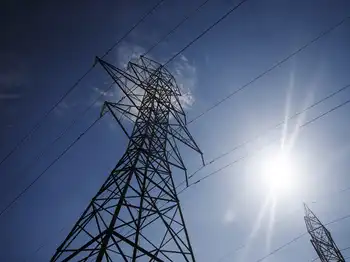
July 30, 2003 -- The Irish government has given state-owned peat supplier Bord na Mona and its partner Hibernian Wind Power (HWP) the green light to build a 300 megawatt wind farm in the western Irish county of Mayo.

The planned 300 million euro ($342 million) plant -- expected to be completed by 2010 -- would comprise 192 wind turbines with a total capacity of up to 300 MW and would be one of the largest land-based wind farms in Europe.

"Bord na Mona has got the initial permission and hopefully we can start construction by autumn next year," Brian Ryan of HWP, a unit of Ireland's Electricity Supply Board, told Reuters on Wednesday.

The permission, granted by Mayo County Council for a period of 10 years, carries a number of conditions relating to factors such as environmental impact and proximity to existing homes and these would have to be carefully assessed, he said.

It was premature to comment on a supplier for the wind turbines, he said, adding: "We have an open mind."

HWP already runs several wind farms in Ireland using units supplied by Denmark's Vestas ((VEST.CO)) and Germany's Enercon.

The Mayo wind farm, if it goes ahead, could provide enough energy to supply some 200,000 homes -- around seven percent of Ireland's electricity requirement.

The Irish government aims to have 1,250 megawatts of green energy on line by 2010. To date, wind power has made the most progress, with nearly 200 MW of capacity in place, the Irish Wind Energy Association said.

Related News

CT leads New England charge to overhaul electricity market structure

New England Grid Reform Initiative aligns governors with ISO New England to reshape market design, boost grid reliability, accelerate renewable energy and offshore wind, explore carbon pricing and forward clean energy markets, and bolster accountability.


Key Points

Five states aim to reform ISO New England markets, prioritize renewables and reliability, and test carbon pricing.

✅ Governors seek market design aligned with clean energy mandates

✅ ISO-NE accountability and stakeholder engagement prioritized

✅ Explore carbon pricing and forward clean energy market options


Weeks after initiating a broad overhaul of utility regulation within its borders, Connecticut has recruited four New England states, as Maine debates a 145-mile transmission line project to rework the regional grid that is overseen by ISO New England, the independent system operator charged with ensuring a reliable supply of electricity from power plants.

In a written statement Thursday morning, Gov. Ned Lamont said the current structure “has actively hindered” states’ efforts to phase out polluting power plants in favor of renewable sources like wind turbines and solar panels, while increasing costs “to fix market design failures” in his words. Lamont’s energy policy chief Katie Dykes has emerged as a vocal critic of ISO New England’s structure and priorities, in her role as commissioner of the Connecticut Department of Energy and Environmental Protection.

“When Connecticut opted to deregulate our electricity market, we wanted the benefits of competition — to achieve lower-cost energy, compatible with meeting our clean-energy goals,” Dykes said in a telephone interview Thursday afternoon. “We have a partner [in] ISO New England, to manage this grid and design a market that is not thwarting our clean-energy goals, but achieving them; and not ignoring consumers’ concerns. ... That’s really what we are looking to do — reclaim the benefits of competition and regional cooperation.”

Lamont and his counterparts in Massachusetts, Rhode Island, Vermont and Maine plan to release a “vision document” in their words on Friday through the New England States Committee on Electricity, after New Hampshire rejected a Quebec-Massachusetts transmission proposal that sought to import Canadian hydropower.

The initial documents made no mention of New Hampshire, which likewise obtains electricity through the wholesale markets managed by ISO New England and has seen clashes over the Northern Pass hydropower project in recent years; and whose Seabrook Station is one two nuclear power plants in New England alongside Dominion Energy’s Millstone Power Station in Waterford. Gov. Chris Sununu’s office did not respond immediately to a query on why New Hampshire is not participating.

Connecticut and the four other states outlined a few broad goals that they will hone over the coming months. Those include creating a better market structure and planning process supporting the conversion to renewables; improving grid reliability, with measures such as an emergency fuel stock program considered; and increasing the accountability of ISO New England to the states and by extension their ratepayer households and businesses.

ISO New England spokesperson Matt Kakley indicated the Holyoke, Mass.-based nonprofit will “engage with the states and our stakeholders” on the governors’ proposal, in an email response to a query. He did not elaborate on any immediate opportunities or challenges inherent in the governors’ proposal.

“Maintaining reliable, competitively-priced electricity through the clean energy transition will require broad collaboration,” Kakley stated. “The common vision of the New England governors will play an important role in the discussions currently underway on the future of the grid.”


Renewable revolution
ISO New England launched operations in 1999, running auctions through which power plant operators bid to supply electricity, including against long-term projections for future needs that can only be met through the construction or installation of new generation capacity.

ISO New England falls under the jurisdiction of the Federal Energy Regulatory Commission rather than the states whose electricity supplies it is tasked with ensuring. That has led to pointed criticism from Dykes and Connecticut legislators that ISO New England is out of touch with the state’s push to switch to renewable sources of electricity.

Entering October, ISO New England published an updated outlook that revealed 60 percent of proposed power generators in the region’s future “queue” are wind farms, primarily offshore installations like the proposed Park City Wind project of Avangrid and Revolution Wind from Eversource. But Dykes recently criticized as unnecessary an NTE Energy plant approved already by ISO New England for eastern Connecticut, which will be fueled by natural gas if all other regulatory approvals are granted.

The six New England states participate in the Regional Greenhouse Gas Initiative that caps carbon emissions by individual power plants, while allowing them to purchase unused allowances from each other with that revenue funneled to the states to support renewable energy and conservation programs. FERC is now considering the concept of carbon pricing, which would levy a tax on power plants based on their emissions, and it also faces pressure to act on aggregated DERs from lawmakers.

ISO New England is investigating the concepts of net carbon pricing and a “forward clean energy market” that would borrow elements of the existing forward capacity market, but designed to meet individual state objectives for the percentage of renewable power they want generated while ensuring adequate electricity is in place when weather does not cooperate.

The Connecticut Public Utilities Regulatory Authority is collecting on its own initiative industry input on modernization proposals, as New York regulators open a formal review of retail energy markets for comparison, that would add up to hundreds of millions of dollars, including utility-scale batteries to store power generated by offshore wind farms and solar arrays; and “smart” meters in homes and businesses to help electricity customers better manage their power use.

The New England Power Pool serves as a central forum for plant operators, commercial users and others like the Connecticut Office of Consumer Counsel, amid Massachusetts solar demand charge debates that affect distributed generation policy, with NEPOOL’s chair stating Thursday morning the group was still reviewing the governors’ announcement.

“NEPOOL has been engaged this year in meetings ... exploring the transition to a future grid in New England and potential pathways forward to support that transition,” stated Nancy Chafetz, chair of NEPOOL, in an email.

Connecticut’s issues with ISO New England boiled over this summer on the heels of a power-purchase agreement between Millstone owner Dominion and transmission grid operators Eversource and United Illuminating, which contributed to a sharp increase in customer bills.

A few weeks ago, Lamont signed into law a “Take Back the Grid” act that allows the Connecticut Public Utilities Regulatory Authority to factor in Eversource’s and Avangrid subsidiary United Illuminating’s past performance in maintaining electric reliability, in addition to any future needs for revenue based on needed upgrades. The law included an element for Connecticut to initiate a study of ISO New England’s role.

Eversource and Avangrid have voiced support for the switch to “performance-based” regulation in Connecticut. Eversource spokesperson Mitch Gross on Thursday cited the company’s view that any changes to the operation of New England’s wholesale power markets should occur within the existing ISO New England structure.

“We also recommend any examination of potential alternatives includes a thorough evaluation that ensures unfair costs would not be imposed on customers,” Gross stated in an email.

In a statement forwarded by Avangrid spokesperson Ed Crowder, the United Illuminating parent indicated it intends to have “a voice in this process” with the goal of continued grid reliability amid increased adoption of clean energy sources.


Related News

View more

Hydro One crews restore power to more than 277,000 customers following damaging storms in Ontario

Hydro One Power Restoration showcases outage recovery after a severe windstorm, with crews repairing downed power lines, broken poles and crossarms, partnering with utilities and contractors to boost grid resilience and promote emergency kit preparedness.


Key Points

A coordinated response by Hydro One and partners to repair storm damage, restore outages, strengthen grid resilience.

✅ Crews repaired downed lines, broken poles, and crossarms

✅ Partners and contractors aided rapid outage restoration

✅ Investments improve grid resilience and emergency readiness


Hydro One crews have restored power to more than 277,000 customers following back-to-back storms, with impacts felt in communities like Sudbury where local crews worked to reconnect service, including a damaging windstorm on that caused 57 broken poles, 27 broken crossarms, as well as downed power lines and fallen trees on lines. Hydro One crews restored power to more than 140,000 customers within 24 hours of Friday's windstorm, even as Toronto outages persisted for some customers elsewhere.

'We understand power outages bring life to a halt, which is why we are continuously improving our storm response, as employee COVID-19 support demonstrated, while making smart investments in a resilient, reliable and sustainable electricity system to energize life for families, businesses and communities for years to come,' said David Lebeter, Chief Operating Officer, Hydro One. 'We thank our customers for their patience as our crews worked tirelessly, alongside our utility partners and contractors, including Ontario crews in Florida, to restore power as quickly and as safely as possible.'

Hydro One thanks all of its utility partners and contractors who assisted with restoration efforts following the windstorm (alongside similar Quebec outages that highlighted the broader impact), including Durham High Voltage, EPCOR, ERTH Power, K-Line Construction Ltd., Lakeland Power Distribution Ltd., North Bay Hydro, Sproule Powerline Construction Ltd. and Valard Construction.

Hydro One encourages customers to restock their emergency kits following these storms, which utilities such as BC Hydro have also characterized as atypical, and to be aware of support programs like our pandemic relief fund that can help during difficult periods, to ensure they're prepared for an emergency or extended power outage.


Related News

View more

TransAlta Poised to Finalize Alberta Data Centre Agreement in 2025 

TransAlta Alberta Data Centre integrates AI, cloud computing, and renewable energy, tackling electricity demand, grid capacity, decarbonization, and energy storage with clean power, cooling efficiency, and PPA-backed supply for hyperscale workloads.


Key Points

TransAlta Alberta Data Centre is a planned AI facility powered mostly by renewables to meet high electricity demand.

✅ Targets partner exclusivity mid-year; ops 18-24 months post-contract.

✅ Supplies ~90% power via TransAlta; balance from market.

✅ Anchors $3.5B clean energy growth and storage in Alberta.


TransAlta Corp., one of Alberta’s leading power producers, is moving toward finalizing agreements with partners to establish a data centre in the province, aligned with AI data center grid integration efforts nationally, aiming to have definitive contracts signed before the end of the year.

CEO John Kousinioris stated during an analyst conference that the company seeks to secure exclusivity with key partners by mid-year, with detailed design plans and final agreements expected by late 2025. Once the contracts are signed, the data centre is anticipated to be operational within 18 to 24 months, a horizon mirrored by Medicine Hat AI grid upgrades initiatives that aim to modernize local systems.

Data centres, which are critical for high-tech industries such as artificial intelligence, consume large amounts of electricity to run and cool servers, a trend reflected in U.S. utility power challenges reporting, underscoring the scale of energy demand. In this context, TransAlta plans to supply around 90% of its partner's energy needs for the facility, with the remainder coming from the broader electricity market.

Alberta has identified data centres as a strategic priority, aiming to see $100 billion in AI-related data centre construction over the next five years. However, the rapid growth of this sector presents challenges for the region’s energy infrastructure. Electricity demand from data centres has already outpaced the available capacity in Alberta’s power grid, intensifying discussions about a western Canadian electricity grid to improve regional reliability, potentially impacting the province’s decarbonization goals.

To address these challenges, TransAlta has adopted a renewable energy investment strategy. The company announced a $3.5 billion growth plan focused primarily on clean electricity generation and storage, as British Columbia's clean energy shift advances across the region, through 2028. By then, more than two-thirds of TransAlta’s earnings are expected to come from renewable power generation, supporting progress toward a net-zero electricity grid by 2050 nationally.

The collaboration between TransAlta and data centre developers represents an opportunity to balance growing energy demand with sustainability goals. By integrating renewable energy generation into data centre operations and broader macrogrid investments, Alberta could move toward a cleaner and more resilient energy future.


Related News

View more

NTPC bags order to supply 300 MW electricity to Bangladesh

NTPC Bangladesh Power Supply Tender sees NVVN win 300 MW, long-term cross-border electricity trade to BPDB, enabled by 500 MW HVDC interconnection; rivals included Adani, PTC, and Sembcorp in the competitive bidding process.


Key Points

It is NTPC's NVVN win to supply 300 MW to Bangladesh's BPDB for 15 years via a 500 MW HVDC link.

✅ NVVN selected as L1 for short and long-term supply

✅ 300 MW to BPDB; delivery via India-Bangladesh HVDC link

✅ Competing bidders: Adani, PTC, Sembcorp


NTPC, India’s biggest electricity producer in a nation that is now the third-largest electricity producer globally, on Tuesday said it has won a tender to supply 300 megawatts (MW) of electricity to Bangladesh for 15 years.

Bangladesh Power Development Board (BPDP), in a market where Bangladesh's nuclear power is expanding with IAEA assistance, had invited tenders for supply of 500 MW power from India for short term (1 June, 2018 to 31 December, 2019) and long term (1 January, 2020 to 31 May, 2033). NTPC Vidyut Vyapar Nigam (NVVN), Adani Group, PTC and Singapore-bases Sembcorp submitted bids by the scheduled date of 11 January.

Financial bid was opened on 11 February, the company said in a statement, amid rising electricity prices domestically. “NVVN, wholly-owned subsidiary of NTPC Limited, emerged as successful bidder (L1), both in short term and long term for 300 MW power,” it said.

Without giving details of the rate at which power will be supplied, NTPC said supply of electricity is likely to commence from June 2018 after commissioning of 500 MW HVDC inter-connection project between India and Bangladesh, and as the government advances nuclear power initiatives to bolster capacity in the sector. India currently exports approximately 600 MW electricity to Bangladesh even as authorities weigh coal rationing measures to meet surging demand domestically.


Related News

View more

Ontario Providing Electricity Relief to Families, Small Businesses and Farms During COVID-19

Ontario TOU Electricity Rate Relief offers 24/7 fixed off-peak pricing at 10.1¢/kWh, suspending time-of-use tiers to support residential customers, small businesses, and farms, coordinated by the Ontario Energy Board during COVID-19.


Key Points

A 45-day policy fixing TOU power at 10.1¢/kWh 24/7 off-peak to ease costs for residents, small businesses, and farms.

✅ Applies 24/7 off-peak 10.1¢/kWh to all TOU electricity customers.

✅ Automatic bill credit; no application or enrollment required.

✅ Covers residential, small businesses, and farms; OEB coordination.


To support Ontarians through the rapidly evolving COVID-19 situation, the Government of Ontario is providing immediate electricity rate relief for families, small businesses and farms paying time-of-use (TOU) rates.

For a 45-day period, the government is working to suspend time-of-use electricity rates, holding electricity prices to the off-peak rate of 10.1 cents-per-kilowatt-hour. This reduced price will be available 24 hours per day, seven days a week to all time-of-use customers, who make up the majority of electricity consumers in the province. By switching to a fixed off-peak rate, time-of-use customers will see rate reductions of over 50 per cent compared to on-peak rates now in effect.

To deliver savings as quickly and conveniently as possible, this discount will be applied automatically to electricity bills without the need for customers to fill out an application form.

"During this unprecedented time, we are providing much-needed relief to Ontarians, specifically helping those who are doing the right thing by staying home and small businesses that have closed or are seeing fewer customers," said Premier Doug Ford. "By adopting a fixed, 24/7 off-peak rate, aligned with ultra-low overnight pricing options, we are making things a little easier during these difficult times and putting more money in people's pockets for other important priorities and necessities."

The Government of Ontario issued an Emergency Order under the Emergency Management and Civil Protection Act to apply the off-peak TOU electricity rate for residential, small businesses, and farm customers who currently pay TOU rates.

"Ontario is fortunate to have a strong electricity system we can rely on during these exceptional times, even as Ottawa's electricity consumption decreased during the pandemic, and our government is proud to provide additional relief to Ontarians who are doing their part to stay home," said Greg Rickford, Minister of Energy, Northern Development and Mines.

"We thank the Ontario Energy Board and our partners at local distribution companies across the province, including initiatives like Hydro One's Ultra-Low Overnight Price Plan that support customers, for taking quick action to make this change and provide immediate support for hardworking people of Ontario," said Bill Walker, Associate Minister of Energy.

Visit Ontario's website to learn more about how the province continues to protect Ontarians from COVID-19.

Quick Facts

  • The Ontario Energy Board sets time-of-use electricity rates for residential and small business customers through the Regulated Price Plan, and provides stable electricity pricing for industrial and commercial companies through separate programs.
  • Time-of-use prices as of November, 2019 ― Off-Peak: 10.1₵/kWh, Mid-Peak: 14.4₵/kWh, On-Peak: 20.8₵/kWh
  • Depending on billing cycles, some customers will see these changes on their next electricity bill. TOU customers whose billing cycle ended before their local distribution company implemented this change will receive the reduced rate as a credit on a future bill.
  • The Ontario Electricity Rebate (OER) will continue to provide a 31.8 per cent rebate on the sub-total bill amount for all existing Regulated Price Plan (RPP) consumers.
  • There are approximately five million residential consumers, farms and some small businesses billed using time-of-use (TOU) electricity prices under the RPP.
  • The Ontario Energy Board has extended the winter ban on disconnections to July 31st.


Related News

View more

New clean energy investment in developing nations slipped sharply last year: report

Developing Countries Clean Energy investment fell as renewable energy financing slowed in China; solar and wind growth lagged while coal power hit new highs, raising emissions risks for emerging markets and complicating climate change goals.


Key Points

Renewables investment and power trends in emerging nations: solar, wind, coal shifts, and steps toward decarbonization.

✅ Investment fell to $133b; China dropped to $86b

✅ Coal power rose to 6,900 TWh; 47% generation share

✅ New coal builds declined to 39 GW, decade low


New clean energy investment slid by more than a fifth in developing countries last year due to a slowdown in China, while the amount of coal-fired power generation jumped to a new high, reflecting global power demand trends, a recent annual survey showed.

Bloomberg New Energy Finance (BNEF) surveyed 104 emerging markets and found that developing nations were moving towards cleaner, low-emissions sources in many regions, but not fast enough to limit carbon dioxide emissions or the effects of climate change.

New investment in wind, solar and other clean energy projects dropped to $133 billion last year from $169 billion a year earlier, mainly due to a slump in Chinese investment, even as electricity investment globally surpasses oil and gas for the first time, the research showed.

China’s clean energy investment fell to $86 billion from $122 billion a year earlier, with dynamics in China's electricity sector also in focus. Investment by India and Brazil also declined, mainly due to lower costs for solar and wind.

However, the volume of coal-fired power generation produced and consumed in developing countries increased to a new high of 6,900 terrawatt hours (TWh) last year, even as renewables are poised to eclipse coal globally, from 6,400 TWh in 2017.

The increase of 500 TWh is equivalent to the power consumed in the U.S. state of Texas in one year, underscoring how surging electricity demand is putting power systems under strain. Coal accounted for 47% of all power generation across the 104 countries.

“The transition from coal toward cleaner sources in developing nations is underway,” said Ethan Zindler, head of Americas at BNEF. “But like trying to turn a massive oil tanker, it takes time.”

Despite the spike in coal-fired generation, the amount of new coal capacity which was added to the grid in developing countries declined, with Europe's renewables crowding out gas offering a contrasting pathway. New construction of coal plants fell to its lowest level in a decade last year of 39 gigawatts (GW).

The report comes a week ahead of United Nations climate talks in Madrid, Spain, where more than 190 countries will flesh out the details of an accord to limit global warming.


Related News

View more

Sign Up for Electricity Forum’s Newsletter

Stay informed with our FREE Newsletter — get the latest news, breakthrough technologies, and expert insights, delivered straight to your inbox.

Electricity Today T&D Magazine Subscribe for FREE

Stay informed with the latest T&D policies and technologies.
  • Timely insights from industry experts
  • Practical solutions T&D engineers
  • Free access to every issue

Live Online & In-person Group Training

Advantages To Instructor-Led Training – Instructor-Led Course, Customized Training, Multiple Locations, Economical, CEU Credits, Course Discounts.

Request For Quotation

Whether you would prefer Live Online or In-Person instruction, our electrical training courses can be tailored to meet your company's specific requirements and delivered to your employees in one location or at various locations.